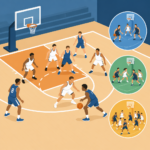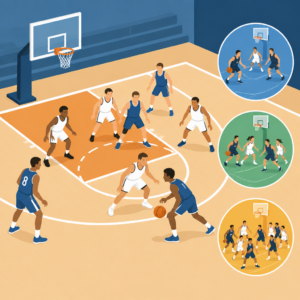

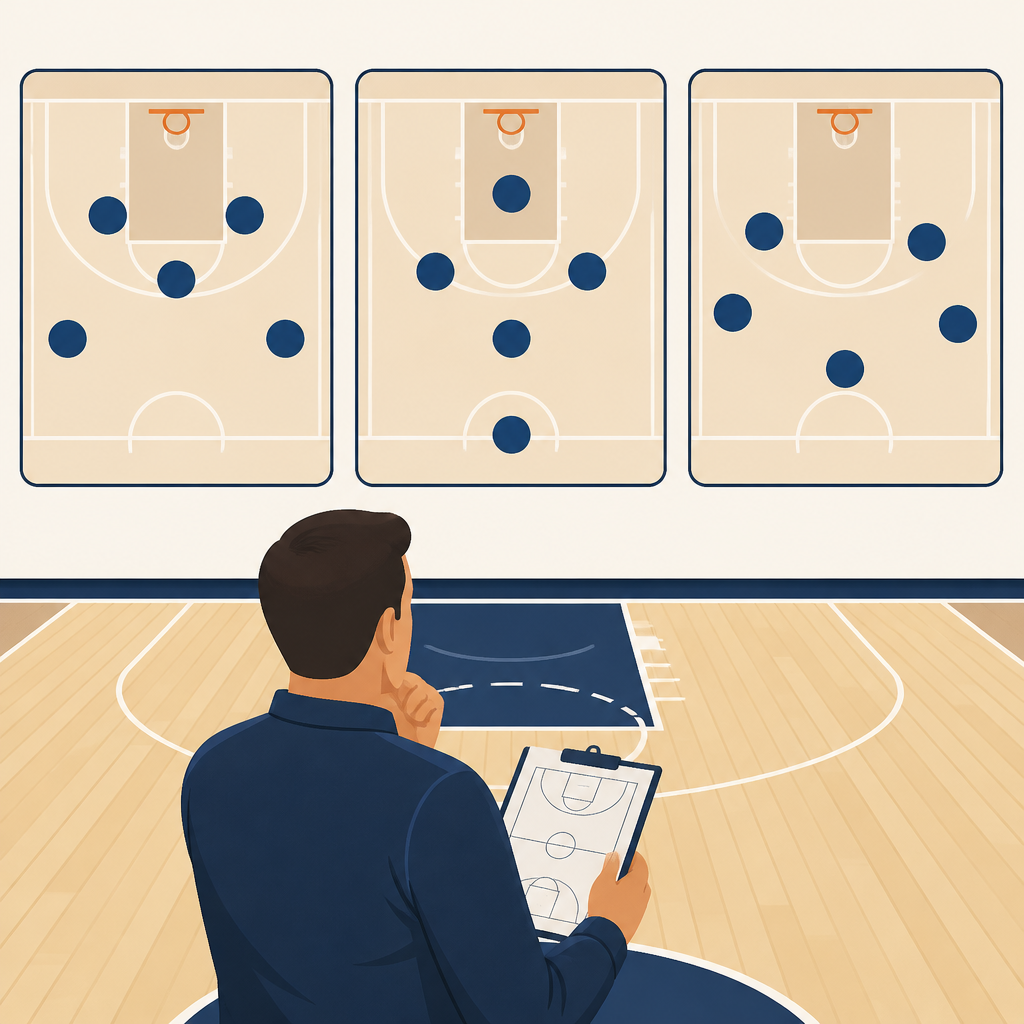
Choosing the right zone defense can shape a high school season because scheme affects pace, foul trouble, rebounding, player development, and how well a team survives size or talent gaps. In coaching rooms, the question is rarely whether zone works. The real question is what zone defense should a high school team run when the roster has clear strengths, obvious limitations, and only so many practice minutes. The three systems most programs weigh most often are the 2-3 zone, the 1-3-1 zone, and the match-up zone. Each can win games, but each asks different things from guards, wings, and the center of the defense.
A zone defense assigns players to areas first and matchups second. That sounds simple, yet modern zone concepts are more nuanced than standing in a spot. Good zones shrink driving lanes, tag cutters, deny the high post, and finish possessions with gang rebounding. Great zones also disguise coverages, bait weak shooters, and control the locations of opponent shots. At the high school level, where shooting consistency varies and scouting time is limited, those details matter more than whiteboard theory.
When I have helped staffs install zone packages, the decision has usually come down to five factors: roster length, point-of-attack speed, rim protection, communication level, and available teaching time. A 2-3 zone generally gives the strongest base for teams that need paint protection and simple rules. A 1-3-1 zone offers more disruption, trap opportunities, and tempo swings, but it punishes hesitation. A match-up zone can be the most complete answer against balanced offenses because it behaves like man-to-man after the initial alignment, yet it demands the highest collective understanding.
This strategy guide explains how each defense works, when it fits, where it breaks, and how a coach should choose. The aim is not to crown one universal best option. The aim is to identify the zone that best fits a high school team’s personnel, schedule, and competitive goals.
Why the 2-3 Zone Is Still the Default Choice for Many High School Teams
The 2-3 zone remains the most common answer because it solves the most common high school problems. It places two defenders high to protect the elbows and ball reversal, three across the back to defend the blocks and baseline, and it naturally keeps a body near the rim. If a team lacks elite on-ball defenders or has one true post player who must stay out of foul trouble, the 2-3 is often the safest foundation.
Its biggest strength is paint protection. Most high school offenses struggle to make enough perimeter shots over four quarters, so forcing extra passes around the arc is usually a favorable trade. A disciplined 2-3 also simplifies help responsibilities. Top defenders contain and stunt. Wing-bottom defenders close to the corner and recover to the block. The middle defender anchors the charge circle, fronts the high-low when possible, and owns the restricted area. Because roles are stable, younger players learn rotations faster.
The 2-3 zone is especially effective against dribble-drive teams that lack a reliable short-corner passer. It can also reduce transition mismatches because players can sprint to spots rather than hunt exact assignments. Programs that practice only a few times between games often benefit from that clarity. The tradeoff is obvious: a poor 2-3 can give up rhythm threes, offensive rebounds on the weak side, and easy touches at the high post. If the top line is slow or the middle defender is late reading the ball, the whole shell caves in.
How to Make a 2-3 Zone Better Than Basic
The difference between a passive 2-3 and a winning 2-3 is not formation; it is detail. First, define closeout rules. Against average shooters, I prefer shorter, choppy closeouts with high hands and no middle penetration. Against elite shooters, the top guard must leave earlier on the skip, and the weak-side wing must split the difference between the corner and block until the ball is controlled. Second, teach the bottom line to move on airtime, not after the catch. That one habit cleans up many late rotations.
Third, decide how to guard the high post. Some teams three-quarter the catch from behind and collapse on the dribble. Others bump the middle defender up early and rotate the weak-side bottom to the rim. Either can work, but indecision cannot. Fourth, build rebounding language into every rep. Zone teams do not rebound by accident. The weak-side wing must crack back, the middle defender must hit first, and guards must pursue long rebounds around the foul line area.
A practical example is a smaller varsity facing a conference rival with one dominant driver and inconsistent corner shooting. In that matchup, a 2-3 with hard nail help from the top and loaded weak-side bottom defenders can turn layup attempts into contested floaters and kick-outs. If the opponent finishes 5-for-22 from three, the scheme did its job even if it gave up some perimeter volume.
When a 1-3-1 Zone Changes the Game
The 1-3-1 zone is built to distort rhythm. It places one defender on top, three across the middle line, and one baseline runner behind the play. Compared with a 2-3, it covers passing lanes more aggressively, pressures the sideline, and creates natural trapping spots in the corners and along the wing. Teams use it to speed up opponents, hide a lack of half-court scoring by generating turnovers, or shift momentum when a game grows flat.
Its best feature is unpredictability. Ball handlers see length in unusual places. Reversals feel tighter. Skip passes stay in the air longer, giving the baseline runner and opposite wing time to rotate. The top defender can influence the ball to a side, the wing can sit on the first pass, and the middle player can protect the high post while also deterring the slot. Against inexperienced guards, this geometry creates panic.
The 1-3-1 works best when a roster has three ingredients: an active top guard with stamina, long wings who read the ball early, and a fearless baseline runner. That runner may be the most important player in the scheme. He must sprint corner to corner, contest under control, and still rebound above his area. If the runner is slow or loses vision, opponents will get open baseline jumpers and drop-off passes all night. The 1-3-1 also struggles against disciplined teams that flash the short corner, place a passer in the middle, and reverse the ball with patience rather than panic.
| Defense | Best For | Main Strength | Main Risk | Practice Demand |
|---|---|---|---|---|
| 2-3 Zone | Teams needing rim protection and simple rules | Protects paint, controls fouls | Can allow threes and high-post touches | Moderate |
| 1-3-1 Zone | Teams seeking tempo, traps, and deflections | Disrupts passing lanes and rhythm | Exposes corners and baseline | High |
| Match-Up Zone | Smart, connected teams with communication | Blends zone shape with man principles | Breakdowns versus cutters if rules are unclear | Very high |
Teaching Points That Decide Whether a 1-3-1 Survives
To run a 1-3-1 well, a coach must settle three teaching questions early. First, where is the first trap? Some staffs trap the corner every time. Others trap the wing only when the dribble is picked up. The rule must be absolute. Second, who owns the opposite corner on skip passes? If that answer is vague, opponents will feast. Third, what is the rebounding plan? The biggest criticism of the 1-3-1 is valid: it can be vulnerable on the glass because defenders are rotated out of traditional box-out angles.
The most reliable fix is role clarity. The baseline runner contests and turns. The weak-side wing cracks down to the block. The middle player finds the nearest interior body. The top defender circles to the foul line for long rebounds. Without those assignments, the defense creates one stop and gives it back. In film sessions, I look first not at steals but at second-shot points allowed. That stat tells the truth about whether the 1-3-1 is helping or merely entertaining.
There is also a schedule reality. A 1-3-1 demands repeated shell work, skip-pass recovery drills, and live reps against overload alignments. If a high school team practices twice between Friday and Tuesday games, installation time is precious. For that reason, the 1-3-1 is often strongest as a changeup defense unless the roster is built for it and the staff commits fully.
Why Match-Up Zone Can Be the Most Complete System
Match-up zone is the most misunderstood option. Many people think it means a soft zone that turns into man-to-man at random. Good match-up zone is far more exact. Defenders begin in zone spots, then match cutters and perimeter threats according to coverage rules tied to ball location, screening action, and exchange responsibilities. The goal is to keep zone structure against penetration while eliminating the open catch-and-shoot looks that basic zones sometimes surrender.
At the high school level, match-up zone is powerful because it answers modern spacing. Offenses now place five players around the arc, use dribble handoffs, lift corners, and flash behind help. A match-up zone can pass off movement cleanly without requiring defenders to chase every action through traffic. It also disguises who is guarding whom, which can bother teams that rely on set play entries and timing. Against strong shooting teams, this flexibility is valuable.
The catch is complexity. Match-up zone fails when one player guards action by instinct while the other four guard by rule. Every exchange must be taught: bump cutters, peel on drives, sink to the roller, and recover to shooters on the flight of the pass. Communication words matter. So does film study. If a program has experienced varsity players and a staff comfortable teaching layered reads, match-up zone can become a season-long identity. If not, it can become a half-speed hybrid that gives away both layups and threes.
How to Choose the Right Zone for Your Personnel
The best zone defense for a high school team depends less on ideology than on roster truth. Start with your center. If you have one legitimate rim protector but limited lateral quickness on the perimeter, lean 2-3. If you lack interior size but have length and active hands across three positions, consider 1-3-1. If you have smart multi-positional defenders who talk constantly and process the game quickly, match-up zone deserves serious consideration.
Next evaluate your guards. A 2-3 needs guards who can stunt, recover, and keep the ball out of the middle. A 1-3-1 needs a top defender who can pressure without getting split. Match-up zone needs guards who recognize screening actions and communicate exchanges early. Then assess discipline. Teams that miss assignments because of focus usually need simpler rules, not more diagrams.
Opponent profile matters too. In leagues where few teams shoot above 32 percent from three, a 2-3 often remains efficient. In leagues filled with shaky ball handlers and impatient decision-makers, a 1-3-1 can generate huge possession swings. In postseason play, where scouting improves and opponents prepare set counters, match-up zone can hold up best because it adjusts without changing the lineup card. The smartest coaches revisit this decision in January, not just November.
Common Offensive Counters and the Adjustments That Matter
Every zone invites counters. Against a 2-3, expect overloads, high-post flashes, short-corner occupation, and skip passes to the weak-side corner. The adjustment is earlier weak-side movement and a firm high-post rule. Against a 1-3-1, expect diagonal skip passes, baseline drift, and a skilled passer stationed in the middle. The adjustment is sharper ball influence from the top and a baseline runner who starts one step earlier than feels comfortable. Against match-up zone, expect screening confusion, ghost cuts, and five-out spacing. The adjustment is repetition and clear terminology more than tactical reinvention.
No matter the scheme, two principles travel. First, stop the first clean paint touch. Second, finish the possession. High school teams often obsess over the initial alignment and ignore the ending. Yet many zone failures come after good initial defense: a missed box-out, a late tag, or a broken floor-balance rule leading to transition. If your team cannot rebound or communicate, changing from 2-3 to 1-3-1 will not save it.
Final Recommendation for Most High School Programs
If a coach asks for one answer without seeing the roster, the safest recommendation is a 2-3 zone as the base defense, a 1-3-1 as a changeup, and match-up principles added as players mature. That sequence matches how most high school programs actually develop. The 2-3 gives structure, protects the rim, and is teachable in limited practice time. The 1-3-1 changes tempo, creates turnovers, and steals possessions during key stretches. Match-up concepts then raise the ceiling by improving coverage against shooters, cutters, and modern spacing.
The broader strategy lesson is simple: choose the defense your players can execute repeatedly under pressure, not the one that looks smartest on a clinic board. Zone defense wins when the rules are clear, the rotations are drilled, and the rebounding responsibilities are nonnegotiable. For most teams, that means starting with the 2-3, using the 1-3-1 selectively, and graduating to match-up zone only when communication and experience justify it.
Study your roster honestly, chart the shots you actually allow, and build the zone package that fits those facts. When scheme matches personnel, a high school defense becomes more connected, more confident, and far harder to solve.
Frequently Asked Questions
What zone defense is usually the best starting point for most high school teams?
For most high school programs, the 2-3 zone is the best starting point because it is the easiest to teach, the quickest to install, and the most stable over the course of a season. High school teams rarely have unlimited practice time, and that matters. A defense can look great on a whiteboard but fail in games if players cannot execute it under pressure. The 2-3 gives coaches a structure that players usually understand faster than more aggressive or more nuanced zone systems. It protects the lane, keeps help defense close to the rim, and gives teams a dependable base when they are still developing communication, footwork, and rebounding habits.
It is also a practical choice for rosters that do not have elite quickness at every position. Many high school teams have one or two strong perimeter defenders but not five players who can cover large areas, trap, recover, and rotate perfectly. The 2-3 asks less of individual speed and more of positioning, discipline, and talking. That makes it a strong option for teams with average size, limited depth, or a need to keep players out of foul trouble. Because the guards start high and the back line stays compact, the 2-3 often helps teams survive against dribble-drive opponents and against bigger teams that want to score inside.
That said, “best starting point” does not always mean “best final answer.” The 2-3 can become vulnerable if opponents shoot well, move the ball crisply, or punish the short corner and offensive glass. A coach choosing it should commit to teaching the details that separate a decent zone from a soft one: ball pressure at the top, active hands in passing lanes, sharp closeouts, strong weak-side rebounding, and clear rules for cutters and baseline runners. If a team can master those details, the 2-3 can be more than a safe fallback. It can be a season-long identity defense that keeps games manageable and puts players in positions they can handle consistently.
When should a high school team choose a 1-3-1 zone instead of a 2-3?
A high school team should consider the 1-3-1 when it wants to create disruption rather than simply protect structure. The 1-3-1 is often the better choice for teams that need to speed opponents up, force uncomfortable passes, generate turnovers, and change the rhythm of the game. If your roster has length on the perimeter, an active player at the top, and a smart, mobile athlete in the middle line, the 1-3-1 can become a real weapon. It can bother ball-handlers, distort passing angles, and make opponents feel like every catch is crowded. For underdog teams in particular, that chaos can be valuable because it narrows talent gaps and creates extra possessions.
The 1-3-1 can also be effective when your team has one or two instinctive defenders who cover ground well and anticipate the next pass. Long wings can trap corners, deny reversals, and turn routine half-court possessions into rushed decisions. Against inexperienced offenses, it often produces exactly the kind of game a coach wants: hesitant entries, floaty skip passes, and late-clock possessions that lead to bad shots. Teams that are disciplined with rotations can also use the 1-3-1 to control tempo in a different way than people expect. It does not just speed teams up. It can make them uncomfortable enough to burn clock without getting quality looks.
Still, the 1-3-1 asks for more precision than a 2-3. It can be exposed on the glass, along the baseline, and by teams that can skip the ball accurately from side to side. If your roster lacks length, stamina, or communication, the system can break down quickly. That is why many coaches use the 1-3-1 as a changeup or situational package rather than as the only defense they play. It is especially useful after timeouts, after made free throws, against backup guards, or when an opponent struggles with corner traps and baseline reads. In short, choose the 1-3-1 when your team has the athletes and instincts to make opponents uncomfortable, and when you are willing to live with a little more risk in exchange for a lot more disruption.
How does a match-up zone compare to a traditional 2-3 or 1-3-1 for player development and long-term growth?
A match-up zone often offers the best blend of zone structure and man-to-man habits, which is why many coaches view it as a strong long-term developmental option. Instead of guarding an area passively, players learn to identify threats, communicate through screens and cutters, and “match” to offensive movement in a way that looks more like man principles inside a zone shell. That can be extremely valuable at the high school level because it teaches athletes how to see the ball, recognize spacing, close out under control, and defend actions rather than simply stand in spots. For programs thinking beyond one season, that matters a lot.
Compared with a standard 2-3, a match-up zone can take away easy rhythm threes and reduce the clean ball movement that often hurts basic zones. It also tends to hold up better against teams that screen the zone, overload one side, or use skilled forwards at the elbows. Compared with a 1-3-1, it is usually less gamble-heavy and less vulnerable to obvious weak points like the deep corner or quick diagonal skips. A well-taught match-up zone can make offenses feel like they are facing both a zone and a man defense at the same time. That uncertainty is a major advantage, especially against high school teams that are comfortable attacking one look but not the other.
The tradeoff is teaching time. Match-up zones demand strong communication, high basketball IQ, and consistent reps. Players must understand when to bump cutters, when to exchange responsibilities, when to contest shooters, and when to convert temporarily into man principles. If a team is young, inexperienced, or still learning basic defensive stance and help positioning, a match-up zone may become too complicated too early. It is a great system for programs that have continuity, veteran guards, and a coaching staff willing to invest in details every day. For player development, it may be the richest of the three systems, but only if players can absorb and execute the rules with confidence. Otherwise, it can become a defense that is theoretically smart but practically shaky.
What roster strengths and weaknesses should determine whether a team runs a 2-3, 1-3-1, or match-up zone?
The best zone choice should start with an honest roster evaluation, not with a coach’s personal preference. If a team has size near the rim, limited foot speed on the perimeter, and a need to protect players from foul trouble, the 2-3 is often the logical fit. It allows bigger players to stay near the basket, helps weaker individual defenders by shrinking driving lanes, and gives the team a chance to rebound out of a compact shape. It is especially useful when a roster has a true post presence, solid but not elite guards, and a need to keep games under control rather than turn them into track meets.
If a roster has length, activity, and interchangeable athletes who can cover space, the 1-3-1 becomes more attractive. This is particularly true if the team lacks traditional size but has speed and instincts. A mobile top defender can pressure the ball, a long middle player can take away the high post and contest passes, and active wings can trap and rotate. That setup can help teams manufacture energy and possessions. It can also hide the lack of a dominant interior player by making the ball harder to enter cleanly in the first place. However, if those athletes are undisciplined, poor communicators, or weak rebounders, the same scheme can quickly become a liability.
A match-up zone fits best when the roster has intelligence, communication, and enough versatility to guard actions without panicking. You do not necessarily need the longest or fastest team for a match-up zone, but you do need players who process the game well. Veteran guards, experienced wings, and a back-line anchor who talks constantly all make a major difference. This defense is often ideal for programs with continuity because returning players can build on the same language and rules year after year. In simple terms, choose the 2-3 for stability and protection, the 1-3-1 for pressure and unpredictability, and the match-up zone for versatility and growth. The right answer depends less on what looks best on film and more on what your specific players can repeat under game stress.
Is it better for a high school team to commit to one zone defense or use multiple zone looks during the season?
In most cases, it is better for a high school team to have one primary zone and one secondary changeup rather than trying to be everything at once. High school players improve through repetition, and defensive confidence usually comes from knowing exactly where to be, what to say, and how to react. When teams split too much practice time across multiple systems, they often become average at all of them and dependable at none. That is why the smartest approach for many programs is to choose a base identity first. Build the defense your roster can execute consistently, then add a complementary look that changes