
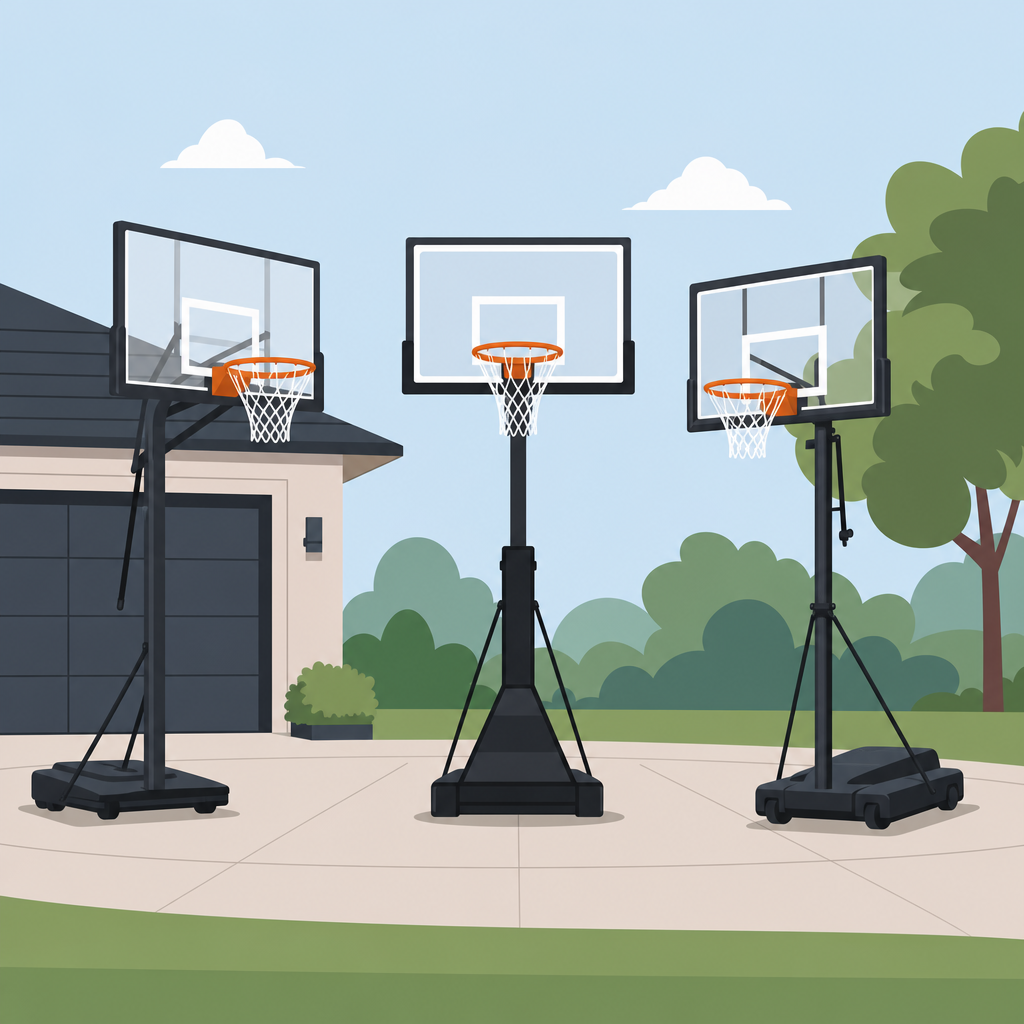
Portable basketball hoop reviews matter because the right system changes how often a driveway gets used, how safely people play, and how long your investment lasts. In the basketball equipment category, hoops and gear sit at the center of home play: the hoop determines rebound quality, height adjustment, stability, and whether a casual setup becomes a serious practice station. A portable basketball hoop is a freestanding goal with a weighted base, adjustable pole, backboard, rim, and net, designed to deliver near in-ground performance without permanent installation. For families, coaches, and players who need flexibility, that portability is the main advantage. You can position the hoop for safer clearance, move it during winter, or relocate it after a home move. But portability also introduces tradeoffs, especially around base ballast, pole flex, and long-term durability.
After testing driveway systems over years of youth practices, adult shooting workouts, and neighborhood games, I’ve found that buyers usually ask the same questions: Which portable basketball hoop feels most like a gym hoop? What backboard size is best for a driveway? Is a 54-inch model enough, or should you buy a 60-inch or 72-inch system? How important is the height adjustment mechanism? The short answer is that the best portable basketball hoop depends on the age of the players, the space available, and how often the hoop will be used. A 44-inch polycarbonate setup may satisfy younger kids, but regular teenage and adult play usually calls for a 54-inch or larger backboard, a sturdier steel pole, and a breakaway rim. This hub page compares the best driveway basketball systems and also connects the broader hoops and gear conversation: backboard materials, rims, nets, basketballs, safety accessories, and maintenance routines all affect the playing experience.
When evaluating portable basketball hoops, five factors separate a good purchase from an expensive disappointment. First is backboard material. Polycarbonate is durable and affordable but softer on bank shots; acrylic provides better rebound; tempered glass offers the most authentic response and is the standard for premium systems. Second is size. Larger backboards improve shot angles and make layup drills more realistic. Third is the pole design. Three-piece poles are common, but thicker steel and fewer connection points reduce vibration. Fourth is base capacity. Sand or water ballast stabilizes the hoop, and heavier bases generally produce safer play. Fifth is the adjustment system. Pneumatic and crank systems are far easier to use than pin-lock designs, especially when multiple family members play at different heights. Understanding those basics makes every portable basketball hoop review easier to interpret and helps buyers choose equipment that fits real use rather than marketing claims.
How to Compare Portable Basketball Hoop Systems
The best way to compare driveway basketball systems is to judge them by performance under normal household use, not showroom appearance. In practice, that means looking at rebound consistency, pole shake after made shots, ease of adjusting from 7.5 to 10 feet, and whether the base stays planted during hard play. I always start with the backboard because it shapes nearly every shot. Polycarbonate is impact resistant and suitable for young players, but it often feels dead compared with acrylic or tempered glass. Acrylic hits a useful middle ground for families who want cleaner rebounds without paying premium prices. Tempered glass remains the benchmark because the ball comes off the board with the crisp response players expect from school and club gyms. If competitive training is the goal, glass is worth prioritizing.
Backboard size should match both player ability and driveway dimensions. A 44-inch or 48-inch hoop works for elementary-age children and tight spaces, but serious skill development benefits from 54 inches or more. On regulation courts, 72-inch glass is standard. Most portable buyers choose 54-inch or 60-inch systems because they fit residential spaces while still allowing realistic bank shots. Pole design is just as important. Entry-level models often use lighter three-piece round poles that sway noticeably. Midrange and premium systems use thicker steel, square poles, and stronger bracing. That translates into less vibration and a more solid feel on rebounds and dunks where permitted by the manufacturer. Base design also matters. A broad base with 30 gallons or more of water, or the sand equivalent, reduces tip risk, though water is easier to fill and sand is better for long-term stability.
Height adjustment deserves more attention than many reviews give it. Families who lower the rim for younger children need a simple system, or they stop using the feature. Pin systems are inexpensive but awkward; they often require two adults and encourage people to leave the hoop at one height. Telescoping handles and crank mechanisms are much more practical. If the hoop serves both a nine-year-old and an adult, a smooth adjustment mechanism becomes a quality-of-life feature, not a luxury. Finally, check the rim and net hardware. A breakaway rim protects both players and the backboard assembly by absorbing force. Double-compression springs, enclosed spring covers, and all-weather nylon nets hold up better in sun, rain, and freeze-thaw conditions. Those details explain why some driveway hoops last three seasons and others stay reliable for ten years.
Best Driveway Hoops by Category
Most buyers do not need the single “best” portable basketball hoop; they need the best one for their budget and playing style. In the entry-level range, the Lifetime Pro Court and similar 44-inch to 48-inch systems remain popular because they are affordable, easy to assemble, and durable enough for youth recreation. They typically use polycarbonate backboards and lighter poles, which means more shake and a less lively rebound, but for beginners they deliver solid value. In the midrange tier, the Spalding Momentous EZ Assembly 54-inch and several Silverback portable models offer a meaningful step up. These hoops usually add better adjustment systems, larger backboards, and sturdier bases, making them suitable for family games and regular practice.
Premium buyers should focus on systems such as the Goalrilla GS54c, Goalrilla GS60c, and high-end Spalding or Silverback glass models. Goalrilla, in particular, has built a strong reputation for heavy steel construction, clear height indicators, and tempered glass backboards that feel far closer to in-ground units than most portable competitors. The GS54c suits many suburban driveways, while the GS60c gives advanced teens and adults more rebounding surface and a stronger visual target on bank shots. The tradeoff is weight, price, and assembly complexity. These systems often require several hours, multiple adults, and careful ballast filling. Yet once installed correctly, they support more serious use with less movement and better shot response.
| Category | Typical Backboard | Best For | Main Tradeoff |
|---|---|---|---|
| Entry level | 44–48 inch polycarbonate | Young kids, casual play, low budgets | More vibration, softer rebounds |
| Midrange | 50–54 inch acrylic or polycarbonate | Family use, youth development, mixed ages | Still less stable than premium units |
| Premium | 54–60 inch tempered glass | Teen training, adult games, long-term ownership | Higher price, heavier assembly |
If you are comparing portable basketball hoop reviews for realism alone, premium tempered-glass systems win. If you are comparing by value per dollar, midrange hoops are often the sweet spot. They avoid the flimsy feel of entry units while staying accessible for families building out their basketball equipment setup. As a hoops and gear hub, this is the central decision: start with the goal system, then match accessories and training tools to the level of play it supports.
Backboard Materials, Rim Quality, and Essential Gear
Backboard material is not a cosmetic choice; it directly affects playability. Polycarbonate is nearly unbreakable and handles rough family use well, which is why brands like Lifetime rely on it in affordable systems. However, because it flexes more, rebounds can feel inconsistent during repetition shooting. Acrylic is stiffer and clearer, offering improved response while remaining lighter and less expensive than glass. Tempered glass is the standard used in high school, college, and professional environments because it delivers the truest ball response. For players practicing bank shots, post finishing, and touch around the rim, that consistency matters. If a teenager is preparing for organized competition, jumping from polycarbonate to acrylic or glass often improves training quality more than people expect.
The rim is equally important. Many budget hoops advertise a breakaway rim, but the quality varies substantially. A true breakaway rim with strong spring tension protects the mounting area and provides realistic give on hard finishes. Cheap rims loosen over time, leading to side-to-side wobble and poor feel on makes. Nets also deserve attention. Standard nylon nets are fine for many climates, but heavy all-weather nets resist fraying better in high sun exposure. Chain nets last longer but are louder and harder on hands during home use. Beyond the hoop itself, serious driveway setups benefit from gear that supports safer and more consistent play. Pole pads reduce collision risk for children driving to the basket. Backboard edge padding helps on tighter driveways. Ball storage racks, pump needles, pressure gauges, and quality outdoor basketballs extend the usefulness of the whole space.
For a complete hoops and gear setup, I recommend thinking in layers. Start with the hoop. Add an outdoor basketball matched to the surface; composite covers usually grip better on concrete than indoor leather. Include a hand pump and pressure gauge because underinflated balls distort shooting feedback. Add a return system only if the driveway shape supports it; on narrow or sloped surfaces, rebounders can create more hassle than benefit. For skill work, cones, dribble goggles, and agility markers offer far more training value than novelty accessories. This is where a hub article matters: portable basketball hoop reviews help you choose the centerpiece, but a good driveway court only performs well when the surrounding gear supports regular practice.
Setup, Safety, and Long-Term Maintenance
Assembly quality strongly affects whether a portable basketball hoop remains safe over time. Most failures I have seen were not caused by bad products alone; they came from rushed setup, underfilled bases, loose hardware, or ignored weather exposure. Manufacturers generally specify whether the base should be filled with water, sand, or a combination with antifreeze in cold climates. Water is simple and easy to drain before moving, but repeated freezing can crack a neglected base. Sand is heavier and more stable, though difficult to remove later. On windy sites, anchoring guidance in the manual should be taken seriously. No portable hoop is immune to severe gusts, and even premium systems can tip if the base is underweighted or the hoop is left in a vulnerable position.
Safe placement matters as much as stability. Leave enough overhang for layups, but keep the base clear of garage doors, parked cars, and public sidewalks. A flat concrete surface is ideal; uneven pavers or sloped asphalt increase wobble and create strange rebound angles. Check local conditions too. If your driveway pools water, rust protection becomes a bigger issue. Powder-coated steel resists corrosion, but scratches should be touched up before rust spreads. Hardware should be inspected several times each year, especially after heavy play or storms. Tighten bolts, inspect the rim mount, and replace frayed nets before they snag. If the height adjustment mechanism starts sticking, clean and lubricate it according to the manufacturer’s instructions rather than forcing it.
Maintenance is straightforward when done routinely. Wash the backboard to preserve visibility, inspect decals and protective sleeves, and keep the ballast cap sealed. In winter regions, lower the hoop when not in use and consider moving it to a less exposed area. If the unit has wheels, move it carefully; dragging a full base over rough concrete can stress joints and wheel brackets. Families often ask whether portable hoops can handle dunking. The practical answer is that most residential systems are designed for shooting and moderate recreational play, not repeated aggressive hanging on the rim. Follow the manufacturer’s weight and use limits. Taking those warnings seriously extends the life of the system and reduces the chance of sudden failure during play.
Choosing the Right Hoop for Your Home Court
The best portable basketball hoop for your home court is the one that fits your players today and still makes sense three years from now. For younger children under about ten, a 44-inch or 48-inch system with easy height adjustment is usually enough. The priority should be convenience, safe placement, and a low enough starting height to encourage proper shooting form. For middle school players, many families regret buying too small. A 54-inch hoop is often the smartest long-term choice because it remains manageable in a driveway but gives enough backboard for realistic drills. High school players and adults who train regularly should consider 54-inch tempered glass at minimum, with 60-inch glass ideal when space and budget allow.
Budget should be evaluated over the life of the hoop, not just at checkout. A cheap system replaced in three years can cost more than a sturdier midrange unit that lasts eight or ten. Brand support also matters. Goalrilla, Silverback, Spalding, and Lifetime each serve different parts of the market, but replacement parts, warranty terms, and customer service vary by model. Read the manual before buying, not after delivery. Check assembled weight, base volume, overhang, and whether the rim reaches a true 10 feet. If you are building out a complete basketball equipment plan, this hub should guide your next steps as well: compare outdoor basketballs, backboard pads, nets, court markings, and training aids based on the type of hoop you choose.
Portable basketball hoop reviews are most useful when they look beyond advertising language and focus on the playing experience. The key takeaways are simple. Backboard material determines rebound quality. Size shapes realism. Pole strength and base capacity control stability. Height adjustment affects how often every family member actually uses the hoop. Premium systems deliver the closest feel to a gym, midrange models usually offer the best value, and entry-level hoops make sense for very young players or limited budgets. Once the system is in place, the right gear and regular maintenance protect that investment and improve every session. If you are shopping for the best driveway basketball system, start by matching the hoop to your space, skill level, and long-term goals, then build the rest of your hoops and gear setup around that foundation.
Frequently Asked Questions
What should I look for when comparing portable basketball hoop systems for a driveway?
Start with the features that most directly affect performance, safety, and long-term durability. The first is backboard size and material. Larger backboards, typically in the 54-inch to 60-inch range, give players a more realistic court feel and better bank-shot response, while smaller boards can work well for younger kids or tighter driveways. Material matters too: polycarbonate is durable and budget-friendly, acrylic offers better rebound and a more premium feel, and tempered glass delivers the most authentic gym-like performance but usually comes at a higher price point.
Next, look closely at the height adjustment system. A good portable hoop should adjust smoothly from youth-friendly heights up to the regulation 10 feet. Systems with simple one-hand or trigger-style adjustment mechanisms are usually more convenient for families who regularly switch between children and adults. Pole design also deserves attention. A three-piece pole may be common on entry-level models, but sturdier systems often use stronger construction that limits shake and improves stability during play.
The base is another major factor. Since a portable basketball hoop depends on ballast rather than permanent in-ground installation, base capacity heavily influences stability. Larger bases that can be filled with water or sand generally perform better, especially for aggressive rebounding, shooting practice, and casual dunk-style rim contact where allowed by the manufacturer. Wheels, base shape, and portability are also worth comparing if you may need to move the hoop seasonally or reposition it around the driveway.
Finally, pay attention to rim quality, weather resistance, and assembly. A solid breakaway rim can improve durability and playability, while rust-resistant hardware and UV-protected materials help the system last outdoors. Reviews are especially useful here because they reveal real-world issues such as excessive pole wobble, difficult assembly, weak nets, or backboards that do not hold up over time. The best driveway system is the one that balances performance, budget, available space, and the age and skill level of the people who will actually use it most.
Are portable basketball hoops stable enough for serious practice, or are they mainly for casual play?
High-quality portable basketball hoops can absolutely support serious practice, but stability varies significantly by model. Entry-level systems are usually best for light shooting, family games, and recreational use, while premium portable hoops are designed to feel much closer to fixed systems. If your goal is regular skill development, shooting reps, rebounding drills, and competitive one-on-one games in the driveway, stability should be one of your top buying criteria.
The biggest difference comes from the relationship between the pole, base, and backboard. A heavier base with a large fill capacity, especially when filled with sand instead of water, generally provides better resistance to movement and tipping. Stronger poles reduce vibration after shots hit the rim or backboard. Better backboard support arms also help keep the hoop from feeling flimsy during play. When reviews mention limited shake, solid rebound response, and dependable footing, that is usually a good sign the system can handle more than casual use.
That said, even the best portable systems have practical limits. They are not usually as rigid as professionally installed in-ground hoops, and they should always be used according to the manufacturer’s guidelines. If older teens or adults plan to play hard on the hoop regularly, choosing a premium portable model is important. Lower-end systems may become frustrating because of wobble, inconsistent rebound, or base movement on repeated impact.
For many households, a well-reviewed portable basketball hoop hits the sweet spot: strong enough for meaningful practice, adjustable enough for multiple ages, and flexible enough to move when needed. If you want a driveway hoop that encourages frequent use, focus on systems that are repeatedly praised for stability under real play conditions, not just for low price or easy assembly.
What backboard size and material are best for a portable basketball hoop?
The right backboard depends on who is playing, how much driveway space you have, and how closely you want the system to mimic a regulation court. In general, larger backboards create a better playing experience. A 54-inch backboard is often a strong all-around choice for families because it offers a generous target area without requiring as much space as larger models. A 60-inch board feels more serious and is especially appealing for older players and frequent use, while smaller 44-inch to 50-inch options are often better suited to beginners, younger children, or tighter budgets.
Material changes the way the hoop plays and lasts. Polycarbonate backboards are common on affordable portable systems because they are tough and impact-resistant. They are a practical choice for families who want durability and value. Acrylic backboards usually provide improved rebound performance and a clearer, more polished appearance. They often appeal to buyers who want a step up in feel without paying top-tier prices. Tempered glass is generally considered the premium option because it offers the best rebound quality and the most authentic court response, making it ideal for more serious shooters and players who want a truer bank shot.
However, the best material is not always the most expensive one. A well-built acrylic or polycarbonate system with a solid frame and stable base can outperform a larger glass board mounted on a weak portable structure. This is why portable basketball hoop reviews are so valuable: they help show whether the complete system actually delivers on-paper promises. Backboard material should always be evaluated together with rim quality, support design, and overall stability.
If your household includes a mix of young players and adults, a mid-size or larger adjustable system often provides the most room to grow. If performance is the top priority, lean toward acrylic or tempered glass. If durability and price matter most, polycarbonate can still be an excellent fit. The goal is to choose a backboard that matches both your current needs and how serious the driveway setup may become over time.
How important is height adjustment on a portable basketball hoop?
Height adjustment is one of the most valuable features on a portable basketball hoop because it determines how useful the system will be for different ages, skill levels, and types of play. A hoop that adjusts easily allows younger children to learn proper shooting form on a lower rim, while older players can raise it to the regulation 10-foot height for realistic practice. Without convenient adjustment, families often end up with a hoop that suits only one user well, which limits how often it gets used.
Ease of adjustment matters almost as much as the adjustment range itself. Some systems use a telescoping pole with pin-based settings, while others have a crank, trigger, or pneumatic-style mechanism. Simpler one-person adjustment systems are often better for busy households because they make it practical to lower and raise the hoop often instead of leaving it fixed at one height. Reviews frequently highlight this point, because a hoop that technically adjusts but is awkward to change may not deliver much real-world benefit.
Height adjustment also affects skill progression. Younger players build confidence when they can see the ball go in regularly, and lowering the rim can help them develop mechanics without forcing poor shooting habits caused by trying to heave the ball upward. As they grow stronger, the hoop can be raised gradually. For teens and adults, regulation height remains essential for realistic shooting, rebounding, and layup practice. That flexibility makes an adjustable portable hoop a better long-term investment than a fixed-height recreational setup.
In short, height adjustment is not just a convenience feature. It directly influences player development, family usability, and the overall value of the system. If multiple people will share the hoop, prioritize a model with a wide adjustment range and a mechanism that owners consistently describe as smooth, secure, and easy to operate.
How do I make a portable basketball hoop last longer and stay safe in outdoor conditions?
Long-term durability starts with proper setup and regular maintenance. First, fill the base exactly as recommended by the manufacturer. Many owners prefer sand because it is heavier and less likely to evaporate or freeze-relatedly shift the way water can in colder climates. A properly weighted base improves both safety and performance by reducing movement, wobble, and the risk of tipping during active play. Make sure the hoop is positioned on a flat, stable surface, since uneven placement can stress the frame and create a safety issue over time.
Weather exposure is the next major factor. Portable basketball hoops live outdoors, so sun, rain, wind, and temperature swings all affect their lifespan. UV exposure can degrade plastics and nets, while moisture can lead to rust if hardware is not well protected. It helps to inspect bolts, brackets, and the rim regularly and tighten anything that loosens with use. If severe weather is expected, especially strong winds or storms, moving the hoop to a protected area or laying it down according to manufacturer instructions can prevent damage.
Routine care also makes a noticeable difference. Clean the backboard periodically so dirt buildup does not dull visibility or trap grime around the frame. Replace worn nets before they tear away and put extra stress on the rim hardware. Check the pole and base for cracks, leaks, or signs of structural fatigue. If the base uses water, monitor levels and refill as needed, because even partial loss of ballast can reduce stability significantly. Portable basketball hoop reviews often reveal whether a model holds up well over multiple seasons, which can be more useful than marketing claims alone.
Most importantly, use the hoop within its design limits. Not