
NBA team names carry more history than most fans realize. A franchise name is not just branding on a jersey; it is a record of expansion eras, city identity, relocation, ownership influence, and the changing business of professional basketball. In the NBA, some names were chosen through public contests, some were inherited from earlier leagues, and others survived moves across the country even after losing their original geographic logic. Understanding NBA team name origins gives fans a clearer view of league history because every nickname connects to a specific moment in the growth of the sport.
When I have researched franchise history, the biggest surprise has been how often a team name reflects forces beyond basketball. Railroads shaped one club’s identity. Local industry defined several others. Jazz, royalty, weather, colonial history, and even dinosaur fossils all appear in the league’s naming map. In practical terms, a franchise name usually comes from one of five sources: local geography, economic identity, cultural symbolism, a previous pro team, or a relocation decision that kept existing brand equity intact. Those categories explain nearly every current NBA franchise.
This matters because league history becomes easier to follow when names are placed in context. The Minneapolis Lakers make sense once you know Minnesota’s nickname is the Land of 10,000 Lakes. The Utah Jazz only seems strange until you remember the club began in New Orleans. The Los Angeles Clippers become clearer when traced back to San Diego’s harbor culture. For a hub page within NBA history, team names are one of the best organizing tools because they connect expansion, mergers, city moves, and ownership eras in one topic. What follows is a franchise-by-franchise guide to the story behind every current NBA team name.
Names rooted in geography, nature, and local landmarks
Several NBA franchises took their names directly from the physical environment around them. The Los Angeles Lakers are the clearest historical carryover. The franchise was founded in Minneapolis in 1947 in the National Basketball League before joining the Basketball Association of America and then the NBA. Minnesota’s abundance of lakes inspired the name, and the team kept it after relocating to Los Angeles in 1960 because the Lakers brand already had championship value. That choice created one of the league’s most famous examples of a name that no longer matches local geography.
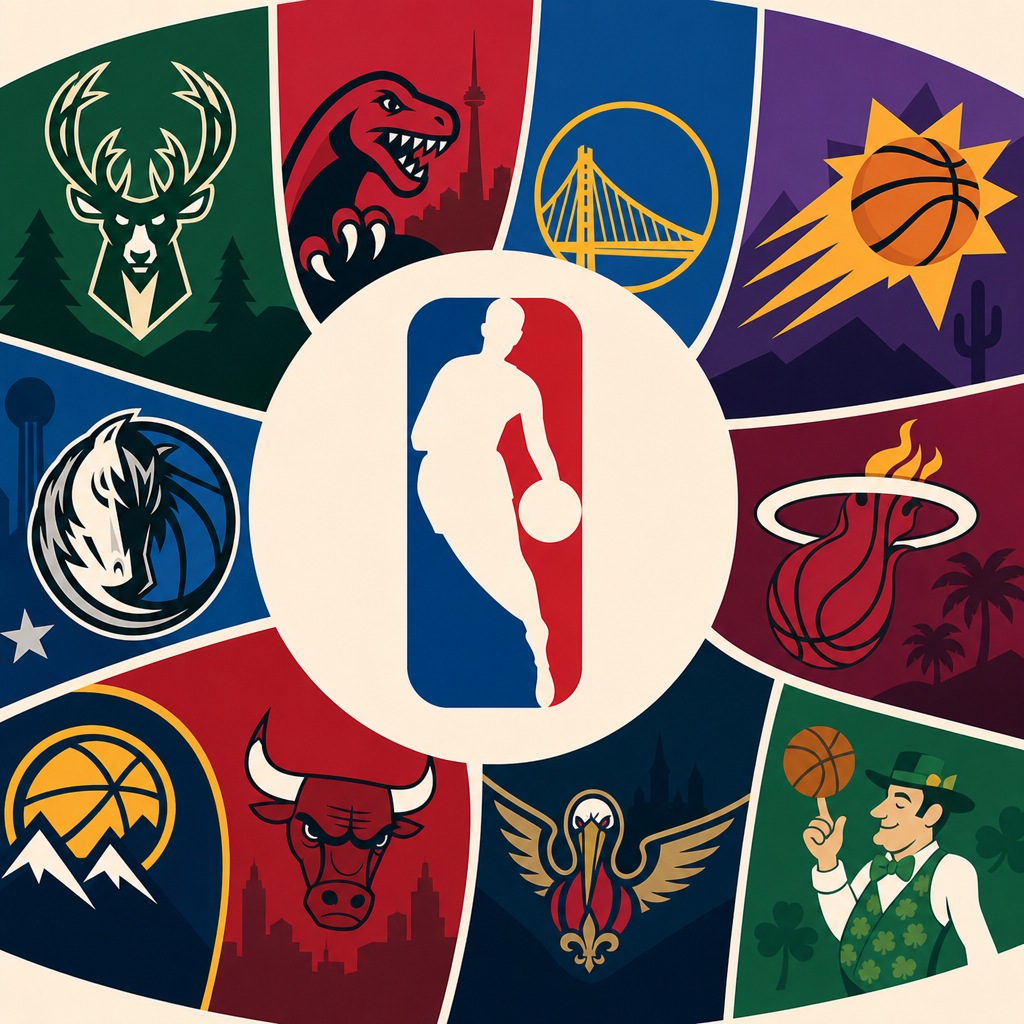
The Denver Nuggets also reflect regional identity. Denver previously had a Nuggets team in the old ABA, and the modern franchise adopted the name in 1974 after first being called the Rockets. “Nuggets” references Colorado’s gold rush history, especially the mining economy that helped define the state in the nineteenth century. The Golden State Warriors are another geography-driven case, though indirectly. The team began as the Philadelphia Warriors, moved to San Francisco, then broadened its identity to “Golden State” in 1971 to represent California as a whole. That wider label helped the club market beyond one city.
The Phoenix Suns emerged from a 1968 name-the-team contest and fit the city perfectly. Phoenix is one of the hottest major markets in North America, with sunshine as a core part of its civic image. The Miami Heat followed a similar logic in 1988, using climate as branding. The Orlando Magic took a less literal route but still tied itself to place. Team executives reportedly drew inspiration from Orlando’s tourism slogan and the atmosphere around its theme-park economy. The Oklahoma City Thunder, introduced after the Seattle relocation in 2008, evokes the region’s dramatic storms and the state’s weather identity.
The Portland Trail Blazers name came from a 1970 public contest and points to Oregon’s frontier heritage and the trails of western expansion. The Minnesota Timberwolves, selected in 1986 before the franchise began play in 1989, tie directly to the state’s large wolf population and northern wilderness identity. The Toronto Raptors came from a 1994 fan vote during the popularity of the film Jurassic Park, but the choice also resonated locally because major dinosaur fossils had been displayed at the Royal Ontario Museum. The New Orleans Pelicans, adopted in 2013, draw from Louisiana’s state bird and restored a name with stronger regional meaning than the inherited Hornets label.
Names tied to industry, work, and civic economy
A second large group of NBA names comes from the dominant industries that built their cities. The Detroit Pistons began as the Fort Wayne Zollner Pistons in Indiana, named for owner Fred Zollner’s piston manufacturing business. When the team moved to Detroit in 1957, the name remained highly compatible because Detroit was the center of the American auto industry. Few franchise names fit two different homes as neatly. The Houston Rockets are similar. The team started in San Diego in 1967, where “Rockets” referenced the local aerospace and missile industry, then moved to Houston in 1971, where NASA and the Johnson Space Center made the name even more logical.
The Milwaukee Bucks were chosen through a 1968 fan contest. A buck is not an industrial symbol, but the name was selected partly because it fit Wisconsin’s outdoor culture and projected speed, agility, and strength. More directly economic are the Indiana Pacers. The franchise joined the ABA in 1967, and “Pacers” was intended to honor both the pacing horse used in harness racing and the pace car associated with the Indianapolis 500. Few names capture a city’s sporting economy so precisely. The Sacramento Kings, by contrast, represent continuity more than industry; the franchise lineage runs from the Rochester Royals to Cincinnati to Kansas City-Omaha and finally Sacramento, with “Kings” adopted partly to avoid conflict with baseball’s Royals.
The Brooklyn Nets have one of the simplest origin stories in pro sports. Originally the New Jersey Americans in the ABA, the team became the New Jersey Nets in 1968. The choice matched the rhythm of “Mets” and “Jets,” creating an alliterative fit within the New York market. The name lacks historical grandeur, but from a branding standpoint it was efficient and memorable. The Philadelphia 76ers took a far more deliberate historical path. After the Syracuse Nationals relocated in 1963, a contest produced “76ers,” referencing 1776 and Philadelphia’s role in American independence. The shortened “Sixers” quickly became one of the league’s strongest colloquial brands.
The Washington Wizards illustrate how naming can respond to business concerns. The franchise was once the Chicago Packers, then the Zephyrs, then the Baltimore Bullets, then the Capital Bullets and Washington Bullets. In 1997 ownership changed the name to Wizards largely because “Bullets” had become problematic amid concerns about gun violence in Washington. Fans still debate the decision, but the case shows that team names are not fixed relics; they evolve with social context, sponsor considerations, and ownership priorities.
Names inherited through relocation and brand preservation
Many confusing NBA names make sense once relocation is part of the story. The Utah Jazz is the classic example. The franchise began in New Orleans in 1974, where “Jazz” perfectly matched the city’s globally recognized musical heritage. When financial pressures pushed the team to Salt Lake City in 1979, ownership kept the name because changing identities is expensive and risky. The result is a famous historical mismatch, but it also preserved continuity through a difficult move. The Memphis Grizzlies followed the same pattern. The team entered the league as the Vancouver Grizzlies in 1995, where grizzly bears fit British Columbia naturally. After moving to Memphis in 2001, the name remained for brand consistency, even though grizzlies are not part of Tennessee identity.
The Los Angeles Clippers also require relocation history. The franchise was founded as the Buffalo Braves in 1970, moved to San Diego in 1978, and became the Clippers, a reference to the fast sailing ships associated with the city’s coastal history. When the club relocated to Los Angeles in 1984, it retained the newer name. The Atlanta Hawks trace an even longer path: Buffalo Bisons, Tri-Cities Blackhawks, Milwaukee Hawks, St. Louis Hawks, and finally Atlanta Hawks. “Blackhawks” originally referenced Chief Black Hawk, a Sauk leader associated with regional history near the Mississippi River. The name later shortened to Hawks and survived multiple moves because the brand had already accumulated recognition.
The franchise histories below show how often relocation, mergers, and market strategy shaped naming decisions.
| Team | Origin of Name | Key Historical Note |
|---|---|---|
| Lakers | Minnesota lakes | Kept after move to Los Angeles in 1960 |
| Jazz | New Orleans music culture | Retained after move to Utah in 1979 |
| Grizzlies | British Columbia wildlife | Kept after move to Memphis in 2001 |
| Clippers | San Diego sailing ships | Retained after move to Los Angeles in 1984 |
| Kings | Derived from Royals lineage | Adjusted during Kansas City era |
| Thunder | Oklahoma storms | New identity after Seattle relocation |
The Sacramento Kings deserve special attention because their name evolved from the Rochester Royals, one of the NBA’s oldest lineages. When the club played in Kansas City, “Royals” conflicted with Major League Baseball’s Royals, so ownership shifted to “Kings.” That practical adjustment stayed in place when the franchise moved to Sacramento in 1985. The Charlotte Hornets and New Orleans Pelicans also show how modern leagues now treat naming history as recoverable property. New Orleans rebranded from Hornets to Pelicans in 2013, and Charlotte reclaimed the Hornets identity in 2014, reconnecting the market to its original 1988 expansion-era name.
Names built from animals, symbols, and civic character
A final group of NBA names comes from symbolic qualities teams wanted to project. The Chicago Bulls, chosen in 1966, referenced the city’s meatpacking history and the force associated with bulls. The name was short, strong, and visually effective, which helped it become globally iconic during the Michael Jordan era. The Cleveland Cavaliers were selected in 1970 through a newspaper contest. “Cavaliers” was intended to suggest fearless, swashbuckling play and gave the expansion team a regal tone distinct from many animal-based names. The San Antonio Spurs, adopted in the ABA in 1973 after the franchise moved from Dallas, connected directly to Texas cowboy culture and remains one of the league’s cleanest regional fits.
The Boston Celtics were named in 1946 by founder Walter Brown, who considered Whirlwinds and Unicorns before choosing a name tied to the city’s large Irish-American population. The New York Knicks is short for Knickerbockers, a term linked to early Dutch-settler heritage in New York and popularized by Washington Irving. It is one of the NBA’s oldest and most locally specific names. The Dallas Mavericks, selected in 1980, aimed to project independence and free-spirited energy. The Charlotte Hornets originally referenced the city’s Revolutionary War reputation as a “hornet’s nest” of resistance, giving the nickname unusual historical depth.
The Indiana, Milwaukee, and Toronto examples also show how symbolism works best when it overlaps with local identity. That is why the strongest NBA names usually succeed on two levels: they sound good in sports language and they point to something real about the place. From a league-history perspective, franchise names are evidence. They show where the NBA expanded, which cities it left, what owners valued, and how markets wanted to be seen.
For fans exploring NBA history, start using team names as entry points rather than trivia. Trace a name backward and you usually uncover an expansion wave, a relocation fight, a merger decision, or a city trying to define itself on a national stage. That is the central benefit of studying NBA team name origins: the league stops looking like a static map and starts looking like a moving, commercial, cultural history of American and Canadian sport. If you are building out your understanding of league history, use this hub as the starting point, then follow each franchise story into ownership changes, arena moves, and the eras that made every name stick.
Frequently Asked Questions
Why do so many NBA team names seem disconnected from the cities they play in today?
One of the biggest reasons is relocation. NBA franchises move far more often than casual fans sometimes realize, especially when you look across the league’s full history. When a team changes cities, owners often keep the existing name because it already has brand recognition, merchandise value, and historical weight. That is why some names make perfect sense in one place but feel less natural in another. The classic examples are the Los Angeles Lakers and the Utah Jazz. “Lakers” originated in Minnesota, a state famous for its lakes, while “Jazz” came from New Orleans, a city with a deep and obvious connection to jazz music. Once those teams moved, the names stayed because the identity had already become valuable. In other cases, a team may keep a name simply to preserve continuity for fans, sponsors, and league history. So when a modern NBA name seems geographically odd, it usually reflects a franchise’s past life rather than a branding mistake. In many ways, those mismatched names are reminders that the NBA is a league shaped by business decisions, migration, and the long arc of professional sports history.
Were NBA team names usually chosen for local culture, or were they mostly marketing decisions?
They were often both. The strongest NBA team names usually sit at the intersection of civic identity and marketability. Owners wanted names that connected to the city, but they also needed something memorable, visually strong, and easy to sell. Some names came directly from local industries, geography, or cultural symbolism. The Denver Nuggets reference Colorado’s mining history and Gold Rush associations. The Portland Trail Blazers evoke westward expansion and the Pacific Northwest’s frontier legacy. The San Antonio Spurs reflect Texas imagery and regional heritage. At the same time, even deeply local names were still business decisions. A team name had to look good in headlines, sound strong on broadcasts, and create a clear emotional image for fans. That is why some names lean toward action, power, or movement rather than literal descriptions. Franchises have always understood that a good name does more than describe a place; it creates a personality. So while local culture played a major role, marketing was never separate from the process. In the NBA, naming a team has almost always meant turning regional identity into a durable commercial brand.
Which NBA teams kept names from earlier leagues or earlier versions of professional basketball?
Quite a few franchises carry naming traditions that stretch back beyond the modern NBA as fans know it. Basketball history is layered, and some franchise identities were established in earlier leagues, predecessor organizations, or older versions of the same club. The Lakers, Knicks, Celtics, and Pistons are all examples of names with deep roots. The Pistons, for instance, were originally tied to a company producing pistons, reflecting corporate ownership and industrial identity. The Celtics name was selected in part because of its strong ethnic and historical resonance in Boston, and it endured because it became one of the most successful brands in sports. The Knicks, short for Knickerbockers, draw from a historic nickname associated with New York and date back to the franchise’s founding. In many cases, these names survived not only league evolution but also changes in ownership, arenas, logos, and the broader business of basketball. This continuity matters because it shows that team names are often among the oldest surviving parts of a franchise’s identity. Even when uniforms, cities, or competitive eras change, the name can serve as the thread connecting every generation of the team’s story.
Have any NBA team names been created through fan contests or public input?
Yes, and that process has played an important role in how some franchises built an early bond with their communities. Public naming contests were especially useful for expansion teams or relocated clubs trying to establish local support quickly. Inviting fans to submit ideas made the team feel like a civic project rather than a product imposed from above. In some cases, ownership groups narrowed a list and then selected a winner; in others, fan suggestions directly inspired the final choice. This approach helped teams create immediate local investment, because supporters could feel that the name belonged to the city. It also generated publicity at a time when newspaper coverage, radio discussion, and community buzz were essential to launching a franchise. Even when the final decision still rested with owners, fan participation gave the name legitimacy. It signaled that the team wanted to reflect public identity, not just executive preference. Over time, some of those names became so established that fans forget they were once the product of a contest or public debate. That history is important because it shows team names are not always top-down branding exercises; sometimes they emerge from direct conversation between a franchise and its future fan base.
Why does understanding NBA team name origins add to the experience of following the league?
Because team names are a shortcut into the larger history of the NBA itself. When you learn where a franchise name came from, you start to see the league as more than standings, highlights, and championships. You begin to understand expansion waves, regional ambitions, failed markets, successful relocations, and the ways owners tried to connect basketball to local pride. A name can reveal whether a team was born from industry, geography, music, mythology, state identity, or pure commercial strategy. It can also expose the gap between past and present, especially when a franchise has moved and kept a name that no longer fits its surroundings in an obvious way. That tension is part of what makes NBA history so interesting. Team names preserve earlier versions of cities, older business models, and moments when professional basketball was still trying to define itself in different parts of the country. For fans, that knowledge adds texture. It turns a logo into a story and a brand into a historical artifact. Instead of seeing an NBA franchise as a fixed identity, you see it as something shaped over decades by culture, economics, relocation, and fan memory. That deeper perspective makes the league feel richer, more connected, and far more human.