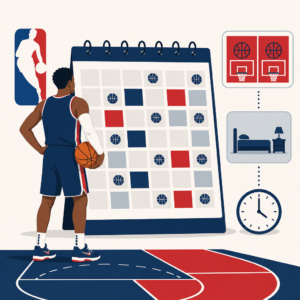


Close basketball games are rarely decided by one dramatic shot alone. They are usually won in the final four minutes through possession management, matchup targeting, clock awareness, defensive discipline, and composure under pressure. When coaches talk about late-game strategy, they mean the set of decisions that increase expected points on offense while reducing variance on defense. In practical terms, that includes when to call timeout, whether to foul up three, which action to run after a dead ball, who should inbound, how to protect the defensive glass, and how to create a two-for-one without sacrificing shot quality. These details matter because the margins are tiny. In the NBA, a single turnover, a missed box-out, or a poor switch call can erase forty-four minutes of good work.
I have spent years breaking down end-of-game possessions, and the pattern is consistent: teams that look calm late are usually the teams that prepared specific answers beforehand. Winning a close basketball game is not about inventing brilliance in the moment. It is about rehearsing decisions so players recognize the situation instantly. Strategy, in this context, is both tactical and behavioral. Tactical strategy covers play calls, coverages, substitutions, and foul game choices. Behavioral strategy covers communication, shot selection discipline, emotional control, and trust in role definition. A team with superior talent can still lose if it mismanages these layers in the final minutes.
This hub article explains the late-game framework coaches use, with an emphasis on NBA logic that also applies to high-level college, international, and advanced youth basketball. You will see how coaches think about score differential, time remaining, timeout inventory, foul counts, offensive rebounding balance, and opponent tendencies. You will also see why the best late-game teams simplify rather than complicate. They know their primary actions, counters, and emergency options. Most importantly, they understand that every possession must answer three questions: what shot are we trying to create, what are we taking away on the other end, and how do we control the next possession if this one fails?
Start With the Game State, Not the Play Call
The first coaching rule in a close basketball game is simple: diagnose the game state before choosing the tactic. Score, time, possession arrow equivalents, team fouls, timeout count, bonus status, lineup fatigue, and matchups all shape the correct choice. A tied game with 2:10 left is not strategically similar to leading by three with 0:18 left. Yet many teams make mistakes because they chase a favorite action instead of reading the situation. Good coaches create a decision tree. If the defense is switching one through five, attack the weakest switch. If the opponent is in the penalty, drive with force. If your center has five fouls, avoid schemes that expose him at the level repeatedly.
Late-game offense should begin with a clear hierarchy. First priority: create a paint touch, free throws, or an uncontested three. Second priority: avoid live-ball turnovers. Third priority: preserve floor balance to defend the next transition chance. On defense, the order is similar. First: eliminate layups and direct drive lines. Second: remove the opponent’s most efficient trigger action. Third: finish with a rebound. Coaches often say the possession is not over until the rebound is secured because end-game losses frequently come from second-chance threes after twenty good seconds of defense.
The most useful habit is segmenting the final minutes into scenarios. Up one to three points requires different math than down one to three. Up two possessions, your priority shifts toward clock drain, free-throw shooting, and no-foul transition defense. Down two possessions, you need speed without panic, which often means quick attacks at the rim rather than hunting a rushed three. This situational clarity is what separates disciplined teams from talented but inconsistent ones.
Late-Game Offense: Get to Your Best Action Fast
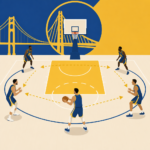
When the game tightens, coaches usually narrow the playbook. The goal is not variety for its own sake. The goal is to run the action that your players execute best against the coverage you are most likely to see. In the NBA, that often means a high pick-and-roll, a guard-guard screen to force a switch, a horns set that flows into a mismatch post-up, or a Spain pick-and-roll that occupies the low man. The key is timing. Great late-game offenses enter the action early enough to allow a second move. If you begin your set with eight seconds left, the defense can blow up the first option and force a bailout. If you begin with sixteen, you can reject the screen, re-screen, or flow into a counter.
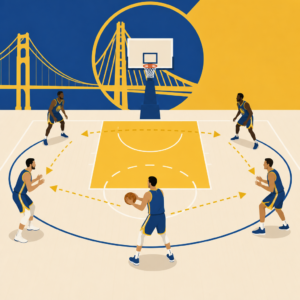
Shot quality matters more than surprise. Coaches often prefer actions that produce multiple acceptable outcomes rather than one perfect one. For example, a spread pick-and-roll with shooters in both corners can yield a layup, a pocket pass, a tagger-induced corner three, or a switch mismatch. That flexibility is valuable under pressure. By contrast, a tightly scripted decoy-heavy set may look clever on a whiteboard but fail if one cut is mistimed. In late-game conditions, clean spacing beats complexity.
A common coaching point is to attack the weakest defender without becoming predictable. If the opponent hides a smaller guard on a standstill shooter, use screening angles or empty-side actions to involve that defender. Denver has long used this principle with Nikola Jokic as a hub, forcing help decisions that expose a weak point. Boston often manipulates switch assignments by screening with a wing to get a preferred matchup for Jayson Tatum or Jaylen Brown. The lesson is universal: identify the defender you want in the action, then organize spacing so the help behind him is expensive.
After timeouts, coaches script actions that give players immediate clarity. A baseline out-of-bounds play may target a lob first, then a corner shooter, then a quick inbound safety valve to avoid a five-second violation. Sideline out-of-bounds sets often aim to free the primary ballhandler for a catch on the move. The best after-timeout possessions are not just creative; they are easy to communicate and hard to defend in one possession.
Clock Management, Two-for-Ones, and Timeout Discipline
Clock management is where many close games swing. A two-for-one is useful only if it does not force a terrible shot. Coaches teach players to recognize the window, usually when the game clock and shot clock create a chance to shoot around the 32- to 36-second mark of a quarter or final minute sequence. But the principle is not “shoot quickly no matter what.” The principle is “generate an efficient attempt early enough to preserve another possession.” A pull-up three over a set defender with twenty-two seconds left is often worse than a strong drive at eighteen that creates free throws or a scramble.
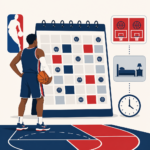
Timeout usage also demands discipline. Burning a timeout simply because the offense looks messy can leave a team exposed later during the foul game or against pressure. Elite coaches save one timeout for emergency advance or organization unless the current possession has extreme leverage. At the same time, they avoid the opposite mistake: keeping timeouts unused while players drift into confusion. The right standard is possession value. If the possession can materially change win probability and the team lacks clarity, call it. If players can flow into a reliable action, trust them.
Advancing the ball after a timeout is another major late-game lever in the NBA. With only a few seconds left, moving the inbound to the frontcourt increases your chance of producing a quality attempt. Coaches usually pair this with a clear rebound assignment because long misses and deflections decide many final plays. The hidden detail is that advancing the ball also limits how much time your best handler spends beating pressure in the backcourt. Those saved seconds can be the difference between a clean catch-and-shoot and a desperation heave.
| Situation | Primary Goal | Common Coaching Choice | Main Risk |
|---|---|---|---|
| Up 3, under 10 seconds | Prevent a tying three | Consider foul before gather | Poor timing creates three free throws |
| Down 2, 24-40 seconds | Score quickly without panic | Attack paint early, extend game if needed | Settling for rushed contested three |
| Tied, last possession | Get final quality shot | Start action with 14-18 seconds left | Going too early and giving opponent time |
| Need two-for-one | Create extra possession | Shoot efficient attempt at proper window | Forcing low-quality early shot |
| Pressed after score | Inbound safely and organize | Use best decision-maker as release valve | Live-ball turnover leading to instant points |
Defensive Strategy: Protect the Rim, the Three, and the Glass
Late-game defense starts with a clear choice about what you are willing to concede. No defense takes away everything. Coaches decide whether the bigger threat is a rim attempt, a catch-and-shoot three, or a foul-driven free-throw sequence. Against elite pull-up guards, many teams switch selectively and bring late help from non-shooters. Against dominant rollers, they may show higher at the screen and rotate early from the weak side. The exact scheme matters less than total commitment to it. Confused defense is losing defense.
One of the most important end-game principles is shrinking the floor without overhelping. The first defender must contain the ball long enough for the second layer to load to the lane. But once help comes, the backside rotation must be on time and on a string. Miami under Erik Spoelstra has repeatedly shown how connected help can crowd a star drive while still contesting the release valve. The communication is constant: screen direction, switch call, redrive alert, shooter location. In loud arenas, teams use hand signals because verbal communication alone can fail.
Rebounding is the final exam of the possession. Coaches emphasize hit-first box-outs because offensive rebounders gain an edge when defenders watch the ball. In late-game moments, wings must crack back to help bigs secure long rebounds, especially against five-out lineups where misses bounce beyond the charge circle. I have seen excellent defensive possessions wasted by a guard leaking out too early. The right habit is simple: no one leaks until possession is secured unless the game state clearly demands gambling for transition offense.
Foul strategy is the most debated defensive issue. Up three in the closing seconds, many coaches prefer fouling before the upward shooting motion to prevent a tying attempt. The logic is sound: forcing two free throws reduces the chance of immediate overtime. But execution is everything. The foul must come early, low, and under control. If defenders wait until the shooter gathers, they risk three shots. Coaches who use this tactic drill the timing repeatedly and assign the foul to a poised perimeter defender, not a late-reacting big.
The Foul Game, Free Throws, and Substitution Patterns
Once the clock drops under a minute, the game can turn into a sequence of free throws, intentional fouls, and offense-defense substitutions. This phase rewards preparation. Coaches should know their inbound hierarchy, best free-throw pairings, and weakest defenders to hide or replace. If your lead guard is an 89 percent free-throw shooter, he must touch the ball. If your best offensive player is vulnerable defensively, you may still keep him in if the opponent lacks timeouts and must play fast. Every substitution should answer a possession-specific question, not a general preference.
Free-throw strategy is more than choosing the best shooter. Teams also rehearse lane responsibilities after both makes and misses. On a final free throw while up three, some coaches instruct the shooter to miss intentionally off the front rim if little time remains, forcing a live rebound scramble. Others prefer the make to avoid a lane violation or a clean outlet. The correct decision depends on time and timeout context. With 1.8 seconds left and no timeout for the opponent, a miss can be smart. With 4.5 seconds and an elite transition passer on the floor, the make may be safer.
Press offense and inbounding become central in the foul game. Coaches often use a stack or box alignment to free the best receiver, then flash a second option to the middle. The inbounder matters. A calm passer with size sees over pressure and delivers safer angles. This is why many teams inbound with a forward rather than a small guard. If the pass is denied, the safety release must appear early enough to avoid panic. Five-second violations and sideline traps are avoidable mistakes when spacing and timing are rehearsed.
Substitution patterns can also protect your weakest links. Offense-defense platooning with dead balls is common, but overdoing it can hurt communication. The more players you swap, the more likely someone misses an assignment. The best coaches simplify roles: one elite stopper for the defensive possession, one reliable inbounder for the offensive one, and clear cross-matches called immediately. Precision wins here, not constant shuffling.
Psychology, Preparation, and the Habits of Winning Teams
Late-game execution is psychological as much as tactical. Players must distinguish urgency from rush. Urgency means cutting hard, screening with force, and making decisive reads. Rush means leaving your feet without a plan, helping one step too far, or shooting because the crowd expects a hero attempt. Coaches build poise through repetition. In practice, they script score-time scenarios, require verbal calls, and grade decisions, not just outcomes. A made bad shot is still a bad possession if it undermines repeatable process.
Role clarity is another hidden advantage. In close games, everyone should know the first option, second option, foul responsibility, and rebounding assignment. This does not make players robotic. It frees them to play fast because they are not guessing. Championship teams are usually the clearest teams. Watch successful late-game units and you will see players pointing, echoing calls, and moving into familiar spacing spots before the action begins.
Film study sharpens these habits. Coaches catalog what opponents prefer after timeouts, which sideline actions they trust, which bigs slip screens, and which stars reject picks under pressure. That information turns vague caution into precise anticipation. If you know a scorer favors a step-back going left after a flat screen, your defender can shade accordingly and the helper can load early. Preparation does not remove uncertainty, but it dramatically improves first reactions.
The best way to win a close basketball game is to treat the ending as its own discipline. Build a menu of two or three trusted offensive actions, two late-game defensive coverages, one press-break structure, and a clear foul-game plan. Rehearse them until players can execute under fatigue and noise. Then adjust to the game state with honesty. If the matchup says attack the paint, do not hunt a heroic three. If the score says defend without fouling, do not gamble for a steal. Close games reward teams that think clearly, communicate early, and finish each possession completely. Study your own endings, tighten your decision tree, and your late-game record will improve.
Frequently Asked Questions
What usually decides a close basketball game in the final four minutes?
Most close basketball games are decided by a series of small, high-leverage decisions rather than one heroic shot. In the final four minutes, coaches focus on possession management, shot quality, defensive discipline, and clock control because each possession becomes more valuable as time disappears. A team that gets organized into a good offensive action, avoids live-ball turnovers, secures a defensive rebound, and forces the opponent into a contested look is usually giving itself a better chance to win than a team that simply hopes its best player makes something difficult.
Late-game basketball is really about expected value. On offense, coaches want the highest-quality shot they can create without wasting so much time that they lose flexibility if the possession fails. On defense, they want to reduce variance by taking away easy threes, preventing straight-line drives, and finishing the stop with a rebound. Teams also win close games by understanding score and time together, not separately. Down two with plenty of time left calls for a different decision than down two with under 20 seconds. Smart teams know when to push, when to hold, when to use a foul to stop the clock, and when to trust their half-court execution.
Composure is another major separator. In tight moments, rushed decisions, emotional fouls, poor spacing, and missed box-outs often matter more than raw talent. Coaches prepare players to recognize situations quickly, communicate clearly, and execute simple actions under pressure. That is why experienced teams often look calm in one-possession games: they are not improvising as much as people think. They are following late-game principles designed to maximize good outcomes possession by possession.
When should a coach call a timeout late in a close game?
Timeout usage late in games is one of the most misunderstood parts of coaching strategy. A timeout should not be called automatically after every made basket or whenever a team feels pressure. Good coaches use timeouts to solve a specific problem: organize a two-for-one opportunity, stop a damaging run, advance the ball where rules allow, protect a player who is trapped or off-balance, set up a sideline or baseline out-of-bounds play, or make sure everyone understands the exact score-time-foul situation. The key question is not “Should we call timeout?” but “What advantage do we gain by using it now instead of later?”
In many cases, not calling timeout is the better decision. If a team has a numbers advantage in transition, its primary ball-handler is under control, or the defense is scrambled after a change of possession, playing on can produce a better shot than stopping the game and allowing the defense to get set. Elite coaches often prefer flow when they trust their players to read the moment. However, if the offense is disorganized, players are unclear about whether to attack quickly or use clock, or there is a risk of a turnover from pressure, a timeout can be extremely valuable.
Timeouts are also important for end-of-game precision. With under a minute left, a coach may use one to define the exact action to run, identify who inbounded the ball and who should receive it, discuss whether to foul, remind players of the opponent’s likely coverage, and clarify rebounding responsibilities. In other words, timeouts are at their best when they increase clarity and execution. The best late-game coaches treat them like strategic tools, not panic buttons.
What offensive actions do coaches like to run late in a close game?
Late-game offense usually begins with one goal: force the defense to make a difficult choice. Coaches rarely want a stagnant isolation unless they have a true mismatch or an elite shot creator with space and support. More often, they run actions that target a weak defender, create confusion in switching, or generate downhill pressure that collapses help. Common choices include high ball screens, empty-side pick-and-rolls, Spain pick-and-roll variations, guard-guard screening, and off-ball screening actions that free a shooter or create a post mismatch after a switch.
The best late-game actions also preserve spacing and a second option. Coaches want the ball in the hands of a decision-maker, but they do not want the possession to become predictable. A strong set might begin with a decoy cut, flow into a ball screen, and then produce one of three outcomes: a layup or paint touch, a pull-up for the ball-handler, or a kick-out three for a trusted shooter. Against switching teams, coaches may use screening angles that force a favorable matchup, then flatten the floor and attack. Against drop coverage, they may look for mid-range pull-ups or pocket passes. Against aggressive traps, they may station a short-roll passer in the middle of the floor to create a numbers advantage.
Just as important, coaches plan for the aftermath of the first action. If the initial option is denied, players must know the counter without hesitation. That is why the best late-game teams often run simple concepts with great clarity rather than overly complex sets. They know where the pressure point is, who the release valve is, where the spacing should be, and who is responsible for offensive rebounding versus defensive balance. A good late-game set is not just about drawing up a shot; it is about creating an organized possession that gives the offense multiple winning outcomes while minimizing the chance of a turnover.
How do coaches decide whether to foul up three points late in the game?
Fouling up three is one of the most debated late-game strategies because it involves balancing control against risk. The idea is straightforward: if the opponent is down three in the final seconds, a defensive foul before the shooting motion can prevent a tying three-point attempt and force two free throws instead. In theory, that reduces variance because the trailing team can score only two points on that possession unless something unusual happens. Many coaches prefer this approach when there is very little time left, their team is organized defensively, and players clearly understand who can foul, when to foul, and how to avoid fouling a shooter.
The risk is in the execution. A mistimed foul can lead to three free throws, an and-one situation, or confusion that gives up an open shot. There is also the possibility of a missed free throw, an offensive rebound, and a scramble possession after the foul sequence. Because of that, coaches usually consider several factors before choosing this strategy: the time remaining, the opponent’s personnel, whether the ball is being inbounded or already live, the foul count, and the confidence they have in their players’ awareness. If there are enough seconds left for the offense to extend the game after two free throws, the decision becomes even more nuanced.
Teams that use this tactic well practice it in advance. They identify the trigger point, communicate the matchup responsibilities, and teach players to foul low and early before the upward shooting motion begins. If a team has not rehearsed it, the safer choice may be to defend cleanly, take away the three-point line, and finish with a rebound. The smartest approach is not to treat fouling up three as a universal rule. It is a situational tool, and the right call depends on timing, preparation, and the likelihood that the defense can execute without creating a bigger problem.
What defensive habits matter most when protecting a small lead late in the game?
When protecting a lead late, disciplined defense is usually more important than gambling for a steal. Coaches want players to stay connected to the scouting report, communicate every screen, and avoid giving the offense easy points from fouls, back cuts, or broken coverages. The first priority is often to take away the opponent’s preferred action. That might mean switching with more intention, top-locking a dangerous shooter, sending help from a specific non-shooter, or keeping the ball out of the middle of the floor. The exact scheme can vary, but the principle is consistent: make the opponent work for a contested shot type you can live with.
Closeout discipline becomes critical in these moments. Over-helping and flying past shooters can turn a strong defensive possession into free throws or a drive-and-kick three. Coaches teach players to contest under control, keep the ball in front, and understand the score. For example, if a team is up three, allowing a quick two may be preferable to giving up an open three or fouling on a three-point attempt. If a team is up one, then protecting the rim and preventing direct drives may take priority. Good defenses are not just intense; they are aware of the game state.
The possession is not finished until the rebound is secured. One late offensive rebound can erase 20 seconds of excellent defense, so box-outs and gang rebounding are non-negotiable. Coaches also emphasize transition defense after scores or free throws because some teams try to steal quick points before the defense gets matched up. Ultimately, strong late-game defense is built on communication, role clarity, and emotional control. Teams that do not panic, do not foul unnecessarily, and do not lose track of personnel usually close games better than teams that chase highlights.
How can players stay composed and make better decisions under late-game pressure?
Composure in late-game basketball is not just a personality trait; it is a trained skill. Players make better decisions under pressure when they have rehearsed common end-game situations and know exactly what matters most. Coaches help by reducing mental clutter. Instead of