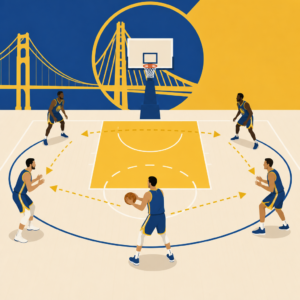


In NBA strategy, the debate between role player vs star is often framed as a hierarchy, but championship teams are built on interdependence, not status. A star is the offensive and defensive fulcrum who bends coverages, absorbs usage, and creates advantages against set defenses. A role player is a specialist or connector whose job is narrower but no less important: defend point of attack, space the floor, screen, rebound, cut, rotate, and make quick decisions that keep possessions alive. After years of studying playoff film, lineup data, and coaching trends, I have found that teams fail when they misunderstand this relationship. Stars win matchups; role players stabilize systems. The best organizations know both jobs must fit the same strategic blueprint. This matters because postseason basketball strips away weak links. Opponents scout every tendency, target every defensive mistake, and force stars into difficult reads. When that pressure arrives, titles usually hinge on whether supporting players can convert the openings a star creates, and whether stars can trust the ecosystem around them. Understanding the strategic difference between stars and role players explains roster construction, salary allocation, lineup optimization, and why some talented teams never reach June.
What Separates a Star From a Role Player Strategically
The simplest distinction is possession burden. Stars carry high-usage creation responsibilities, often initiating in pick-and-roll, isolation, post-ups, or late-clock actions when the defense already knows where the ball is going. They generate efficient offense anyway. Think Nikola Jokic orchestrating from the elbow, Stephen Curry warping defenses without the ball, or Jayson Tatum handling primary scoring while also drawing the opponent’s best wing defender. These players create strategic gravity. Their presence changes help rules, matchups, and shot profiles across the floor.
Role players generally do not control the offense for forty possessions, but they convert strategic advantages. A corner shooter must be ready when help tags the roll man. A screener must angle picks to force the exact coverage a coach wants. A low-usage wing must defend multiple positions without needing touches to stay engaged. Bruce Brown on Denver’s 2023 title team is a useful example: secondary ballhandling, short-roll passing, back cuts, and point-of-attack defense gave the Nuggets tactical flexibility that pure scoring numbers did not fully capture.
The difference is not talent versus no talent. It is task breadth, decision difficulty, and opponent attention. A star can survive imperfect spacing by creating something from nothing. A role player usually needs the structure around him to be coherent. Yet that dependence cuts both ways. Even elite stars become less effective if role players miss rotations, clog driving lanes, or fail to punish double teams. Strategy lives in those connections.
How Stars Create Championship-Level Advantages
Every title contender needs players who can solve the hardest problem in basketball: efficient offense against elite, prepared defenses. In the regular season, systems and depth can carry a team through many nights. In the playoffs, opponents remove first options. Stars matter because they still produce quality shots under reduced space and increased physicality. They collapse the nail defender, force low man decisions, and trigger chain reactions that produce layups, free throws, and open threes.
There are different star archetypes. On-ball engines like Luka Doncic or Shai Gilgeous-Alexander dominate possession and dictate tempo. Movement stars like Curry create panic through relocation and screening counters. Two-way wings like Kawhi Leonard at his peak add matchup-proof scoring while defending premium assignments. Big-man hubs like Jokic or Giannis Antetokounmpo create pressure through interior efficiency, passing vision, or rim gravity. The common thread is leverage. A true star gives a coach reliable access to advantage creation every game.
Stars also raise a team’s margin for error. Poor spacing, a cold shooting night, or an opponent’s run can be managed if one player can manufacture offense late in the clock. That stabilizing force is why max contracts exist. According to lineup and play-type tracking used across front offices, self-created efficient offense is the scarcest resource in the league. Teams can find a rotation defender or corner shooter more easily than a player who bends a playoff series by himself.
Why Role Players Decide Series More Often Than Fans Admit
Role players determine whether a star’s advantages become points. In film sessions, coaches focus relentlessly on the “next action” after the defense commits. If the star draws two defenders, can the release valve make the extra pass? Can the weak-side shooter hit above the break threes? Can the dunker spot finisher catch in traffic? Can the big defend in space for two dribbles without fouling? These are role-player questions, and they often decide playoff rounds.
The 2020 Lakers needed LeBron James and Anthony Davis to drive the offense, but Kentavious Caldwell-Pope, Alex Caruso, and Rajon Rondo each solved tactical problems: transition spacing, rear-view contests, connective passing, and timely weak-side rotations. The 2019 Raptors are another strong case. Kawhi Leonard provided superstar shot creation, yet Marc Gasol’s passing, Pascal Siakam’s transition pressure, Fred VanVleet’s shooting, and Kyle Lowry’s screening and charge-taking made the ecosystem championship quality.
Role players are especially important because they influence possession economy. A single extra offensive rebound, a tag at the nail that forces one more pass, or a clean x-out rotation to contest a corner three can swing expected points over a series. These plays rarely lead highlight packages, but winning organizations measure them carefully using tracking data, defensive assignment charts, and lineup context. Good role players do not just fill minutes. They preserve structure under stress.
The Strategic Fit Matrix Championship Teams Use
Front offices and coaching staffs do not ask whether a roster has stars and role players; they ask whether the stars amplify the right roles. Fit begins with offensive geometry and defensive coverage compatibility. A heliocentric creator needs quick-decision shooters, a vertical spacer, and defenders who can survive cross-matches. A post hub needs cutters, relocation shooters, and screeners comfortable dribble-handoff timing. A transition star benefits from rebounders and wings who sprint to proper spacing lanes.
| Team Build | Star Strength | Ideal Role Players | Strategic Goal |
|---|---|---|---|
| Heliocentric guard | Pick-and-roll creation | Spot-up shooters, rim runner, switchable defenders | Maximize paint touches and kick-out threes |
| Playmaking center | Elbow passing and interior scoring | Cutters, movement shooters, mobile forwards | Punish help with cuts and handoff actions |
| Two-way wing | Isolation scoring and on-ball defense | Secondary handlers, corner spacers, weak-side shot blockers | Balance half-court creation with defensive versatility |
| Transition force | Rim pressure in open floor | Rebounders, trail shooters, screen-setting bigs | Create early offense before defense is set |
I have seen teams overpay for name recognition while ignoring fit, and the results are predictable. If two non-shooters share the floor around a driving star, help defenders sit in gaps and possessions stall. If a drop-coverage center plays behind weak point-of-attack defense, every screen becomes a crisis. Championship strategy is less about collecting talent than aligning functions. The best role players make a star’s strengths repeatable.
Defense, Sacrifice, and the Hidden Labor of Winning
Fans usually identify stars through scoring, but many championship possessions are won by defensive role execution. A role player who navigates screens, boxes out reliably, communicates early, and rotates on the back line can be more valuable in a specific series than a higher-scoring teammate. Defensive game plans depend on trust. Coaches cannot keep elite offensive players on the floor if the surrounding defenders miss tags, fail scram switches, or lose shooters on second-side actions.
The 2022 Warriors illustrated this dynamic. Curry was the star engine, but Andrew Wiggins’ wing defense, Kevon Looney’s rebounding and screening, Gary Payton II’s ball pressure, and Draymond Green’s quarterbacking supplied the connective tissue. Boston’s stars faced a maze of disciplined help and recovery because Golden State’s role players understood spacing, timing, and communication. That is strategy in practice: one player creates fear, others turn that fear into constraints.
Sacrifice also matters. Role players often accept lower usage, inconsistent minutes, or matchup-specific deployment. Stars must sacrifice too, especially when they screen, relocate, defend, or trust the extra pass instead of hunting every shot. Championship teams are usually the ones whose stars embrace structure and whose role players embrace responsibility. When either side rejects the bargain, chemistry erodes and tactical clarity disappears.
Roster Building, Salary Cap Pressure, and Playoff Adaptability
The collective bargaining system makes the role player vs star conversation even more strategic. Supermax and max salaries concentrate value and risk in a few roster spots, so contenders must find underpriced role players who fit precisely. That is why teams invest heavily in scouting, player development, and archetype targeting. A minimum-salary wing who can defend two positions and hit catch-and-shoot threes may unlock more playoff value than a mid-tier scorer who duplicates a star’s touches.
Adaptability is the final separator. In a seven-game series, opponents attack your weakest defender, ignore reluctant shooters, and force backups into unfamiliar reads. Championship-caliber role players hold up when schemes change. They can play in switch, drop, or zone; attack a closeout with one or two dribbles; and understand time, score, and foul context. Stars must adapt too by reading blitzes, relocating off the ball, or conserving energy for endgame possessions.
For an NBA strategy hub, this is the core lesson: stars provide scalable advantage creation, while role players convert, protect, and multiply those advantages. One without the other rarely survives four playoff rounds. If you want to analyze contenders well, stop asking whether a team has enough stars or enough depth in the abstract. Ask whether the stars create the right problems for opponents, whether the role players solve the counters, and whether the whole roster can shift under postseason pressure. That is how championship teams are actually built. Use that lens when studying lineups, trade targets, playoff matchups, and coaching decisions, and the game becomes clearer.
Frequently Asked Questions
What is the difference between a role player and a star in the NBA?
The biggest difference comes down to offensive burden, decision-making responsibility, and how much of the game plan runs through each player. A star is typically the player who can create advantages even when the defense is set and focused entirely on stopping him. He bends coverages, forces double teams, carries a large usage rate, and often serves as the late-clock answer when a possession breaks down. Stars are usually expected to score efficiently at volume, initiate offense, and in many cases anchor key defensive possessions as well. Their value is often measured by how much they can raise a team’s ceiling in the most difficult moments, especially in the playoffs when scouting is precise and space is harder to find.
A role player, by contrast, usually operates in a narrower lane, but that narrower lane can be absolutely critical to winning. Role players are specialists, connectors, or complementary pieces who make the star’s job easier and the overall system function better. That can mean defending the point of attack, spacing the floor from the corners, screening with precision, making quick swing passes, crashing the glass, cutting behind ball watching defenders, or rotating on the back line. They may not dominate the ball, but they often determine whether a team’s advantages are converted into quality shots or wasted through poor execution. In that sense, the role player vs star discussion should not be framed as “important player” versus “less important player.” It is really about different types of importance. Stars create pressure; role players turn that pressure into results.
Why are role players so important to championship teams if stars get most of the attention?
Role players matter so much because playoff basketball is a chain reaction game. A star can draw two defenders and kick the ball out, but someone still has to make the next pass, hit the open shot, set the second screen, tag the roller, or rotate to cover for a breakdown. Championships are rarely won by talent alone; they are won by talent supported by reliable execution over four rounds against elite opponents. The deeper a team goes, the more every possession is tested. That is where role players become indispensable. They bring stability, discipline, and repeatable winning habits that survive the pressure of playoff basketball.
They are also essential because stars cannot do everything at once. A lead creator cannot simultaneously run every pick-and-roll, guard the opponent’s quickest perimeter scorer, box out the center, and sprint to every corner shooter in transition. Role players absorb those responsibilities. A great screen-setting big can free the star for cleaner touches. A 3-and-D wing can take the toughest perimeter assignment and preserve the star’s energy for offense. A smart connector can keep the ball moving so the defense never gets a chance to reset. In many championship runs, the margin between winning and losing is not whether the star plays well, but whether the supporting cast executes the details around him. Attention follows stars because they are the faces of teams, but banners are often secured by role players doing difficult, unglamorous work at a very high level.
Can a team win a championship with great role players but no true star?
In most cases, no. NBA history strongly suggests that teams need at least one true star, and often more than one high-end shot creator or two-way engine, to win a championship. The reason is simple: in the postseason, defenses become too sophisticated and too prepared for a team to rely solely on system play, ball movement, and balanced scoring. Eventually, every team faces possessions where the opponent takes away the first action, denies easy entries, switches counters, and forces someone to create against length, pressure, and time. That is where stars separate themselves. They can manufacture good offense when structure breaks down. They can also command so much defensive attention that they create opportunities others simply cannot generate on their own.
That said, a star without strong role players usually falls short as well. Championship construction is not about choosing between stars and role players; it is about understanding that stars provide the scalable advantage while role players provide the support structure that lets that advantage matter consistently. A team with only role players may be coherent, disciplined, and competitive, but it often lacks the elite problem-solver needed in the toughest playoff moments. A team with only stars and weak role players may have firepower, but it can become fragile, predictable, or defensively compromised. The most successful teams strike the balance: stars who can tilt the game and role players who can hold every possession together around them.
How do role players make stars more effective during the playoffs?
Role players make stars more effective by widening the floor, simplifying reads, covering weaknesses, and punishing the defensive choices opponents make. In the playoffs, defenses are built to test a star’s patience and force the ball out of his hands. If the players around him cannot shoot, cut, screen, defend, or make quick decisions, the defense wins the math. But when role players are credible threats, the star’s gravity becomes devastating. A floor spacer in the corner makes the help defender hesitate. A screener who knows how to angle his body creates the half-step needed to turn the corner. A short-roll passer can punish traps. A cutter can score when the defense top-locks shooters. These are not small details; they are the mechanics that transform star power into efficient team offense.
Defensively, role players often preserve the star’s effectiveness by handling the highest-energy assignments. A strong perimeter defender can chase elite guards over screens, allowing the star to conserve energy for creation. A rugged rebounder can finish possessions so the team does not waste a good defensive stand. A versatile forward can switch across positions and erase mistakes before they become points. In other words, role players do not just complement stars aesthetically; they support them structurally. The playoffs expose weak links, and the best role players reduce the number of weak links a team has. That allows the star to spend more time doing what only stars can do: create offense, command attention, and swing games.
What should teams look for when building around stars and role players?
Teams should look for fit, scalability, and reliability rather than just raw name value. Around a star, the ideal role players are those whose skills remain useful against elite competition. Shooting matters, but it has to be paired with decision-making. Defense matters, but it has to be playable across multiple matchups. Rebounding, screening, cutting, and passing all become more valuable when they can hold up under playoff pressure. The best front offices ask a simple but powerful question: does this player make life easier for our best player, and can he still do that when the game slows down and every weakness is targeted? That is how teams identify role players who are more than regular-season contributors.
They also need to understand the specific needs of their star. A heliocentric ball handler may need size, spacing, and defensive coverage around him. A dominant scoring big may need entry-pass reliability, perimeter shooting, and weak-side rotation. A star wing may need secondary creation so he is not forced to initiate every possession. The goal is not to collect talent randomly; it is to build lineups that solve problems together. Championship teams usually have stars who can carry responsibility and role players who can adapt without losing effectiveness. The right blend creates resilience. It gives a team multiple ways to win, whether that means leaning on elite shot creation, surviving a physical defensive series, or grinding out ugly possessions late in games. That is why the role player vs star conversation misses the larger truth: championship teams need both, and they need them in the right relationship.