
How to seal a defender in the post is one of the most practical scoring skills in basketball because it turns size, timing, and leverage into efficient offense. A seal is the act of using your body to establish legal inside position, keep the defender on your back or hip, and present a clean passing window near the lane, short corner, or block. I have coached wings, forwards, and centers through this skill in youth gyms, high school practices, and film sessions, and the pattern is always the same: players think post offense starts with the catch, but the best post offense starts two steps earlier with angle, contact, and timing. If you want to score inside without needing a perfect isolation, you need to know how to pin, wedge, and hold a defender legally.
This matters far beyond traditional back-to-the-basket play. Modern offense asks wings to punish switches, asks bigs to create deep catches in spread pick-and-roll spacing, and asks every frontcourt player to convert cross-matches in transition. A strong seal can lead to layups, free throws, kick-out threes, or rotation breakdowns that open the weak side. It also serves as the foundation for other offensive skills: entry passing, duck-ins, offensive rebounding, short-roll finishing, and two-man game reads from the dunker spot. In other words, learning positioning for wings and bigs is not a niche post move. It is a hub skill that connects footwork, screening, passing angles, spacing, and finishing into one repeatable offensive advantage.
To seal a defender well, you need three things. First, you need target awareness: where the ball is, where help is coming from, and where the best passing angle exists. Second, you need body control: a wide base, low hips, active forearm frame, and chest balance so you can absorb pressure without pushing. Third, you need timing: sealing too early lets the defender swim around, while sealing too late means the passer never sees the window. The best post players are not simply stronger. They understand when to sprint into space, when to reverse pivot into contact, and when to release the seal into a finish. That combination is what creates high-percentage post offense in any system.
What a post seal is and when to use it
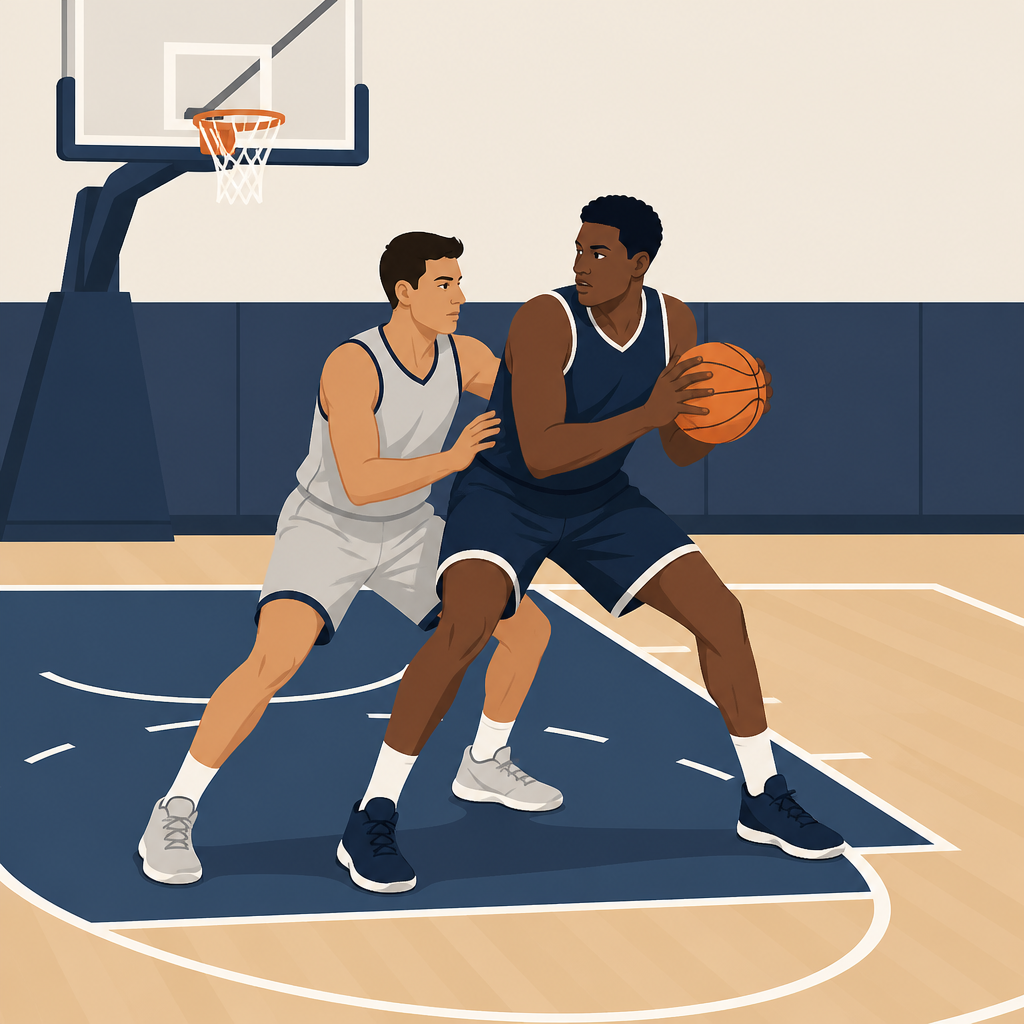
A post seal is a legal positioning technique used to keep the defender behind or beside you while you occupy valuable interior space. The goal is not to wrestle. The goal is to win the line to the ball, establish your hips between the defender and the passing lane, and show a target hand without losing balance. In coaching terms, I teach players to “arrive early, sit low, and show late.” Arrive early to the spot before the defense is organized. Sit low so your base can absorb contact. Show late so the passer sees a clear target after you have created the advantage. That sequence prevents wasted movement and reduces offensive fouls.
You should use a seal whenever the defense is vulnerable by alignment or mismatch. Common moments include a switch that leaves a smaller guard on a forward, transition when a trailing defender is behind the play, weak-side duck-ins after a drive, and baseline drift situations where the low defender turns their head to help. Teams also use seals from horns sets, UCLA action, cross screens, and empty-side pick-and-rolls. A wing can seal at the nail after a switch. A center can seal on the block after screening. A power forward can pin the low man in the dunker spot when the ball gets downhill. These are all forms of offensive post positioning, and they all rely on the same principles of leverage, timing, and passing angle.
Footwork, leverage, and body angles that create deep catches
The best seals are built from footwork, not from arm strength. Start with a wide, balanced stance and keep your hips lower than the defender’s hips. Your inside foot should claim the lane line or the direct path to the rim, while your outside foot anchors the angle to the passer. Reverse pivots are especially useful because they let you turn your back into the defender and widen your base without hooking or extending your arms. Drop steps matter too, particularly when the defender is top-side and you need to bury them under the rim. In practice, I tell players to make first contact with their lower body and torso, then stabilize with their legs. If your feet are narrow, you will get moved. If your chest is too upright, you will lose the line.
Leverage also depends on where you place your body. Think in terms of hips, not shoulders. Shoulders can fake and sway; hips control space. If your hips are across the defender’s path, you own the angle. If your hips are parallel and soft, the defender can spin around. Keep contact on the defender’s thigh or hip pocket, feel pressure, and adjust a half step at a time. This is why elite post players look calm. They are not making giant shoves. They are making precise, legal adjustments. Watch how players like Nikola Jokic or A’ja Wilson gain position: they use early contact, subtle re-seals, and patient foot placement to turn average catches into catches inside the charge circle or just outside it, where field goal percentage rises sharply.
Positioning for wings: seals after cuts, drives, and switches
Wings often miss easy post offense because they think sealing is only for centers. In reality, wings get some of the cleanest seals because they operate against smaller defenders and because help is often occupied by perimeter actions. After a backdoor cut that is denied, a wing can plant the inside foot, reverse pivot, and pin the defender on the high side for a quick high-low feed. After a guard drive from the top, the opposite wing can drift to the short corner, wait for the low defender to step over, then duck in behind that help. Against a switch, the wing should not post from fifteen feet just because there is a mismatch. The better play is to walk the smaller defender down, make contact early, and seal within one step of the block.
The wing seal is especially effective from spread spacing. If the corners are occupied and the ball is above the break, there is room to isolate the mismatch without bringing extra help. I teach wings to sprint into the paint line first, then choose one of two options: sit on the top leg of the defender if the pass is coming from the slot, or pin the defender directly under the rim if the pass is coming from the wing. That detail changes the angle of the catch. Jayson Tatum, Jimmy Butler, and DeMar DeRozan all use versions of this. They do not simply ask for the ball and back down. They win position before the catch, force the defense to send help, and then read the floor. For a wing, sealing is as much about decision-making as strength.
Positioning for bigs: block seals, duck-ins, and re-seals
Bigs live on efficiency, and deep catches are the cleanest path to efficient post offense. The classic big-man seal starts after a screen or rim run. If you set a ball screen and your defender shows high, sprint to the front of the rim, locate the defender’s inside shoulder, and reverse pivot into the lane line. If the entry pass is not available immediately, do not abandon the play. Re-seal. Shift the defender from one hip to the other, widen your feet, and present a high target. This second effort is often the scoring window because weak-side help relaxes after the first action. On duck-ins, the key is to move while the defender is looking at the ball. Slide from the mid-post to the block or from the dunker spot under the rim, then hit with your hips and sit into space.
One mistake bigs make is sealing too far from the basket. Catching at ten to twelve feet with your back to the rim invites digs, strips, and tough fadeaways. Productive post players fight for catches at four to eight feet whenever possible. Another mistake is trying to hold the seal with extended arms. Officials watch that closely, and strong defenders can swim through it. Better technique is to keep elbows in, forearm strong, chest broad, and knees bent. Joel Embiid is difficult to guard partly because he catches deep and wide. Domantas Sabonis creates similar advantages by re-sealing quickly after handoffs and dribble entries. The lesson for bigs is clear: your first seal gets the defender off balance, but your second seal often gets you the ball.
| Situation | Best Seal Technique | Primary Teaching Cue | Likely Offensive Result |
|---|---|---|---|
| Wing switched onto smaller guard | Walk-down seal to low block | Make contact early, catch within one step of rim | Layup, hook, or help rotation kick-out |
| Center after ball screen | Reverse pivot and re-seal | Sprint first, seal second, hold hips low | Lob, pocket finish, or drop-step score |
| Weak-side wing on baseline drive | Short-corner duck-in | Move when low defender turns head | Dump-off layup or corner help collapse |
| Transition cross-match | Early rim-line pin | Run to paint before posting | Quick entry pass and foul pressure |
Timing with passers, spacing, and offensive structure
Sealing only works when it fits the offense around it. The passer must see the advantage early and deliver on time, and the other three players must maintain spacing that punishes help. Good entry passing starts with ball position. A better passing angle usually comes from the slot or a shallow wing than from the top of the floor. The passer should use pass fakes to move the top-side defender, then feed to the target hand away from help. Bounce passes are useful against full-front pressure; direct chest or hook passes are better when the post has a clean lane-side seal. I train passers to read the post player’s hips first. If the hips are across the defender, the window is real. If only the hand is showing, the window is fake.
Offensive structure matters just as much. In five-out systems, post seals usually emerge from cuts, ghost action, or empty-side drives rather than static posting. In four-out, one-in systems, the center may establish early block position while the perimeter reverses the ball to improve the entry angle. In two-big lineups, one interior player often occupies the dunker spot while the other screens or flashes, creating staggered rim pressure that makes help decisions harder. The key rule is simple: do not crowd the seal. If a teammate cuts into the same window or stands low on the weak side without purpose, the defense can dig and recover. Clean spacing turns a good seal into a high-value offensive possession.
Common mistakes, legal limits, and drills that build the skill
The most common sealing mistakes are posting too high, showing for the ball before winning contact, and leaning with the upper body instead of sitting with the hips. Players also lose catches by stopping their feet after first contact. Small adjustments matter; one reverse pivot or one hip switch can reopen the passing lane. Another frequent problem is sealing on the wrong side of the defender relative to the ball. If the ball is on the right wing and you seal the defender to your right hip without an angle, the passer has no lane. Match your body angle to the passer. That sounds basic, but on film it is one of the biggest reasons entries fail.
Players also need to understand legal limits. You can hold position; you cannot displace with a shove, hook an arm, or back in recklessly. Under NFHS, NCAA, and FIBA interpretations, illegal use of hands, extended forearms, or obvious displacement will be called, especially against players who initiate exaggerated contact. Build your seal from your base and core, not from grabbing. To improve, drill specific scenarios. Use 1-on-1 block wrestling with a coach feeding from the slot, 2-on-2 short-corner duck-in games, and screen-to-seal reps with live reads. Add constraints: score only on catches inside the charge circle, or award extra points for re-seals after the first denial. Those drills translate because they teach the exact reads and timing real games demand.
Sealing a defender in the post is a core offensive skill because it creates easier catches, higher-percentage shots, and clearer reads for everyone on the floor. For wings, it turns switches, cuts, and help rotations into efficient interior chances. For bigs, it converts rim runs, ball screens, and duck-ins into deep paint touches where strength and touch matter most. The principles stay the same across positions: win the angle before the catch, use footwork and hips rather than pushing, and time the seal to the passer and the spacing. When players understand that post offense starts before the ball arrives, their scoring efficiency changes quickly.
As the hub for offense within basketball skills, this concept connects to finishing, passing, footwork, screening, spacing, and decision-making. A good seal can produce a layup, draw a double team, open a shooter, or force a foul, which is why coaches at every level still teach it even in perimeter-oriented systems. Start by mastering one or two situations that match your role: a wing switch seal on the block, a big-man re-seal after a screen, or a weak-side duck-in on drives. Drill them until the contact, balance, and timing feel automatic. Then build the next layer of your offensive game around those catches, because once you can own space legally in the paint, the rest of your offense becomes simpler and more effective.
Frequently Asked Questions
What does it really mean to seal a defender in the post, and why is it so effective for wings and bigs?
Sealing a defender in the post means using your body legally and purposefully to gain inside position, keep the defender behind you or pinned on your hip, and create a clear target for the passer. It is not just about standing on the block and asking for the ball. A true seal happens when the offensive player wins the angle first, then uses balance, leverage, wide feet, strong hands, and timing to keep the defender from recovering. For wings, this can happen on a duck-in from the short corner, a baseline cut, or a transition mismatch. For bigs, it often happens on the block, mid-post, or after screening actions. In both cases, the goal is the same: make the defender play from behind so the pass becomes simple and the finish becomes high percentage.
The reason this skill is so effective is that it produces efficient offense without needing a complicated dribble move. If you can catch the ball deep, with your defender sealed on your back or outside shoulder, you have already done most of the work. That catch can lead to a layup, a jump hook, a quick power finish, a drop step, or a kick-out if help defense collapses. It also puts pressure on the defense to rotate, and that can open perimeter shots or dump-off passes. The best post players do not fight for space after the catch; they earn the space before the catch. That is why sealing is so valuable. It rewards anticipation, footwork, patience, and physical discipline, and those traits translate across positions and levels.
What are the most important positioning fundamentals for getting a strong, legal seal?
The first fundamental is winning the line to the ball. You must beat the defender to the spot you want, whether that is the front of the rim, the low block, the mid-post, or the short corner. That means reading where the pass is coming from and adjusting your angle so your body sits between the defender and the ball. The second fundamental is playing low and wide. A narrow base gets moved. A wide, balanced base with bent knees and active feet allows you to absorb contact and hold position without leaning, pushing, or fouling. The third fundamental is using your hips and lower body more than your upper body. Strong post position is built from the ground up. If your feet are active and your hips are loaded into the defender’s path, you control the space legally.
Another key is showing a target with your hands while keeping your chest and shoulders under control. Young players often reach back, hook, or push with their arms, and that is where offensive fouls happen. Instead, keep your forearms disciplined, chin up, and hands ready for the pass. Feel the defender with your body, not by grabbing. Also, understand the difference between pinning the defender directly behind you and sealing them on one hip. Many great catches happen when the defender is not fully behind the offensive player but is stuck on the high side or top foot, unable to contest the pass cleanly. Finally, timing matters as much as strength. The best seal is established just before the pass is delivered, not too early. If you seal too soon, the defender has time to swim around, front, or get weak-side help into the play.
How can wings use post seals effectively if they are not traditional back-to-the-basket players?
Wings can be extremely effective with seals because they often create matchup problems against smaller guards or distracted defenders. A wing does not need to play like a center to benefit from post positioning. In fact, some of the best wing seals come from movement rather than static posting. For example, if a wing sets up high, makes a hard cut toward the lane, and then plants to duck into the block, the defender may end up trailing the action. That is the perfect moment to sit on the defender’s inside thigh or top hip and show a quick target. A wing can do the same thing from the short corner after a drive-and-lift action or after screening away and slipping into open space.
The biggest advantage wings have is versatility. Once they seal and catch, they can score with a quick turn, one-dribble middle move, baseline spin, short fade, or immediate kick-out to the perimeter. Because defenses often do not expect consistent post work from wings, a good seal can create surprise offense. Wings should especially look for these chances in transition, after switches, and when the help defender is occupied by a driver. The key is not trying to wrestle for five seconds. Instead, make the action sharp and timely: create movement, force the defender to react, then lock in the angle as the pass is arriving. If the catch is not there, a skilled wing can flow right into the next action without stalling the offense.
What are the most common mistakes players make when trying to seal a defender in the post?
The most common mistake is trying to post with strength before winning position with footwork. Players often walk straight into the defender, initiate unnecessary contact, and then wonder why they cannot catch the ball. The seal should begin with an angle, not a collision. Another mistake is standing too upright. High hips make you easy to move, and straight legs kill your balance. Good seals are grounded, active, and alive through the feet. A third mistake is sealing too far from the scoring area. If you catch the ball outside your effective range or two steps off the lane line without a plan, the seal may look good but produce very little. Productive post positioning puts you in a place where one move leads to a quality shot or forces meaningful help.
Players also hurt themselves by using their arms illegally. Hooking the defender, extending the off-arm, or pushing to maintain space will lead to turnovers and offensive fouls, especially against disciplined defenders. Another frequent issue is poor communication and bad timing with the passer. You can earn perfect inside position, but if the passer does not recognize it quickly, the advantage disappears. That is why eye contact, hand targets, and offensive spacing matter. Finally, many players fail to read the defense after the initial seal. If you are being fronted, you may need to re-seal higher or lower. If help is sitting on the baseline, the middle may be open. If the defender is sitting on your top side, reverse pivoting into a deeper angle may be the answer. Sealing is not a single pose; it is an ongoing read-and-react skill.
How can players practice sealing and improve at turning position into easy scoring chances?
Players improve fastest when they break the skill into repeatable pieces. Start with footwork and angle drills. Work on duck-ins from the lane line, reverse pivots into the block, and short-corner seals with a coach or teammate applying light resistance. Focus on getting your hips between the defender and the ball without pushing. Then add a target-hand habit, where you hold your seal and present a clean passing window as the ball arrives. From there, build out simple finishes: quick lay-in, jump hook, baseline drop step, and middle turn. The goal is to connect the seal to a decisive finish in one or two beats, because deep catches lose value if the offensive player hesitates.
Film study is also a powerful tool. Watch how effective post scorers establish position before the pass, how they keep defenders on a hip rather than trying to overpower them, and how quickly they make decisions once they catch. In team practice, players should rehearse seals out of real offensive actions such as cross screens, drive-and-replace situations, pick-and-roll mismatches, and transition runs to the rim. Coaches should emphasize not just getting open, but getting open in a place that matters. To turn seals into efficient scoring, players must also improve chemistry with passers. Great seals and great entries go together. When the passer understands your timing and preferred angle, the offense becomes much harder to guard. Over time, the best post players become reliable not because they are always bigger, but because they consistently arrive early, hold legal position, and finish with calm, efficient footwork.