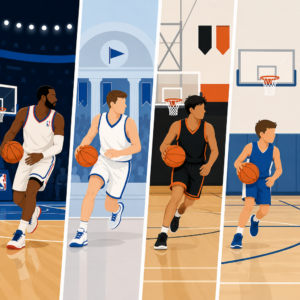


Ball handling is the foundation of modern basketball, and the best dribbling drills for basketball players at every skill level all serve one purpose: helping you control the ball under pressure while seeing the floor, changing pace, and creating advantages. In practical terms, ball handling includes stationary control, movement dribbles, change-of-direction moves, protection techniques, and decision-making. Dribbling is not just bouncing the ball; it is the coordinated ability to move with balance, maintain a live dribble, read defenders, and transition smoothly into passes, finishes, or jump shots. I have coached youth guards, trained high school wings, and worked with adult players rebuilding fundamentals, and the pattern is always the same: players improve fastest when drills match their current level and build from simple constraints to game-speed chaos.
That is why a skill-level approach matters. Beginners need rhythm, posture, and hand familiarity before they worry about advanced combos. Intermediate players need tighter control on the move, stronger weak-hand confidence, and better footwork linking dribbles to attacks. Advanced players need reactive training, pressure reads, and finishing sequences that simulate traps, hedges, switches, and recovery defenders. A useful dribbling program also respects biomechanics. Good handlers stay low through the hips, keep the chest tall enough to scan, pound the ball with fingertips rather than slapping with the palm, and place off-arm and shoulders between the defender and the ball. Done correctly, dribbling drills sharpen far more than control. They improve balance, ankle stiffness, deceleration, first-step timing, and live-read confidence, all of which translate directly to game production.
This hub covers ball handling comprehensively, from core principles to level-specific drills and practice design. If you are asking what drills improve dribbling, how often to train ball handling, or which exercises translate best into games, the short answer is this: train fundamentals daily, progress from stationary to dynamic work, use both hands equally, and finish every session with pressure-based actions that force decisions. Players who only perform flashy cone work often look skilled in workouts and struggle in games. Players who master pace changes, body positioning, and eyes-up control become dependable creators. The sections below explain exactly which dribbling drills belong at each stage and how to organize them into a plan that produces measurable improvement.
Core Ball Handling Principles Every Player Should Learn
Before choosing drills, understand the nonnegotiable mechanics. First, stance. Effective dribblers work from an athletic base with feet just outside hip width, knees bent, hips loaded, and weight balanced through the midfoot. Second, contact. The ball should be controlled by the pads of the fingers, not the palm, because fingertip control improves feel and lets you vary pace and height quickly. Third, dribble height. A power dribble in space can rise near the hip, but a protected dribble against pressure should stay below the knee. Fourth, eyes. Players must train to see the rim, teammates, and help defenders without staring at the ball. Finally, the off-hand matters. It is not for pushing defenders, but for legal shielding, balance, and absorbing contact.
There is also a progression that works across age groups. Stationary drills build rhythm and confidence. Moving drills add coordination between feet and hands. Change-of-direction drills teach manipulation. Contact and trap drills teach survival. Read-based drills teach application. In training sessions I often tell players that a move only counts if it creates an advantage. A between-the-legs dribble is useful when it shifts the defender’s feet or protects the ball while changing angle. A crossover matters when it changes pace, not when it simply looks quick. This distinction is important because real ball handling is tied to purpose: beat a defender, reject a screen, split a trap, create separation, or get the team into offense safely.
Consistency is equally important. Ten focused minutes of daily work usually beats one long session each week. Elite guards often accumulate thousands of quality touches every month, but volume alone is not enough. Repetition must include precision and progression. If a player can pound-cross comfortably in place, the next step is not random freestyle dribbling; it is adding movement, then a defender’s angle, then a shot or pass. That layered approach is what turns drills into transferable skill.
Best Beginner Dribbling Drills for Basketball Players
Beginner players need control before creativity. The most effective starting drills are stationary pounds, right-hand and left-hand low dribbles, waist-high power dribbles, front crossovers, between-the-legs wraps without movement, and simple retreat dribbles. I start many new players with 30-second sets: pound dribbles on each hand, alternating dribbles, crossovers, and in-and-out moves. The goal is not speed at first. It is clean rhythm, stable posture, and no extra body sway. If the player cannot maintain stance for 30 seconds, the set is too advanced or the pace is too fast.
Another high-value beginner exercise is the walking series. Walk the length of the court using right hand down and left hand back, then repeat with crossovers every two steps, then with retreat dribbles into forward pushes. This teaches synchronization of feet and ball while reducing panic. Cone dribbling can help beginners if used correctly. Set three to five cones in a straight line and ask the player to attack each cone with one deliberate move rather than dancing around it. A single crossover past each marker teaches entry angle better than excessive combinations.
Wall and tennis-ball variations are useful only after basic control appears. For example, a player can dribble with the right hand while lightly tossing a tennis ball off a wall with the left. This encourages eyes-up awareness, but it should not replace foundational work. For young players especially, mastery means being able to start, stop, pivot, and protect the ball without losing posture. That is the base that supports every later skill in ball handling.
Intermediate Drills That Build Game-Speed Control
Intermediate players should progress into movement, reaction, and linkage. The best drills here include zigzag dribbling, hesitation-to-go attacks, retreat-and-reattack series, two-ball rhythm work, and change-of-direction finishes. Zigzag dribbling remains one of the most reliable development tools because it teaches angle changes and defensive simulation. Start on the sideline, attack at 45 degrees, plant outside foot, then cross, between, or behind into the next angle. The key is acceleration out of each move. If the move is quick but the exit is slow, the drill is missing its purpose.
Two-ball dribbling has value when used as a coordination tool rather than a gimmick. Same-height pounds, alternating pounds, high-low variations, and moving two-ball pushes force athletes to stabilize the trunk and improve hand independence. I have found two-ball work especially helpful for wings who can already dribble but lose control when pressured with their weak hand. Still, players should not spend most of the session on two balls. In games they use one ball, so transfer comes from returning quickly to single-ball application.
Intermediate players also need stop mechanics. A hard dribble into a jump stop, stride stop, or inside-foot stop matters because many turnovers happen not on the move itself but on the gather. Add pull-ups, floaters, and drive-kick passes after the stop. When players connect the dribble to a scoring or playmaking action, the drill becomes realistic. That is where meaningful improvement happens.
Advanced Dribbling Drills for Pressure, Reads, and Creation
Advanced ball handling is about solving problems at speed. The best drills include live 1-on-1 from constrained starts, pick-and-roll reads, trap escapes, split-dribble sequences, and disadvantage drills where the defender begins attached at the hip. In these settings, the ball handler must read the top foot, chest angle, help position, and recovery path. This is how high-level guards actually use dribbling. They are not chaining random moves; they are manipulating defenders with pacing, shoulder deception, and well-timed counters.
A favorite advanced drill is the read-and-react lane attack. Place a coach or defender at the nail and another near the low block. The ball handler comes off a live dribble and must decide whether to snake, reject, split, or retreat based on the defender’s body position. Add a finish, pull-up, or skip pass. Another excellent drill is the late-clock isolation series: six seconds on the clock, defender pressing, one side of the floor occupied by a spacer. The handler must create a clean shot without overdribbling. This trains economy, which is a hallmark of elite creators.
Pressure dribbling also requires contact tolerance. Use pad bumps, forearm rides, or legal chest pressure to train ball protection. The player should keep the ball outside the defender’s reach line, shift hips to shield, and maintain a live dribble while changing pace. These details separate skilled workout handlers from reliable game handlers. Advanced drills should feel uncomfortable, because game possessions are uncomfortable.
How to Structure a Ball Handling Workout
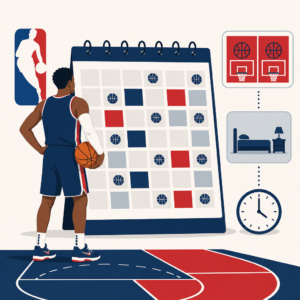
A complete session should move from control to application. Start with one to two minutes of stance and fingertip activation, then stationary pounds and rhythm work. Progress to moving drills, then change-of-direction actions, then finishing or passing from the dribble, and close with competitive or reactive reps. This order respects motor learning: establish clean patterns first, then increase speed and decision load. Most players can make strong progress with 15 to 30 minutes, four to six days per week.
| Skill level | Primary drill focus | Session length | Best weekly frequency |
|---|---|---|---|
| Beginner | Stationary control, walking dribbles, basic crossovers, retreat dribbles | 15-20 minutes | 5-6 sessions |
| Intermediate | Zigzag moves, hesitation attacks, two-ball rhythm, stop-and-score actions | 20-30 minutes | 4-6 sessions |
| Advanced | Live reads, pressure escapes, pick-and-roll handling, contact finishes | 25-35 minutes | 4-5 sessions |
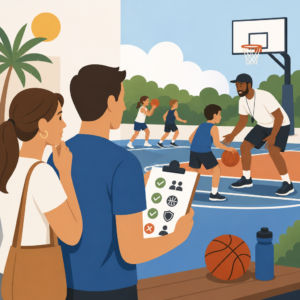
Track a few objective markers. Count clean reps without a fumble, weak-hand finish percentage, turnover rate in live play, and ability to keep eyes up during movement. Film one workout each week. On video, players usually notice that they rise out of stance, carry the ball too high, or fail to explode after the move. These are correctable problems, but only if you measure them honestly.
Common Ball Handling Mistakes and How to Fix Them
The most common mistake is dribbling for the drill instead of dribbling for the game. Players perform fast combinations with no change of pace, no shoulder shift, and no exit angle. The fix is simple: require every move to gain ground, create separation, or protect the ball. Another mistake is overreliance on the strong hand. A player who avoids the weak hand in workouts will definitely avoid it in games. Equal volume is the minimum standard, and extra weak-hand reps are often necessary.
Other frequent errors include standing too tall, pounding the ball directly in front of the body, and watching the dribble under pressure. Teach players to keep the ball slightly outside the lead foot when attacking, to use retreat dribbles when cut off, and to pause with a real hesitation instead of rushing into the next move. Also, do not ignore passing. Good ball handlers are good decision-makers, and many of the best advantages created off the dribble end in a pass, not a shot.
The best dribbling drills for basketball players at every skill level are the ones that build usable ball handling, not empty flash. Start with stance, fingertip control, eyes-up awareness, and both-hand confidence. Progress into movement, change of pace, stops, and scoring links. Then add defenders, contact, and reads so the skill survives in real possessions. If you treat ball handling as a complete skill that connects dribbling, footwork, vision, and decision-making, improvement becomes visible quickly.
As the ball handling hub within Basketball Skills, this page should guide how you train and what you practice next. Beginners should own the basics. Intermediate players should master pace and direction changes. Advanced players should train reads, pressure, and efficiency. Build your weekly plan around those priorities, record your reps, and evaluate your progress honestly. Then continue into your next ball handling workout with a clear standard: every dribble must have purpose. Pick three drills from your level, train them this week, and make your handle more dependable in games.
Frequently Asked Questions
1. What are the best dribbling drills for beginners in basketball?
For beginners, the best dribbling drills are the ones that build comfort, consistency, and control before adding speed or advanced moves. Start with stationary ball-handling drills such as pound dribbles, low dribbles, high dribbles, crossover dribbles, and between-the-legs repetitions. These teach players how to keep their hand on top and slightly behind the ball, stay balanced in an athletic stance, and use their fingertips rather than slapping at the ball with a flat palm. It is also important for beginners to practice with both hands equally, because one of the fastest ways to limit long-term development is relying only on a dominant hand.
Once basic stationary control improves, players should move into simple movement drills like walking dribbles, jog-speed dribbles, zig-zag dribbling, and cone changes of direction. These help connect ball control to actual movement, which is where many new players struggle. A beginner should also learn to dribble without staring at the ball, even if that means slowing down at first. Keeping the eyes up trains court awareness and prepares players to make passes, read defenders, and recognize space. The goal at this stage is not flashy dribbling. It is developing a strong foundation of ball control, posture, rhythm, and confidence that will support every future skill.
2. How often should basketball players practice dribbling drills to see real improvement?
Most players will see real improvement when they practice dribbling consistently rather than occasionally. In practical terms, that usually means at least 4 to 6 days per week, even if some sessions are short. A focused 10- to 20-minute ball-handling workout done regularly is often more effective than one long session once a week. Dribbling is a feel-based skill, and touch improves through repetition, frequency, and attention to detail. When players handle the ball often, they improve hand strength, coordination, reaction time, and confidence under pressure.
A good approach is to combine different types of dribbling work throughout the week. One day might emphasize stationary control and weak-hand development, another might focus on movement dribbles and change-of-direction work, and another might include pressure drills, game-speed combinations, or decision-making. Advanced players should also practice dribbling while fatigued, because real games demand control when legs are tired and defenders are aggressive. The key is quality repetition. If a player is going through drills lazily, looking down the whole time, and not challenging pace or precision, progress will be limited. Consistent, game-relevant practice is what turns basic ball handling into reliable in-game dribbling.
3. Which dribbling drills help players handle defensive pressure and protect the ball?
The best drills for handling pressure are the ones that teach body positioning, control at different heights, and smart reactions to defenders. Protection dribbles are essential. Players should practice keeping the ball on the outside hip, using the off-arm legally as a shield, lowering their center of gravity, and turning their shoulders to keep the defender from reaching across their body. Drills like retreat dribbles, hesitation-to-retreat moves, strong-hand and weak-hand shield dribbles, and live zig-zag pressure dribbling are especially effective because they simulate what happens when a defender cuts off space or crowds the ball.
Another important category is change-of-pace and change-of-direction work. Many players think beating pressure is only about speed, but control and timing matter just as much. Drills using cones or a live defender can train crossovers, inside-outs, behind-the-back counters, and spin dribbles after a stop or retreat. These moves are most useful when players learn when to use them, not just how to perform them. For example, a retreat dribble creates space, a crossover attacks an exposed foot, and a hesitation move punishes a defender who relaxes for a split second. To improve ball security, players should also practice in tight spaces and under contact, because pressure dribbling requires strength, composure, and the ability to stay under control without picking up the ball too early.
4. What dribbling drills are best for intermediate and advanced basketball players?
Intermediate and advanced players need dribbling drills that go beyond simple control and begin to reflect game reads, tempo changes, and advantage creation. For intermediate players, strong options include two-ball dribbling drills, combo move sequences, full-court speed dribbles with direction changes, cone attack drills, and hesitation-to-explosion work. These drills sharpen coordination while teaching players to chain moves together with purpose. At this level, players should also emphasize weak-hand confidence, because defenders will force them away from comfort zones. The focus should be on clean mechanics at speed, staying low through moves, and quickly re-accelerating after each change of direction.
For advanced players, the best dribbling drills are highly game-specific. That includes live reads out of ball screens, change-of-pace attacks from triple threat, split dribbles against gap defenders, escape dribbles versus traps, and finishing drills that begin with a pressure move. Advanced players benefit from reactive drills where a coach or partner gives visual or verbal cues that force quick decisions. This turns dribbling into a complete offensive skill rather than a pre-planned routine. The best advanced ball handlers are not just fast with the ball. They read help defense, manipulate defenders with pace, protect the dribble in crowds, and create passing or scoring windows. Drills should reflect those realities if the goal is real game transfer.
5. Why is keeping your head up so important during dribbling drills?
Keeping your head up is one of the most important habits a player can build because basketball is a reading game, not just a control game. A player who can dribble well while looking down may still struggle in competition because they miss open teammates, rotating defenders, driving lanes, and timing opportunities. Dribbling with the eyes up allows players to see the floor, anticipate pressure, and make better decisions. It also helps create confidence under game speed, because the player is learning to control the ball without relying on constant visual confirmation.
That is why many effective dribbling drills include a vision component. Players can call out numbers on a wall, identify hand signals from a coach, react to colored cones, or scan the court while moving through drills. These small additions train awareness along with ball control. Over time, this makes a huge difference. Players become more comfortable attacking gaps, recognizing help defense, and making reads on the move. In modern basketball, dribbling is not just about bouncing the ball hard or performing quick moves. It is the coordinated ability to move with control, protect the ball, change pace, and process the game in real time. Keeping the head up is what connects dribbling skill to actual basketball effectiveness.