
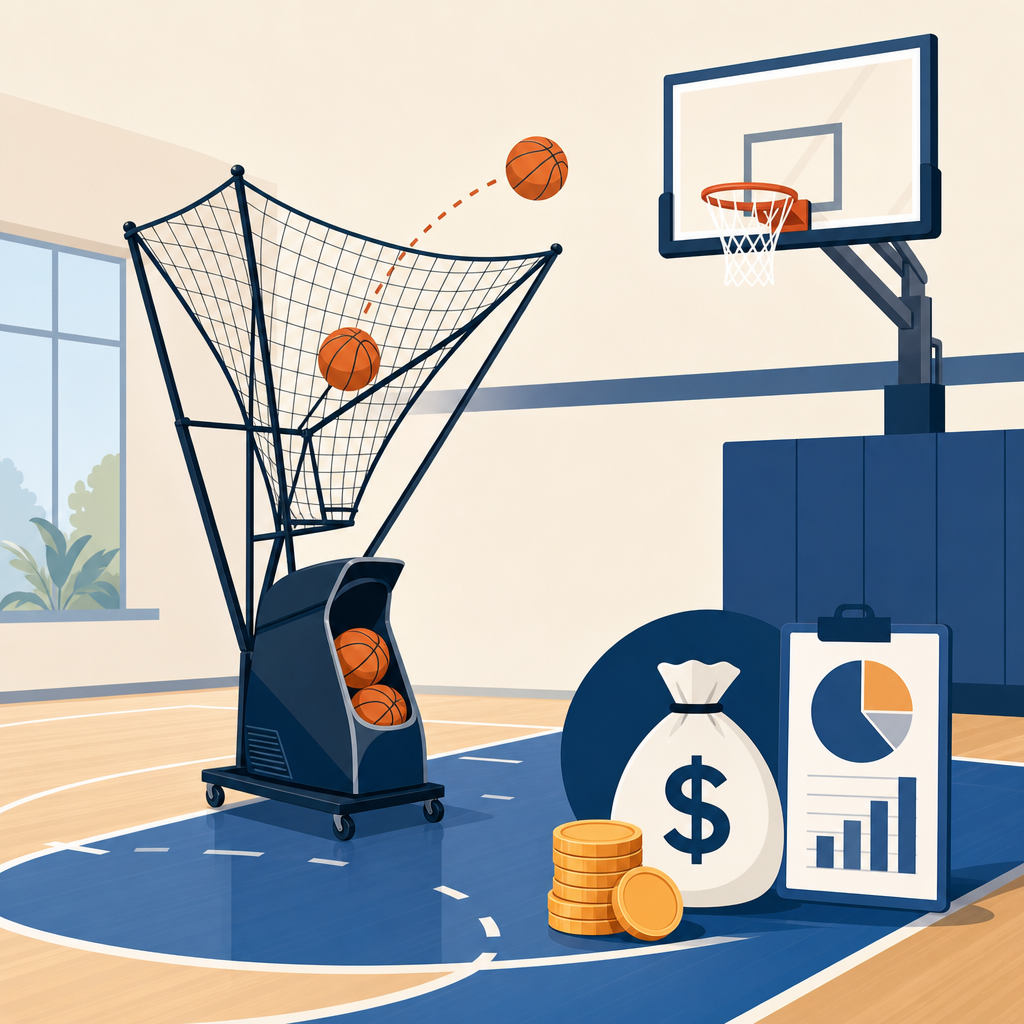
Basketball shooting machine cost is one of the first questions coaches, parents, trainers, and facility owners ask when they start upgrading training gear, because these rebounder systems sit at the high end of basketball equipment budgets and promise measurable improvements in repetition, efficiency, and player development. A basketball shooting machine is a motorized rebounder that returns made or missed shots to a designated spot or along programmable passing paths, allowing players to take far more game-speed repetitions than they could with a traditional partner rebound setup. In practical terms, it replaces the slowest part of solo shooting workouts: chasing the ball, resetting, and finding a rhythm again. That matters because elite shooting development depends on volume, consistency, and immediate feedback. Across youth gyms, school programs, AAU organizations, colleges, and private training businesses, I have seen the same pattern: teams buy uniforms every season, upgrade balls every few years, and debate premium gear constantly, yet the equipment that most directly changes daily skill work is often the hardest purchase to justify. The decision is rarely only about sticker price. It also involves labor savings, gym scheduling, athlete development goals, maintenance expectations, and whether the machine will actually be used enough to earn its footprint. As a hub article for basketball training gear, this guide explains not only what shooting machines cost, but how they compare with other development tools, what features affect value, where they fit in a complete equipment plan, and when the investment is smart, premature, or unnecessary.
What Basketball Shooting Machines Cost and What Drives the Price
Most basketball shooting machines cost between roughly $3,000 and $10,000, with premium commercial models reaching higher once options, delivery, and gym-specific add-ons are included. Entry-level rebounder systems usually focus on simple ball return and basic angle adjustment. Mid-range models add programmable passing locations, shot tracking integration, faster return speeds, and more durable net and frame systems. High-end units from brands such as Dr. Dish, Shoot-A-Way, and The Gun are built for heavy institutional use, including daily training in school, collegiate, and commercial environments. Used machines can lower acquisition cost, but condition, software support, battery life, wheel wear, and replacement-part availability matter more than the headline discount.
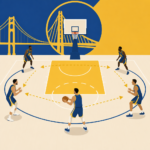
Price is driven by five core factors. First is passing capability: a machine that returns every ball to one spot is cheaper than one that passes to multiple locations around the perimeter. Second is programmability: touchscreen workouts, custom drill libraries, and app control increase both hardware and software cost. Third is analytics: systems that log makes, attempts, release timing, and shooting percentages command a premium because they support player tracking and structured training plans. Fourth is build quality: steel frames, commercial wheels, stable bases, and stronger nets cost more but hold up better in schools and clubs. Fifth is power and portability: battery operation, foldability, and one-person setup convenience often separate institutional models from lower-priced alternatives.
Buyers should also budget for hidden costs. Shipping and installation can add several hundred dollars or more, depending on weight and access. Some brands charge for software subscriptions, premium content, or extended warranties. If a machine is used outdoors or moved frequently, replacement tires, netting, and battery maintenance enter the long-term cost equation. In my experience, the cheapest machine is rarely the least expensive over five years if it breaks during peak season, lacks service support, or gets abandoned because setup is cumbersome.
Are Rebounder Machines Worth the Investment for Players and Programs?
Yes, rebounder machines are worth the investment when usage volume is high, goals are skill-specific, and the machine solves a real training bottleneck. They are less compelling when buyers assume the machine itself creates improvement without disciplined programming. A shooting machine does not teach footwork, shot selection, balance, or defensive reads on its own. What it does exceptionally well is multiply useful repetitions. One player can take hundreds of shots in a focused block without needing another person under the rim. In a team setting, multiple athletes can rotate quickly through game-like catch-and-shoot spots, relocation actions, and free-throw routines.
For individual players, the machine is most valuable for building rhythm, speeding up release preparation, and increasing shot volume from targeted locations. For coaches, it reduces dependence on managers and assistants to feed rebounds manually. For trainers, it creates a scalable service model because one instructor can supervise mechanics and footwork while the machine handles return work. For facilities, it supports rentable skill sessions and off-hours training packages that can generate revenue.
The strongest case comes from environments where time is expensive. A varsity program with limited court access may only get sixty to ninety minutes for player development before practices or classes. If the machine allows each shooter to get 250 quality attempts instead of 90, the value is obvious. The weakest case appears when a recreational buyer with irregular training habits spends heavily on a machine that becomes oversized storage equipment within months. Investment value depends less on the machine and more on the training system around it.
How Shooting Machines Compare With Other Basketball Training Gear
A complete basketball training gear plan should not start and end with a rebounder machine. It should prioritize the tools that create the broadest development gains per dollar. In most programs I have helped evaluate equipment, the best sequence is quality basketballs, a reliable passing and finishing setup, cones or markers for spacing, resistance and mobility tools, and then a shooting machine once repetition volume becomes the limiting factor. Shooting machines are specialized accelerators, not foundational substitutes.
| Training Gear | Typical Cost Range | Primary Benefit | Best For |
|---|---|---|---|
| Shooting machine | $3,000-$10,000+ | High-volume shot repetition and ball return | Schools, trainers, serious players, facilities |
| Game basketballs | $50-$120 each | Feel, consistency, realistic practice | Every player and team |
| Cones and markers | $20-$100 | Footwork, spacing, drill structure | Every coach and trainer |
| Passing targets or nets | $100-$500 | Accuracy and decision-making cues | Youth programs and skill trainers |
| Resistance bands and strength tools | $30-$300 | Warm-up, activation, durability | Players at all levels |
| Video analysis tools | $0-$500+ | Mechanics review and feedback | Trainers, advanced players, coaches |
This comparison matters because many buyers ask the wrong question. They ask whether a shooting machine is expensive, when they should ask whether it is the next best use of budget after essential gear is covered. A youth team with poor ball quality and no drill infrastructure will get more immediate benefit from foundational equipment. A training academy already running structured workouts may see the machine become its highest-return purchase because it increases throughput and client results.
Key Features That Separate a Good Machine From a Bad Buy
The best basketball shooting machines share several practical qualities. Fast and consistent ball return is the first. If return timing varies or jams occur, players lose rhythm and coaches lose patience. Adjustable arc and distance settings come next, because a useful machine must support short-range form work, mid-range repetition, corner shooting, wing relocation, and top-of-key actions. Passing versatility matters too. Five to ten programmable spots cover most common perimeter patterns, but the quality of the pass is as important as the number of spots. A machine that sends flat, predictable passes may not simulate real catch conditions well enough for advanced players.
Ease of setup is often overlooked. In high school gyms and shared club spaces, staff will avoid equipment that requires a complicated assembly or blocks transitions between drills. Foldable designs, simple calibration, and quick movement through doors increase actual usage. Durability is another separator. Check wheel material, net attachment points, frame welds, and whether replacement parts are stocked domestically. If service requires weeks of downtime during season, the machine loses a lot of value.
Software is now a serious buying factor. Some machines include drill libraries, cloud-based workout history, and app control that lets coaches assign sessions by athlete. These features are not gimmicks when implemented well; they create accountability and help quantify progress. However, software should support training, not trap buyers in expensive subscriptions for basic functions. Ask what still works if the subscription ends, how updates are delivered, and whether historical shooting data can be exported.
Real-World Use Cases: Home Gyms, Schools, Clubs, and Training Businesses
For home use, a shooting machine makes sense only in a narrow set of circumstances: the player trains consistently, has a proper hoop and space, and the family values development enough to absorb a commercial-grade purchase. In most home settings, portability, power source, weather protection, and storage become limiting issues. I have seen committed prospects benefit enormously from home machines, especially when paired with a trainer who assigns structured workouts, but casual buyers usually overestimate how often the system will be used.
Schools often get the clearest return. A middle school or high school program can use one machine across preseason workouts, in-season player development, camps, and offseason open gyms. Because gyms are shared spaces and staffing is limited, machines reduce the labor burden on coaches and managers. Colleges and prep programs use them even more effectively by integrating shooting benchmarks into individualized development plans. A machine also helps injured players maintain routine and touch when live movement is restricted.
AAU clubs and private trainers benefit when the machine becomes part of a business model. Trainers can run semi-private sessions with more touches per athlete and less dead time between reps. Facilities can offer membership blocks, machine rentals, and shooting evaluation sessions. In these contexts, the machine is not only a training tool but an asset that can produce revenue. That said, the purchase works only when demand exists and scheduling is disciplined. Equipment that is not booked or integrated into programming does not pay for itself.
How to Calculate Return on Investment Before You Buy
To judge basketball shooting machine cost properly, calculate return on investment in three layers: development value, labor savings, and revenue potential. Start with usage. Estimate how many athletes will use the machine each week, how many sessions each athlete completes, and how many additional quality shots the machine creates compared with normal practice. If a varsity and junior varsity group of twenty-four players each gain 150 extra useful attempts per week over a twenty-week cycle, that is 72,000 additional repetitions in a season. That scale of practice is difficult to replicate manually.
Next, account for labor. If assistants, student managers, or trainers spend hours rebounding and feeding players, the machine can redirect that time toward instruction, film review, or individualized coaching. In commercial settings, calculate whether one trainer can supervise more athletes per hour without sacrificing quality. Then look at direct revenue. If a facility can rent the machine for individual sessions, team packages, or camps, estimate realistic utilization rather than best-case demand.
Also consider depreciation and maintenance. A well-built machine in a school or training center may remain productive for years, but only if parts are replaced proactively and software support continues. Resale value is better for recognized brands with documented service histories. Finally, measure alternatives. If the same budget could fund a part-time shooting coach, upgraded balls, video tools, and strength equipment, compare outcomes honestly. The right decision is the option that improves player development most per dollar and per hour.
Buying Tips, Common Mistakes, and the Smartest Next Step
The smartest buyers test machines before purchasing, ask for references from similar programs, and request a full breakdown of warranty terms, software costs, delivery, and replacement parts. They also evaluate gym layout. Ceiling height, baseline space, outlet access, storage location, and door widths affect everyday usability more than buyers expect. If possible, run a real workout on the machine, not just a short demo. Watch how quickly athletes adjust, how often balls jam, and whether the passing pattern truly matches your training style.
Common mistakes are predictable. Buyers overspend on advanced analytics they never use, underestimate storage hassles, ignore maintenance planning, and confuse shot quantity with shot quality. Another frequent mistake is purchasing a machine before establishing a shooting curriculum. Players need defined goals: catch-and-shoot percentages, off-movement reps, free-throw benchmarks, weak-hand footwork, and drill progressions. Without structure, the machine becomes a fancy rebound net.
As the hub for basketball training gear, the clearest takeaway is this: a shooting machine is a premium tool that delivers premium value only when the broader equipment ecosystem is already in place. Quality basketballs, clear drill design, floor markers, strength support, and video feedback still matter. If those basics are covered and your players need more efficient reps, a rebounder machine can be one of the best investments in basketball equipment. Review your budget, map your training volume, compare models carefully, and buy the machine that matches how your program actually works.
Frequently Asked Questions
How much does a basketball shooting machine typically cost?
Basketball shooting machine cost can vary widely depending on the brand, feature set, build quality, and intended level of use. Entry-level or lightly featured rebounder machines often start in the low thousands, while mid-range models designed for schools, clubs, and serious private trainers commonly fall in the several-thousand-dollar range. Premium machines with advanced programming, touchscreen controls, mobile app integration, multiple passing locations, shot tracking, and heavy-duty construction can move well beyond that. In addition to the base purchase price, buyers should also factor in shipping, setup, possible training packages, replacement parts, and any ongoing maintenance. For coaches, parents, and facility owners, the most accurate way to evaluate cost is not just to ask what the machine sells for, but what the total ownership expense will look like over several years of use.
What features have the biggest impact on the price of a rebounder machine?
The biggest pricing factors are usually automation level, passing versatility, durability, and software capability. A basic machine that simply returns shots to one or two predictable spots will cost less than a programmable system that can simulate game-like passes around the perimeter, into the mid-range, or to different finishing areas. Build quality matters too. Machines built for daily team practices or commercial training facilities are typically more expensive because they use stronger frames, more reliable motors, and collection systems designed to hold up under repeated use. Technology also raises the price. Touchscreen interfaces, remote controls, mobile apps, drill libraries, player analytics, and performance tracking tools all add value, but they also increase the investment. Portability, battery compatibility, net design, setup speed, and the ability to fit different gym environments can also influence the final price. In short, the more a machine does to improve efficiency, customization, and long-term reliability, the more it will usually cost.
Are basketball shooting machines actually worth the investment for coaches and players?
For many buyers, yes, a basketball shooting machine can absolutely be worth the investment, but the value depends on how often it will be used and what training goals it supports. The main advantage is repetition. A player can get far more shots up in a shorter period of time because the machine rebounds and returns the ball automatically, reducing downtime and keeping workouts focused. That efficiency is especially valuable for skill development, form work, catch-and-shoot rhythm, footwork drills, and conditioning-based shooting sessions. Coaches benefit because they can run more organized practices and free themselves from spending time manually rebounding. Trainers benefit because sessions become more productive and easier to scale. Facility owners may see value in attracting members, teams, and individual athletes who want premium training tools. That said, the machine is only worth it if it gets used consistently. If it sits in storage or is purchased without a clear training plan, the return on investment drops quickly. The machine does not replace coaching, but it can multiply the effectiveness of a well-structured shooting program.
Who gets the best return on investment from a basketball shooting machine?
The best return on investment usually goes to high-use environments. Schools, AAU programs, basketball academies, private training businesses, colleges, and multi-court facilities often benefit the most because the machine can serve many athletes over time. In those settings, the cost is spread across dozens or even hundreds of workouts, making the per-session value much easier to justify. Individual families may also see strong value if they have a highly motivated player who trains consistently and has regular access to a hoop where the machine can be used properly. For private trainers, a shooting machine can become a business asset by increasing session quality, allowing more structured workouts, and helping differentiate services in a competitive market. On the other hand, casual users may struggle to justify the price if they only plan to use it occasionally. The real question is less about whether the machine is expensive and more about whether the usage volume, development goals, and potential time savings make the cost practical for that specific buyer.
What should you consider before buying a basketball shooting machine?
Before buying, start by looking at usage frequency, training environment, and long-term purpose. Ask how many players will use the machine, how often it will be used each week, and whether it needs to support individual workouts, team drills, or commercial instruction. Make sure the machine fits the court setup, has manageable storage requirements, and can be moved or assembled without creating constant hassle. It is also smart to evaluate warranty coverage, customer support quality, parts availability, and the brand’s reputation for reliability. A lower upfront price is not always a better value if the machine breaks down often or lacks service support. Buyers should also think carefully about the features they will genuinely use. Some need simple, dependable rebounding, while others want advanced drill programming and analytics. Finally, compare the expected benefits against alternative investments such as coaching, strength training, video analysis, or additional court time. The best purchase is the one that aligns with actual development needs, not just the most impressive spec sheet.