
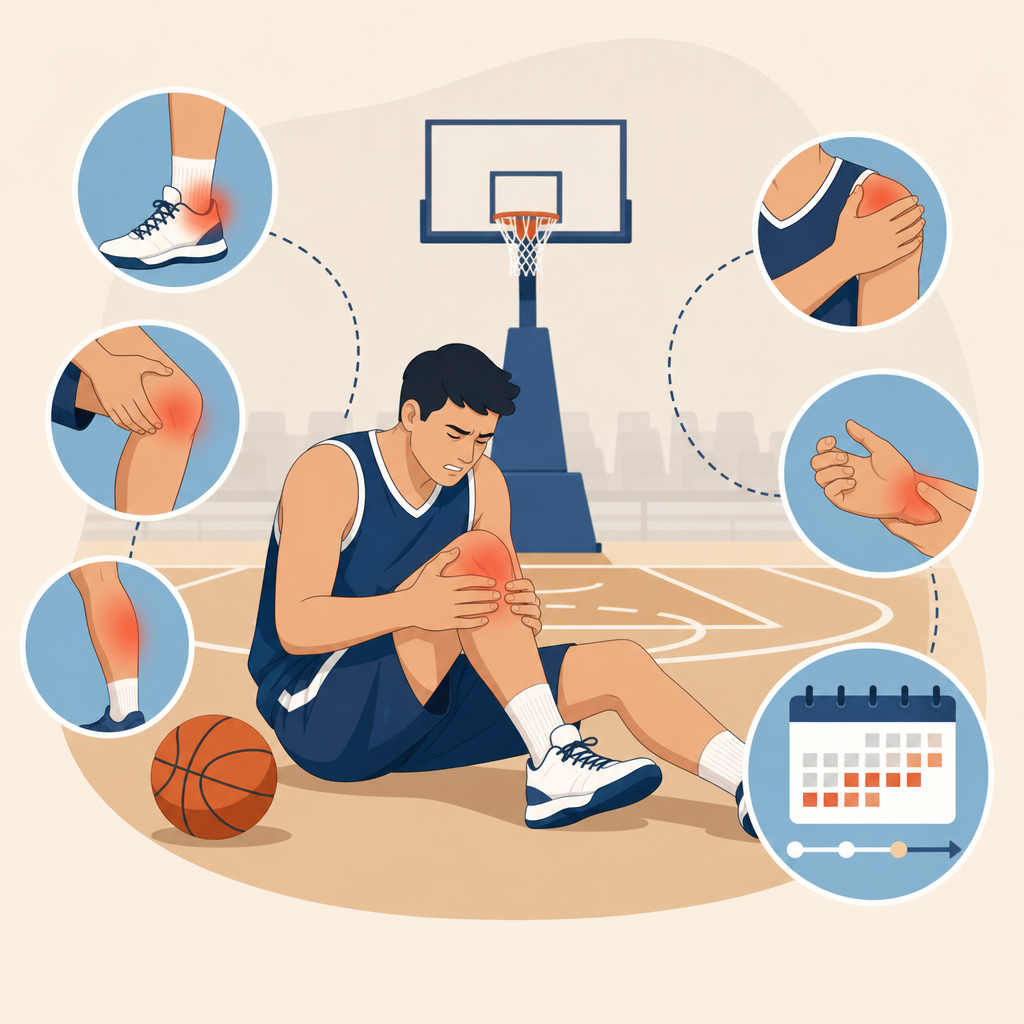
Basketball injuries shape seasons, careers, and daily training decisions, which is why understanding the most common court injuries and recovery timelines is essential for players, coaches, parents, and anyone following the modern NBA through a sports science lens. In practical terms, a basketball injury is any musculoskeletal or neurological problem caused or aggravated by the demands of jumping, sprinting, cutting, decelerating, landing, contact, or overuse during practices and games. The sport combines repeated high-force movements with unpredictable collisions, making it one of the most demanding environments for ankles, knees, hips, fingers, the lower back, and the soft tissues that stabilize every explosive action. After working with athletes and reviewing injury data across youth, college, and professional settings, I have seen the same pattern repeatedly: the headline injury may look sudden, but the risk usually builds through workload spikes, fatigue, prior injury history, movement deficits, and insufficient recovery. That is why recovery timelines are never just calendar estimates. They reflect tissue healing, pain response, swelling, neuromuscular control, confidence, and the athlete’s ability to tolerate basketball-specific loads again.
For an NBA Analysis audience, sports science matters because availability often predicts team outcomes as much as raw talent. Front offices track games lost to injury, performance staffs monitor acute-to-chronic workload ratios, and medical teams balance imaging findings with functional testing before clearing a player. Fans usually ask simple questions: What is the injury, how serious is it, and when will the player return? Those are fair questions, but the best answers require context. A Grade 1 ankle sprain can mean a few days for one athlete and three weeks for another. Patellar tendinopathy may never require surgery, yet it can reduce lift, lateral burst, and minute tolerance for months. A hamstring strain can appear healed on basic movement screens while still failing under late-game sprint demands. This hub article explains the injuries most often seen on the court, why they occur, what symptoms usually appear, and how long recovery typically takes. It also serves as a foundation for deeper sports science topics, including load management, return-to-play testing, biomechanics, sleep, nutrition, and performance monitoring.
The basketball injury profile: why the sport is hard on the body
Basketball creates a unique injury pattern because it blends vertical power with constant changes of direction in a confined space. Players accelerate, brake, pivot, jump, absorb contact in the air, and land on crowded feet. Epidemiological research from organizations such as the NCAA Injury Surveillance Program consistently shows high rates of ankle injuries, knee injuries, and hand injuries in basketball, with lower extremity problems dominating total time lost. In the NBA, the problem is magnified by schedule density, travel, game intensity, and the physical demands placed on taller bodies. Guards often accumulate soft-tissue and overuse issues from repeated high-speed actions, while larger forwards and centers absorb substantial joint loading at the knees, feet, and lumbar spine.
Mechanism matters. Contact injuries happen when another player falls into a knee, clips an ankle, or jams a finger on the ball. Noncontact injuries happen when force exceeds the body’s capacity during planting, cutting, or sprinting. Overuse injuries sit on a spectrum, building over days or weeks from repeated microstress without enough recovery. This distinction matters because it changes prevention and recovery strategies. A contact hand fracture is mostly about bone healing and protection. A noncontact ACL tear raises questions about landing mechanics, strength asymmetry, and later return-to-sport confidence. An overuse problem like patellar tendinopathy requires load calibration, not pure rest. The central sports science lesson is simple: basketball injuries are not random. Most result from the interaction of tissue capacity, movement demands, accumulated fatigue, and game situations.
Ankle sprains: the most common basketball injury
Ankle sprains are the classic basketball injury and remain the most frequent issue across levels of play. Most are lateral ankle sprains, usually involving the anterior talofibular ligament after a player lands on another foot and rolls the ankle inward. Symptoms include immediate pain, swelling, tenderness on the outside of the ankle, and difficulty pushing off or changing direction. Mild sprains may allow a player to walk, while more severe sprains cause marked instability and bruising over the next twenty-four to forty-eight hours. High ankle sprains are different. They affect the syndesmotic ligaments above the ankle joint and often occur through twisting with the foot planted. They usually heal more slowly because those structures are stressed every time the athlete cuts or dorsiflexes.
Recovery timelines vary by grade and by whether the athlete regains stability quickly. A mild lateral sprain may settle in one to two weeks. A moderate sprain often takes three to six weeks. A severe sprain can take six to twelve weeks, especially if there is significant ligament damage or associated bone bruising. High ankle sprains commonly require four to eight weeks and sometimes more. In practice, I never trust the early pain response alone. Many players feel surprisingly good after a few days, then flare when they resume reactive movement. The key milestones are swelling reduction, full range of motion, calf strength, balance, hopping tolerance, and confidence on hard cuts. Bracing and taping can reduce recurrence risk, but prior ankle sprain remains one of the strongest predictors of future ankle injury.
Knee injuries: from ligament tears to jumper’s knee
Knee injuries in basketball range from short-term sprains to major surgeries. The most feared is the anterior cruciate ligament tear, typically caused by a sudden deceleration, plant, and pivot, or an awkward landing with the knee collapsing inward. Athletes often report a pop, immediate instability, rapid swelling, and inability to continue. Associated injuries to the meniscus, bone, or collateral ligaments are common. Modern reconstruction and rehabilitation have improved outcomes, but return timelines remain long because the challenge is not just graft healing. It is rebuilding quadriceps strength, force absorption, deceleration control, and trust in the knee under chaotic game demands. Typical return-to-play windows after ACL reconstruction are nine to twelve months, and many sports medicine specialists prefer the longer end because reinjury risk is higher with premature return.
Meniscus injuries are also common. The meniscus is the cartilage that helps distribute load and stabilize the knee. Twisting under load can cause a tear, with symptoms such as joint line pain, swelling, locking, catching, or pain in deep flexion. Small tears managed conservatively may settle in four to eight weeks, while surgical timelines depend on procedure. Meniscectomy often allows return in four to eight weeks, but meniscus repair, which protects long-term joint health by preserving tissue, commonly requires three to six months. Then there is patellar tendinopathy, often called jumper’s knee, a hallmark overuse issue in basketball. It presents as pain just below the kneecap during jumping, landing, squatting, or after heavy workloads. Recovery is highly variable. Some players improve in two to six weeks with load modification and progressive tendon loading, while chronic cases can affect performance for an entire season.
Muscle strains and lower-leg problems that limit explosiveness
Hamstring, quadriceps, calf, and groin strains are central to basketball performance because they directly affect sprinting, braking, and jumping. Hamstring strains often occur during high-speed running or late-game fatigue, producing sudden posterior thigh pain and tightness. Mild strains may recover in one to three weeks, moderate strains in three to six weeks, and more significant injuries can take two months or longer. Reinjury is common if sprint exposure is rushed. Calf strains, especially involving the gastrocnemius or soleus, can be deceptively limiting because the calf absorbs force on every landing and push-off. These often take two to six weeks depending on severity. Quadriceps strains and hip adductor strains sit in a similar range but can linger when lateral movement returns before tissue capacity is restored.
Shin and foot-related lower-leg problems deserve special attention because they can begin as minor soreness and become long absences. Medial tibial stress syndrome, often labeled shin splints, causes aching pain along the inner tibia from repetitive loading. Relative rest, footwear review, and progressive reloading usually settle it within two to six weeks. Bone stress injuries are more serious. A stress reaction or stress fracture in the tibia, navicular, or metatarsals may require six to twelve weeks or longer, sometimes with non-weight-bearing restrictions. Basketball players also deal with plantar fascia irritation and Achilles tendinopathy. Achilles tendon pain may begin as morning stiffness or soreness after activity, then progress to persistent discomfort and reduced explosiveness. Conservative treatment often succeeds, but timelines can range from several weeks to several months because tendon adaptation is gradual.
| Injury | Typical signs | Usual recovery timeline | Key return-to-play marker |
|---|---|---|---|
| Lateral ankle sprain | Outside ankle pain, swelling, instability | 1-6 weeks | Cutting and hopping without pain or wobble |
| High ankle sprain | Pain above ankle, twisting pain, slow push-off | 4-8+ weeks | Full dorsiflexion and pain-free change of direction |
| ACL reconstruction | Pop, swelling, instability | 9-12 months | Strength symmetry and passing movement tests |
| Meniscus repair | Locking, joint line pain, swelling | 3-6 months | Deep flexion and rotational tolerance |
| Patellar tendinopathy | Pain below kneecap with jumping | 2 weeks to season-long management | Repeated jumps and practice load tolerance |
| Hamstring strain | Sudden back-of-thigh pain | 1-6+ weeks | Max sprinting without pain or apprehension |
Upper-body injuries, hand trauma, and concussion management
Basketball is lower-body dominant, but upper-body injuries still matter because ball control, screening, rebounding, and absorbing contact all depend on healthy hands, shoulders, and head-neck function. Finger sprains and dislocations are extremely common after the ball strikes an extended hand. These injuries may look minor, yet swelling and joint stiffness can affect shooting touch and grip for weeks. Simple sprains can improve in days to two weeks, while dislocations or fractures may need splinting and several weeks of protection. Wrist injuries, including scaphoid fractures, are less frequent but more consequential because delayed diagnosis can prolong healing. Shoulder injuries often occur from falls or collisions, producing AC joint sprains, subluxations, or labral irritation. Mild shoulder sprains may settle within two to four weeks; instability episodes can require much longer management or surgery.
Concussion care has also changed significantly. A concussion is a brain injury caused by biomechanical force, not simply being knocked out. Symptoms may include headache, dizziness, nausea, light sensitivity, slowed processing, balance problems, or sleep disruption. Return is based on a graduated progression rather than a fixed number of days. Many athletes recover within one to three weeks, but some need longer, especially if symptoms persist with exertion or screen exposure. Standardized tools such as SCAT assessments, balance testing, symptom checklists, and supervised exercise progression help guide decisions, though they do not replace clinical judgment. In elite settings, the challenge is balancing a player’s desire to return with the reality that reaction time, spatial awareness, and decision-making are central to basketball performance and safety.
How recovery timelines are determined in modern sports science
Fans often want a single return date, but sports medicine works in phases. First comes diagnosis through history, examination, and when needed, imaging such as MRI, ultrasound, or X-ray. Then comes acute management: controlling swelling, reducing pain, protecting injured tissue, and maintaining general conditioning. Next is progressive rehabilitation, which rebuilds range of motion, strength, coordination, and tolerance to impact and basketball-specific movement. Final clearance depends on objective benchmarks, not only symptom reduction. In high-performance environments, clinicians monitor force production, asymmetry, jump metrics, sprint exposure, and response to workload over consecutive days. That is why a player can be listed as doing individual court work long before returning to games.
Timelines also depend on context. Age, previous injury, body size, position, and competition calendar all matter. Big men with foot injuries often progress more cautiously because each landing transmits large forces through a relatively small structure. Veterans with chronic tendinopathy may be medically available yet managed through reduced practice and minute caps. Surgical choices also alter timelines. For example, preserving the meniscus may delay return compared with removing damaged tissue, but it usually benefits long-term joint integrity. The best organizations integrate physicians, physical therapists, athletic trainers, strength staff, nutrition support, and performance analysts. When those groups share data well, decisions improve. When communication breaks down, athletes are more likely to return underprepared, compensate elsewhere, and suffer secondary injuries.
Prevention, recurrence risk, and what smart basketball programs do well
No program can eliminate basketball injuries, but good systems reduce avoidable risk. The strongest prevention strategies are surprisingly consistent: build lower-body strength, train landing and deceleration mechanics, progress workloads gradually, maintain ankle and hip mobility, and address prior injuries before they become repeat injuries. Evidence-based warm-up programs that include balance work, plyometrics, trunk control, and cutting mechanics can reduce lower-extremity injury risk. So can routine ankle bracing in athletes with previous sprains. Sleep, nutrition, hydration, and travel management matter because fatigue changes coordination and tissue tolerance. In the NBA, dense scheduling and cross-country flights make recovery logistics part of injury prevention, not an optional extra.
The most important takeaway is that recovery timelines are ranges, not promises. A player returns safely when the injured tissue has healed enough, the athlete has rebuilt sport-specific capacity, and the medical staff sees low enough risk relative to the demands ahead. For readers using this basketball injuries guide as a hub for sports science, the next step is to connect injury knowledge with performance topics such as load management, biomechanics, return-to-play testing, and fatigue monitoring. Those subjects explain why two athletes with the same diagnosis can have very different outcomes. Use this article as your baseline reference when evaluating player news, team reporting, or your own training decisions. The better you understand common court injuries, the better you can judge severity, set realistic expectations, and appreciate the science behind getting back on the floor.
Frequently Asked Questions
What are the most common basketball injuries, and why do they happen so often?
The most common basketball injuries usually include ankle sprains, knee ligament and cartilage injuries, muscle strains, finger and hand injuries, and overuse conditions such as patellar tendinopathy, commonly called jumper’s knee. These injuries are so frequent because basketball places repeated stress on the exact movements the body finds most demanding: explosive jumping, rapid acceleration, abrupt stops, hard cuts, awkward landings, and frequent player contact. A single possession can involve sprinting, decelerating, pivoting, reaching, and landing in traffic, all of which challenge balance, joint stability, and tissue tolerance.
Ankle sprains are especially common because players often land on another athlete’s foot after a rebound or contest. Knees are vulnerable because cutting and decelerating create high rotational and shearing forces, which can affect the ACL, meniscus, and surrounding structures. Muscle strains, particularly in the hamstrings, calves, groin, and quadriceps, often happen when workload rises too quickly or when fatigue reduces movement quality. Hand and finger injuries occur during rebounds, steals, and deflections. Overuse issues develop more gradually when practices, games, travel, and individual workouts pile up without enough recovery. In short, basketball combines speed, repetition, impact, and unpredictability, which is why injury prevention and smart load management are such important parts of modern player care.
How long does it usually take to recover from a basketball injury?
Recovery time depends on the type of injury, its severity, the player’s age and health, treatment quality, and how well rehabilitation progresses. Mild injuries may improve within days or a couple of weeks, while major structural injuries can take many months. For example, a mild ankle sprain might allow return in 1 to 3 weeks, but a more significant sprain can require 4 to 8 weeks or longer if instability persists. A simple muscle strain may heal in 2 to 6 weeks, while more severe strains can take longer, especially if an athlete returns too quickly and re-aggravates the tissue.
Knee injuries have some of the widest recovery ranges. Patellar tendinopathy may linger for weeks or months if not managed correctly, even if the athlete continues playing. Meniscus injuries may resolve in a matter of weeks with conservative care in some cases, but surgical cases can extend recovery substantially. ACL tears are among the most serious basketball injuries and commonly require 9 to 12 months or more before full return to high-level competition. Fractures and dislocations vary depending on the bone or joint involved, but often take 6 to 12 weeks just for basic healing, followed by additional rehabilitation to restore strength, mobility, and confidence.
Perhaps the most important point is that timelines are estimates, not guarantees. Returning based only on the calendar is risky. Sports medicine professionals usually look for pain reduction, restored range of motion, adequate strength, good movement mechanics, and the ability to tolerate basketball-specific actions like sprinting, cutting, and landing before clearing a player. That is why two athletes with the same diagnosis may have very different return-to-play timelines.
What is the difference between an acute basketball injury and an overuse injury?
An acute injury happens suddenly and is usually tied to a specific moment. A player might land awkwardly, twist the ankle, collide with another athlete, or feel a sharp pull in the hamstring during a sprint. These injuries are easier to connect to a single event because the symptoms begin immediately or very soon afterward. Examples include ankle sprains, ACL tears, finger dislocations, facial injuries, and many muscle strains. Acute injuries often produce obvious signs such as swelling, bruising, instability, immediate pain, or inability to continue playing.
An overuse injury develops gradually over time because repeated stress exceeds the body’s ability to recover and adapt. Instead of one dramatic incident, the player notices worsening soreness, stiffness, or reduced performance over days or weeks. Common overuse problems in basketball include patellar tendinopathy, Achilles tendinopathy, shin pain, low back irritation, and stress reactions. These issues are often linked to high training volume, sudden workload increases, poor recovery, inadequate sleep, limited strength in key muscle groups, or movement patterns that repeatedly overload the same tissues.
This distinction matters because treatment and return decisions are different. Acute injuries may require protecting damaged tissue right away, while overuse injuries often demand a broader review of workload, biomechanics, jumping volume, strength deficits, and recovery habits. In basketball, both categories are common, and both can become long-term problems if warning signs are ignored.
How do doctors, athletic trainers, and physical therapists decide when a basketball player can return to the court?
Return-to-play decisions are based on function, not just symptom relief. A player may feel better walking around, but basketball requires a much higher standard: absorbing force, changing direction, reacting under pressure, and repeating those efforts without breakdown. Medical teams typically begin by confirming that pain and swelling are controlled and that the injured area has regained enough mobility and stability. From there, they assess strength, often comparing the injured side to the uninjured side, while also looking at balance, coordination, and movement quality.
For lower-body injuries, a return progression often includes jogging, sprinting, decelerating, shuffling, jumping, landing, cutting, and eventually full basketball drills. Clinicians may use hop tests, force-based measures, agility drills, and workload monitoring to see whether the athlete can tolerate basketball demands safely. For upper-body injuries, they assess grip, shooting mechanics, passing, contact tolerance, and functional control. Equally important is whether the athlete can perform these actions repeatedly, not just once, because many injuries reappear when fatigue sets in.
Confidence and readiness also matter. An athlete who is physically cleared but still hesitant to jump, plant, or absorb contact may not truly be game-ready. The best return-to-play process blends tissue healing, objective performance testing, sport-specific progression, and psychological readiness. This is especially relevant in basketball, where hesitation during a cut or landing can raise injury risk again.
Can most basketball injuries be prevented, or are they just part of the game?
Not every basketball injury can be prevented because the sport is fast, physical, and unpredictable, but many injuries can be reduced through smart preparation and consistent habits. Prevention usually starts with strength training, especially for the ankles, calves, hamstrings, glutes, quadriceps, and core. Stronger athletes generally tolerate force better and control landing and cutting positions more effectively. Structured warmups that include mobility, activation, balance, and landing mechanics can also lower risk by preparing the body for explosive movement.
Workload management is another major factor. Players are at greater risk when game minutes, practice intensity, tournament density, or individual workout volume jump too quickly. Sleep, hydration, nutrition, and recovery time all influence how well tissues adapt to stress. Proper footwear, bracing or taping in athletes with prior ankle sprains, and attention to court conditions can help as well. Technique matters too: teaching athletes how to decelerate, land softly, maintain knee and hip control, and avoid repeated high-risk movement patterns can make a real difference.
From a sports science perspective, prevention is really about stacking small advantages. A well-designed training plan, adequate recovery, early treatment of minor pain, and strong communication among coaches, trainers, athletes, and parents can prevent manageable issues from becoming serious ones. So while injuries will always be part of basketball to some degree, they are not simply random bad luck. In many cases, risk can be lowered substantially with the right approach.