
Youth basketball coaching is not just about teaching a crossover or drawing up an out-of-bounds play. It is the day-to-day work of helping children enjoy the game, build sound fundamentals, learn how to compete, and develop habits that carry beyond the court. When coaches get this right, players stay engaged longer, improve faster, and build confidence. When coaches get it wrong, even talented kids lose interest, struggle with basics, or start associating basketball with pressure instead of growth.
In youth basketball, “engagement” means players are mentally present, physically active, and emotionally connected to practice and games. “Real skills” means transferable basketball abilities that hold up under pressure: footwork, passing, shooting mechanics, defensive stance, spacing, decision-making, communication, and self-control. This distinction matters because many young players can look good in isolated drills yet fail in live play. I have coached youth teams across beginner recreational leagues and competitive travel settings, and the pattern is consistent: kids improve most when practice is structured, demanding, age-appropriate, and fun enough that they want to come back.
Parents, club directors, and school program leaders often ask the same questions. How long should kids stand in lines? Almost never. Should young teams run complex offenses? Usually no. What matters most at ages eight to twelve? Ball handling, passing, finishing, defensive movement, and learning how to read simple game situations. As players mature, coaches can layer in screening, help defense, transition decisions, and role definition. A strong youth basketball coaching approach creates a bridge from enthusiasm to competence. That is why this topic sits at the center of any serious youth basketball program: coaching determines whether players merely participate or actually develop.
Build Practices Around Activity, Repetition, and Clarity
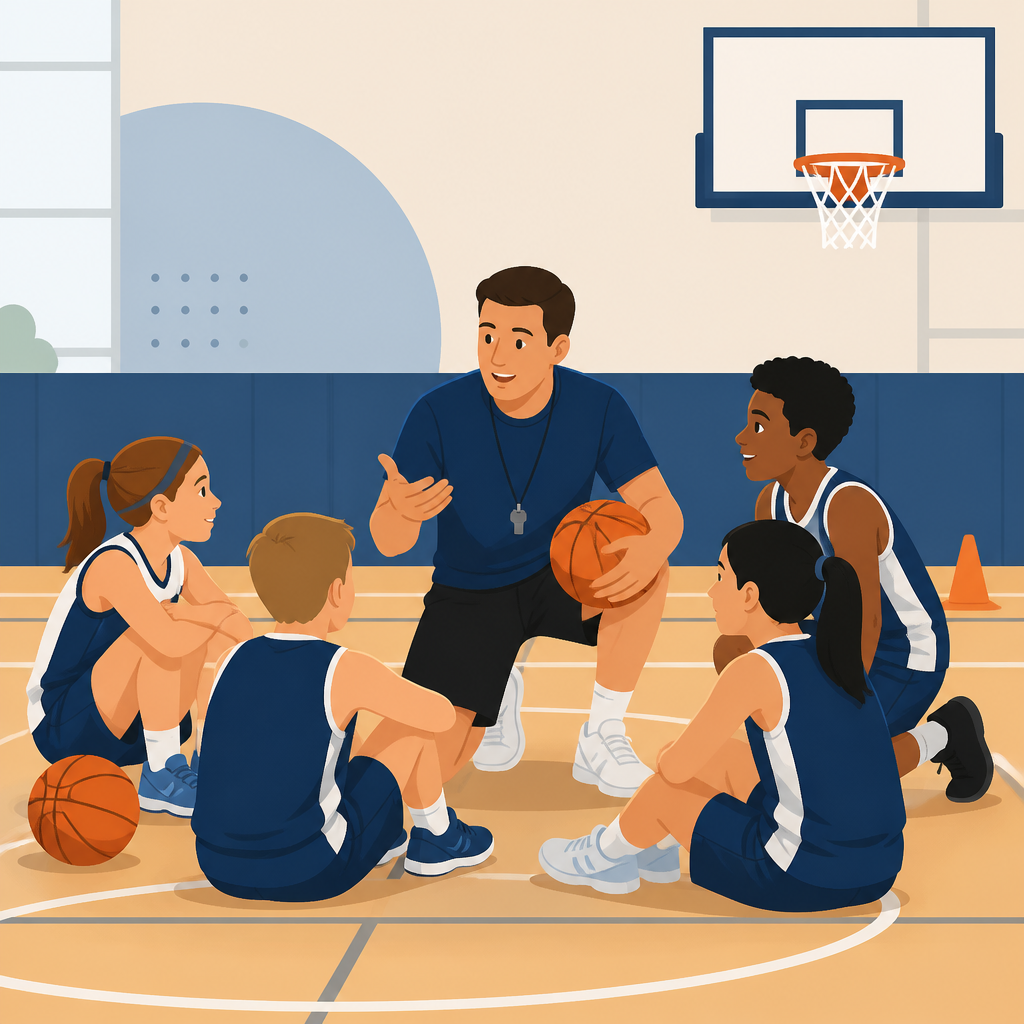
The fastest way to lose a youth team is to run practices built around speeches, long lines, and drills that only engage one player at a time. Kids need touches, decisions, movement, and short coaching points. A strong youth basketball practice plan keeps players active for most of the session and moves cleanly from warm-up to skill work to competitive play. In practical terms, that means using station work, partner drills, small-sided games, and constraints that force repetition without boredom.
A useful standard is this: if players are waiting more than a few seconds for their turn, the drill needs redesign. Instead of one layup line with ten kids, split into three baskets or create finishing stations with different angles. Instead of a five-minute lecture on pivoting, teach front pivot and reverse pivot in thirty seconds, demonstrate once, then let players execute ten quality reps each way. I have found that young athletes retain more from one concise cue such as “chin on shoulder when you pivot” than from a long technical breakdown. Clarity beats volume every time.
Practice design should also respect attention span. For younger groups, six to ten minutes per segment is usually enough before quality drops. A sixty-minute session might include dynamic movement, ball handling, passing on the move, finishing, defensive footwork, and then a game that rewards the day’s emphasis. If the theme is jump stops and balance, end with a points game where baskets only count after a controlled stop in the lane. This is how coaching connects drills to play, which is where real skills become visible.
Teach Fundamentals That Transfer to Games
The core of youth basketball coaching is choosing which fundamentals matter most now, not someday. Transferable skills begin with stance and footwork. Can players start low, stop under control, pivot without traveling, and change direction without losing balance? Those details affect every drive, catch, shot, and defensive possession. Before a child learns advanced combos, they need to dribble with both hands, protect the ball with their body, and keep eyes up. Before they launch deep threes, they need consistent alignment, rhythm, and follow-through close to the basket.
Passing is often under-taught, yet it separates organized teams from chaotic ones. Young players should learn chest passes, bounce passes, push passes off the dribble, and how to pass away from defenders. Equally important is receiving the ball: meeting passes, showing hands, landing on balance, and making the next decision quickly. Good youth coaches do not treat passing as a warm-up throwaway. They teach timing, angle, and spacing because those skills unlock team offense later.
Defense deserves equal emphasis. A team that cannot defend the ball, see both player and ball, and close out under control will struggle regardless of scoring talent. For beginners, the first defensive goals are simple: stay in stance, slide without crossing feet when possible, contest without fouling, and rebound with two hands. Advanced concepts such as shell rotation and tag responsibilities can wait until the basics hold up. The point is progression. Youth basketball coaching works best when coaches stack skills in the order players can actually absorb and apply them.
Use Small-Sided Games to Keep Kids Engaged
Small-sided games are one of the most effective tools in youth basketball development because they increase repetitions, force decisions, and feel like basketball rather than exercise disguised as basketball. In a 3-on-3 game, each player handles the ball more, defends more actions, and makes more reads than in a full 5-on-5 scrimmage. In 1-on-1 and 2-on-2 formats, weaknesses show up immediately, which gives coaches clear teaching moments.
I regularly use constrained games to teach specific habits. For example, in a 3-on-3 half-court game, the offense may be required to make one paint touch before shooting. That teaches spacing, cutting, and penetration. Another game might award an extra point for a stop that includes a box-out, reinforcing the end of the defensive possession. A finishing game may start with a coach toss and require players to score off a jump stop, teaching body control under pressure. These formats keep players engaged because the objective is obvious and the action is continuous.
Small-sided games also reveal whether a player can transfer isolated skills into live decisions. A child may look polished in a cone drill but struggle to read a help defender. Another may shoot well in form work but rush every shot in a contested setting. Coaches need that feedback. It tells you what to reteach, what to simplify, and which players need confidence versus correction.
| Coaching focus | Best game format | What players learn |
|---|---|---|
| Ball handling under pressure | 1-on-1 from the wing | Change of pace, protecting the ball, finishing angles |
| Passing and spacing | 3-on-3 no dribble | Cutting, pivoting, screening awareness, catching ready to move |
| Help defense | 2-on-2 plus coach drive trigger | Gap positioning, rotation timing, recovery |
| Transition decisions | 3-on-2 continuous | Advantage recognition, communication, shot selection |
| Rebounding toughness | 2-on-2 shot and crash | Hit-first habits, pursuit, second-effort finishes |
Create a Positive Culture Without Lowering Standards
Keeping kids engaged does not mean making everything easy. It means creating an environment where effort, attention, and improvement are expected, mistakes are corrected, and players feel safe enough to keep trying. The strongest youth coaches I know combine warmth with structure. They know every player’s name quickly, set routines, explain expectations, and correct behavior consistently. They also praise specific actions, not empty outcomes. “Great job sprinting back and talking” helps a player repeat the right habit. “Nice shot” has less teaching value unless it ties back to process.
Culture starts with what the coach rewards. If the loudest praise always goes to scoring, players learn that defense, screening, hustle, and passing matter less. If coaches celebrate unselfish plays, strong closeouts, and resilient responses after mistakes, the entire team becomes more balanced. One practical method is to track “effort stats” on the bench: deflections, rebounds, floor dives, paint touches, and assists. Even younger players respond when they see that contribution has many forms.
Accountability must be age-appropriate. A nine-year-old forgetting spacing needs a reminder and a simple reset. A middle school player repeatedly ignoring instructions may need substitution and a direct conversation. Either way, standards should be clear. Show up on time, listen when others speak, respect teammates, and compete in every drill. Positive culture is not permissive. It is organized, fair, and built on trust, which is essential if you want kids to stay engaged through the inevitable frustration of learning hard skills.
Communicate Well With Parents and Manage Game Day Wisely
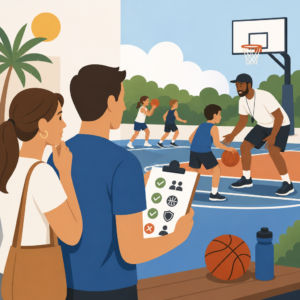
Youth basketball coaching extends beyond the court because parents shape the player experience. Miscommunication with families can undo strong teaching fast. At the start of a season, coaches should clearly explain goals, playing time philosophy, practice expectations, communication channels, and what support looks like from the sideline. In most healthy programs, parents are encouraged to applaud effort, avoid coaching from the stands, and let players process games before launching into postgame analysis.
Game day management matters just as much as practice planning. Many youth coaches try to correct everything during live play and overload players with instructions. That usually creates hesitation. In games, keep cues short and actionable: “jump stop,” “talk on defense,” “reverse the ball,” “see player and ball.” Save deeper teaching for timeouts, halftime, film review, or the next practice. Players need room to read the game and make mistakes.
Rotation decisions should reflect developmental priorities. At younger ages, every player needs meaningful minutes and chances to handle responsibility. If only the strongest athletes bring up the ball or defend top matchups, the rest of the roster stagnates. In more competitive settings, roles can narrow, but development should never disappear. One of the hardest truths in youth basketball is that short-term winning often hides long-term weakness. A pressing defense and one dominant ball handler may win weekend games, yet leave the group underdeveloped by the next season. Good coaches think beyond the current scoreboard.
Adjust Coaching by Age, Ability, and Season Phase
Effective youth basketball coaching is never one-size-fits-all. A second-grade recreation team needs different language, pacing, and expectations than a seventh-grade travel team. Younger players benefit from simple rules, visual demonstrations, and games that teach one idea at a time. Older players can handle layered reads, film sessions, and more deliberate technical work. Ability level matters too. Beginners need success early to stay engaged, while advanced players need constraints and competition to avoid plateauing.
Season phase should shape priorities. Early in the season, install routines, terminology, spacing habits, and your nonnegotiables on effort and communication. Midseason is the best time to deepen core skills and add counters. Late season should sharpen execution, situational awareness, and confidence under pressure without abandoning fundamentals. I have seen many teams waste the final third of a season by overloading players with plays instead of refining what already works. Repetition with purpose usually beats new complexity.
Assessment should be ongoing and practical. Ask: Can players execute the skill against live defense? Do they understand when to use it? Can they repeat it when tired or frustrated? If not, they do not own it yet. Video from a phone or tablet can help, especially for showing spacing, defensive stance, and shot selection. Used correctly, film makes teaching concrete. The goal is not to criticize every possession. It is to help players see what winning habits actually look like and give them a path to improve.
Youth basketball coaching has the greatest impact when it balances engagement with substance. Kids stay involved when practices move, expectations are clear, games feel connected to learning, and adults create a supportive environment. They build real skills when coaches prioritize fundamentals that transfer, use small-sided games, teach decision-making, and resist the temptation to chase shortcuts that only work briefly. That combination is what turns a season into development instead of just activity.
If you coach youth basketball, focus on what players will still need next year: footwork, balance, passing, defense, spacing, communication, and confidence under pressure. Organize practices so every child gets touches and decisions. Teach in short cues. Correct with consistency. Involve parents with clear boundaries. Most of all, remember that improvement and enjoyment are not opposing goals. In youth basketball, they fuel each other when coaching is done well.
Use this hub as your starting point for every coaching question in youth basketball, from practice planning and drill design to game management, parent communication, and player development. Revisit your current approach, simplify what is not working, and build a program that keeps kids engaged while teaching skills that truly last.
Frequently Asked Questions
How can youth basketball coaches keep practices fun without sacrificing skill development?
The best youth basketball practices do not force coaches to choose between fun and fundamentals. In fact, younger players usually learn faster when practice is active, competitive, and enjoyable. The key is to build drills that teach real basketball habits while keeping players involved. Instead of long lines and repetitive stationary work, use small-group stations, partner drills, relays, and game-like competitions that create lots of touches and decision-making. A dribbling game, for example, can improve ball control, balance, and confidence if players are challenged to protect the ball, change speeds, and react under pressure rather than just dribble in place.
Practice energy also depends on pacing. Kids lose focus when coaches talk too long, over-explain every detail, or stop action after every mistake. Short instruction, quick demonstrations, and immediate reps usually work much better. A strong rule for youth coaches is to explain briefly, let players try, correct one or two important things, and then get them moving again. The more players are standing still, the less engaged they are. A lively practice with frequent transitions helps children stay mentally connected and physically active.
Another important part of making practice fun is giving players achievable challenges. Kids enjoy improving when they can see progress. That might mean counting successful chest passes in a row, tracking how many layups a group can make from both sides, or setting team goals for defensive slides done with good form. These small wins create momentum and help players associate effort with improvement. Fun should not mean chaos or low standards. It means creating an environment where players work hard, laugh, compete, and leave feeling like they got better.
What fundamental skills should youth basketball coaches prioritize first?
Youth coaches should begin with the core skills that support every part of the game: balance, footwork, ball handling, passing, catching, shooting mechanics, finishing at the basket, and basic defensive movement. It can be tempting to spend time on advanced plays or flashy moves, but younger players benefit much more from mastering the basics that show up on every possession. A player with solid footwork and balance will usually improve faster in every other area because they can stop under control, pivot, defend, and shoot with better technique.
Ball handling should focus on control before creativity. Players need to learn how to dribble with both hands, keep their eyes up, change pace, protect the ball, and move efficiently rather than simply perform tricks. Passing and catching are equally important and often overlooked. Good youth teams are usually made up of players who can deliver simple, accurate passes, meet the ball, and make quick decisions. Teaching these habits early helps the game slow down for young athletes and makes team offense much more effective.
Shooting should be taught with age-appropriate expectations. Coaches should emphasize stance, balance, hand placement, follow-through, and shot selection rather than demanding long-range shooting before players are physically ready. Finishing around the basket, especially through layups, jump stops, and simple finishes off either foot, deserves heavy attention because these opportunities happen often in youth games. On defense, players need to learn stance, effort, positioning, talking, and staying between their player and the basket. If a coach builds strong habits in these fundamental areas, players will have a much better foundation for long-term growth than they would from memorizing complicated systems too early.
How do you coach kids with different skill levels on the same youth basketball team?
Coaching mixed ability levels is one of the most common challenges in youth basketball, and it requires both structure and flexibility. The first step is to identify what every player needs most right now rather than expecting the entire team to progress at the exact same pace. Some players may need basic coordination, confidence, and repetition, while others are ready for more advanced reads and faster decision-making. A good coach plans practices with layers, meaning the same drill can be adjusted in difficulty. For example, one group might work on stationary pound dribbles and controlled crossover moves, while another group does those same skills on the move against light pressure.
Small groups are especially useful because they allow coaches to teach at the right level without leaving anyone behind. Stations, partner work, and sided games can keep advanced players challenged while giving developing players more repetitions and clearer instruction. This also helps avoid one of the biggest mistakes youth coaches make: designing practice entirely around the strongest players. When that happens, beginners feel overwhelmed, stop enjoying the game, and often stop improving because they are not getting the right kind of reps.
Language matters too. Players should never feel labeled as the “good” group or the “weak” group. The culture should communicate that everyone is developing and that effort, focus, and improvement are valued just as much as current performance. Stronger players can even help raise the level of the team when coached correctly, especially through partner drills, leadership examples, and competitive but respectful practice habits. The goal is not to make every player look the same. It is to move each child forward, build confidence, and keep the entire roster engaged in meaningful development.
What is the best way to build confidence in young basketball players?
Confidence in youth basketball is built through preparation, repetition, and the right kind of feedback. It is not created by empty praise or by protecting players from every mistake. Young athletes become confident when they experience real improvement and learn that mistakes are part of the process. Coaches can support this by creating practices where players get enough quality repetitions to feel ownership over a skill. A child who has practiced jump stops, pivots, layups, and defensive slides correctly over time will naturally feel more confident using those skills in games.
Feedback should be specific and honest. Instead of saying “good job” after everything, effective coaches point out what the player did well: “You kept your eyes up on that dribble,” “That was a strong jump stop,” or “Great job sliding your feet without crossing over.” Specific feedback helps players connect effort to results. It also makes correction easier to accept because kids see that the coach is paying attention to their growth, not just criticizing mistakes. Confidence grows when players trust that their coach sees both their progress and their potential.
Game experience matters as well. Players who never get meaningful opportunities often struggle to develop belief in themselves. Coaches should find ways to put kids in situations where they can contribute, compete, and learn under pressure. That may mean assigning simple roles, celebrating hustle plays, or recognizing smart decisions that do not show up in the box score. Over time, players start to understand that value is not limited to scoring. Rebounding, defending, communicating, sprinting back, and making the extra pass all matter. When coaches reinforce those habits consistently, players begin to develop durable confidence rooted in work and understanding rather than short-term results.
How can youth basketball coaches balance competition, playing time, and long-term development?
This is one of the most important balancing acts in coaching young players. Competition is valuable because it teaches resilience, focus, teamwork, and how to perform under pressure. At the same time, youth basketball should not become so centered on winning that development gets pushed aside. When coaches prioritize short-term results above everything else, they often lean heavily on a few early-maturing players, limit experimentation, and neglect fundamental teaching for the rest of the team. That approach may produce some wins now, but it often hurts players and the team over time.
A healthy balance starts with clear priorities. At younger ages, the main goals should be skill development, love of the game, teamwork, and learning how to compete the right way. Playing time decisions should reflect that mission. While exact minutes may vary by age, league setting, and team goals, young players generally need real opportunities in games to apply what they practice. If children only develop in drills but rarely experience game speed and game mistakes, growth will be slower and confidence may suffer. Coaches should think carefully about whether their substitution patterns are helping all players improve or only protecting the scoreboard.
Competition can still be emphasized in productive ways. Practices can be demanding, standards can be high, and players can be taught to care about outcomes without feeling that their value depends on winning. Coaches should praise toughness, unselfishness, effort, discipline, and response to adversity just as much as made shots. Long-term development also means teaching players to think the game, not just follow instructions. Giving them chances to make decisions, solve problems, and learn from mistakes prepares them better than over-controlling every possession. The strongest youth coaching environments are the ones where players are challenged to compete hard, supported when they struggle, and developed with an eye toward the athlete and person they can become in the future.