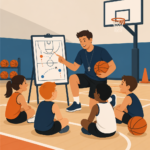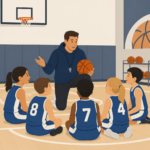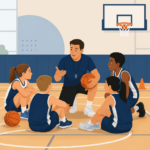

Coaching youth basketball for the first time can feel overwhelming, especially when you are balancing player development, safety, parent communication, and the simple fact that children learn the game very differently than adults expect. In youth basketball, coaching is not just calling plays or organizing drills. It means teaching age-appropriate skills, building confidence, establishing team routines, and creating an environment where players want to come back next season. For a first-time parent coach, that broader job description matters because the best youth basketball coaching starts with knowing what success actually looks like.
At the youth level, success is measured less by wins and more by improvement. A strong first season usually means players learn basic spacing, can dribble with both hands under light pressure, understand defensive stance, improve footwork, and become better teammates. It also means they feel safe, included, and clear about expectations. I have worked with first-year coaches who arrived worried about offense and end-of-game strategy, then discovered their season was really decided by simpler things: whether practice started on time, whether players stayed active instead of standing in lines, and whether communication with parents was steady and respectful.
This guide is built as a practical hub for youth basketball coaching. It covers how to prepare before the season, how to run effective practices, how to teach core skills, how to handle game day, how to communicate with families, and how to support player development over time. If you are asking common first-time coach questions such as “What should I teach first,” “How long should drills last,” “How do I manage different skill levels,” or “How do I keep practices fun and organized,” you will find direct answers here. The goal is simple: help you coach youth basketball with structure, confidence, and a plan that fits the way kids actually learn.
Start With Age-Appropriate Goals and a Simple Season Plan
The first job of a new youth basketball coach is to match expectations to the age and level of the team. A group of six- or seven-year-olds needs movement, repetition, and simple cues such as “eyes up,” “wide base,” and “show your hands.” A middle school travel team can handle more terminology, help defense concepts, and situational play. Problems start when coaches import high school or college ideas too early. Young players do not need a thick playbook. They need a foundation: athletic stance, balance, ball control, passing technique, layup footwork, defensive effort, and understanding where to stand.
Create a season plan before your first practice. Break the season into three phases. In the first phase, focus on rules, routines, dribbling, passing, layups, pivoting, stopping, and basic defense. In the second phase, add spacing, give-and-go action, rebounding habits, transition lanes, and simple team concepts such as man-to-man help. In the third phase, revisit fundamentals under more pressure and game speed. USA Basketball’s youth development guidance consistently emphasizes age-appropriate training, small-sided play, and progressive skill building. That is a sound model because it gives players the repetitions they need without overwhelming them with strategy they cannot yet apply.
Keep your written plan short enough to use. One page is often enough. List your top five season priorities, then map each practice to one or two priorities. If your players cannot yet jump stop, pivot, and protect the ball, that should appear in multiple sessions. Repetition is not boring when it is organized well. Boring practice usually comes from long speeches and standing still. Productive repetition comes from short explanations, quick demonstrations, and many touches on the ball. For first-time coaches, planning reduces stress because you stop improvising every session and start coaching with intention.
Run Practices That Keep Kids Moving and Learning
A good youth basketball practice is active, paced, and predictable. Players should know how practice starts, where water breaks happen, and what behavior earns correction. As a practical rule, use drills that involve as many players as possible at once. Avoid long lines under a basket where one child works and nine watch. In most gyms, you can split the court into stations and run ball-handling, passing, finishing, and footwork simultaneously. For younger ages, drill segments of six to eight minutes are usually enough before attention drops. Older youth players can handle slightly longer teaching blocks if they stay physically engaged.
A first-time coach also needs a repeatable structure. When I build youth practice plans, I usually start with dynamic movement and ball-handling, move into a skill of emphasis, add a competitive constraint-based drill, then finish with small-sided games. That order works because it raises body temperature, establishes focus, teaches a concept, and then gives players a chance to apply it. Small-sided play is especially valuable. Three-on-three and four-on-four create more decisions, more passes, more drives, and more defensive reads than full five-on-five for many youth teams. More involvement means more learning.
| Practice Segment | Time | Purpose | Example |
|---|---|---|---|
| Dynamic warm-up | 8 minutes | Prepare bodies and establish energy | Skipping, lunges, defensive slides, closeout footwork |
| Ball-handling | 10 minutes | Improve control and confidence | Pound dribbles, crossover series, retreat dribbles, eyes-up movement |
| Skill teaching | 12 minutes | Introduce one main concept | Jump stop, pivot, pass fake, chest pass on target |
| Competitive drill | 12 minutes | Add pressure and decision-making | One-on-one from the wing with limited dribbles |
| Team concept | 10 minutes | Teach spacing or defense | Shell drill for help position and closeouts |
| Small-sided game | 15 minutes | Transfer skills into play | Three-on-three no dribble or advantage transition game |
| Review and free throws | 8 minutes | Reinforce learning and close calmly | Two teaching points, partner free throws, team break |
Notice what is missing from that plan: long conditioning blocks. Young players get conditioning through well-designed drills and game play. Running extra laps after mistakes rarely teaches basketball and often damages trust. Use consequences carefully and favor accountability that connects to the skill, such as redoing a rep with proper spacing or communication. The best youth basketball practice plans are demanding without becoming punitive.
Teach the Fundamentals in the Right Order
For first-time coaches, the easiest trap is teaching too much offense before players can execute basic movements. Start with stance, starts and stops, pivots, and ball security. A player who can jump stop, reverse pivot, and pass out of pressure is already more functional than a player who knows the name of a set play but travels when trapped. Ball-handling should begin with posture, fingertips, off-hand protection, and vision. Passing should emphasize stepping to the target, using two hands when appropriate, and receiving the ball with ready hands. Shooting should start near the basket so mechanics are not sacrificed for distance.
Finishing is another priority because young players love attacking the rim, but many have never learned proper footwork. Teach right-hand layups off the left foot and left-hand layups off the right foot. Break the skill into pieces if needed: step pattern, knee drive, target on the backboard, then game-speed finish. On defense, teach stance, slide mechanics, staying between the ball and the basket, and closing out with controlled feet and active hands. Rebounding should be taught as a contact skill: find, hit, pursue, and secure with two hands. Those fundamentals show up in every game, regardless of system.
Use simple teaching language and one correction at a time. Instead of saying, “Your base is too narrow and your upper body is leaning, which ruins your balance on the gather,” tell a young player, “Wider feet. Chest tall.” Then let them rep it immediately. Demonstration matters too. If you cannot physically model every skill at speed, use an assistant, a capable player, or even a slow walkthrough. Children often learn faster from seeing than from hearing. The best youth basketball coaches are concise teachers. They know that short cues repeated consistently are more useful than long speeches delivered once.
Manage Games With Clear Priorities, Not Panic
Game day often feels like the test, but for youth basketball it is better viewed as feedback. Your job during games is to reinforce habits from practice, keep players composed, and make manageable adjustments. Before the game, define two or three team goals that do not depend on the scoreboard. Examples include sprinting back on defense, making one extra pass, boxing out on every shot, or reducing live-ball turnovers. These are measurable, teachable objectives. They also help players stay focused when emotions rise.
Rotations should be planned before tip-off whenever league rules allow. Many youth leagues require minimum playing time, and even where they do not, development still matters. If one or two strong players dominate the ball and minutes every week, the team may win short term while the rest of the roster stalls. Strong youth coaches think in seasons, not just Saturdays. They use games to expose players to pressure, decision-making, and responsibility. That may mean living with mistakes. A missed layup or bad pass is often more coachable than a player who never touches the ball in meaningful moments.
Timeouts should be calm and specific. Correct one offensive issue and one defensive issue. For example: “On offense, widen the floor and meet every pass. On defense, stop helping from one pass away.” Then send them back out. Halftime is similar. Avoid ten new ideas. Reinforce what is working, identify the biggest breakdown, and reset body language. After the game, do not turn the handshake line into a lecture. Share one positive, one learning point, and the next practice focus. Players remember your emotional tone as much as your tactical advice.
Communicate Well With Parents and Build a Healthy Team Culture
Many first-time coaches think their hardest conversations will be with players. Often, they are with adults. Set expectations early through a parent meeting or a written team message. Cover practice attendance, arrival times, playing time philosophy, game-day behavior, injury reporting, and how questions should be raised. A 24-hour cooling-off rule after games is useful because it prevents emotional sideline debates from becoming ongoing conflict. When parents know your standards in advance, they are less likely to assume unfairness when roles shift during the season.
Team culture is built through consistency more than slogans. Start practice on time. Use names. Praise effort that supports the group, not only scoring. Correct disrespect immediately. Make hustle, communication, and coachability visible values. One practical method is to reward behaviors you want repeated: best teammate of the day, best communicator, toughest rebounder, or most improved pivot footwork. This widens the definition of contribution and helps quieter players feel seen. It also teaches that basketball intelligence includes spacing, screening, tagging cutters, and helping teammates, not just making shots.
Be especially careful with criticism. Children can separate instruction from identity only if the coach does it first. Say, “That pass needed more zip,” not, “You are careless.” Say, “Sprint through the line,” not, “You are lazy.” The distinction matters because youth athletes borrow confidence from adult language. A demanding coach can still be encouraging. In fact, the most trusted coaches are usually those who combine high standards with emotional steadiness. Players improve faster when they know mistakes will be corrected clearly, not punished personally.
Handle Common First-Season Challenges With Practical Solutions
Every new youth basketball coach runs into the same set of problems: different skill levels, short attention spans, uneven effort, and confusion about what to prioritize. The solution is not more complexity. It is better structure. If your team has wide ability gaps, group players by task for parts of practice so everyone gets an appropriate challenge. On finishing drills, for example, stronger players can use weak-hand or contact variations while beginners focus on footwork and target. In scrimmages, add constraints that support development, such as requiring paint touches before a shot or limiting dominant ball-handlers.
If attention drifts, shorten explanations and increase touches. If effort drops, make drills competitive with clear scoring and quick resets. If turnovers are high, simplify your offense and revisit pivoting, catching, spacing, and passing angles. If defense breaks down, reduce the number of concepts. Young players usually need to master on-ball stance, help position, and closeouts before they can execute more advanced switching rules. When in doubt, return to fundamentals. Nearly every youth basketball problem becomes easier to solve when players can stop under control, see the floor, communicate, and protect the ball.
Keep learning as a coach as well. Watch reputable clinics, review practice film if available, and study resources from organizations such as USA Basketball, the Positive Coaching Alliance, and the National Federation of State High School Associations for rules and safety guidance. Borrow good ideas, but filter them through your team’s age and level. The best first-year coaches are not the ones who know the most plays. They are the ones who create a stable environment, teach the right basics, and improve from week to week. Start simple, stay organized, and keep the focus on development. If you do that, your first season coaching youth basketball will help players grow and will give you a foundation you can build on for years.
Frequently Asked Questions
1. What should a first-time youth basketball coach focus on first?
A first-time youth basketball coach should focus on three priorities before anything else: safety, structure, and simple skill development. It is tempting to think coaching starts with plays, lineups, or game strategy, but for young players, the foundation matters far more. Your first job is to create a safe environment where players understand expectations, warm up properly, stay hydrated, and learn basic movement habits that reduce the risk of injury. Your second job is to establish structure. Kids respond well when practices follow a predictable routine, such as a quick team talk, dynamic warm-up, skill stations, a fun competitive activity, and a short team recap. That rhythm helps players settle in, pay attention, and improve faster.
From there, concentrate on a small set of age-appropriate basketball skills. For most beginner or younger teams, that means athletic stance, balance, footwork, passing, catching, dribbling with control, layup steps, and defensive positioning. Keep instructions short and repeat the same core habits often. Players do not need a complicated offense right away. They need to learn how to stop under control, pivot without traveling, protect the ball, make a simple pass, and understand spacing. If they can do those things with confidence, the team will already be ahead of many first-year groups.
Equally important, focus on building confidence and enjoyment. Young athletes learn best when they feel supported, not judged. Praise effort, listening, hustle, and improvement as much as results. A player who misses a layup but uses the correct footwork deserves recognition. A child who struggles with dribbling but keeps trying needs encouragement. When players believe practice is a place where they can learn without embarrassment, they become more coachable and more willing to compete. If you make the season organized, positive, and skill-based, you will be doing exactly what a strong first-time coach should do.
2. How do I plan effective basketball practices for young players?
The best youth basketball practices are organized, fast-moving, and built around repetition without becoming boring. Young players usually lose focus during long speeches, extended waiting lines, or drills that are too advanced for their age. A good practice plan keeps players active and gives them many touches on the ball. In most cases, a 60- to 90-minute practice should include a brief opening, a dynamic warm-up, one or two fundamental skill blocks, a small-sided game or competitive drill, and a short closing review. That format gives enough repetition for improvement while keeping energy high.
Start by deciding on one or two main teaching goals for each practice. For example, one practice might focus on dribbling under control and jump stops, while another emphasizes passing, catching, and spacing. Avoid trying to teach everything at once. Young athletes retain more when the lesson is narrow and repeated in multiple ways. If the goal is passing, you might teach chest passes first, then run a partner passing drill, then add movement, then finish with a small game where players must complete three passes before shooting. This connects the skill to actual play, which helps kids understand why it matters.
Keep lines short and decisions simple. If only one child is moving and ten are standing still, the practice design needs work. Use stations, partner work, and small groups whenever possible. This increases repetition and reduces distractions. Also, use language that players can understand immediately. Instead of giving a long explanation about angles and timing, say something clear like, “Hands ready, step to the pass, and show your target.” Demonstrate visually whenever you can, because many children learn better by seeing than by listening alone.
Finally, end practices on a positive note. A quick team huddle to review what was learned, recognize effort, and preview the next practice creates a sense of progress and routine. Players and parents appreciate consistency. As a first-time coach, you do not need a perfect drill library. You need a clear plan, efficient transitions, and a commitment to teaching fundamentals in a way that is energetic and encouraging.
3. How can I teach basketball fundamentals without overwhelming beginners?
The key to teaching basketball fundamentals to beginners is to simplify the game into small, teachable parts and then build those parts gradually. Many first-time coaches overwhelm young players by correcting too many things at once or introducing advanced concepts before the basics are stable. Instead, teach one point at a time. If you are teaching dribbling, begin with posture, ball control, and using fingertips rather than trying to cover speed dribbles, crossovers, and pressure moves in the same session. If you are teaching defense, start with stance, staying balanced, and moving laterally before discussing help-side rotations.
Use a “show it, practice it, apply it” approach. First, demonstrate the skill clearly and briefly. Second, let players practice it in a controlled drill with lots of repetition. Third, put the skill into a simple game situation so they can connect the drill to real basketball. For example, after teaching jump stops and pivots, run a game where players catch a pass, make a jump stop, pivot, and pass to a teammate before the defense closes out. That sequence helps players understand the purpose of the technique rather than seeing it as an isolated exercise.
Another important strategy is to correct selectively. Beginners often make several mistakes at once, but if you mention all of them, they may freeze or become discouraged. Pick the most important correction and reinforce it repeatedly. A phrase like “eyes up while you dribble” or “wide base on defense” is easier for a child to remember than a long list of technical points. As players improve, you can layer in more detail. Coaching young athletes is often about timing: not just what you teach, but when you teach it.
Most of all, be patient with the learning curve. Young players need repetition far more than variety, and progress may look uneven from week to week. One child may understand passing quickly but struggle with footwork. Another may be fearless on offense but hesitant on defense. That is normal. Your job is to keep the learning environment positive, break skills into manageable steps, and celebrate growth. When beginners feel successful in small ways, they stay engaged long enough to become fundamentally sound players.
4. How should I communicate with parents as a first-time coach?
Strong parent communication can make a youth basketball season much smoother. As a first-time coach, it helps to set expectations early rather than waiting for confusion or frustration to appear. A simple welcome message or preseason meeting can explain your goals for the team, your coaching philosophy, practice schedule, game expectations, communication methods, and what you need from families. If parents understand from the start that your focus is player development, teamwork, effort, and sportsmanship, they are less likely to judge the season only by wins and losses.
Be clear and consistent. Let parents know how you will share updates, whether by team app, text thread, email, or printed schedule. Communicate practice times, arrival expectations, game locations, and any changes as early as possible. Parents are much more supportive when they feel informed. It is also wise to explain your sideline expectations. For example, you may ask parents to cheer positively, avoid coaching from the stands, and allow players to listen to one voice during games. This protects the learning environment and helps children stay focused.
When concerns come up, respond calmly and professionally. Parents usually want what they believe is best for their child, even when their approach is emotional or poorly timed. If a parent has a question about playing time, development, or team role, it is often better to discuss it privately after emotions have settled rather than immediately after a game. Listen respectfully, explain your thinking clearly, and bring the conversation back to development, effort, and team goals. You do not need to win every disagreement. You do need to remain composed, fair, and consistent.
It also helps to communicate positive things, not just logistics or problems. A quick note about the team improving at passing, a compliment about great effort in practice, or recognition of sportsmanship goes a long way. Parents want reassurance that their children are learning and being supported. When they see that you care about the players as people, not just performers, trust increases. Good parent communication is not about saying more. It is about being proactive, respectful, and aligned around what youth sports should be: a place for children to grow.
5. What matters more in first-time youth coaching: winning games or developing players?
For a first-time youth basketball coach, player development should matter more than winning, especially in younger age groups. That does not mean games are unimportant or that competition should be ignored. It means the long-term goal is to help players improve skills, confidence, decision-making, teamwork, and love for the game. A team that wins because one or two advanced players dominate the ball may have short-term success, but that approach often slows development for the rest of the group. In contrast, a team that learns to pass, defend, communicate, and make smart decisions is building habits that last beyond a single season.
Development-first coaching also creates a healthier environment for children. Young players need room to make mistakes, experiment, and learn under game pressure. If the only thing that matters is the scoreboard, coaches often