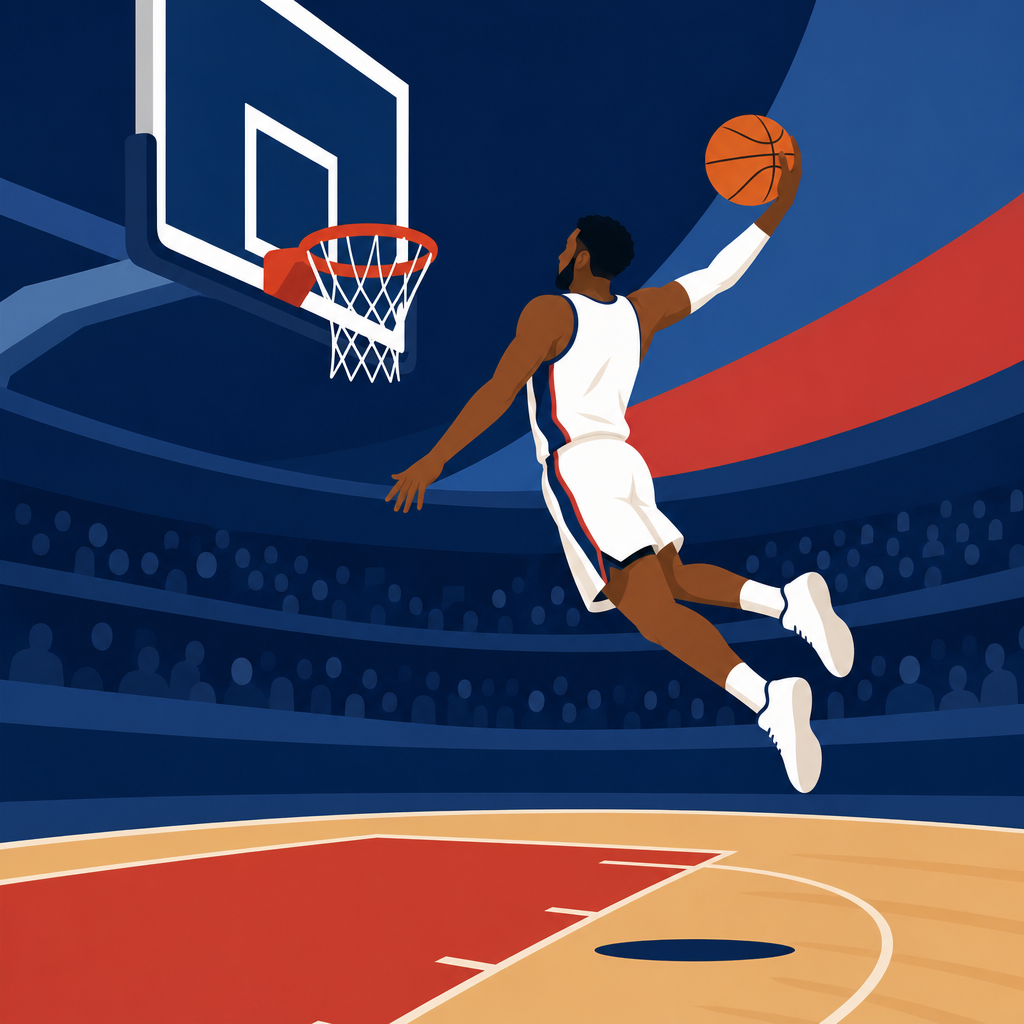

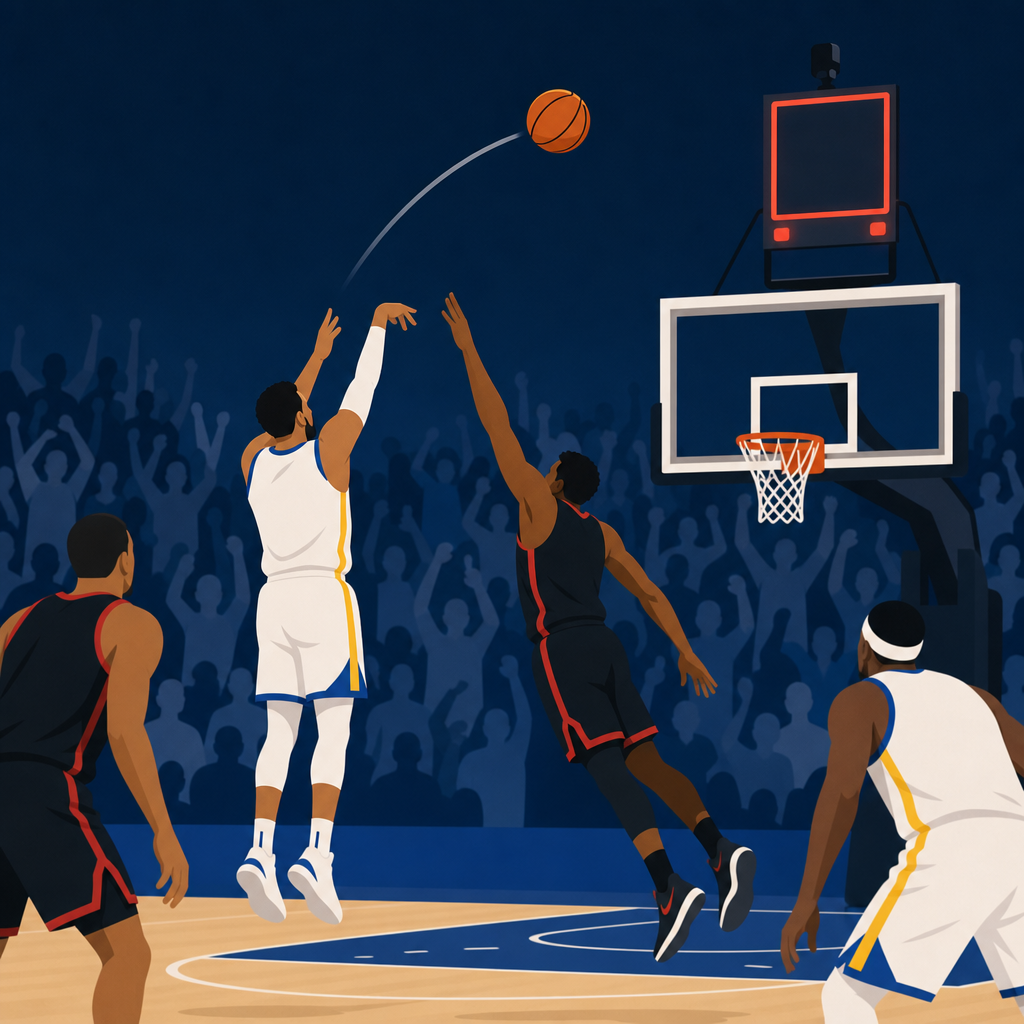
A buzzer beater is a shot released before the game clock expires that goes through the basket after the horn sounds, and in NBA history no play captures pressure, skill, and legacy more completely. Within the broader story of NBA history, buzzer beaters sit at the intersection of rules, technology, iconic rivalries, and the evolution of stars across eras. Fans use the term loosely, but the official standard is precise: the ball must leave the shooter’s hand with 0.1 seconds or more remaining, and replay must confirm release before time hits 0.0. If the shot counts and it ends a quarter, wins a game, or swings a playoff series, it becomes part of basketball memory almost instantly.
This topic matters because playoff buzzer beaters are not just highlights. They reveal how the league changed from the hand-checking, bruising style of earlier decades to the spacing and shot creation of modern offenses. They also connect the “Legends and Eras” side of NBA history better than almost any other single play type. Michael Jordan, Magic Johnson, Larry Bird, Kobe Bryant, LeBron James, Kawhi Leonard, Damian Lillard, and Derek Fisher all have moments that help define their eras. Coaches, referees, and replay officials study these possessions carefully because clock rules, catch-and-shoot timing, and end-of-game execution decide championships as much as talent does. When people ask what separates regular stars from enduring legends, the answer often starts with who delivered when there was no time left.
What counts as a buzzer beater under NBA rules
In practical terms, a buzzer beater happens when a player releases a legal shot before the period expires and the ball then enters the basket after the horn. NBA timing rules matter here. Since the clock starts on a touched inbounds pass and stops on made field goals in the final minute only under specific circumstances, end-of-game sequences are tightly regulated. Instant replay has become essential because officials must determine whether the shooter still had contact with the ball when the red light around the backboard illuminated or the game clock reached zero. If any fingertip remains on the ball at 0.0, the basket cannot count.
There is also a critical distinction between a true shot attempt and a tip-in. Under long-standing NBA interpretation, a player needs at least 0.3 seconds to catch and shoot because that action requires control of the ball. With 0.2 or 0.1 seconds remaining, the only legal scoring play is a tap or direct tip. That rule shaped famous endings and has prevented many apparent winners from counting. I have worked through late-game video reviews frame by frame, and the difference between a valid release and a disallowed basket is often a fraction of a second, not judgment or drama. The rule is technical, but it protects competitive integrity.
Why buzzer beaters matter in the history of legends and eras
Buzzer beaters have unusual historical weight because they compress an era into one image. Jordan’s hang time and isolation scoring fit the 1990s Bulls dynasty. Magic’s skyhook in the 1987 Finals reflected the Showtime Lakers’ pace, confidence, and precision. Kawhi Leonard’s four-bounce winner in 2019 represented the modern era’s emphasis on two-way wings, load management, and half-court shot creation against elite playoff defenses. These moments are replayed because they explain a larger basketball context in seconds.
They also become shortcuts for how fans remember players. A Hall of Fame résumé is built over years, but one made shot can change perception immediately. That does not mean clutch value is mystical. End-of-game success still depends on shot quality, defensive scheme, clock awareness, and roster construction. Yet repeated playoff shot-making under pressure does separate certain players from the field. Across different eras, the names recur because their teams trusted them to read coverages, create separation, and accept the consequences. In that sense, buzzer beaters are historical evidence, not just entertainment.
The skills behind a playoff buzzer beater
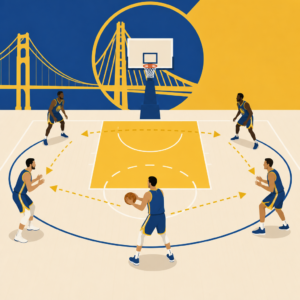
Most memorable playoff buzzer beaters look spontaneous, but they are usually the product of practiced end-of-game process. The first requirement is clock management. Elite players know whether they need to attack early for a potential rebound, hold for the final shot, or create a two-for-one. The second requirement is spatial awareness. Shooters must understand where help defense is coming from, where the sideline and baseline remove dribble options, and how much room exists for a turnaround, step-back, or catch-and-shoot release. The third is emotional regulation. Crowd noise, fatigue, and score context make mechanics harder to repeat cleanly.
Coaching matters just as much. Teams script sideline out-of-bounds actions, decoy cuts, and counter options based on likely switches. Phil Jackson’s triangle offense created clear spacing for Jordan and Bryant. Gregg Popovich’s Spurs routinely generated quick-hitting looks through timing and screening angles. Erik Spoelstra’s late-game sets emphasize multiple options so the defense cannot load onto one scorer. The best buzzer beaters often come from an offense that understands not only who should shoot, but exactly where that player must catch the ball to minimize help.
| Shot | Year | Why it mattered |
|---|---|---|
| Michael Jordan vs Cavaliers | 1989 | Ended the series and launched “The Shot” into league mythology |
| Derek Fisher vs Spurs | 2004 | Counted with 0.4 seconds left in a conference semifinal classic |
| Kawhi Leonard vs 76ers | 2019 | First Game 7 series-winner at the buzzer in NBA history |
| Damian Lillard vs Thunder | 2019 | Series-ending 37-foot three that closed an era in Oklahoma City |
Michael Jordan and the standard for playoff game winners
No discussion of NBA playoff buzzer beaters starts anywhere other than Michael Jordan’s 1989 series-clincher against Cleveland, still known simply as “The Shot.” In Game 5 of the first round, Jordan caught the inbounds pass, drove right, elevated over Craig Ehlo, and hit the winner as time expired. The image of Ehlo collapsing while Jordan leapt in celebration became one of the defining still frames of NBA history. The basket mattered beyond one series. It announced Jordan as the league’s inevitable central figure and showed that late-game scoring could become both art and intimidation.
Jordan produced other playoff daggers too, but this one remains foundational because it linked individual brilliance to franchise destiny. The Bulls had not yet become champions. The shot arrived before the six titles, before the complete mythology was established, and that timing made it more powerful. It was evidence of what was coming. From a technical standpoint, the play also illustrates how little separation a great scorer needs. Jordan changed pace, got to a preferred midrange spot, and maintained balance under full pressure. That template influenced Kobe Bryant, DeMar DeRozan, and many other wing scorers who built careers on similar footwork.
Magic, Bird, and the playoff endings that shaped the 1980s
The 1980s are often remembered through the Lakers-Celtics rivalry, and late-game shot making was central to that rivalry’s hold on the league. Magic Johnson’s junior skyhook in Game 4 of the 1987 Finals was not a buzzer beater in the strictest sense, but it belongs in this conversation because it functions historically like one: road arena, championship stakes, and a possession that altered the balance of a series. It demonstrated that the Showtime Lakers were more than fast breaks. In the biggest moment, they could execute in the half court through touch, length, and calm.
Larry Bird’s legacy in clutch moments was built differently. Bird thrived on anticipation, positioning, and ruthless confidence rather than sheer elevation or burst. His famous steal against Detroit in the 1987 Eastern Conference Finals set up Dennis Johnson’s winning layup, a reminder that end-of-game greatness is not limited to the final shooter. Bird-era basketball also explains why many older playoff endings look more crowded than modern ones. Illegal defense rules existed, but floor spacing was tighter, three-point volume was lower, and offenses often finished possessions in heavy traffic. That environment made clean buzzer-beater looks harder to create.
The precision era: replay, tenths of a second, and Derek Fisher’s 0.4
Few playoff endings explain NBA timing rules better than Derek Fisher’s 0.4-second shot against the Spurs in Game 5 of the 2004 Western Conference semifinals. Tim Duncan had just hit an improbable turnaround over Shaquille O’Neal with 0.4 seconds left. On the next play, Fisher caught, turned, and released in one motion for a 37-foot make that counted. Spurs players protested, but replay confirmed the release beat the horn. It remains one of the cleanest examples of how catch mechanics, body preparation, and timing awareness can produce a legal shot in almost no time.
That sequence also accelerated how fans understood replay review. Before widespread high-definition angles and standardized replay processes, people often argued from memory or emotion. Fisher’s shot showed why synchronized clock and backboard-light evidence matter. It also highlighted the distinction between 0.4 and 0.3. At 0.4, a player may catch and shoot. At 0.3, the league generally treats a controlled catch-and-shoot as impossible in game conditions. This is one reason coaches obsess over setting the clock correctly after stoppages. One tenth of a second can change the available playbook entirely.
Kobe, LeBron, and the modern expansion of clutch shot creation
Kobe Bryant carried the Jordan lineage into the 2000s with a similar commitment to difficult, late-clock shot making. His playoff game winners against Phoenix in 2006 and his broader body of endgame work reinforced a principle coaches know well: the closer the defense is to perfect, the more valuable a scorer becomes who can rise over coverage without needing a scheme-generated layup. Bryant’s footwork, jab sequencing, and comfort from either elbow made him unusually hard to neutralize when the possession had to end with one shot.
LeBron James changed the geometry of these moments. Early criticism claimed he passed too often in final possessions, but the fuller historical record is clear: he became one of the most productive playoff late-game scorers ever. His buzzer beaters against Orlando in 2009, Indiana in 2013, Toronto in 2018, and his banked winner against Chicago in 2015 show range in both style and decision-making. Unlike pure midrange assassins, LeBron can win with power drives, post seals, catch-and-shoot threes, or off-glass improvisation. That versatility reflects the modern game’s broader spacing and the demand that stars read multiple help layers in real time.
Kawhi Leonard, Damian Lillard, and the defining buzzer beaters of the 2010s
Kawhi Leonard’s Game 7 winner over Philadelphia in the 2019 Eastern Conference semifinals may be the most dramatic true playoff buzzer beater ever. Tied score, final possession, road game, one-leg fade from the right corner, and four bounces before the ball fell. It was the first Game 7 series-winning buzzer beater in NBA history, which alone gives it permanent significance. But the play also represented the decade’s tactical reality. Philadelphia had length everywhere, Toronto trusted a primary wing creator to work in space, and the possession ended with a difficult shot because elite defenses often force exactly that.
Damian Lillard’s series-ending three over Paul George that same postseason belongs beside it for different reasons. The shot came from 37 feet, reflecting the era’s expanded shooting range and the confidence modern guards have developed from deep pull-up territory. It also instantly closed Oklahoma City’s Westbrook-George chapter. That is what legendary buzzer beaters do at the historical level: they do not merely win games; they close narratives and open new ones. After that make, Lillard was no longer just an excellent scorer. He became attached to one of the era’s signature playoff exits.
How this hub connects the legends and eras of NBA history
As a hub within NBA history, this topic links naturally to dynasty studies, rivalries, player biographies, rule changes, and the evolution of offensive strategy. If you are building out coverage of “Legends and Eras,” buzzer beaters provide an efficient path through the timeline. The 1960s and 1970s emphasize foundational stars, television growth, and the merger context. The 1980s center on Lakers-Celtics and the rebirth of league popularity. The 1990s revolve around Jordan and the Bulls’ championship machine. The 2000s highlight Shaq-Kobe, Spurs precision, and defensive physicality. The 2010s and 2020s focus on pace-and-space basketball, superstar mobility, and deep-range shot creation.
Seen together, the most memorable NBA playoff buzzer beaters form a map of basketball history. They teach the rules, reveal the strategies, and humanize the legends. More importantly, they show that every era produces its own version of pressure and brilliance. The names change, the spacing changes, and the replay technology improves, but the standard remains constant: release before the horn, make the shot, and own the moment forever. If you are exploring NBA history through legends and eras, start with these endings, then follow each one into the teams, rivalries, and tactical shifts that made it possible. That is where the league’s biggest stories come alive.
Frequently Asked Questions
What exactly is a buzzer beater in basketball?
A buzzer beater is a made shot that is released before the game clock expires and then goes through the basket after the horn sounds. That timing element is what makes it distinct. The shot does not have to leave the shooter’s hand long before the buzzer; it simply must be out of the player’s control before time reaches 0.0. If the ball is still touching the shooter’s hand when the clock expires, the basket does not count, no matter how dramatic the finish looks in real time.
In everyday conversation, fans often use “buzzer beater” to describe any late game-winning shot, even one made with a second or two left. Officially, though, the term is narrower. A true buzzer beater ends the period or game at the horn. That is why these plays hold such a special place in NBA history: there is no time left for a response, no extra possession, and no chance to recover from a mistake. The result changes instantly from possibility to finality.
In playoff settings, buzzer beaters carry even more weight because the stakes are magnified. One shot can swing a series, preserve a season, eliminate a contender, or elevate a player’s reputation forever. That combination of precision, pressure, and permanence is why buzzer beaters are remembered as more than just made baskets. They become defining moments in the league’s larger story.
What are the official NBA rules that determine whether a buzzer beater counts?
The key rule is simple but strict: the ball must leave the shooter’s hand before the game clock hits 0.0. If instant replay shows that the player still had contact with the ball after time expired, the basket is waved off. In modern NBA games, officials rely heavily on replay review in end-of-period situations because these plays are often too close to judge accurately in real time.
Another important detail involves the minimum time needed for a player to control and release the ball. Under NBA timing standards, with 0.3 seconds or less on the clock, a player generally cannot catch the ball and make a conventional shot. In that situation, only a tip-in or direct alley-oop style redirection is allowed. With 0.1 or 0.2 seconds remaining, there is not enough time to secure possession, gather, and shoot in a normal motion. That is why discussions about buzzer beaters often mention 0.1 seconds as a meaningful threshold in the rulebook and in replay analysis.
The review process also considers whether the shot was released before a shot clock violation, whether any foul occurred before time expired, and whether the basket was worth two or three points. Technology has made these determinations more precise, but it has also highlighted how razor-thin the margins can be. A frame or two can decide whether a shot becomes an iconic game winner or an unforgettable near miss.
Why are NBA playoff buzzer beaters considered more memorable than regular-season ones?
Playoff buzzer beaters matter more because the consequences are larger and the emotional intensity is higher. Every possession in the postseason carries added weight, and every mistake is magnified. A buzzer beater in April can be thrilling, but a buzzer beater in May or June can define a franchise, alter a championship race, and become part of basketball history for decades.
There is also a narrative element that makes playoff buzzer beaters endure. These shots often happen within fierce rivalries, against elite defenses, and under the pressure of scouting, fatigue, and hostile road environments. When a star creates a clean look despite all of that, the moment feels like the ultimate proof of shot-making ability, confidence, and poise. Fans remember not just the basket, but the context: the series score, the crowd reaction, the defender, and what was at stake.
Some playoff buzzer beaters are remembered because they ended a series immediately. Others live on because they shifted momentum and changed how a matchup unfolded. In either case, they compress drama into a single second. That is why so many of the most famous postseason images in NBA history involve a player rising for a last shot while the clock winds down and everyone in the arena knows the season may hinge on one release.
What are some of the most memorable buzzer beaters in NBA playoff history?
Several postseason buzzer beaters stand above the rest because of their difficulty, stage, and long-term impact. Michael Jordan’s series-winning jumper over Craig Ehlo in 1989 is one of the most famous. It was a first-round winner for the Chicago Bulls against the Cleveland Cavaliers, and the image of Jordan leaping in celebration became part of NBA mythology. It represented both individual greatness and the rise of a player who would soon define the league.
Kawhi Leonard’s Game 7 shot against the Philadelphia 76ers in 2019 is another all-time example. The ball bounced on the rim multiple times before falling, giving the moment a level of suspense rarely matched in playoff history. Because it came in a winner-take-all Game 7 and sent Toronto to the Eastern Conference Finals, it instantly became one of the signature shots of the modern era.
Damian Lillard’s deep three against the Oklahoma City Thunder in 2019 also deserves a place on the list. It was a series-ending shot from extraordinary range, delivered with complete confidence, and followed by one of the coldest walk-off moments the playoffs have seen. Other historic examples include Derek Fisher’s 0.4-second shot in 2004, which showcased the importance of timing rules and late-game execution, and John Stockton’s 1997 Western Conference Finals winner that sent the Utah Jazz to the NBA Finals. These shots endure because they combined elite skill with the highest possible stakes.
How have replay technology and clock precision changed the way buzzer beaters are judged and remembered?
Replay technology has transformed buzzer beater rulings from educated guesses into evidence-based decisions. In earlier eras, officials had to rely mostly on their live view of the play, which made extremely close calls harder to get right. Today, high-definition camera angles, synchronized clock feeds, and frame-by-frame review allow referees to determine exactly when the ball left the shooter’s fingertips and whether time remained on the clock.
That precision has made the official definition of a buzzer beater more widely understood. Fans now regularly see reviews that confirm whether a shot counts, whether it beat the shot clock, or whether the release was late by the slimmest fraction of a second. The added clarity has helped separate true buzzer beaters from shots that merely happened late in the game. It has also deepened appreciation for how difficult these plays really are, because viewers can see how tiny the margin is between success and failure.
At the same time, technology has added a new layer to how these moments are remembered. Modern buzzer beaters are replayed instantly from multiple angles, analyzed in detail, and preserved as viral highlights. That can elevate a moment even further, but it can also turn a disputed finish into a lasting debate. Either way, replay has not reduced the drama. If anything, it has sharpened it by showing that the most iconic shots in NBA playoff history often come down to timing so exact that legacy itself seems measured in tenths of a second.