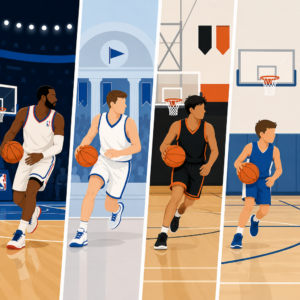

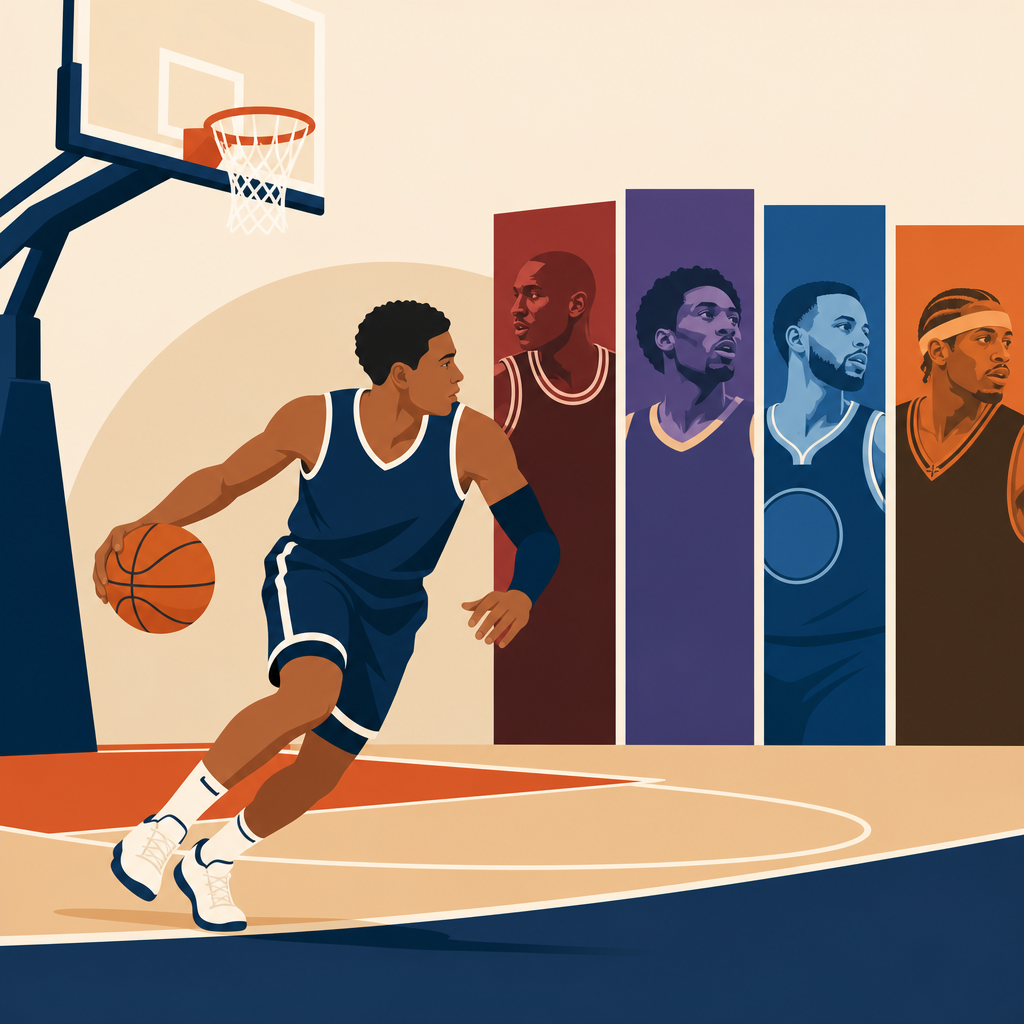
The shooting guard position sits at the heart of modern basketball because it blends perimeter scoring, off-ball movement, ball handling, and defensive versatility into one demanding role. In the NBA basics conversation, understanding positions and roles starts with knowing what a shooting guard actually does, how that job has changed across eras, and why the best players at the position have shaped the way the sport is played. A shooting guard, often called the two guard, is usually a backcourt player responsible for creating points from the outside, attacking gaps off the dribble, spacing the floor, and defending opposing guards or wings. In practice, the role is broader than the name suggests. Some shooting guards are elite catch-and-shoot specialists. Others are primary scorers who run pick-and-roll, close games, and function like lead creators.
I have always found the shooting guard role to be the easiest position for casual fans to recognize and the hardest to define precisely. That is because roster design changes what teams ask from the spot. On one team, the shooting guard may be a movement shooter flying off screens. On another, the same position may be occupied by a downhill slasher, a defensive stopper, or a superstar scorer who dominates every late-clock possession. The common thread is perimeter offense paired with wing-level responsibilities. If point guards organize the attack and centers anchor the paint, shooting guards often convert possessions into points under pressure.
This matters because the shooting guard position connects every other role on the floor. It influences spacing for the center, driving lanes for the point guard, and defensive matchups for the small forward. It is also one of the clearest windows into how the NBA has evolved from midrange-heavy isolation basketball to three-point volume, read-and-react offense, and switchable defense. For anyone learning positions and roles, the shooting guard offers a practical hub: by studying the two guard, you also learn about usage rate, shot profile, weak-side action, screen navigation, transition scoring, and lineup construction. That makes this position a foundation for understanding how complete teams operate.
What the shooting guard position does on offense
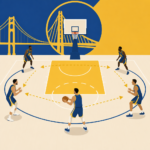
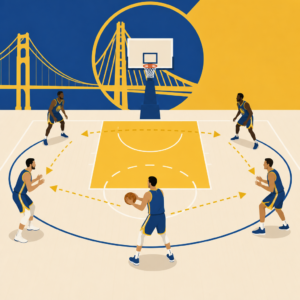
The core offensive duty of a shooting guard is simple: score efficiently from the perimeter while fitting beside another ball handler. In the half court, that usually means a mix of spot-up shooting, coming off pin-downs, curling into the lane, attacking closeouts, and creating in late-clock situations. The best shooting guards are dangerous without monopolizing the ball. Coaches value that because a two guard who can score off movement preserves rhythm and spacing for the rest of the lineup. Klay Thompson is a classic example. During Golden State’s title runs, he punished defenses with relocation threes, flare-screen actions, and quick-trigger jumpers that required almost no dribbles.
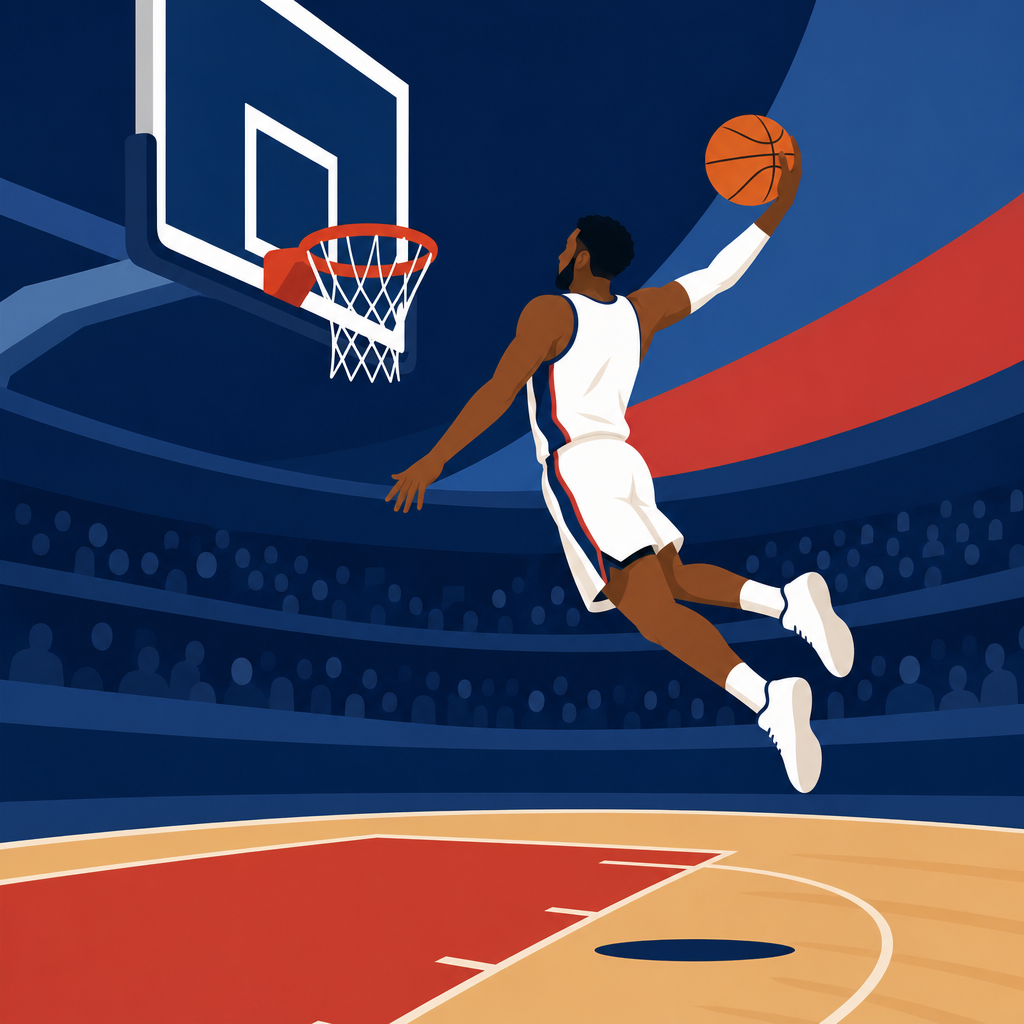
Not every great shooting guard scores the same way. Devin Booker can operate as a polished three-level scorer, threatening from the arc, midrange, and rim. Anthony Edwards combines pull-up shooting with explosive rim pressure. Historically, Reggie Miller weaponized constant movement to wear down defenders, while Dwyane Wade thrived as a slasher who attacked seams, drew fouls, and collapsed the paint. The role therefore includes several archetypes: movement shooter, combo scorer, shot creator, slasher, and secondary playmaker. What separates a true shooting guard from a generic wing is that the player must consistently generate perimeter offense against backcourt pressure.
Off-ball intelligence is essential. Good shooting guards read help defenders, time their cuts, and know how to flatten to the corner or lift above the break depending on where the ball is. In film study, coaches focus on details such as screen angle, footwork into the catch, and the ability to make a rapid decision in 0.5 seconds: shoot, drive, or swing the ball. Those choices show up in efficiency metrics like true shooting percentage, points per possession as a spot-up player, and turnover rate. A shooting guard does not need to be the team’s lead passer, but the position requires quick processing because defenses rotate fast against perimeter threats.
What the shooting guard position does on defense
Defensively, the shooting guard position is about containment, screen navigation, and adaptability. Most teams ask the two guard to defend opposing guards, high-usage scorers, or whichever perimeter threat best fits the matchup. That means chasing players through stagger screens, contesting pull-up jumpers without fouling, tagging cutters from the weak side, and helping on drives before recovering to shooters. In today’s NBA, where offenses hunt mismatches through ball screens and dribble handoffs, a shooting guard who cannot stay attached or switch competently becomes a target immediately.
The best defensive shooting guards combine lateral quickness with anticipation. Michael Jordan and Kobe Bryant are remembered for scoring, but both earned All-Defensive recognition because they disrupted actions before they developed. Tony Allen, though limited offensively, showed what elite point-of-attack defense from a guard can look like: chest-to-chest pressure, active hands, disciplined footwork, and relentless effort through every cut and screen. Jrue Holiday, often listed as a guard with either backcourt designation depending on lineup context, is another modern example of how guard defense can bend playoff series. Strong guard defenders shrink available space for stars and force late-clock offense into lower-value shots.
Rebounding and physicality also matter more than many new fans assume. A shooting guard who secures defensive rebounds can start transition without an outlet pass, which increases tempo and creates cross-matches. That is one reason bigger two guards are prized. Players around 6-foot-5 to 6-foot-7 with strength can absorb contact, switch onto wings, and still provide ball skills. The league’s move toward positionless basketball has blurred lines, but it has not removed the need for a dependable shooting guard defender. It has simply raised the standard from “guard your man” to “survive every action the offense throws at you.”
How the role fits within positions and roles
As the hub for positions and roles, this is the key idea: the shooting guard position only makes full sense when viewed next to the point guard, small forward, power forward, and center. In a traditional setup, the point guard initiates, the shooting guard scores from the perimeter, the small forward adds wing balance, the power forward screens and rebounds, and the center protects the rim. In modern systems, those jobs overlap, but lineup balance still matters. A team with a non-shooting guard next to a non-shooting center can clog the floor. A team with two small guards may create offense but give up size defensively. Coaches build rotations to avoid those tradeoffs.
That is why the shooting guard is often described as a bridge role. The position links guard skills with wing responsibilities. If your point guard is ball dominant, the shooting guard must space the floor and attack second-side actions. If your point guard is more of a connector, the shooting guard may need to handle a star-level usage load. If your small forward is a big defender, the two guard can take easier assignments. If the roster lacks creation, the shooting guard becomes an on-ball engine. In other words, positions and roles are not labels first; they are solutions to lineup needs.
| Position | Primary offensive job | Primary defensive job | How the shooting guard connects to it |
|---|---|---|---|
| Point Guard | Initiate sets, organize pace, create advantages | Contain lead ball handler | Shares backcourt creation and provides spacing or secondary playmaking |
| Shooting Guard | Perimeter scoring, movement shooting, attack closeouts | Guard perimeter scorers, navigate screens | Balances the backcourt and turns advantages into points |
| Small Forward | Wing scoring, cutting, transition finishing | Switch across multiple matchups | Works in tandem on the wing to handle size and spacing demands |
| Power Forward | Screening, interior finishing, spacing in some systems | Rebounding, help defense | Benefits from guard gravity on the perimeter and creates screens for the two guard |
| Center | Rim pressure, screening, paint finishing | Rim protection, interior coverage | Opens cleaner shots when the center draws help and relies on guard spacing |
For readers exploring NBA basics, this table is the simplest framework to keep in mind: each position has a core function, but the shooting guard’s value rises when it complements the strengths and weaknesses around it. That is why role clarity matters more than roster labels.
Skills that define a great shooting guard
The first defining skill is shooting versatility. A top shooting guard must hit catch-and-shoot threes, punish defenders going under screens, and remain credible from the corners and above the break. According to league tracking over the past decade, high-volume three-point shooting has become nonnegotiable for most contenders because it stretches weak-side help and improves expected points per shot. But shotmaking alone is not enough. Footwork separates good scorers from elite ones. Players who can hop into balance, one-two into space, or stop on a dime for a pull-up create efficient offense without needing perfect play calls.
The second skill is self-creation. Even if the offense is designed around a point guard or a heliocentric star, playoff possessions often stall. When that happens, the shooting guard must be able to beat a closeout, reject a screen, or get to a reliable counter in the midrange. That is where players like Kobe Bryant and Booker stand out. They could flow from first option to bailout scorer without looking rushed. The third skill is decision-making. A two guard who forces contested jumpers may score points, but efficient teams need the right shot at the right time. Assist-to-turnover ratio, paint touches, and quality of passing reads all reveal whether a scorer actually helps an offense scale.
Finally, durable defense and conditioning matter. Shooting guards cover miles over an 82-game season because they sprint through actions on both ends. Reggie Miller’s endurance was legendary. Ray Allen’s preparation kept his movement game effective deep into his career. Coaches and performance staffs monitor workload because the role demands repeated accelerations, decelerations, and direction changes. Great two guards make hard skills look smooth, but the base of the position is physical readiness married to technical precision.
Who has played the shooting guard position best
If the question is who has played the shooting guard position best, the shortest credible list starts with Michael Jordan, Kobe Bryant, Dwyane Wade, Jerry West, and James Harden, with strong historical cases for George Gervin, Clyde Drexler, Allen Iverson, and Reggie Miller depending on how strictly you classify guards. Jordan remains the standard because he paired scoring volume with elite efficiency for his era, postseason dominance, playmaking growth, and top-tier defense. He won ten scoring titles, six championships, six Finals MVPs, and a Defensive Player of the Year award. No other shooting guard matched that complete résumé.
Kobe Bryant sits in the next tier for most analysts because of his shotmaking difficulty, longevity, championships, and cultural influence on perimeter skill development. His footwork, counter game, and late-clock creation became a template for generations of guards and wings. Wade has a different case: fewer years at the very top, but tremendous peak value driven by rim pressure, transition offense, weak-side shot blocking, and championship-level playoff performance. In 2006 he authored one of the greatest Finals by a guard, relentlessly attacking the paint and forcing defensive collapse. West, despite playing in an earlier era, deserves serious respect because he was an advanced shot creator and passer whose impact translated across regular season and playoffs.
Harden is the most polarizing all-time candidate, but his peak cannot be dismissed. He changed spacing geometry through step-back threes, foul drawing, and pick-and-roll orchestration. Some fans classify him as a point guard during certain seasons, which shows again how fluid positions and roles can be. For pure shooting guard lineage, he still belongs in the discussion because his scoring and playmaking from the two spot drove elite offenses. My own ranking prioritizes two-way playoff-proof value, so Jordan is clearly first, Kobe second, Wade third, then a debate among West, Harden, Drexler, and Miller depending on whether you weigh scoring efficiency, creation burden, era context, and defense more heavily.
How the shooting guard position has changed over time
In earlier NBA eras, shooting guards often lived in the midrange, operated off floppy action, and attacked from the post more than many current guards do. Hand-checking rules, illegal defense guidelines, and different spacing norms shaped the job. Jordan and Bryant thrived in triangle-based environments where post entries, split cuts, and isolations created chances to score from elbows and low blocks. Miller and Allen represented another path: constant movement shooting within half-court structure. As the league emphasized pace, space, and three-point efficiency, the position expanded outward. Now teams want two guards who can launch from deep, run secondary pick-and-roll, and survive defensive switching.
The result is a role with more tactical variety than ever. Some teams start oversized creators at shooting guard. Others use pure spacers. Others deploy defensive specialists next to a dominant initiator. What has not changed is the premium on backcourt scoring under pressure. The best shooting guards still create hard shots late in games, still punish indecision in coverages, and still carry major playoff responsibility. If you want to understand basketball positions and roles at a deeper level, start here, then compare how the point guard, small forward, power forward, and center alter the demands placed on the two guard. That context reveals why the position remains one of the NBA’s defining jobs.
The main takeaway is straightforward: the shooting guard position is not just about shooting. It is about converting offensive advantages into points, defending skilled perimeter players, and adapting to whatever a lineup needs. The best shooting guards in NBA history combined scoring craft, footwork, decision-making, and competitive durability, with Michael Jordan still standing as the clearest benchmark. For readers using this page as a hub for positions and roles, the next step is simple: study how the shooting guard works beside the other four positions, because that is where basketball strategy becomes easiest to see and most rewarding to understand.
Frequently Asked Questions
What does a shooting guard do in basketball?
A shooting guard, or “two guard,” is typically responsible for providing scoring from the perimeter while also contributing as a secondary ball handler, floor spacer, and perimeter defender. In the most basic sense, this position is built around putting pressure on the defense. A shooting guard may do that by making catch-and-shoot jumpers, coming off screens, attacking closeouts off the dribble, cutting without the ball, or creating in late-clock situations when the offense needs a basket. Unlike a point guard, who is usually the team’s primary organizer, the shooting guard often works within the flow of the offense and looks for scoring opportunities as they develop.
That said, the role is much broader than simply “the player who shoots.” Modern shooting guards are often asked to read defenses, make quick passing decisions, and switch across multiple defensive matchups. On one possession, a two guard might sprint around a screen to hit a three-pointer; on the next, they may defend the opposing team’s top perimeter scorer or help initiate a pick-and-roll. The best shooting guards combine skill, timing, and awareness. They understand spacing, know how to move without dominating the ball, and can still create offense when a set breaks down. That combination is why the position has long been one of the most dynamic and influential roles in basketball.
How is a shooting guard different from a point guard or small forward?
The main difference comes down to primary responsibilities, even though today’s game often blurs the lines between positions. A point guard is generally the lead playmaker, responsible for setting up the offense, bringing the ball up the floor, and making sure teammates get organized. A shooting guard, by contrast, is more often tasked with finishing possessions, finding scoring openings, and supporting the offense as a secondary creator rather than serving as the full-time director. Many shooting guards can handle the ball and make plays, but they are usually judged more by how effectively they score, move off the ball, and defend on the perimeter.
Compared with a small forward, the shooting guard usually plays more in the backcourt and spends more time operating around the three-point line, navigating screens, and dealing with opposing guards. Small forwards tend to have more frontcourt responsibilities, including guarding bigger wings, rebounding more consistently, and often playing a more physical style. Of course, there is overlap. Some players are “combo guards” who share point guard duties, while others are wing scorers who can slide between shooting guard and small forward depending on the lineup. Still, if you are learning NBA basics, it helps to think of the shooting guard as the position that connects guard skills with wing scoring: enough ball handling to create, enough shooting to stretch the floor, and enough athleticism and versatility to impact both ends.
How has the shooting guard position changed over time?
The shooting guard position has evolved dramatically as basketball strategy has changed. In earlier eras, many shooting guards were known primarily as scorers who operated in the mid-range, curled off screens, and attacked from the perimeter without necessarily being asked to run the offense. The classic version of the role emphasized footwork, one-on-one scoring, and strong man-to-man defense. These players often worked alongside a traditional point guard who handled most of the playmaking and a frontcourt built around interior scoring. In that structure, the shooting guard’s job was clear: provide offense from the outside, create in isolation when needed, and defend the opposing backcourt.
In the modern NBA, the position has expanded. Shooting guards are now expected to shoot efficiently from three-point range, make quick decisions in spread pick-and-roll actions, and switch defensively across multiple positions. Analytics, pace-and-space offenses, and positionless basketball have all pushed the role toward greater versatility. A top shooting guard today might function as a lead scorer, an initiator, and a key defender all at once. Instead of living mostly in the mid-range, many now generate value through three-pointers, drives to the rim, free throws, and playmaking reads. Even so, the core remains the same: the best shooting guards are perimeter players who can score in a variety of ways and influence the game whether they have the ball or not. The tools have changed, but the importance of the role has only grown.
What skills make a great shooting guard?
A great shooting guard usually starts with scoring ability, but it is never just about points. Elite players at the position can score at all three levels: from beyond the arc, in the mid-range, and at the rim. They know how to get open without the ball, read defenders coming off screens, and punish mistakes quickly. Reliable shooting is especially important because it forces defenses to stay attached, which opens driving lanes and creates space for teammates. Ball handling matters too, since many shooting guards need to attack closeouts, create separation, and take pressure off the point guard when defenses become aggressive.
Beyond offense, the best shooting guards bring strong defensive habits, body control, and decision-making. They must be able to stay in front of quick guards, contest shots without fouling, and recognize when to help or rotate. Basketball IQ is a huge separator at this position. Great two guards understand timing, spacing, and shot selection, which helps them fit into different systems and lineups. Toughness and conditioning also matter because the role often demands constant movement, whether that means chasing shooters on defense or running through screens on offense. When a player combines shot-making, discipline, defensive versatility, and feel for the game, that is when a shooting guard becomes more than a scorer and turns into a complete impact player.
Who are the best shooting guards in NBA history?
Any serious discussion of the best shooting guards in NBA history begins with Michael Jordan, whose combination of scoring, competitiveness, defense, efficiency, and championship success set the standard for the position. Jordan was not just a prolific scorer; he was a complete player who could dominate with athleticism, footwork, mid-range precision, relentless rim pressure, and elite perimeter defense. For many fans and analysts, he remains the benchmark not only for shooting guards, but for basketball greatness overall. Right behind him in most conversations is Kobe Bryant, whose skill, shot-making difficulty, work ethic, and longevity made him one of the defining players of his era. Bryant expanded the image of the modern two guard by combining polished footwork, perimeter creation, and a fearless scoring mentality.
Beyond Jordan and Bryant, several other legends deserve strong recognition. Dwyane Wade brought explosive driving, high-level defense, and playmaking that made him one of the most complete guards ever. Jerry West, though from an earlier era, was a foundational backcourt star whose scoring and all-around excellence helped shape the position historically. James Harden changed the role in a different way, showing how a shooting guard could function as a full-scale offensive engine with elite scoring, foul drawing, and passing. Players like Clyde Drexler, Ray Allen, Reggie Miller, George Gervin, Manu Ginobili, and Allen Iverson also left major marks on the position through different styles, from pure shooting and off-ball movement to slashing, creativity, and competitive edge. The “best” ultimately depends on whether you value championships, peak performance, longevity, versatility, or influence on the game, but the greatest shooting guards all have one thing in common: they changed defenses and forced basketball to adapt around their talent.