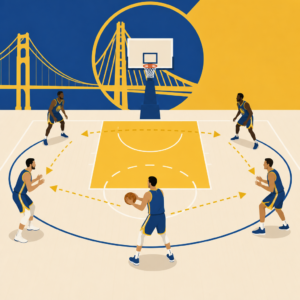

The point guard is the NBA’s on-court organizer, responsible for initiating offense, reading the defense, controlling tempo, and making sure every possession has purpose. In basketball language, the point guard, or PG, is usually the primary ball handler and lead decision-maker, the player who brings the ball up, calls sets, and creates shots for teammates while still threatening to score. Although basketball has become more positionless, the point guard role remains central because every team still needs someone to manage possessions under pressure, especially late in games, against traps, or when spacing breaks down.
When I explain NBA positions and roles to new fans, I start with the point guard because it connects to everything else on the floor. The shooting guard often finishes plays, wings stretch defenses, power forwards screen and space, and centers anchor the paint, but the point guard ties those jobs together. That is why this role matters far beyond dribbling. A strong point guard improves shot quality, limits turnovers, organizes transition defense after misses, and raises the effectiveness of every teammate. A weak one can leave scorers stranded, big men underused, and an entire offense predictable.
Historically, point guards were judged first by assists, ball security, and leadership. Today, the job description is broader. Modern NBA point guards must handle switching defenses, punish drop coverage with pull-up shooting, navigate blitzes in pick-and-roll, and survive targeted attacks on defense. Some teams use jumbo creators like Luka Doncic, some lean on movement guards like Stephen Curry, and others prefer downhill paint touch creators such as Ja Morant. The common thread is orchestration. This hub explains the point guard position in full: core responsibilities, essential skills, defensive duties, how the role has changed, and the best PGs in NBA history.
What a Point Guard Does on Offense
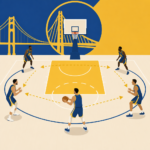
The clearest answer is simple: a point guard creates order from chaos. On most possessions, the PG identifies the defensive coverage, calls for a screen or enters a set, and determines whether the team should attack early or settle into half-court structure. In practical terms, that means reading the weak-side tag defender, timing passes to rollers, hitting shooters in the pocket, and knowing when to reset rather than force a low-value shot. Elite point guards do this possession after possession without losing pace or composure.
Pick-and-roll management is the modern center of the role. A point guard must recognize whether the defense is in drop, hedge, switch, ice, or blitz, then respond instantly. Against drop coverage, the guard may take the pull-up three or snake dribbles into the midrange. Against a switch, the goal may be isolating a slower big or feeding the screener against a smaller defender. Chris Paul made a career out of manipulating drop defenders into impossible choices, while Steve Nash bent help defenders with live-dribble patience and impossible passing angles. These are not flashy details; they are the job.
Tempo control is another major responsibility. Great point guards know when to run after a rebound, when to advance the ball early with a hit-ahead pass, and when to slow down to preserve spacing. Magic Johnson turned transition into a weapon by seeing lanes before they fully opened. Jason Kidd created easy points through advance passes that arrived a beat earlier than defenders expected. Even in slower playoff basketball, tempo still matters because changing rhythm can expose cross-matches and prevent the defense from getting organized.
Ball security is part of offensive creation, not separate from it. A risky passer who piles up turnovers can erase the value of his assists. Coaches and analysts often use assist-to-turnover ratio as a starting point, but film gives the better answer: did the point guard create advantages without putting the ball in danger? John Stockton excelled here. He did not just rack up assists; he consistently delivered on-time, on-target passes within structure, especially in Utah’s pick-and-roll game with Karl Malone.
Core Skills Every NBA Point Guard Needs
The position demands a rare blend of technical skill and mental processing speed. Handle comes first. A point guard must protect the ball against digs, rear-view pressure, and full-court pickups while staying balanced enough to pass or shoot at any moment. This is why players with loose dribbles often struggle to function as primary creators, even if they are explosive athletes. Kyrie Irving represents the high end of ball control, able to change directions without exposing the ball and finish through traffic from awkward angles.
Passing is more than vision. It includes footwork, timing, deception, and delivery type. A one-hand live-dribble pass to the corner is different from a pocket pass to a rolling big, and both differ from a skip pass against a low man rotating from the weak side. The best point guards vary pace and release points. Nash used dribble probes under the rim to force defenders to turn their heads. LeBron James, while not a traditional point guard by size, demonstrates the same principle as a lead organizer: move the defense first, then pass into the opening it creates.
Shooting has become nonnegotiable. A point guard who cannot threaten from three allows defenders to duck under screens and clog driving lanes. Stephen Curry changed the geometry of the sport by extending credible shooting range several feet beyond the arc. That did more than add points; it pulled screen defenders higher, widened the pocket for rollers, and opened back cuts behind overplays. Even pass-first guards now need enough pull-up gravity to punish conservative coverages.
Communication may be the least glamorous skill, but teams rely on it every trip down the floor. The point guard often signals actions, reminds teammates of spacing, and changes plays after seeing a mismatch. In my experience studying game tape, this verbal layer is obvious once you start looking for it. Veteran guards constantly point, talk, and direct. Their control is audible as much as visible. That leadership piece is one reason coaches trust experienced point guards in playoff environments.
Defense, Matchups, and Leadership Responsibilities
People often define point guards by offense, but the position carries real defensive obligations. On the ball, the PG usually picks up opposing creators at the point of attack, fighting over screens and steering drives toward help. If that defense fails, the entire structure bends. Small guards are regularly targeted in switches, so technique matters: screen navigation, chest positioning, rear contests, and knowing when to peel switch. Jrue Holiday, though sometimes listed at either guard spot, is a model of point-of-attack defense because he combines strength with disciplined hands and excellent anticipation.
Team defense matters just as much. The point guard must recognize nail help responsibilities, tag rollers when the low man is occupied, and recover to shooters without losing balance. Smaller guards can still be effective by rotating early, taking charges, and rebounding long misses that trigger transition. Kyle Lowry built playoff value this way for years. He did not rely only on speed; he won possessions with positioning, communication, and toughness.
Leadership is inseparable from the role. The point guard is often the first player coaches trust to execute the game plan exactly as designed. In late-game situations, that means recognizing two-for-one opportunities, using clock wisely, and making sure the team enters actions with proper spacing. Leaders at this position also manage emotion. When games become frantic, the best PGs project calm. Chauncey Billups earned the nickname Mr. Big Shot not simply because he made clutch baskets, but because he organized Detroit’s offense with clarity under pressure.
Because this page is the hub for NBA positions and roles, it helps to compare the point guard with the other four spots. The table below shows how responsibilities typically differ, even in today’s flexible systems.
| Position | Primary Offensive Role | Primary Defensive Role | Typical Key Skill |
|---|---|---|---|
| Point Guard | Initiate offense, create advantages, manage tempo | Guard at the point of attack, direct coverages | Handle and decision-making |
| Shooting Guard | Score off movement, spot up, attack secondary closeouts | Defend perimeter scorers | Shooting versatility |
| Small Forward | Two-way wing creation, slashing, spacing | Switch across multiple assignments | Positional versatility |
| Power Forward | Screen, finish, space, short-roll playmaking | Help defense, rebounding, switching | Physicality and mobility |
| Center | Rim pressure, screening, interior finishing | Rim protection and paint control | Size and interior defense |
How the Point Guard Role Has Evolved
The position has changed dramatically across eras. In the 1960s and 1970s, point guards were often expected to organize offense, feed post scorers, and prioritize distribution over shot volume. Players like Walt Frazier combined control with defense and selective scoring. In the 1980s, Magic Johnson expanded the imagination of the role by proving a lead guard could dominate through size, transition passing, and matchup manipulation. His Lakers did not just play fast; they weaponized instant decision-making before defenses could set.
The 1990s and early 2000s emphasized structure, half-court execution, and safer play from the position. Stockton, Mark Jackson, Kevin Johnson, and later Andre Miller fit different versions of the floor-general archetype. Then the hand-check rule changes, spacing revolution, and three-point boom pushed point guards toward higher-usage scoring. Nash’s Suns accelerated pace and spread the floor in ways that previewed modern offense. Curry then detonated old assumptions by becoming the most dangerous off-ball and on-ball point guard ever, showing that a PG could dominate possessions without monopolizing dribbles.
Today, teams use multiple creators, and labels can blur. Shai Gilgeous-Alexander, Luka Doncic, Tyrese Haliburton, and Jalen Brunson all run offenses differently. Some are oversized wings in functional terms; some are classic pick-and-roll guards with elite touch; some create by movement and shooting gravity. What has not changed is the need for decision quality. Whether the offense runs through spread pick-and-roll, delay actions, pistol sets, or five-out spacing, someone must diagnose the defense and choose the highest-value option quickly.
The Best PGs in NBA History
Any list of the best point guards in NBA history starts with Magic Johnson and Stephen Curry, though the order depends on what a voter values most. Magic owns one of the strongest resumes ever: five championships, three MVP awards, three Finals MVPs, and a revolutionary style that turned passing into offensive control. At 6-foot-9, he saw over defenses, punished mismatches in the post, and made transition basketball feel inevitable. Curry’s case rests on different but equally historic ground. He is the greatest shooter ever, a two-time MVP, the first unanimous MVP, and the offensive engine of a dynasty that changed leaguewide shot selection and spacing principles.
Behind them, the next tier usually includes Oscar Robertson, Isiah Thomas, Jerry West if classified as a point guard, John Stockton, Steve Nash, Chris Paul, and Jason Kidd. Robertson averaged a triple-double over a season before it was common or even fully appreciated as a shorthand for all-around control. Isiah Thomas was the emotional and tactical leader of Detroit’s title teams, balancing scoring bursts with high-level playmaking. Stockton remains the NBA’s all-time leader in assists and steals, a mark so large that it may never be broken. Nash won back-to-back MVPs and piloted historically efficient offenses. Paul combined elite passing, midrange scoring, and meticulous late-game management for nearly two decades. Kidd, one of the best rebounding guards ever, transformed teams immediately with defense and transition creation.
There are important honorable mentions and era debates. Russell Westbrook at his peak overwhelmed defenses with speed, rim pressure, and relentless rebounding, though his efficiency and decision-making sparked debate. Damian Lillard pushed pull-up range to extreme distances and delivered legendary postseason shots. Gary Payton deserves respect for his defense, toughness, and complete two-way profile. Walt Frazier, Bob Cousy, Tiny Archibald, and Tony Parker all have strong historical cases depending on whether a ranking prioritizes peak, longevity, championships, or stylistic influence.
How to Evaluate a Point Guard Today
Start with film, then use numbers to sharpen the picture. Assist totals alone are not enough because system, pace, and teammate shooting all affect them. Better indicators include turnover rate, assist-to-turnover ratio, on-ball efficiency in pick-and-roll, pull-up three-point threat, rim pressure, and lineup impact. Public metrics such as estimated plus-minus, offensive rating, and playmaking data from tracking providers can help, but context matters. A guard who creates one great advantage that leads to a hockey assist may influence offense more than the box score shows.
Also ask what kind of ecosystem the player needs. Some point guards raise any lineup because they can score from all three levels and punish every coverage. Others need vertical spacing, multiple shooters, or a second creator beside them. That distinction matters in team building. A smaller guard with limited defense may need a bigger backcourt partner. A non-shooting PG may require four-out spacing. Understanding those dependencies gives a truer read of value than highlights alone.
The best way to learn the role is to watch how elite guards solve the same problem in different ways. Compare Curry’s relocation movement, Paul’s pick-and-roll manipulation, Kidd’s hit-ahead passing, and Brunson’s footwork in the lane. You will see that the point guard position is not one style but one responsibility: organize the game so your team gets better shots than the opponent. That is the enduring standard.
Point guard remains the clearest window into how basketball works because the role sits at the intersection of strategy, skill, and leadership. The PG handles the ball, reads the defense, calls actions, protects possessions, and sets the emotional and tactical tone. Across eras, the details have changed, from pass-first floor generals to pull-up shooting engines, but the core mission has not. Great point guards make the game easier for everyone around them.
For fans learning NBA basics, understanding this position makes the rest of the sport easier to read. You start noticing why a screen angle matters, why a weak-side defender tags the roller, and why one guard creates calm while another creates chaos. If you are building out your understanding of positions and roles, use this page as the hub, then continue to the related guides on shooting guards, small forwards, power forwards, and centers to see how each role connects within a complete lineup.
Frequently Asked Questions
What does a point guard do in basketball?
A point guard is typically the team’s on-court organizer and primary decision-maker. In the NBA, this means the point guard usually brings the ball up the floor, initiates the offense, calls or signals sets, reads how the defense is aligned, and determines the best way to attack each possession. While every player contributes to execution, the point guard often acts like an extension of the coaching staff during live action, making split-second choices that shape the flow of the game.
The role goes far beyond dribbling and passing. A great point guard controls tempo, knowing when to push in transition, when to slow the game down, and when to get the ball to a specific scorer in the right spot. Point guards are also responsible for creating advantages, whether by breaking down a defender off the dribble, using a screen effectively, drawing help defenders, or finding open shooters and rollers. Defensively, many point guards are asked to contain opposing ball handlers at the point of attack, which is critical in a league built around spacing and pick-and-roll offense. In short, the point guard is responsible for giving each possession direction, structure, and purpose.
What skills are most important for a great NBA point guard?
The most important skill for a point guard is decision-making. NBA point guards must process the floor quickly, identify defensive coverages, anticipate help rotations, and choose the right action under pressure. Ball handling is also essential because the point guard is frequently the primary initiator and must be able to beat pressure, change pace, protect the ball, and get the team into offense cleanly. Passing vision matters just as much, because elite point guards do not simply complete passes—they create passing angles, manipulate defenders with their eyes and timing, and consistently deliver the ball where teammates can score efficiently.
Shooting has become increasingly important in the modern NBA. A point guard who can score from three levels forces defenders to play honestly, which opens up passing lanes and makes pick-and-roll actions more dangerous. Beyond those core offensive tools, leadership and communication are major parts of the job. The best point guards keep teammates organized, recognize matchups, calm chaotic stretches, and elevate the overall discipline of the team. On defense, quickness, awareness, screen navigation, and effort are especially valuable. The complete NBA point guard combines skill, poise, court vision, scoring threat, and command of the game.
How has the point guard position changed in modern NBA basketball?
The point guard position has evolved significantly as the NBA has become faster, more spaced out, and more positionless. Traditionally, point guards were viewed primarily as distributors whose first responsibility was to set up teammates and limit mistakes. In earlier eras, many teams wanted their point guard to organize the offense, feed the post, make safe reads, and function as a pass-first floor general. That classic model still exists in some form, but modern offenses often ask point guards to be dynamic scoring threats as well.
Today’s point guards are expected to pressure defenses with shooting range, off-the-dribble creation, and pick-and-roll mastery. Players like Stephen Curry helped redefine the position by showing how a point guard’s shooting gravity can bend the entire defense even without the ball. At the same time, the league now features jumbo creators and wings who initiate offense, which means traditional size expectations for point guards matter less than actual playmaking ability. Even so, the core responsibility remains the same: someone has to organize possessions, read the defense, control tempo, and create efficient offense. The label may be more flexible than it once was, but the point guard function is still central to winning basketball.
Who are the best point guards in NBA history?
Any serious discussion of the greatest point guards in NBA history starts with Magic Johnson, whose combination of size, vision, creativity, leadership, and winning makes him the gold standard for many analysts and fans. Magic transformed the position by proving that a lead guard could control the game at 6-foot-9 while orchestrating one of the most dangerous transition offenses ever. Stephen Curry belongs firmly in that top-tier conversation as well because of how dramatically he changed modern basketball. His shooting range, movement, and efficiency redefined what a point guard can do offensively and forced defenses to operate in ways the league had rarely seen before.
John Stockton is another all-time great, especially when discussing pure orchestration, durability, and playmaking production. He remains the NBA’s all-time leader in assists and steals, and his mastery of pace and pick-and-roll execution was historic. Isiah Thomas deserves mention for his leadership, scoring toughness, and ability to lead the Detroit Pistons to championships in a brutally competitive era. Oscar Robertson was decades ahead of his time as a complete offensive engine, combining scoring, rebounding, and playmaking in ways that forecast the modern all-around lead guard. Chris Paul is widely regarded as one of the most complete point guards ever because of his control, efficiency, midrange scoring, passing precision, and defensive impact. Depending on how broad the criteria are, other names often included are Jason Kidd, Steve Nash, Walt Frazier, Gary Payton, and Allen Iverson, though some debates depend on whether a player was truly a point guard versus a scoring guard. Ultimately, the “best” list can shift based on whether the emphasis is placed on championships, peak performance, statistical production, longevity, or influence on the game.
Why is the point guard still important if basketball has become more positionless?
Even in a positionless NBA, teams still need someone to organize the offense, manage possession quality, and make high-level decisions with the ball. That is why the point guard role remains so important, even if the player filling that role does not always fit the traditional physical or stylistic mold. Every team needs a lead initiator who can handle pressure, recognize defensive schemes, and create structure when the game becomes chaotic. Whether that player is a smaller guard, a combo guard, a big wing, or even a forward with elite passing ability, the point guard responsibilities still have to be covered.
In practical terms, the NBA has become less rigid about positions but more demanding about skills. Offenses are more complex, defenses are more versatile, and spacing creates both opportunities and pressure for the ball handler. Someone must decide when to attack, when to reset, where the advantage is, and how to get the ball to the right player at the right moment. That is the essence of point guard play. The title may be less fixed than it was in previous generations, but the need for a player who can direct traffic, control tempo, and give possessions purpose has not gone away. If anything, in an era built on speed, shooting, and rapid decision-making, those responsibilities are more valuable than ever.