
The one-and-done rule in college basketball shapes how elite prospects move from high school stardom to the NBA Draft, and it has influenced recruiting, roster construction, player development, and league economics for nearly two decades. In simple terms, the rule requires American players to be at least nineteen years old during the calendar year of the draft and at least one NBA season removed from high school graduation before they can be selected. That standard is not an NCAA bylaw. It is an NBA eligibility rule negotiated through collective bargaining, yet college basketball has felt its effects more than any other level of the sport. For fans trying to understand draft explained coverage, this is the starting point because it affects who enters the draft, when they enter, and how teams evaluate them.
I have covered draft cycles in gyms, conference tournaments, and predraft settings long enough to see the pattern repeat: a top recruit arrives on campus with lottery expectations, plays one season under immense scrutiny, then exits before the program can fully build around him. Coaches recruit differently because of it. NBA front offices scout differently because of it. Players and families plan differently because of it. The rule matters not just for blue-chip names such as Kevin Durant, Anthony Davis, Zion Williamson, or Paolo Banchero, but also for borderline prospects deciding whether one year in college, the G League, an overseas contract, or another path gives them the best chance to improve draft position.
Understanding the one-and-done era also requires defining a few connected terms. A “one-and-done” player spends one college season before entering the NBA Draft. An “early entrant” is a player who declares before exhausting college eligibility. “Draft stock” refers to where a player is projected to be selected based on performance, age, tools, health, and team need. “NBA Draft eligibility” covers the age and timing rules, while “draft declaration” refers to the player officially filing paperwork. This article serves as a hub within the NBA Draft topic because any serious explanation of draft strategy, scouting, mock drafts, and prospect development runs through the one-and-done question: why does the system exist, who benefits, who loses, and what could change next?
The short answer is that the rule was created to slow direct high school entry into the league, but its long-term effects have been more complicated than its original purpose. It helped the NBA shift some development and exposure to other environments, especially major college programs. It also produced a marketplace in which one season can become a high-stakes audition rather than a traditional college experience. To understand what could change, it helps to trace how the rule began, how it works in practice, how it reshaped both the NCAA and the NBA Draft pipeline, and why the debate remains unsettled even as new routes such as the G League Ignite, Overtime Elite, NBL Next Stars, and NIL opportunities have expanded player choice.
How the one-and-done rule started and why the NBA wanted it
Before 2006, elite American players could enter the NBA Draft directly from high school. That path produced stars including Kevin Garnett, Kobe Bryant, Tracy McGrady, Dwight Howard, LeBron James, and Amar’e Stoudemire. It also produced misses. Teams invested guaranteed first-round money in teenagers with elite athletic traits but limited polish, and some organizations believed they were forcing the league to carry more raw prospects than it wanted. Owners worried about development timelines, guaranteed contracts, and public perception when teenagers struggled early. The NBA Players Association had its own concerns because every incoming teenager competed for jobs and salary slots that otherwise might have gone to veteran players already in the union.
The result was a negotiated age-limit system in the 2005 collective bargaining agreement, implemented for the 2006 draft. The key requirements were straightforward: players had to be nineteen during the draft calendar year and one year removed from their high school class. The first draft deeply shaped by the rule came in 2007, when freshmen such as Greg Oden, Kevin Durant, Mike Conley, Joakim Noah, and Al Horford defined a new talent pipeline. The league did not ban young players entirely; it simply redirected them. Most elite American prospects now needed a temporary destination, and college basketball became the default stage.
That distinction matters because many fans assume the NCAA created the one-and-done system. It did not. Colleges benefited from hosting stars for a season, but the legal authority rested with the NBA and the union. Once that was in place, the market adapted quickly. Blueblood programs learned to recruit short-term stars and sell immediate NBA preparation. Shoe companies, television networks, and event operators benefited from having future lottery picks in marquee college games. NBA scouts gained months of film against stronger competition than most high school schedules could provide. Yet the basic tension never disappeared: if a player is good enough at eighteen, should a labor agreement force him into an intermediate stop?
How the rule works today and what it means for draft eligibility
The one-and-done rule is often described casually, but the actual draft explained version is more precise. For U.S. players, the two main eligibility triggers are age and time. A player must turn nineteen during the calendar year of the draft and be at least one year removed from the graduation of his high school class. International players have different automatic eligibility standards, which is why draft conversations often separate domestic and international prospects. College players who want to enter early must declare for the draft and navigate withdrawal deadlines if they hope to preserve eligibility under current NCAA rules.
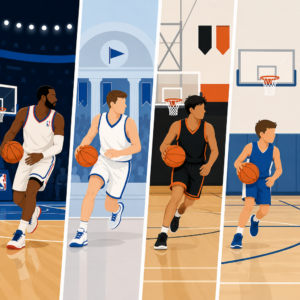
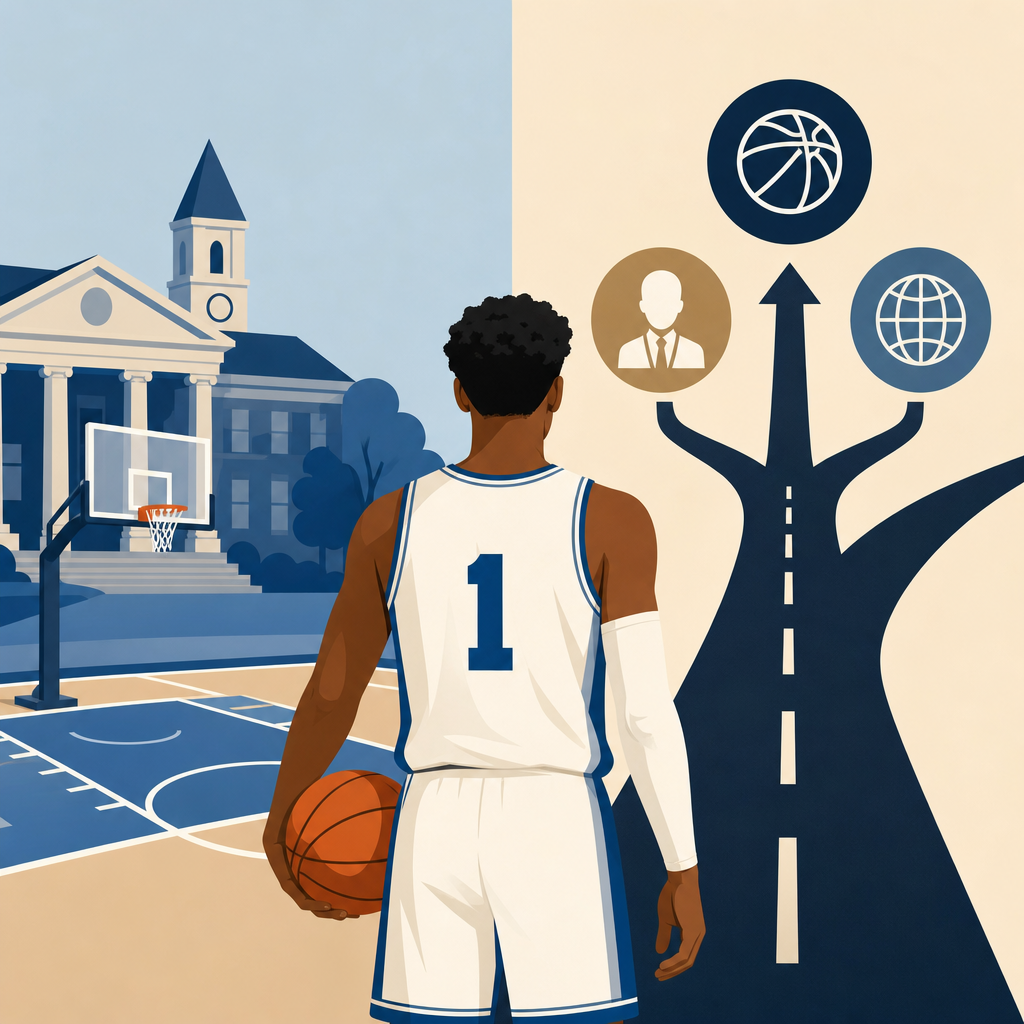
In practice, the rule creates several routes. A top recruit can attend a Division I program for one season, as Anthony Davis did at Kentucky before becoming the first pick in 2012. A player can choose the G League route, as Jalen Green did before the 2021 draft. A prospect can sign overseas, as LaMelo Ball did in Australia before going third in 2020. Some prospects now choose alternative development programs such as Overtime Elite or the former G League Ignite team. NIL has changed incentives further, because high-level college players can now earn significant money while keeping their draft timeline flexible.
| Path to the NBA Draft | Typical Benefits | Main Tradeoffs |
|---|---|---|
| One college season | National exposure, structured competition, established coaching, NCAA tournament visibility | System fit risk, limited time, injury exposure, academic obligations |
| G League program | Professional rules, NBA-style spacing, direct access to pro development staff | Less campus visibility, different media spotlight, uncertain team context |
| Overseas league | Professional experience, varied styles of play, adult competition | Adjustment challenges, travel, language, less familiarity for casual U.S. fans |
| Development academy model | Customized training, brand building, schedule flexibility | Less traditional competition, evaluation questions, uneven comparability |
For teams, this rule compresses evaluation into a narrow window. A freshman who starts slowly but finishes strong may still be drafted high based on age, physical tools, and projected upside. Conversely, an older college star may be penalized because front offices see less room for development. That is why draft explained coverage cannot stop at college box scores. NBA scouting departments weigh biomechanics, decision-making, translation of role, defensive versatility, shooting indicators, medical data, and age curves. The one-and-done rule intensified this projection business because teams are often judging what a player will become, not simply what he was for thirty-five college games.
How one-and-done reshaped college basketball programs and player development
The biggest college basketball impact has been roster volatility. Before the rule, many elite programs built around juniors and seniors, with occasional underclass stars. During the one-and-done era, top coaches increasingly recruited in layers: one or two likely short-term stars, several multi-year contributors, and a few developmental pieces. John Calipari’s Kentucky teams became the clearest model. By embracing NBA-bound freshmen such as John Wall, DeMarcus Cousins, Karl-Anthony Towns, Devin Booker, and Shai Gilgeous-Alexander, Kentucky turned annual roster turnover into a recruiting advantage. Duke later followed with its own freshman-driven classes featuring players such as Kyrie Irving, Jayson Tatum, RJ Barrett, Zion Williamson, and Paolo Banchero.
That strategy can produce spectacular peaks but also structural instability. Coaches must teach systems quickly because one-and-done stars rarely stay long enough for gradual development. Teammates accept changing roles based on draft priorities. Some rosters become younger and less consistent early in the season. I have watched veteran-heavy teams exploit those groups in November, only for the talent gap to assert itself by March once the freshmen settle in. This is why tournament outcomes have never fully validated the idea that stacking one-and-done talent automatically wins championships. Talent raises the ceiling, but continuity still matters, as programs like Villanova, Virginia, and older Kansas teams repeatedly showed.
For players, the one-year college stop can be useful but imperfect. The benefits are real: advanced strength training, national television exposure, coaching against disciplined defenses, and pressure environments that resemble the scrutiny of the NBA. The drawbacks are real too. Some prospects enter systems that do not highlight their NBA role. A high-usage prep scorer may be asked to stand in the corner on a veteran college team. A switchable big may be used strictly as a post player because of conference matchups. That can muddy evaluation. NBA teams know this, so they spend considerable time separating scheme from skill and temporary role from long-term projection.
Who benefits, who is hurt, and why the debate has never ended
The one-and-done rule survives because multiple parties gain something from it, even while the central fairness argument remains unresolved. The NBA gets an additional year of evaluation and pushes some development costs elsewhere. Major college programs gain star power, ticket sales, tournament relevance, and recruiting prestige. Television partners benefit from showcasing future pros in high-profile games. Some players also benefit because one strong college season can elevate draft stock dramatically. Anthony Edwards at Georgia, for example, played on a mediocre team but still secured the first pick because scouts had enough evidence of shot creation, athletic power, and long-term upside.
The strongest criticism is straightforward: if a player is talented enough to be hired by a professional team at eighteen, he should be free to enter the workforce. That view has legal, ethical, and economic force. Basketball is unusual compared with other industries because elite ability can arrive before age nineteen. Restricting entry does not eliminate risk; it simply shifts where that risk is carried. College basketball, developmental leagues, and overseas clubs become holding zones for players who might already be among the best basketball labor options available. Critics also note that the rule can distort education by encouraging a nominal college experience centered on draft timing rather than academic development.
There is also a subtler basketball critique. The rule may not always improve decision-making. Teams still miss on prospects. Projection remains hard. Some front offices overvalue youth and tools, while undervaluing production, feel, and durability. A year in college can answer some questions, but not all. It can even introduce new noise if a prospect is recovering from injury, playing out of position, or sharing touches with other future pros. In that sense, one-and-done did not solve drafting uncertainty. It changed the evidence set. The debate continues because the rule creates order for institutions, but not necessarily justice or clarity for every player affected by it.
What could change next for the NBA Draft pipeline
Several realistic changes could alter or weaken the one-and-done framework. The most discussed option is lowering the NBA age limit and allowing direct entry from high school again. That would not eliminate college basketball as a draft route; it would simply make it a choice rather than a requirement for the youngest elite Americans. Front offices already scout high school events extensively, and modern tracking, biometric testing, video databases, and skill-development networks make pre-NBA evaluation more sophisticated than it was twenty years ago. If the league believes teams can manage that risk, direct entry could return in a future labor negotiation.
Another likely change is not a rule repeal but a market shift. NIL has already made college more financially viable for players who might otherwise rush to the pros. A projected late first-round or second-round pick can now compare guaranteed college earnings, role security, and brand growth against uncertain draft outcomes. That means the one-and-done era may evolve into a more selective model, where only clear lottery-level prospects leave immediately while others stay two or three years by choice. We have already seen examples of players improving stock through patience, physical development, and expanded offensive responsibility.
The professional alternatives are changing too. The G League Ignite experiment showed both promise and limits before ending, but the broader developmental concept remains influential. Overtime Elite, NBL Next Stars, and European club academies all offer versions of pre-draft preparation outside the NCAA. If enough prospects thrive in those systems, the cultural default of one college season may weaken even without formal rule changes. For teams, the practical lesson is clear: build scouting models that compare players across environments fairly. For fans, the takeaway is simpler. To understand the NBA Draft, follow the pipeline, not just the picks. Watch how eligibility rules, college choices, developmental options, and labor negotiations shape every class. The one-and-done rule is the hinge point, and whatever changes next will redefine draft strategy for players, schools, and NBA franchises alike. If you follow the draft, keep this page bookmarked as your starting hub and use it to frame every prospect decision you evaluate.
Frequently Asked Questions
What is the one-and-done rule in college basketball, and where did it come from?
The one-and-done rule is the commonly used name for the NBA’s age-eligibility standard that affects top basketball prospects after high school. In practice, it means a U.S. player generally cannot enter the NBA Draft immediately after high school. To be draft-eligible, that player must be at least 19 years old during the calendar year of the draft and at least one NBA season removed from high school graduation. A key point that often gets misunderstood is that this is not actually an NCAA rule. It comes from the collective bargaining agreement between the NBA and the National Basketball Players Association, which is why it governs draft eligibility rather than college participation itself.
The rule took hold in 2005, when the NBA and the players’ union agreed to raise the minimum draft-entry age. Before that change, elite high school stars such as Kevin Garnett, Kobe Bryant, Tracy McGrady, and LeBron James were able to move directly from high school to the NBA. Once the new age limit was adopted, many elite prospects began spending a single season in college before turning pro, which is how the phrase “one-and-done” became part of the sport’s vocabulary. Since then, it has played a major role in shaping recruiting battles, blue-blood program strategies, and the public perception of freshman stars who arrive on campus with obvious NBA futures.
Why has the one-and-done rule been so influential for college basketball programs?
The rule has had a sweeping effect because it changed the talent pipeline overnight. Instead of watching the very best high school players jump directly to the NBA, college basketball programs suddenly had access to elite prospects for at least a year. That created enormous opportunities for major schools. Coaches at top programs could recruit future lottery picks, build national title contenders around them, and benefit from the publicity, ticket sales, television exposure, and recruiting momentum that come with having a star freshman on the roster.
At the same time, the rule made roster management much more complicated. Coaches could no longer assume that their best young players would stay for multiple seasons. If a freshman performed at a high level, he might leave after one year even if he had not fully developed every aspect of his game. That forced programs to recruit with short windows in mind. Some coaches embraced that model and stocked their rosters with elite freshmen year after year, while others prioritized veteran continuity, transfers, and multi-year player development. The result has been a strategic divide in the sport: some teams chase top-end NBA talent, while others focus on experience and system fit.
The one-and-done era also changed fan expectations. Supporters of powerhouse programs became accustomed to learning a new freshman class every season, sometimes with little continuity from the previous year. That can create exciting, high-upside teams, but it can also produce inconsistency, especially early in the season. In that sense, the rule has influenced not just recruiting, but also how college basketball is played, marketed, and consumed.
How has the one-and-done rule affected players, both positively and negatively?
For players, the rule has created both opportunity and tension. On the positive side, spending a year in college can offer national exposure, high-level coaching, structured competition, and a chance to mature physically before entering the NBA. For some prospects, that one season serves as a useful bridge between high school and the professional game. Players can face stronger opponents, improve their bodies, and gain experience in pressure situations such as conference play and the NCAA tournament. In some cases, a strong freshman season has significantly boosted a player’s draft stock and long-term earning potential.
On the negative side, critics argue that the rule limits player freedom by forcing elite prospects to delay entry into the NBA even when they may already be talented enough to compete professionally. Instead of choosing the path they believe is best, many players have historically felt pushed into a temporary stop, whether that meant college basketball or another route such as overseas leagues, professional development programs, or other alternatives. That criticism intensified over the years because the players most affected are often high-level talents whose earning window is short and whose careers can change dramatically because of injury, poor fit, or a disappointing single season.
The rule has also created uneven incentives. College programs benefit from the visibility generated by star freshmen, while the players themselves may treat college as a brief stepping stone rather than a long-term developmental home. Even when that arrangement works well, it can be transactional. More recently, name, image, and likeness opportunities have changed the equation somewhat by allowing college players to earn money while in school, but the underlying question remains the same: should elite basketball players be required to wait a year before becoming draft-eligible, or should they be allowed to make that decision for themselves?
If the one-and-done rule is not an NCAA bylaw, what alternatives have top prospects used instead of college?
Because the rule is tied to NBA draft eligibility rather than NCAA participation, college has never been the only option. Over time, top prospects have explored several alternatives during that required post-high-school year. Some have chosen to play professionally overseas, where they can earn money, train in a pro environment, and face experienced competition. Others have pursued domestic professional development routes, including NBA-affiliated pathways created specifically to give elite players an alternative to traditional college basketball.
Those options became more visible as debate around the one-and-done rule intensified. For many prospects, the appeal is straightforward: instead of spending a year in a college system they may leave quickly, they can begin adapting to a professional schedule, earn compensation, and focus entirely on basketball development. That said, college still offers major advantages. The NCAA stage provides unmatched media attention, strong branding opportunities, passionate fan support, and a familiar cultural platform that can help a player’s profile heading into the draft.
The growth of alternative pathways has put pressure on both the NCAA and the NBA. Colleges must compete not only with other schools, but with professional options that may better fit certain players’ goals. Meanwhile, the NBA has had to consider whether its age-limit structure still makes sense in a changing development landscape. The fact that elite prospects now have more choices than they did a decade ago is one of the biggest reasons the future of the one-and-done rule remains such an active topic.
What could change about the one-and-done rule in the future?
The most discussed potential change is the elimination or modification of the NBA’s current age-eligibility requirements. If the NBA and the players’ union were to agree on a new collective bargaining framework, the league could eventually allow players to enter the draft directly from high school again. That would effectively end the classic one-and-done model for many elite prospects, because the very best players would no longer need to spend a single year in college or another developmental setting just to become draft-eligible.
If that happens, college basketball would likely undergo another major adjustment. Top-tier programs might lose some of the most NBA-ready high school stars, especially those viewed as clear lottery-level talents. In response, coaches could place even greater emphasis on player retention, transfer portal strategy, and recruiting athletes who project as multi-year contributors rather than one-year stars. At the same time, not every elite recruit would necessarily skip college. Some players may still see value in spending time on campus, especially if they believe they can improve their draft stock, build their personal brand, or benefit from NIL opportunities and college competition.
There are also more moderate possibilities. The NBA could keep an age floor but revise how eligibility works, or it could maintain the current structure while expanding alternative development pathways. Either way, any future change would affect far more than just draft logistics. It would reshape recruiting ecosystems, alter how college coaches build rosters, influence the economics of amateur and professional development, and change the experience of fans who have spent nearly two decades watching future NBA players pass through college basketball for a single season. That is why the one-and-done debate continues to matter: it sits at the intersection of player rights, league policy, college sports business, and the broader evolution of the basketball talent pipeline.