
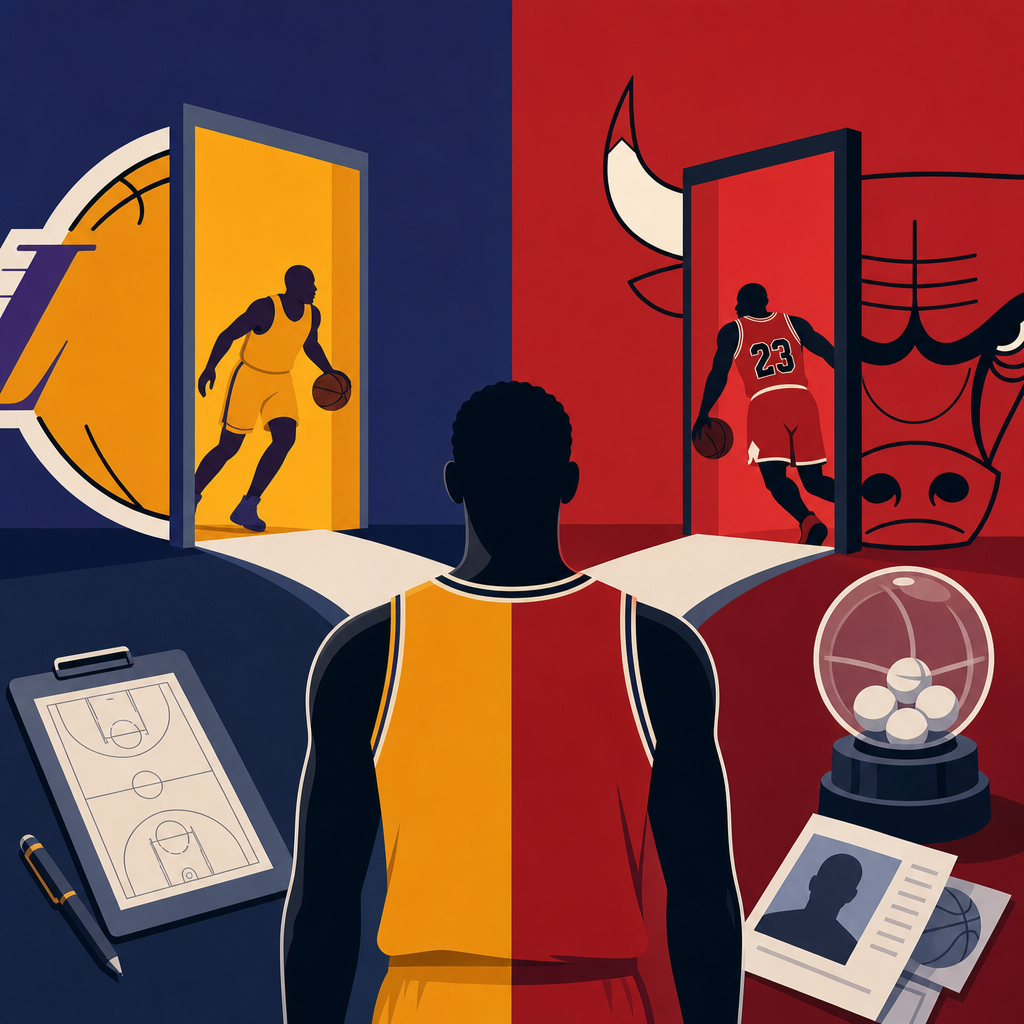
NBA history is often told through championships, dynasties, rivalries, and iconic players, but just beneath every famous moment sits a quieter story: the move that almost happened. An almost-trade, a draft pick passed over, a contract not signed, or a front office disagreement can redirect an entire era. In basketball terms, these are counterfactual turning points, moments when a franchise stood one decision away from changing league history. For anyone studying NBA legends and eras, understanding these near misses is not trivia. It is one of the clearest ways to see how greatness is built, how fragile dynasties really are, and why the league’s timeline looks inevitable only in hindsight.
When I have reviewed old transaction logs, cap sheets, scouting reports, and front office interviews, the same pattern appears again and again: the NBA is shaped as much by rejected ideas as by completed deals. A general manager protects a young prospect instead of including him in a package. An owner vetoes a trade over money. A scout pounds the table for one player, while the room goes in another direction. Those decisions can alter title counts, MVP races, television ratings, and even the way future stars are remembered. The study of legends and eras becomes richer when you examine the forks in the road.
This hub article covers that landscape comprehensively. It focuses on the trade talks and draft choices that nearly rewrote basketball history, while also serving as an entry point into the broader NBA History conversation around legends and eras. The key terms matter. A near-miss trade is a deal seriously discussed but never finalized. A pivotal draft pass is a moment when a team had a realistic shot at selecting a future star and chose differently. An era, in this context, means more than a decade marker; it is a period defined by a style of play, a group of dominant teams, and a cluster of stars whose careers overlap to shape the league’s identity.
Why does this matter now? Because modern NBA analysis is increasingly transactional. Fans understand player movement, draft capital, roster construction, salary cap mechanics, and asset management better than ever. Looking backward through that lens helps explain why the Russell Celtics became a dynasty, why Magic and Bird revived the league, why Jordan’s Bulls became a global machine, why the Shaq-Kobe Lakers were both inevitable and unstable, and why the player-empowerment era took form. The biggest legends did not rise in a vacuum. They emerged from ecosystems built by choices, including the choices that were never completed.
How near-miss trades and draft picks define NBA eras
The shortest answer is simple: one personnel decision can change who wins titles, which stars become central to league marketing, and how styles evolve. A franchise point guard accelerates teammates. An elite rim protector lets a coach build an aggressive defense. A wing scorer changes late-game hierarchy. Because the NBA puts only five players on the court per team, superstar concentration matters more than in most major sports. That is why a single unmade deal can reshape several seasons at once.
Consider the 1984 draft, one of the most studied decision points in basketball history. Hakeem Olajuwon went first to Houston and Michael Jordan went third to Chicago, with Sam Bowie selected second by Portland. At the time, Portland’s reasoning reflected the league’s long-standing belief that size was foundational and the team already had Clyde Drexler on the wing. In plain terms, the Trail Blazers chose positional need over the best player available. The result was not merely that Chicago landed Jordan. The result was that the entire 1990s acquired a different center of gravity. Jordan became the defining athlete of the decade, the Bulls became a commercial empire, and Portland spent years being measured against the player it passed on.
Near-miss trades create a different kind of alternate history because they reveal how close some dynasties came to collapsing before they started. The 1997 discussions that could have sent a young Tracy McGrady to Chicago in a package for Scottie Pippen sit in that category. Had Chicago broken up its championship core earlier, the late Jordan era might have ended differently, and McGrady’s development could have unfolded under radically different pressure. These stories matter because they connect front office philosophy to historical legacy. Dynasties survive not just on talent, but on timing and restraint.
The draft decisions that almost remade the league
Draft night is where most alternate NBA histories begin because the draft combines imperfect information, organizational bias, medical risk, and projection. Teams are not selecting a finished product. They are betting on what a 19- or 21-year-old might become inside a specific system. That uncertainty has produced some of the most famous what-ifs in league history.
The 1984 Bowie-over-Jordan decision remains the classic example, but it is not alone. In 1996, the Charlotte Hornets selected Kobe Bryant at No. 13 before trading him to the Los Angeles Lakers for Vlade Divac, a move driven by roster fit and immediate need. The Lakers then paired a teenage perimeter prodigy with a glamour market and, soon after, with Shaquille O’Neal. That one sequence helped define the early 2000s. If Bryant had stayed in Charlotte, the Hornets’ trajectory, the Lakers’ title count, and the league’s most famous post-Jordan superstar arc all look different.
Another foundational near miss came in 1998, when several teams passed on Dirk Nowitzki before Dallas acquired him in a deal with Milwaukee. At the time, a 7-footer from Germany with perimeter skills looked unusual enough to make conservative front offices uneasy. In retrospect, Dirk became one of the key figures in basketball’s stylistic evolution, proving that a tall player could anchor elite offense through shooting, spacing, and face-up creation. His success changed scouting attitudes toward international prospects and stretch bigs. One draft-night choice helped modernize roster thinking.
In 2007, Portland selected Greg Oden first overall ahead of Kevin Durant. Oden was an elite prospect, and the decision was defensible based on the information available, yet it became another era-shaping fork. Durant developed into one of the greatest scorers in league history, while injuries derailed Oden. The practical consequence was massive: Oklahoma City gained a franchise centerpiece, later pairing Durant with Russell Westbrook and James Harden. That sequence influenced the 2010s as much as any single draft decision.
| Year | Decision | What Almost Changed | Historical Impact |
|---|---|---|---|
| 1984 | Portland chose Sam Bowie over Michael Jordan | Chicago might never become the 1990s dynasty | Jordan defined the decade and globalized the league |
| 1996 | Charlotte drafted Kobe Bryant, then dealt him to the Lakers | Kobe’s development and the Lakers’ future titles | Helped launch the Shaq-Kobe era |
| 1998 | Multiple teams passed before Dallas landed Dirk Nowitzki | European scouting and stretch-big acceptance | Accelerated the modern offensive style |
| 2007 | Portland chose Greg Oden over Kevin Durant | Thunder-era contention and future star alignment | Durant became central to the 2010s NBA |
These examples show a core principle of NBA history: draft errors are not isolated mistakes. They create cascading effects across conferences, free agency, coaching choices, and even future collective bargaining pressure. A superstar drafted elsewhere can alter television relevance, jersey sales, local arena economics, and the urgency behind later trades. That is why any serious legends-and-eras study starts with draft rooms.
Trade talks that nearly broke dynasties or created new ones
Some of the league’s biggest what-ifs involve stars who were discussed in deals but never moved at the critical moment. These stories are harder to map than draft misses because negotiations are fluid, but several are well documented enough to show how close history came to turning.
Before the 1980 draft, the Golden State Warriors sent Robert Parish and the No. 3 pick to Boston, which used that selection on Kevin McHale. That trade actually happened, but its significance belongs in any discussion of near misses because Boston’s rise under Larry Bird would have looked very different without it. The Celtics did not simply add talent. They assembled frontcourt balance, depth, and championship optionality. It is one of the clearest examples of a front office identifying fit before the modern language of roster synergy became popular.
A more direct almost-trade involved Kobe Bryant in 2007, when his frustration with the Lakers became public and trade scenarios swirled around Chicago and other teams. Los Angeles ultimately kept him, then acquired Pau Gasol in 2008. The result was two more championships and a complete rewrite of Bryant’s late-career legacy. If the Lakers had moved him, the post-Shaq period would be remembered as a breakup story, not a second act. This is why patience matters in franchise management. One avoided trade can buy time for a better roster solution.
Chris Paul’s blocked 2011 move to the Lakers is another historic hinge point. The trade was agreed in principle, then vetoed by the league, which at that time owned the New Orleans Hornets. The consequences were enormous. Paul eventually went to the Clippers, helping create the Lob City era and changing the balance of power in Los Angeles. The Lakers, meanwhile, pursued Dwight Howard and Steve Nash, a plan that never delivered the expected payoff. One veto redirected two franchises and reshaped the Western Conference.
Even deals that sound smaller can alter historical memory. The Milwaukee Bucks traded Dirk Nowitzki on draft night. The Atlanta Hawks selected Pau Gasol before his rights ended up in Memphis. The Indiana Pacers came close in various periods to major retools around Reggie Miller that might have changed the Eastern hierarchy. NBA history is full of these negotiation edges, where a second phone call or a different owner’s appetite for risk could have created a new contender.
Legends, franchise identity, and the eras built around them
Every NBA era is anchored by a few legends, but those legends also define the identity of the teams and rivals around them. Bill Russell’s Celtics stand for defense, sacrifice, and repeatable culture. Magic Johnson’s Lakers represent pace, passing, and showmanship. Larry Bird’s Celtics embody execution and competitive edge. Michael Jordan’s Bulls symbolize peak two-way excellence and brand power. LeBron James’ teams reflect adaptability, player control, and roster optimization around a heliocentric star. In each case, transaction history clarifies how the era was built.
That matters for hub coverage because legends and eras are not just biographies. They are networks of decisions. To understand Kareem Abdul-Jabbar, you need Milwaukee’s title window and his move to the Lakers. To understand Tim Duncan, you need San Antonio’s tanking controversy, lottery luck, and long-term continuity. To understand Stephen Curry, you need the Warriors’ patient development, contract value created by his early extension, and the draft-and-develop infrastructure that let Golden State build a dynasty before Kevin Durant arrived.
This is also where nuance is essential. Not every passed-over pick would have become the same player elsewhere. Development environments matter. Coaching, usage, roster hierarchy, medical support, and market pressure all shape outcomes. Kobe Bryant in Charlotte may not have become the exact version of Kobe Bryant seen in Los Angeles. Dirk in a less patient organization may not have had the runway to become an MVP. Counterfactual analysis is most useful when it respects context instead of assuming talent alone determines history.
Still, the overall lesson is firm: eras are made by a mix of star brilliance and front office precision. When those elements align, franchises create legacies that feel timeless. When they miss, they leave behind some of the most compelling questions in sports history.
How to use this hub to explore NBA history more deeply
As a sub-pillar under NBA History, this page works best as a roadmap for studying how legends and eras connect. One path is player-centered: trace Jordan, Kobe, Duncan, LeBron, Curry, and other icons through the transactions that enabled their rise. Another path is franchise-centered: study the Celtics, Lakers, Bulls, Spurs, Warriors, and Heat through turning-point moves, both completed and avoided. A third path is era-centered: examine how the 1960s, 1980s, 1990s, 2000s, and 2010s each hinged on a handful of draft outcomes and negotiation decisions.
The biggest benefit of this approach is clarity. Instead of treating history as a chain of inevitable champions, you begin to see the NBA as a decision-making league where scouting, negotiation, and timing matter as much as star power. That perspective makes classic debates sharper. It explains why some rings required luck, why some rebuilds failed despite sound logic, and why certain legends inherited stronger structures than others.
The best next step is simple: use these what-if moments as entry points into deeper reading on each era, each dynasty, and each all-time great. Start with one near-miss trade or draft pick, then follow the ripple effects across teams and seasons. That is where NBA history becomes most alive, and where legends stop feeling prewritten and start feeling earned.
Frequently Asked Questions
What does “NBA what if” really mean in the context of trades and draft picks?
In NBA history, a “what if” refers to a realistic alternate path created by a decision that nearly happened but ultimately did not. That can include a trade that reached serious negotiations, a draft pick a team strongly considered before choosing someone else, a free-agent signing that fell apart late, or even a front office disagreement that changed the direction of a franchise. These moments matter because the NBA is uniquely shaped by star talent, and one player move can alter playoff races, championship windows, coaching careers, and even the legacy of entire eras.
What makes these scenarios so compelling is that they are usually not fantasy. They are often built on documented reports, team needs, cap realities, ownership preferences, scouting opinions, and timing. When a team passes on a future superstar or declines a trade that would have paired elite players together, the ripple effects can last for decades. A single decision might change who wins a title, who becomes a dynasty, which coach stays employed, or how a superstar is remembered. In that sense, “NBA what if” is not just trivia. It is a useful way to understand how fragile basketball history can be and how close the league often comes to looking completely different.
Why do near-miss trades and passed-over draft picks have such a huge impact on NBA history?
They matter because the NBA is a star-driven league more than almost any other major sport. One elite player can transform a team’s offense, defense, identity, and relevance overnight. If a franchise acquires the right superstar at the right time, it can jump from mediocrity to contention immediately. If it misses, it may spend years rebuilding. That is why a near-trade or a draft decision that looks small in the moment can become one of the defining pivots in league history.
Draft picks are especially powerful because they determine not only who a team gets, but also how that team develops its roster, spends its money, and builds its culture. Passing on a future Hall of Famer does not just mean losing that player. It often means missing out on years of elite production on a rookie-scale contract, losing future trade leverage, and shaping the roster around a less impactful option. The same is true with trades. A deal that almost sends a star to a contender could create a dynasty, end another team’s window, or prevent a future champion from ever coming together. When people revisit these moments, they are really studying leverage points in history, places where one choice could have changed not just one franchise, but the entire balance of power in the NBA.
What are some of the most famous almost-trades or draft decisions that could have changed the league?
Several examples come up repeatedly because their consequences were so enormous. One of the biggest is the 1984 draft, when the Portland Trail Blazers selected Sam Bowie over Michael Jordan. At the time, Portland already had Clyde Drexler and believed it needed a center more than another guard. On paper, that logic reflected roster construction. In hindsight, it became one of the most famous draft decisions in sports history because Jordan went on to define an era, win six championships with the Chicago Bulls, and become arguably the most important global figure the NBA has ever produced.
Another often-discussed example is the Los Angeles Lakers trading away the draft rights to Kobe Bryant after he was selected 13th in 1996 by Charlotte. That move did happen, but it still functions like a “what if” because it raises questions about what Charlotte might have become had it kept him. The same draft also invites broader counterfactual thinking because teams repeatedly passed on Bryant. Likewise, the 2007 draft stands out because the Portland Trail Blazers chose Greg Oden first overall while Kevin Durant went second. Oden was a legitimate top prospect, but injuries changed everything, while Durant became one of the greatest scorers in league history.
On the trade side, the almost-deal involving Chris Paul to the Lakers in 2011 remains one of the league’s most debated turning points. The trade was agreed to before being vetoed by the NBA, which then owned the New Orleans Hornets. Had it gone through, Kobe Bryant and Chris Paul might have formed one of the league’s most dangerous pairings. Instead, Paul eventually landed with the Clippers, helping launch the “Lob City” era and changing the direction of two Los Angeles franchises at once. These examples endure because they were not marginal moves. They had the potential to reshape championships, player legacies, and even the NBA’s cultural landscape.
How should fans evaluate these NBA what-if scenarios without turning them into pure speculation?
The best approach is to stay grounded in evidence and context. Not every rumor deserves equal weight. Some “almost happened” stories are based on serious reporting, executive testimony, player interviews, or documented negotiations, while others are exaggerated over time. A strong evaluation starts by asking a few basic questions: How close was the move, really? Were teams actively negotiating? Did the salaries and roster needs line up? Was there draft interest from the team involved, or is that being added later in hindsight? The more documentation there is, the more meaningful the what-if becomes.
It is also important to judge the original decision by what people knew at the time, not just by what happened afterward. Front offices make choices based on medical evaluations, positional needs, financial restrictions, ownership pressure, scouting disagreements, and the competitive timeline of the roster. That does not excuse bad decisions, but it helps explain them. For example, some infamous draft misses were not irrational in the moment, even if history made them look disastrous later. Good counterfactual analysis balances hindsight with realism. It asks not only what might have happened if a team made a different move, but also whether that alternate path makes sense given the roster, coaching style, player development environment, and league conditions of that era.
In other words, the goal is not to invent fantasy outcomes. It is to understand how credible decision points could have produced different results. That is what makes NBA what-if discussions valuable for serious fans. They reveal how much of basketball history is shaped by timing, fit, health, and organizational judgment, not just by talent alone.
Why are these alternate-history NBA moments so important for understanding franchises, legends, and entire eras?
Because they expose how close many famous outcomes were to never happening at all. Dynasties often look inevitable in retrospect, but they rarely are. Behind almost every great run is a draft room debate, a rejected trade, a free-agent miss, or a front office gamble that could have gone another way. Studying those moments helps fans understand that championships and legacies are built not just on star performances, but on organizational decisions made months or years before the banners go up.
These what-if scenarios also deepen the way we understand players. A superstar’s legacy is tied not only to individual greatness, but to where he landed, which coach developed him, what roster surrounded him, and whether a rival team passed on him. Michael Jordan in Portland, Kobe Bryant staying with Charlotte, Tim Duncan nearly joining another franchise, or Chris Paul teaming with Kobe are not just entertaining hypotheticals. They are alternate frameworks for evaluating career arcs, title counts, and public perception. The same player can be remembered very differently depending on fit, opportunity, and timing.
For franchises, these moments often explain decades of success or failure. One smart draft pick can establish a winning culture for years, while one miss can trap a team in irrelevance. For the league as a whole, alternate-history moments help show how eras are constructed. Rivalries, television appeal, market growth, style of play, and global popularity can all be influenced by one decision in a draft room or one late-night trade call. That is why the story of the NBA is not only about what happened. It is also about what almost happened, and how those near-misses reveal the true fragility of basketball history.