

NBA timeout strategy shapes momentum, lineups, play calling, and game management in ways casual viewers often miss. A timeout is not just a pause. In the NBA, it is a finite resource used to stop a run, advance the ball in late-game situations, rest key players, substitute offense-for-defense personnel, fix coverage mistakes, and create one clean possession after chaos. When people ask when coaches call timeouts, why they use them, and what happens inside the huddle, they are really asking how teams manage pressure, information, and probability over forty-eight minutes. Having worked through game tape and bench communication patterns, I can say the best coaches treat timeouts as strategic investments, not emotional reactions.
To understand NBA timeout strategy, start with the rule framework. Teams receive a limited number of timeouts, with distribution and mandatory stoppages governed by league rules and broadcast structure. Coaches must balance immediate needs against endgame scarcity, because one early timeout can become the missing tool in the final thirty seconds. Strategy also changes by context. A timeout in the first quarter might address transition defense and substitutions. A timeout with twelve seconds left might be about advancing the ball, selecting a sideline out-of-bounds package, and deciding whether to hunt a three, a quick two, or a switch mismatch. The same whistle serves different purposes depending on score, foul situation, personnel, and opponent tendencies.
This matters because NBA games are decided on margins. A well-timed timeout can prevent a 10-0 run from becoming 18-0. It can preserve a star’s energy for closing time, let coaches challenge defensive coverages, or generate a high-value shot after a dead ball. It also reveals coaching philosophy. Some coaches let players play through mistakes to build resilience. Others intervene quickly to protect structure. The article below serves as a hub for NBA strategy, explaining the main timeout types, common decision triggers, huddle mechanics, late-game design, and the tradeoffs that separate elite game managers from average ones.
When NBA coaches call timeouts
Coaches call timeouts at predictable pressure points, even if the exact trigger differs by team. The most common moment is an opponent scoring run. If a defense gives up repeated paint touches, open corner threes, or offensive rebounds on consecutive possessions, the coach may stop play before the game state worsens. This is not simply to “calm the team down.” It is usually to correct one concrete issue: poor nail help, a missed low man rotation, a transition match-up problem, or a stagnant offensive spacing pattern. On film, many timeouts come after the same error happens twice, not once. Coaches generally tolerate one breakdown and react to repetition.
Another common trigger is the substitution window. Bench units need structure because mixed lineups often lack the intuitive chemistry of starting groups. A coach may call timeout around the six-minute mark of a quarter to insert a second creator, protect a star from a fourth foul, or reset a reserve group that is struggling to organize. Timeouts also cluster around two-for-one opportunities near quarter endings, after coaches track the game clock and shot clock relationship. In close games, they come after made baskets when the coach wants to advance the ball, draw up a sideline or baseline action, and control matchup assignments before the next possession begins.
There is also a defensive timeout category that fans often underestimate. A coach may use one before an opponent’s sideline out-of-bounds play, after noticing a favorite set from scouting, or to set up a switch-everything group for a final stop. Erik Spoelstra, Ty Lue, and Nick Nurse have all shown how timeout usage can be proactive rather than reactive. They will spend a timeout to win one possession if the possession is high leverage enough. That choice reflects modern NBA math: one possession late in a one-score game can swing win probability dramatically more than several early possessions combined.
Why a timeout changes more than momentum
Fans describe timeouts as momentum stoppers, but that phrase can hide the real mechanics. A timeout changes decision quality. It gives coaches twenty to seventy-five seconds, depending on the stoppage type, to organize information and assign roles. Assistants may report that the opponent has switched from drop coverage to weak-side zone help. The head coach can then call a Spain pick-and-roll, a ghost screen, or a stack action designed to exploit the new coverage. On defense, a timeout can shift a team from switching to showing at the level, pre-rotating from the weak corner, or top-locking a movement shooter. Momentum often changes because tactics change first.
Timeouts also affect physiology. NBA possessions are violent bursts of sprinting, screening, decelerating, and contact. A ninety-second pause can lower fatigue enough to improve closeouts, shot mechanics, and decision speed. That is why coaches sometimes use a timeout before free throws for a tired star, or after a long scramble sequence where a center has defended multiple actions in space. In playoff basketball, where rotations tighten and stars push toward forty-plus minutes, these micro-rest benefits matter. They are not equal for every roster. Older teams, heavy-isolation teams, and clubs with thin bench creation often gain more from strategic rest than younger, deeper groups.
Finally, timeouts are communication filters. In a loud arena, players cannot absorb layered instructions during live play. In the huddle, coaches reduce complexity to one or two priority points. The best benches are clear and specific: “No middle on Brunson, hit first on the roll, tag from the slot, live with the above-the-break three from the weak shooter.” That level of precision is why timeouts matter. They turn a broad objective like “play harder” into executable assignments tied to scouting, personnel, and score. Good timeout strategy is really high-speed information management under stress.
What happens inside the huddle
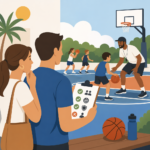
Inside an NBA timeout huddle, the sequence is tighter and more structured than television usually shows. The head coach rarely monologues the entire time. One assistant may manage the whiteboard and diagram the set. Another quickly relays opponent tendencies from the previous few possessions. A player development coach might remind a specific reserve about spacing depth or screen angle. Veterans often reinforce the message by translating it into player language. The point guard confirms who initiates. The bigs identify screening order. Wing defenders check matchups for the next dead-ball crossmatch. Everyone leaves with a short script.
Most huddles follow a hierarchy. First comes emotional regulation: settle the group, especially after turnovers, missed calls, or a hostile road run. Second comes one diagnostic point: what is actually breaking down. Third comes the immediate solution for the next possession or two. Fourth comes situational awareness: score, time, fouls to give, timeout count, challenge status, and whether the team wants early offense or a last-shot scenario. Good coaches do not overload players with six corrections. They identify the leverage point. If the issue is poor floor balance leading to transition scores, that becomes the message, even if other mistakes exist.
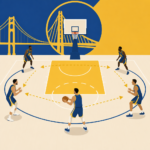
Specificity separates average timeout execution from elite execution. Consider a late-game after-timeout play against switch defense. Instead of vaguely asking for a star isolation, the staff might call a ram screen into empty-corner pick-and-roll, forcing a smaller defender onto the screener before the main action begins. If the opponent top-locks the shooter, the counter may be a back cut into a lob window. If help comes from the nail, the weak-side corner lifts for a skip pass. All of that can be covered quickly because NBA players rehearse these packages constantly. The timeout is where the coach selects the package that best fits the matchup and game state.
Late-game timeout strategy and end-of-game math
End-of-game timeout strategy is where coaching judgment is most visible. The first major question is whether to call timeout in transition or let the offense attack before the defense gets set. Some coaches prefer flow, especially with an advantage creator like LeBron James or Luka Doncic handling against a retreating defense. Others want control: advance the ball, substitute shooting, and call a pet action. There is no universal rule. The correct choice depends on personnel, score, remaining time, and whether the defense is scrambled. Generally, if a team has numbers or a mismatch in early offense, playing on can outperform a dead-ball set against a loaded defense.
The second question is shot selection relative to time and score. Down three with eight seconds left, should a team hunt an immediate three, drive for a quick two, or seek a foul on a three-point attempt? Coaches model this through probability, foul situation, and rebound positioning. Down two, many staffs prefer a two-for-one style quick attack before the defense can switch every screen. Tied games introduce another choice: hold for the last shot or score early enough to preserve a final defensive possession. Analytics departments track expected value, but coaches still weigh trust, matchup comfort, and turnover risk.
| Situation | Common Timeout Choice | Main Reason |
|---|---|---|
| Up 1, 24 seconds left, opponent ball | Set defense, save final timeout if possible | Preserve flexibility after stop or foul sequence |
| Down 2, 14 seconds left, live rebound | Usually play on | Attack unsettled defense before matchups are set |
| Down 3, 7 seconds left, after made basket | Advance ball and call set | Create clean three-point look with spacing |
| Tied, 18 seconds left, possession secured | Often no timeout with star creator | Avoid allowing defense to load up and switch personnel |
| Need final stop with foul to give | Use timeout proactively | Organize switch rules and intentional foul timing |
One more late-game layer is timeout conservation. Coaches who spend too freely in the third quarter sometimes lose the ability to advance the ball or rescue a broken possession late. That does not mean hoarding is always smart. A timeout used early to stop an avalanche may protect win probability more than a timeout saved for a hypothetical last play. The strongest game managers understand leverage. They know that timeout value is nonlinear. One possession in the final minute can be worth multiple average possessions, but one timeout during a 15-2 opponent run may also be decisive if it prevents rotation panic and foul accumulation.
How timeout strategy connects to lineups, playbooks, and scouting
Timeouts are inseparable from roster construction and pregame preparation. A coach with versatile wings and multiple handlers can call more complex after-timeout actions because the personnel can invert roles, disguise intent, and flow into counters. A team with one dominant creator may use timeouts to engineer that player’s preferred matchup through screening layers and substitution timing. This is why playoff scouting matters so much. Over a seven-game series, staffs learn which pet actions opponents trust after timeouts and build counters for the first option, second option, and emergency release valve.
Lineup management is a central timeout function. Coaches often use timeouts to create offense-defense substitutions, protect foul-troubled bigs, or pair bench scorers with specific spacers. Think of a timeout as a checkpoint where the coach can correct the interaction between players, not just the scheme. If a reserve guard cannot enter the ball cleanly against pressure, the team may use a bigger initiator after the break. If a drop center is getting pulled into space by five-out alignment, the coach may shift to a mobile switching unit. The timeout turns those observations into action before another damaging stretch occurs.
For a strategy hub, the key takeaway is that timeout decisions touch every major NBA analysis topic: pace, lineup data, pick-and-roll coverage, late-game offense, foul management, and playoff adjustments. Studying timeout usage reveals how a coaching staff prioritizes information, risk, and player strengths. If you want to understand why some teams consistently execute better in close games, start with their timeout process. Watch what triggered the whistle, who enters the game, what set is called, and whether the team gets the exact shot or stop it wanted. That is where coaching becomes visible. For deeper NBA analysis, use this framework to break down game film, compare staffs, and track how strategy changes from regular season to playoffs.
Frequently Asked Questions
When do NBA coaches usually call timeouts?
NBA coaches call timeouts at very specific pressure points in a game, not just whenever they want a break. One of the most common moments is when the other team is on a scoring run and momentum is clearly shifting. A timeout can stop the pace, reset the emotional tone, and prevent a two-possession problem from turning into a double-digit swing. Coaches also call timeouts after repeated defensive breakdowns, poor spacing on offense, rushed shot selection, or confusion in transition. If a team is making the same mistake on two or three straight possessions, that is often enough to trigger a stoppage.
Late-game situations are another major reason. In the final minutes, coaches may call timeout to advance the ball, organize a sideline or baseline out-of-bounds play, decide whether to go for a quick two or a tying three, or set up a defensive substitution after a made basket. Timeouts are also used before challenge decisions, after unusual lineup problems, or when a star player needs a short rest without being taken out for a full stretch. Just as importantly, some coaches save timeouts deliberately, because having one available in the final minute can be worth far more than using it too early. In other words, timing is strategic: coaches are constantly weighing immediate damage control against the value of preserving a timeout for a more important possession later.
Why is an NBA timeout so important if it only lasts a short time?
An NBA timeout matters because it can change several layers of the game at once. On the surface, it pauses play. In practice, it gives the coaching staff a chance to interrupt momentum, deliver corrections, and create one organized possession in a sport that can become chaotic very quickly. Basketball is highly rhythm-based. If one team is playing faster, cleaner, and more confidently, even a short interruption can break that flow. That is why commentators often say a coach “needed that timeout” even when the scoreboard damage still looks manageable. The timeout is often about preventing the next five possessions from getting worse.
It is also important because coaches can use the stoppage to control matchups and personnel. They might substitute shooting for spacing, size for rebounding, or defense for a final stop. They can remind the ballhandler where the trap is coming from, tell the bigs how to defend a pick-and-roll coverage, or instruct the weak-side defender to tag the roller earlier. In end-of-game scenarios, the timeout can be even more valuable because NBA rules allow teams to advance the ball in certain situations, which dramatically changes play-calling options. Instead of needing to dribble through the backcourt with the clock running, a team can begin much closer to scoring position. That makes the timeout more than a pause; it becomes a tool for geometry, timing, substitutions, and decision-making all at once.
What actually happens inside an NBA timeout huddle?
Inside the huddle, the conversation is much more structured than many fans realize. Coaches do not simply yell general motivation and send players back out. Usually, the first few seconds are about urgency and focus: identifying the problem clearly, calming the group, and making sure everyone is listening. Then the head coach or lead assistant gets specific. If the issue is defensive, they may explain exactly how to handle the opponent’s action: switch the screen, stay home on shooters, send help from a different side, or stop over-helping in the corner. If the issue is offensive, they may call a set play, emphasize pace, remind a player to get downhill, or tell the group to attack a mismatch they have not used enough.
There is also constant communication about personnel, clock, score, and foul situation. Players are told who is checking in, whether there is a two-for-one opportunity, whether to foul up three, whether to deny an inbound, and what to do if the first option gets taken away. Assistants may be handling clipboards, diagramming an action, relaying matchup details, or reinforcing one tactical point to a specific player. Veterans sometimes add quick reminders of their own, especially about spacing and communication. In many cases, the timeout ends with one or two simple phrases everyone can remember under pressure. The goal is not to overload the team with information. The goal is to deliver a clear plan that can be executed immediately on the next possession.
How do timeouts affect lineups, substitutions, and offense-for-defense decisions?
Timeouts are one of the easiest moments for coaches to reshape lineups without creating additional confusion. Because play is stopped, they can insert specialists for a single possession or a short sequence. This is where offense-for-defense substitutions become especially important. If a team needs one clean look at the basket, a coach may put extra shooting, passing, and screening on the floor. If the team needs one stop, that same coach might replace a shooter with a longer defender, stronger rebounder, or more versatile switch piece. These changes can look minor on television, but they can determine whether a play even gets started properly.
Timeouts also help coaches manage fatigue and foul trouble. A star player may stay in the game because the timeout provides enough rest to survive another stretch. A big man with five fouls may get tactical instructions on how aggressive to be in drop coverage. A bench unit that has lost structure can be reorganized around a better ballhandler or steadier defender. Sometimes the timeout is less about the next play than about the next three minutes, especially in playoff basketball when matchup chess becomes intense. Coaches are thinking about who can survive on an island defensively, who can guard the inbounder, who can trigger the offense, and who is most likely to make the right decision if the first option breaks down. The timeout gives them a controlled environment to make those choices.
Do timeouts really change momentum, or is that just a basketball cliché?
Timeouts can absolutely affect momentum, but not in a magical or automatic way. A timeout does not guarantee a comeback or stop a run by itself. What it does is create a chance to interrupt patterns. If the opponent is scoring repeatedly from the same action, getting to loose balls first, or forcing rushed possessions, the timeout gives the coach a window to change the pattern before it gets worse. That might mean switching defensive coverage, slowing tempo, calling a set to get a high-percentage shot, or simply resetting the team emotionally. In that sense, momentum is often the visible result of deeper factors like spacing, decision-making, communication, and confidence. Timeouts matter because they let coaches address those factors directly.
Just as importantly, a timeout can change the emotional temperature of the game. Players get a brief reset, frustration can be redirected, and the staff can restore clarity. That is especially valuable after a blown assignment, a controversial call, or a stretch where the team looks sped up. Great coaches use timeouts not only to stop what is going wrong, but to create the next right possession. Sometimes that possession leads to a basket, a stop, and a visible swing in energy that fans recognize immediately as momentum. Other times the effect is subtler: better floor balance, sharper communication, cleaner late-clock execution, and fewer avoidable mistakes. So while “momentum” can sound cliché, the strategic value behind it is very real. In the NBA, a well-timed timeout can stabilize a team, sharpen execution, and shift the game back toward controllable details.