

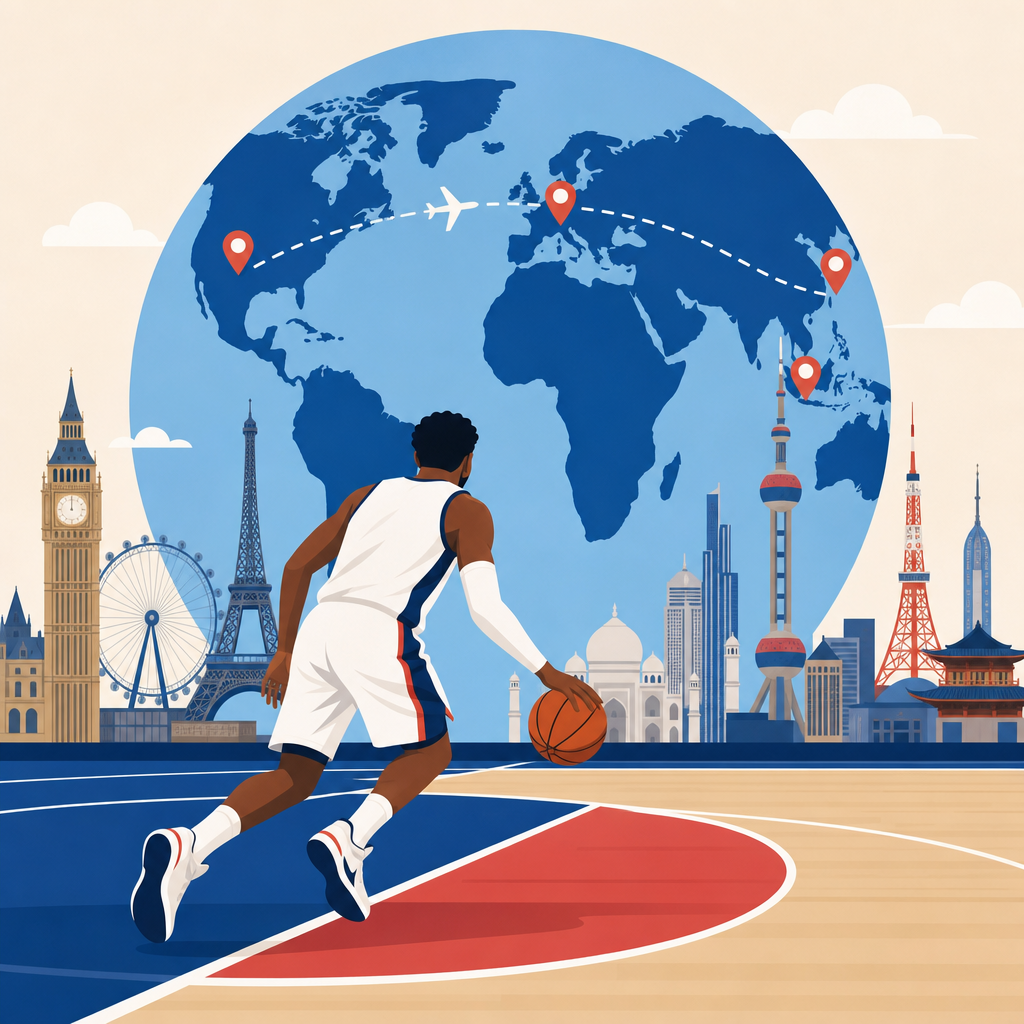
The NBA International Games are regular season contests staged outside the United States and Canada to grow the league’s audience, deepen commercial partnerships, and turn basketball interest into lasting fandom. In simple terms, the league takes meaningful games abroad because exhibitions create awareness, but standings that count create urgency, media attention, and ticket demand. I have worked on international sports content and sponsorship planning, and the pattern is consistent: when a league exports real competition, local engagement rises faster than it does with preseason tours alone. For the NBA, that strategy sits at the center of its global growth story.
International games matter because the NBA is no longer a domestic entertainment product with overseas viewers on the side. It is a year-round media property consumed in Europe, Latin America, Asia, Africa, and the Middle East, powered by streaming, social media, merchandise, betting partnerships, and a player pipeline that is increasingly international. By the start of the 2023-24 season, the league featured a record 125 international players from 40 countries, according to NBA release data. Recent MVP races, All-NBA teams, and draft classes have reinforced the same point: global basketball is shaping the NBA on the court as much as the NBA is shaping basketball abroad.
To understand why the league sends regular season games to Paris, Mexico City, London, or other host markets, it helps to define a few terms. “International Games” is the broad label for NBA-sanctioned contests outside the league’s home countries. “Global growth” refers to expanding audience, revenue, participation, and cultural relevance across borders. “Market development” means building demand in a specific country through local media rights, sponsorship, events, grassroots clinics, and retail distribution. “Basketball operations” covers the playing side, including travel, scheduling, training conditions, and competitive integrity. The NBA balances all of those factors when it chooses where, when, and how to play abroad.
The topic matters within NBA history because overseas games are not side events. They are milestones in the league’s transformation from an American competition into one of the world’s most recognizable sports brands. This hub article explains how international regular season games began, what business logic supports them, how host cities are selected, what players and teams gain or lose, and why these games connect to wider themes such as media rights, youth development, and the rise of international stars. If you want to understand the NBA’s global growth, start with the games that leave home and still count.
How NBA international games became a core part of global growth
The NBA’s overseas strategy did not begin with regular season games. It developed through decades of exhibitions, television distribution, and the worldwide halo effect created by the 1992 United States Olympic “Dream Team.” That Barcelona team turned elite NBA talent into a global cultural event and accelerated basketball participation in markets that already had strong club traditions, especially Spain, France, Italy, and parts of Latin America. In the years that followed, the NBA expanded preseason tours under banners such as NBA Europe Live and NBA Global Games, testing venue demand and broadcast appeal before committing to games with standings implications.
The shift from exhibitions to regular season contests was significant because it changed the value proposition for everyone involved. Broadcasters could promote a game with real playoff implications. Sponsors could attach their brands to a premium event rather than a glorified friendly. Fans were more likely to pay high ticket prices when stars were expected to play meaningful minutes, subject to standard injury limitations. The Mexico City Games and the NBA Paris Game illustrate this progression. Both cities had already hosted league events and demonstrated that they could handle logistics, media demand, and local interest before becoming recurring stops for regular season scheduling.
From an NBA History perspective, these games also fit a broader pattern of institutional patience. The league rarely enters a market cold. It usually layers activity over time: youth clinics, grassroots partnerships, localized social channels, merchandise programs, media rights deals, celebrity appearances, and then major events. That sequencing matters. A regular season game works best as the visible peak of a much larger market-development plan. In my experience, leagues that skip those earlier steps often get a burst of attention but fail to build retention. The NBA has been more disciplined than most in connecting event strategy to long-term audience formation.
Why the NBA takes regular season games abroad instead of only preseason exhibitions
The simplest answer is that regular season games create stronger demand and more durable business results than exhibitions. A preseason game can introduce the brand, but it does not command the same urgency from broadcasters, sponsors, or casual fans. A regular season matchup affects standings, player awards narratives, coaching decisions, and playoff races. That competitive relevance increases viewing intent. It also improves news pickup, since global sports desks are far more likely to lead with a game that counts than one designed mainly for outreach.
There are four main reasons the NBA prefers regular season games abroad when conditions allow. First, they deepen fan loyalty. A supporter in Paris or Mexico City who attends a real NBA game is more likely to subscribe to League Pass, follow the teams afterward, and purchase licensed merchandise. Second, they strengthen commercial negotiations. Local sponsors pay more when the league offers premium inventory around a meaningful event. Third, they help media-rights partners market the league in local language with a marquee tentpole. Fourth, they signal commitment. When a league is willing to move official games overseas, it tells the market that international fans matter, not just as viewers but as part of the league’s future.
There are limits, and the NBA knows them. Travel fatigue is real. Scheduling fairness matters. Teams must manage body clocks, practice access, and recovery windows, especially in compact parts of the calendar. That is why the league uses targeted placements rather than scattering many international regular season games across the schedule. The goal is not to maximize volume in the short term. The goal is to place a small number of high-impact games where they generate long-term strategic value without undermining competitive standards.
How the league chooses host cities, teams, and matchups
Host selection is driven by infrastructure, audience potential, and strategic fit. The NBA looks for modern arenas, reliable transportation, security planning, hotel capacity, broadcast facilities, and local promoters or partners capable of executing at league standard. It also considers whether the city has a strong basketball culture, favorable commercial conditions, and time-zone usefulness for international television windows. Mexico City stands out because of its population scale, existing G League presence through the Capitanes, and regional significance for Latin America. Paris stands out because France is one of the NBA’s strongest talent pipelines and one of Europe’s most commercially attractive basketball markets.
Team and matchup selection is equally deliberate. The league prefers clubs with marketable stars, stylistic appeal, and roster connections to the host region. A French player on an NBA roster can transform local interest in a Paris game. A team with Latino fan traction can boost a Mexico City event. Rivalries matter too, but the first filter is often exportability: can this matchup tell a story that local media and global platforms will amplify? In planning cycles, the answer is measured through ratings history, social engagement, sponsor interest, and ticket demand forecasts, not by intuition alone.
| Factor | Why It Matters | Example |
|---|---|---|
| Arena quality | Ensures broadcast, safety, and fan experience standards | Accor Arena in Paris meets premium event requirements |
| Local player connection | Raises media interest and emotional relevance | French prospects and veterans increase Paris visibility |
| Commercial ecosystem | Supports sponsors, merchandise, and activations | Mexico City offers regional brand reach in Latin America |
| Time zone and media value | Improves viewership in multiple territories | European tip times can serve local and U.S. audiences |
| Long-term strategy | Links one event to broader market development | Games complement academies, clinics, and social channels |
The NBA also weighs operational fairness. A team should not lose too much rest or home-court balance because it was chosen for an international showcase. That is why scheduling accommodations, earlier arrivals, and adjusted surrounding games are common. The league office has become more sophisticated in this area over time, and that operational maturity is one reason international regular season games now feel sustainable rather than experimental.
The business case: media rights, sponsorship, tourism, and merchandise
International games are expensive to stage, but they can unlock revenue well beyond the ticket gate. Media rights are the biggest long-term prize. One high-profile game abroad can strengthen negotiations with broadcasters and streaming platforms by proving local appetite for premium NBA programming. The event also produces shoulder content: studio shows, documentaries, player features, and social clips tailored to local audiences. That multiplies the value of one game across weeks of programming.
Sponsorship is the second major driver. Global and regional brands want culturally relevant moments, not just logo placement. An NBA game in Paris lets a partner run retail promotions, hospitality events, influencer campaigns, youth clinics, and digital contests in one coordinated burst. Tourism agencies and city governments often support these events because they attract visitors, media crews, and international attention. Hotels, restaurants, and transit networks all benefit from a major sports week, particularly when it includes open practices, fan zones, and community programming.
Merchandise is another important piece. Fans who attend a live event are more likely to buy jerseys, caps, and collectibles, especially when products are localized or tied to a limited-edition game identity. In sports marketing data, live-event conversion rates routinely outperform standard retail campaigns because emotional intensity is higher at the point of purchase. The NBA has been adept at pairing event storytelling with commerce, using local language, player narratives, and city branding to make products feel specific rather than generic.
What international games mean for players, teams, and competitive integrity
For players, an overseas regular season game can be both rewarding and demanding. International stars often describe these events as homecoming moments, especially when family, childhood coaches, or national media are present. Those appearances can strengthen the league’s relationship with players from abroad because they demonstrate respect for their roots. At the same time, the practical burdens are real. Long-haul travel disrupts sleep, nutrition routines, and treatment schedules. Sports science staffs must adjust hydration, circadian timing, and workload management to protect performance.
For teams, the upside includes brand expansion, sponsor hospitality, and stronger global recruiting visibility. A franchise that shows up professionally on an international stage can build fans for decades. But coaches and executives care about fairness. No contender wants a strategically important week complicated by customs procedures, compressed practice time, or unusual court familiarity. The league mitigates this through extra planning days and by choosing calendar spots that reduce competitive distortion. The fact that teams continue to participate without major public resistance suggests the balance is workable, though not cost-free.
Competitive integrity remains the central test. If international games ever appeared to compromise results materially, the model would face stronger criticism. So far, the NBA has protected the concept by keeping the number limited, ensuring venue standards are high, and treating the games as normal contests rather than carnival exhibitions. That distinction matters historically. The league is saying that global expansion belongs inside the competition, not outside it.
How these games connect to the NBA’s wider global growth ecosystem
Regular season games abroad are the visible tip of a much larger global structure. The NBA’s international growth also depends on Basketball Without Borders, NBA Academies, localized content teams, grassroots coaching education, social media distribution, and partnerships with federations and broadcasters. A game in Paris is more effective because French fans already know Victor Wembanyama, Rudy Gobert, and earlier generations such as Tony Parker. A game in Mexico City resonates more because the league has invested there repeatedly, including G League placement and Spanish-language outreach.
This is why the subject belongs in any serious NBA History hub on global growth. International games reflect several deeper trends at once: the globalization of talent, the fragmentation of media consumption, the rise of direct-to-consumer streaming, and the increasing importance of cultural relevance in sports business. They also show that the NBA understands a crucial reality of modern fandom. People do not only adopt leagues through television. They adopt them through touchpoints that feel local: a clinic in their city, a social post in their language, a jersey tied to their national star, or a game that brings the league physically into their market.
Looking ahead, expect the NBA to remain selective rather than reckless. More countries will want regular season games, but not every market can support them at league standard. The best candidates will combine infrastructure, commercial depth, player relevance, and long-term strategic value. For readers exploring NBA global growth, the key takeaway is clear: when the league takes regular season games abroad, it is not chasing novelty. It is executing one of the most important expansion strategies in modern basketball history. Follow the host markets, the player pathways, and the media deals, and you will understand where the NBA is going next.
Frequently Asked Questions
Why does the NBA take regular season games abroad instead of just playing exhibition games?
The main reason is that regular season games matter in a way exhibitions never can. A preseason or promotional matchup may create short-term curiosity, but a game that counts in the standings creates urgency for fans, broadcasters, sponsors, and local media. When the outcome affects playoff positioning, load management decisions, and team momentum, the event instantly feels more significant. That higher level of consequence tends to drive stronger ticket demand, more extensive news coverage, and deeper fan engagement before, during, and after the game.
From a league strategy standpoint, the NBA is not just trying to introduce itself to international audiences; it is trying to convert general awareness into habitual fandom. Meaningful games give viewers a reason to tune in live, follow star players more closely, and start tracking teams over the course of a season. They also create stronger value for commercial partners because brands want to be associated with premium moments, not only ceremonial ones. In practical terms, taking regular season games abroad helps the NBA prove that basketball interest in a market is not merely casual curiosity but something robust enough to support long-term media rights, sponsorships, merchandise sales, and grassroots participation.
What does the NBA hope to gain from playing games in international markets?
The NBA is pursuing several goals at once. First, it wants to expand and deepen its global audience. Basketball already has broad international appeal, but staging games locally helps the league move from being a distant entertainment product to a lived, in-person experience. Seeing teams, coaches, and star players in the arena can create a much stronger emotional connection than watching highlights online. That emotional connection often translates into repeat viewership, team loyalty, social media engagement, and merchandise purchases.
Second, international games help the NBA strengthen commercial relationships. Global brands and regional sponsors are often more willing to invest when the league shows up physically in a market with a marquee event. A live regular season game offers hospitality opportunities, local activations, premium branding inventory, and a major media moment that sponsors can use across multiple channels. Third, these games support the league’s broader ecosystem, including youth development, basketball participation, local federation ties, and long-term media negotiations. In short, the NBA is not just exporting a game for one night; it is using a high-profile event to build a deeper business and cultural footprint in strategically important markets.
How do international regular season games help grow fandom more effectively than broadcasts alone?
Broadcasts are essential, but live events create a different level of engagement. A televised product can introduce the NBA to viewers, but an in-market regular season game turns the league into a local conversation. Fans begin discussing ticket access, player arrivals, city events, local sponsorship tie-ins, and game-day experiences. Media outlets that may only occasionally cover the league often expand their coverage dramatically when a real game is coming to their city. That concentrated attention can pull in casual sports fans who might not otherwise seek out NBA content on their own.
There is also a psychological effect: when fans know the game counts, they pay closer attention to team storylines and league context. They want to understand playoff races, player roles, coaching decisions, and rivalries because those details now matter to the event they are attending or watching. This is how awareness becomes education, and education often becomes loyalty. Over time, that loyalty can show up in stronger local TV and streaming interest, higher merchandise demand, more youth participation in basketball, and a wider base of fans who follow the league consistently rather than only during major events like the Finals.
Are NBA International Games mainly about revenue, or is there a bigger strategy behind them?
Revenue is absolutely part of the equation, but the larger strategy is much broader than a single game’s ticket sales or sponsorship income. The NBA operates with a long-term global growth mindset. International regular season games are a tool for market development: they help the league test demand, evaluate operational readiness, strengthen partner relationships, and build evidence that a region can support more investment. That could mean expanded media packages, deeper brand partnerships, more grassroots programs, or additional future events.
There is also a brand-positioning dimension. By taking meaningful games abroad, the NBA reinforces its identity as a truly global league rather than a domestic competition with overseas viewers. That matters in an era when sports properties compete not only for local market share but for worldwide attention, subscription revenue, and cultural relevance. For teams, players, sponsors, and broadcasters, international games can open doors to new audiences and new commercial opportunities. So while revenue matters, the deeper purpose is to create lasting strategic value in markets where basketball interest can be transformed into sustained engagement and business growth.
How does the NBA decide which countries or cities should host international regular season games?
The decision is typically based on a mix of fan interest, commercial potential, infrastructure, and strategic fit. The league looks for markets where basketball already has a meaningful presence or where there is strong evidence that the sport can grow further with the right investment. That includes television and streaming consumption, social engagement, grassroots participation, local sponsor appetite, and the ability of local promoters or partners to support a world-class event. A city may have passionate fans, but if the arena, travel logistics, broadcast setup, or commercial environment are not strong enough, it may not be the right host at that time.
The NBA also considers whether a market can turn a one-off event into something larger. A successful host city is not just a place that can sell tickets; it is a place where the game can generate lasting momentum. That could include school and community programs, fan festivals, sponsor activations, media partnerships, and ongoing league visibility after the teams leave. In many cases, the league is looking for locations where a regular season game can serve as a catalyst for broader growth across fandom, business, and basketball culture. The host selection process is therefore less about novelty and more about where a meaningful game can create the strongest long-term impact.