
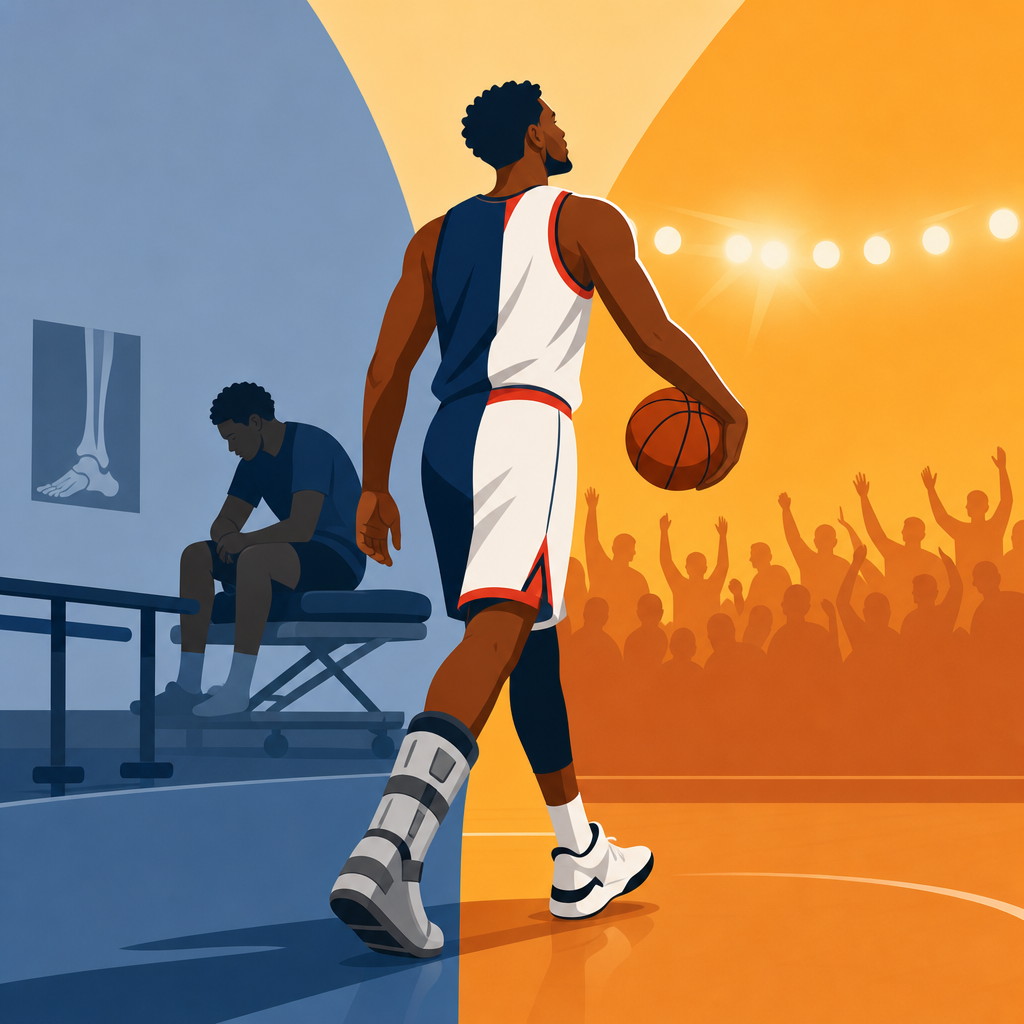
NBA comeback stories reveal the hardest truth in professional basketball: talent can build a career, but returning from a career-threatening injury demands resilience, medical precision, and a complete rebuilding of identity. In the NBA, a “career-threatening injury” usually refers to damage that historically ends prime performance or removes a player from the league altogether, including Achilles tendon ruptures, multiple knee ligament tears, catastrophic fractures, spinal issues, nerve damage, and heart-related health scares. A comeback is not simply appearing in another game. It means regaining rotation minutes, reclaiming trust from coaches, adapting a skill set, and proving that the body can survive the demands of an 82-game season and playoff intensity. I have covered and analyzed player profiles for years, and the pattern is consistent: the most meaningful recoveries are rarely clean, linear, or fast.
These stories matter because they reshape how fans evaluate greatness, durability, and player development. They also sit at the center of modern NBA analysis, where medical timelines, load management, biomechanics, and role changes are as important as points per game. For readers exploring NBA players, comeback profiles offer a practical way to understand the league through character, context, and evidence. Why did one star return to All-NBA form after an Achilles tear while another never fully recovered from a knee injury? How do age, play style, body type, and team infrastructure influence outcomes? Answering those questions creates a stronger foundation for every other player profile, from prospects and role players to Hall of Fame veterans. The best comeback stories are not sentimental side notes. They are case studies in adaptation, risk, and elite performance under severe physical limits.
Career-threatening injuries also expose the hidden labor behind every NBA season. A return is built on imaging, surgery, progressive overload, gait retraining, strength symmetry testing, confidence restoration, and constant monitoring of setbacks. Team doctors, athletic trainers, performance specialists, and skill coaches all shape the path back, but the player still has to absorb pain, public doubt, and the fear that one explosive step could fail. That is why this hub on player profiles matters within the broader NBA Players topic. It gathers the most instructive examples, explains what changed in each player’s game, and shows how a comeback should be judged: not by narrative alone, but by measurable impact, durability, and reinvention. From Shaun Livingston to Kevin Durant, these returns define careers as much as championships, MVP awards, or scoring records.
What makes an NBA comeback story truly significant
A significant comeback has three traits. First, the original injury must carry a genuine threat to long-term availability or peak athletic function. Second, the return must involve more than ceremonial minutes; the player has to contribute in meaningful games. Third, the player profile has to show adaptation. Many athletes return physically, but the great comeback stories feature tactical change: fewer reckless drives, improved shooting efficiency, smarter footwork, altered defensive assignments, or better pacing. In practical terms, Derrick Rose returning to score 50 points in 2018 mattered because it proved he could still create offense after repeated knee trauma. Alonzo Mourning returning after a kidney transplant mattered because he resumed winning basketball at the highest level. These are not symbolic appearances. They are competitive returns.
Context is essential when evaluating injury comebacks in the NBA. A torn ACL in 1995 did not carry the same rehab expectations as a torn ACL in 2025, when surgical techniques, return-to-play protocols, and performance tracking are much better. Position also matters. A center who relies on length and positioning may survive lower-limb decline better than a guard whose game depends on burst and repeated deceleration. Contract status, team depth, and competitive timeline matter too. A rebuilding team can offer patience, while a contender may expect immediate playoff value. In every player profile, the comeback should be tied to role, era, and style, not treated as a generic triumph story.
Player profiles that define the modern NBA comeback conversation
Shaun Livingston remains one of the clearest examples of a true basketball resurrection. In 2007, he suffered a devastating knee injury involving a torn ACL, torn PCL, torn lateral meniscus, sprained MCL, and a dislocated patella. Doctors reportedly considered amputation a risk because of vascular concerns. Before the injury, Livingston projected as a tall lead guard built on fluidity and vision. After it, he could not rely on explosive athleticism the same way. His comeback worked because he rebuilt himself into a poised midrange specialist, post-up guard, and low-mistake playmaker. He eventually became a vital part of Golden State’s championship infrastructure. His player profile teaches a central lesson: survival in the NBA often depends on skill translation, not restoration of the old self.
Paul George’s return from his 2014 leg fracture is another foundational profile. During a USA Basketball scrimmage, he suffered an open tibia-fibula fracture, one of the most visually shocking injuries of the era. What made his comeback remarkable was not just that he returned, but that he returned as an elite two-way wing. George regained enough lateral mobility and lift to remain a primary scorer and high-level defender. He later rebuilt his offensive game around polished handle creation, pull-up shooting, and measured use of space rather than pure force. His case shows that a player can come back from structural trauma and still remain central to contention, provided the rehab and skill base are strong enough.
Dominique Wilkins changed how people think about Achilles injuries. When he ruptured his Achilles in 1992 at age 32, conventional wisdom said an explosive scorer was unlikely to return near peak form. Instead, Wilkins averaged 29.9 points per game the following season and remained highly productive. His recovery predates many current medical advances, which makes it even more impressive. Kevin Durant later offered a modern version of that challenge. After rupturing his Achilles during the 2019 Finals, Durant returned with Brooklyn and immediately performed like a superstar, using size, shotmaking, and balance to reduce the burden on first-step explosion. Both profiles matter because Achilles tears were once viewed as near-automatic decline for perimeter stars. These players proved that elite skill can overcome even the most feared lower-leg setback.
| Player | Career-threatening injury | What changed after return | Why the comeback matters |
|---|---|---|---|
| Shaun Livingston | Multi-ligament knee trauma and patella dislocation | Shifted to midrange creation and controlled playmaking | Became a championship rotation player after near career loss |
| Paul George | Open tibia-fibula fracture | Expanded pull-up scoring and pace control | Returned as an All-NBA caliber wing |
| Dominique Wilkins | Achilles tendon rupture | Relied more on skill timing and scoring craft | Redefined expectations for Achilles recovery |
| Kevin Durant | Achilles tendon rupture | Used size, shooting, and efficiency over constant rim pressure | Showed a modern superstar could still dominate post-injury |
How players reinvent their games after severe injury
The most successful NBA injury recoveries usually involve deliberate reinvention. Players often lose some acceleration, vertical pop, or recovery speed, but they can still preserve impact by improving decision-making and shot value. Livingston became a master of the short midrange. Grant Hill, after ankle injuries and surgeries derailed his superstar peak, extended his career by becoming a versatile connector, transition finisher, and smart defender rather than a heliocentric scorer. Jamal Crawford and Vince Carter offer related examples of aging and adaptation, though not every change came directly from a single catastrophic event. The common theme is technical recalibration. Footwork gets tighter. Passing reads get faster. Shot selection becomes more selective.
Derrick Rose is one of the clearest studies in controlled reinvention. His 2012 ACL tear was followed by additional meniscus injuries, and he never returned to the relentless MVP version built on violent changes of direction. Yet he found a second life by adjusting pace, improving touch, and attacking specific matchups instead of every possession. His 50-point game with Minnesota became an emotional landmark, but the deeper basketball takeaway was efficiency through restraint. Rose learned to choose his spots. That is often the dividing line in player profiles: stars who understand they cannot beat biology, but can outthink it.
Medical and performance staffs now play a larger role in these reinventions than at any earlier point in league history. Teams use force-plate testing, GPS-informed workload tracking in practice environments, high-speed video for gait analysis, and asymmetric strength monitoring to reduce re-injury risk. But data does not replace honesty. Some players can return only if their teams accept a reduced usage rate or scheduled rest. Kawhi Leonard’s injury management illustrates that elite impact sometimes comes with incomplete availability. That complicates his profile, but it does not erase the comeback value. A serious return can mean preserving star-level bursts, even if the old volume never fully comes back.
Historic comeback cases every NBA player profile hub should include
Alonzo Mourning belongs near the top of any serious list because his comeback involved more than orthopedic recovery. Diagnosed with focal segmental glomerulosclerosis, a serious kidney disease, Mourning missed substantial time, underwent a kidney transplant in 2003, and later returned to help the Miami Heat win the 2006 championship. His profile stands apart because the threat was existential as well as professional. He came back as a defensive anchor, rebounder, and emotional force, proving that return narratives are not limited to legs and joints.
Grant Hill’s profile is equally instructive. Early in his career, Hill looked like a future inner-circle superstar, but ankle injuries and complications from surgery radically altered his trajectory. He lost years of prime production and faced an infection risk that became genuinely dangerous. Yet he rebuilt his career in Phoenix, where better health management and a more controlled role allowed him to become a reliable starter again. Hill’s story is not about full restoration. It is about professional longevity after a devastating interruption, which is often the more realistic benchmark for severe injuries.
There are also comeback stories that highlight the edge between success and limitation. DeMarcus Cousins returned from an Achilles rupture, then suffered a quadriceps tear and ACL injury. He made it back to NBA floors, which is significant, but his player profile also shows how stacked injuries can permanently alter mobility and defensive viability. Similarly, Penny Hardaway reinvented pieces of his game but never fully regained the explosive stardom projected early in his career. These examples matter because honest player profiles should include partial comebacks. Returning is not binary. There are levels: playing again, contributing again, starring again, and dominating again.
What these comeback stories teach fans evaluating NBA players today
First, injury history must be read with specificity. “Knee injury” is too vague to mean much. An ACL reconstruction, meniscus trim, meniscus repair, patellar tendon issue, and chronic tendinopathy all carry different timelines and long-term effects. Second, age at injury is critical. Younger players often recover baseline athleticism more fully, but older stars may compensate better because their skill base is deeper. Third, game style predicts recovery quality. Shooters and oversized creators usually have more margin for decline than rim-pressure guards. That is why Durant could remain devastating after an Achilles tear, while smaller speed-dependent guards often struggle more.
For a sub-pillar hub on NBA player profiles, these lessons provide a framework readers can use across the site. When you study a current star returning from surgery, ask four direct questions. What exactly was injured? What physical trait powered the player before the injury? Which skill can substitute if that trait declines? And does the team context support a careful return? Those questions cut through hype and produce smarter analysis. They also improve comparisons between eras. A comeback in the 1980s, 2000s, and current league should never be judged by identical medical assumptions.
The biggest benefit of studying NBA comeback stories is perspective. They reveal that player evaluation is not only about ceilings, awards, or peak highlights. It is also about durability, problem-solving, and adaptation under pressure. The strongest player profiles show the full arc: who the athlete was before the injury, what the setback removed, what the recovery required, and what version emerged afterward. If you are building knowledge around NBA players, start with these comeback case studies and follow the links into deeper individual profiles. They will make every future discussion about value, legacy, and roster building more informed.
Frequently Asked Questions
What counts as a career-threatening injury in the NBA?
In NBA terms, a career-threatening injury is not just an injury that keeps a player out for a few weeks or even a full season. It usually refers to damage that has historically altered or ended high-level performance altogether. That includes Achilles tendon ruptures, repeated ACL or multi-ligament knee tears, severe fractures to the leg or foot, spinal problems, nerve damage, and major tendon or cartilage injuries that affect explosiveness, balance, or durability. These are the kinds of injuries that can change the way a player runs, jumps, cuts, lands, and absorbs contact, which are all essential skills in professional basketball.
What makes these injuries especially serious is that NBA success depends on movement at the absolute margins. A slight loss of lift, first-step speed, lateral quickness, or confidence can be the difference between an All-Star and a player struggling to stay in a rotation. That is why comeback stories in the NBA are so compelling. They are not simply about healing tissue. They are about restoring elite function in a sport where every movement is tested against the best athletes in the world. In many cases, the player must rebuild mechanics, conditioning, timing, and trust in the injured body part while also adapting to a changed version of his game.
Why are NBA comeback stories from career-threatening injuries so difficult?
They are difficult because recovery happens on multiple levels at once. First, there is the medical challenge: the injury itself has to heal correctly through surgery, rehab, load management, and months of progressive strengthening. Then comes the performance challenge. A player may be medically cleared but still far from game-ready. NBA basketball demands reaction speed, body control, endurance, and the ability to execute under pressure, and those qualities often return more slowly than basic health markers suggest.
There is also a major psychological component. After a devastating injury, players often have to relearn trust in their bodies. Cutting hard, jumping in traffic, planting on one leg, or attacking the rim can create hesitation even after the pain is gone. That hesitation matters at the NBA level. On top of that, athletes are dealing with identity disruption. Many have spent their entire lives being defined by what their bodies could do. When that ability is suddenly taken away, the comeback becomes mental and emotional as much as physical.
Finally, the league itself is unforgiving. Recovery does not happen in isolation. Players come back into real games, real travel, real scouting reports, and real pressure to produce. They are asked to compete against younger, healthier, faster opponents while managing minute restrictions and public scrutiny. That is what makes these returns so remarkable. A true comeback requires medical precision, patience, adaptation, and an extraordinary level of resilience.
Which NBA players are most often cited as great comeback examples after severe injuries?
Several names come up repeatedly because their returns reshaped how fans and analysts think about injury recovery. Dominique Wilkins is one of the classic examples. After suffering an Achilles rupture in 1992, an injury once viewed as devastating for explosive athletes, he returned and continued to score at an elite level. His comeback helped challenge old assumptions about what was possible after that type of injury.
Paul George is another major example. His 2014 leg fracture during Team USA activity was so severe and visually shocking that many feared it would permanently alter his career. Instead, he returned to become an All-NBA level player again, showing that elite two-way performance could be recovered through disciplined rehab and gradual rebuilding. Shaun Livingston is often cited for a different reason. His catastrophic knee injury in 2007 involved multiple structures and threatened not only his career but the basic function of his leg. He reinvented himself over time and eventually became a key contributor on championship teams, proving that comeback stories are not always about returning in the exact same form. Sometimes they are about building a new, equally valuable version of your game.
More recent discussions frequently include Kevin Durant, whose return from an Achilles tear stood out because he did not simply come back as a serviceable player. He returned as a superstar-level scorer. Players like Jamal Murray and Klay Thompson are also often part of this conversation because they came back from major lower-body injuries that historically derail careers, especially when multiple serious injuries happen close together. Each case is different, but what connects them is the same core theme: the comeback is measured not only by returning to the floor, but by rediscovering impact, confidence, and identity at the highest level.
Do players usually return to the same level after a career-threatening injury?
Not always, and that is one of the most important things to understand when talking about NBA comeback stories. A successful return does not automatically mean a player becomes the exact same athlete again. Some players regain nearly all of their previous form, while others return in a more limited role or with a different style of play. The outcome depends on many factors, including the type of injury, age, position, medical care, biomechanics, workload history, and how well the player adapts his game.
For example, an explosive guard who relies heavily on burst and change of direction may feel the effects of an Achilles or knee injury differently than a taller shooter or post player. A player might lose a little vertical pop or lateral speed but compensate with better shot selection, stronger footwork, improved playmaking, and smarter pacing. In that sense, some of the best comeback stories are less about complete restoration and more about evolution. The player learns how to remain effective even if certain physical traits are no longer quite the same.
It is also important to separate short-term return from long-term sustainability. A player may look strong in flashes early in a comeback but still need months, or even full seasons, to regain rhythm and consistency. That is why the most respected evaluations of a comeback consider durability, playoff performance, minute load, and how the player responds over time. The strongest comebacks are the ones where the player not only returns, but stays available and meaningful in high-leverage basketball.
What makes an NBA comeback story inspiring beyond the statistics?
The numbers matter, but the most powerful part of a comeback story usually lives beyond points per game or efficiency. What resonates with fans is the human side of the process. These players go from being among the most physically gifted people in the world to facing uncertainty, vulnerability, pain, and doubt. They spend months in rehab doing repetitive, unglamorous work with no guarantee that the old version of themselves will return. That kind of effort reveals character in a way game highlights alone cannot.
Comeback stories are also inspiring because they show reinvention. A player returning from a career-threatening injury often has to accept that his path forward will not look exactly like his path before the injury. That can mean changing training habits, adjusting style of play, embracing a new role, or finding leadership value even while physical tools are still coming back. In many cases, the comeback becomes a story about maturity as much as athletic recovery.
For readers and fans, these stories endure because they reflect a truth that goes far beyond basketball: resilience is not simply about returning to what you were. It is about confronting loss, rebuilding patiently, and finding a way to compete again with whatever version of yourself emerges on the other side. That is why NBA comeback stories remain so compelling. They are not just about sports medicine or performance. They are about persistence, identity, and the refusal to let a devastating setback write the final chapter.