
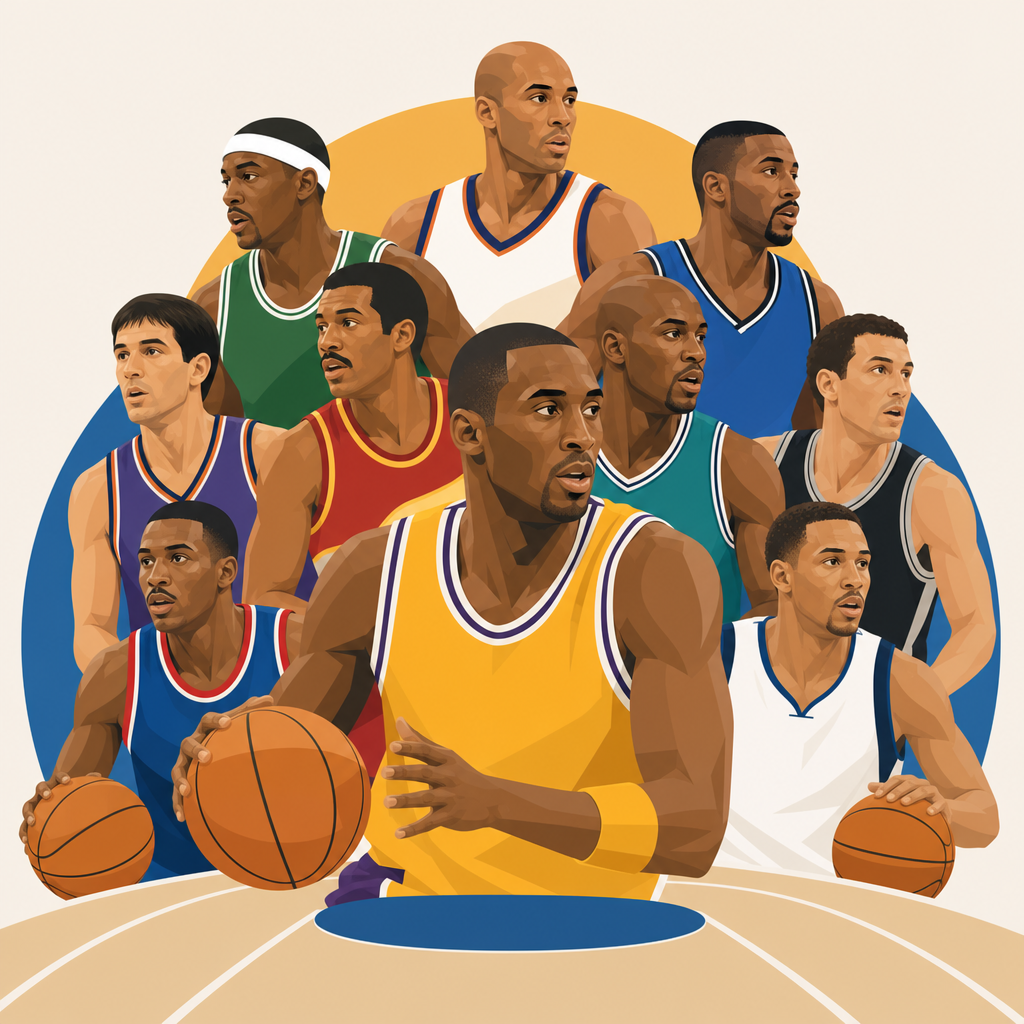
The best point guards in NBA history shaped how basketball is organized, paced, and ultimately won. A point guard is traditionally the primary ball handler and offensive organizer, responsible for bringing the ball up the floor, initiating sets, creating efficient shots, managing tempo, and directing teammates on both ends. In practice, the role has evolved from pure table-setter to complete offensive engine. Some great point guards dominated through passing vision and control, others through scoring gravity, and the rarest through both. Ranking them requires more than counting rings or points. It demands a balanced look at peak performance, longevity, playoff translation, awards, efficiency, statistical impact, and how much each player changed the position itself.
This position ranking matters because point guard is the NBA’s clearest expression of basketball intelligence under pressure. When I build all-time player lists, point guard is usually the hardest spot to order after the very top, because styles differ dramatically across eras. Magic Johnson operated in transition with unprecedented size. Stephen Curry warped defenses with off-ball movement and three-point range. Chris Paul mastered possession value and turnover control. Oscar Robertson produced all-around box score dominance before modern spacing. Isiah Thomas built a championship identity through creation and late-game fearlessness. Comparing them fairly means accounting for pace, rules, shot profile, supporting casts, and playoff context, not just raw per-game totals.
This article serves as a full hub for NBA point guard rankings. It explains what separates the greatest floor generals, gives a definitive top 10, and provides context you can use when exploring related position rankings across the broader NBA Players topic. The core question is simple: who combined production, winning, and influence most completely? The answer begins with clear criteria. I weigh regular-season résumé, postseason ceiling, All-NBA and MVP level play, advanced indicators such as Box Plus/Minus and Win Shares, era-adjusted impact, and the eye test of command. A great point guard does not merely accumulate assists. He bends the geometry of the game, raises teammates’ efficiency, and remains viable when defenses know exactly where the ball is going.
How to rank the greatest point guards in NBA history
The cleanest way to rank historical point guards is to separate role from reputation. Assists alone are not enough, because systems can inflate assist totals, and some elite creators generate offense through scoring gravity rather than direct passing. Rings alone are not enough, because roster quality and organizational stability matter. The strongest evaluation combines five categories: individual peak, longevity, playoff résumé, two-way value, and innovation. Peak asks how dominant a player was at his absolute best. Longevity measures how long he maintained All-NBA or near-All-NBA value. Playoff résumé tests whether regular-season strengths held up against elite scouting. Two-way value matters even at point guard, where size limitations can be mitigated by anticipation, strength, and communication. Innovation captures whether a player expanded the possibilities of the position.
By that standard, the top tier is very small. Magic Johnson and Stephen Curry stand above the field because each anchored dynastic offense while redefining how a point guard could control games. Behind them comes a deep group featuring Oscar Robertson, Jerry West if classified as a lead guard, Isiah Thomas, Chris Paul, Steve Nash, Jason Kidd, John Stockton, and Russell Westbrook. For this hub, I am using the common historical classification that places West primarily with shooting guards, so the list remains focused on players identified most often as point guards. That choice matters because it opens room for a specialist like Bob Cousy, whose résumé and era impact remain significant even if modern efficiency standards are less favorable.
Top 10 point guards in NBA history
| Rank | Player | Key résumé markers | Why he ranks here |
|---|---|---|---|
| 1 | Magic Johnson | 5 titles, 3 MVPs, 3 Finals MVPs, 12 All-NBA selections | Best blend of peak, playoff leadership, size, passing, and offensive control ever at the position |
| 2 | Stephen Curry | 4 titles, 2 MVPs, 1 Finals MVP, all-time three-point leader | Greatest shooter ever and the most transformational offensive guard in modern basketball |
| 3 | Oscar Robertson | 1 MVP, 11 All-NBA selections, triple-double pioneer | Complete offensive superstar whose all-around creation was decades ahead of its time |
| 4 | Isiah Thomas | 2 titles, 1 Finals MVP, 12 All-Star selections | Best small-guard championship driver before Curry, with elite shot creation under playoff pressure |
| 5 | Chris Paul | 11 All-NBA selections, 9 All-Defense selections, elite assist-turnover profile | One of the most efficient floor generals ever, with extraordinary control of game pace and possessions |
| 6 | Steve Nash | 2 MVPs, 7 All-NBA selections, historic offensive engine | Passing creativity and shooting efficiency made him one of the greatest regular-season conductors ever |
| 7 | John Stockton | All-time assists and steals leader, 11 All-NBA selections | Unmatched longevity, precision, and durability, though with a lower peak than players above him |
| 8 | Jason Kidd | 1 title, 10 All-Star selections, 9 All-Defense selections | Elite rebounding, passing, and defensive versatility gave him rare all-around value |
| 9 | Russell Westbrook | 1 MVP, multiple triple-double seasons, 9 All-NBA selections | Relentless rim pressure and volume creation produced one of the most explosive peaks ever |
| 10 | Bob Cousy | 1 MVP, 6 titles, 12 All-NBA selections | Early architect of modern guard play whose ball handling and passing reset the position in his era |
Why Magic Johnson is still number one
Magic Johnson remains the best point guard in NBA history because no one else married offensive orchestration, postseason résumé, and matchup distortion so completely. At 6-foot-9, he saw over defenses and turned transition into an inevitability. His career averages of 19.5 points, 11.2 assists, and 7.2 rebounds only begin the case. He won three MVP awards, led the league in assists four times, captured three Finals MVPs, and drove five championships for the Lakers. In 1987, the best season of his career, he averaged 23.9 points and 12.2 assists with exceptional efficiency for the era while running one of the greatest offenses ever.
The practical difference with Magic was decision speed. He advanced the ball earlier than most guards even processed the floor, which meant the defense was broken before the set defense formed. In half-court offense, he manipulated weak-side help with his eyes, delivered interior passes at sharp angles, and punished switches in the post. Critics point out he benefited from Kareem Abdul-Jabbar, James Worthy, and strong Lakers infrastructure. That is true, but it works both ways: stars can coexist only when the lead guard consistently creates order. Magic did that at a dynasty level. His 42-point, 15-rebound, 7-assist closeout performance as a rookie center substitute in the 1980 Finals remains one of the clearest examples of playoff command by any guard.
How Stephen Curry changed the point guard position forever
Stephen Curry is second because his impact on basketball strategy is unmatched among modern point guards. He is the greatest shooter ever, but reducing him to shooting misses the deeper point. Curry changed defensive spacing rules. Teams pick him up 30 feet from the basket, top-lock him off the ball, and still lose contact because his movement creates stress before the catch. That gravity opens slips, back cuts, split actions, and short-roll playmaking opportunities that conventional box scores do not fully capture. His résumé is now complete: four championships, two MVPs, the first unanimous MVP in league history in 2016, and a 2022 Finals run that answered the last lingering durability and leadership questions.
At his peak, Curry fused elite on-ball scoring with underrated playmaking efficiency. In 2015-16, he averaged 30.1 points, 6.7 assists, and shot 45.4 percent from three on absurd volume, producing one of the best offensive seasons ever recorded. In my own film study of Golden State’s championship years, the most striking pattern is how many possessions Curry wins without touching the ball for long. His relocation after passing is as damaging as another guard’s isolation. That matters in historical ranking because playoff basketball often shrinks space. Curry expands it. While Magic was the greatest traditional offensive conductor, Curry became the most dangerous modern offensive ecosystem by himself, which is why he has a legitimate argument for number one even if he lands second here.
The next tier: Oscar Robertson, Isiah Thomas, and Chris Paul
Oscar Robertson ranks third because he was functionally an entire offense in one player before the league understood spacing and efficiency the way it does now. He averaged a triple-double in 1961-62, but the stronger argument is his sustained dominance: 30.5 points, 10.1 rebounds, and 9.7 assists per game over his first five seasons. Robertson scored efficiently, created relentlessly, and used strength to control smaller guards. He won the 1964 MVP over Wilt Chamberlain and Bill Russell, which tells you how overwhelming his impact was viewed at the time. His later championship with Milwaukee alongside Kareem should not be dismissed as a late add-on; it proved his game could scale to title basketball.
Isiah Thomas sits fourth because his postseason résumé is stronger than that of every point guard below him. The leader of the Bad Boys Pistons was never as statistically clean as Paul or Stockton, but playoff rankings are not accounting exercises. Thomas repeatedly created difficult offense in ugly environments against elite defenses. His 25-point quarter on a severely injured ankle in Game 6 of the 1988 Finals remains iconic even in defeat. He then led Detroit to back-to-back championships in 1989 and 1990, beating Larry Bird, Michael Jordan, and Magic-era contenders during that run. At 6-foot-1, he survived physically punishing playoff basketball because his handle, burst, and pull-up shot held up under pressure.
Chris Paul is fifth and may be the most overqualified player ever to sit outside the top four. By advanced metrics, he has a real argument above Thomas. Paul has led the league in assists five times and steals six times, made nine All-Defensive teams, and owns one of the best assist-to-turnover profiles in league history. His command of pick-and-roll timing is the standard coaches still teach. Pocket passes, snake dribbles, hostage dribbles, weak-side tags read in real time: Paul mastered all of it. The only thing missing is a championship, and while team context and injuries matter, that absence is enough to keep him just below the strongest title drivers.
From Nash to Cousy: the final five and what separates them
Steve Nash ranks sixth because he engineered elite offenses with historic consistency. His Suns popularized pace, spread pick-and-roll, early drag screens, and the drive-and-kick rhythm that later defined much of the league. Nash’s two MVP awards remain debated because he was not a high-volume defender or isolation scorer, yet the numbers support his value. Phoenix routinely posted top offenses, and Nash combined 50-40-90 shooting efficiency with elite passing imagination. John Stockton follows at seventh. He is the all-time leader in assists and steals, missed remarkably few games, and sustained high-level play for nearly two decades. Still, his peak was less forceful than Nash’s or Paul’s, and Utah’s offense often leaned on Karl Malone’s finishing gravity.
Jason Kidd is eighth and one of the easiest players to underrate if you focus too heavily on shooting splits. Early-career Kidd was a shaky scorer, but he rebounded like a wing, defended multiple positions, pushed transition relentlessly, and transformed team competence almost immediately. The Nets reached consecutive Finals after his arrival, which was not a coincidence. Russell Westbrook is ninth. His 2017 MVP season was one of the most explosive creator seasons ever, and his repeated triple-double years reflected genuine usage burden, not empty stat hunting. Efficiency and defensive consistency limit him historically, but his rim pressure and tempo were devastating at peak. Bob Cousy rounds out the top 10 because era dominance matters. He led the league in assists eight straight times and helped establish the improvisational guard blueprint that later stars refined.
What separates these five is not fame but portability. Nash and Stockton produced cleaner decision-making possessions than Westbrook. Kidd offered more defensive and rebounding value than Nash. Cousy owns the strongest era-relative pioneering case, but the widest contextual gap from modern basketball. When building a hub for position rankings, that is the broader lesson: all-time lists are strongest when they balance achievement with translatable skill. If you are continuing through the NBA Players category, use this page as the baseline for comparing lead guards to shooting guards, wings, and bigs. The point guard position rewards control, but greatness at the spot comes in many forms: pace manipulation, shooting gravity, turnover avoidance, paint collapse, and postseason composure.
Conclusion: the clearest way to think about all-time point guard rankings
The best point guards in NBA history did more than handle the ball. They organized every possession, created advantages before the defense could react, and gave their teams an identity. Magic Johnson still ranks first because his size, passing, and championship control remain unmatched. Stephen Curry is the strongest challenger because his shooting and movement changed the geometry of the sport. Oscar Robertson, Isiah Thomas, and Chris Paul round out the next tier through complete offensive command, playoff toughness, and precision. Behind them, Nash, Stockton, Kidd, Westbrook, and Cousy each represent a distinct path to greatness, from efficiency and durability to force and innovation.
If you use one principle from this ranking, let it be this: judge point guards by how fully they solve offense, not by one statistic. The greatest at the position raise team efficiency, survive playoff scouting, and make difficult basketball look inevitable. Use this top-10 breakdown as your hub for NBA position rankings, then compare it against the best shooting guards, small forwards, power forwards, and centers to build your own all-time list.
Frequently Asked Questions
What makes a point guard truly great in NBA history?
A truly great point guard combines skill, control, leadership, and impact in a way that changes both the flow of a game and the ceiling of an entire team. Traditionally, the position has centered on ball handling, passing, initiating offense, and managing tempo, but the very best point guards in NBA history go much further than simply bringing the ball up the floor. They read defenses in real time, put teammates in ideal scoring positions, protect possessions, understand when to push pace and when to slow things down, and consistently make the right decision under pressure.
Greatness at the position is also measured by versatility. Some all-time point guards built their legacies through elite playmaking and court vision, like Magic Johnson and John Stockton. Others added dominant scoring to their playmaking responsibilities, like Stephen Curry, Oscar Robertson, and Isiah Thomas. Modern evaluations also include efficiency, shooting gravity, playoff performance, longevity, and how a player’s style influenced the league. A point guard who can bend defenses with passing, score at all three levels, and elevate teammates is often more valuable than one who excels in only one area.
Legacy matters too. Championships, MVP awards, All-NBA selections, assist and steals totals, advanced analytics, and sustained postseason success all help separate the good from the historic. Ultimately, the greatest point guards are the ones who controlled games, defined eras, and proved they could be the engine of elite winning basketball.
Who is usually considered the greatest point guard of all time?
The most common answer is Magic Johnson, although the debate has become more competitive as Stephen Curry’s resume has continued to grow. Magic has long been regarded as the gold standard at point guard because of his unmatched blend of size, playmaking, leadership, and winning. At 6-foot-9, he redefined what a point guard could look like, and his ability to run the fast break, create easy offense, and dominate the biggest stages made him the face of an era. His resume includes multiple championships, MVP awards, Finals MVPs, and one of the highest career assist averages in league history.
Magic’s historical case is built on both production and transformation. He was not just piling up numbers; he was orchestrating elite offenses and making teammates better in visible, repeatable ways. The Showtime Lakers became one of the most iconic dynasties in basketball largely because Magic controlled pace and execution at a level very few players ever have. His playoff reputation also remains one of the strongest among all point guards.
That said, Stephen Curry has forced a serious reexamination of the conversation. Curry’s shooting changed the geometry of basketball, and his off-ball movement, scoring efficiency, and championship success have created a résumé that is historically unique. If Magic represents the ultimate traditional and oversized playmaker, Curry represents the evolution of the position into a modern offensive engine. Depending on whether someone values pure table-setting, overall offensive impact, rings, peak value, or era-shifting influence more heavily, the answer may differ. Still, Magic remains the most widely accepted choice in all-time point guard rankings.
How do stats help rank the best point guards in NBA history?
Stats are essential because they help compare players across different roles, teams, and eras, but they work best when paired with context. Basic numbers like points, assists, steals, turnovers, field-goal percentage, three-point percentage, and free-throw percentage offer a starting point. For point guards in particular, assists and assist-to-turnover ratio have traditionally been important because they reflect how well a player creates offense while protecting possessions. Rebounding can also matter, especially for guards like Oscar Robertson, Magic Johnson, and Russell Westbrook, who added major value beyond the standard expectations of the position.
Advanced stats sharpen the picture. Metrics such as true shooting percentage, usage rate, offensive win shares, box plus-minus, player efficiency rating, and value over replacement player help show how efficient and impactful a point guard was beyond raw totals. For example, a player averaging fewer assists in a lower-possession era may still have had incredible offensive control, while a modern guard with fewer traditional point guard stats may still be creating enormous value through scoring gravity and spacing. That is why players like Curry can rank near the very top even though their game does not mirror a classic pass-first floor general.
Era context is crucial. Assist numbers, pace, defensive rules, spacing, and shot distribution have changed dramatically over time. John Stockton’s assist totals are legendary, but they came in a different offensive environment than Steve Nash’s or Chris Paul’s. Likewise, Curry’s scoring and shooting impact must be viewed through the lens of a modern perimeter-driven league that he helped shape. The best rankings use stats not as a shortcut, but as evidence within a broader evaluation that includes film, role, team results, peak performance, and historical influence.
Why are Magic Johnson, Stephen Curry, Oscar Robertson, Isiah Thomas, and John Stockton so often in the top tier?
Those names appear again and again because each represents a different model of point guard greatness, and all of them built résumés that are difficult to challenge. Magic Johnson is the prototype for oversized, championship-level offensive orchestration. Stephen Curry is the most transformative shooter ever and one of the most efficient offensive stars in league history. Oscar Robertson was decades ahead of his time, blending scoring, rebounding, and playmaking in a way that foreshadowed the modern heliocentric guard. Isiah Thomas was the emotional and competitive engine of a title team, capable of both elite creation and clutch postseason moments. John Stockton remains the all-time leader in assists and steals, a reflection of astonishing durability, consistency, and command of the position.
What separates this tier from the next group is that each player has a strong argument built on both individual excellence and historical significance. Magic and Curry changed how the position is understood. Oscar expanded the statistical and stylistic possibilities of what a lead guard could be. Isiah delivered championships in a brutally competitive era and proved he could lead at the highest level against legendary opponents. Stockton may not have had the same MVP peak as some others, but his longevity and playmaking production are almost impossible to duplicate.
In ranking discussions, these players also benefit from having clear signature strengths that translated directly to winning. Magic controlled games through passing and pace. Curry warped defenses with shooting range and movement. Oscar generated all-around offensive production. Isiah thrived in high-pressure moments. Stockton ran offenses with precision for nearly two decades. When a point guard combines elite defining skills with playoff credibility and lasting historical impact, top-tier status usually follows.
How has the point guard position evolved, and does that affect all-time rankings?
The point guard position has evolved dramatically, and that evolution absolutely affects all-time rankings. In earlier eras, point guards were often judged primarily by their ability to organize the offense, distribute the ball, limit mistakes, and serve as an extension of the coach on the floor. Scoring was useful, but not always considered the main job description. Over time, especially as spacing improved and offensive systems changed, the position shifted toward players who could not only create for others but also function as primary scorers and offensive focal points.
That change matters because it broadens the criteria used to evaluate greatness. A classic pass-first floor general like Stockton or Jason Kidd may be judged differently than a score-first or hybrid creator like Curry, Damian Lillard, or Kyrie Irving. Modern point guards are often expected to shoot from deep, operate in pick-and-roll, finish in traffic, create off the dribble, and punish switches. In contrast, older point guards were sometimes operating in systems with less space, different defensive rules, and different expectations about shot selection. Comparing players across these environments requires careful balance.
All-time rankings are affected because the definition of the role itself is less rigid than it once was. Some of the best “point guards” in NBA history are not traditional in style at all. Curry may not resemble the old model of a pure distributor, but his offensive influence is impossible to ignore. Magic stretched size expectations. Oscar combined lead-guard responsibilities with superstar scoring. The fairest rankings recognize both role evolution and era difficulty. Rather than asking whether every great point guard played the same way, the better question is how dominant each player was at driving elite offense and winning within the demands of his era.