
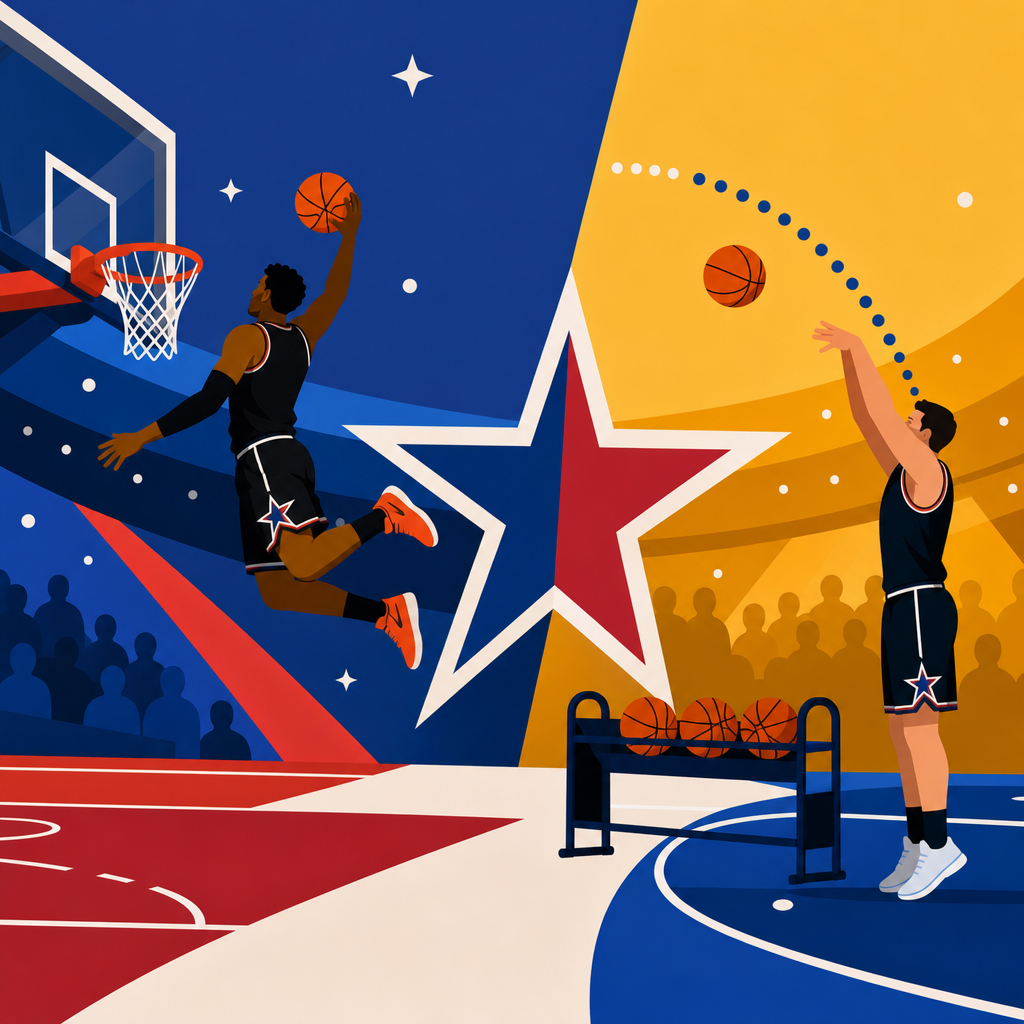
NBA All-Star Weekend is the league’s annual showcase of skill, style, and storytelling, and its two signature competitions—the Slam Dunk Contest and the Three-Point Contest—have become as historically important as the game itself. For fans studying NBA history, understanding these events means more than knowing who won on Saturday night. It means seeing how the league has marketed stars, rewarded creativity, responded to rule changes, and reflected broader shifts in basketball strategy. The dunk contest celebrates athletic invention in a controlled exhibition setting, while the three-point contest turns shooting precision into a test of rhythm, endurance, and nerves. Together, they reveal what each era of the NBA values most.
In league history, All-Star Weekend functions as both entertainment and archive. Iconic moments from Michael Jordan, Dominique Wilkins, Larry Bird, Craig Hodges, Vince Carter, Zach LaVine, Stephen Curry, Sabrina Ionescu, and Damian Lillard did not just fill highlight reels; they helped define reputations. I have covered and analyzed these events through the lens of league evolution, and the pattern is consistent: when the NBA wants to showcase where the sport is going, it often does so on All-Star Saturday. The rules, scoring systems, and presentation formats are carefully designed to make individual skills legible to a broad audience, which is why these contests remain central to any serious overview of NBA history.
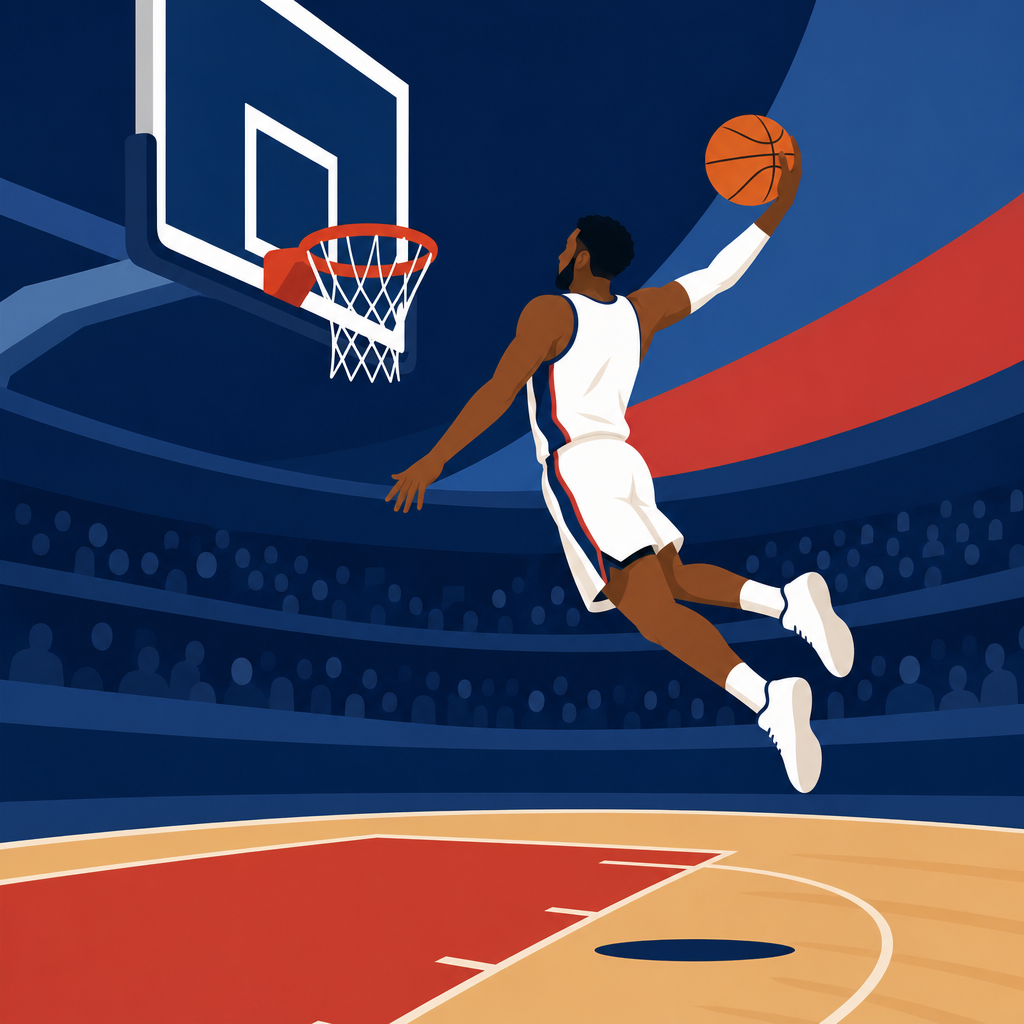
At a basic level, the dunk contest asks players to complete judged dunks over multiple rounds, with scores awarded for difficulty, execution, creativity, and presentation. The three-point contest asks players to move station to station around the arc and score as many points as possible within a timed round. Those simple definitions matter because they explain the contrast at the heart of All-Star Weekend. One event depends on subjective judging and spectacle. The other depends on objective scoring and repeatable technique. That contrast has shaped debate for decades, and it is one reason the three-point contest is often seen as the more competitively stable event, even while the dunk contest remains the more mythic one.
As a hub within NBA history, this article covers the origins, format, scoring, notable changes, and historical significance of both contests. It also connects these Saturday events to larger league-history themes: the ABA’s influence on showmanship, the three-point line’s rise from novelty to strategic center, television’s role in turning players into brands, and the tension between pure competition and entertainment. If you are building a foundation in league history, this is the right place to start before moving into deeper profiles of classic All-Star performances, individual champions, and era-by-era changes in NBA style.
How All-Star Weekend Fits Into League History
NBA All-Star Weekend did not become a full cultural institution overnight. The All-Star Game began in 1951 as a midseason exhibition intended to boost interest in the league, but the surrounding events expanded significantly later, especially when television audiences grew and the NBA recognized the promotional power of stars performing outside normal game structure. The modern weekend format allowed the league to package basketball skill into discrete, dramatic contests with clear winners, memorable visuals, and strong replay value. That made Saturday night a historical engine, not a sideshow.
The dunk contest’s lineage is inseparable from the ABA. Julius Erving’s free-throw-line dunk in the 1976 ABA Slam Dunk Contest created the event’s founding image before the NBA later adopted its own version. That moment mattered because it linked above-the-rim artistry to professional basketball marketing. The NBA’s official Slam Dunk Contest debuted in 1984, won by Larry Nance, and quickly became a marquee event as stars such as Jordan, Wilkins, and Spud Webb gave it narrative weight. The three-point contest also debuted in 1986, at a moment when the long ball was still underused in regular-season offense. Its early champions helped legitimize perimeter shooting as a stand-alone craft worthy of center stage.
These contests also track major stylistic turns in league history. In the 1980s and 1990s, the dunk contest aligned with the NBA’s emphasis on individual flair and poster-worthy athleticism. In the 2010s and 2020s, the three-point contest rose in stature because the league itself shifted toward spacing, volume shooting, and analytics-driven offense. If you want to understand why Stephen Curry changed basketball, the regular season tells one story, but the three-point contest tells another: the league elevated shooting to spectacle because shooting had become central to winning basketball.
For a league-history hub, this context matters because All-Star Weekend is not isolated from mainstream NBA development. It mirrors labor trends, media strategy, player branding, rules standardization, and evolving fan expectations. Many subtopics branch from here, including the history of the three-point line, the ABA-NBA merger’s cultural effects, the rise of signature sneakers through All-Star visibility, and the changing role of judges, celebrities, and broadcast production in sports entertainment.
Slam Dunk Contest Format: Rounds, Scoring, and Judging
The Slam Dunk Contest format has changed several times, but its core structure remains straightforward: a small field of players performs dunks in preliminary rounds, scores are awarded by judges, and the top performers advance to a final round. In the classic format, each dunk received a score from a five-judge panel, usually on a 6-to-10 scale, producing a maximum of 50 points. Judges evaluate originality, degree of difficulty, cleanliness of finish, body control, and crowd impact. Missed attempts matter because they reduce momentum and often influence perceptions of execution even when the final dunk is eventually completed.
Over the years, the NBA has experimented with tournament brackets, timed rounds, fan voting, team formats, and score resets. Fan voting created engagement but also produced criticism when popularity seemed to outweigh judging consistency. Timed rounds increased pace but sometimes hurt presentation, since many famous dunks rely on setup, suspense, and interaction with props or assistants. In practice, the league keeps searching for balance: enough structure to ensure fairness, enough flexibility to allow memorable creativity. When the format works, the audience understands both the competitive stakes and the artistic ambition of each attempt.
Judging is the contest’s defining complication. Unlike sprinting or shooting, dunking is not measured by a purely objective result. The score reflects human reaction. In my experience evaluating old contests, the best judging standard is comparative rather than absolute: a 50 should feel rare, distinct, and clearly superior to a 47 or 48. Score inflation has often hurt the event because too many early perfect scores leave judges little room to reward a truly historic dunk later. That problem became obvious in several modern contests, especially when finalists delivered multiple elite attempts and the scoring scale no longer separated them meaningfully.
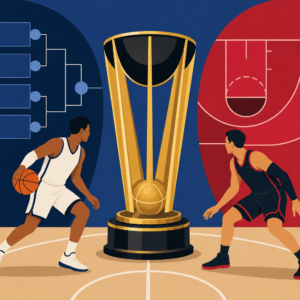
Famous examples show how format shapes legacy. Jordan and Wilkins in 1988 benefited from a structure that allowed suspense, repetition, and direct comparison. Vince Carter in 2000 thrived because his dunks were so clean and new-looking that judging became almost ceremonial. The 2016 duel between Zach LaVine and Aaron Gordon demonstrated both the contest’s upside and its flaw: breathtaking innovation paired with a scoring system that struggled to distinguish between excellent and transcendent.
| Contest | Typical Objective | How Scoring Works | Main Challenge |
|---|---|---|---|
| Slam Dunk Contest | Complete the most impressive dunks over multiple rounds | Judges award scores based on creativity, difficulty, and execution | Subjective evaluation and limited scoring separation |
| Three-Point Contest | Score the most points across timed shooting racks | Players earn fixed point values for made shots | Maintaining rhythm and pace under time pressure |
Three-Point Contest Format: Racks, Money Balls, and Time Pressure
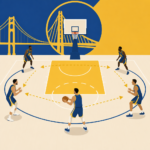
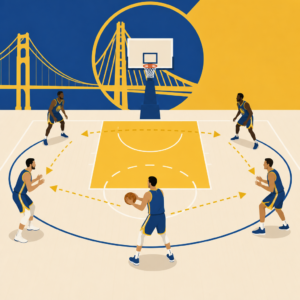
The Three-Point Contest is easier to explain and, for that reason, often easier to defend as a competition. Players shoot from five stations arranged around the three-point arc: the corners, the wings, and the top of the key. At each station, a rack contains several balls. Traditionally, four regular balls are worth one point each and one money ball is worth two points, with the money ball placed last. Modern versions also allow one full money-ball rack chosen by the player, plus deeper-distance “Starry” or sponsor balls worth extra points at designated spots. The round is timed, so score depends on both accuracy and tempo.
Historically, the contest began in 1986 and has evolved without losing its identity. That consistency is one reason it holds up so well in league history. A viewer from the Larry Bird era can still recognize the event immediately, even though point totals have increased with additional bonus balls and improved league-wide shooting. Bird’s famous pre-contest confidence, Craig Hodges’s technical excellence, Mark Price’s compact mechanics, and later performances by Curry, Klay Thompson, Devin Booker, Tyrese Haliburton, and Lillard all fit within the same basic test: can you repeat elite shooting mechanics under a strict clock?
The contest rewards several identifiable skills. First is footwork. Great shooters arrive at each rack balanced and already aligned to the rim. Second is rack management. Players cannot linger on a miss because the clock punishes hesitation. Third is release economy. Compact form preserves time and energy. Fourth is emotional control. A hot start can create pressure, and a cold start can tempt a player to rush. From years of observing these rounds, I think the best way to describe the event is this: it is a cardio-mechanics drill disguised as showtime. Players are not just making shots; they are maintaining a reproducible movement pattern while sprinting through a sequence.
The move from novelty to prestige reflects larger NBA history. In the 1980s, the three-point line was still strategically marginal for many coaches. By the 2010s, spacing and efficiency models made high-volume three-point shooting foundational. As the regular-season game changed, the contest’s meaning changed too. Winning it no longer just signaled specialist accuracy; it could validate a superstar’s place in the center of modern offensive basketball.
What These Contests Reveal About Eras, Stars, and Strategy
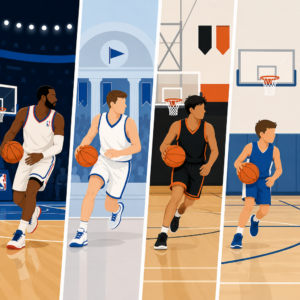
The dunk contest and three-point contest are historical documents as much as entertainment products. They show which skills the league wants to dramatize for fans at a given moment. In Jordan’s era, the dunk contest amplified the NBA’s embrace of singular star charisma. In the Curry era, the three-point contest reflects a sport reorganized around space, geometry, and shot value. That does not mean dunking became irrelevant. It means the league’s center of gravity shifted, and All-Star Saturday shifted with it.
Individual reputations have also been built or preserved here. Vince Carter’s 2000 performance remains one of the most powerful pieces of brand-making in league history because it compressed athletic authority, creativity, and cool into a few unforgettable minutes. Larry Bird’s three consecutive three-point titles from 1986 to 1988 helped frame him as basketball’s ultimate confidence shooter. Craig Hodges winning three straight from 1990 to 1992 underscored the legitimacy of shooting specialists before the league fully reorganized around their value. More recently, Curry versus Sabrina Ionescu in a special shootout broadened the event’s cultural reach and highlighted shooting as a universal basketball language.
There are tradeoffs, and league history should acknowledge them honestly. The dunk contest suffers when stars decline to participate, when overproduced props substitute for innovation, or when judges chase crowd reaction instead of consistent standards. The three-point contest can feel repetitive if the field lacks personality or if television presentation fails to explain strategy. Yet both events endure because they reduce basketball complexity into forms audiences instantly understand. One asks, “Was that the most astonishing thing you have seen in the air?” The other asks, “Who can make the most shots under pressure?” Those are timeless sports questions.
Why This Matters for Anyone Studying NBA History
If you are exploring league history seriously, All-Star Weekend deserves attention because it condenses the NBA’s larger story into a single annual stage. It connects the ABA’s showmanship to the NBA’s modern media machine. It links the rise of star-driven marketing to memorable individual performances. It traces the three-point shot from tactical curiosity to strategic centerpiece. It also exposes recurring league tensions: competition versus entertainment, judging versus measurement, nostalgia versus reinvention. Few NBA institutions reveal so much so quickly.
As a hub article, this overview should prepare you to go deeper into adjacent topics such as the history of the All-Star Game, the origins of the three-point line, the influence of the ABA merger, signature performances by Jordan, Carter, Bird, and Curry, and the evolution of basketball aesthetics across eras. The essential takeaway is simple. The dunk contest explains how the league celebrates imagination and athletic theater. The three-point contest explains how the league measures repeatable skill under pressure. Together, they map the changing values of professional basketball. If you want to understand NBA history beyond box scores, start with All-Star Weekend, then follow these contests outward into the players, strategies, and eras they helped define.
Frequently Asked Questions
What is the main purpose of the NBA All-Star Weekend Dunk Contest and Three-Point Contest?
The Slam Dunk Contest and Three-Point Contest are designed to showcase two of basketball’s most entertaining and defining skills in a setting that is separate from the traditional game. The Dunk Contest highlights athleticism, imagination, timing, body control, and showmanship. The Three-Point Contest focuses on shooting precision, rhythm, concentration, and repeatable technique under pressure. Together, these events help explain why NBA All-Star Weekend has become more than an exhibition—it is a cultural stage where the league celebrates both performance and personality.
Historically, these contests have also served a larger purpose for the NBA. They give individual players a chance to build their brands, create signature moments, and connect with fans in a way that regular-season games do not always allow. A memorable dunk or a record-setting shooting round can elevate a player’s reputation for years. In that sense, the contests are not just side attractions; they are part of how the league markets stars, reinforces its entertainment value, and tells the story of how basketball style evolves over time.
How does the NBA Slam Dunk Contest format work?
The exact structure has changed over the years, but the basic idea remains consistent: players attempt dunks in judged rounds, and the best overall performances advance or win. In most modern versions, contestants perform a set number of dunks in the opening round, with judges scoring each attempt based on creativity, execution, difficulty, and overall impact. Top scorers then advance to a final round, where additional dunks determine the champion. Some formats have included head-to-head battles, fan voting elements, or timed windows, but the core principle is still about producing the most impressive dunks on demand.
Judging is a major part of the event’s identity. Unlike a measurable skill competition such as shooting, dunking involves interpretation. Judges consider whether a dunk was original, how cleanly it was completed, how difficult the setup was, and how much excitement it generated in the arena. Props, assists from teammates or celebrities, off-the-backboard setups, and thematic presentation can all add to the performance, but execution still matters. A brilliant concept may lose value if it takes too many tries to finish.
That mix of art and competition is what has made the Dunk Contest so significant in NBA history. It rewards not only raw leaping ability but also invention and stage presence. Some of the most famous performances are remembered because they changed what fans thought was possible, while others became iconic because they perfectly matched a player’s personality. For anyone studying All-Star Weekend, the format matters because it shows how the league turned a simple idea—who can dunk best—into one of sports’ most recognizable showcases of creativity.
How does the NBA Three-Point Contest format work?
The Three-Point Contest is built around speed, accuracy, and shot-making consistency. Players move around the arc and shoot from multiple designated rack locations within a time limit. Traditionally, there are five racks positioned around the three-point line, and each rack contains a set of basketballs worth specific point values. Standard balls count for one point, while the final “money ball” on each rack is worth more. In newer formats, entire racks can be designated as money-ball racks, adding a strategic layer because shooters can choose where to place their highest-value rack.
The event has evolved to reflect changes in the modern game. Additional long-distance “starry” shots have been added in some versions, and these carry even more point value. That update mirrors the NBA’s growing emphasis on deep-range shooting and spacing. What once primarily measured pure corner-to-corner accuracy now also tests whether a player can seamlessly adapt to expanded range under a clock. As the league has become more perimeter-oriented, the contest has increasingly mirrored the real strategic importance of elite shooting in today’s offenses.
Scoring determines advancement. Contestants shoot in the first round, and the highest scorers move to the final round, where the best performance wins the title. Because the contest is objective and points-based, it often feels more straightforward than the Dunk Contest, but it is no less demanding. Players must manage pace, conserve motion, maintain form while fatigued, and recover quickly after misses. A great Three-Point Contest round is not just about touch—it is about rhythm, footwork, breathing, and the ability to string together makes when every second counts.
Why have the Dunk Contest and Three-Point Contest become so important in NBA history?
These contests matter because they capture turning points in how basketball is played, promoted, and remembered. The Dunk Contest became a symbol of individuality and flair, especially during eras when the NBA was expanding its national and global appeal. Signature performances helped define careers and gave fans visual moments that endured far beyond a single All-Star Weekend. In many cases, the contest turned rising stars into household names by letting them display style and confidence in a setting built for highlights.
The Three-Point Contest tells a different but equally important historical story. As the value of perimeter shooting increased, the event became a lens through which fans could understand the strategic evolution of the league. What was once seen as a specialty skill grew into a foundational part of modern offense, and the contest gained prestige along with that shift. Winning it now often reinforces a player’s place among the NBA’s elite shooters, not just among entertainers on All-Star Saturday.
Together, the two events reveal how the NBA responds to broader changes in the sport. The Dunk Contest reflects creativity, spectacle, and star power. The Three-Point Contest reflects efficiency, spacing, and the modern emphasis on skill from long range. Studying both formats helps fans see that All-Star Weekend is not separate from basketball history—it is a condensed version of it, where the league’s values, trends, and marketing instincts are put on display in a highly visible format.
What should fans pay attention to when watching these contests to better understand their formats and significance?
In the Dunk Contest, fans should look beyond whether a dunk simply goes in. The key details are originality, degree of difficulty, execution on the first attempt, and how the player uses timing and presentation. A dunk that appears simple may be technically extraordinary because of body rotation, launch point, hand control, or airborne coordination. It also helps to notice how judges and audiences react, because the event has always been shaped by both technical merit and emotional impact. Understanding that tension makes the scoring easier to follow and explains why certain results become part of NBA debate.
In the Three-Point Contest, the most important things to watch are pace, rack strategy, and how shooters handle pressure. Some competitors start fast to build confidence, while others aim to stay smooth and avoid rushing. The placement of the money-ball rack can reveal where a shooter feels strongest, and the long-range bonus shots can swing the outcome dramatically. Small details such as foot positioning, transition speed between racks, and recovery after a miss often separate a good round from a winning one.
More broadly, fans should view both events as snapshots of what the league values at a given moment. If the Dunk Contest emphasizes creativity and theatrical presentation, that says something about the NBA’s entertainment culture. If the Three-Point Contest keeps expanding its range and strategic complexity, that reflects how modern basketball continues to evolve around shooting. Watching with that perspective turns All-Star Saturday from a fun spectacle into a useful guide for understanding NBA history, player identity, and the sport’s changing priorities.