
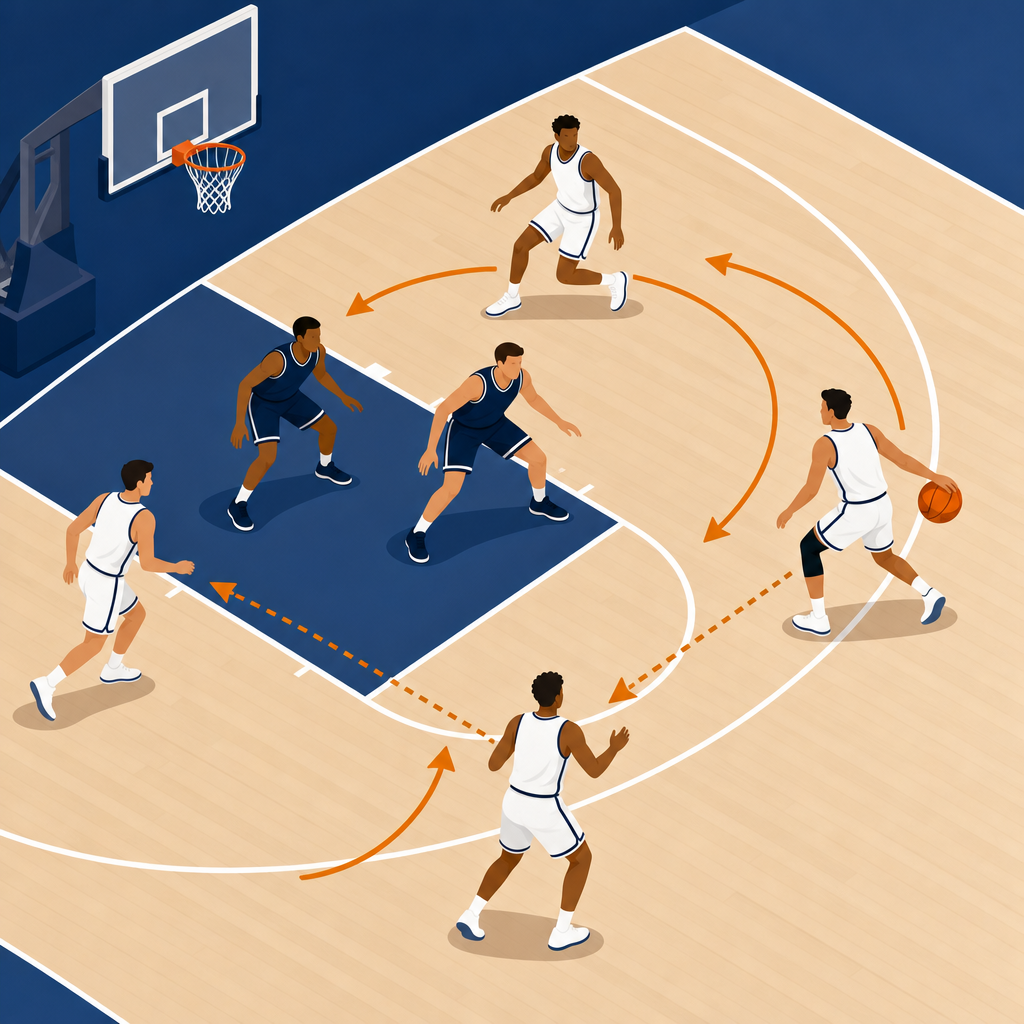
Motion offense in basketball is a system built on spacing, cutting, screening, and reading defenders so teams can create quality shots without calling a rigid set play every trip. Instead of memorizing a long playbook, players learn rules: keep proper spacing, move after passing, screen with purpose, fill open spots, and react to what the defense gives them. I have coached and broken down motion teams at youth, high school, and college levels, and the common thread is simple: the best motion offense turns five players into constant problems. That matters because modern defenses switch, help early, and load the paint. If an offense depends only on one action, it becomes predictable. A sound motion system creates layups, open threes, paint touches, and free throws while also developing decision-making, timing, and unselfish habits that translate across every level of the game.
At its core, motion offense answers a practical question: how do you get shots when the first option is taken away? The answer is continuous action. One pass leads to a cut, the cut leads to a screen, the screen leads to a drive or reversal, and the defense is forced to guard multiple threats in sequence. Terms such as pass-and-cut, down screen, flare screen, dribble handoff, split action, weak-side exchange, and drive-and-kick are central because motion is not random movement. It is organized freedom. Good teams teach concepts, not chaos. Players know where to stand, when to cut, what reads to make against overplay, denial, switching, or drop coverage, and how to maintain offensive balance so they can still defend in transition.
As the offense hub within basketball skills, this article covers the foundations every player, coach, and serious fan should understand. It explains spacing rules, reads, common actions, player roles, teaching progressions, and the strengths and limits of motion compared with set plays. If you want to understand why teams like the Warriors have used split cuts, why Princeton principles still appear in modern systems, or why youth programs often use 4-out motion to teach offense, the key is seeing how these pieces fit together. Motion offense is not one playbook. It is a language for creating shots, and once players speak it well, the game opens up.
What Motion Offense Means and How It Differs From Set Plays
A set play has a fixed sequence: Player 1 dribbles to a spot, Player 4 screens, Player 2 curls, and the offense looks for a specific shot. Motion offense starts with alignment and rules, then asks players to read the floor. The distinction matters. Set plays can produce quick, targeted opportunities, especially after timeouts or against a known defensive weakness. Motion offense produces repeated advantages over the full game because defenders must process constant movement. In practice, most good teams use both, but motion is the engine that sustains offense between special situations.
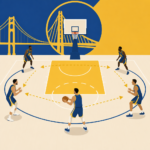
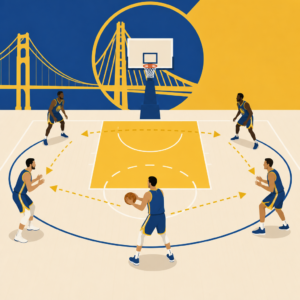
The biggest misconception is that motion means freelancing. It does not. Effective motion systems are tightly structured around spacing windows, timing, and decision trees. For example, in a basic 4-out 1-in alignment, perimeter players usually stay 12 to 15 feet apart to stretch help defenders. After a pass, the passer may basket cut, screen away, or follow the pass into a handoff. The correct choice depends on the defender’s position, the post player’s location, and whether the defense is switching. Teams that skip these details end up with players clogging the same side, cutting at the same time, and taking contested shots late in the clock.
Motion offense also changes what coaches value. Instead of asking whether a play was run correctly, they ask whether the possession created an advantage. Did the offense force a closeout? Did a cutter draw tag help? Did a ball reversal shift the shell defense? Did a paint touch collapse the lane line defenders? These are the real indicators. Synergy Sports data and shot-quality models consistently show that corner threes, rim attempts, and free throws are the most efficient outcomes. Motion offense is designed to generate those looks by making defenders help, rotate, and communicate under pressure.
The Core Principles: Spacing, Timing, Movement, and Reads
Every successful motion offense rests on four principles. First is spacing. If players stand too close, one defender can guard two men and driving lanes disappear. Proper spacing widens help responsibilities and creates longer closeouts. Second is timing. A screen set too early or a cut made too late ruins the action. Third is movement. Defenders relax when the offense holds the ball. Continuous cuts, exchanges, and reversals force mistakes. Fourth is reading. Players must identify whether their defender is trailing, top-locking, going under, switching, or sitting in the gap. The offense only works when movement is linked to those reads.
One of the best teaching rules is “see ball, see man” for defenders, because it explains what the offense tries to disrupt. If the defense is in strong help position, back cuts become available. If help is late, drives reach the paint. If defenders lock and trail shooters, pin-downs and flares can free them. If switches happen automatically, slips and seals punish the mismatch. I have seen average shooting teams improve dramatically just by learning to cut behind overplay and relocate after drives. They did not need new talent; they needed cleaner reads.
Ball movement alone is not enough. Good motion creates player movement that complements the ball. On dribble penetration, for example, perimeter players should not remain stationary. One may drift to the corner, another may lift from the corner to the wing, and a big may dunker-spot behind the rim. Those reactions create simple passing angles. Many coaches teach this with drive spacing rules rather than memorized spots, because the floor changes with every penetration angle. The best offenses make these reactions automatic.
Common Motion Actions That Create Shots
Most motion offenses are built from a small menu of repeatable actions. Pass-and-cut is the simplest. After passing, the player cuts to the rim, looking for a layup if the defender watches the ball. If the cut is covered, the cutter exits to the weak side and the next action flows. Screen-away is another staple. A perimeter player passes, then screens for a teammate on the opposite side, creating curl, fade, or back-cut options depending on the defense. Dribble handoffs function like moving ball screens and are effective when guards can turn the corner or reject the handoff.
Split action is especially valuable from the post or elbow. One player feeds the post, then screens for a nearby teammate. The defense must guard the post entry, the cutter, and the shooter simultaneously. Golden State used this action repeatedly with Draymond Green facilitating and Stephen Curry or Klay Thompson reading the screen. Princeton-inspired offenses use backdoor cuts when defenders deny passing lanes. Read-and-react systems use layered rules so any pass can trigger a cut, screen, or post feed. The exact structure varies, but the principle is identical: one action should naturally trigger the next.
| Action | Primary Purpose | Best Read | Typical Shot Created |
|---|---|---|---|
| Pass and cut | Punish ball watching and denial | Back cut if overplayed | Layup or short paint pass |
| Screen away | Free weak-side movement | Curl, fade, or slip versus switch | Mid-paint touch or catch-and-shoot three |
| Dribble handoff | Create downhill drive or turn the corner | Reject if defender cheats high | Rim attempt, pull-up, or kick-out three |
| Split action | Stress help around a post or elbow touch | Hit cutter if defenders switch late | Layup, post score, or open perimeter jumper |
| Ball screen into re-spacing | Force help, then attack recovery | Short roll versus aggressive coverage | Lob, floater, corner three |
These actions work because they force difficult defensive choices. Against switching teams, slips happen before contact and produce layups. Against drop coverage, handoffs and ball screens can create pull-up jumpers. Against denial pressure, backdoor cuts open the lane. This is why motion offense scales well from youth basketball to the NBA. The actions are teachable, but the reads become more sophisticated as players improve.
Popular Motion Alignments and the Roles Within Them
Alignment is the starting shape of the offense, and it determines driving lanes, post space, and screening angles. The most common teaching alignment is 4-out 1-in, with four perimeter spots and one interior player. It provides room for cuts and is ideal for youth and high school teams because spacing is easy to visualize. A 5-out motion places all five players on the perimeter, opening the lane for drives and back cuts. It is effective when a team lacks a true post scorer or wants to attack switching defenses. A 3-out 2-in alignment supports strong post play and high-low passing but can shrink driving space if the bigs are not mobile.
Roles still matter inside a free-flowing system. A primary creator must collapse the defense off the dribble. Shooters must sprint into space and be ready on the catch. Interior players need soft hands, strong screening technique, and awareness as short-roll passers. Connectors are the players coaches love most in motion: they may not dominate the ball, but they make the next pass, screen at the right angle, cut decisively, and keep the possession alive. When teams struggle in motion, it is often because everyone wants to be a finisher and nobody wants to be a connector.
Positionless basketball has pushed many coaches toward interchangeable roles, but true interchangeability requires skill. A center who can dribble handoff, hit a backdoor cutter, and make a skip pass turns motion offense into a weapon. Domantas Sabonis is a clear NBA example; Denver has also used Nikola Jokić as a hub from the elbow and top of the key. At lower levels, the same principle applies. If your biggest player can pass, the offense gains an extra decision-maker and becomes harder to scout.
How Coaches Teach Motion Offense Effectively
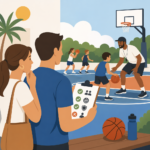
Motion offense should be installed in layers. Start with spacing spots and one simple rule after the pass, usually cut or screen away. Then add counters: if denied, back cut; if switched, slip; if the lane is occupied, replace to the next open spot. Small-sided games are the fastest teaching tool because they increase touches and decision volume. I prefer 3-on-3 and 4-on-4 constraints before full 5-on-5. For example, a drill may require every pass to be followed by a basket cut, or award extra points for paint touches created by off-ball action. Players learn the reason behind the rule, not just the rule itself.
Film study is equally important. Stop the clip before the pass and ask what the defender is taking away. Then show the correct read. This method improves processing speed more than simply replaying highlights. Coaches should also track a few possession metrics: turnovers from spacing errors, assisted baskets, paint touches, second-side actions, and shot quality by location. If the offense produces many long twos and few rim attempts or corner threes, the issue is rarely effort. It is usually spacing, timing, or a failure to create a second advantage after the first action is contained.
Teaching language must remain consistent. If one coach says “drift” and another says “slide,” players hesitate. Use a shared vocabulary for cuts, fills, and screening reads. Repetition matters, but context matters more. Players should know not only where to move, but why that movement punishes a specific defensive behavior. That is how motion offense becomes instinctive under game pressure.
Advantages, Limitations, and When Motion Works Best
The biggest advantage of motion offense is adaptability. Because it is read-based, it survives defensive adjustments better than a one-option playbook. It also develops basketball IQ. Players learn how to screen, cut, relocate, pass on time, and recognize help defenders. Over a season, that growth can raise the entire team’s offensive floor. Motion is also useful when personnel changes due to injuries or foul trouble, because the system is less dependent on one exact action or one exact lineup.
There are limits. Motion offense can bog down if players cannot shoot well enough to stretch the floor, cannot pass on time, or do not understand pace changes. It also may not generate the precise matchup hunt that late-game situations sometimes require. That is why smart coaches keep a package of special sets for baseline out-of-bounds plays, sideline situations, and end-of-clock possessions. Motion should not replace every play. It should be the base that allows the offense to function when the game gets messy.
Motion works best when a team commits to spacing discipline, values passing, and has at least two credible decision-makers. It is particularly strong for development programs because it teaches universal offensive habits. For players, the lesson is straightforward: learn to cut hard, screen correctly, read your defender, and move into space after every action. For coaches, the lesson is just as clear: build the rules, drill the reads, and hold players accountable for details. Study your team’s spacing, teach one action at a time, and let motion offense become the hub that connects every other offensive skill.
Frequently Asked Questions
What is a motion offense in basketball, and how is it different from a set-play offense?
A motion offense is a principles-based system that helps a team create scoring chances through spacing, cutting, screening, passing, and player reads instead of relying on a called play every possession. In a set-play offense, the coach may call a specific action with fixed movements and timing, and each player has a defined route or assignment. In a motion offense, players still operate within structure, but that structure comes from rules and habits rather than memorized sequences. The goal is to make the defense guard multiple actions in a row until it makes a mistake.
At its core, motion offense teaches players how to react to the defense. If a defender overplays a passing lane, the offensive player back-cuts. If help defenders collapse into the lane, the ball is kicked out to open shooters. If a teammate drives, the other players adjust by drifting, lifting, or filling open space. Good motion teams do not look random. They are organized, but flexible. That is the real difference. A set-play offense tells players exactly where to go. A motion offense teaches them why they are going there and what to do next based on what happens.
This approach can be especially effective because defenses are constantly being asked to communicate and make decisions. Instead of preparing for one action, they must handle a chain of cuts, screens, reversals, and attacks. That often leads to breakdowns, late closeouts, mismatches, and open shots. When taught well, motion offense gives a team a repeatable way to generate quality looks without becoming predictable.
What are the most important fundamentals players need to run motion offense effectively?
The foundation of any good motion offense is spacing. If players crowd the ball, stand too close together, or drift into the same area, the offense becomes easy to guard. Proper spacing stretches help defenders, opens driving lanes, and creates room for cutters and screeners to work. Players have to understand where to stand relative to the ball, to each other, and to the basket. This sounds simple, but spacing is often the difference between an offense that flows and one that stalls.
The next essential skill is moving after the pass. One of the biggest mistakes in motion offense is becoming a spectator. Players must learn that a pass is usually the beginning of the action, not the end. After passing, they may basket cut, screen away, follow their pass, replace to an open spot, or relocate for a return pass. Constant purposeful movement forces defenders to stay engaged and makes it much harder for the defense to load up on the ball.
Reading defenders is also critical. Motion offense is not just about running patterns. It is about recognizing cues. If the defender is above the passing lane, cut backdoor. If a teammate gets stopped on a drive, present a passing window. If two defenders follow the ball, fill behind the play for a reversal. Players who understand these reads turn basic rules into high-level execution. On top of that, screening technique matters. Screens must be set with good angles, proper timing, and physical balance. A poorly set screen does not create an advantage. A well-set screen can force a switch, free a shooter, or open a slip to the rim.
Finally, communication and decision-making tie everything together. Players need to talk through screens, call out cuts, and recognize when to attack versus when to keep the ball moving. The best motion teams are disciplined, but they also play with freedom because they trust the rules and trust each other. That combination of fundamentals and awareness is what makes the offense work at any level.
Why do coaches like motion offense for youth, high school, and college teams?
Coaches often favor motion offense because it develops complete basketball players rather than position-limited players who only know how to run a few plays. In youth basketball, that matters a lot. Young players need touches, decisions, and opportunities to learn how to cut, screen, pass, and move without the ball. A motion system exposes them to all of those skills. Instead of standing in a corner waiting for one player to create everything, everyone learns how to participate in the offense.
At the high school level, motion offense can be especially valuable because practice time is limited and rosters can change from year to year. A team may not have the personnel to run a complicated playbook full of specialized actions. Motion gives coaches a framework they can teach consistently. If players understand spacing, timing, and reads, the offense can remain effective even when lineups change. It also helps teams adapt to different opponents. Against pressure, motion can create backdoor opportunities. Against switching defenses, it can produce slips and mismatches. Against help-heavy teams, it can generate inside-out threes.
At the college level, motion offense is attractive because it can be tailored to personnel while still maintaining core principles. Coaches can build in more advanced concepts such as continuity ball-screen actions, split cuts, post entries with weak-side movement, and read-based counters. It allows a team to play with pace and unpredictability while still being structurally sound. Just as important, motion offense can be hard to scout because the same basic alignment can lead to different outcomes depending on how the defense reacts.
Another reason coaches like it is that it encourages accountability. Players cannot hide in a motion offense. They have to make the correct read, move with purpose, and understand how their action affects the next action. When taught properly, it creates smarter, more connected teams. That is why so many coaches across levels come back to motion principles even if they package them in different ways.
Can a motion offense work if a team does not have elite shooters or a dominant scorer?
Yes, and in many cases that is exactly when motion offense is most useful. Teams without a dominant isolation scorer or multiple elite shooters often need a system that creates offense collectively. Motion offense can help by generating quality shots through player movement, defensive confusion, and repeated actions rather than depending on one star to bail out the possession. It gives average offensive teams a way to manufacture good looks through execution.
If a team is not full of knockdown shooters, motion offense can still create layups, cuts to the rim, slips off screens, post touches, and paint attacks. Good spacing forces defenders to cover more ground, and good cutting punishes ball watching. A team does not need to shoot like a great perimeter team to be effective in motion. It needs players who can pass on time, cut hard, screen with intent, and make smart decisions. Those habits can create easier shots than a static offense that asks players to win one-on-one from poor floor balance.
That said, teams still need enough offensive skill to make the system honest. If defenders know nobody is a threat to score, they can sag into the lane and clog actions. The answer is not to abandon motion. The answer is to emphasize the versions of motion that fit the roster. A team with strong cutters and finishers can lean into basket cuts and screen-the-screener actions. A team with a good post player can use motion to create cleaner entry angles and weak-side opportunities. A team with one creator can use motion to reduce help and give that player better driving space.
The best offenses are built around personnel, and motion is flexible enough to do that. It is not a magic fix for poor fundamentals, but it is a smart way to maximize teamwork, create rhythm, and avoid becoming overly dependent on one player. For many teams, that is a major advantage over a rigid offense that only works if every piece is ideal.
What are the biggest mistakes teams make when trying to run motion offense?
The most common mistake is confusing motion with aimless movement. Motion offense is not about running around. It is about coordinated movement with spacing and purpose. When players cut at the wrong time, screen without angles, or relocate into occupied space, the floor shrinks and the offense bogs down. To an outside observer, bad motion can look chaotic. Good motion looks connected because each action flows into the next and supports the player with the ball.
Another major mistake is holding the ball too long. Motion offense depends on quick decisions and ball reversals. If the ball sticks, the defense gets set, help defenders recover, and cutting windows disappear. Players do not have to play fast in a rushed sense, but they do need to play decisively. Catch, read, and either pass, shoot, or drive. That rhythm is what keeps the defense under pressure. Indecision is one of the quickest ways to kill the benefits of motion.
Teams also struggle when they do not commit to screening fundamentals. A lazy screen, a poor angle, or leaving too early ruins the action. The same is true for cutting. Soft cuts rarely draw defenders or create openings. Hard cuts force reactions. Coaches often say motion offense is built on details, and that is absolutely true. The offense only works when players value the little things that create advantages.
A final mistake is trying to install too much too soon. Motion offense can become overwhelming if players are given a long list of options before they understand the basics. The best way to teach it is to start with a few simple rules: maintain spacing, move after passing, cut hard, screen with purpose, and fill open spots. Once those habits are solid