
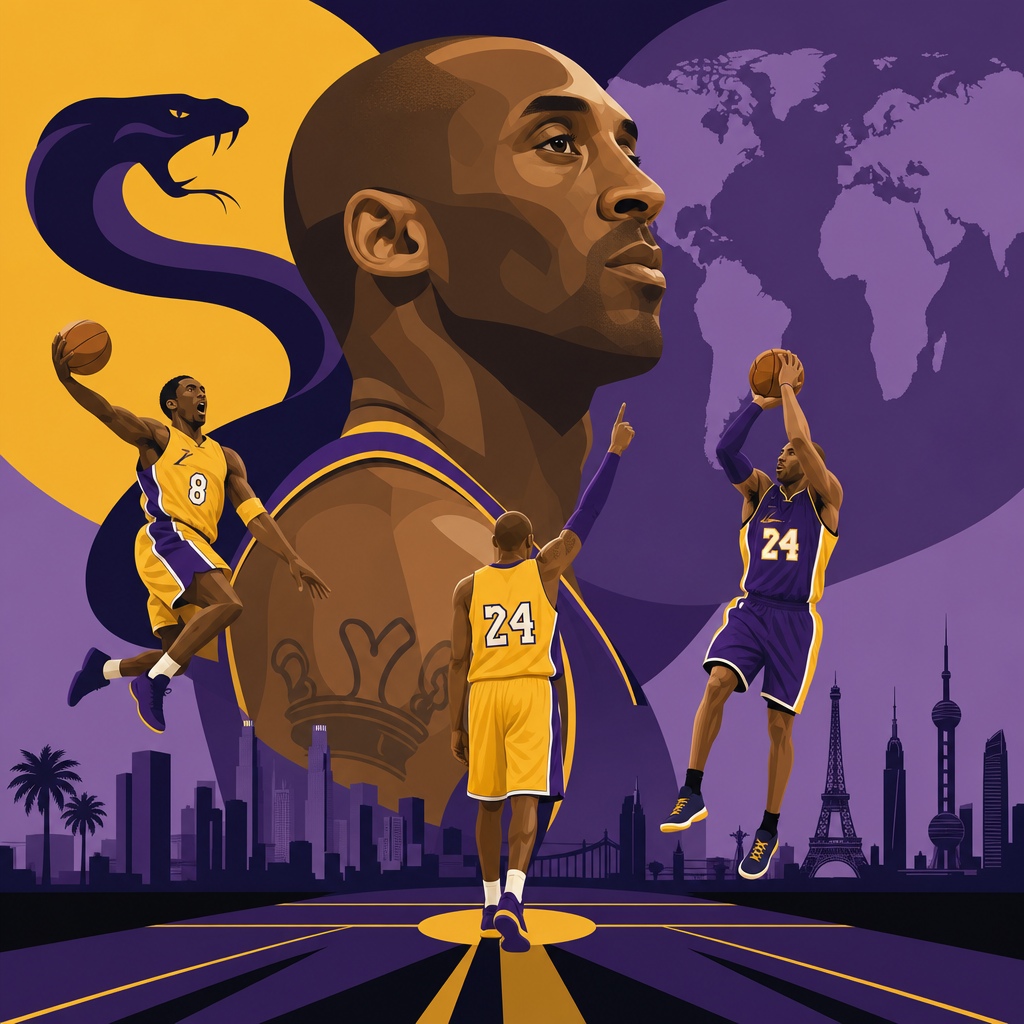
Kobe Bryant’s legacy reaches far beyond points, championships, and highlight reels because his career became a template for modern player identity, relentless skill development, and worldwide basketball influence. In any serious discussion of NBA player profiles, Bryant stands as a central figure: a five-time NBA champion, 18-time All-Star, 2008 league MVP, two-time Finals MVP, and one of the most studied competitors the sport has produced. Yet statistics alone do not explain why his name still shapes coaching language, training culture, youth development, brand storytelling, and even how fans describe mental toughness. To understand the Black Mamba’s impact on basketball and global culture, it helps to define the key ideas attached to him: elite footwork, scoring versatility, obsession with preparation, and a public persona built around disciplined excellence.
From my work analyzing player development models and historic NBA careers, Bryant remains one of the clearest examples of how a player profile can function as both performance record and cultural blueprint. He entered the NBA directly from Lower Merion High School in 1996, spent his entire 20-year career with the Los Angeles Lakers, and retired with 33,643 regular-season points, fourth on the all-time list at the time. His career arc covered teenage promise, championship partnership with Shaquille O’Neal, post-Shaq reinvention, late-career mentorship, and a global afterlife in sport, media, and education. That arc matters because Bryant influenced not only how stars play, but also how they train, market themselves, communicate ambition, and connect with international audiences.
This article serves as a hub within NBA player profiles by examining Bryant from several angles: on-court evolution, signature skills, leadership style, commercial reach, youth inspiration, and enduring relevance after his death in 2020. The goal is not mythmaking. Bryant’s career included criticism, difficult locker-room stretches, and the physical costs of extreme workload. But those realities make the profile stronger, not weaker, because they show why his legacy endures. He was not admired for ease. He was admired for turning difficult habits into repeatable standards. For basketball followers, coaches, players, and culture writers, Kobe Bryant remains one of the most important case studies in how greatness is built, contested, and remembered.
Kobe Bryant’s career arc and why it changed the NBA player profile
Bryant changed the idea of a superstar profile by combining old-school shot-making with modern perimeter responsibility. Drafted 13th overall by the Charlotte Hornets and immediately traded to the Lakers, he arrived as a 17-year-old guard with advanced footwork, unusual confidence, and a willingness to take difficult shots that veterans often avoid. Early in his career, he played a complementary role behind Shaquille O’Neal, but even then the signs were visible: he embraced end-of-clock possessions, guarded top wings, and treated every possession like a technical challenge to solve. By the early 2000s, the Lakers’ three straight titles established him as more than a talented sidekick. He became the perimeter engine of a dynasty.
What separated Bryant from many high-volume scorers was how completely he evolved between eras. During the first title run, he thrived in the triangle offense under Phil Jackson, learning spacing, weak-side reads, post entries, and timing cuts. After O’Neal’s departure in 2004, Bryant carried a far heavier creation burden. He responded with one of the most explosive scoring phases in league history, including 35.4 points per game in 2005-06 and the famous 81-point game against Toronto on January 22, 2006, the second-highest single-game total in NBA history. That period showed that Bryant could generate offense against loaded defenses without sacrificing technical precision. He was not merely hot; he was structurally hard to guard.
His later career added another dimension to the player profile: adaptation through mastery rather than athletic decline alone. Bryant refined his mid-post game, used pivots and fakes to conserve energy, and studied defenders with the patience of a veteran quarterback. The 2008 and 2010 championships, with Pau Gasol as his primary co-star, proved he could lead a different kind of contender than the early Lakers. This matters in player evaluation because it shows why Bryant is cited so often in development circles. He did not rely on one athletic phase. He built successive versions of himself, and that is one reason his profile remains a reference point for complete offensive guards.
The Black Mamba skill set: footwork, scoring craft, and defensive commitment
The phrase “Mamba Mentality” is often used loosely, but Bryant’s actual basketball legacy begins with skill. His footwork was elite by any historical standard. He borrowed from Michael Jordan, Hakeem Olajuwon, and international fundamentals, then blended those influences into a scoring package that worked from the wing, the post, and the elbows. Coaches still use Bryant film to teach jab series, reverse pivots, fadeaway balance, inside-foot stops, and shot preparation against contact. His mechanics let him score in crowded areas where many guards lose efficiency. He could create separation with inches rather than feet, which is why defenders regularly described his game as exhausting to cover even when they forced him into tough attempts.
Bryant’s scoring versatility is easiest to understand through the range of defensive coverages he could solve. Against smaller guards, he posted and shot over the top. Against bigger wings, he attacked from triple threat, used rip-throughs, and got into pull-up jumpers before help arrived. Against packed paints, he operated from the midrange, where his balance and touch were exceptional. He also punished broken coverages as a transition finisher and could work as an off-ball cutter when the triangle offense flowed correctly. Critics sometimes point to his shot difficulty and career field-goal percentage, but that misses context. Bryant took a large diet of bailout attempts late in the clock, exactly the shots that lower percentages while preserving team possessions.
His defense is sometimes overshadowed by his scoring, yet at his peak he was a serious two-way guard. Bryant made 12 All-Defensive teams, tied for the most by a guard when he retired. In film study, his best defensive years show sharp nail help, aggressive ball pressure, strong chest positioning in the post, and a willingness to take top assignments in major games. Like many stars with huge offensive usage, he was not a full-game shutdown defender every night for twenty seasons. But in playoff settings and key matchups, he consistently treated defense as part of star responsibility. That two-way expectation influenced later wings such as Kawhi Leonard, Devin Booker, Jayson Tatum, and countless prospects trained to score without neglecting competitive defense.
How Bryant’s preparation reshaped training culture worldwide
If one part of Kobe Bryant’s legacy became universal, it was preparation. Teammates, trainers, and opponents repeatedly described predawn workouts, meticulous skill repetition, scouting discipline, and a near-total commitment to incremental improvement. I have seen few player profiles that affected grassroots habits as directly as Bryant’s did. Young players began scheduling “two-a-days,” logging makes by spot, and studying game film not because a coach demanded it, but because Bryant made preparation feel inseparable from ambition. His influence landed in high school gyms, European academies, college offseason plans, and private skill sessions across Asia, Africa, and Latin America.
Importantly, Bryant’s training example was not just about volume. It was about specificity. He rehearsed footwork patterns from exact floor areas, practiced counters to likely defensive reactions, and treated conditioning as basketball-specific rather than generic punishment. That aligns with what modern performance departments now emphasize: deliberate practice, load management informed by data, and movement efficiency under fatigue. Bryant came from an earlier era, but many of his methods anticipated today’s individualized development systems. Players such as Giannis Antetokounmpo, Kyrie Irving, and Jayson Tatum have all publicly reflected the broader culture Bryant helped normalize: skill work tied to obsession with detail, not just raw intensity.
| Area of impact | What Bryant modeled | Modern example |
|---|---|---|
| Skill development | High-repetition, game-specific footwork and counters | Private trainers building session plans around spots, reads, and finishing angles |
| Film study | Detailed opponent tendencies and self-scouting | Teams using Synergy, Second Spectrum, and clip libraries for player reviews |
| Mindset language | Daily discipline framed as identity | Youth programs teaching resilience through routine and accountability |
| Global reach | Visible commitment that transcended language barriers | International camps and academies using Bryant as a motivational reference |
There is a necessary tradeoff to acknowledge. Bryant’s workload mindset inspired millions, but not every athlete should copy it literally. Sports science now warns against excessive cumulative load, especially for adolescents. The wiser lesson is his precision, consistency, and seriousness of purpose. Bryant’s best legacy in training culture is not romantic exhaustion. It is disciplined craftsmanship. That distinction matters because it preserves what was durable and valuable in his example while avoiding the mistake of turning every hard story into a safe development template.
Global icon status: sneakers, storytelling, and cross-cultural influence
Bryant became one of basketball’s most global figures because his appeal translated across markets that value different things. In the United States, he represented star power, scoring brilliance, and Los Angeles scale. In Europe, his multilingual background and technical game resonated with players raised on skill instruction and team concepts. In China, where the NBA invested heavily in audience growth during the 2000s and 2010s, Bryant emerged as a premier ambassador. His tours drew enormous crowds, his jersey ranked among the league’s most popular sellers, and his direct connection with fans helped deepen the NBA’s international brand. Few athletes have matched the combination of elite performance and transnational recognizability that Bryant sustained.
His commercial influence also changed basketball aesthetics. Bryant’s sneaker line, particularly the Nike Kobe series, shifted performance footwear toward lower-cut designs that emphasized responsiveness, traction, and guard movement. That trend affected amateur, college, and professional players alike. Even athletes not signed to Nike often sought shoes modeled after the same design logic. Culturally, Bryant’s brand worked because it connected product to practice. Consumers did not just buy shoes; they bought into an idea of precision and competitive identity. That is a stronger form of influence than celebrity alone, and it helps explain why Kobe products continue to carry symbolic weight years after his retirement.
Beyond commerce, Bryant proved unusually effective as a storyteller. After retiring in 2016, he won an Academy Award for “Dear Basketball,” showing he could translate athletic experience into narrative form without losing seriousness. He invested in youth sports education, supported women’s basketball visibly, and became a prominent courtside advocate for his daughter Gianna’s generation. These post-playing years broadened his cultural profile from icon to mentor figure. That expansion matters when assessing legacy. Some stars remain frozen in their playing highlights. Bryant’s image evolved into something larger: a model of reinvention, creative output, and family-centered teaching that reached audiences beyond the core NBA fan base.
How Kobe Bryant is remembered in player profiles, debates, and future generations
In all-time debates, Bryant is usually placed somewhere in the second cluster below the near-unanimous top tier, and that placement reflects both his brilliance and the complexity of his résumé. Analysts weigh five championships, extraordinary longevity, devastating playoff moments, and unmatched shot-making against efficiency questions, a 2008 MVP total that did not fully capture his peak, and fierce competition among perimeter legends. Reasonable people can rank him differently. What is not debatable is his centrality to basketball memory. For players now entering the NBA, Bryant is often less a retired star than a formative reference, the player whose clips they studied and whose work habits they heard about before they ever played on national television.
His influence is especially visible in today’s wing scorers. DeMar DeRozan’s footwork, Jayson Tatum’s jab series, Devin Booker’s mid-post creation, and Kyrie Irving’s finishing imagination all carry traces of Bryant’s example, whether directly stated or indirectly absorbed through training culture. Women’s basketball also reflects his legacy. Bryant’s public support for the WNBA and youth girls’ basketball gave added visibility to players and pathways that deserved more investment. Many young athletes, male and female, did not simply admire Bryant’s success. They adopted his process language, his attention to details, and his belief that technical improvement is a lifelong responsibility.
The final measure of Kobe Bryant’s legacy is that he changed behavior. Fans still use his name as shorthand for discipline. Coaches still assign his film to teach scoring craft. Brands still build campaigns around his standards. International players still describe him as proof that basketball excellence can carry cultural meaning across borders. For anyone exploring NBA player profiles, Bryant is essential because his story connects performance, psychology, business, and identity more completely than almost any modern athlete. Revisit his games, interviews, and post-career work, and the reason becomes clear: Kobe Bryant did not just leave memories behind. He left methods, expectations, and a worldwide vocabulary for pursuing greatness.
Frequently Asked Questions
Why is Kobe Bryant considered one of the most influential players in NBA history?
Kobe Bryant is considered one of the most influential players in NBA history because his impact combines elite achievement, technical mastery, competitive intensity, and cultural reach in a way very few athletes ever have. On the court, his resume is undeniable: five NBA championships with the Los Angeles Lakers, 18 All-Star selections, the 2008 NBA MVP award, two Finals MVPs, and a scoring legacy that includes some of the most memorable performances in league history. But what truly separates Bryant from many other all-time greats is how he reshaped the way players approached the profession of basketball. He made preparation, repetition, footwork, and mental toughness part of his public identity, and that standard influenced an entire generation of players who studied him not just for what he accomplished, but for how he worked.
Bryant also became a bridge between basketball eras. He drew inspiration from Michael Jordan and older-school fundamentals, but he competed in a modern media age where every game, quote, and training story circulated globally. That allowed him to become both a traditional basketball purist and a modern icon. Younger stars admired his obsession with detail, his ability to score from every area of the floor, and his refusal to accept shortcuts. In that sense, Kobe’s legacy is not limited to championships or points; it lives on in the mindset, discipline, and ambition he normalized for players around the world.
What does the “Mamba Mentality” really mean, and why did it resonate so strongly?
The “Mamba Mentality” is far more than a nickname or branding phrase. It represents Kobe Bryant’s philosophy of relentless self-improvement, focus, discipline, and resilience. Bryant used the Black Mamba persona as a way to channel concentration and purpose, especially under pressure, and over time that identity evolved into a broader life philosophy. At its core, the Mamba Mentality means committing to the process every day, confronting weaknesses directly, and refusing to be outworked. For Bryant, greatness was never accidental. It was the result of obsessive preparation, constant film study, countless practice repetitions, and a willingness to embrace discomfort in pursuit of excellence.
This philosophy resonated so strongly because it applied beyond basketball. Athletes, entrepreneurs, students, artists, and professionals in many fields saw something powerful in Bryant’s message: talent matters, but discipline and consistency often matter more. He spoke openly about learning, refining skills, and treating failure as information rather than defeat. That made the Mamba Mentality feel both elite and accessible. Not everyone can become Kobe Bryant, but anyone can adopt his commitment to preparation, improvement, and accountability. That broad relevance is a major reason his influence expanded well beyond the NBA and into global culture.
How did Kobe Bryant help grow basketball’s popularity around the world?
Kobe Bryant played a major role in basketball’s global expansion because he was one of the first modern superstars whose appeal transcended regional fandom and became truly international. His style of play was easy to admire anywhere: highly skilled, intensely competitive, and full of dramatic moments that translated across languages and cultures. He had a global biography as well, having spent part of his childhood in Italy, which gave him an unusual international perspective for an American superstar. That background helped him connect naturally with fans overseas, and it contributed to a sense that he belonged to the wider basketball world, not just the American one.
As the NBA’s international visibility grew in the 2000s and 2010s, Bryant became one of its defining global faces. Fans across Europe, Asia, Latin America, and Africa followed his career closely, wore his jersey, copied his moves, and viewed him as a symbol of basketball excellence. His popularity in China in particular was extraordinary, and he was often greeted abroad with the kind of recognition usually reserved for heads of state or major entertainers. Beyond marketing appeal, his influence was developmental: international players studied his footwork, post game, shooting mechanics, and competitive habits. In that sense, Kobe did not just help basketball become more popular; he helped define what serious basketball aspiration looked like for players and fans across the world.
What made Kobe Bryant’s playing style so admired by players, coaches, and fans?
Kobe Bryant’s playing style was admired because it combined artistry, difficulty, and discipline. He was one of the most technically refined scorers the game has ever seen, capable of creating shots from nearly any position on the floor. His footwork was especially respected, drawing from Michael Jordan, Hakeem Olajuwon, and classic fundamental principles, yet blending those influences into something unmistakably his own. Bryant could score in the post, from mid-range, off the dribble, on the catch, at the free-throw line, and from deep. He thrived in isolation, but he also understood spacing, timing, and defensive reading at an advanced level. For players and coaches, he became a case study in skill layering: every counter had another counter behind it.
Fans were equally drawn to the emotional intensity of his game. Bryant played with visible purpose, and he often seemed most alive in difficult moments, whether that meant taking a game-winning shot, battling through injury, or responding after a poor performance. His famous 81-point game, his 60-point farewell, and countless clutch sequences reinforced the idea that he could turn pressure into spectacle. Coaches appreciated not only his scoring but also his defensive competitiveness, especially in his prime, when he earned multiple All-Defensive Team honors. Altogether, Kobe’s style appealed on several levels at once: aesthetically, intellectually, emotionally, and competitively. That rare combination is why he remains one of the most studied and celebrated player profiles in basketball history.
How does Kobe Bryant’s legacy continue to shape basketball and culture today?
Kobe Bryant’s legacy continues to shape basketball through the players who model parts of their game and mindset after him, the training culture he helped popularize, and the standards of professionalism he made visible. Countless current NBA players openly cite Bryant as a formative influence, whether they borrowed his footwork, his post moves, his scoring mentality, or his obsessive training habits. His example helped elevate the value of year-round skill development, individualized workouts, and mental preparation. In many ways, the modern basketball conversation around craft, obsession, and intentional improvement carries Kobe’s fingerprints. He remains a reference point whenever people discuss work ethic, competitive identity, and what it means to pursue greatness seriously.
Culturally, his impact extends into language, storytelling, fashion, youth sports, and motivation itself. “Mamba Mentality” became shorthand for discipline and resilience in everyday life. His post-playing career also expanded his legacy, showing another side of his ambition through storytelling, business, and creative work, including his Academy Award-winning animated short film. After his death, public remembrance of Bryant made clear that he had become more than a sports legend; he had become a global symbol of excellence, determination, and inspiration. Today, his legacy endures because people still find meaning in the way he approached improvement, competition, and purpose. That is why Kobe Bryant remains central not only to basketball history, but to the broader cultural conversation about greatness.