
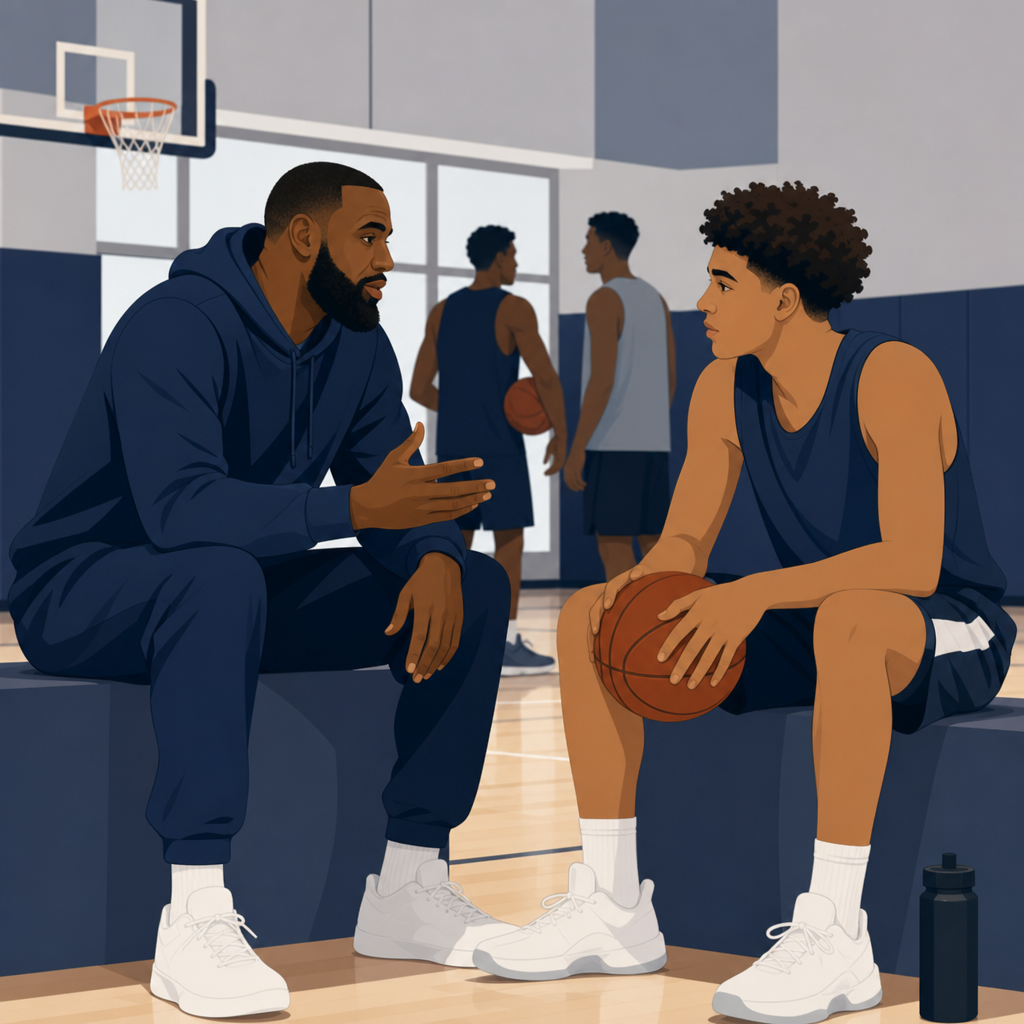
Veteran mentorship is one of the least visible forces behind NBA success, yet it shapes how young players practice, travel, recover, communicate, and survive the pressure of a long season. In NBA culture, “player culture” refers to the habits, expectations, and unwritten rules passed from one generation of players to the next inside locker rooms, film sessions, weight rooms, flights, and late-game moments. A veteran is not simply an older player; he is someone trusted to translate professional standards into daily behavior. A young player is not only a rookie; he can be any prospect still learning how to turn talent into reliable winning basketball. This side of team building matters because rosters change constantly, coaches get limited practice time, and development rarely happens through formal instruction alone. I have covered enough teams and spoken with enough staffers to know that organizations often credit assistant coaches publicly while privately admitting that the biggest breakthroughs came when a respected veteran pulled a young guard aside, simplified one read, or demanded better habits. That is player culture in action. It is quiet, repetitive, and usually invisible to fans, but it often determines whether promising athletes become rotation players, leaders, or cautionary examples.
For a hub article on NBA player culture, veteran mentorship is the ideal entry point because it connects nearly every related subject: leadership, accountability, locker room chemistry, role acceptance, professionalism, conflict management, and long-term player development. When people ask why one talented roster gels and another disappoints, the answer often starts with how experienced players model standards. Udonis Haslem in Miami, Andre Iguodala in Golden State, Mike Conley in Memphis and Minnesota, and Garrett Temple across multiple stops all represent the same principle: teams need credible internal teachers. Their value cannot be measured fully by points per game. It shows up when a rookie learns scouting report discipline, when a bench player stays ready instead of sulking, and when a franchise protects a prospect from avoidable mistakes. Understanding how veterans mentor young NBA players reveals how winning habits spread, why some rebuilds accelerate, and how organizations create continuity even when the roster turns over every summer.
What veteran mentorship looks like day to day
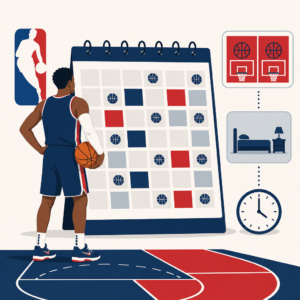
Veteran mentorship in the NBA is practical, not ceremonial. It begins with routine. A respected veteran shows a young player when to arrive, how to prepare his body, what to ask in film, how to study matchups, and how to conserve energy across 82 games plus travel. Coaches install schemes, but veterans teach survival within the schedule. They explain why a rookie’s body feels different in January than in Summer League, why sleep becomes a competitive advantage on road trips, and why one missed defensive tag can erase three made shots. The best mentors do not lecture constantly. They choose moments carefully, often right after practice, on the bench during a timeout, or on the team plane after an ugly loss.
Specific guidance usually falls into a few categories. First is role clarity. Young players often think development means expanding their game immediately. Veterans help narrow the focus. A rookie wing may want pull-up jumpers, but a veteran tells him that earning minutes requires corner spacing, transition defense, and making the extra pass. Second is emotional regulation. NBA seasons expose every insecurity: DNPs, trade rumors, social media criticism, and uneven minutes. Veterans normalize those stresses and show younger teammates how not to let one night define them. Third is communication. Good teams talk early on defense, in huddles, and in private. Veterans teach how to deliver criticism without humiliating teammates and how to accept correction without defensiveness.
The mentorship also includes off-court professionalism. Financial discipline, media training, family boundaries, and community expectations all affect performance. The league and union provide formal resources, but players often hear the message more clearly from someone who has lived through rookie mistakes. When a ten-year veteran tells a first-round pick that too many late nights will show up in his second jump during a back-to-back, that lesson lands differently. This is why teams prize adults in the locker room. They are not placeholders. They are cultural carriers.
Why young NBA players need veterans more than ever
Young NBA players enter the league with more skill training and public exposure than ever, yet many arrive with less experience in stable, demanding team environments. Elite prospects often spend one year in college, the G League Ignite pathway, or overseas systems tailored around development and evaluation rather than veteran hierarchy. By the time they reach the NBA, they may have worked with private trainers for years but still lack fluency in the daily compromises of winning basketball. Veterans close that gap. They help translate individual talent into team utility.
The modern game also increases informational overload. Players must absorb playbooks, biometric data, matchup analytics, nutrition plans, and constant video clips delivered through team apps. A strong veteran can filter what matters first. Instead of drowning a rookie in theory, he says: know the three actions the second unit runs, learn where your low-man help comes from, and be early to treatment. That kind of prioritization is development gold. It turns complexity into execution.
Another reason mentorship matters is the visibility of failure. Every mistake is clipped, posted, and debated within minutes. Younger players can become image-conscious, chasing highlights rather than sound possessions. Veterans re-center the standard. They remind prospects that coaches trust defenders who rotate on time and ballhandlers who make the simple pass. In practice facilities, I have repeatedly heard staff describe the same pattern: once a veteran earns a young player’s respect, coaching points stick better. The message is no longer abstract. It is endorsed by someone who survives in the league.
| Mentorship area | What a veteran teaches | Example of impact |
|---|---|---|
| Role definition | How to earn minutes through specific strengths | A rookie wing stops hunting isolations and becomes a trusted defender |
| Game preparation | Film habits, scouting priorities, recovery timing | A young guard reads coverages faster and commits fewer turnovers |
| Professional routine | Sleep, nutrition, treatment, travel discipline | A second-year player stays healthier through the middle of the season |
| Emotional control | How to handle benchings, slumps, and media noise | A prospect responds to reduced minutes without losing confidence |
| Locker room conduct | When to speak, how to listen, how to confront respectfully | Team chemistry holds during a losing streak |
How contenders and rebuilding teams use mentorship differently
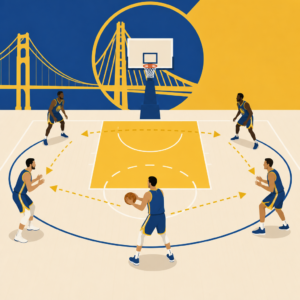
Every NBA team values mentorship, but contenders and rebuilding teams deploy it differently. Contenders use veterans to sharpen role execution around stars. On those teams, the mentor’s job is often to accelerate trust. A young rotation player cannot spend six months figuring out playoff-level details. He needs immediate guidance on spacing with primary creators, switching rules, clock management, and poise under national scrutiny. Think about the way Golden State relied on Andre Iguodala and later Draymond Green to educate younger contributors on cutting angles, defensive communication, and the importance of processing speed. The teaching was inseparable from the pursuit of wins.
Rebuilding teams, by contrast, use veteran mentors to create structure amid experimentation. Young rosters can become chaotic if nobody establishes standards for practice intensity, punctuality, and accountability after losses. This is where players like Mike Conley, Al Horford, Thaddeus Young, or Garrett Temple have been especially valuable across different phases of team cycles. They help organizations avoid the dangerous trap of teaching prospects that development and losing are compatible for too long. Good rebuilding teams still demand professional habits. The veteran mentor protects that line.
There is also a roster construction angle. Front offices increasingly discuss “development ecosystem” rather than raw upside alone. A talented but fragile young core may need a backup point guard who can run a huddle, or a reserve big who accepts a limited role while teaching defensive terminology. These signings are not accidental. They are infrastructure moves. Teams know that one stabilizing veteran can raise the floor of an entire bench unit and keep younger players from drifting into bad habits. In that sense, player culture is built as deliberately as shooting depth or rim protection.
The forms mentorship takes: teaching, modeling, and accountability
Not every veteran mentors the same way. Some teach verbally. They explain a coverage in plain language, walk a young teammate through options after practice, or review possessions on a tablet during games. Others mentor by modeling consistency. They rarely make speeches, but they lift, stretch, study, and compete the same way every day. Younger players learn by proximity. A third group specializes in accountability. They call out missed rotations, challenge immature behavior, and say what coaches sometimes cannot say without losing relational equity. The best locker rooms usually have all three types.
Direct teaching is especially important for point guards and centers because those positions organize the game. A veteran point guard can simplify pace, pick-and-roll reads, late-clock decision-making, and communication with referees. A veteran center can teach screen angles, drop coverage footwork, weak-side tags, and verticality at the rim. Modeling matters most with players whose roles depend on repeatability, such as three-and-D wings or reserve guards. If a young player sees an older teammate preserving his body, staying mentally ready, and contributing in twenty-minute bursts, he understands what a durable career looks like.
Accountability is the hardest form because it risks friction. Yet it is often the most valuable. Real mentorship does not mean endless encouragement. It means telling a young scorer that poor transition defense will cut his minutes, or telling a promising big that foul discipline matters more than highlight blocks. The strongest mentors combine honesty with credibility. Teammates accept tough feedback when they know it comes from someone who prepares, competes, and puts the team first.
Famous NBA examples that show the pattern clearly
Several widely respected examples illustrate how veteran mentorship shapes player culture. In Miami, Udonis Haslem became a standard-bearer for conditioning, accountability, and competitive honesty long after his on-court role shrank. Younger Heat players repeatedly described him as someone who enforced expectations before coaches needed to. That matters in a franchise built on hard edges and defined roles. In Golden State, Andre Iguodala served as a bridge between championship habits and younger talent, helping players understand spacing, timing, and the difference between flashy plays and winning plays. His voice carried because he had succeeded in multiple roles, from primary option to connective reserve.
Chris Paul has provided another clear case. Whether in Oklahoma City, Phoenix, or Golden State, his influence on young guards has been immediate because his standards are precise. He teaches pace manipulation, situational awareness, and the value of owning the final two minutes of a quarter. Younger teammates often improve simply by seeing how thoroughly he prepares. Al Horford has played a similar role for bigs and wings, especially in teaching defensive positioning and calm communication during pressure possessions. His value extends far beyond his box-score line.
The lesson from these examples is not that every team needs a star veteran. It is that every healthy player culture needs trusted transmitters of standards. Sometimes that player is an All-Star. Sometimes he is the tenth man. The title matters less than the credibility.
How teams can build a stronger player culture through veterans
Organizations that want a stronger player culture cannot assume mentorship will happen automatically. They need intention. First, they should identify which young players need structure, confidence, or technical guidance and pair them with veterans whose communication style fits. Second, coaches should create spaces where player-to-player teaching can occur naturally, including mixed film groups, small skill pods, and travel routines that encourage conversation. Third, front offices should evaluate veterans not only by production but by reliability, adaptability, and willingness to teach.
There are limitations. Not every respected veteran is a good mentor, and not every young player is ready to listen. Age alone does not create leadership. Some veterans cling to old habits that no longer fit the modern game, while some prospects interpret correction as personal criticism. Teams must assess chemistry honestly. Still, when the fit is right, the return is enormous. Mentorship shortens learning curves, supports coaching, reduces preventable mistakes, and gives a roster internal stability that schemes alone cannot provide.
For anyone studying NBA culture, this is the key takeaway: player culture is built person to person before it is visible team to team. Veterans mentor young NBA players through example, instruction, and accountability, and that quiet labor often determines whether talent matures into winning basketball. If you want to understand why some teams develop smarter, tougher, and more connected players, start with the veterans in the room and the habits they pass on. Explore the rest of this NBA Culture hub with that lens, because every topic in player culture begins there.
Frequently Asked Questions
What does veteran mentorship actually look like in the NBA on a day-to-day basis?
Veteran mentorship in the NBA is usually much quieter and more practical than fans imagine. It rarely looks like a dramatic speech in the locker room. More often, it shows up in the small routines that shape a young player’s professional life. A respected veteran might tell a rookie how early to arrive for treatment, how to prepare his body on the second night of a back-to-back, how to stay mentally engaged when his minutes fluctuate, or how to speak in film sessions without sounding defensive. These lessons are passed along in training rooms, on team flights, during walkthroughs, in pregame warmups, and in the moments after a tough loss when emotions are still high.
Day to day, a veteran often acts as a translator between talent and professionalism. Young NBA players may already have elite skill, but the league demands much more than raw ability. It demands consistency, attention to detail, emotional control, and an understanding of role acceptance. A veteran helps a younger teammate understand why coaches emphasize certain habits, how scouting reports should affect in-game decisions, and what winning players do when nobody is watching. In that sense, mentorship becomes a form of team building. It teaches young players how to live the rhythm of an 82-game season and how to contribute to a shared culture rather than just chasing individual success.
Why is veteran leadership considered such an important part of team building?
Veteran leadership matters because teams are not built on talent alone. They are built on trust, standards, accountability, and shared behavior under pressure. The NBA season is long, physically demanding, and emotionally draining. Young players are asked to absorb complex schemes, handle constant travel, maintain their bodies, process public criticism, and still perform at a high level. Coaches can set expectations, but veterans often make those expectations real. When a younger player sees an established teammate take recovery seriously, stay locked into film study, communicate on defense, or respond professionally after a bad shooting night, those habits become easier to copy and accept.
This is especially important because player culture is often transmitted peer to peer. Coaches lead the system, but veterans reinforce the lived standards inside that system. They can challenge a young player in ways that feel credible because they have survived the same pressures themselves. They know when to push, when to encourage, and when to simplify the message. That influence can keep a locker room stable during losing streaks, help a prospect adjust to a smaller role, and prevent talented young players from developing habits that hurt long-term growth. In that way, veteran leadership is not a side story to team building. It is one of the mechanisms that turns a group of athletes into a functioning professional team.
How do veterans help young NBA players handle pressure, mistakes, and the mental side of the season?
One of the most valuable things a veteran provides is emotional perspective. Young players often enter the league after years of being featured stars. In the NBA, they may suddenly deal with reduced minutes, sharper media scrutiny, tougher competition, and less margin for error. A veteran can normalize that experience. He can explain that one bad game does not define a season, that coaches often trust players who respond well to mistakes, and that mental steadiness is a major part of staying playable over time. Those reminders are powerful because they come from someone who has lived through slumps, benchings, trade rumors, playoff pressure, and the grind of public evaluation.
Veterans also help by modeling how professionals recover mentally after adversity. Instead of spiraling after a turnover or a missed defensive assignment, experienced players often reset quickly and move to the next possession. Younger teammates watch that. They learn that maturity in the NBA is not about being perfect but about being reliable after imperfection. Off the court, a veteran may advise a younger player on managing social media, avoiding emotional overreactions to headlines, protecting rest on the road, and building routines that reduce anxiety. Over a full season, that kind of guidance can be the difference between a young player burning out and a young player stabilizing into someone coaches trust in meaningful moments.
Can veteran mentorship improve on-court performance, or is it mostly about locker-room chemistry?
It absolutely can improve on-court performance, and often in very direct ways. Veteran mentorship helps young players make faster decisions, recognize game situations more clearly, and avoid mistakes that do not always show up in a box score. A veteran might teach a young guard how to manipulate pace, when to make the simple pass instead of the flashy one, or how to read weak-side help before driving. A veteran big man might show a younger teammate how to set better screens, defend without fouling, or use positioning to win rebounds against stronger opponents. These details matter because the NBA is a league where small edges separate playable talent from winning impact.
Just as importantly, mentorship improves performance by helping players understand role effectiveness. Young players sometimes assume development means expanding usage, but veterans often teach the opposite lesson first: earn trust through discipline. That can mean sprinting back on defense, making the extra rotation, being vocal on switches, cutting with timing, or staying ready for limited touches. Once a player masters those habits, coaches are more likely to reward him with larger responsibility. So while veteran influence certainly supports locker-room chemistry, it also sharpens execution, raises basketball IQ, and helps younger players translate physical gifts into dependable winning basketball.
What makes a veteran truly trusted as a mentor rather than just an older player on the roster?
Age alone does not make someone a meaningful mentor. In NBA culture, the trusted veteran is usually the player who consistently connects professional standards to everyday behavior. He understands how the league works, but just as importantly, younger players believe him. That credibility usually comes from preparation, steadiness, honesty, and example. A true veteran mentor does not just tell younger teammates what to do; he shows them what professionalism looks like in practice habits, body maintenance, communication, punctuality, and response to adversity. He becomes a reliable source of truth about what it takes to stay in the league and help a team win.
Trusted veterans also know how to communicate across personalities. Some young players need direct accountability. Others respond better to calm encouragement or private conversation. The best mentors can read that difference. They do not treat guidance as performance. They treat it as responsibility. They understand the unwritten rules of team life, the emotional rhythms of a season, and the importance of protecting the locker room from panic, ego, or distraction. That is why a real veteran is so valuable: he helps translate professional survival into teachable habits. For young NBA players, that kind of guidance can accelerate growth in ways that talent development alone never could.