
Watching the NBA is easier than ever, but the number of streaming services, blackout rules, cable bundles, and app-based subscriptions can make the process confusing fast. If you want to follow the league consistently, you need to understand three things: where national games air, how local broadcasts work, and what NBA League Pass can and cannot do. I have helped fans set up viewing plans for full-season coverage, and the biggest mistake is assuming one subscription covers everything. It usually does not.
This guide explains how to watch NBA games across the regular season, playoffs, and Finals, with clear detail on streaming options, League Pass features, regional sports access, and what each route typically costs. In plain terms, streaming means watching through internet-based services such as YouTube TV, Sling TV, Max, or NBA League Pass instead of a traditional cable box. League Pass is the NBA’s direct-to-consumer out-of-market package, designed mainly for fans who want to watch teams outside their local market. National broadcasts are games carried across the United States on channels such as ESPN, ABC, TNT, and NBA TV. Local broadcasts are the games shown by regional or local rights holders in a team’s home territory.
Why does this matter? Because the right setup depends on how you follow the NBA. A casual fan may only need ABC and TNT for marquee matchups. A fantasy basketball manager may want nightly out-of-market access. A relocated fan trying to watch their old hometown team will probably need League Pass. A local diehard may need a live TV streaming service that includes the right regional channel. The cost gap is significant, too: you can spend under $20 a month for limited access or more than $100 monthly for broad coverage. The sections below break down the practical options, the tradeoffs, and the smartest ways to follow the NBA all season long.
Understand How NBA Broadcast Rights Work
The NBA viewing landscape starts with rights. In the United States, games are split among national broadcasters, team-specific local partners, and the league’s own subscription products. That split is why access feels fragmented. A Lakers game, for example, might appear on a regional network on Tuesday, ABC on Saturday, and be unavailable live on League Pass inside Southern California because of local blackout restrictions. The same pattern applies across much of the league.
National TV games are the easiest to identify. These include many opening week matchups, holiday games, Saturday primetime windows, rivalry games, and much of the postseason. ESPN and ABC carry a large share of marquee regular-season and playoff games. TNT has long been central to Tuesday and Thursday national windows and major postseason coverage. NBA TV carries additional regular-season games, though local blackouts can still affect some live access. If your goal is broad league visibility rather than every single game, these channels matter most.
Local rights are where many fans run into trouble. Teams often have agreements with regional sports networks or over-the-air affiliates, and those rights limit who can stream games live in the home market. This is why a local Knicks fan cannot rely on standard League Pass for live Knicks games, while a fan in Denver might still need a service carrying the proper local partner. The exact channel varies by team and market, so checking the team’s official schedule page and local broadcast listing is essential before paying for anything.
For a sub-pillar fan guide, this is the core principle to remember: no single service is perfect for every fan profile. The rest of your setup should flow from one question first—are you trying to watch your local team, out-of-market teams, nationally televised games, or all of the above?
Best Streaming Options for National NBA Games
If you want the simplest path to major NBA coverage, start with a live TV streaming service that includes ESPN, ABC, TNT, and NBA TV. In practice, this gives you the broadest national access during the regular season and playoffs. The most common choices are YouTube TV, Hulu + Live TV, DIRECTV STREAM, and Sling TV, though channel availability differs by plan and by market.
YouTube TV is often the most balanced option for NBA fans because its base package generally includes ESPN, ABC, and TNT in supported markets, along with a polished app, reliable cloud DVR, and easy device support. Hulu + Live TV offers a similar national-channel mix and works well for households already using the Disney bundle. DIRECTV STREAM tends to be more expensive, but it can be important for fans who also need certain regional sports networks that competitors do not carry. Sling TV is usually the cheapest route to ESPN and TNT, but ABC availability is limited in some areas, and NBA TV may require a higher-tier add-on.
The key question searchers usually ask is simple: which service lets me watch the most NBA games live? For many households, the answer is YouTube TV or DIRECTV STREAM, depending on whether local team channels matter. If you only care about nationally televised games and cost control, Sling can be a practical compromise. If you want one app for sports plus broader family entertainment, Hulu + Live TV is strong.
| Service | Best For | Typical NBA Channels | Typical Monthly Cost |
|---|---|---|---|
| YouTube TV | Broad national NBA coverage | ESPN, ABC, TNT, NBA TV in many markets | $73-$83 |
| Hulu + Live TV | Fans who also want Disney bundle value | ESPN, ABC, TNT, often NBA TV | $77-$90 |
| DIRECTV STREAM | National games plus some regional sports access | ESPN, ABC, TNT, NBA TV, select RSNs on higher plans | $80-$120+ |
| Sling TV | Lower-cost national game access | ESPN, TNT, NBA TV on select plans; ABC limited by market | $40-$60+ |
These prices change frequently with promotions, taxes, and add-ons, so treat them as typical ranges rather than fixed rates. Also note an important playoff fact: the NBA Finals air on ABC in the United States, so any setup missing ABC is incomplete if you want full postseason access.
What NBA League Pass Includes and Who Should Buy It
NBA League Pass is the league’s direct subscription product, and it is ideal for out-of-market viewing. If you live in North Carolina and want to watch the Kings most nights, League Pass is exactly the kind of service built for you. It gives access to live and on-demand out-of-market games, condensed replays, multiple viewing formats, and a broad library of game content depending on plan level and region.
In recent seasons, League Pass has typically offered a standard tier and a premium tier. The standard plan usually allows one stream at a time and includes live out-of-market games with ads. The premium version generally removes commercials from some in-game breaks and allows more concurrent streams, making it better for families or shared households. There is also often a single-team option at a lower price for fans focused on just one franchise, though blackout restrictions still apply if that team is local to you.
Most fans ask the same direct question: can I watch every NBA game with League Pass? The answer is no. League Pass does not replace national TV access, and it does not override local blackout rules. Nationally televised games may be subject to delayed archive access rather than live viewing, and local games in your home market are usually blacked out live. That limitation is not a bug in your app; it is how the rights model works.
Still, League Pass is excellent for serious league followers. I recommend it most often to fantasy players, bettors looking for broad game context, analysts, and fans who enjoy watching multiple teams rather than only their local club. Features like multiview on supported devices, in-arena feeds, alternate broadcasts, and full-game replays make it more useful than a simple one-team package. If your priority is nightly NBA volume, League Pass is hard to beat for the price.
Local Team Coverage, Blackouts, and Regional Sports Networks
For many fans, the hardest part of following the NBA is not the national package. It is watching the home team consistently. Local live rights are usually controlled by regional sports networks, direct-to-consumer team-affiliated apps, or local over-the-air stations depending on the market. This means your access to regular-season games can change entirely based on your ZIP code.
Blackouts are the issue people search for most because they feel counterintuitive. A blackout means a game is unavailable live on a service in a protected territory because another broadcaster owns the local live rights. If you are inside the local market, League Pass generally blocks that game live. If the same game is on ESPN or TNT nationally, your local or national rights holder determines what you can watch and where. The cleanest workaround is not a workaround at all: use a service that legally carries the local channel or over-the-air affiliate in your market.
Regional sports network availability varies sharply. DIRECTV STREAM has often been the strongest live streaming replacement for RSN access, while YouTube TV and Hulu + Live TV have dropped many RSNs over the years. Some teams or ownership groups now offer direct streaming products in-market, which can be a useful cable-free option if available. Others still require cable, satellite, or a specific streaming partner. The only safe process is to verify the current official local rights holder for your team before subscribing.
If you are building a complete following-the-NBA setup, think of local access as its own category. National channels and League Pass solve only part of the problem. For a hometown fan, the local rights question usually determines whether a plan is actually workable.
How Much It Costs to Watch the NBA
NBA viewing costs depend on how complete you want your coverage to be. At the low end, a fan can subscribe to a partial live TV package or use occasional antenna access for ABC and spend relatively little. At the high end, a fan who wants local games, all national broadcasts, and out-of-market access may combine a premium live TV streaming service with League Pass and cross the $100-per-month mark during the season.
A budget national setup might mean Sling TV plus an antenna for local ABC access where available. That can land in the $40 to $60 monthly range, but it may still leave gaps depending on your market and whether NBA TV matters to you. A mainstream setup through YouTube TV or Hulu + Live TV usually sits around $75 to $90 per month before add-ons. A more complete solution pairing DIRECTV STREAM with RSN access and League Pass can cost materially more, but it may be the only realistic path for fans who want both local and out-of-market coverage without cable.
League Pass itself is usually relatively affordable compared with full live TV bundles. Season pricing has generally been offered as a one-time charge or monthly subscription, with the single-team tier costing less than the full league plan. That price-to-volume ratio is strong if you watch multiple games weekly. It is less efficient if you only watch a few nationally televised matchups each month.
One practical tip from experience: map your season first. If you mainly watch from opening night through Christmas and then return for the playoffs, a full-year bundle may not be necessary. If you watch five nights a week, paying more for convenience and channel coverage is often worth it.
The Smartest Viewing Setups for Different Types of Fans
The best NBA streaming option depends on your habits, not on a universal ranking. For local-team diehards, start with the official local broadcaster, then add national channels if you care about playoffs and marquee games. For out-of-market fans, League Pass is usually the first purchase, with a slim live TV package added only if national windows matter. For league-wide fans who watch whatever game is most interesting each night, a full live TV service plus League Pass is the strongest combination.
Casual fans can keep it much simpler. If your priority is Christmas Day, weekend games, the conference finals, and the Finals, choose a service with ABC, ESPN, and TNT and skip the rest. Fantasy managers and heavy social followers benefit from League Pass because they need broader nightly context, not just the national spotlight. Households with multiple sports interests may prefer a larger live TV bundle because it also covers NFL, MLB, college sports, and news in one place.
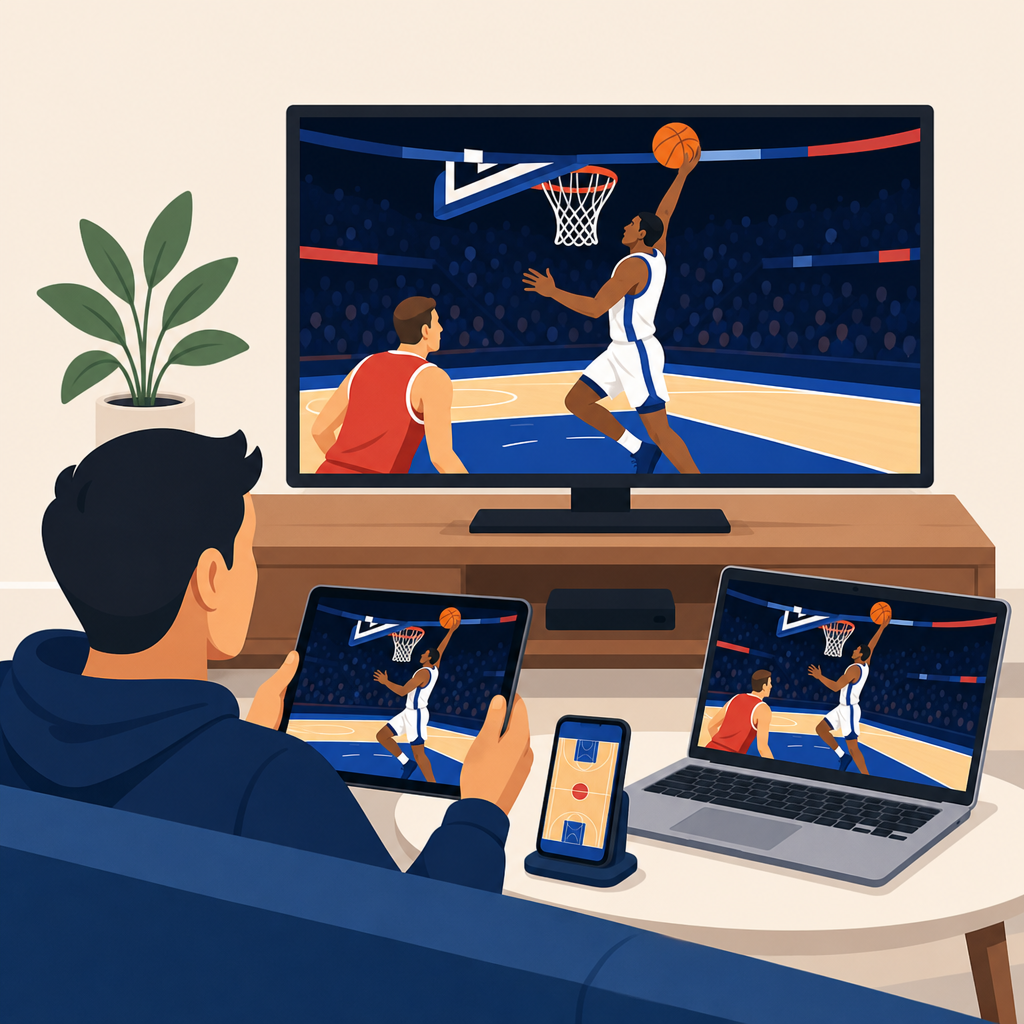
Device support also matters more than many fans realize. NBA apps and live TV services are generally available on Roku, Apple TV, Amazon Fire TV, smart TVs, iPhone, Android, tablets, and web browsers, but multiview, picture quality, and interface speed vary. If you routinely watch two games while checking box scores, test usability before committing for the full season.
Following the NBA well is really about matching rights, budget, and viewing habits. Start with your team, your market, and your must-have channels, then build outward. Check your local broadcast situation, compare live TV packages, and decide whether League Pass fits your routine. Done right, you can avoid blackout surprises, control costs, and watch the games that matter most to you all season long.
Frequently Asked Questions
What is the cheapest way to watch NBA games all season?
The cheapest option depends on which games you actually want to watch. If you mostly care about nationally televised matchups, a live TV streaming service with ESPN, ABC, TNT, and NBA TV may be the most practical route, because those channels carry a large share of marquee games throughout the season. If you mainly want out-of-market games and do not need your local team, NBA League Pass is often the more affordable standalone choice. That said, many fans run into trouble by assuming League Pass includes every game they want. It does not. Local team games are usually subject to blackout restrictions in your home market, and nationally televised games may also be unavailable live on League Pass in certain cases.
For budget-conscious viewers, the smartest strategy is to match the subscription to your viewing habits instead of chasing a one-size-fits-all package. If you only want occasional big games, you may be able to subscribe during the heart of the season or playoffs rather than paying year-round. If you follow one local team closely, a regional sports network or local TV access may matter more than League Pass. If you want broad coverage with fewer gaps, expect to combine services, which raises the monthly cost. In other words, the cheapest plan is usually the one built around the games you actually watch, not the one with the lowest advertised price.
Does NBA League Pass include every NBA game?
No, and this is one of the most common misunderstandings. NBA League Pass is designed primarily for out-of-market viewing, which means it works best when you want to watch teams outside your local broadcast area. If your favorite team is considered local based on your zip code or market, those games may be blacked out live on League Pass. Nationally televised games can also be limited live because broadcast rights belong to networks such as ESPN, ABC, or TNT. In those situations, League Pass may offer the game after it ends, but not always in real time.
League Pass is still useful, especially for fans who want regular-season access across the league, alternate feeds, condensed replays, and the flexibility to follow multiple teams. But it is not a complete replacement for live TV if your goal is full, unrestricted coverage. The most accurate way to think about it is as a strong complement to national and local broadcast access, not as a universal all-access pass. Before subscribing, it helps to verify which teams are blacked out in your area and whether your must-watch games are likely to air nationally.
How do local blackouts work when trying to watch my favorite NBA team?
Local blackouts exist because the NBA sells separate media rights for local and national broadcasts. If you live inside your team’s home television territory, that team’s games are often reserved for the regional sports network, local channel, or partner app that holds the rights in your area. As a result, NBA League Pass may block those games live even if you are paying for the service. This surprises many fans, especially those who assume a league-branded subscription automatically includes their hometown team. In practice, local rights are often the most important part of setting up a reliable viewing plan.
The exact blackout rules vary by market, provider, and game type, so it is important to check your team’s local broadcast partners before buying anything. In some areas, local games are available through cable or a live TV streaming bundle that carries the relevant regional sports network. In others, the team or network may offer a direct-to-consumer streaming option. Nationally televised games may also move to ESPN, ABC, or TNT, which means even local coverage can shift depending on the schedule. If you want to follow one team every night, start with local availability first, then add national channels and League Pass only if needed.
Which streaming services usually carry national NBA games?
National NBA games are typically split across major broadcast and cable partners, especially ESPN, ABC, TNT, and NBA TV during the regular season. That means the best streaming service for NBA fans is usually one that includes most or all of those channels in a live TV package. Services that offer broad sports channel lineups tend to be the most reliable for nationally televised games, opening night, Christmas Day matchups, rivalry games, and many playoff broadcasts. However, channel availability can vary by provider and pricing tier, so it is worth confirming the exact lineup before subscribing.
This is where many viewers overspend or underbuy. A lower-cost streaming package may look attractive at first, but if it is missing TNT or NBA TV, you could lose access to a meaningful portion of the schedule. On the other hand, if you do not care about every national window and just want a few games each week, a smaller package may be enough. The key is to compare channels, not just monthly price. For most fans trying to avoid surprises, the most dependable setup includes access to ESPN, ABC, and TNT at minimum, because those networks carry many of the highest-profile games all season.
How much should I expect to pay to watch the NBA without missing many games?
If your goal is near-complete NBA coverage, you should expect to pay for more than one service. A comprehensive setup often includes a live TV streaming package for national broadcasts and local market access, plus NBA League Pass for out-of-market games. That combination gives you the best chance of covering national telecasts, local team games, and the broader league schedule, but it is also where costs can rise quickly. Depending on the services available in your market, your monthly total can range from moderate to expensive, especially if regional sports access is only included in higher-priced bundles.
The biggest mistake is assuming there is a single low-cost subscription that covers national games, your local team, and every out-of-market matchup. Usually, there is not. If you want to save money, decide what “not missing many games” actually means for you. For some fans, that means every game involving one team. For others, it means national broadcasts plus occasional League Pass browsing. Once you define your priorities, you can choose the most efficient combination instead of paying for features you will not use. In practical terms, full convenience costs more, while a focused plan built around your team or viewing habits can keep spending under control.