
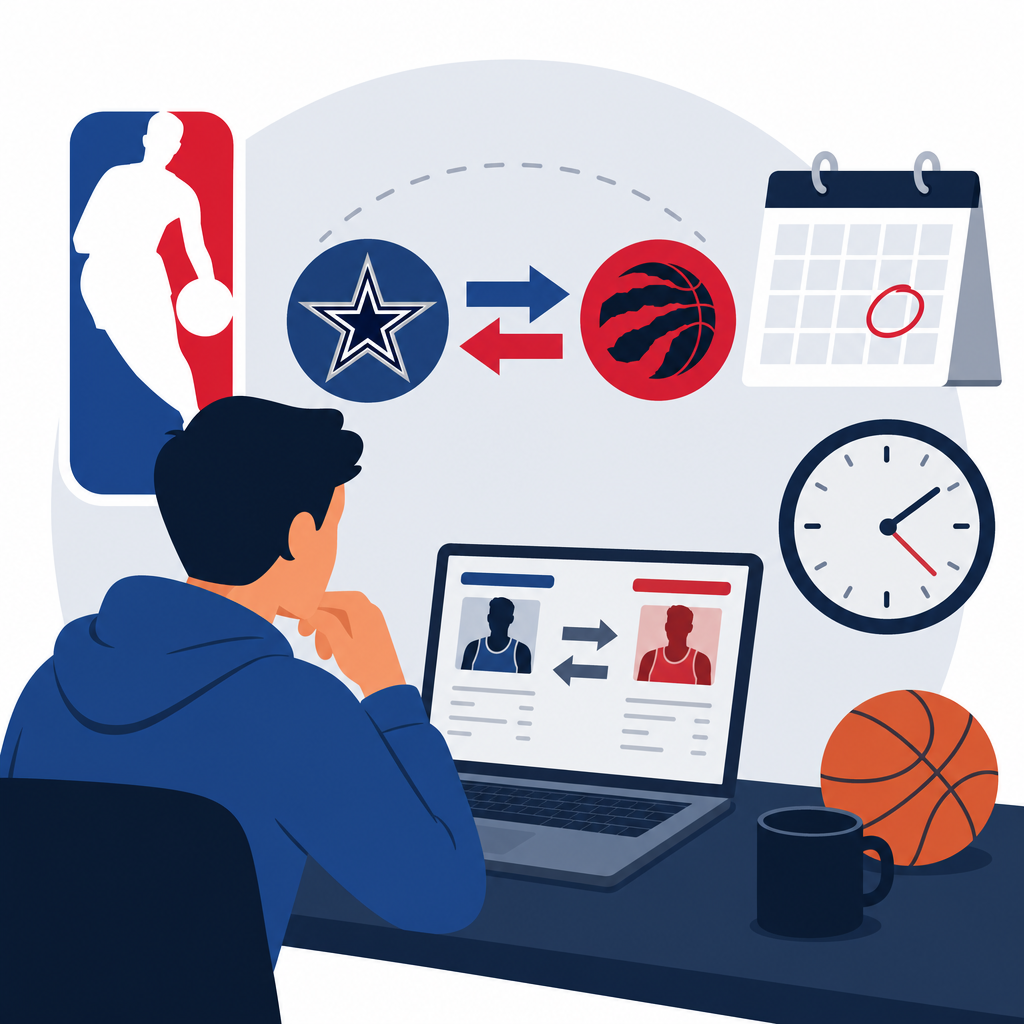
The NBA trade deadline is the point each season when roster-building stops being a slow front-office exercise and becomes live drama that every fan can follow in real time. For first-time followers, it can feel confusing because reports, salary rules, draft picks, and lineup changes all hit at once. Once you understand the basic terms and the rhythm of deadline day, though, following the NBA trade deadline becomes one of the easiest and most rewarding ways to learn how the league really works. This guide is the hub for Following the NBA within a broader Fan Guide, so it covers the full picture: what the deadline is, why teams make moves, how trades are reported, what rules matter, which sources to trust, and how to track the impact after the headlines fade.
In simple terms, the NBA trade deadline is the last date in the regular season when teams can exchange player contracts, draft assets, and certain rights for that season’s playoff push. Teams cannot simply swap any players they want. Every trade must satisfy league rules in the collective bargaining agreement, fit roster limits, and pass a league office review. That is why fans often hear terms like expiring contract, salary matching, protected first-round pick, trade exception, second apron, and buyout market. These are not niche details. They explain why one team can complete a deal quickly while another spends weeks trying to build a legal package. I learned this the hard way covering busy deadlines: the splashiest rumor often dies not because the teams changed their minds, but because the math and restrictions never worked.
Why does it matter so much? Because the deadline reveals what every franchise believes about itself. A contender may pay premium draft capital for a defensive wing. A play-in team may decide whether to buy or sell. A rebuilding club may trade a veteran for future picks and cap flexibility. Even a minor move can change rotations, playoff odds, ticket demand, and the development path for younger players. For fans, the deadline is also the fastest route to understanding team strategy. If you can follow the NBA trade deadline well, you begin to understand the league beyond highlights and standings. You see incentives, timelines, and the constant tension between winning now and building for later.
What the NBA Trade Deadline Is and When to Watch It
The NBA trade deadline usually falls in early February, roughly two-thirds of the way through the regular season. The exact date changes each year, but the practical point is consistent: teams have enough evidence to judge their roster, yet enough games remain for a move to matter. If a contender needs more shooting, rim protection, or bench creation, this is the last major chance to address it through trades. After the deadline, teams can still sign certain free agents or add players through the buyout market, but they cannot trade players for the rest of that season.
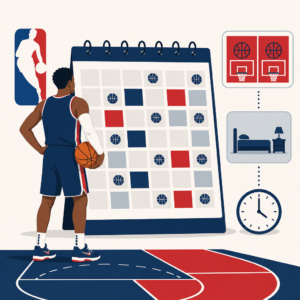
For a first-time fan, the best way to watch the deadline is to think in phases instead of one moment. The first phase starts weeks earlier, when rumors intensify and executives speak more carefully in public. The second phase is the final week, when frameworks become clearer and reporters start naming specific players, picks, and salary pieces. The third phase is deadline day itself, when information moves fastest and verbal agreements may be reported before official league approval. The fourth phase is the aftermath, when failed physicals, waived players, and buyout decisions still reshape rosters. If you only tune in for the final hour, you will miss half the story.
Time zones matter too. Most major news breaks during U.S. business hours because front offices, agents, and league officials are all working simultaneously. On deadline day, national reporters, team beat writers, television networks, and league transaction logs become your main tools. I recommend keeping one reliable live news feed open, one team-specific source for your favorite club, and the official transaction page for confirmation. That mix helps separate real movement from recycled rumor.
Why Teams Make Trades at the Deadline
Teams make deadline trades for four main reasons: to contend, to reset, to manage finances, or to solve a lineup problem. Contending teams usually target playoff skills. They are not chasing raw points alone; they want attributes that survive in postseason basketball, such as switchable defense, secondary ballhandling, late-clock shot creation, and reliable rebounding. A team sitting near the top of the conference may trade a future first-round pick for a veteran who can guard elite wings because that specific role becomes more valuable in a seven-game series than in a random January game.
Middle-tier teams face the hardest choices. A club around .500 must decide whether to add help for a playoff push or sell veterans before they lose value. This is where fan expectations and front-office logic often diverge. Supporters may want a win-now move, while management may judge the roster as too limited to justify spending future assets. Rebuilding teams usually prioritize draft picks, young players, and salary flexibility. They often absorb contracts other teams want to move if a draft asset comes with them. That is why a rebuilding team can become central to a three-team or four-team trade even when it is not trying to improve immediately.
Money is another major driver. Under the current labor system, tax concerns and apron restrictions can stop aggressive spending even for ambitious owners. A team above key payroll thresholds loses flexibility in trade construction and future team-building tools. Fans sometimes interpret a quiet deadline as a lack of effort, but sometimes the front office is boxed in by earlier decisions. Understanding that context makes the deadline far less random and far more strategic.
How NBA Trades Actually Work
At a basic level, an NBA trade exchanges contracts, draft considerations, and sometimes rights to players not currently on the roster. What matters most is that outgoing and incoming salaries must fit league rules for the teams involved. This is why fans constantly hear about “matching salary.” If a player earns $30 million, a team cannot always acquire him by sending out a minimum contract and a second-round pick. The transaction must fit allowed salary bands, exceptions, and cap status. On top of that, teams must stay within roster limits and account for hard-cap triggers and apron limitations.
Draft picks also have layers. A first-round pick can be unprotected, lightly protected, lottery protected, or protected in multiple years with conversion terms if it does not convey. Those protections matter because they change the actual value of the asset. Two “first-round picks” are not equal if one is likely to land in the 20s and another could become a top-10 selection. Second-round picks have become more useful than casual fans realize because teams use them to grease smaller deals, buy into drafts, or add low-cost developmental talent.
Reported trades are often agreements in principle first. The league still reviews them, and teams may need medical information before everything becomes official. Occasionally a deal changes because one side adds another player, cash consideration, or a pick swap to satisfy terms. This is why careful reporters use phrases like “finalizing” or “intent to complete.” It is not hedging. It reflects how NBA transactions really move from negotiation to execution.
The Terms Every First-Time Fan Should Know
If you want to follow deadline coverage without feeling lost, learn the core vocabulary. An expiring contract is a player deal ending after the season, valuable because it can create future flexibility. A buyout happens when a player and team agree to part ways after the deadline, often so the player can join a contender once he clears waivers. A trade exception is a mechanism that can help a team absorb salary in a later move under specific conditions. Bird rights allow teams to exceed the cap to re-sign their own players. Protected picks, pick swaps, cap holds, luxury tax, hard cap, and apron thresholds all affect how aggressive a team can be.
The most important habit is to translate every term into a basketball or team-building consequence. If a report says a team wants expiring money, that usually means preserving future cap flexibility. If a team wants swaps instead of a single protected pick, it may be betting on another team declining later. If a front office wants a “rotation wing,” it is often seeking a player who can credibly defend multiple positions and stay playable in the playoffs. Once you connect terminology to purpose, trade news starts making immediate sense.
| Term | What It Means | Why Fans Should Care |
|---|---|---|
| Expiring contract | A deal ending after the season | Creates cap flexibility or matching salary value |
| Protected pick | A draft pick with limits on where it conveys | Changes the real value of a trade package |
| Trade exception | A tool allowing salary absorption in some cases | Can enable future deals without sending equal money back |
| Buyout market | Post-deadline route for waived veterans to sign elsewhere | Strong teams can still improve after the deadline |
| Luxury tax | Financial penalty for high payrolls | Explains why some teams avoid extra salary |
| Second apron | Upper payroll band with stricter team-building limits | Greatly reduces flexibility for expensive contenders |
Which Sources to Trust on Deadline Day
The best deadline coverage comes from a combination of national insiders, local beat reporters, and official league records. National reporters often break the broad framework first because they speak with multiple teams and agents. Beat writers add context that national accounts may miss, such as locker-room fit, coaching preferences, ownership limits, and which players a team is actually willing to move. Official transaction pages, team press releases, and the league database confirm when a deal becomes formal.
As someone who has tracked chaotic deadlines minute by minute, I strongly recommend ranking information by reliability. Tier one is a small group of established national reporters and your team’s most accurate beat writer. Tier two is television discussion that adds sourcing or cap context. Tier three is rumor aggregation, which is useful for speed but often strips away the original caveats. Tier four is random social posts with no sourcing. Many first-time fans get confused because they treat all trade chatter as equal. It is not equal. The difference between “team has interest,” “team made a call,” “serious talks,” and “deal is done” is enormous.
To stay organized, track three questions with every report: Who said it first? What exactly was claimed? Has another reliable source independently confirmed it? That quick test filters out most noise. It also helps you enjoy the drama without being misled by every speculative graphic or reposted clip.
How to Follow the Impact After a Trade Happens
The headline is only the start. To understand whether a move matters, watch the first two weeks after the trade through four lenses: role, fit, schedule, and cost. Role means where the new player fits in the rotation and whether his minutes are stable. Fit means how his skills align with the stars, coach, and system. Schedule matters because a brutal road trip can make a good trade look bad in the short term. Cost means revisiting what the team gave up, including future picks and lost flexibility, not just outgoing players.
Real examples show why this matters. A scoring guard may average fewer points after a trade but still improve a contender because he reduces turnover pressure on the primary creator. A center acquired for rebounding may look ordinary in box scores while quietly fixing the team’s biggest defensive weakness. On the other hand, a talented player can struggle if he joins a switching defense he cannot execute or a spacing offense that exposes his weaknesses. Context beats raw numbers.
Use simple tools to evaluate impact: lineup data, on-off numbers, shot profile, turnover rate, rebounding percentage, and opponent quality. NBA.com/stats, Basketball-Reference, Cleaning the Glass, and team game notes help here. If you are building your overall Following the NBA knowledge, this is where trade news connects to standings, playoff races, player roles, and coaching decisions. The deadline is not a separate event from the season. It is a turning point inside the season’s larger story.
A Simple Routine for First-Time Fans
For a calm, effective deadline experience, set a routine. In the week leading up to the deadline, read one daily roundup from a trusted national source and one update from your team’s beat writer. On deadline day, watch for official times, keep notifications on only for reliable reporters, and note each deal in a simple list: players, picks, money, and immediate team reason. Afterward, review depth charts and injury reports so you can see how the roster actually changed. Then follow the next five games rather than rushing to judgment after one debut.
This hub article should also serve as your base camp for the broader Fan Guide. Once you understand how to follow the NBA trade deadline, branch into companion topics such as standings, playoff seeding, salary cap basics, draft picks, awards, and the buyout market. Those subjects all connect. The better you understand them together, the easier it becomes to read any trade rumor and instantly see whether it is realistic, smart, desperate, or unlikely.
The main takeaway is simple: following the NBA trade deadline is not about memorizing every clause in the rulebook. It is about learning the league’s logic. Know what the deadline is, why teams act, how trades are constructed, which terms matter, which reporters are reliable, and how to judge the aftermath. Do that, and the chaos becomes clear. The payoff is huge: you will enjoy the season more, understand your team better, and spot meaningful moves before everyone else does. Start with one team, one trusted news list, and one deadline tracker, and you will be following the NBA with confidence by the next trade cycle.
Frequently Asked Questions
What exactly is the NBA trade deadline, and why does it matter so much?
The NBA trade deadline is the cutoff point in the regular season when teams must complete trades if they want newly acquired players to help them right away. Before that date, front offices can negotiate deals involving players, draft picks, and other assets as they try to improve the roster, reset the team’s direction, or create financial flexibility. After the deadline passes, teams generally cannot make standard trades until the offseason, which is why the final hours feel so intense and news-heavy.
It matters because the deadline often reveals what teams truly believe about themselves. A contender may trade for veteran depth or a missing starter to strengthen a playoff run. A rebuilding team may move experienced players for future draft picks, younger talent, or expiring contracts. A team stuck in the middle might use the deadline to avoid falling behind in the standings or to begin a longer-term reset. For fans, the trade deadline is one of the clearest windows into how the league works behind the scenes, because strategy, money, team identity, and future planning all become visible at once.
How can a first-time fan follow the NBA trade deadline without feeling overwhelmed?
The easiest way to follow the NBA trade deadline is to break it into a few simple categories: who was traded, why each team made the move, and what changes on the court afterward. Start by tracking trusted NBA insiders, team reporters, and official league or team announcements. Early reports often describe discussions or likely frameworks, but the details can change, so it helps to wait for confirmed terms before reacting too strongly. If you see a report about a player, check whether the trade is final, what draft picks are included, and whether there are multiple teams involved.
It also helps to focus less on every rumor and more on patterns. Ask basic questions as you read each deal: Is this team buying for the playoffs, selling for the future, or clearing salary? Did it improve a weak bench, add defense, create shooting, or open minutes for younger players? If you follow deadline day this way, the chaos starts to make sense quickly. Instead of trying to memorize every transaction instantly, treat the deadline like a story unfolding team by team. By the end of the day, you will understand not just what happened, but why it happened.
What do common trade deadline terms like expiring contract, cap space, draft picks, and salary matching actually mean?
These terms sound complicated at first, but they become much easier once you connect them to team-building. An expiring contract is a player deal that ends after the season, which can be valuable because it gives a team financial flexibility. Cap space refers to room under the salary cap, allowing a team to take on contracts more easily or pursue players later. Draft picks are future selections in the NBA Draft, and they are often treated as long-term assets because they can become young players or be included in future trades. Teams also use protections on picks, meaning a selection may or may not transfer depending on where it lands in the draft order.
Salary matching matters because NBA teams cannot always trade any contract for any other contract freely. Depending on a team’s payroll situation, it may need to send out a similar amount of salary to legally acquire a higher-paid player. That is why some deals include extra players who seem random at first glance: their contracts help the math work. You may also hear about exceptions, tax concerns, roster spots, and buyouts. You do not need to master every collective bargaining detail on day one. If you understand that trades must make sense both competitively and financially, you already have the foundation needed to follow most deadline moves confidently.
Why do some trades look strange at first, especially when teams include multiple players or future picks?
Many trades look unusual because they are solving more than one problem at the same time. A team might not be trading only for the best player in the deal. It could also be trying to balance salaries, open a roster spot, add a certain type of defender, create future cap flexibility, or collect draft assets for a later move. That is why a trade can involve several players, second-round picks, cash considerations, or even a third team helping complete the transaction. What looks messy on the surface is often a carefully built structure designed to satisfy both league rules and team goals.
Future picks especially can confuse first-time fans, but they are central to how front offices think. A first-round pick can be a major asset, while second-round picks may still carry value as flexible trade tools. Teams may include pick swaps, protections, or rights to picks years down the line. Those details matter because they shape a team’s long-term outlook as much as the current roster does. When evaluating a trade, it helps to avoid judging it only by the biggest name involved. Ask whether each team gained something it specifically needed now or later. Once you start viewing trades that way, even complicated multi-team deals become much easier to understand.
What should fans pay attention to after the trade deadline once the deals are done?
After the deadline, the most important thing to watch is how the moves actually change rotations, lineups, and team identity. A trade may look exciting on paper, but the real test is fit. Does the new player solve a weakness the team had before? Is there enough shooting, size, playmaking, or defense around him? Does the coach trust the new arrivals in closing lineups? A fan following the aftermath should pay attention to minutes, starting lineup changes, bench roles, and late-game usage. Those details often tell you more than headlines do.
You should also watch for the ripple effects beyond the star players. Sometimes the biggest post-deadline change is a younger player getting more opportunity because a veteran was moved. Other times, a team’s pace changes, its defense improves, or its playoff chances rise simply because the rotation now makes more sense. Injury updates, chemistry, and schedule strength also matter when judging deadline winners and losers. In short, the deadline is not just one dramatic day of transactions. It is the beginning of a new stretch of the season where teams show whether their decisions were smart, urgent, short-sighted, or transformative.