

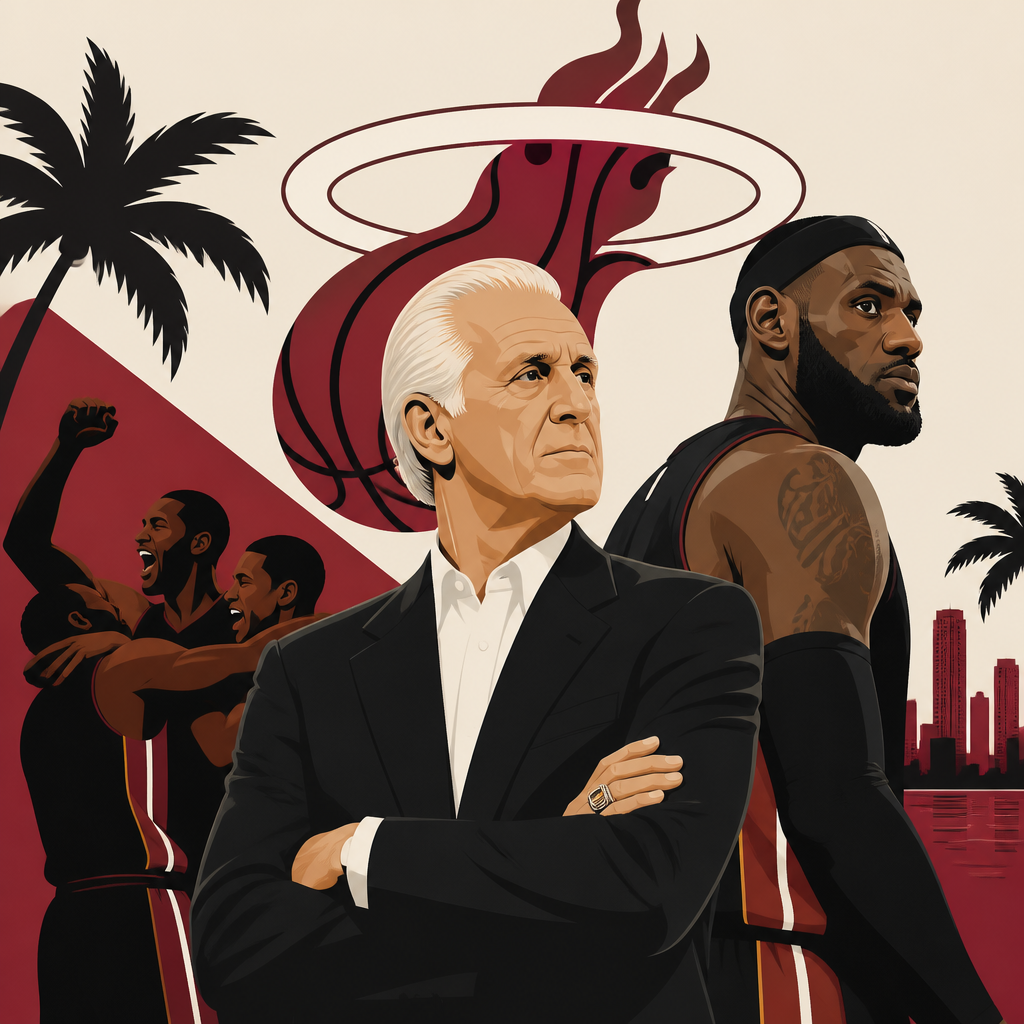
Miami Heat culture is one of the most recognizable ideas in modern basketball, a team-building philosophy built on conditioning, accountability, defensive commitment, and a belief that mental toughness can create competitive advantages year after year. In the NBA, “culture” is often used loosely, but in Miami it has a specific meaning shaped by Pat Riley, reinforced by Erik Spoelstra, tested by stars from Dwyane Wade to LeBron James to Jimmy Butler, and expressed through the franchise’s history. For readers exploring NBA team histories, the Heat provide an ideal hub because their story connects expansion-era uncertainty, superstar team construction, player development, playoff overachievement, and the constant tension between talent and discipline. I have covered and studied this franchise through multiple eras, and one theme keeps repeating: Miami rarely wants to be merely skilled; it wants to be the hardest team to play. That goal has influenced roster decisions, coaching style, training standards, and the public identity of the organization. Understanding Miami Heat culture means understanding how a relatively young franchise became a standard-setter, why Riley’s influence still frames every season, how the LeBron years changed expectations, and what winning through toughness really looks like when games slow down, bodies wear down, and only connected teams survive in May and June.
How the Miami Heat built a franchise identity
The Miami Heat entered the NBA in 1988, and unlike legacy franchises that inherited generations of tradition, they had to manufacture one quickly. Early Heat history included predictable expansion struggles, but the organizational tone changed when Pat Riley arrived in 1995. Riley had already won titles with the Showtime Lakers and brought instant credibility, exacting standards, and a clear basketball worldview. He valued elite conditioning, physical defense, low-error execution, and emotional resilience. Those principles did more than improve the win column; they gave the Heat a repeatable identity.
The first major Heat contender was built around Alonzo Mourning and Tim Hardaway, two players whose competitiveness matched Riley’s demands. Those late-1990s teams became known for bruising defense and intense playoff battles, especially against the New York Knicks. The rivalry mattered because it taught the league what Miami wanted to be: disciplined, unafraid, and physically imposing. Even when those teams fell short of a Finals run, they established a template that later versions of the franchise would follow.
By the early 2000s, the Heat were transitioning, but the franchise caught a historic break by drafting Dwyane Wade in 2003. Wade gave Miami a foundational superstar with elite downhill pressure, shot creation, and unusual toughness for a young guard. Pairing Wade with Shaquille O’Neal accelerated the timeline, and the Heat won the 2006 NBA Finals. That championship was not only a talent story. It was also proof that Miami’s structure could absorb major personalities and still hold together in the highest-pressure moments. Wade’s 2006 Finals performance remains one of the clearest examples in team history of winning through force, pain tolerance, and relentless pressure on the rim.
From there, the Heat became a franchise associated with expectation rather than novelty. That distinction matters in any NBA team history. Plenty of teams have short peaks. Fewer create an operating system that survives roster turnover. Miami did exactly that by embedding standards into everyday work, then hiring and promoting people who protected those standards over time.
Pat Riley’s blueprint for toughness and winning
Pat Riley is central to any serious explanation of Miami Heat culture because he did not simply assemble rosters; he defined what behavior and preparation would be rewarded. His philosophy has always mixed glamour with severity. Miami can attract stars, but stars entering the Heat ecosystem are expected to submit to structure. Conditioning tests, body-fat targets, intense film work, and a premium on defensive reliability are not side details. They are part of the franchise’s competitive model.
Riley’s influence can be seen in personnel choices across eras. The Heat consistently value players who defend multiple positions, accept hard coaching, and stay playable in playoff basketball. Bruce Bowen, P.J. Brown, Udonis Haslem, Shane Battier, Caleb Martin, Gabe Vincent, Max Strus, and Haywood Highsmith fit this archetype in different ways. Some were stars in their roles, others were developmental wins, but all made sense within Miami’s standards.
There is also a front-office discipline to Riley’s toughness model. Miami has repeatedly pursued superstar talent, yet it has usually done so without abandoning the internal hierarchy that defines the organization. Even when LeBron James and Chris Bosh joined Wade in 2010, the stars entered a structure rather than replacing one. That distinction is why the Heat remained coherent under enormous pressure. The franchise did not become less demanding because it got more famous.
Riley’s best teams also understood a simple postseason truth: the playoffs expose weak habits. Transition defense must be immediate, half-court spacing must be intentional, and role players must know exactly where their value comes from. Toughness, in this sense, is not chest-thumping. It is the ability to execute under fatigue and resist emotional swings during seven-game series. Miami has built countless game plans around that premise.
The LeBron era and the pressure of expectation
The most famous chapter in Miami Heat history began in 2010, when LeBron James and Chris Bosh joined Dwyane Wade. “The Big Three” transformed the franchise from contender to central NBA story overnight. With that shift came scrutiny rarely seen in basketball. Every regular-season lapse was national news, and every playoff result was judged against championship-or-bust standards.
In basketball terms, the LeBron era showed how Heat culture could scale around generational talent. Erik Spoelstra, initially questioned by outside observers who underestimated him, managed egos, tactical adjustments, and championship expectations with impressive consistency. Miami reached four straight NBA Finals from 2011 through 2014 and won titles in 2012 and 2013. That run placed the Heat among the defining teams of the decade.
LeBron’s arrival did not erase Miami’s toughness identity; it amplified it. The Heat became devastating when they committed to hyperactive defense, quick rotations, and small-ball versatility. Chris Bosh at center unlocked switchability. Shane Battier and Mike Miller supplied spacing and discipline. Wade, even while managing injuries, remained a powerful two-way force. LeBron himself evolved as a post player, help defender, and late-game decision-maker within this structure.
The 2011 Finals loss to Dallas remains important because it forced growth. Miami learned that raw talent and pressure creation were not enough without cleaner half-court execution and emotional steadiness. The response was decisive. In 2012, the Heat defended with greater purpose and closed with maturity. In 2013, they survived one of the greatest Finals tests ever, defeating San Antonio in seven games after Ray Allen’s iconic Game 6 three preserved the season. Those teams were star-heavy, but they still won through the disciplined habits Riley had institutionalized.
Erik Spoelstra, player development, and the modern Heat machine
If Riley built the blueprint, Erik Spoelstra turned it into a sustainable operating system. Spoelstra is one of the most important figures in NBA team histories because he represents continuity without stagnation. He began in Miami’s video room, learned every layer of preparation, and became head coach in 2008. Since then, he has shown elite adaptability across wildly different rosters.
What makes Spoelstra exceptional is his ability to coach stars and undrafted players with the same clarity. Miami’s development pipeline is one of the league’s best. The franchise has consistently uncovered or elevated contributors such as Udonis Haslem, Duncan Robinson, Gabe Vincent, Max Strus, Caleb Martin, Kendrick Nunn, and Hassan Whiteside during his most productive stretch. Not every development success lasts, but the pattern is unmistakable: Miami identifies role clarity quickly and teaches players how to survive playoff possessions.
That success is tied closely to the Sioux Falls Skyforce, Miami’s long-running G League affiliate, and to a player-development program that emphasizes defensive reads, footwork, shot selection, and conditioning. In practical terms, this means fringe players are prepared to execute within the Heat system instead of improvising outside it. Few organizations move bench and two-way players into meaningful postseason minutes with as much confidence.
| Era | Core figures | Identity | Historical significance |
|---|---|---|---|
| 1995–2003 | Pat Riley, Alonzo Mourning, Tim Hardaway | Defensive intensity, physical play | Established the franchise’s toughness standard |
| 2003–2010 | Dwyane Wade, Shaquille O’Neal, Udonis Haslem | Rim pressure, resilience, veteran balance | Delivered the 2006 championship |
| 2010–2014 | LeBron James, Wade, Chris Bosh, Spoelstra | Switchable defense, pace, star discipline | Reached four straight Finals, won two titles |
| 2019–present | Jimmy Butler, Bam Adebayo, Spoelstra, Riley | Versatility, grit, development culture | Multiple deep playoff runs as underdog or lower seed |
Spoelstra’s tactical flexibility deserves special attention. Miami has leaned on man-to-man pressure, 2-3 zone, matchup zone, switching schemes, blitz packages, and carefully timed offensive actions built around dribble handoffs and weak-side movement. Bam Adebayo’s emergence as one of the league’s best defensive hubs expanded those options. In playoff settings, the Heat often win edges not by surprise alone, but by presenting the same base principles through changing coverages that force hesitation.
What winning through toughness looks like in practice
Winning through toughness is not a slogan if it changes outcomes. In Miami, it usually shows up in five concrete ways: superior conditioning, defensive communication, role acceptance, composure in close games, and the ability to survive ugly stretches without losing structure. Those traits explain why Heat teams often outperform regular-season projections.
Conditioning matters because playoff basketball is cumulative. Teams do not just need one burst; they need repeat effort late in games and late in series. Miami’s emphasis on body composition and fitness has long been league-famous. Players have described demanding standards that can feel severe, but the competitive logic is straightforward: fatigue breaks down closeouts, box-outs, and decision-making first.
Defensive communication is another pillar. The Heat have regularly asked lineups with limited size or top-end scoring to compete against more gifted opponents. They stay viable by shrinking errors. Sharp tagging on the roll, timely low-man rotations, and precise switches can erase a talent gap for stretches. This was evident during the 2020 bubble run, when Miami reached the NBA Finals through organized defense, clutch shot-making, and Jimmy Butler’s relentless leadership.
Role acceptance may be the least glamorous part of Heat culture, but it is often the most important. Miami’s best teams feature players who know exactly when to screen, cut, space, rotate, and attack. Udonis Haslem became the symbolic keeper of those expectations because he demanded professionalism from stars and reserves alike. That type of internal enforcement is rare and valuable.
The 2023 Finals run from the eighth seed offered another clear example. Miami eliminated Milwaukee, New York, and Boston with a roster that many analysts considered overmatched on paper. The Heat shot unusually well in key stretches, but the run was not luck alone. It reflected scouting discipline, Butler’s poise, Spoelstra’s adjustments, and a locker room that treated hard games as normal rather than intimidating.
Why the Heat matter in the broader history of NBA teams
As a hub for NBA team histories, the Miami Heat matter because they compress several major league themes into one franchise story. They show how an expansion team can accelerate relevance through executive clarity. They show how a front office can attract stars without surrendering institutional control. They show how coaching continuity and player development can bridge eras between title cores. They also show the limits of culture: it raises the floor dramatically, but championships still require elite talent, health, and favorable timing.
Compared with older franchises, Miami’s trophy case is relatively recent, yet its influence is outsized. The Heat normalized the idea that player conditioning and organizational standards could become part of a team’s brand. They helped define the superstar-alignment era in 2010. They also demonstrated that undrafted contributors can become central playoff pieces when scouting and development are aligned.
There are useful points of comparison across NBA history. The Spurs built around continuity and precision, the Lakers around star gravity and market power, the Knicks around identity battles in the 1990s, and the Warriors around spacing and skill evolution. The Heat belong in that conversation because their niche is unmistakable: they turn discipline into a strategic asset. That does not make them invincible, but it makes them persistently relevant.
For readers exploring team histories, Miami is also a gateway topic. Studying the Heat naturally leads to related subjects: the Knicks rivalry, the rise of Wade, the formation of the Big Three, Spoelstra’s coaching tree influence, and the Butler-Adebayo era. In that sense, the franchise works perfectly as a hub page. It connects generations, styles, and league-wide trends while remaining distinct in its methods.
Miami Heat culture endures because it is more than branding; it is a repeatable method for building competitive teams around toughness, preparation, and accountability. From Pat Riley’s arrival in 1995 to Dwyane Wade’s championship breakthrough, from LeBron James and the Big Three to Erik Spoelstra’s modern development machine, the franchise has maintained a remarkably consistent standard. That standard asks every player, whether MVP candidate or undrafted reserve, to defend, condition, communicate, and accept role clarity under pressure. The result has been sustained relevance, multiple championships, and a reputation that travels across eras.
The biggest lesson from Miami’s team history is simple: winning through toughness does not mean rejecting talent; it means organizing talent so it survives playoff stress. The Heat have repeatedly shown that stars flourish more reliably when habits are strong, schemes are clear, and excuses are scarce. They have also shown that culture has practical limits, which is why their best seasons combine structure with top-end creators like Wade, LeBron, Butler, and Bam Adebayo. That balance is the real secret.
If you are building out your understanding of NBA teams, use the Heat as a reference point for how elite organizations think. Explore the Mourning-Hardaway years, the 2006 title, the Big Three Finals runs, and the Butler-led underdog surges. Each era reveals a different version of the same core truth: Miami wins its biggest games by making them harder, sharper, and more demanding than opponents want them to be. Continue through the rest of the NBA Teams section to compare how other franchises built their own histories, identities, and paths to contention.
Frequently Asked Questions
What does “Heat Culture” actually mean in Miami’s case?
In Miami, “Heat Culture” is not just a marketing phrase or a vague way of saying the team works hard. It refers to a specific, repeatable organizational philosophy built around elite conditioning, personal accountability, defensive discipline, professionalism, and emotional toughness. Players are expected to arrive in shape, accept demanding standards, compete every day, and put team success ahead of comfort or ego. The idea is that preparation and discipline create an edge over the long NBA season, especially when games become physical, stressful, and mentally draining.
What makes Miami different is that this philosophy is enforced from the top down. Pat Riley helped establish the identity, Erik Spoelstra has sustained and evolved it, and the front office consistently looks for players who can handle structure, criticism, and pressure. The result is a program where roles are clear, effort is non-negotiable, and defense is treated as a reflection of character as much as strategy. That is why “Heat Culture” has become such a recognizable concept: it is less about slogans and more about a daily operating standard that influences roster decisions, player development, and playoff competitiveness.
How did Pat Riley shape the identity of Heat Culture?
Pat Riley is the architect of the modern Miami Heat identity. Long before “culture” became a league-wide buzzword, Riley emphasized conditioning, sacrifice, professionalism, and a hard-edged approach to winning. His background as a championship coach informed the idea that talent alone does not sustain excellence; standards do. In Miami, he helped build an organization that values players who can withstand pressure, accept coaching, and commit to both physical and mental discipline.
Riley’s influence shows up in how the franchise thinks about everything from body composition to defensive effort to postseason mentality. He helped create an environment where no one is supposed to feel entitled, no matter how accomplished they are. Stars are celebrated, but they are also expected to lead through work, not just reputation. That expectation has been central to Miami’s ability to remain relevant across different eras. Riley’s larger legacy is that he turned toughness into infrastructure. Instead of depending on one coach or one superstar, he embedded a competitive identity into the organization itself, which is why the Heat have often remained dangerous even during transitions in personnel.
What role did LeBron James play in validating Heat Culture?
LeBron James played a major role in validating Heat Culture on the biggest stage because his years in Miami showed how a superstar could thrive inside a demanding structure. When LeBron joined the Heat, he arrived with enormous expectations and unmatched talent, but he also stepped into a system that asked him to adapt. Miami did not simply revolve around his preferences. Instead, he became part of a framework shaped by conditioning, defensive commitment, and organizational discipline. That mattered because it demonstrated that even the league’s biggest stars could benefit from a culture that challenged them rather than just accommodating them.
During his Miami years, LeBron became an even more complete and relentless player. He sharpened his defensive versatility, embraced physical conditioning at an elite level, and learned how to operate within a championship environment where accountability touched everyone. The Heat won titles, reached multiple Finals, and established themselves as the standard for high-pressure team building. In that sense, LeBron did not create Heat Culture, but he helped prove its power. His success in Miami showed that when all-time talent meets a system built on toughness and clarity, the result can be dominant, sustainable winning at the highest level.
Why is toughness such a central part of the Miami Heat’s winning philosophy?
Toughness is central to Miami’s philosophy because the franchise believes the NBA season constantly tests more than skill. Teams deal with fatigue, injuries, slumps, travel, playoff intensity, and emotional swings, and Miami’s view is that mental and physical resilience can decide outcomes when talent is relatively equal. Toughness, in the Heat sense, does not simply mean playing aggressively. It means staying disciplined when tired, defending with consistency, accepting hard coaching, and executing under pressure without losing focus. It is about durability of habits as much as intensity of effort.
This is one reason Miami often appears more competitive than outsiders expect, especially in playoff settings. The Heat try to create players and lineups that do not break mentally when games get ugly or when circumstances turn against them. They value defenders, two-way effort, and players who can handle uncomfortable roles. That approach can turn overlooked contributors into meaningful pieces and make the team hard to eliminate in a seven-game series. Winning through toughness, in Miami’s model, means building a roster and a mindset that can survive adversity and still perform with discipline when the stakes rise.
How have Erik Spoelstra, Dwyane Wade, and Jimmy Butler helped carry Heat Culture across different eras?
One reason Heat Culture has endured is that it has not depended on a single personality. Erik Spoelstra has been critical because he translated the organization’s standards into a modern coaching identity. He is demanding but adaptable, detail-oriented but creative, and he has earned credibility by developing role players while also coaching stars. Spoelstra gives the culture practical expression through game planning, player development, and an insistence on defensive cohesion and accountability. He has shown that toughness can coexist with tactical flexibility, which is one reason Miami has remained competitive against more talented teams on paper.
Dwyane Wade and Jimmy Butler represent two different but equally important embodiments of the culture. Wade helped define the emotional and competitive core of the franchise, leading through sacrifice, clutch play, and a willingness to absorb the burdens that come with winning. He gave the organization a superstar who fit its values rather than clashing with them. Butler, in a later era, has reinforced the same principles with his own edge, confidence, and playoff intensity. He is the kind of player Miami historically trusts: demanding, resilient, and comfortable in high-pressure moments. Together, figures like Spoelstra, Wade, and Butler show how Heat Culture survives roster changes. The names evolve, but the standard remains the same.