
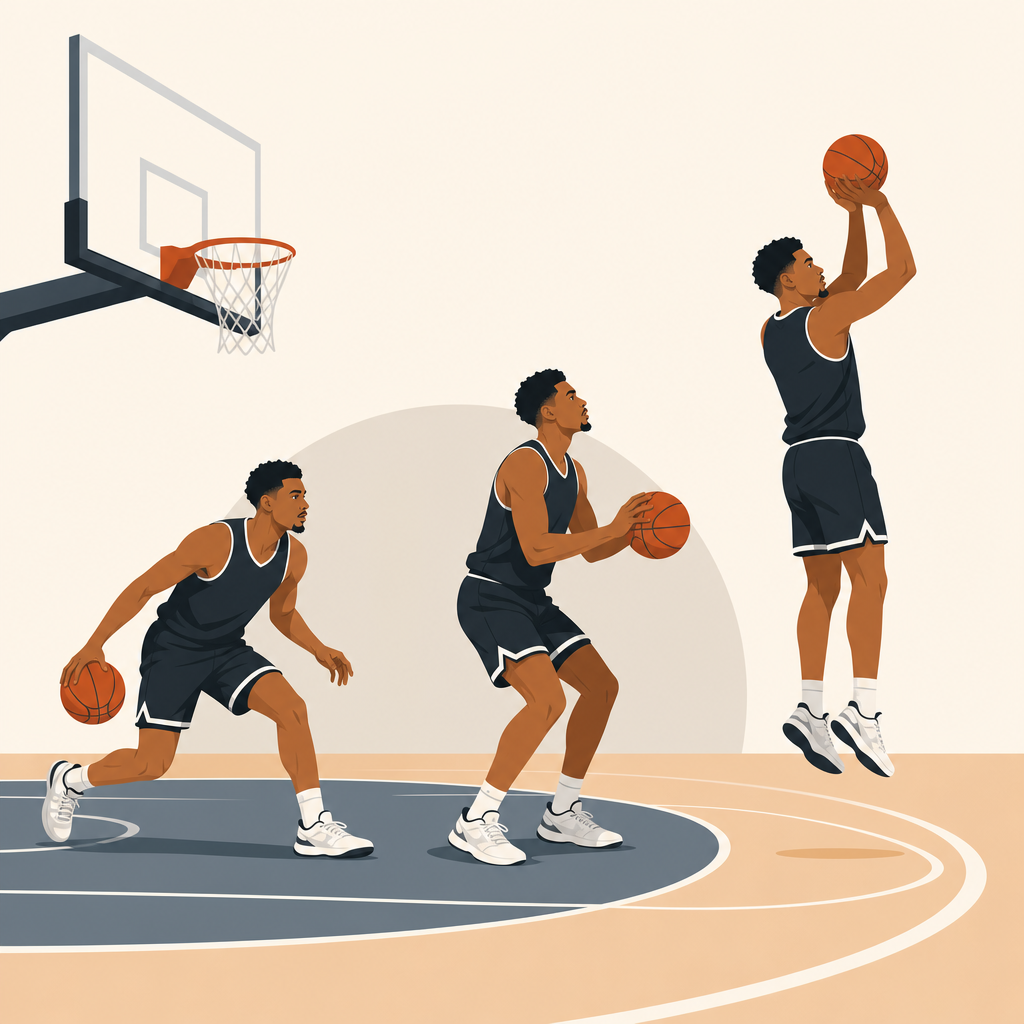
How to shoot off the dribble starts with understanding what a pull-up jumper really is: a shot taken immediately after one or more dribbles, usually after creating separation from a defender, gathering into balance, and rising straight up into a controlled release. For guards, the pull-up jumper sits at the center of modern scoring because defenses are built to take away easy layups and clean catch-and-shoot looks. When I train guards, this is the skill that most often separates a player who can function in drills from one who can create points in games. A reliable pull-up punishes drop coverage, beats late switches, and forces help defenders to step higher, which opens passing windows and driving lanes.
In practical terms, shooting off the dribble combines ball handling, footwork, deceleration, alignment, timing, and decision-making. It is not just “dribble, stop, shoot.” Good shooters control pace into the move, keep their chest organized over their hips, gather the ball early enough to be efficient, and land in balance. The best guards also understand shot context. A free-throw-line pull-up against a retreating big is usually efficient. A fading, contested long two after overdribbling usually is not. Learning that distinction matters as much as refining mechanics.
This Basketball Skills shooting hub covers the full picture: how to build your base, how to use your feet on one-dribble and two-dribble pull-ups, how to read defenders, how to train game-speed reps, and how to fix common misses. If you are building out your shooting development, think of this page as the anchor article that connects closely to form shooting, footwork, finishing, ball-screen reads, midrange scoring, and three-point shot creation. Guards who master the pull-up jumper do not just score more. They become harder to guard in every area of the floor.
Why the pull-up jumper matters for guards
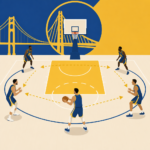
The pull-up jumper matters because it answers the most common defensive concession in basketball: space given to stop the drive. In youth, high school, college, and pro settings, on-ball defenders are taught to contain penetration first. Bigs in pick-and-roll often play drop coverage, which means they protect the rim and invite a short jumper. If a guard cannot make that shot, defenders sit lower, go under screens, and shrink the court. If a guard can make it consistently, the entire geometry changes.
That effect shows up in real games. A guard who can come off a ball screen, take two hard dribbles, stop at the nail, and rise into a balanced jumper forces the big to play higher next possession. Once the big steps up, pocket passes, lobs, and downhill drives open up. This is why strong pull-up shooters often improve team offense beyond their own scoring. The shot creates pressure before the ball even reaches the paint.
It also travels across levels. At lower levels, a pull-up from 12 to 17 feet may be the most available shot on the floor. At higher levels, the same skill expands to the elbows, the nail, and behind the arc. The movement principles remain the same: win the defender’s feet, stop on balance, keep your eyes stable, and release on time.
Core shooting mechanics: balance, alignment, and release
Before you work on advanced off-the-dribble shooting, your base mechanics must hold up under movement. I teach three priorities: balance, alignment, and repeatable release. Balance means your hips and chest are stacked well enough that your upward force goes through the shot instead of drifting left, right, or backward. Alignment means your feet, knees, hips, shooting shoulder, and ball path are organized toward the target in a way your body can repeat. Release means the ball leaves your hand with clean rotation, a consistent launch angle, and full extension without strain.
For most guards, slight foot turn is normal and often helpful. Many right-handed shooters naturally set the right foot a bit behind the left, which clears the hip and shoulder line. What matters is not perfectly squared toes; it is whether the ball can travel from gather to shot pocket to release without crossing your face or forcing extra motion. The most efficient pull-up mechanics are compact. The ball should not drop to the waist after the gather, and the guide hand should stabilize rather than push.
Lower-body rhythm is equally important. Good pull-up shooters absorb force on the stop, then convert that stop into vertical lift. If your head bounces or your knees collapse inward, your release timing will vary. Watch strong guards at any level and you will notice the same pattern: quiet upper body, stable eyes, smooth rise, held follow-through, balanced landing. Those are the non-negotiables.
Footwork for one-dribble and two-dribble pull-ups
Footwork creates the shot. On a one-dribble pull-up going right for a right-handed shooter, a common pattern is right-hand dribble, quick gather, left-right stop, then straight up. Going left, many players prefer inside-out footwork with a left-right or hop stop depending on speed and angle. There is no single universal pattern, but there are standards. Your last dribble must be low enough to control. Your gather must happen before the ball floats. Your feet must land under your center of mass, not far in front of it.
The most common mistake I see is overstriding into the stop. Guards attack hard, then plant too wide, which sends momentum forward and turns the jumper into a fade. Instead, think of deceleration in layers. The second-to-last step drops your speed. The last step organizes balance. The rise happens only after you have accepted the floor. This is why elite trainers spend so much time on “stop quality.” Shot quality often begins there.
| Game situation | Preferred footwork | Why it works | Common error |
|---|---|---|---|
| Open space, one hard dribble | 1-2 stop | Fast into balance, easy to repeat | Leaning forward on the plant |
| Coming off a ball screen | Inside foot stop | Keeps shoulders compact around the screener | Gathering too high and exposing the ball |
| Snake dribble into the lane | Hop stop | Lets both feet hit together and square quickly | Landing too wide to shoot on line |
| Retreat dribble to create space | Punch step into 1-2 | Changes rhythm and punishes pressure defense | Fading sideways after separation |
Train both 1-2 stops and hop stops. The 1-2 is often easier for rhythm and directional speed. The hop stop is useful when you need to square fast after contact or lateral movement. Great guards can use both without thinking. That flexibility becomes essential in late-clock situations and ball-screen play.
Creating separation before the shot
The pull-up jumper is easiest when the defender’s feet are compromised. Separation does not always mean a dramatic step-back. More often, it comes from pace, angle, and the threat of the drive. If you attack a defender’s top foot, get them to open their hips, and then stop on a dime, you have created enough space. A shoulder dip, hesitation, in-and-out dribble, or crossover can all trigger that reaction if used at the right moment.
I prefer teaching guards to win with simple moves first. One hard setup dribble and a violent change of speed usually creates more usable separation than a series of unnecessary combos. Against a defender trailing over a screen, the window may be at the foul line. Against a switch, it may be one retreat dribble into a rise-up three. Against a defender going under, the answer can be immediate re-load behind the screen into a pull-up from deep. The move must match the coverage.
Screen reads matter here. If the big is in drop, reject the temptation to drive all the way into length every time. Hit the pocket of space. If the on-ball defender dies on the screen and the big stays low, the elbow or nail pull-up is the correct basketball play. If both defenders jump high, the shot may be gone, but the pull-up threat still worked because it shifted the defense.
Reading defenders and choosing the right pull-up
Good shot creation is decision-making under speed. The first read is your defender’s chest. If they are backpedaling, the pull-up is available. If they are attached on your hip, you may need one more dribble or a screen angle change. The second read is help position. If the low man is loaded early, a floater or kick-out may beat the pull-up. The third read is clock and score. A clean 15-footer early in the clock may be fine for a strong midrange shooter, but a contested long two with a full possession available is usually poor value.
This is where film study helps. Break down guards who score from the dribble without wasting movement. Notice how often they shoot because the defender conceded space, not because they forced a tough make. They are reading the defender’s feet, the screen defender’s depth, and the help side at the same time. Then they get to a spot they have practiced hundreds of times.
Shot selection should also reflect your range. If your percentages drop sharply outside 17 feet off the bounce, do not treat every pull-up as interchangeable. Own your best zones first. Many effective guards build from paint touch to short pull-up, then elbow, then long two, then pull-up three. The progression matters.
Training drills that transfer to games
To improve off-the-dribble shooting, drills must include pace, reads, and constraints. Start with form-based movement shooting: one dribble right, one dribble left, stop on balance, five makes from each elbow. Then add game angles: off a cone as a screen, snake dribble to the nail, retreat dribble into re-attack, side pick-and-roll pull-up. Make goals should be specific. For example, 7 of 10 from each spot at game speed before moving on.
Use progression. Stationary makes build confidence, but transfer comes from variability. I like three layers. Layer one is scripted reps with perfect footwork. Layer two adds live pace and a guided read, such as “big in drop, stop at the elbow.” Layer three adds a defender, coach call, or clock. If your workout never includes decision pressure, you are training mechanics without the real skill.
Track outcomes honestly. Separate uncontested drill makes from contested game-speed makes. Chart left pull-ups, right pull-ups, elbow pull-ups, nail pull-ups, and pull-up threes. Tools such as Noah Basketball, HomeCourt, and simple shot charts can reveal patterns in arc, depth, and location. In my experience, players improve faster when they can see that most of their misses come from drifting left, short misses off poor deceleration, or flat shots after high gathers.
Common mistakes and how to fix them
Most missed pull-up jumpers come from one of five issues: poor deceleration, loose gather, inconsistent shot pocket, drifting, or rushed decision-making. Poor deceleration causes front-rim misses and fades because too much forward momentum survives into the release. Fix it with stop drills, especially one-two stick finishes where you land and hold. A loose gather causes the ball to float away from the body, delaying the release. Fix it by picking the ball up earlier and tighter with the eyes already on target.
Inconsistent shot pocket often appears when players drop the ball after the gather to “load power.” That extra dip may work in open gym, but defenders close it in games. Keep the ball between chest and shoulder line unless your personal mechanics require slight variation. Drifting usually comes from foot placement that is too wide or misaligned. Use tape lines, lane lines, or cones to train straight stops and straight landings.
The last issue is mental. Guards often predetermine the pull-up. They come off a screen already committed to shooting, ignore the tag defender, and take a low-value attempt. The fix is simple: build read language into workouts. Call out “shot,” “floater,” or “kick” late in the rep so the player must process before acting.
Building this shooting skill into a complete scoring package
The best pull-up jumper tutorial for guards does not end with mechanics. The shot must connect to the rest of your scoring and playmaking. Once defenders respect your pull-up, your handle becomes more dangerous, your passing windows widen, and your finishing improves because rim protectors cannot wait as deep. That is why shooting should be developed as part of a complete Basketball Skills plan, alongside ball handling, finishing through contact, change of pace, pick-and-roll reads, and catch-and-shoot range.
For long-term progress, keep your development organized. Build a weekly shooting routine with form work, footwork reps, game-speed pull-ups, and live decision drills. Study your best spots. Learn which coverages invite the shot. Track your percentages honestly and adjust. The pull-up jumper rewards precision, not random volume.
If you want to become a guard defenses must chase, start with balance and stop quality, then layer in footwork, separation, reads, and pressure reps. Master the simple pull-up first, and the advanced counters will come faster. Use this page as your shooting hub, revisit each section during training, and turn every dribble into a scoring threat.
Frequently Asked Questions
What is a pull-up jumper, and why is it so important for guards?
A pull-up jumper is a shot taken directly off the dribble after a player creates enough space to rise into a balanced, controlled jump shot. Unlike a catch-and-shoot jumper, where the feet and hands are often set in advance, the pull-up requires a guard to handle the ball, read the defense, stop efficiently, gather under control, and shoot in one smooth sequence. That makes it one of the most valuable scoring tools in the game, especially for guards who spend a large part of each possession attacking defenders with the ball in their hands.
For modern guards, the pull-up jumper matters because defenses are designed to take away the easiest scoring opportunities. Help defenders protect the rim, bigs sit in drop coverage, and on-ball defenders fight hard to contest spot-up threes. The pull-up punishes all of that. If a defender backs up to stop the drive, the guard can stop short and shoot. If a screen creates even a small cushion, the guard can rise before the defense recovers. If help defenders load up in the lane, the pull-up becomes the answer that keeps the defense from crowding every drive.
Just as importantly, a good pull-up jumper changes the way defenders guard you. Once a defender knows you can stop on a dime and make shots off the bounce, they can no longer simply retreat to contain penetration. That opens up your first step, makes hesitation moves more effective, and creates better passing windows because help defenders have to respect your scoring threat at multiple levels. In other words, the pull-up jumper is not just a shot; it is a shot that unlocks the rest of a guard’s offensive game.
How do you shoot off the dribble without losing balance or power?
Shooting off the dribble with balance starts with the feet long before the ball leaves your hand. Most players miss pull-ups not because their shooting form is broken, but because they arrive at the shot off-balance, too fast, or with poor lower-body positioning. The key is learning how to go from attack mode to shot mode without rushing the transition. That means staying low on the dribble, keeping your chest under control, and using your last one or two steps to gather your body into a stable base.
On the gather, your feet should land underneath you or slightly staggered in a way that allows you to go straight up, not drift sideways or fade backward unnecessarily. Your hips and shoulders should be organized to the rim as early as possible. A lot of guards make the mistake of letting the dribble pull them off line, then trying to fix everything in the air. Strong pull-up shooters do the opposite: they get organized on the floor first, then rise vertically. Think of it as braking under control rather than stopping abruptly and hoping your upper body can save the shot.
Power also comes from sequencing. The ball should move from dribble to gather to shooting pocket in one connected action. If the ball drops too low, swings wide, or pauses, rhythm disappears. Your legs provide the lift, your core keeps you stable, and your shooting motion stays compact. For most guards, the best cue is simple: slow your body down just enough to be fast into the shot. When your feet are quiet, your chest is steady, and your rise is straight up, the jumper feels easier, repeatable, and far more accurate under game speed.
What footwork should guards use on a pull-up jumper?
Footwork is the foundation of every reliable pull-up jumper, and guards need more than one stopping pattern because game situations change. The two most common options are the 1-2 stop and the hop stop. On a 1-2 stop, you plant one foot and then the other in rhythm as you gather into the shot. This often feels natural when pulling up after a hard drive or when attacking at an angle. It helps many players line up their hips and shoulders smoothly, especially in the mid-range. On a hop stop, both feet land nearly at the same time, which can be extremely effective when you need a quick, compact stop and immediate rise, especially off a tighter dribble move or in space off a ball screen.
The best choice depends on your body control, the direction of your drive, and how the defender is reacting. If you are moving laterally or changing direction, a hop can help square you up quickly. If you are attacking downhill and want a more natural flow into the jumper, a 1-2 may feel cleaner. Neither is automatically better. What matters is whether the footwork allows you to stop on balance, stay aligned, and go straight into your shooting motion without extra movement.
Guards should also pay attention to deceleration footwork. Great pull-up shooters are not just quick; they are elite at slowing down. That means sinking the hips, taking efficient final steps, and avoiding long, uncontrolled strides that carry momentum into a fade or lean. A useful training focus is to practice stopping from different speeds and angles while landing in the same balanced shooting position every time. When your footwork is dependable, your shot becomes much more trustworthy under pressure, because you are not rebuilding your base differently on every rep.
How can guards create enough separation from defenders to get a clean pull-up jumper?
Creating separation for a pull-up jumper is less about flashy dribble moves and more about timing, pace, and the ability to make defenders react. The best guards understand that the pull-up is often available the moment a defender shifts weight the wrong way, goes under a screen, opens their stance to protect against the drive, or retreats to contain penetration. Separation does not always mean several feet of open space. Sometimes it is just enough room to stop, rise, and get the shot off before the contest arrives.
One of the most effective ways to create that window is by changing pace. If every dribble is at the same speed, defenders can stay in rhythm with you. But when you attack hard, hesitate, then burst again, the defender has to keep resetting their feet. That is where the pull-up becomes dangerous. A simple in-and-out dribble, crossover, or hesitation can be enough if the defender is forced to slide, open up, or backpedal. Ball screens are another major source of separation. If the defender gets clipped or the big defender stays back, the guard must recognize that pocket instantly and go right into the shot.
Body positioning matters too. Strong guards keep the defender on their hip, use their shoulders to protect the ball, and stop before the defender can fully recover. They do not wait for perfect space; they shoot from the advantage they created. To improve this in training, practice pull-ups after game-like moves at game-like pace, with a focus on reading an imaginary or live defender. Learn what the shot looks like when a defender is trailing, when they are under the screen, and when they are trying to cut off the lane. The more clearly you recognize those moments, the more consistently you will find clean pull-up opportunities in real games.
What are the most common mistakes players make when learning how to shoot off the dribble?
The most common mistake is rushing. Many players think a pull-up jumper has to feel hurried because it happens off the dribble, but rushed is not the same as quick. A good pull-up is efficient, not chaotic. Players often attack too fast, gather too high, and shoot before their feet and shoulders are organized. The result is a shot that drifts, fades, or comes off the hand with inconsistent touch. The fix is learning how to decelerate into the shot so the body is under control before takeoff.
Another major mistake is poor shot selection disguised as skill work. Just because a player can technically shoot off the dribble does not mean every off-the-bounce jumper is a good one. Guards need to understand spacing, defender position, time on the clock, and their own shooting range. Pulling up over a set defender with no advantage is very different from rising into an open elbow jumper after forcing the defender backward. Great guard play combines shot-making ability with decision-making discipline.
Players also struggle when they separate the dribble move from the shot itself. The handle might be sharp, but the transition into the gather is loose. The ball may come too far away from the body, the off-hand may interfere, or the shot pocket may be inconsistent from rep to rep. On top of that, many players practice pull-ups without enough realism. They shoot from the same spot, at the same speed, with no change of direction and no defensive read. That can build comfort, but not true game readiness.
The best way to correct these mistakes is to train the full skill as one connected action: attack, read, stop, gather, and shoot. Emphasize balance, vertical lift, compact mechanics, and realistic repetitions from the spots guards actually use in games. Film can help as well, because it often reveals issues players do not feel in the moment, such as drifting left, leaning back, or picking the ball up too late. When guards clean up those details, their pull-up jumper becomes more accurate, more repeatable, and far more effective against real defensive pressure.