
How to shoot a basketball with better accuracy starts with understanding that great shooting is repeatable, not random. Players who make shots under pressure do not rely on feel alone; they build mechanics, footwork, rhythm, and decision-making until each rep looks almost identical. In practical terms, shooting accuracy means sending the ball on the right line, with the right arc, from a balanced base, using a consistent release. If you want more made jumpers in games, you need more than generic advice like “follow through” or “bend your knees.” You need a system.
In my own work with shooters, the biggest mistake I see is treating accuracy as one skill instead of several connected skills. A player might have a clean release but poor shot preparation. Another may square up well but rush the dip and lift. Others shoot well in workouts and poorly in games because the drill environment never trained timing, movement, or fatigue. That is why this basketball shooting hub covers the full shooting picture: form, balance, footwork, shot readiness, range building, game-speed reps, and feedback.
Shooting matters because it changes everything else on the floor. Accurate shooters create spacing, force longer closeouts, open driving lanes, and punish help defense. At every level, from youth to college to the NBA, efficient shooting is one of the fastest ways to raise offensive value. Coaches can trust a player who consistently makes open shots and understands shot selection. Teammates also play differently next to a shooter; they cut harder, screen with purpose, and kick the ball out earlier because they expect points from the pass.
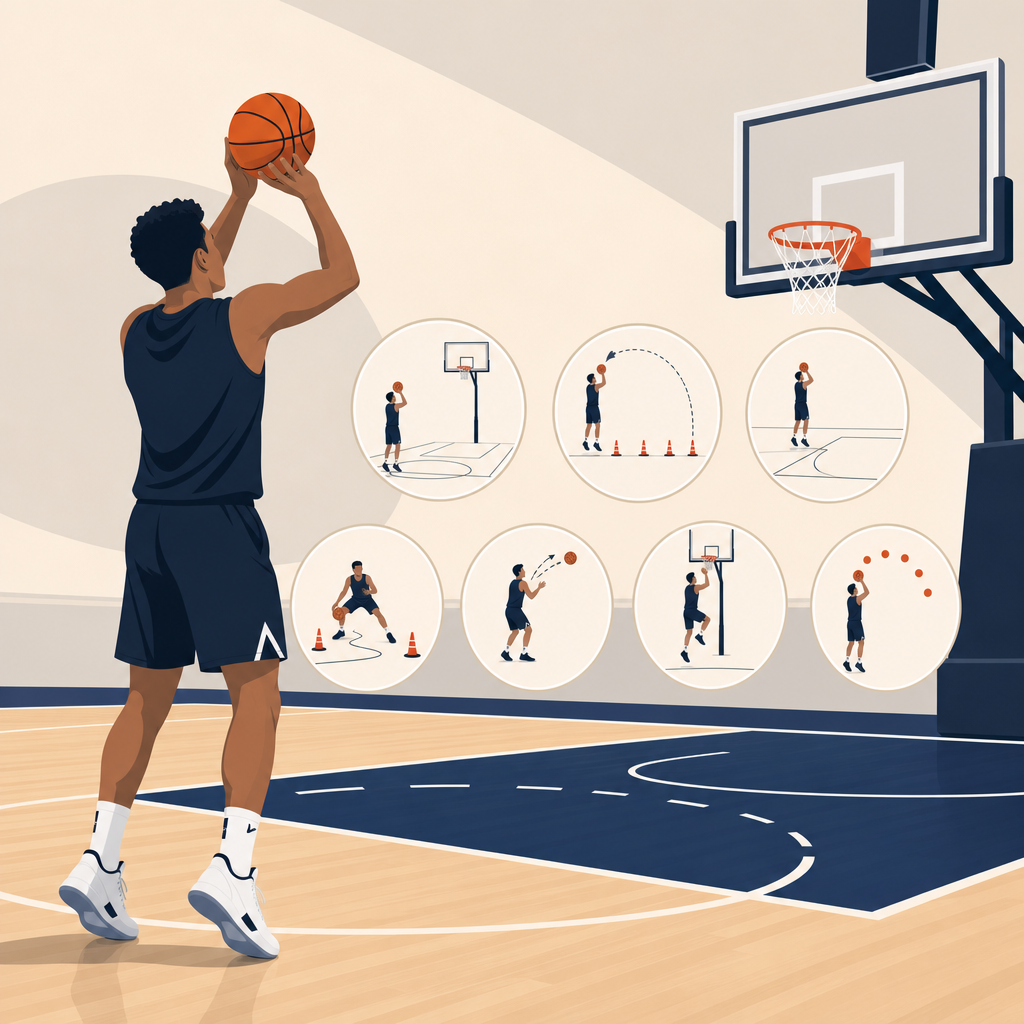
This article focuses on seven drills NBA players actually use, either in team workouts, pregame routines, or offseason skill sessions. These drills are popular because they train real shooting fundamentals instead of empty volume. They also connect naturally to the broader Basketball Skills topic, especially footwork, finishing, ball handling into pull-ups, and game IQ around spacing. If you are building a serious shooting plan, think of this page as your central guide to the Shooting category: the mechanics you need, the drills worth prioritizing, and the standards that separate casual reps from effective practice.
What Accurate Shooting Really Depends On
Before drills, define the non-negotiables. Accurate shooting begins with stance width, balance through the feet, and efficient alignment from hips to shoulder to shooting hand. Most elite shooters use a slight turn rather than being perfectly square, because that allows the elbow and wrist to stack naturally. The guide hand stabilizes the ball but does not push it. The shooting hand gets under and slightly behind the ball. The release should be smooth, with full wrist flexion and relaxed fingers finishing down toward the rim.
Arc and entry angle matter more than many players realize. Studies from systems such as Noah Basketball have shown that shots entering around the mid-40-degree range generally create a friendlier window at the rim than flatter misses. Depth matters too. A shot that lands a few inches deep in the basket often has better make probability than one that barely clears the front rim. This is why high-level coaches track not just makes and misses, but arc, depth, and left-right accuracy. Good mechanics produce useful ball flight.
Footwork is the hidden driver of many shooting slumps. NBA trainers spend enormous time on the catch, the hop, the one-two step, and body control out of cuts. If your feet arrive late, your release will be rushed. If your base is too narrow, your shoulders sway. If your momentum drifts sideways, your miss pattern often follows. The best shooters look calm because their lower body organizes the shot before the ball reaches the set point. When players say they found their rhythm, that usually means their feet and hands synced again.
Just as important, accuracy must survive context. Open gym form shooting is useful, but games demand fast preparation, variable passes, closeouts, screens, relocation, and fatigue. That is why the best shooting development moves from stationary precision to movement, then to pressure and decision-making. The seven drills below follow that logic. Each one has a purpose, a standard, and a common error to avoid.
Drill 1: Form Shooting Close to the Rim
Every serious shooter I have worked with comes back to close-range form shooting, including pros. The point is not to make easy shots. The point is to remove power from the equation so mechanics become visible. Stand a few feet from the basket, use one hand when appropriate, and focus on ball path, wrist snap, quiet guide hand, and balanced finish. Many NBA players begin workouts with 25 to 50 makes from different short spots before taking a single three.
This drill works because it exposes flaws quickly. If the ball spins sideways, the guide hand is probably interfering. If the shot sprays left or right, alignment or release timing is off. If the player leans back even from short range, the issue is often core control or a habit of generating power inefficiently. A strong benchmark is perfecting swishes from the center, left, and right sides before stepping back. Not every rep must be one-handed, but every rep should feel clean and effortless.
Common error: players rush through this part to “get to real shooting.” That is backwards. Close-range form shooting is where real shooting starts, because it gives immediate feedback. If you are coaching younger players, use cues like “freeze the finish,” “eyes on target early,” and “land where you jumped.” If you are advanced, film from the side and front to check set point, elbow path, and trunk stability.
Drill 2: Around-the-World Spot Shooting With a Make Standard
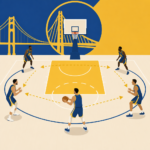
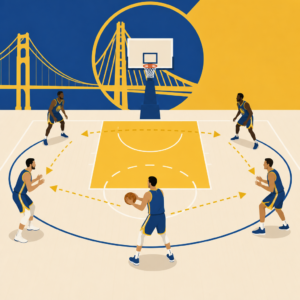
Classic spot shooting remains a staple because it builds volume from game-relevant locations. The NBA version is not casual. Players work from corners, wings, and top, often with a passer, and they must hit a target number before moving on. For example, make 10 from each of five spots, or make 7 in a row from each. The standard matters because pressure starts when a miss resets the count or extends the set.
Use this drill to build accuracy on catch-and-shoot attempts, which remain one of the most valuable shots in basketball. According to league tracking trends, efficient offenses consistently generate corner threes and above-the-break catch-and-shoot looks. Spot work teaches preparation: hands ready, feet set before the catch, quick dip, direct rise, and full hold. It also helps identify weak zones. Many right-handed players are comfortable on the left wing and inconsistent in the right corner because their foot alignment changes.
Pregame routines often include a version of this because it sharpens confidence without overloading the legs. The key is to keep every rep game-like. Do not stare at the ball before loading. Call for the pass, step into it, and shoot on rhythm. If you miss repeatedly from one spot, adjust process before changing aim. Usually the issue is rushed feet, not the target itself.
Drill 3: One-Two Step and Hop Footwork Series
NBA shooters drill footwork separately because not every catch is the same. Sometimes the fastest, most balanced choice is a hop into the shot. Other times a one-two step gives cleaner momentum, especially on movement catches or when drifting into space. In this series, start without defense. Have a partner pass from different angles while you alternate between hop footwork and one-two footwork from both wings, corners, and the top.
The purpose is to make shot preparation automatic. Klay Thompson has long been cited as a model for rapid, efficient footwork on the catch, while players like Devin Booker and Stephen Curry constantly organize their feet out of movement before the release. Your feet should hit the floor in a pattern that matches the pass and your body angle. The drill is not just about speed; it is about arriving on balance with your chest and shooting shoulder aligned to the rim.
Track makes, but also track clean catches and balanced landings. If you cannot hold your finish for a second, the rep likely had unnecessary movement. This is one of the biggest separators between average high school shooters and advanced players: the advanced shooter is often ready before the ball arrives.
Drill 4: Chair Curl, Fade, and Relocation Shooting
Movement shooting is where many game points are won. Set up chairs or cones to simulate screens. Curl into a jumper, fade to the corner, or relocate behind the arc after a pass drive. NBA guards and wings do this constantly because few game shots are perfectly static. The drill teaches how to lower your center of gravity, plant efficiently, and gather the ball while moving at speed.
For a curl, come tight off the chair, show your hands early, catch on balance, and go straight up. For a fade, create separation with your feet, then stop your momentum before lifting. For a relocation, pass, slide to a new window, receive the return pass, and shoot immediately. Duncan Robinson, Desmond Bane, and many elite movement shooters make their living on these details. Their skill is not just release speed. It is route precision and body control.
Players often miss this drill long because they carry too much forward momentum. The correction is usually earlier deceleration and cleaner inside-foot planting. Start with predictable routes, then add a coach calling the pattern late so you must react.
Drill 5: Off-the-Dribble Pull-Up Progressions
A complete shooting hub must include pull-ups because defenders run shooters off the line. NBA players train one-dribble and two-dribble pull-ups going both directions, from multiple starting angles, with emphasis on separation, deceleration, and vertical lift. Begin with simple setups: attack from the wing, one hard dribble, plant, rise, and hold the finish. Then add crossovers, step-backs, and snake dribbles out of pick-and-roll reads.
What matters here is stopping under control. Many misses on pull-ups come from poor braking, not poor touch. Your hips should sink before the shot, your last dribble should be purposeful, and the ball must move quickly from pocket to release. Midrange pull-ups still matter because defenses concede them selectively, especially against drop coverage. Players like Kevin Durant, Shai Gilgeous-Alexander, and Jalen Brunson punish that space because they can get balanced from live dribbles.
| Drill | Main Skill | Best Use | Common Mistake |
|---|---|---|---|
| Form shooting | Release consistency | Warm-up and mechanics reset | Guide hand pushing |
| Spot shooting | Catch-and-shoot accuracy | Volume from game spots | Rushing the feet |
| Footwork series | Shot preparation | Different catch types | Arriving off balance |
| Movement shooting | Screens and relocation | Wing and guard scoring | Drifting through release |
| Pull-up progressions | Dribble into jumper | Beating hard closeouts | Poor deceleration |
| Free throws | Routine and focus | Pressure simulation | Changing mechanics |
| Fatigue shooting | Game endurance | Late-workout transfer | Sacrificing form for speed |
Keep this progression honest by setting direction-specific goals, such as 15 makes going left and 15 going right from each elbow area. Most players have a stronger side. The drill reveals it fast and gives you a plan to close the gap.
Drill 6: Pressure Free Throws Between Sets
Free throws are the purest measure of shooting discipline because the environment is controlled and the standard is visible. NBA players commonly shoot free throws between drill blocks, not just at the end, because this simulates the need to calm down while breathing hard. The rule can be simple: make 10 in a row before leaving, or hit 2 before returning to the next station. Miss, and there is a consequence such as a sprint or a reset.
This drill matters beyond the stripe. It trains routine. Good routines reduce noise by keeping the same breath, same dribble count, same visual focus, and same tempo. Over time, that consistency transfers to jump shooting. If a player’s free throw percentage lags badly behind practice touch, mechanics or concentration are probably changing under pressure. Strong shooters usually have a repeatable pre-shot pattern, not a different idea on every attempt.
Use a notebook or app to log percentage over weeks, not days. Short-term variance can mislead you. Long-term trends tell the truth.
Drill 7: Fatigue Shooting With Timed Makes
Games do not care how well you shoot when fresh. Late-clock possessions and fourth-quarter minutes demand mechanics that hold up under fatigue. That is why NBA conditioning often includes timed shooting tests, such as making 25 threes in two minutes with a rebounder, or alternating corners and wings for a target score. The goal is not reckless speed. The goal is to sustain efficient mechanics while the heart rate rises.
I like fatigue shooting at the end of a workout because it exposes what breaks first. Some players lose lift and miss short. Others widen left-right because their base gets sloppy. Others stop preparing their hands and fumble the catch. This drill gives honest feedback on whether your shooting form is truly owned. If accuracy collapses completely under moderate fatigue, your current mechanics may require too much effort or your conditioning may be limiting your transfer.
To keep quality high, use a realistic threshold. For example, 20 makes from five perimeter spots in three minutes is demanding but measurable. If percentages drop sharply, reduce speed slightly and restore form before building back up.
How to Build a Weekly Shooting Plan That Actually Improves Accuracy
The best shooting plan is structured, measurable, and sustainable. Divide the week into mechanics work, catch-and-shoot volume, movement shooting, pull-ups, and pressure reps. A useful template for many players is two lighter skill days, two high-volume shooting days, and one mixed game-speed day. Each session should begin with form shooting and end with pressure or fatigue work. Track makes, locations, and how the misses happen. Short, left, right, and long each point to different problems.
As this Basketball Skills hub expands, link your shooting work to adjacent development. Tight footwork supports better shooting. Better passing creates cleaner shooting windows. Better conditioning preserves mechanics late. Better film study improves shot selection. The players who improve fastest are not always the ones who shoot the most; they are the ones who practice with clear standards, review what the reps mean, and repeat drills that solve the exact problems showing up in games.
To shoot a basketball with better accuracy, build from the rim outward, train your feet as seriously as your release, and use drills that reflect real possessions. The seven drills here work because NBA players trust them for a reason: they sharpen mechanics, improve preparation, and hold up under pressure. Start with form, progress to spots and movement, add pull-ups, and test everything with free throws and fatigue. If you want better shooting results, stop chasing random tips and start following a plan. Pick three drills from this guide, track your makes for four weeks, and turn your shooting practice into measurable improvement.
Frequently Asked Questions
1. What is the fastest way to improve basketball shooting accuracy?
The fastest way to improve shooting accuracy is to stop treating every shot the same and start prioritizing repeatable mechanics. Most players want quick results, but accuracy improves fastest when you build a consistent base first: balanced feet, stable hips and shoulders, proper hand placement, a clean upward path, and the same release every time. If your feet are different on every rep, your timing changes. If your guide hand interferes, the ball leaves your hand on a different line. If your balance shifts backward or sideways, your misses become unpredictable. That is why the quickest path is usually not taking more random jumpers, but doing focused form shooting, one-two footwork reps, and catch-to-release drills that remove unnecessary variation.
A smart progression starts close to the basket. Begin with short-range form shots to groove alignment, touch, and follow-through. Then add controlled footwork, such as stepping into the shot the same way on every rep. After that, progress to game-speed catches, movement into space, and decision-based drills where you shoot after cutting, relocating, or changing direction. NBA players use this type of layered practice because it trains accuracy under realistic conditions instead of creating a practice-only shot. If you want fast improvement, measure quality as much as quantity: track makes, misses, left-right patterns, short-long misses, and how often your mechanics stay intact when you speed up. The combination of technical repetition and honest feedback is what usually produces the fastest visible jump in shooting percentage.
2. How often should I practice shooting drills to become a more accurate shooter?
For most players, shooting accuracy improves best with frequent, structured practice rather than occasional marathon sessions. A good target is four to six shooting sessions per week, even if some of those workouts are shorter. Daily exposure helps your body build a consistent movement pattern, which is exactly what accurate shooting requires. The goal is not just to get shots up, but to make your setup, rhythm, and release feel automatic. Short, high-quality sessions often outperform long, unfocused ones because fatigue can break down mechanics and teach bad habits if you are not paying attention.
A practical weekly plan might include two technique-focused days, two game-speed shooting days, and one or two lighter touch sessions. On technique days, spend more time on form shooting, balance, release path, and footwork precision. On game-speed days, work on drills that mimic real attempts: catch-and-shoot, relocation threes, one-dribble pull-ups, and shots after conditioning or decision-making. Lighter days can focus on touch around the rim, free throws, and rhythm shooting from mid-range. The key is consistency over time. If you only practice when you feel motivated, progress will come slowly. If you train regularly with intent, your mechanics become more reliable under pressure, and that is when accuracy starts showing up in games instead of just workouts.
3. Which shooting drills do NBA players actually use to improve accuracy?
NBA players use drills that sharpen repeatability, timing, and shot quality under realistic conditions. While exact routines vary by player and shooting coach, the most common categories are form shooting, footwork shooting, catch-and-shoot reps, movement shooting, off-the-dribble shooting, and pressure-based shooting. Form shooting is foundational because it cleans up the release, wrist action, arc, and alignment. Footwork drills teach players to arrive on balance, whether they are stepping into a one-two, hopping into a shot, or relocating around the perimeter. Catch-and-shoot drills build readiness and rhythm so the body and ball are connected the moment the pass arrives.
Movement drills are especially valuable because they simulate how shots happen in games. NBA players rarely stand still for perfect passes all day. They sprint off screens, drift to the corner, lift on penetration, relocate after passing, and shoot after changing speed. That is why drills like curl-to-shot, flare-to-shot, transition pull-up series, and relocate shooting are so common. Off-the-dribble work matters too, because defenders force adjustments. Players practice one-dribble pull-ups, side-step jumpers, step-backs, and escape dribbles to maintain shot line and balance even when the defense takes away the first option. Finally, many pros finish sessions with pressure elements such as make streaks, timed rounds, or consequence-based free throws. These drills matter because they train not just shooting form, but the ability to repeat that form when the heart rate rises and the rep feels important.
4. Why do I shoot well in practice but miss in games?
This usually happens because your practice environment does not truly prepare you for game demands. In casual workouts, players often shoot from comfortable spots, at comfortable speeds, with no defender, no fatigue, and no decision to make. In a game, everything changes. Your feet are not always perfectly set, the pass may be high or late, a defender may close out hard, and you may be shooting after sprinting, absorbing contact, or thinking about the next read. If your mechanics only hold up in calm situations, your accuracy will drop when game pressure exposes that inconsistency.
The fix is to make practice look more like competition. Keep your form work, but spend a meaningful part of each workout on game-speed reps. That means catching on the move, shooting after cuts, changing direction into your shot, and practicing after physical fatigue. Add constraints: limited time, score goals, make streak requirements, and situational reads. Track not just how many shots you take, but how many are taken on balance, with clean footwork, and with your normal release. You should also review shot selection. Many players blame mechanics when the bigger issue is taking rushed, contested, or off-rhythm shots they have not trained enough. When your training includes realistic footwork, pace, and pressure, the gap between practice and game shooting gets much smaller.
5. What are the most important mechanics to focus on when learning how to shoot a basketball with better accuracy?
The most important mechanics are balance, alignment, consistent hand placement, a smooth upward motion, and a repeatable release. Balance starts from the ground up. Your feet should help you stay stable and organized, not force you to correct yourself in midair. Alignment matters because the ball follows the line your body creates; if your feet, hips, shoulders, and shooting hand are fighting each other, accuracy becomes harder to maintain. Hand placement is equally important. Your shooting hand should control the ball with comfort and consistency, while the guide hand supports without pushing or twisting the release. A lot of inaccurate shooters are not far off mechanically; they simply add small variations from rep to rep that change ball flight.
The release itself should feel fluid, not forced. You want a clean lift from your shooting pocket into a soft, controlled follow-through, with enough arc to improve margin for error. Your wrist snap and finger finish should be consistent, and your elbow path should support a straight shot line rather than flare unnecessarily. Just as important is rhythm: accurate shooters connect their lower body and upper body smoothly, so power travels efficiently without extra strain. If you are trying to fix your shot, focus on one or two key adjustments at a time instead of overloading yourself with ten cues. Build those adjustments through close-range reps first, then gradually move back while keeping the same mechanics. Accuracy comes from a shot that holds up at every distance and speed, not one that only works when everything is perfect.