
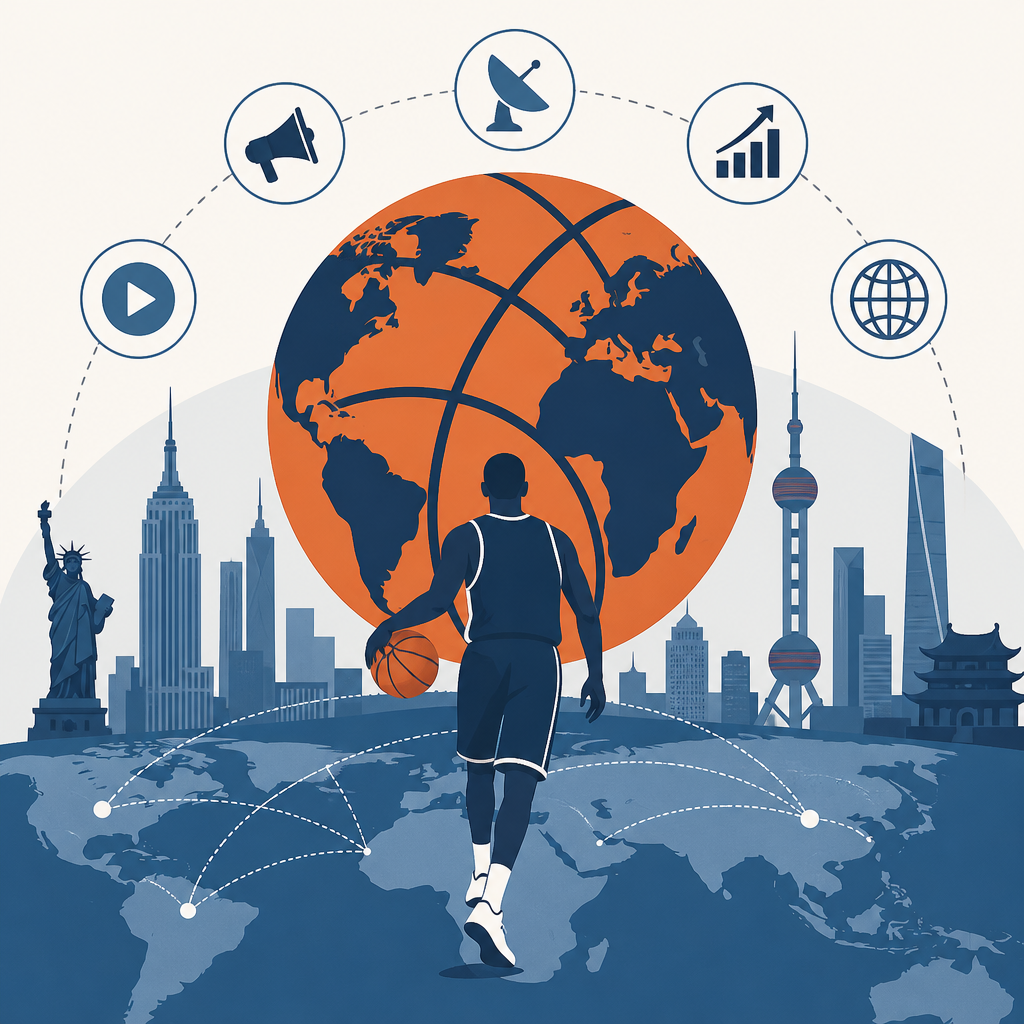
The NBA became a global business by combining elite competition with deliberate marketing, media innovation, and sustained international expansion. Global growth, in this context, means more than overseas ticket sales or a few foreign-born stars. It describes a full commercial system: worldwide broadcasting, localized digital content, international merchandise distribution, grassroots basketball development, cross-border sponsorships, and player pipelines that connect local courts in Europe, Africa, Asia, Latin America, and Oceania to the league’s main stage. As someone who has worked through sports media strategy and audience analysis, I have seen few leagues match the NBA’s consistency in turning cultural appeal into repeatable international revenue.
That transformation matters because the NBA’s business model now depends on audiences far beyond the United States and Canada. International fans buy League Pass subscriptions, follow highlights on social platforms, attend preseason and regular-season games abroad, purchase jerseys, and support sponsors that use basketball as a global advertising vehicle. The league’s value is reinforced by the fact that basketball travels well. The game is relatively inexpensive to play, easy to understand at a basic level, and adaptable to city parks, schools, and professional arenas alike. Those qualities gave the NBA a strong product, but the league’s rise was never automatic. It required decades of coordinated decisions across television, branding, licensing, grassroots development, and talent scouting.
This article serves as the main hub for NBA global growth within the broader NBA history topic. It explains how the league moved from a mostly domestic competition into an international entertainment property and sports business. To understand that shift, readers need to separate three related ideas. Marketing is how the NBA sold stars, teams, values, and lifestyle. Media is how the league distributed games, stories, and highlights through television, cable, satellite, streaming, and social platforms. International expansion is how the NBA built permanent relationships in overseas markets through events, offices, academies, partnerships, and player development systems. Together, those forces changed not only who watched basketball, but where the sport was played, monetized, and culturally embedded.
From domestic league to worldwide spectacle
The NBA’s early decades did not suggest inevitable global dominance. For much of the league’s history, professional basketball trailed other American sports in cultural standing and media power. The turning point began in the 1980s, when the rivalry between Magic Johnson and Larry Bird gave the league a cleaner television product, stronger storylines, and renewed mainstream attention. Then Michael Jordan accelerated everything. Nike’s Air Jordan line, nationally televised playoff drama, and the Chicago Bulls’ dominance created a model for global sports celebrity that went beyond team loyalty. In practical terms, Jordan helped convert NBA fandom into a lifestyle category. Fans who did not know every roster still knew the shoes, the logo, and the highlights.
The 1992 Barcelona Olympics widened the opening into a permanent lane. The United States men’s team, widely known as the Dream Team, featured NBA stars at a scale the world had never seen together. The effect was immediate and measurable in participation, merchandising, and media demand. Basketball federations around the world reported higher youth interest, and future international NBA players consistently cite those games as a formative influence. The NBA benefited because the tournament acted as a global demonstration of product quality. It showed the sport’s pace, athleticism, and star power to new audiences in one concentrated event. From a business perspective, Barcelona functioned like a worldwide brand campaign with unmatched credibility.
Once the league understood that foreign interest could be cultivated systematically, expansion became less about one-off exhibitions and more about long-term market development. That meant opening offices abroad, signing regional media rights deals, building sponsor relationships market by market, and investing in basketball ecosystems that would eventually produce viewers and players. The league did not simply export games. It exported narratives, symbols, and participation pathways.
Marketing transformed players into global brands
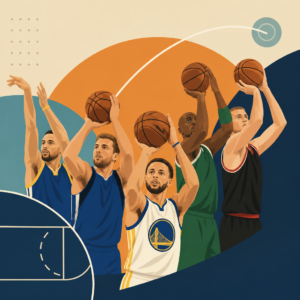
The NBA’s marketing advantage came from a simple but powerful insight: basketball stars are unusually visible. Players compete without helmets, appear in close camera shots, and influence outcomes on nearly every possession. That makes individual athletes easier to recognize than athletes in many other sports. The league and its partners leaned into that visibility, building campaigns around personalities rather than only franchises. Michael Jordan was the foundational example, but the model continued with Kobe Bryant in China, Yao Ming across Asia, Dirk Nowitzki in Germany, Manu Ginobili in Argentina, and later LeBron James, Stephen Curry, Giannis Antetokounmpo, and Luka Doncic across multiple regions.
In international markets, star-based marketing solved a practical problem. New fans often enter a sport through people, not structures. They may not understand conference standings or salary cap rules, but they can follow a charismatic scorer, a compelling underdog, or a player from their own country. The NBA’s promotional strategy consistently acknowledged that reality. Campaigns highlighted style, emotion, signature moves, and personal backstories. Apparel licensing reinforced the message. Jerseys, sneakers, and video games let fans participate in the league without needing physical proximity to an arena.
That approach was especially effective when local identity and global aspiration overlapped. Yao Ming is the clearest case. When he entered the league in 2002, Houston Rockets games drew massive interest in China, not because every viewer had a preexisting attachment to the franchise, but because Yao represented national pride within a premium international league. The NBA and its broadcasters adapted quickly with Mandarin-language coverage, China-specific sponsorships, and local content distribution. Similar, though smaller-scale, effects followed with players such as Pau Gasol in Spain and Hakeem Olajuwon’s long influence across African basketball communities.
Media rights made international growth financially durable
Marketing created demand, but media rights turned that demand into durable business. The NBA’s global rise tracks closely with advances in distribution technology. In the broadcast era, tape-delayed international telecasts introduced the game to overseas audiences. Cable and satellite then increased frequency and quality. Later, broadband streaming and mobile video removed many geographic limits altogether. At each stage, the league improved both access and monetization.
Traditional television remained essential because scale still matters. Regional sports channels and national broadcasters in Europe, Latin America, Africa, and Asia gave the NBA habitual visibility. Even casual fans became repeat viewers when games were easy to find. Rights agreements also signaled legitimacy. When major local networks carried games, the NBA became part of normal sports consumption rather than a foreign novelty. In my experience analyzing sports audiences, distribution consistency matters almost as much as game quality. Fans rarely build habits around content they cannot reliably locate.
Digital distribution expanded what television started. NBA League Pass made the league available directly to consumers in markets where cable packages were limited or expensive. Social platforms then became discovery engines. Short-form clips of dunks, step-back threes, and postgame reactions are particularly well suited to basketball because the sport produces frequent discrete highlights. The NBA recognized this earlier than many leagues and became highly effective at circulating clips across YouTube, Instagram, X, Facebook, TikTok, and region-specific platforms. Those clips do not replace full-game viewing; they widen the funnel by turning moments into entry points.
| Growth driver | Business function | Global effect |
|---|---|---|
| Broadcast rights | Licensing games to local networks | Built recurring audience habits in national markets |
| League Pass | Direct subscription revenue | Reached fans beyond cable systems |
| Social media highlights | Audience acquisition and engagement | Introduced stars and moments to younger viewers |
| Localized commentary | Language and cultural adaptation | Improved accessibility and relevance |
| Data and analytics feeds | Enhanced broadcasts, betting, and apps | Deepened engagement for serious fans worldwide |
The media business also became more sophisticated through localization. Commentary in local languages, region-specific social accounts, and country-targeted programming made the NBA feel less imported and more integrated. That distinction matters. Fans respond differently when a league addresses them directly rather than treating them as an afterthought.
International players reshaped the league’s economics and identity
One of the most important reasons the NBA became global is that it stopped looking purely American on the court. International players were not just ambassadors; they became central to winning basketball. Early pioneers such as Drazen Petrovic, Vlade Divac, Arvydas Sabonis, and Toni Kukoc challenged outdated assumptions about whether elite foreign players could adapt to the NBA game. By the 2000s, that debate was largely over. International talent was no longer an exception. It was a competitive necessity.
That shift changed economics in several ways. First, it increased interest in the league from players’ home countries. Second, it improved the quality and style diversity of the product. Third, it pushed front offices to globalize their scouting operations. Teams invested in overseas scouts, international tournaments, analytics databases, and relationships with clubs and agents. The draft became more international, and so did MVP voting discussions. When Dirk Nowitzki won the 2007 MVP, when Giannis Antetokounmpo and Nikola Jokic became dominant centers of the modern era, and when Victor Wembanyama arrived with global attention, the message was clear: the NBA was the peak league for a worldwide talent pool.
The commercial impact of this talent flow cannot be overstated. A Serbian superstar drives viewership in the Balkans. A Cameroonian or Nigerian-linked star energizes African basketball communities. A French phenom boosts media demand in Europe. These connections are not temporary spikes. When supported by local programming, grassroots clinics, and merchandise supply, they become long-tail market assets.
Events, academies, and partnerships built roots outside North America
Sustained expansion required physical presence. The NBA Global Games, preseason exhibitions, and occasional regular-season contests in cities such as London, Paris, Mexico City, Tokyo, and Shanghai allowed fans to experience the league in person. Live events matter because they validate fandom. They generate local press, sponsor activations, hospitality sales, and social content that digital campaigns alone cannot replicate. Mexico City, in particular, has emerged as a serious long-term market due to population size, geography, and existing basketball interest.
The league also invested in development infrastructure. Basketball Without Borders, launched with FIBA in 2001, became one of the most effective international talent identification and community outreach programs in sports. It combines camps, coaching education, and social development, helping the NBA build goodwill while improving its access to emerging players. NBA Academies extended that pipeline further with structured training environments in regions including Africa, India, Latin America, and Australia. These initiatives are not charity side projects. They serve a dual purpose: expanding the sport and strengthening the league’s future talent and fan base.
Africa offers a strong example of strategy maturing into institution building. The launch of the Basketball Africa League in 2021, operated in partnership with FIBA, represented a deeper commitment than occasional camps or exhibition games. It created a continent-based professional competition linked to the NBA brand, local operators, and regional commercial partners. Not every market will support the same model, and there are clear economic and infrastructure constraints in many regions, but the direction is significant. The NBA is no longer simply recruiting players globally. It is helping shape basketball ecosystems globally.
The limits, risks, and next phase of global growth
Global expansion is powerful, but it is not frictionless. Media rights depend on local regulation, platform economics, and time-zone realities. Political tensions can disrupt commercial relationships, as the league learned in China when a 2019 controversy led to major business fallout. Relying heavily on star-driven marketing also creates concentration risk. If a key player is injured, traded, or retires, local interest can decline quickly unless the league has built broader attachment to teams, rivalries, and the sport itself.
There are also competitive tradeoffs. International scheduling stretches players, increases travel complexity, and must be balanced against domestic priorities. Grassroots investments can take years to pay off. Some markets deliver strong social engagement but weaker revenue conversion. Others support merchandise but not premium media subscriptions. Smart expansion requires patience and local knowledge, not assumptions that one formula will work everywhere.
Still, the long-term direction is unmistakable. The NBA has become a global business because it built a repeatable system: market stars aggressively, distribute games widely, localize content intelligently, welcome international talent, and invest in the places where future players and fans are developing. That system turned basketball into one of the world’s most portable sports properties. For readers exploring NBA history, global growth is not a side chapter. It is one of the central forces that explains the modern league’s scale, influence, and value. Continue through the related articles in this hub to examine international players, overseas games, media rights, and region-by-region expansion in greater detail.
Frequently Asked Questions
1. What does it really mean to say the NBA became a global business?
When people say the NBA became a global business, they mean the league evolved far beyond being a successful American sports competition. It built an international commercial ecosystem that reaches fans, media partners, sponsors, retailers, and aspiring players across multiple continents. The modern NBA is not just exporting games; it is exporting a year-round entertainment product supported by live broadcasts, social media, streaming platforms, merchandise sales, youth development programs, global sponsorships, and local-language content strategies.
That global business model works because the NBA understands that fan loyalty is built in many ways. A fan in Paris, Lagos, Manila, or São Paulo may never attend a game in person, but they can still follow stars in real time, buy jerseys online, watch highlights on mobile devices, engage with team accounts on social platforms, and participate in local basketball clinics connected to the league. In other words, the NBA created a system in which interest can be monetized and deepened even when the fan is thousands of miles away from an arena.
It also means the league established durable pipelines rather than one-off international moments. Those pipelines include scouting networks, basketball academies, preseason and regular-season events abroad, partnerships with broadcasters, and region-specific marketing campaigns. Instead of treating international audiences as occasional consumers, the NBA treated them as core markets. That approach is a major reason the league became one of the clearest examples of how sports, media, and culture can combine into a scalable global business.
2. How did marketing help the NBA expand internationally?
Marketing was one of the NBA’s most important growth engines because the league learned early that basketball could be sold not only as a sport, but as a cultural product. The NBA promoted personalities, rivalries, style, and storytelling in ways that translated across borders. Rather than asking international fans to memorize every team immediately, the league often introduced them through iconic stars, memorable moments, and a distinctive visual identity. That made the product easier to understand and easier to share.
The rise of superstar branding was central to this strategy. Players became global ambassadors for the league, often more recognizable internationally than the teams themselves. Michael Jordan was the clearest early example, but later stars such as Kobe Bryant, LeBron James, Stephen Curry, Giannis Antetokounmpo, and others helped sustain that model. Their appeal reached beyond hardcore sports audiences and into fashion, music, gaming, and youth culture. That crossover mattered because it allowed the NBA to compete not only with other leagues, but with other forms of entertainment.
The league also invested in localized marketing, which is a major reason its expansion was durable. Instead of relying only on U.S.-based campaigns, the NBA worked with local media, translated content, celebrated international players from specific countries, and aligned promotions with regional fan habits. In some markets, that meant emphasizing mobile-first content. In others, it meant community events, sponsor activations, or youth outreach. The result was a strategy that felt global in scale but increasingly local in execution.
Another important factor was consistency. The NBA did not market itself abroad as a temporary novelty. It showed up repeatedly through campaigns, digital engagement, merchandise, and grassroots programs. Over time, that repetition created familiarity, and familiarity created trust and fandom. That is how marketing helped turn global awareness into long-term business value.
3. What role did media and broadcasting play in making the NBA a worldwide brand?
Media and broadcasting were absolutely foundational to the NBA’s international growth. Before a league can sell tickets, sponsorships, merchandise, or digital subscriptions in foreign markets, people first need reliable access to the product. The NBA understood that visibility drives fandom, and fandom drives business. By expanding television distribution and later embracing digital media and streaming, the league made itself accessible to audiences around the world.
Traditional broadcast deals were the first major step. International television partnerships allowed fans in Europe, Asia, Africa, and Latin America to watch games, highlights, and studio programming on a regular basis. That consistency helped turn isolated interest into habitual viewing. Fans were no longer dependent on occasional clips or delayed coverage; they could follow teams and players as part of their normal sports routine. The more often people watched, the more emotionally invested they became.
As media habits changed, the NBA adapted faster than many sports organizations. It leaned into highlight culture, short-form video, social media distribution, mobile viewing, and direct-to-consumer platforms. This was especially important in global markets where younger audiences consume sports differently than previous generations. Instead of insisting that every fan experience the game in one traditional format, the NBA made itself available across multiple channels. A casual fan might discover the league through social clips, then become a regular viewer through streaming, and later become a merchandise buyer or event attendee.
Localized content also mattered. Offering commentary, news, and social content in different languages made the league feel more accessible and relevant. This was not just a translation exercise; it was a way to reduce distance between the league and international audiences. Media partnerships, regional programming, and digital personalization helped the NBA function less like a foreign import and more like a familiar part of local sports culture. That media flexibility is one of the clearest reasons the NBA became a worldwide brand rather than simply a league with overseas viewers.
4. Why have international players been so important to the NBA’s business growth?
International players have been vital because they strengthen both the competitive quality of the league and its commercial reach. On the basketball side, they expanded the talent pool and helped make the NBA a more diverse, dynamic, and globally representative competition. On the business side, they gave fans in different countries a direct emotional connection to the league. When a player from a particular region succeeds on the NBA stage, interest in that region often rises immediately and meaningfully.
This effect goes well beyond simple national pride. International stars create storylines that broadcasters can promote, sponsors can activate, and local basketball communities can rally around. A successful player from Serbia, France, Nigeria, Canada, Slovenia, or Cameroon can inspire youth participation, boost jersey sales, increase television audiences, and generate more media coverage in their home and neighboring markets. That turns individual success into broader market development.
Just as important, the NBA and its partners built systems to support this pipeline. Scouting became more global, basketball academies and training initiatives expanded, and grassroots development programs created more opportunities for players outside the United States to enter elite pathways. The league benefited from the perception that the NBA is the highest destination for talent no matter where a player is born. That reinforces the league’s claim to be a truly global competition, not just an American league with a few international exceptions.
International stars also make the NBA more credible when it promotes itself abroad. Fans are more likely to engage deeply when they see people from their own countries or regions succeeding at the highest level. That representation helps transform the NBA from something foreign into something participatory. It tells young players and fans worldwide that the league is connected to their basketball future, not just their entertainment present.
5. What strategies helped the NBA sustain international expansion over the long term?
The NBA sustained international expansion by thinking in systems rather than isolated campaigns. It did not rely on one superstar, one television deal, or one overseas event to carry global growth. Instead, it built multiple reinforcing layers: media distribution, digital engagement, local sponsorships, licensed merchandise, youth development, international events, and talent pipelines. That diversified structure made the league more resilient and more capable of deepening its presence over time.
One of the most effective long-term strategies was localization. The NBA recognized that global growth does not mean treating every market the same way. Different countries have different media habits, commercial partners, basketball traditions, and consumer expectations. By adapting content, messaging, and partnerships to local conditions, the league increased relevance without sacrificing brand consistency. That balance is difficult to achieve, but it is essential for sustained international business growth.
Another major strategy was investing in grassroots basketball development. Clinics, academies, school programs, and community partnerships helped the NBA grow the sport itself, not just promote its own games. That matters because the strongest sports businesses are usually built where the underlying sport has active local participation. If more young people play basketball, more families watch basketball, more media outlets cover it, and more brands want to be associated with it. The NBA benefited by helping enlarge the entire basketball ecosystem.
The league also embraced the reality that modern sports businesses are media businesses. By staying flexible across television, social media, streaming, gaming, and digital communities, the NBA remained visible to younger international audiences whose attention is spread across platforms. It did not depend solely on legacy viewing habits. That adaptability allowed the league to remain culturally current while continuing to monetize its global fan base.
Finally, sustained expansion required patience. Building meaningful international markets takes years of repeated engagement, not quick wins. The NBA committed to that long horizon through regular outreach, strategic partnerships, and ongoing investment. That is why its global position is not simply the result of popularity, but of deliberate business design.