
Technical fouls confuse many fans because the NBA uses them for conduct, procedural mistakes, and bench behavior, not just rough play. If you want the direct answer to how many technical fouls before ejection in the NBA, the in-game rule is simple: a player, coach, or trainer is automatically ejected after two unsportsmanlike technical fouls in the same game. That answer, however, sits inside a broader set of NBA foul rules that matter just as much when you are trying to understand officiating, discipline, and game strategy. In practical terms, “technical foul” refers to a non-contact or indirect infraction involving behavior, delay, disrespect toward officials, illegal bench conduct, or certain procedural violations. It is different from a personal foul, which usually involves illegal physical contact, and different from a flagrant foul, which addresses unnecessary or excessive contact. The league also tracks season-long technical foul totals, and those can trigger automatic suspensions even when a player was not ejected in an earlier game.
I have worked through NBA rulebooks, coach video edits, and play-by-play logs enough to know that technical fouls are rarely random. They follow patterns. Officials are trained to distinguish emotion from overt disrespect, accidental delay from tactical delay, and common complaints from behavior that undermines game administration. Fans often remember the dramatic moment when someone gets tossed, but the more useful question is why the first technical was called, what type it was, and whether it counted toward ejection or league discipline. This matters because technical fouls affect possessions, player availability, and playoff races. One free throw can swing a close game. One ejection can remove a star scorer. One accumulated technical can trigger a suspension at the worst time of the season. As the central guide to NBA fouls explained, this article breaks down the technical foul ejection rule and places it in the wider framework of fouls every fan should know.
The basic NBA rule on technical fouls and ejections
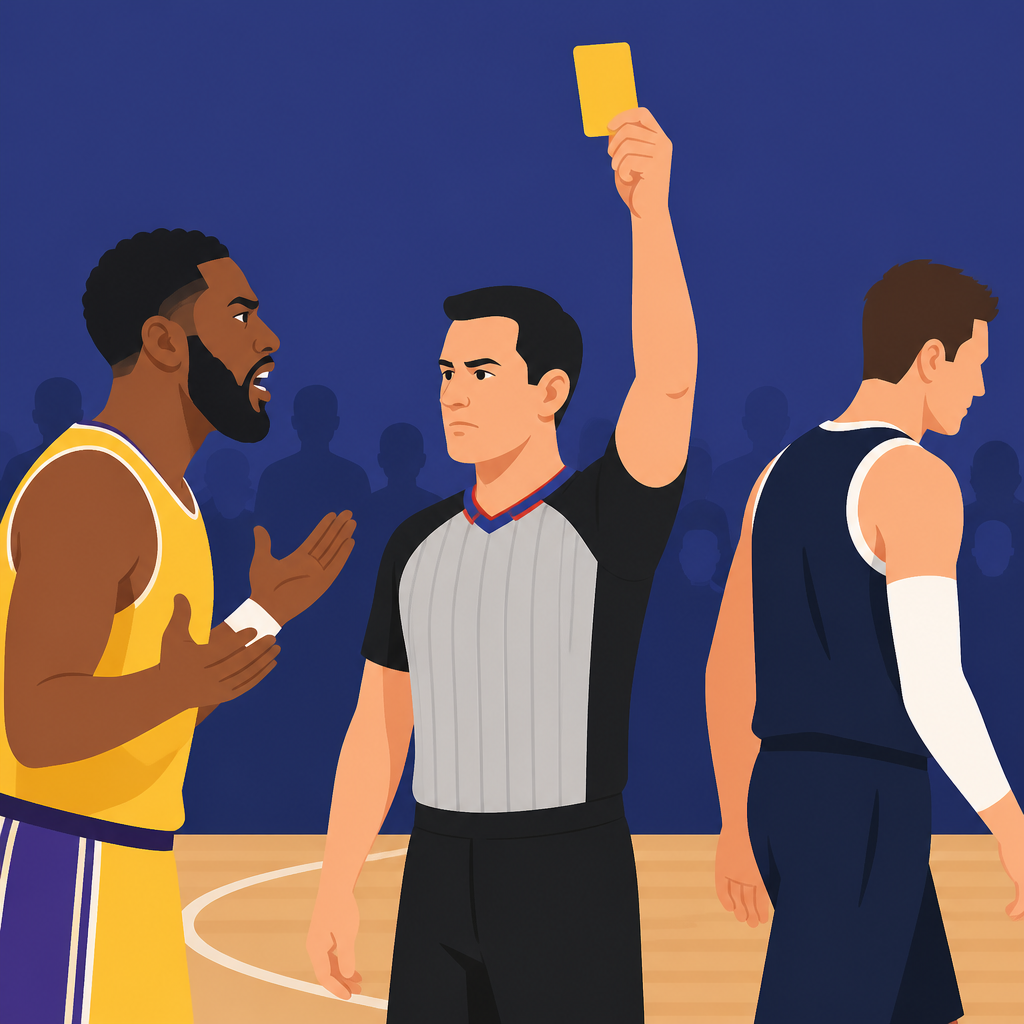
The NBA rule is direct: two unsportsmanlike technical fouls on the same player, coach, or trainer in one game result in automatic ejection. After the second technical is assessed, the person must leave the playing area and go to the locker room. Each technical foul also gives the opposing team one free throw, and play resumes according to the situation specified by rule. In most game summaries, you will see this described as “ejected after receiving two technical fouls.” That is the standard answer most fans need, and it is the one broadcasters repeat accurately.
The important nuance is that not every technical foul is automatically treated the same way for ejection purposes. The NBA distinguishes unsportsmanlike technical fouls from non-unsportsmanlike technicals. Unsportsmanlike technicals include hostile gestures, overtly disrespectful language, continuous arguing, taunting, or actions that challenge game control. Administrative technicals can include delay-of-game violations, too many players on the floor, hanging on the rim in some contexts, defensive three seconds, and other procedural infractions. Those do not always combine with unsportsmanlike technicals the same way for automatic ejection. When people ask, “How many technical fouls before ejection in the NBA?” they are almost always talking about the two unsportsmanlike technicals rule.
That distinction explains many apparent contradictions. A team can receive a delay-of-game warning and later a technical for another delay violation without anyone being ejected. A defender can be called for defensive three seconds and remain in the game because that violation is technical in scoring terms but not a misconduct technical. In contrast, a player who claps aggressively at an official, uses profanity directed at a referee, and continues demonstrative arguing can receive two unsportsmanlike technicals quickly and be gone within seconds. Understanding this classification is the foundation for all foul analysis in the NBA.
What counts as a technical foul in real NBA games
Technical fouls cover a wide range of conduct. The most recognizable examples are arguing with referees, using abusive language, making overt gestures that show up an official, fighting without throwing a punch, taunting an opponent, entering the court from the bench during an altercation, or intentionally delaying the game. Officials also call technicals for hanging on the rim when it is unnecessary, calling excessive timeouts when none remain, violating the coach’s box in a way that interferes with play management, and defensive three-second violations. The common thread is that the act violates game administration or sportsmanship rather than ordinary contact rules.
From experience reviewing tape, the most misunderstood technicals are demonstrative reactions. A player may believe he is reacting to the play, not the referee, but officials judge whether the act is public, prolonged, and confrontational. Throwing the ball away after a whistle, waving off an official, sarcastically applauding, or sprinting toward a referee can all trigger a technical when the behavior crosses the league’s threshold. Context matters. A single emotional outburst may draw a warning. Repeated behavior after a warning often draws a technical immediately. Veteran crews usually manage the temperature first, then enforce if the player keeps escalating.
| Foul type | What it covers | Typical penalty | Can it lead to ejection? |
|---|---|---|---|
| Personal foul | Illegal physical contact such as holding, blocking, or reaching | Free throws or side out depending on team foul situation | Not by itself; player fouls out after six personals |
| Technical foul | Unsportsmanlike conduct or procedural violations | One free throw plus possession treatment by rule | Yes, after two unsportsmanlike technicals in one game |
| Flagrant 1 | Unnecessary contact | Free throws and possession | Possible only if combined with another ejectable act |
| Flagrant 2 | Unnecessary and excessive contact | Free throws, possession, automatic ejection | Yes, immediate ejection |
How technical fouls fit into the larger foul system
To understand “Fouls Explained” fully, technical fouls must be compared with other NBA foul categories. Personal fouls are the most frequent. They involve illegal contact that affects freedom of movement, shooting, rebounding position, or ballhandling. A player is disqualified after six personal fouls. Offensive fouls, loose-ball fouls, shooting fouls, and clear-path fouls all sit inside that contact-based universe. Technical fouls are different because they can be called without meaningful contact and are often directed at behavior rather than physical play.
Flagrant fouls deserve special attention because fans often confuse them with technicals. A Flagrant 1 is unnecessary contact; a Flagrant 2 is unnecessary and excessive contact and brings automatic ejection. A player can therefore be ejected without receiving two technical fouls at all. Fighting also operates on a separate track. Leaving the bench area during an altercation can trigger suspension and technical penalties even if the player never throws a punch. In rulebook logic, the NBA is protecting both safety and game control. Contact fouls regulate competition. Technical fouls regulate conduct. Flagrant fouls regulate dangerous contact. The categories overlap in consequences but not in purpose.
For fans building rule knowledge, this hub framework helps. Ask three questions on any whistle: Was there illegal contact? Was there unsportsmanlike or procedural behavior? Was the act dangerous enough to be unnecessary or excessive? Those questions usually point you toward personal, technical, or flagrant classification. Once you know the category, the penalty becomes easier to predict. That is exactly how coaches teach players to avoid needless discipline: separate emotional reactions from physical mistakes and understand which behaviors cost points, possession, or a roster spot later in the season.
Season accumulation, fines, and suspensions
The single-game ejection rule is only part of the story. The NBA also tracks a player’s or coach’s cumulative unsportsmanlike technical fouls across the regular season and playoffs. In the regular season, automatic suspensions begin once a player or coach reaches the league’s threshold, with escalating penalties for additional technicals afterward. The exact administrative details can be updated by league policy, but the established pattern is clear: too many technical fouls over time lead to fines first and then suspensions. That means a player who never gets ejected in one game can still miss a future game because of repeated technical behavior.
This system matters strategically. A contender managing a star with a high technical total late in the regular season may tell him to avoid arguing marginal calls for a week because one extra technical could mean a suspension in a critical matchup. The playoffs have a separate accumulation scale because the number of games is smaller and the stakes are higher. League offices also review technical fouls after games. Some are rescinded if video shows the call was incorrect or if the behavior did not meet the standard. That review process is significant because rescission can remove a technical from a player’s season total, potentially avoiding a suspension.
Anyone following NBA rules seriously should pay attention to the official box score and the league’s discipline reports, not just social media clips. Broadcasts often emphasize the emotional moment, while the league record clarifies whether the technical was unsportsmanlike, whether it will count toward accumulation, and whether a postgame review changed anything. That is why rule literacy matters. The consequences of a technical foul continue after the final buzzer.
Common situations that lead to ejections
The fastest path to an NBA ejection through technical fouls is escalation. A player disagrees with a foul call, turns toward the referee, uses profanity or a personal insult, and receives the first technical. Instead of disengaging, he continues demonstratively, steps toward the official again, or prolongs the confrontation. The second technical follows, and the ejection is automatic. This is not unusual. Referees are generally more tolerant of a brief complaint than of repeated, public challenges to authority. The second act, not the first, usually ends the night.
Coaches are ejected in similar fashion. A coach may leave the coaching box to argue, continue after a warning, or make exaggerated gestures to show up the crew. Some coaches use the first technical intentionally to energize a team. Very few want the second, because losing the head coach changes timeout management, substitution patterns, and late-game playcalling. Bench personnel can also create ejection situations by standing on the court, confronting officials, or entering an altercation area. The NBA treats bench decorum seriously because those moments can escalate rapidly.
Real-world examples reinforce the pattern. Many star players with high technical counts are not being punished for passion alone; they are being punished for repeated demonstrative acts after the initial dispute is already over. Conversely, plenty of visibly frustrated players stay in games because they vent briefly, walk away, and let teammates or assistant coaches redirect them. Emotional control is a skill, and in the NBA it is measurable in points, minutes, and availability.
What fans, players, and coaches should watch for
If you want to read games more accurately, watch the referee-player interaction before the whistle that becomes a technical. Did the official issue a verbal warning? Did the player clap, point, charge toward the official, or continue after teammates intervened? Those are classic escalation markers. Also notice whether the technical is on an individual or the bench, and whether it appears unsportsmanlike or administrative. That distinction tells you whether ejection risk or season accumulation is in play.
For players, the practical lesson is simple: say your piece once, then exit the exchange. Team staff often coach a “two-step rule” after a disputed call: react, reset, and run to the next action. For coaches, assigning an assistant to pull away an agitated player prevents second technicals more often than fans realize. For fans, the biggest takeaway is that NBA fouls are not one system but several connected systems. Personal fouls govern contact, technical fouls govern conduct and procedure, and flagrants govern dangerous contact. Learning those distinctions makes every game easier to follow and every controversial whistle easier to evaluate.
The answer to the headline question remains straightforward: in the NBA, two unsportsmanlike technical fouls in the same game bring automatic ejection. But the deeper lesson is that technical fouls are only one part of a larger foul framework. They differ from personal fouls, which accumulate to six before disqualification, and from Flagrant 2 fouls, which cause immediate ejection for excessive contact. They also carry season-long consequences through fines, rescissions, and automatic suspensions tied to accumulation. That broader context is what turns a simple rule into meaningful basketball knowledge.
As the hub page for fouls explained under NBA rules, this guide gives you the foundation to understand not just ejections, but why officials classify behavior the way they do and how teams manage risk around it. When you watch your next game, track the type of foul, the penalty, and the behavior that triggered it. You will see the game more clearly, judge controversial calls more fairly, and understand why composure is as valuable as talent. Keep this framework in mind as you explore the rest of the NBA rules topics and build a sharper, more confident read on every whistle.
Frequently Asked Questions
How many technical fouls before ejection in the NBA?
In the NBA, a player, coach, or trainer is automatically ejected after receiving two unsportsmanlike technical fouls in the same game. That is the direct in-game rule most fans are looking for. Once the second unsportsmanlike technical is assessed, the individual must leave the game immediately. This is why you will sometimes see a player pick up one technical for arguing, then later get a second one for continuing the behavior, using disrespectful language, or making an aggressive gesture toward an official. At that point, the ejection is automatic and not a matter of referee discretion.
What makes this confusing is that not every technical foul works exactly the same way in every situation. The NBA uses technical fouls for a wide range of conduct, including arguing with officials, taunting, delay-of-game situations, bench decorum violations, and other non-contact actions that disrupt the game. So while the simple answer is “two unsportsmanlike technical fouls equals an ejection,” it helps to know that technicals are part of a broader rule framework, not just a punishment for bad tempers.
Do all technical fouls count toward an automatic ejection?
No. This is one of the biggest sources of confusion. The automatic ejection standard applies to two unsportsmanlike technical fouls in the same game, not necessarily every type of technical foul that can appear in the box score. The NBA distinguishes between unsportsmanlike technicals and other administrative or procedural technical fouls. Unsportsmanlike technicals usually involve conduct issues such as disrespect toward officials, overt complaints, taunting, or other actions the league considers unacceptable sportsmanship.
By contrast, some technicals are assessed for team or procedural violations, such as delay of game or certain bench-related infractions. Those may affect the game and result in free throws or possession consequences, but they are not always treated the same way for ejection purposes as two unsportsmanlike technicals on one individual. That is why a fan can look at a game log, see multiple technicals, and still be unsure whether someone should have been thrown out. The key is not just the number, but also the category of technical foul and who it was charged to.
What actions usually lead to an unsportsmanlike technical foul in the NBA?
Unsportsmanlike technical fouls are typically called for behavior that challenges the authority of the officials, inflames tensions, or harms the game’s orderly flow. Common examples include aggressively arguing a call, using profanity directed at a referee, making demonstrative gestures to show up an official, taunting an opponent, or refusing to comply with instructions during a dead-ball situation. Excessive emotional reactions can also trigger a technical if the referee believes the conduct has crossed the line from frustration into unsportsmanlike behavior.
The NBA gives officials broad discretion in these moments because context matters. A brief complaint after a missed call may draw only a warning, while prolonged arguing, clapping sarcastically, running at an official, or escalating a confrontation can bring an immediate technical. Bench players and coaches are also subject to the same general standards. Leaving the bench area inappropriately, repeatedly complaining, or interfering with game administration can also result in technicals. In short, the rule is designed to control conduct, not just physical play, which is why technical fouls can seem so subjective from game to game.
Can a player be ejected without getting two technical fouls first?
Yes. Although two unsportsmanlike technical fouls lead to an automatic ejection, a player or coach can also be ejected immediately for a single especially severe act. Flagrant conduct, hostile confrontation, threatening behavior, fighting-related actions, or extreme abuse of officials can all lead to a direct ejection without the person first accumulating two technicals. The NBA rulebook gives officials the authority to remove participants when the behavior is serious enough that continued participation is no longer appropriate.
This is important because fans sometimes assume ejection always follows the same step-by-step path. In reality, some situations escalate beyond what a first technical is meant to address. For example, if a player uses highly abusive language toward an official or engages in conduct that creates a dangerous or volatile environment, referees do not need to wait for a second technical. Similarly, flagrant foul penalties and fighting rules operate under separate standards from routine technical foul accumulation. So while “two technicals and you’re out” is the common rule of thumb, it is not the only path to ejection in an NBA game.
Do technical fouls in one NBA game affect suspensions later in the season?
Yes. In addition to the in-game ejection rule, the NBA also tracks certain technical fouls across the regular season and postseason for disciplinary purposes. A player who accumulates too many qualifying unsportsmanlike technical fouls over the course of the season can face automatic fines and eventually a suspension. This is separate from being ejected in a single game. In other words, a player may stay in a game after one technical, but that technical can still matter later if it adds to a season-long total.
This season accumulation system is another reason the technical foul rule can feel complicated. Fans are often discussing two different questions at once: how many technical fouls cause an ejection in one game, and how many technical fouls lead to league discipline over many games. The first answer is straightforward: two unsportsmanlike technical fouls in the same game bring an automatic ejection. The second depends on the league’s season tracking, review process, and penalty thresholds. Understanding both helps explain why players, coaches, and teams often react strongly even to a single technical foul, because the consequences can go beyond that night’s final score.