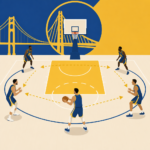

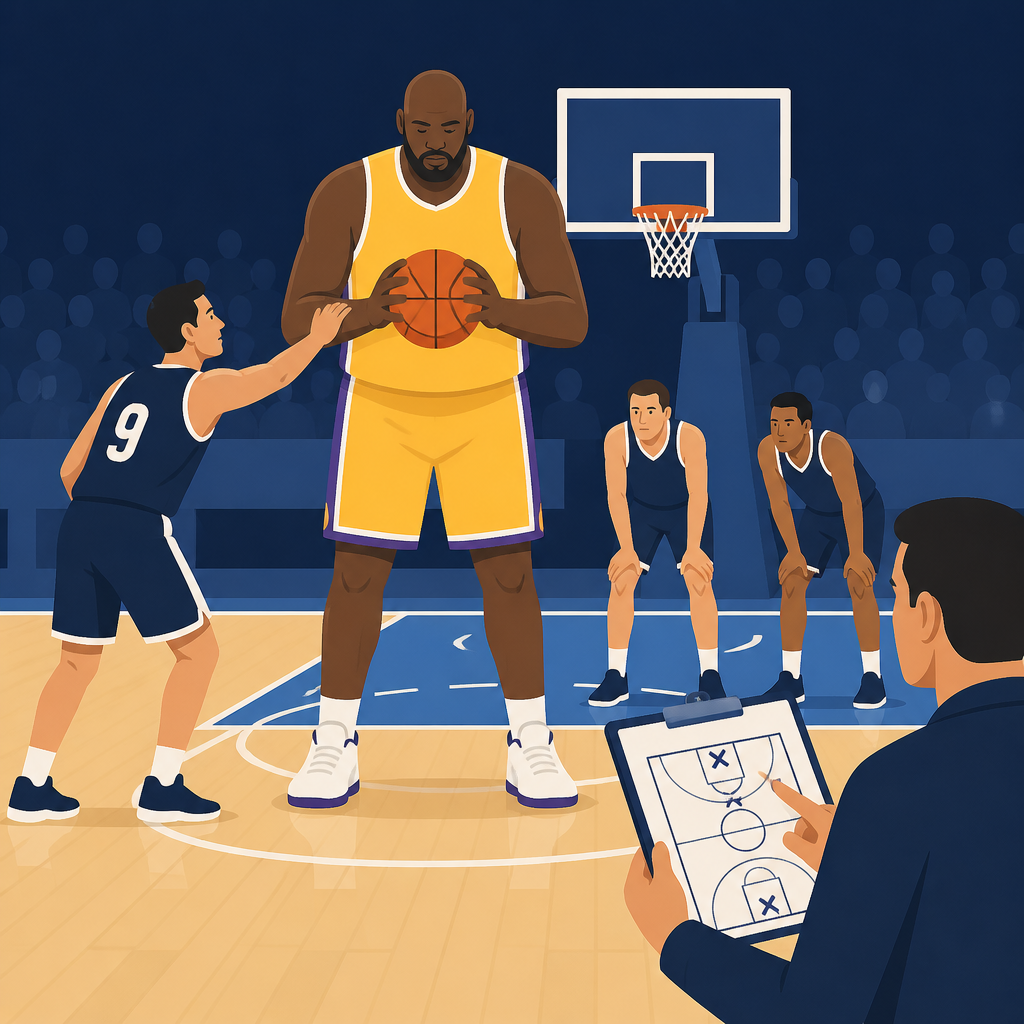
Hack-a-Shaq strategy is the deliberate use of intentional fouling against a poor free-throw shooter to reduce scoring efficiency, control tempo, and exploit a rulebook gray area that has shaped modern NBA tactics. Under the broader NBA Rules topic, this is the central hub for fouls explained because it connects personal fouls, team fouls, bonus situations, free throws, away-from-the-play contact, officiating discretion, and late-game strategy in one concept. I have broken down games, coaching film, and rule interpretations for years, and few tactics reveal the relationship between rules and winning as clearly as this one. What looks ugly from the stands often makes perfect mathematical sense on the bench. The strategy became famous because teams used it against Shaquille O’Neal, a dominant interior scorer whose weakness at the line created a rare tradeoff: give up a likely two-point dunk, or force two free throws from a player who might make only one.
The term now applies to any intentional fouling of a bad free-throw shooter, whether the player is a center rolling to the rim, a non-shooting forward standing away from the ball, or a late-game reserve who becomes a target because of substitution patterns. To understand why coaches use it, you need a clear definition of several key terms. An intentional foul in common basketball language is not always the same as an official flagrant or unsportsmanlike act; here it usually means a deliberate personal foul committed within normal play. The bonus refers to the point at which a defense’s accumulated team fouls send the offense to the free-throw line. Free-throw percentage measures conversion rate at the line, but points per possession is the better strategic lens because it compares the expected return of free throws to the expected return of letting the offense run. This matters because NBA possessions are efficient enough that tiny differences add up quickly over forty-eight minutes.
Hack-a-Shaq matters beyond one famous nickname because it explains how rules shape behavior. It also serves as the best entry point for fouls explained across the NBA. Personal fouls govern contact. Shooting fouls determine whether the offense gets two or three free throws. Loose-ball fouls, clear-path fouls, take fouls, and away-from-the-play fouls each have distinct penalties that coaches must know cold. League rule changes have repeatedly tried to preserve flow while keeping endgame tactics legitimate. Fans who understand this strategy see the sport differently: they notice score, clock, foul counts, lineups, and who is eligible to be attacked under the rules. That is why this article works as a hub. If you want to understand why referees stop play, when free throws are automatic, and when intentional fouling is actually smart basketball, this is the place to start.
How the strategy works in real games
At its core, Hack-a-Shaq replaces uncertainty with a controlled defensive gamble. If a team is facing an elite half-court offense built around a weak free-throw shooter, fouling that player before a shot attempt can lower the expected value of the possession. Suppose a dominant big man finishes pick-and-rolls and post-ups at an efficiency near 1.20 points per possession. If he shoots 50 percent from the line, intentional fouling yields about 1.00 point per possession on two free throws. That difference may look small, but over ten possessions it can erase two points, disrupt rhythm, and keep transition defense set. Coaches care about those margins because playoff games often swing on three or four possessions.
The tactic is especially attractive when the targeted player is both difficult to guard and central to the opponent’s offense. O’Neal was the classic example because single coverage often failed, double teams opened shooters, and his sheer strength created constant rim pressure. Teams such as the Dallas Mavericks under Don Nelson and later the San Antonio Spurs under Gregg Popovich used deliberate fouling stretches to prevent deep post seals and turn every possession into a free-throw test. Dwight Howard, DeAndre Jordan, Andre Drummond, Ben Wallace, and even Giannis Antetokounmpo in specific matchups have all seen versions of the same approach. The names change, but the logic remains constant: attack the weakest efficiency point in an otherwise dangerous offensive structure.
Execution is more nuanced than “just foul him.” Coaches decide whether to foul immediately on the catch, on the roll before upward shooting motion, or away from the ball before the action develops. Timing matters because once the offensive player begins a shooting motion, the defense may be conceding and-one opportunities or putting the wrong player on the line. Personnel matters too. Teams usually assign the foul to a bench wing or backup big with fouls to spare, preserving stars from foul trouble. Referees also watch for grabs that rise to flagrant criteria, especially if the contact appears dangerous rather than tactical. Smart defenses commit clear, conventional fouls with minimal risk.
Why intentional fouling can be mathematically smart
Basketball strategy is often just applied arithmetic under pressure. The relevant question is simple: are the expected points from the free throws lower than the expected points from defending normally? If the answer is yes, the foul can be justified. A player making 45 percent of free throws produces 0.90 expected points on two shots. A player making 60 percent produces 1.20 expected points. League-average half-court offense in many seasons lands around or a little above one point per possession, while elite units surpass that comfortably. That means intentional fouling is not automatically smart against every subpar shooter. It only makes sense when the targeted possession would likely be more efficient than the free throws you are conceding.
Coaches also weigh secondary effects. Intentional fouling slows the game, reduces transition chances, and can keep a trailing team alive by extending possessions. It may prevent foul-prone defenders from battling in the post, and it can discourage the offense from playing through its best interior option. In a playoff series, forcing a star big man to think about free throws changes substitution patterns and late-game lineup decisions. I have seen staffs treat this as a chain reaction tactic rather than a single-possession play. If the opponent benches a dominant rebounder or screener because he cannot survive the line, the defense has already won something before the next inbound.
| Scenario | Free-Throw Percentage | Expected Points From Two Free Throws | Likely Coaching Decision |
|---|---|---|---|
| Elite rim threat, weak shooter | 45% | 0.90 | Foul is often justified |
| Average big, below-average shooter | 55% | 1.10 | Depends on matchup and clock |
| Improved shooter, strong offense | 65% | 1.30 | Usually defend straight up |
| Late game, trailing by three, poor shooter | 50% | 1.00 | Foul may control time and margin |
The table captures the core threshold idea, but real decisions are context dependent. Offensive rebounding matters because missed free throws can be recovered for put-backs. Team foul count matters because one intentional foul in the wrong quarter can trigger the bonus for everyone else. Opponent spacing matters because some lineups turn misses into cross-matches and open threes. Analytics departments model these factors in far more detail than public discussion usually reflects. The best coaching decisions are not emotional reactions to a bad shooter; they are probability choices built from score, clock, lineup quality, foul trouble, and how the opponent is actually scoring that night.
The rulebook foundations every fan should know
To understand fouls explained through this strategy, start with the ordinary personal foul. A defender who makes illegal contact can be assessed a personal foul, and if the offended team is in the bonus, free throws follow even without a shooting motion. That alone creates the opening for intentional fouling. Before the penalty, a common foul may simply result in a side out. Once the team foul threshold is reached in a quarter, the same contact sends the fouled player to the line. That is why commentators constantly mention “foul to give” late in periods. A defense with a foul to give can use contact to disrupt timing without conceding free throws.
Shooting fouls are different because they award free throws based on the shot type: two for a two-point attempt, three for a three-point attempt, plus possible and-one situations if the basket goes in. Hack-a-Shaq defenders try to foul before any upward motion starts. Away-from-the-play fouls became a major battleground because teams realized they could ignore the ball entirely and tackle the weakest shooter elsewhere. The NBA responded with rule adjustments. In the final two minutes of the fourth quarter or overtime, an off-ball foul away from the play gives the offense one free throw by any player plus possession. That penalty sharply reduces the value of the tactic in those moments.
Other foul categories matter because they set boundaries. A clear-path foul awards free throws and possession when a defender illegally stops a transition scoring chance with no one ahead. A flagrant foul adds reviewable criteria involving unnecessary or excessive contact. The modern take-foul rule in transition also reflects the league’s effort to stop intentional disruption that kills fast breaks. These distinctions show how the NBA balances competitive strategy with watchability. Intentional fouling remains legal in many situations because the league accepts some clock and efficiency manipulation as part of basketball. It only steps in when the tactic distorts normal play too severely or creates safety concerns.
Famous examples and what they teach
The original reference point remains O’Neal, who was unstoppable enough to force coaches into uncomfortable choices. During parts of his career, he shot barely above 50 percent from the line while generating elite paint efficiency. Teams fouled him early, late, and occasionally for entire stretches. The games became choppy, but the tactic was rational. O’Neal’s response was complicated. He still imposed physical pressure, drew team fouls, and sometimes punished opponents on the glass after misses. Yet the very existence of the strategy proved that even all-time great players can carry a strategic weakness opponents must exploit.
Dwight Howard’s playoff series against the Rockets and Clippers provided another textbook case. Houston, in particular, leaned into the tactic because Howard’s free-throw inconsistency could be weaponized without sacrificing too much defensively. DeAndre Jordan experienced similar treatment, especially before his free-throw mechanics stabilized somewhat. Andre Drummond arguably became the clearest modern example of sustained targeting because his percentages were low enough that the expected-value case stayed strong. In each case, the broader lesson was the same: a non-shooting star can dominate conventional basketball actions and still become vulnerable if one foundational skill breaks possession economics.
Not every attempt succeeds. Some players have short bursts where they beat the math by making enough free throws to end the experiment. Coaches also misfire when they foul a player whose screening, rebounding, or defensive presence matters less than the substitutions the strategy invites. I have seen games where the offense simply countered by removing the weak shooter, unlocking five-out spacing and making the defense regret forcing the change. Smart teams test the tactic, read the response, and abandon it quickly if the expected edge disappears.
How offenses counter intentional fouling
Offenses are not powerless. The simplest answer is substitution: remove the targeted player in vulnerable clock windows. That works best when the bench can preserve spacing, rim protection, or rebounding. Another response is using the weak shooter as the inbounder, since the inbounder cannot be fouled until the ball is live on the floor. Teams also hide the target in actions that create immediate scoring motion, making pre-shot fouls harder to time cleanly. Quick-hitting sets, ghost screens, and empty-corner pick-and-rolls can force defenders to choose between fouling late or conceding a real shot.
Player development is the long-term solution. Free-throw shooting improvement changes everything because even a jump from 48 percent to 62 percent can make the tactic much less attractive. Coaches work on routine consistency, breathing, shot preparation, and release mechanics because pressure magnifies flaws. Some players also improve by increasing the arc of the shot or narrowing excessive guide-hand influence. The point is practical, not cosmetic. If a star big becomes merely below average rather than disastrous at the line, the offense can keep him on the floor in leverage moments without inviting constant fouling.
There is also a psychological component. Intentional fouling can embarrass players, inflame crowds, and shift momentum if teammates become frustrated. Veteran staffs prepare for that. They script bench communication, remind the group of expected-value logic, and keep the game from feeling personal. Teams that stay organized usually survive the disruption better than teams that argue with officials or rush their offense after every whistle. Emotional control is part of foul management, and good teams treat it as a skill.
What this teaches about fouls explained across the NBA
Hack-a-Shaq is the best hub topic for fouls explained because it touches nearly every important foul concept fans need to follow NBA games intelligently. It shows the difference between personal fouls and shooting fouls. It clarifies why the bonus changes late-quarter behavior. It explains why off-ball fouls are treated differently in the final two minutes. It highlights foul trouble, lineup construction, substitution timing, and referee interpretation. It even reveals why league offices keep revising language around take fouls and game flow. One tactic opens the door to the whole foul ecosystem.
The biggest takeaway is that intentional fouling is smart only when rules, percentages, and game context align. It is not dirty by default, and it is not always boring if you understand the chess match underneath. Coaches use it to lower efficiency, dictate pace, and force uncomfortable lineup decisions. Offenses answer with substitutions, design, and skill development. The NBA then adjusts rules when strategy overwhelms entertainment or fairness. If you want to understand NBA Rules at a deeper level, start tracking who is in the bonus, who has a foul to give, which lineups include vulnerable shooters, and when away-from-the-play penalties apply. That habit will sharpen how you watch every game. From here, continue into the rest of the Fouls Explained subtopic and study shooting fouls, loose-ball fouls, flagrant standards, and bonus rules in detail.
Frequently Asked Questions
What is the Hack-a-Shaq strategy in basketball?
Hack-a-Shaq is a defensive strategy where a team intentionally fouls a poor free-throw shooter to force that player to earn points at the line instead of allowing a normal offensive possession to play out. The idea is simple: if the player consistently makes free throws at a low percentage, those two foul shots may produce fewer expected points than the offense would normally score through its regular sets, post-ups, drives, or pick-and-roll actions. The tactic became widely associated with Shaquille O’Neal, whose dominance near the rim made him almost impossible to guard conventionally, but whose free-throw shooting gave opponents a mathematical opening.
What makes Hack-a-Shaq so important under the broader topic of NBA rules is that it sits at the intersection of multiple rule concepts at once. It involves personal fouls, team foul accumulation, bonus situations, free-throw administration, dead-ball and live-ball timing, and the difference between legal strategic fouling and illegal away-from-the-play contact. It also raises a bigger basketball question: when should a team trade aesthetics and game flow for efficiency and win probability? That is why Hack-a-Shaq is not just a quirky trick from NBA history. It is one of the clearest examples of how coaches use the rulebook itself as part of game strategy.
Why would a coach intentionally foul instead of just playing normal defense?
Coaches use intentional fouling when the numbers suggest it is the smarter option. If an offense is generating highly efficient shots at the rim, creating open threes, or running through a star who is difficult to stop, then sending a poor free-throw shooter to the line can lower the expected value of that possession. For example, if a player shoots badly enough from the line, two free throws may produce fewer points on average than the offense typically scores when allowed to run its half-court actions. In that sense, the foul is not random or emotional. It is a calculated exchange based on percentages, lineup context, and score situation.
There are also tempo and rhythm reasons behind the tactic. Intentional fouling can disrupt an opponent’s flow, prevent them from getting into their preferred sets, and create frequent stoppages that help a trailing team reset its defense or substitute personnel. In some cases, coaches also use it to target a specific lineup weakness, especially when a poor shooter is sharing the floor with otherwise efficient scorers. Rather than challenge everyone at once, the defense chooses the least favorable offensive outcome available. That is what makes Hack-a-Shaq feel counterintuitive but strategically sound: it accepts a foul as the cost of avoiding something even worse.
Is Hack-a-Shaq still legal in the NBA, or did the rules change to limit it?
Hack-a-Shaq has not been eliminated, but the NBA has changed the rules to reduce its use in certain situations. Historically, teams could foul away from the ball almost whenever they wanted, especially late in games, to force a weak free-throw shooter to the line. Over time, the league recognized that constant off-ball grabbing and deliberate stoppages hurt game flow and made the sport less watchable. In response, the NBA strengthened the away-from-the-play foul rule, particularly in the final two minutes of the fourth quarter and overtime.
Under that late-game rule, if a defender intentionally fouls an offensive player away from the play before the ball is inbounded or before it is released on a throw-in, the offense receives one free throw and keeps possession. That is a major deterrent because the defense no longer gets the basic trade-off it wants. Instead of merely sending a bad shooter to the line, it gives up a free point opportunity and still has to defend the possession afterward. However, outside those specific late-game restrictions, intentional fouling can still be used within the normal foul framework. That is why Hack-a-Shaq remains part of NBA strategy discussions even in the modern era. The league narrowed the gray area, but it did not erase the tactic completely.
How do personal fouls, team fouls, and the bonus affect the Hack-a-Shaq strategy?
This is where the strategy becomes especially interesting from a rules perspective. Every intentional foul counts as a personal foul against the defender and also contributes to the team’s foul total for the quarter. That matters because once a team reaches the penalty, also called the bonus, non-shooting defensive fouls result in free throws. In practical terms, a coach considering Hack-a-Shaq has to think beyond the targeted player and ask what the repeated fouling will do to the entire defensive structure. Put key defenders in foul trouble, and the tactic may stop being worth it. Put the team in the bonus too early, and every later defensive mistake becomes more costly.
There is also a possession-by-possession layer to consider. If the targeted player is fouled while not in the act of shooting but the team is already in the bonus, he still gets free throws. If the team is not yet in the penalty, the foul may only trigger a sideline or baseline inbound, depending on game circumstances, which changes the value of the tactic. Coaches and officials both have to track foul counts carefully because the strategic decision depends on exact rule status, not just general intent. That is one reason Hack-a-Shaq is often used as a teaching example when explaining how NBA fouls work. It ties together individual fouls, team foul limits, free-throw consequences, and game management in a way fans can see immediately.
When is Hack-a-Shaq actually smart, and when can it backfire?
Hack-a-Shaq is smartest when three things are true: the targeted player is a genuinely poor free-throw shooter, the offense is otherwise scoring efficiently, and the defense can absorb the foul cost without damaging its own rotation or putting the opponent into favorable bonus situations. It can be especially useful against dominant interior players who are difficult to stop near the basket, because fouling transforms a likely dunk, layup, or high-percentage post score into a pair of lower-value chances at the line. It can also be effective when a coach wants to slow the game down, prevent transition flow, or force uncomfortable substitutions by making the opposing coach decide whether to keep the weak shooter on the floor.
But the strategy can absolutely backfire. If the targeted player has a good night at the line, the defense may be handing away efficient points while also stopping the game clock and letting the offense set its defense. If the fouling team piles up personals on important players or reaches the penalty too soon, it can create a worse situation later in the quarter. There is also the emotional factor: repeated intentional fouling can energize the opponent, frustrate officials, and alter momentum in unpredictable ways. Most importantly, the tactic stops being smart the moment its expected value disappears. If normal defense gives up fewer points than the free throws being surrendered, or if the rule situation turns the foul into a free throw plus possession, then Hack-a-Shaq is no longer clever strategy. It is just self-inflicted damage.