
A flagrant foul in basketball is a personal foul involving unnecessary contact, excessive contact, or both, and it carries a harsher penalty than an ordinary common foul because officials judge the act as dangerous or unsportsmanlike. For fans learning NBA rules, this is one of the most important foul categories to understand because it affects free throws, possession, ejections, replay reviews, and even league discipline after the game. I have spent years breaking down officiating decisions possession by possession, and flagrant fouls consistently create the most confusion because viewers often mix up hard playoff contact with illegal contact that crosses the line. The key terms matter. A common foul is routine illegal contact during live play. A technical foul punishes unsportsmanlike behavior or administrative violations. A flagrant foul punishes contact that is not just illegal, but dangerous, reckless, or excessive.
In the NBA, officials separate this category into Flagrant 1 and Flagrant 2. Flagrant 1 means unnecessary contact. Flagrant 2 means unnecessary and excessive contact. That distinction sounds simple, but in practice referees weigh windup, impact, follow-through, player vulnerability, and the overall basketball play. Similar concepts exist in college basketball, high school basketball under NFHS rules, and FIBA competition, though the wording and penalties are not identical. That is why a play you see called one way in the NCAA tournament may be handled a little differently in an NBA game. Understanding the rule helps you answer common questions fast: Why did that player get two free throws and the ball? Why was replay used? Why was someone ejected after what looked like a hard foul? Why can a player be suspended later even if he stayed in the game? This guide explains the full foul framework around flagrant calls and connects it to the wider fouls explained topic so you can read games more accurately.
What a flagrant foul means under basketball rules
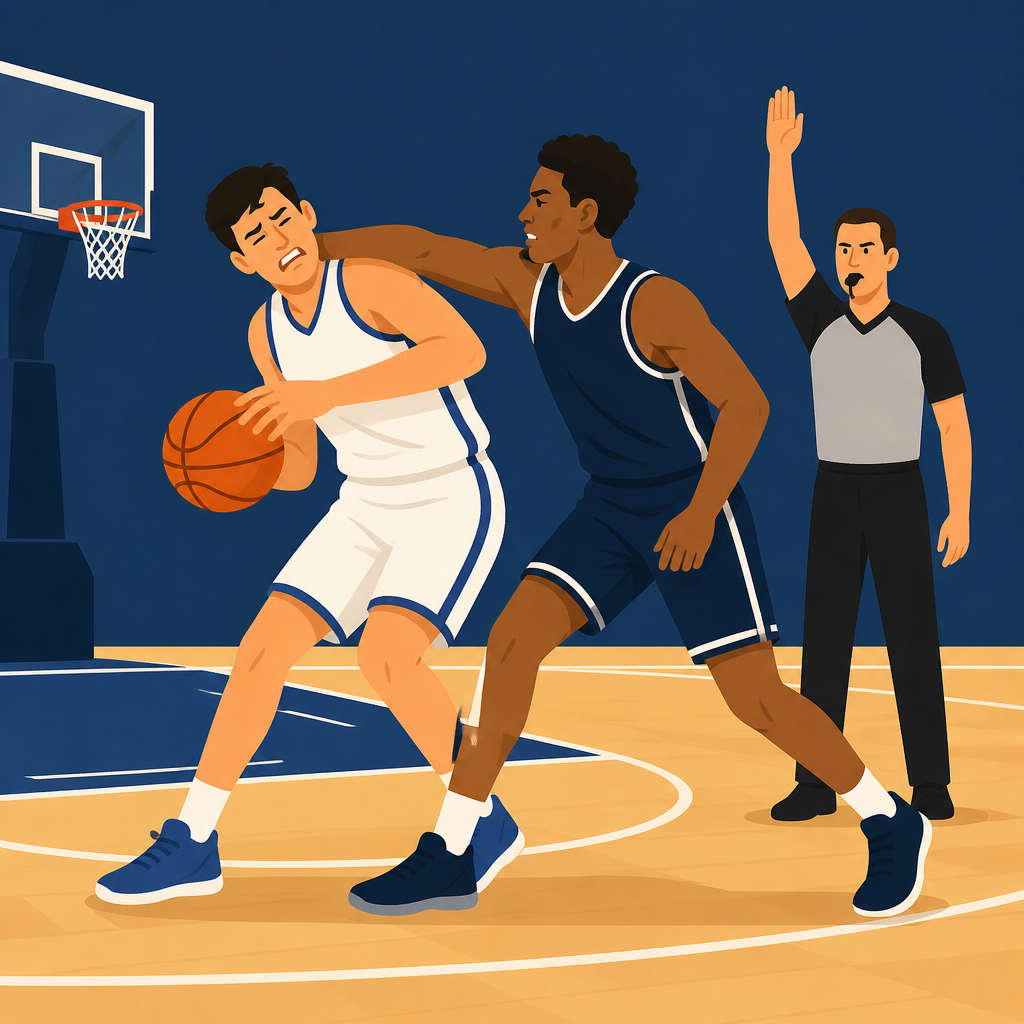
The simplest working definition is this: a flagrant foul is illegal contact that goes beyond a normal basketball play and creates an unacceptable level of risk. In the NBA rulebook, officials are instructed to judge whether contact is unnecessary, or unnecessary and excessive. Unnecessary means the player did not need to make that contact to attempt a legitimate basketball play. Excessive means the force, direction, or totality of the action was severe enough to warrant ejection. This is why a two-hand shove of an airborne player, a windup to the head, or a blindside hit after the pass are treated far more seriously than a reach-in or body bump.
Officials do not decide these calls by emotion alone. They look for specific indicators. Was there a realistic play on the ball? Did the defender strike the opponent in the head or neck area? Was the offensive player airborne and therefore unable to protect himself? Did the fouling player wind up or follow through with force? Was there a grabbing action that turned into a takedown? Those details shape the outcome. The NBA Replay Center and on-court referees can review potential flagrant fouls, then confirm, upgrade, or rescind the original call. This review process matters because speed often hides severity in real time. Slow motion can reveal a forearm to the face, a dangerous undercut, or a non-basketball wrap-up that changes the ruling and the penalty.
Flagrant 1 explained: unnecessary contact
A Flagrant 1 foul is called when the contact is unnecessary but not excessive. In plain terms, the player made illegal contact that crossed the line from normal physicality into dangerous or reckless play, yet not to the level that automatically requires ejection. The penalty in the NBA is two free throws for the offended player and possession of the ball for that player’s team, regardless of whether the shot went in. The fouling player is charged with a personal foul, and the team also absorbs the possession loss, which makes a Flagrant 1 especially costly in a close game.
Common examples include a hard swipe to the head on a drive, a wrap-up from behind to stop a fast break, or a late body check against a shooter with no real chance to contest legally. I have seen many fans argue that a defender “went for the ball,” but that alone does not save the play. If the path to the ball includes unnecessary contact to the face or an unsafe grab of an airborne player, officials can still call Flagrant 1. Consider a transition layup where a trailing defender reaches across the body and makes heavy contact to the shoulders and head. Even if the hand first touched the ball, the follow-through can make the entire act unnecessary under NBA standards.
Flagrant 2 explained: unnecessary and excessive contact
A Flagrant 2 foul is the more severe category. It applies when the contact is both unnecessary and excessive, and the player who commits it is ejected immediately. The game penalty is still two free throws plus possession for the offended team, but the practical impact is larger because the disqualified player cannot return. In many cases, the league office then reviews the incident for additional fines or suspension, especially if the act involved striking the head, pushing an airborne player, or escalating an altercation.
The best way to understand Flagrant 2 is to focus on force and danger. A full windup followed by a blow to the face, a violent shove from behind on a player in the air, or a non-basketball hit delivered in frustration are classic examples. Officials are not required to prove intent to injure. That point is critical. Many fans think a player must “mean to do it” for Flagrant 2, but that is not the standard. The standard is whether the contact was unnecessary and excessive. If a defender loses emotional control and hacks downward across an opponent’s head, the absence of admitted intent does not prevent ejection. The rule protects player safety first.
How referees decide between common, Flagrant 1, and Flagrant 2
Referees use a layered decision process. First, they identify whether illegal contact occurred. Second, they decide whether the contact was part of a legitimate basketball play. Third, they evaluate severity using the NBA’s established indicators. In practical officiating language, windup, impact, and follow-through matter. So do point of contact and player vulnerability. Contact to the head or neck is treated more seriously because it carries elevated injury risk. Contact against an airborne player is judged more strictly because the player cannot brace for landing.
| Foul category | Core standard | Typical signs | NBA penalty |
|---|---|---|---|
| Common foul | Routine illegal contact | Reach, bump, hold during normal play | Standard free throws or side out depending on situation |
| Flagrant 1 | Unnecessary contact | Hard hit, reckless swipe, unsafe wrap-up | Two free throws and possession |
| Flagrant 2 | Unnecessary and excessive contact | Violent blow, dangerous shove, severe non-basketball action | Two free throws, possession, automatic ejection |
Replay often determines the difference between the two levels. A play that looked like a hard foul at live speed may show a major windup or direct head contact on review. Conversely, a dramatic fall may look worse than the actual force applied. Officials are trained to separate the result from the act. An awkward landing alone does not create a flagrant foul if the contact itself was normal and legal. The inverse is also true: a player might stay healthy after a dangerous blow, but the foul can still be upgraded because the action itself was unacceptable.
Penalties, replay review, and what happens after the whistle
Once officials call or review a potential flagrant foul, the administration of the penalty follows a set order. The offended player shoots two free throws unless injured and unable to continue, in which case a substitute may shoot under the applicable rules. After the free throws, the offended team gets possession at the division line in the frontcourt. That extra possession is why even a Flagrant 1 can produce a four- or five-point swing. In end-of-game situations, that swing can decide outcomes more than the foul count itself.
Replay is central to modern NBA officiating. Referees can initiate review for hostile acts and potential flagrant contact, then use broadcast angles to judge the nature of the play. The replay standard is not cosmetic; it exists because dangerous contact is often hidden by bodies, speed, and angle. After the game, the NBA can issue fines or suspensions based on the same play. In the playoffs especially, this matters because a Flagrant 2 ejection can change the game immediately, while accumulated flagrant foul points can affect the next game. The league’s postseason point system assigns penalties for Flagrant 1 and Flagrant 2 fouls, and enough points trigger an automatic suspension. That system exists to deter repeat dangerous play.
Real-game examples and the fouls explained framework
The easiest way to understand a flagrant foul is to compare it with other foul types. A defender who bumps a driver with the chest commits a common personal foul if the contact is illegal but ordinary. A defender who wraps the driver’s shoulders from behind to prevent a layup risks Flagrant 1 because the play is unsafe and unnecessary. A defender who shoves that driver in the back while airborne risks Flagrant 2 because the contact is both unnecessary and excessive. The framework is not about punishing physical defense; it is about drawing a bright line around safety.
This is also where the broader fouls explained topic becomes useful. Blocking and charging govern legal guarding position. Shooting fouls determine free throws on scoring attempts. Clear path fouls punish transition contact that takes away an open scoring opportunity. Technical fouls address taunting, delay, and unsportsmanlike conduct without requiring live-ball contact. Flagrant fouls sit at the intersection of personal contact and player safety. If you are building out your NBA rules knowledge, this hub should connect naturally to deeper articles on common fouls, shooting fouls, loose-ball fouls, over-the-back plays, clear path fouls, take fouls, technical fouls, and ejections. Together, those categories explain why similar collisions produce very different rulings.
Differences between the NBA, NCAA, NFHS, and FIBA
Not every basketball level uses the exact NBA language. In NCAA men’s and women’s basketball, officials use the term flagrant and also apply standards around excessive or severe contact, including dead-ball and non-basketball situations. In NFHS high school rules, intentional and flagrant fouls have their own definitions, and ejection standards are tied closely to the severity and nature of the act. FIBA uses unsportsmanlike and disqualifying foul categories rather than the NBA’s Flagrant 1 and Flagrant 2 labels, though the practical idea is similar: some illegal contact is serious enough to warrant free throws, possession, and possible removal.
For fans, the takeaway is straightforward. The labels change, but the logic is stable across levels. Basketball authorities want officials to penalize dangerous contact more strongly than routine contact. That protects shooters, cutters, rebounders, and ball handlers in vulnerable positions. It also discourages players from using “take foul” style grabs or frustration hacks that can escalate injury risk. When you watch multiple leagues, keep the principle in mind instead of memorizing only one phrase. If the contact is unnecessary, the penalty increases. If it is unnecessary and excessive, ejection becomes likely or automatic depending on the code.
Common misconceptions about flagrant fouls
The biggest misconception is that a hard foul is automatically flagrant. It is not. Basketball remains a contact sport, and legal contests at the rim can be forceful without becoming unnecessary. Another misconception is that intent decides everything. It does not. Officials judge actions and consequences within the rule standard, not a player’s private explanation. A third misconception is that touching the ball first makes any hit legal. It does not. Ball-first contact can still become a flagrant foul when the remainder of the play includes a dangerous strike, shove, or takedown.
Fans also confuse flagrant fouls with technical fouls because both can look unsportsmanlike. The difference is that a technical foul usually addresses conduct not rooted in live-ball illegal contact, such as arguing, taunting, or delay of game. A flagrant foul is still a personal contact foul, just one at a higher level of severity. The final misconception is that replay makes officiating subjective. In reality, replay narrows subjectivity by letting officials apply visible indicators consistently. It does not eliminate debate, but it improves accuracy on the most consequential contact plays.
A flagrant foul rule exists to protect players, preserve competitive fairness, and define the boundary between tough basketball and dangerous basketball. In the NBA, Flagrant 1 means unnecessary contact and results in two free throws plus possession. Flagrant 2 means unnecessary and excessive contact and adds automatic ejection, with possible league discipline afterward. Once you understand that framework, many controversial calls become easier to read in real time. You can watch for the same indicators officials use: windup, impact, follow-through, contact to the head or neck, and whether the player was airborne or otherwise vulnerable.
As the hub for fouls explained under NBA rules, this topic matters because it links directly to how fans interpret common fouls, shooting fouls, clear path fouls, technical fouls, and ejections. The main benefit of learning it is simple: you stop guessing and start recognizing why the penalty, possession, and player status changed. Use this guide as your baseline, then continue through the rest of the fouls explained cluster so every whistle during an NBA game makes more sense.
Frequently Asked Questions
What is a flagrant foul in basketball?
A flagrant foul is a personal foul that involves unnecessary contact, excessive contact, or both. In simple terms, it goes beyond the kind of physical play officials expect during normal basketball action. While ordinary common fouls happen during routine defense, a flagrant foul is treated more seriously because referees believe the contact created a safety risk, showed poor judgment, or crossed into unsportsmanlike behavior. That is why the penalty is harsher than a standard personal foul.
In the NBA, officials generally divide these fouls into two levels: Flagrant 1 and Flagrant 2. A Flagrant 1 is unnecessary contact, while a Flagrant 2 is unnecessary and excessive contact. The distinction matters because it affects whether the player stays in the game, how many free throws are awarded, and whether the fouled team keeps possession. For fans, understanding this category is important because a single flagrant decision can completely change momentum, player availability, and even postgame discipline from the league office.
What is the difference between Flagrant 1 and Flagrant 2?
The difference comes down to severity. A Flagrant 1 foul is called when the contact is judged unnecessary, but not extreme enough to warrant an automatic ejection. This can include a hard hit on a drive, a reckless swipe that makes dangerous contact, or a transition take foul where the defender makes a play that officials consider beyond legitimate basketball contact. The key point is that the act is more serious than a normal foul, but not considered the highest level of dangerous or unsportsmanlike contact.
A Flagrant 2 foul is more serious because officials judge the contact to be both unnecessary and excessive. That usually means the hit was especially forceful, dangerous, or delivered in a way that showed little regard for the opponent’s safety. A Flagrant 2 results in automatic ejection from the game. In practice, referees look at factors such as wind-up, follow-through, point of impact, whether the player made a legitimate play on the ball, and whether the opponent was put at unusual risk. This is why two plays that look similar at full speed can be ruled differently after replay review. The judgment is not only about contact existing, but about how dangerous and avoidable it was.
What are the penalties for a flagrant foul in the NBA?
The standard penalty for a flagrant foul in the NBA is two free throws for the offended player’s team plus possession of the ball. That applies whether the foul is ruled Flagrant 1 or Flagrant 2. The extra possession is one of the biggest reasons these calls are so impactful. Instead of simply sending a player to the line and then resuming normal play, the fouled team also gets the ball back, creating a major swing in expected points and game flow.
If the foul is upgraded to Flagrant 2, the offending player is ejected immediately. That can be enormous in a close game, especially if the player is a starter or key defender. On top of the in-game penalty, the NBA may review the play afterward and decide whether a fine or suspension is appropriate. Players also accumulate flagrant foul points over the course of a season and postseason, and reaching certain thresholds can trigger automatic suspensions. So the consequences are not limited to the moment of the call. A flagrant foul can affect the current possession, the rest of the game, and future games as well.
Can referees review a play to decide whether it is a flagrant foul?
Yes. Referees can use replay review to determine whether contact rises to the level of a flagrant foul and whether a call should remain a common foul, be upgraded to Flagrant 1, or be elevated to Flagrant 2. This process is especially common when a play happens quickly, involves contact to the head or neck area, includes a hard fall, or sparks an immediate reaction from players and coaches. Replay allows officials to slow the action down and examine details that are easy to miss in real time.
During review, officials typically look for several things: whether there was a legitimate basketball play, whether the player wound up before making contact, whether there was follow-through, where the contact landed, how forceful it was, and whether the opponent was vulnerable. They also consider whether the act appears reckless or unnecessarily dangerous. This is why announcers often mention “wind-up, impact, and follow-through” when discussing a possible flagrant. The replay system is meant to improve accuracy, but because the standard still involves judgment, controversial debates often remain even after video review.
Does a flagrant foul always mean the player intended to hurt someone?
No. Intent is not required for a flagrant foul to be called. That is one of the most misunderstood parts of the rule. A player can commit a flagrant foul even while making a basketball play, if the contact is judged unnecessary, excessive, or dangerous. Officials are focused more on the nature of the contact and the risk it created than on proving what the player meant to do. In other words, reckless or out-of-control contact can still be penalized harshly even if there was no obvious malicious intent.
That said, intent can still influence how people interpret a play and how severe it appears. A deliberate shove in midair, a retaliatory hit, or a non-basketball act away from the ball is more likely to be seen as serious and unsportsmanlike. But even accidental plays can become flagrant if they involve a dangerous level of force or put the opponent in an unsafe position. For fans trying to understand officiating decisions, the best approach is to focus less on whether the player “meant it” and more on whether the contact was unnecessary, excessive, and hazardous under NBA standards.