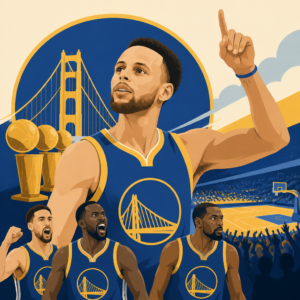

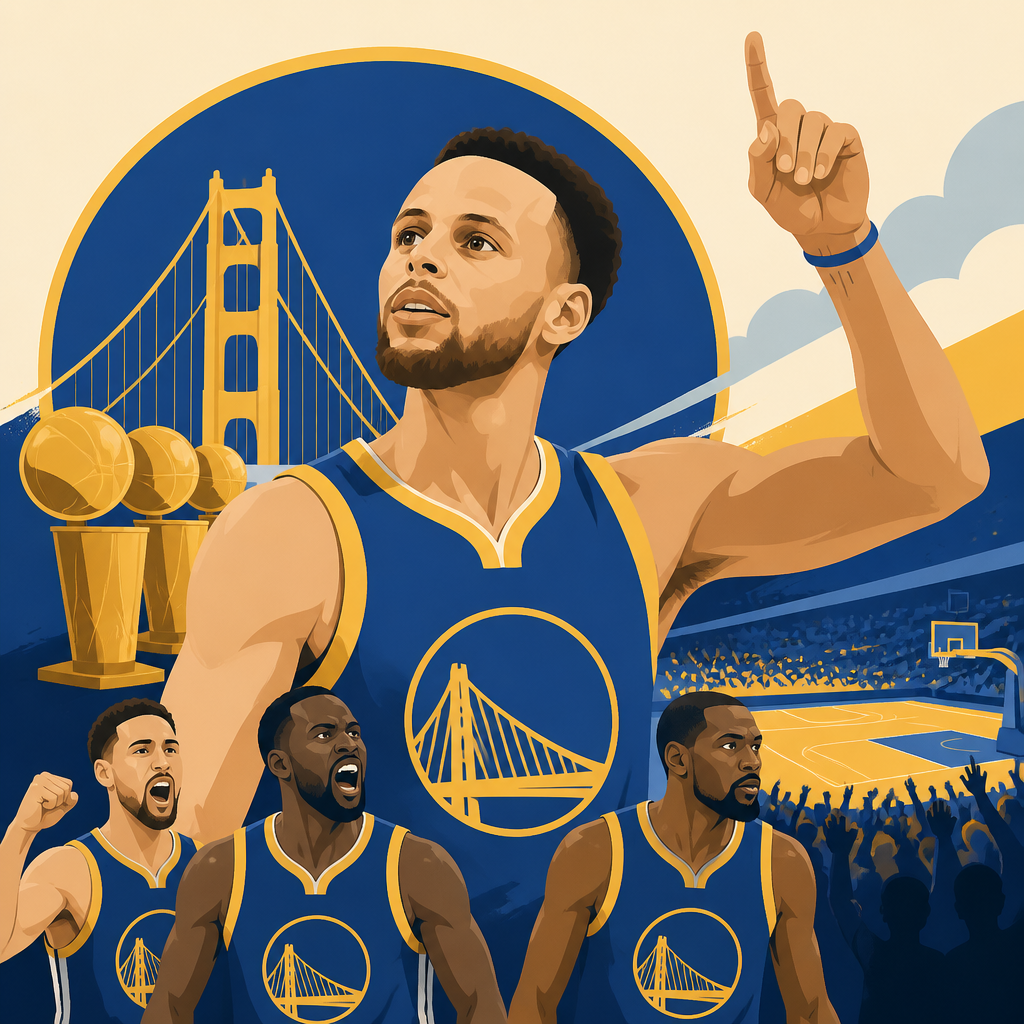
The Golden State Warriors dynasty explained begins with a simple truth: one franchise reshaped modern basketball by building around an unprecedented shooter, aligning smart ownership with elite player development, and committing fully to a style that many teams once considered too risky. In NBA terms, a dynasty is not just a team that wins one championship. It is a sustained period of contention, repeated Finals appearances, multiple titles, and a recognizable identity that changes how the league plays. The Warriors met every part of that definition. From 2015 through 2022, Golden State reached six NBA Finals and won four championships, while Steph Curry became the central force behind a strategic revolution.
As someone who has followed and analyzed team-building cycles across the league, I view the Warriors as the clearest modern example of how a team history can pivot on one star without becoming a one-man story. Curry mattered most, but the dynasty depended on institutional competence. Joe Lacob’s ownership group invested heavily in infrastructure. Bob Myers and the front office drafted and retained key talent. Steve Kerr installed principles that unlocked spacing, pace, and constant movement. Draymond Green anchored the defense and decision-making. Klay Thompson gave the team another elite shooter and a perimeter stopper. Andre Iguodala, Andrew Bogut, Kevin Durant, Kevon Looney, and a deep cast of role players each solved specific problems at the right time.
Why does this matter within NBA team histories? Because the Warriors are a bridge between eras. They inherited some lessons from the Spurs about continuity, unselfishness, and shot quality, but they pushed those ideas into a new extreme. They normalized high-volume three-point shooting, smaller lineups, switching defenses, and offense initiated far from the basket. Before Golden State, teams wanted spacing. After Golden State, every front office demanded it. Before Curry, pulling up from 28 feet in transition was often labeled a bad shot. After Curry, defenders had to pick him up near half court, and coaches at every level started teaching range as a practical weapon rather than a novelty.
This hub article covers the Warriors’ transformation from a long-struggling franchise into a dynasty, the championship years, the tactical innovations, and the wider effect on the NBA. It also explains the limits of the model. Not every team can replicate Golden State, because not every team has the greatest shooter ever, a top-tier defensive communicator, and a second All-NBA caliber shooter in the same age curve. Still, the Warriors provide one of the most important case studies in team history: how drafting well, developing patiently, and committing to a coherent identity can alter the sport itself.
From Long-Suffering Franchise to Modern Power
For much of their history, the Warriors were not a model franchise. They won titles in Philadelphia in 1947 and 1956, then captured the 1975 championship behind Rick Barry after relocating to California, but sustained excellence proved elusive for decades. The “Run TMC” era with Tim Hardaway, Mitch Richmond, and Chris Mullin made Golden State entertaining in the early 1990s, yet it did not become a true championship window. Ownership changes, uneven drafting, injuries, and inconsistent roster planning kept the team from joining the league’s elite. That long context matters because dynasties are easier to appreciate when you understand how rare organizational stability had been for this franchise.
The inflection point began after Joe Lacob and Peter Guber purchased the team in 2010. Their approach was not perfect, but it was ambitious and process-oriented. The Warriors invested in analytics, sports science, and coaching support at a level that reflected championship intent. The 2012 draft brought Harrison Barnes and Draymond Green. The team already had Curry, selected in 2009, and Thompson, drafted in 2011. Even then, the dynasty was not obvious. Curry’s ankles were a serious concern. Thompson had not yet become a perennial All-Star. Green was a second-round pick without a clear positional label. Golden State’s rise depended on identifying uncommon fit before the rest of the league fully saw it.
The 2013 playoff upset over the Denver Nuggets signaled that the foundation was real. Mark Jackson deserves credit for helping install defensive belief and a tougher team identity, even though his offensive system remained comparatively rigid. The eventual decision to replace Jackson with Steve Kerr in 2014 was controversial, but it proved transformative. Kerr, influenced by Phil Jackson’s triangle concepts and Gregg Popovich’s motion principles, created an offense built on split cuts, quick passing, weak-side timing, and freedom within structure. In plain terms, the Warriors did not stand still. They made defenders chase, decide, and fail.
How Steph Curry Changed the Geometry of Basketball
Steph Curry changed the NBA because he altered spacing in a way no player had before. Great shooters existed long before him. Reggie Miller bent defenses with movement. Ray Allen punished any daylight. Steve Nash weaponized efficiency and off-the-dribble craft. Curry combined pieces of all of them, then added deeper range, faster release mechanics, and a willingness to shoot in volumes that broke old assumptions. Defenses had to guard him several feet beyond the three-point line, which expanded driving lanes, opened split-action passes, and made help defense late by default. That is not metaphorical geometry. It is literal court distortion.
Curry’s impact was not just that he made difficult shots. It was that he made difficult shots efficient enough to be worth building an offense around. His 2015-16 season remains one of the defining offensive campaigns in league history: 30.1 points per game, 50.4 percent from the field, 45.4 percent from three, 90.8 percent from the line, and 402 made threes, all while leading the Warriors to a 73-9 record. He became the first unanimous MVP. Those numbers ended debates about whether a jump-shooting lead guard could be the best player on a title-level team. Curry did not merely answer that question. He closed it.
Just as important, Curry’s off-ball movement forced a new defensive labor. Many stars dominate with the ball. Curry exhausts defenses without it. He relocates after passes, sprints through pin-downs, and uses screens as launching points for instant release threes. I have always considered that one of the least appreciated parts of the dynasty, because it required every teammate to read and react in sync. Green became elite at dribble handoffs and short-roll passing. Thompson understood spacing windows instinctively. Bogut and Looney set legal, physical screens that created fractions of separation. Golden State’s system was not “let Steph cook” in isolation. It was coordinated pressure on all five defenders.
| Season | Regular-Season Record | Finals Result | Why It Mattered |
|---|---|---|---|
| 2014-15 | 67-15 | Champions | Validated the motion offense and “Death Lineup” versatility |
| 2015-16 | 73-9 | Lost Finals | Set record pace and confirmed Curry’s range as a system-defining force |
| 2016-17 | 67-15 | Champions | Added Durant, creating one of the most talented teams ever |
| 2017-18 | 58-24 | Champions | Showed the dynasty could handle fatigue and still finish the job |
| 2021-22 | 53-29 | Champions | Proved Golden State could evolve beyond its first peak |
The Core: Klay Thompson, Draymond Green, and the System Around Them
No serious Warriors dynasty explained account can treat Curry as a solo act. Klay Thompson was the ideal backcourt partner because he required almost no dribbles to swing games. His shooting gravity meant opponents could not load fully toward Curry, and his perimeter defense allowed Golden State to survive difficult guard matchups. Thompson’s famous eruptions, including 37 points in one quarter against Sacramento in 2015 and Game 6 against Oklahoma City in the 2016 Western Conference finals, were not random hot streaks. They were the product of elite footwork, balance, and shot preparation under pressure.
Draymond Green was even more structurally important. He defended every frontcourt archetype, quarterbacked rotations, rebounded in traffic, and served as the connective passer that made the offense breathe. In the Warriors’ best lineups, Green functioned as a center on defense and a point forward on offense. That role became central to the “Death Lineup,” usually featuring Curry, Thompson, Iguodala, Barnes or Durant, and Green. The group switched actions, ran in transition, and spaced the floor without sacrificing intelligence. Small ball had existed before Golden State, but the Warriors made it feel sustainable because Green supplied rim protection by timing, leverage, and anticipation rather than traditional size.
Andre Iguodala also deserves historic credit. His acceptance of a bench role in 2014-15 stabilized the rotation, and his insertion into the starting lineup in the Finals against Cleveland shifted the series enough to earn him Finals MVP. Andrew Bogut gave the dynasty an earlier layer of interior defense and screening. Shaun Livingston punished second units from the mid-post. Later, Kevin Durant provided a scoring release valve no defense could solve, while Kevon Looney became a master of positional rebounding and subtle screen angles. This is how dynasties actually work: not through brand names alone, but through complementary specialists whose strengths overlap cleanly.
Championship Runs, Setbacks, and the Durant Era
The Warriors won the 2015 title over the Cavaliers, lost the 2016 Finals after leading 3-1, then added Kevin Durant in one of the most consequential free-agent moves in NBA history. The Durant decision remains divisive, but from a basketball perspective, its logic was overwhelming. Golden State had just watched late-game offense stall under maximum defensive pressure. Durant solved that by giving them a seven-foot shot creator who could score over any coverage. In 2017, the Warriors went 16-1 in the playoffs, one of the most dominant postseason runs ever recorded. Their offense blended motion principles with isolations that were far more efficient because defenders could not help freely against Curry and Thompson.
The 2018 title reaffirmed the group’s resilience, but strain was building. Repetition, scrutiny, injuries, and personality friction gradually reduced the joy and spontaneity that had defined the first phase of the dynasty. The 2019 Finals loss to Toronto marked the end of that chapter, with Thompson suffering a torn ACL and Durant rupturing his Achilles. Many teams would have collapsed permanently under that damage. Instead, Golden State rebuilt on the fly. The front office repositioned contracts, retained Green, trusted Curry’s longevity, and integrated younger talent such as Jordan Poole while eventually adding veterans who fit a known identity.
The 2022 championship may be the most revealing title in the entire Warriors timeline. It showed that the dynasty was not only about overwhelming talent. It was about standards, reads, and institutional memory. Golden State defeated a younger, elite Boston defense by leaning into familiar habits: patient half-court execution, opportunistic transition play, and versatile team defense. Curry’s performance in that Finals, especially 43 points in Game 4, silenced the last lingering doubts about his place among the very greatest players. He had already changed the NBA. In 2022, he proved the model could survive decline, injury, and reinvention.
What the Warriors Changed Across the League
The Warriors’ influence spread through roster construction, shot selection, player development, and even youth basketball culture. Teams prioritized wings who could switch defensively and still make quick decisions on offense. Centers who could not defend in space or facilitate became harder to play deep in the playoffs. Pull-up shooting gained strategic legitimacy. According to league-wide tracking trends, three-point attempt rates climbed steadily through the 2010s, and the Warriors were the clearest stylistic accelerant. Their success did not create the three-point era alone, but it pushed the league from acceptance to dependency.
There were side effects. Some organizations misunderstood the lesson and chased volume without context, assuming more threes automatically meant smarter offense. Golden State’s real advantage was not reckless shooting. It was generating high-value attempts through movement, timing, and personnel fit. The franchise also showed that a team could be both entertaining and fundamentally sound. Their best possessions were improvisational on the surface but governed by repeatable rules: maintain spacing, cut when defenders top-lock, hit the short roll, screen with intent, and trust the extra pass. Coaches across the NBA, college basketball, and international systems adopted pieces of that template because it worked under postseason pressure.
For readers exploring NBA team histories, the Warriors are now a central reference point, much like the Jordan Bulls, Duncan Spurs, Showtime Lakers, or the Bird-era Celtics. Their dynasty will be studied not only for banners, but for how clearly it demonstrated the relationship between star talent and organizational clarity. If you are building out your understanding of NBA teams, the next step is simple: trace how other franchises responded to Golden State’s blueprint, then compare which adaptations lasted and which failed. That is where team history becomes strategy, and where the Warriors’ legacy remains most visible today.
Frequently Asked Questions
What made the Golden State Warriors a true NBA dynasty rather than just a championship team?
The Golden State Warriors are considered a true dynasty because their success was sustained, repeatable, and influential across the entire league. In NBA history, a dynasty is defined by more than a single title run. It means remaining in championship contention for years, reaching the Finals multiple times, winning several championships, and establishing a style of play that others try to imitate. The Warriors checked every one of those boxes. Between 2015 and 2022, they won four NBA championships, appeared in six NBA Finals, and became the central measuring stick for the modern league.
What separated Golden State from a typical contender was the combination of elite talent, continuity, and a clear basketball identity. Their core of Stephen Curry, Klay Thompson, and Draymond Green stayed together through multiple championship cycles, and that continuity created a level of chemistry few teams could match. At the organizational level, ownership invested aggressively, the front office drafted exceptionally well, and the coaching staff built a system that maximized skill, spacing, pace, and decision-making. The result was not just winning, but a model of winning that changed how teams thought about offense, roster construction, and even player development.
How did Steph Curry change the NBA during the Warriors dynasty?
Steph Curry changed the NBA by proving that perimeter shooting could be the foundation of a championship dynasty, not just a complementary skill. Before Curry’s rise, three-point shooting was certainly important, but it was not generally viewed as the defining force of a title-winning offense. Curry altered that idea completely. His range extended defenses far beyond the traditional arc, his quick release made contests less effective, and his off-ball movement forced teams to defend every inch of the floor. That created spacing at a historic level and opened driving lanes, cutting opportunities, and easier shots for everyone around him.
His influence went beyond statistics, although those were remarkable on their own. Curry won multiple MVP awards, including the first unanimous MVP in NBA history, and led offenses that routinely ranked among the best the league had ever seen. Just as important, he changed basketball strategy. Teams began prioritizing shooters, positionless lineups, and pace-and-space systems because the Warriors showed that those ideas could dominate at the highest level. Young players at every level of the sport started modeling their games after Curry, practicing deeper shots and valuing skill and movement more than size alone. In that sense, Curry did not just lead a dynasty; he redefined what modern offensive greatness looks like.
Why was the Warriors’ playing style so revolutionary?
The Warriors’ style was revolutionary because it combined high-volume three-point shooting with constant motion, rapid decision-making, defensive versatility, and unselfish play. Plenty of teams had good shooters before Golden State, but the Warriors turned shooting into the center of a complete basketball ecosystem. Their offense was not built around one player holding the ball and taking difficult shots in isolation over and over. Instead, it featured split actions, quick passing, screening away from the ball, and relentless player movement that made defenses chase for entire possessions.
That style became especially difficult to stop because it was paired with smart, versatile defenders. Draymond Green could guard multiple positions and anchor small-ball lineups, Klay Thompson defended top perimeter threats, and the team as a whole learned how to switch, rotate, and recover at a high level. Offensively, the “small-ball” approach stretched opposing big men away from the basket and forced slower teams into uncomfortable matchups. Defensively, it allowed Golden State to play faster and more flexibly. The Warriors did not just shoot more threes than many opponents; they created better threes, turned defense into transition offense, and used intelligence and chemistry to make the game feel faster than most teams could handle. That combination is what made their system feel new and transformative.
How important were Klay Thompson, Draymond Green, and the Warriors organization to the dynasty?
They were absolutely essential. While Steph Curry was the face of the dynasty and the player who most dramatically changed the sport, the Warriors would not have become a historic force without Klay Thompson, Draymond Green, and a highly competent organization around them. Thompson was the ideal backcourt partner for Curry because he could space the floor at an elite level without needing the ball in his hands constantly. He was one of the greatest catch-and-shoot players in NBA history and also a strong perimeter defender, which allowed Golden State to thrive on both ends.
Draymond Green was just as vital, though in a very different way. He served as the emotional engine, defensive quarterback, and connective passer who made the Warriors’ system function at its highest level. His versatility allowed Golden State to embrace small-ball without sacrificing defense, and his passing helped unlock the team’s movement-heavy offense. Beyond the players, ownership and the front office deserve major credit for building and sustaining the dynasty. The organization drafted well, hired effectively, invested in depth and development, and stayed committed to a long-term vision. Head coach Steve Kerr also played a huge role by implementing a scheme that blended structure with freedom, enabling the team’s stars to maximize their strengths while keeping everyone involved. Dynasties are never built by one person alone, and Golden State is a perfect example of that.
What is the long-term legacy of the Warriors dynasty and Steph Curry’s impact on basketball?
The long-term legacy of the Warriors dynasty is that it permanently changed the way basketball is played, evaluated, and taught. Their success accelerated the league-wide embrace of three-point shooting, spacing, versatility, and skill-based lineups. Front offices increasingly sought players who could shoot, pass, switch defensively, and thrive in motion offenses. Coaches at every level began designing systems that emphasized ball movement and spacing rather than crowded midrange-heavy attacks. Even the archetype of the superstar shifted, with more attention placed on efficiency, gravity, and how one player can elevate teammates without dominating every possession in a traditional way.
Steph Curry’s personal legacy is even broader. He showed that a player who was not physically overwhelming by classic NBA standards could still become the defining force of an era through skill, creativity, conditioning, and confidence. He expanded the boundaries of acceptable shot selection and forced defenses to adapt in unprecedented ways. For younger generations, Curry became proof that shooting can be transformational, not just helpful. For the NBA, he became one of the most influential players ever because his style produced both championships and imitation. That is the clearest sign of a dynasty’s power: it wins repeatedly, leaves a blueprint behind, and changes the sport long after the banners are raised.