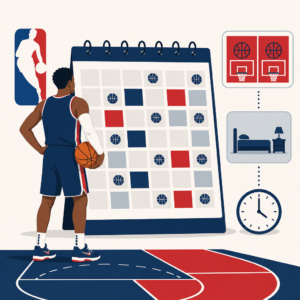

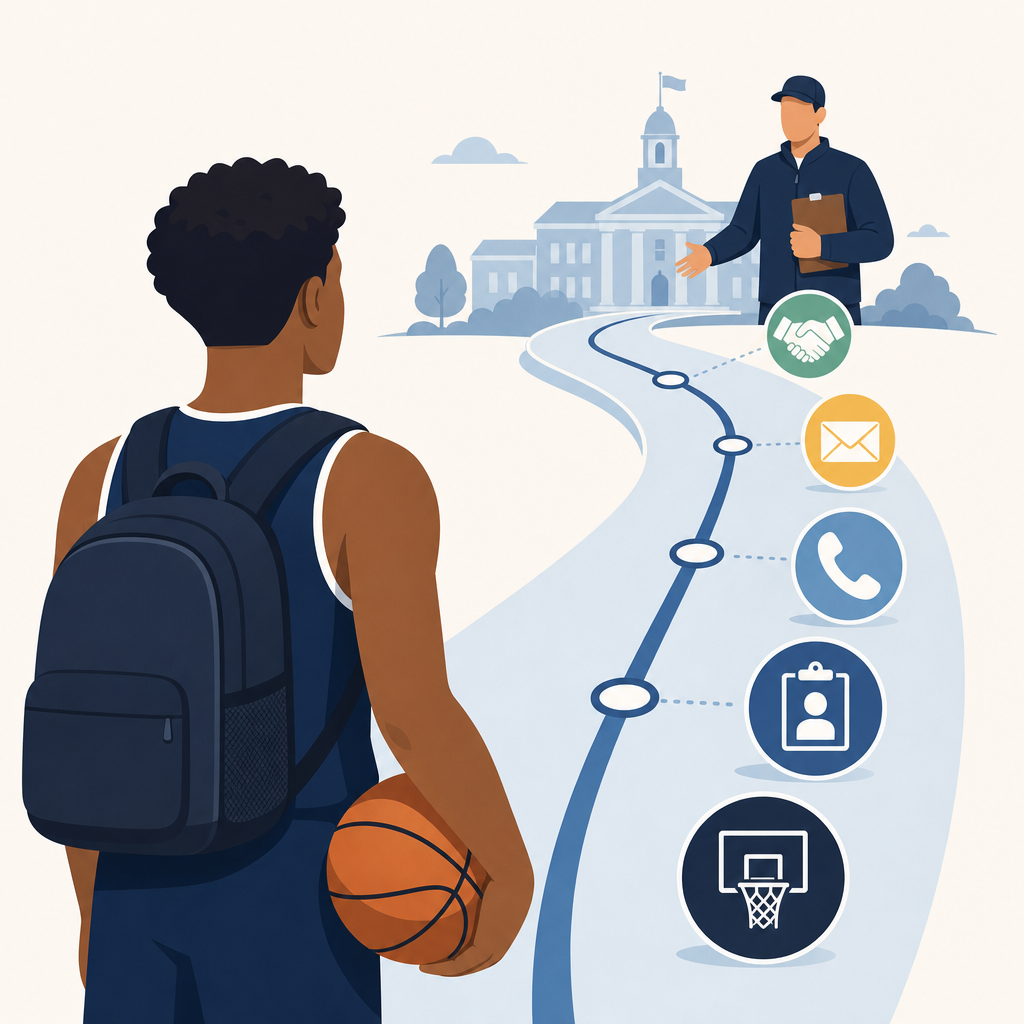
College basketball recruiting moves on a strict calendar, and families who understand that calendar make better decisions, avoid common mistakes, and respond faster when opportunities appear. The central question is simple: when can college coaches first legally contact you? The answer depends on division, communication method, and your year in school, but the broader recruiting timeline matters just as much as the first phone call or text. In practice, recruiting begins long before direct contact is allowed, because coaches can evaluate prospects at events, watch film, receive information from club and high school coaches, and build preliminary recruiting boards months or years in advance.
In college basketball, “contact” has a specific meaning. It usually refers to direct communication between a college coach and a prospective student-athlete by phone, text, email, social media direct message, or in-person conversation beyond a brief hello at certain events. “Evaluation” means coaches watching you compete, reviewing transcripts, talking with your coaches, and assessing whether your athletic profile, academics, character, and projected development fit their program. “Recruiting timeline” refers to the sequence of permitted and restricted actions: when coaches can observe you, when they can initiate outreach, when you can visit campus, and when offers become realistic. Those distinctions matter because many players assume silence means no interest, when often it simply means a coach cannot legally start a conversation yet.
For most athletes, the key benchmark is NCAA Division I basketball legislation allowing coaches to begin direct recruiting contact on June 15 after sophomore year of high school. That date has become the practical starting line for many serious recruiting conversations in men’s and women’s basketball, though the exact recruiting environment still varies by school, conference, and staff philosophy. Division II and Division III follow different recruiting rules, and NAIA and junior colleges operate under separate frameworks. If you treat all levels the same, you will misread your market. I have seen families panic in April of sophomore year because no coach has texted yet, then receive a wave of interest after June 15 once legal restrictions lift.
This matters because basketball recruiting is compressed, competitive, and increasingly data-driven. Coaches manage scholarship limits, transfer portal needs, NIL implications, admissions standards, roster balance, and positional fit at the same time. Players have to manage development, exposure, academics, and communication strategy without violating rules or wasting energy on myths. A clear college basketball recruiting timeline helps you know what to do each season: when to send film, when to attend camps, when unofficial visits are useful, when academic records need to be ready, and when “we like you” turns into a committable offer. If you want to maximize your options, understanding when coaches can first legally contact you is the beginning, not the finish line.
When coaches can first legally contact you in college basketball recruiting
For NCAA Division I basketball, college coaches can generally begin direct contact with prospects on June 15 after the athlete’s sophomore year of high school. That includes phone calls, text messages, emails, and direct messages, and it is the date most families should circle first. Before that point, coaches may still evaluate you at NCAA-certified events, review your film, speak with your high school or grassroots coaches, and track your academic progress. They simply cannot initiate the same level of direct communication with you. As a result, strong prospects often have real interest building behind the scenes before the first legal contact date arrives.
Division II rules have historically allowed earlier communication than Division I in some contexts, while Division III programs can often communicate more freely because they do not offer athletic scholarships in the same NCAA structure. NAIA schools and junior colleges also have their own recruiting rules, and many are more flexible. That is why families should never ask only, “When can coaches call?” They should ask, “Which governing body is this program in, and what actions are allowed right now?” A mid-major Division I staff, an elite academic Division III program, and an NAIA contender may all recruit the same player differently because their calendars and roster pressures are different.
Even after direct contact becomes legal, in-person recruiting still follows additional restrictions tied to recruiting periods. The NCAA uses periods such as contact periods, evaluation periods, dead periods, and quiet periods. During a contact period, coaches can usually meet prospects face to face off campus. During an evaluation period, they can watch you play but cannot have off-campus recruiting conversations with you. During a dead period, in-person recruiting contact is prohibited, even if phone or electronic communication may still be allowed. These distinctions explain why a coach might text often in July but say they cannot meet at your tournament hotel afterward.
The practical takeaway is straightforward: legal contact dates open the door, but they do not guarantee recruiting momentum. Coaches prioritize players they have already identified through film, live evaluations, camp settings, trusted club programs, and academic fit. If your materials are not ready by June 15 after sophomore year, you may lose time to players who prepared earlier. The first legal contact is important, but the work that sets up that moment is what usually determines how strong the opportunity becomes.
What happens before coaches can directly reach out
Before direct contact begins, the smartest recruits act like active candidates, not passive prospects. That means building a short skills video, a longer game film package, an accurate player profile, and an introductory email that includes graduation year, height, position, GPA, test information if available, high school team, grassroots team, upcoming schedule, and links to film. Coaches may not be able to reply freely before certain dates, but they can still log your information, forward it internally, and decide whether to evaluate you. In my experience, prospects who send organized, honest, concise information get tracked more seriously than players who rely on vague social media hype clips.
Academics matter earlier than many families expect. Coaches often ask for transcripts before they invest significant recruiting time, especially at schools with selective admissions or limited support through admissions review. A 3.6 GPA with solid core courses may keep more options alive than a slightly stronger scoring average paired with weak classroom habits. Basketball recruiting is not only talent identification; it is risk management. Staffs want players who can stay eligible, fit campus culture, and progress toward a degree. If your academic record is uneven, address it early with stronger course planning, tutoring, and documented improvement.
Exposure before legal contact typically comes from three channels: high school competition, grassroots events, and camps. High school basketball shows how you perform in a structured team environment and against local rivals. Grassroots circuits increase visibility because many college staffs recruit from concentrated live periods where they can see dozens of prospects in one weekend. Camps are useful when they are targeted. A camp at a school that fits your level can lead to meaningful evaluation; a random camp at a national power where you are clearly below the roster standard usually does not. Exposure is valuable only when it reaches the right audience.
Players should also understand that third-party communication is common before legal contact dates. Your club coach, high school coach, trainer, or school counselor may speak with colleges about your fit, work ethic, and academic standing. Those conversations can help or hurt. Coaches trust sources who are honest and specific. If an intermediary oversells your scholarship level, your credibility suffers. If they explain accurately that you are a tough lead guard, strong student, and likely low-major or high-academic fit, college staffs can evaluate you in the right context. Good recruiting starts with accurate market positioning.
Year-by-year recruiting timeline from freshman year through senior year
Freshman year is primarily about foundation. Your job is to improve skill level, build sound habits, and establish academic consistency. College coaches may notice early physical tools or production, but most players are not being seriously recruited yet. Use this year to create baseline film, learn your realistic position, and begin tracking schools that match your probable level. Sophomore year is when evaluation accelerates. By spring and summer, serious prospects should have updated film, transcripts, measurable information, event schedules, and a clear list of target programs before June 15 arrives.
Junior year is often the decisive recruiting year in college basketball. Once direct contact is permitted, coaches begin sorting priority targets, extending some offers, inviting prospects to campus, and comparing players within the same scholarship slot. This is where communication quality matters. Reply promptly, answer questions directly, and ask smart questions about roster needs, style of play, player development, admissions, and scholarship timing. Senior year can still produce opportunities, especially at the mid-major, low-major, Division II, Division III, NAIA, and junior college levels, but the process often becomes more positional and urgent because staffs are filling remaining spots.
| School Year | Main Recruiting Focus | Best Actions for Players |
|---|---|---|
| Freshman | Skill growth, academics, early identification | Build habits, collect film, learn realistic level |
| Sophomore | Evaluation and pre-contact preparation | Update profile, send film, prepare for June 15 |
| Junior | Direct communication, visits, offers | Respond quickly, compare fit, ask detailed questions |
| Senior | Final roster decisions and late openings | Stay active, widen options, verify scholarship status |
One important reality is that timelines differ by player tier. A top-50 national recruit may receive intense attention very early, including heavy evaluation before legal contact opens. A strong mid-major prospect may not see major traction until the spring of junior year. A late-blooming post player who grows three inches between junior and senior seasons can suddenly become a priority recruit. Recruiting calendars create structure, but player development creates movement. Do not assume your timeline must match someone else’s highlight reel announcements.
The transfer portal has also changed timing. College coaches now balance high school recruiting with immediate roster needs from transfers. That means some staffs recruit high school players more selectively, especially at older positions like point guard and center where experience is highly valued. It also means high school prospects who fit clear developmental roles, defend, shoot, and succeed academically can still separate themselves. The timeline matters, but so does projecting how a coach will use one of their limited scholarships in a changing roster market.
How offers, visits, and evaluations fit into the recruiting process
An offer is not always as simple as it sounds. In basketball recruiting, some offers are committable immediately, while others are conditional on transcripts, test scores, admissions pre-read results, or roster movement. Some are verbal expressions of strong interest rather than a formally authorized scholarship commitment. Ask direct questions: Is this a committable offer today? Is it full or partial? What is the timeline to decide? Where do I rank on your board at my position? Serious programs will answer clearly, even if the answer is nuanced.
Visits are where recruiting moves from interest to fit. An unofficial visit, which families usually fund themselves, can happen before an official visit and is useful for learning campus layout, staff personalities, academic support resources, and team culture. An official visit, governed by recruiting rules, is typically reserved for prospects a program is seriously considering. During visits, pay attention to specifics: practice pace, how assistants teach, whether current players seem engaged, how strength staff interact, and whether the coaching staff describes a concrete role for you. General praise means little; detailed plans mean far more.
Evaluations remain central throughout the process. Coaches do not stop evaluating once they call you. They watch whether your motor holds up on the second day of a tournament, how you respond to foul trouble, whether you defend multiple actions, and how your body language affects teammates. They also compare your transcript, references, and communication habits against other recruits. I have watched players impress a staff with average box-score numbers simply because they rotated early, talked on defense, sprinted into ball screens, and handled coaching well. Winning traits travel better than empty production.
Families should keep documentation organized throughout this stage. Maintain a list of every school contact, date of communication, event attended, visit details, and questions still unanswered. Recruiting becomes confusing quickly when ten or fifteen programs are involved. Clear records help you compare not just who likes you, but who has shown consistent effort, transparency, and roster certainty. That discipline is especially helpful late in the cycle, when coaches may increase pressure and present deadlines that sound more urgent than they really are.
Common recruiting mistakes and how to avoid them
The biggest mistake is misunderstanding level. Many players chase only power-conference logos when their true market may be mid-major, Division II, high-academic Division III, or NAIA. That does not mean lowering ambition; it means matching your current profile with programs where you can realistically earn a roster spot, scholarship support, and playing opportunity. Another mistake is relying only on social media. Coaches may discover players online, but they recruit from verified game film, live evaluations, academic records, and trusted relationships. A viral mixtape rarely replaces a full-game sample.
Another common error is poor communication. Recruits who answer texts days later, send sloppy emails, or let parents do all the talking create concern. College staffs recruit adults in training. They want players who can manage schedules, communicate respectfully, and ask thoughtful questions. Families also damage opportunities when they assume every contact means an imminent offer. Interest is not commitment. Evaluation is not a promise. Keep perspective until details are explicit. At the same time, do not disappear because one school cools off. Recruiting boards change constantly.
Finally, many athletes stop developing once recruiting attention starts. That is backwards. The players who rise most are often the ones who use interest as evidence that their habits are working, then double down on skill work, strength, nutrition, sleep, and academic discipline. If you want better offers, become a better player after coaches find you, not before only.
College basketball recruiting is easier to navigate when you understand the legal contact date, the evaluation process behind it, and the milestones that follow. For most Division I prospects, June 15 after sophomore year is the first major direct-contact benchmark, but successful recruiting depends on much more than one date. Players need early preparation, honest level assessment, strong academics, organized communication, quality film, and targeted exposure. Families need to know the difference between contact and evaluation, interest and offer, unofficial and official visit, and broad praise versus a clear roster plan.
The main benefit of understanding the recruiting timeline is control. You cannot control who offers, but you can control how ready you are when coaches are finally allowed to reach out. Build your profile early, ask informed questions, track every interaction, and evaluate schools as carefully as they evaluate you. If you are starting your process now, create your recruiting materials, confirm your academic standing, and make a realistic target list before the next live period arrives.
Frequently Asked Questions
When can college basketball coaches first legally contact a recruit?
The first date a college basketball coach can legally contact you depends on the NCAA division, the communication method, and your year in high school. In general, families should understand that “contact” does not mean the same thing across every level. For example, there are different rules for phone calls, text messages, direct messages, emails, off-campus contact, and unofficial recruiting conversations that happen through camps or intermediaries. In men’s and women’s basketball, NCAA rules have historically been stricter than in many other sports, which is why timing matters so much. At the Division I level, direct recruiting communication is tied to specific dates on the recruiting calendar, and those dates may change as the NCAA updates legislation. Division II and Division III programs often have more flexibility, but coaches still must follow rules about when and how they can initiate contact.
The practical takeaway is that families should not rely on rumors, social media chatter, or what happened to another player in a different class. The safest approach is to verify current NCAA, NAIA, or junior college rules for your graduating class and your sport-specific division. Also remember that recruiting often starts before formal coach-to-athlete contact is allowed. Coaches may evaluate you at AAU events, high school games, showcases, and camps long before they can call or text you directly. That means your visibility, academic readiness, highlight film, and communication plan should be in place well before the first legal contact date arrives. By the time a coach can legally reach out, many recruiting boards are already taking shape.
Does the recruiting timeline differ between Division I, Division II, and Division III basketball?
Yes, the recruiting timeline can differ significantly by division, and understanding those differences can help families avoid confusion and missed opportunities. Division I basketball generally operates under the most detailed and closely watched recruiting rules. There are often specific windows governing when coaches can begin calling, texting, emailing, or having in-person off-campus conversations with prospects. Because Division I recruiting is highly competitive and heavily regulated, many families focus on those rules first. However, doing that alone can create blind spots, especially if a student-athlete is also a realistic fit for Division II or Division III programs.
Division II schools may have earlier or more flexible communication opportunities compared with Division I, depending on the exact rule in effect for that sport and recruiting cycle. Division III schools, which do not offer athletic scholarships through the NCAA model, often approach recruiting with fewer restrictions and a more individualized process. That does not mean Division III recruiting is casual or unstructured. In reality, strong academic fit, admissions timing, financial aid planning, and coach communication can become even more important at that level. Families should also remember that NAIA programs and junior colleges have their own recruiting frameworks, and those opportunities can open at different points on the timeline.
The smartest approach is to treat recruiting as a multi-lane process rather than a single Division I timeline. A player may hear from one division earlier, receive stronger attention from another, and ultimately find the best overall fit somewhere else entirely. Understanding the differences between divisions helps you respond appropriately, ask better questions, and avoid assuming that silence from one level means no one is interested. Often, it simply means the rules, timing, and priorities are different.
Can coaches watch you play or evaluate you before they are allowed to contact you directly?
Absolutely. This is one of the most misunderstood parts of the college basketball recruiting process. In many cases, coaches can evaluate prospects well before they are allowed to initiate direct communication. That means they may be watching you at live periods, AAU tournaments, scholastic events, certified showcases, camps, and even through video shared by club or high school coaches. Families sometimes assume that no contact means no recruiting is happening, but that is not how the process works. In reality, evaluation usually comes first, and direct outreach comes later once the rules allow it.
This distinction is important because it changes how players should prepare. If coaches are building early impressions from your game film, event performances, body language, effort level, and consistency, then your recruiting profile needs to be ready long before your phone starts ringing. Student-athletes should have updated academic information, verified measurements, a clear schedule, quality video, and a list of target schools in place early. Parents should also understand that coaches often gather information through third parties before direct contact opens. They may speak with high school coaches, AAU coaches, trainers, and school counselors to learn more about a player’s talent, character, grades, and coachability.
So yes, recruiting can begin long before legal direct contact. That is why the timeline should be viewed as more than a single date. The first legal call or text matters, but it usually comes after months of observation and internal evaluation. Players who understand that reality are more likely to be prepared, proactive, and positioned well when communication officially begins.
What should families do before the first legal contact date arrives?
The period before coaches can legally contact you is one of the most important phases of the entire recruiting journey. This is the time to build your foundation. First, make sure your academics are in order. College coaches want to know not just whether you can play, but whether you can be admitted, stay eligible, and handle the demands of college basketball. That means families should pay attention to GPA, course selection, test policies where relevant, and NCAA Eligibility Center requirements if applicable. A strong academic profile can increase options across every level.
Second, develop a realistic recruiting strategy. Create a school list based on level, fit, geography, academics, playing style, and roster needs rather than just brand-name programs. Assemble a strong highlight video and keep full-game film available. Maintain an updated player résumé with contact information, stats, measurements, academic details, and team schedule. Reach out to coaches when permitted for the prospect side of the communication process, because in many situations student-athletes can send emails or fill out recruiting questionnaires before coaches are allowed to respond in certain ways. That allows you to get on programs’ radar early.
Third, be intentional about exposure. Choose events wisely, communicate schedules to coaches, and make sure your high school and club coaches can speak accurately about your game and work ethic. Families should also learn the recruiting calendar, dead periods, live periods, quiet periods, and evaluation periods if they apply to your division and sport. That knowledge helps you understand why a coach may be watching but not speaking, or why responses may be limited during certain times of year. In short, the best thing families can do before first legal contact is arrive prepared. Recruiting rewards players who are organized before the attention becomes visible.
What are the biggest mistakes recruits make with the basketball recruiting timeline?
One of the biggest mistakes is treating the recruiting process as if it begins only when a coach calls, texts, or sends a direct message. By that point, a lot of behind-the-scenes evaluation may have already happened. Players who wait for contact before improving their film, updating academics, or building a target school list often find themselves scrambling when opportunities appear. Another common mistake is relying on outdated rules. NCAA recruiting legislation can change, and basketball-specific rules are not always the same as football, baseball, or other sports. Families should verify current guidance rather than assuming information from older articles, social posts, or other parents is still accurate.
A second major mistake is misunderstanding fit. Many recruits focus too heavily on the highest-profile programs without honestly evaluating roster depth, position needs, developmental timeline, academic requirements, and playing style. That narrow approach can cause players to ignore strong opportunities at Division II, Division III, NAIA, or junior college programs where they may actually be recruited more aggressively and have a better long-term outcome. Families also make mistakes by failing to communicate professionally. Late responses, incomplete emails, poor social media judgment, and disorganized event schedules can hurt a player’s credibility quickly.
Finally, many recruits underestimate how fast recruiting can move once legal contact opens. Coaches often work from prepared lists and move quickly toward players they have already evaluated. If you are not ready with transcripts, film, event schedules, and clear communication, you can lose momentum. The families who handle the timeline best are usually the ones who understand that recruiting is both a rules-driven process and a preparation-driven process. Know the calendar, but also use the calendar wisely. That combination is what leads to better decisions and faster responses when real opportunities show up.