
Best affordable basketball rebounders for home training use are the tools I recommend most often to players who need more productive reps without relying on a partner. A basketball rebounder is any return system that sends the ball back after a shot, pass, or finishing drill, helping one player train alone. In home settings, that usually means a net-style return attachment for a portable hoop, a rebound net that redirects made and missed shots, or a multi-angle passing rebounder set on a driveway, garage court, or backyard slab. Affordable matters because most families are balancing equipment quality, available space, and durability against a real budget, not outfitting a college practice gym.
When I help parents and players choose training gear, rebounders sit near the top of the list because they solve a practical problem: wasted time chasing the ball. More touches in less time improves shooting rhythm, conditioning, and session consistency. For younger athletes, that can mean 150 useful shot attempts in 30 minutes instead of 70. For high school guards refining form, it can mean cleaner catch-and-shoot footwork because the return lands in a predictable zone. For adult players rebuilding confidence after injury, it can reduce awkward sprints after every miss and keep workouts controlled.
This article serves as a hub for basketball training gear within the broader basketball equipment category, so the focus is not only on which rebounders are worth buying, but also how they fit into a complete home setup. A good rebounder should match hoop height, playing surface, weather exposure, and the athlete’s age and skill level. It also needs to work alongside other training gear such as weighted training balls, agility ladders, cones, shot trainers, and portable passing targets. The best choice is rarely the most expensive. It is the one that creates reliable repetitions, survives outdoor use, and fits the way the athlete actually trains.
There is no single perfect rebounder for every home court. Net return systems are excellent for made-shot volume on driveway hoops. Trampoline-style passing rebounders are better for chest passes, quick hands, and reactive footwork. Premium automatic return systems can be outstanding but often push beyond what most buyers should spend for backyard use. The affordable segment is where value lives. That is where smart buyers can find sturdy steel frames, weather-resistant nets, adjustable return angles, and simple setup without paying for unnecessary features. The sections below break down the main types, buying criteria, top value picks, and the training gear ecosystem that turns a rebounder into a complete home development station.
What makes a basketball rebounder affordable and worth buying
An affordable basketball rebounder is not simply the cheapest unit on a retail page. It is a product that delivers enough repetitions, stability, and lifespan to justify its price over several seasons. In practical terms, most home buyers are shopping between about $60 and $250 for a separate rebound net or passing rebounder, while hoop-specific return attachments often land between $30 and $120. Once products move far past that range, buyers should expect meaningful upgrades in frame gauge, return consistency, warranty support, and weather resistance. If those upgrades are not obvious, the extra cost is usually not worth it.
From experience, four factors determine value. First is return consistency. If the ball comes back to roughly the same area on clean makes or firm passes, the player can develop rhythm. Second is stability. Lightweight frames that slide across concrete become frustrating fast. Third is weather durability, especially UV-resistant netting, powder-coated steel, and bungees that do not crack after a hot summer. Fourth is setup time. A rebounder that takes 40 minutes to assemble and needs constant readjustment tends to be abandoned.
Buyers should also define what kind of repetitions they want. A shot-return attachment mainly serves shooters. A multi-angle rebound net supports passing, reaction work, and first-touch drills. Some households need both, but many can start with one. For a player practicing alone on a portable hoop, a shot return often provides the best cost-per-rep. For a younger athlete sharing space and using one piece of gear for many drills, an adjustable rebound net may deliver better value.
Material quality matters more than branding slogans. Look for steel tubing at least in the 1-inch range, tightly woven netting, reinforced sleeve connections, and clear anchoring points. Recognized sporting goods brands such as SKLZ, Goalrilla, Spalding, and Lifetime often offer stronger support documentation and replacement part pathways than generic marketplace listings. That does not mean every branded model is superior, but buyers usually get fewer unpleasant surprises when there is a clear warranty and an established customer service channel.
Types of home basketball rebounders and who should use each one
There are three main categories of affordable basketball rebounders for home training use. The first is the hoop-mounted shot return. This type attaches under the rim or to the net area and funnels made shots back toward the shooter. It is best for players focused on form shooting, free throws, elbow jumpers, and catch-and-shoot repetition from known spots. The tradeoff is that missed shots still need to be chased, so it helps strongest with consistent shooters rather than beginners who miss widely.
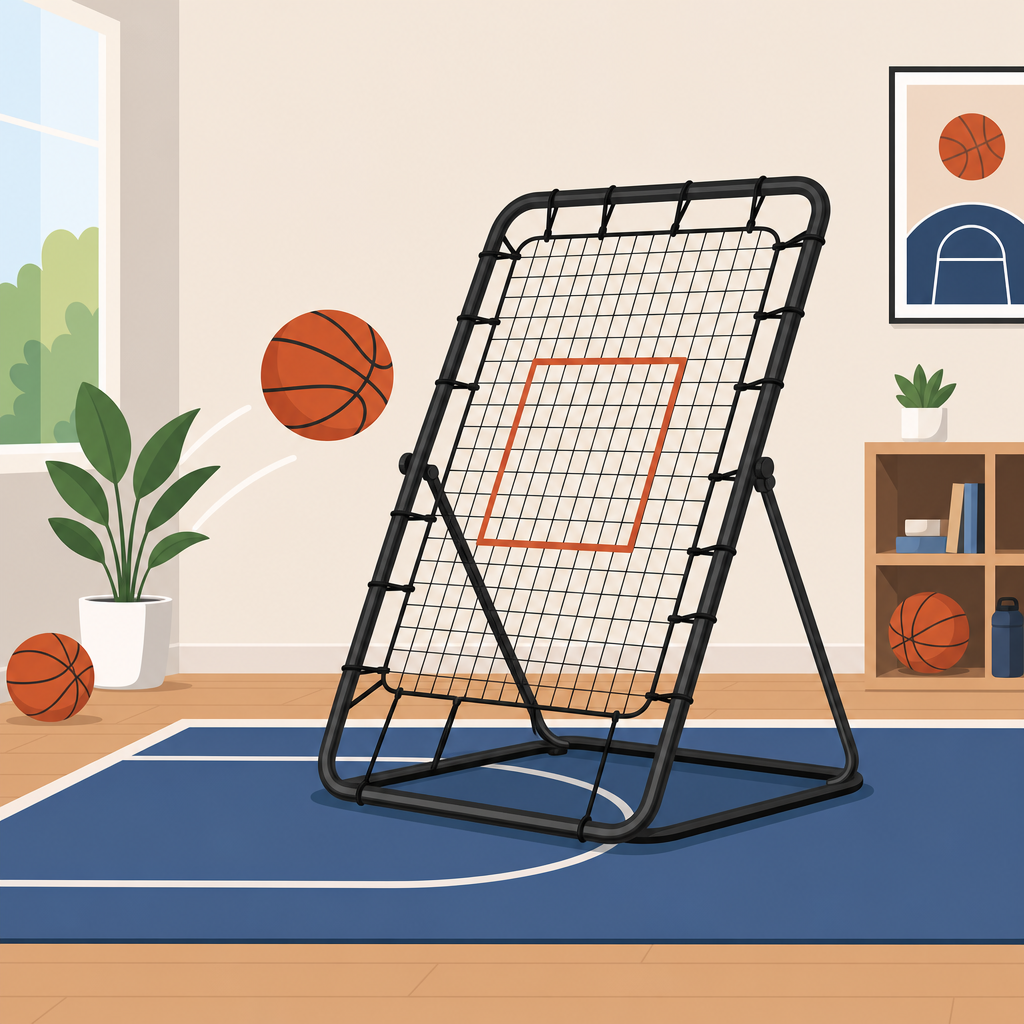
The second category is the freestanding rebound net, sometimes called a passing rebounder. This is a frame with a tensioned net that throws the ball back after a chest pass, bounce pass, or one-hand push pass. Adjustable versions can produce low skidding returns, line-drive returns, or higher unpredictable rebounds. I use this style most for players developing hand speed, defensive reactions, and passing mechanics. It also works well in small driveways where there is not room to move far from the hoop.
The third category is the larger all-purpose rebounder, often built with a wider frame and stronger tension system. These are useful for athletes who want basketball drills but also plan to use the gear for soccer, baseball, or general reaction training. The advantage is versatility. The downside is that some multi-sport models do not produce the cleanest basketball-specific return angles, especially for quick guard drills. Families choosing one piece of equipment for multiple children often land here because it spreads value across sports seasons.
Age and skill level should guide the choice. Elementary players usually benefit from easy setup and forgiving returns, not extreme ball speed. Middle school players can use smaller nets or simple shot returns effectively. High school athletes should prioritize durable frames and angle control because drill quality becomes more important. Adult recreational players often care most about convenience, storage, and preserving knees and ankles by reducing unnecessary ball chasing. Matching the rebounder to actual training goals prevents overspending and improves long-term use.
Best affordable basketball rebounders for different home setups
Several models and product styles stand out consistently in the affordable range. The SKLZ Kick-Out is one of the better-known hoop return systems for home use. It attaches to many standard rims and sends made shots back out toward the shooter. Its main strength is simplicity. For a player working on midrange form or free throws under a home hoop, it increases shot volume quickly. Its weakness is that compatibility varies by hoop design, so buyers need to verify rim support and clearance before ordering.
The Goalrilla Yard Guard is better described as a ball containment and return aid than a classic rebounder, but it is extremely useful in home training. By adding a netted barrier behind the hoop, it keeps misses from flying into streets, flower beds, or neighboring yards. In real home environments, that feature matters more than product copy often suggests. If a player hesitates to shoot freely because missed balls roll downhill into traffic, training quality collapses. Containment can be as valuable as direct return.
For passing and reaction work, the SKLZ Quickster Soccer Trainer and similar multi-angle rebound nets have often been repurposed successfully by basketball players because the frame size and tension create repeatable returns. More basketball-specific rebounders from brands sold by Dick’s Sporting Goods, Amazon, and major sporting chains usually include adjustable positions for chest passes and low bounce returns. The best affordable versions have a steel frame, folding legs, and a net that stays taut after repeated use. Avoid undersized toy-grade models that wobble after firm passes.
Portable basketball hoops from Lifetime and Spalding can also be upgraded with return accessories, creating a cost-effective training station without replacing the entire system. This matters for buyers building a training gear hub at home. If the household already owns a hoop, adding a return attachment and a separate passing rebounder may produce better results than buying an expensive standalone machine. In many cases, the smartest setup is modular: one hoop return for shooting, one freestanding rebounder for passes, and a small set of cones for movement patterns.
| Home setup | Best rebounder style | Typical budget | Why it works |
|---|---|---|---|
| Single driveway hoop | Hoop-mounted shot return | $30 to $100 | Maximizes made-shot volume with minimal footprint |
| Driveway plus open side space | Freestanding passing rebounder | $70 to $180 | Adds passing, reaction, and footwork drills |
| Backyard court near fence or street | Containment net plus return aid | $120 to $250 | Prevents lost balls and supports safer shooting sessions |
| Multi-sport family space | Large adjustable rebound net | $100 to $220 | Useful across basketball, soccer, and baseball practice |
How to choose the right rebounder for training goals, space, and durability
Start with the training objective. If the player’s main goal is becoming a more efficient shooter, choose a hoop return first. If the goal is ballhandling into passing, closeout reactions, or hand-eye speed, choose a freestanding rebounder. For broad athletic development, an adjustable net is usually the better first purchase. This sounds obvious, but many buyers get distracted by promotional photos and ignore how they actually train three times a week.
Space should be measured, not guessed. On a narrow driveway, a rebounder with long support legs can become a hazard. In windy regions, taller rebound nets need sandbags or stakes if used on pavers or grass edges. Ceiling height matters in garage installations because higher return angles can send the ball into lights or door tracks. I advise buyers to map the available drill lane, rebound path, and storage spot before buying. A product that cannot stay assembled or be moved easily ends up unused.
Durability is where low-cost products separate quickly. Powder-coated steel resists rust better than painted thin tubing. UV exposure weakens nets and elastic cords, so replacement parts are valuable. If the rebounder will live outdoors year-round, look for weather claims supported by user reviews over at least one full season. A common failure point is the junction where net tension pulls against corner sleeves. Reinforced stitching and protected anchors extend life considerably.
Also consider noise and neighbor impact. Trampoline-style rebounders create repeated thump and spring sounds that may matter in dense suburban settings. Shot return systems are quieter but can still rattle on portable rims with loose hardware. Tightening hoop bolts, using a quality net, and training with an indoor-outdoor composite ball rather than an overinflated rubber ball can reduce noise and improve the feel of the return. Small details like this influence whether the equipment remains welcome in a shared home environment.
Building a complete home training gear hub around a rebounder
A rebounder becomes far more valuable when paired with complementary training gear. The most useful add-ons are cones, floor markers, a quality pump with pressure gauge, and at least one durable indoor-outdoor basketball in the correct size. Regulation sizes matter: size 7 for most men’s play, size 6 for women’s and many youth divisions, and size 5 for younger players. Proper inflation, typically around 7.5 to 8.5 psi depending on the ball maker, improves return consistency and protects shooting mechanics.
For footwork, an agility ladder can help younger players learn coordination, but cones and taped spots are usually more game-relevant because they let athletes rehearse actual basketball movement patterns. I often pair a rebounder with five cones for pass-and-relocate shooting, closeout-to-catch drills, and one-dribble pull-ups. A resistance band can add activation work before shooting, though it should not interfere with natural mechanics during the main session. Weighted basketballs can build awareness in certain drills, but they should be used carefully and not as a replacement for standard-ball shooting.
If this page is the hub for training gear, the internal logic is simple. Rebounders handle repetition efficiency. Balls affect touch and consistency. Cones and markers shape movement. Passing targets refine accuracy. Shot training aids can help alignment but should never replace real feedback from makes, misses, and video. A phone tripod is one of the most underrated additions because players can review elbow position, dip timing, and foot placement between sets. Low-cost feedback often creates bigger gains than another accessory.
Maintenance also belongs in any serious home training plan. Wipe moisture from steel parts, store detachable nets indoors in winter, check bolts monthly, and replace frayed bungees before they snap. Affordable gear lasts much longer when treated like equipment instead of patio furniture. That is especially true for families using the setup four or five days per week.
Common mistakes buyers make and how to avoid them
The biggest mistake is buying for highlight-drill variety instead of repeatable everyday use. A rebounder should make common drills easier, not just look clever in a product video. Another mistake is ignoring compatibility. Hoop-mounted returns can interfere with certain rim braces, net hooks, or backboard supports. Always verify mounting method and dimensions. Third, buyers often underestimate weather. Cheap elastic cords degrade quickly in full sun and freezing temperatures, leading to sagging returns and early replacement.
It is also common to expect a rebounder to fix poor mechanics. It will not. It creates more reps, and more reps can accelerate improvement only when technique is sound. That is why pairing the equipment with a clear workout plan matters. Even a simple progression works: form shots, spot shooting, pass-return footwork, finishing series, then free throws. Finally, do not buy oversized gear for a very young player if setup becomes intimidating. Simple equipment used consistently beats advanced equipment used twice and forgotten.
Affordable basketball rebounders are among the smartest upgrades for any home basketball setup because they increase useful repetitions, reduce dead time, and make solo training realistic. The best option depends on the player and the space. Hoop-mounted shot returns are ideal for shooting volume. Freestanding rebound nets are better for passing, reaction work, and all-around skill sessions. Containment systems deserve attention too, especially where missed shots create safety issues or constant interruptions. Price matters, but value comes from stable construction, consistent returns, weather durability, and easy setup.
As the hub for training gear within basketball equipment, this topic connects directly to the tools that shape daily development: the right basketball, cones, markers, pumps, video feedback tools, and simple accessories that support structured workouts. A rebounder should not be viewed as a gimmick or a standalone solution. It is a force multiplier for a well-planned practice environment. When buyers choose equipment based on actual goals rather than marketing claims, they get more from every session and protect their budget at the same time.
If you are building a home training space, start by identifying the primary need: shooting repetition, passing and reaction drills, or ball containment. Measure the area, check your hoop compatibility, and choose the most durable affordable model that fits those conditions. Then add a few essential training items around it and commit to a simple weekly routine. That approach delivers the real benefit of home basketball training: more quality reps, more consistency, and steady improvement without needing a full team practice to get better.
Frequently Asked Questions
What is the best type of affordable basketball rebounder for home training use?
The best type of affordable basketball rebounder for home training use depends on how you practice, how much space you have, and what kind of hoop setup is already in your driveway or garage. For most players, the best value usually comes from a net-style shot return that attaches to a portable or mounted hoop. These systems are often the most budget-friendly, easy to install, and effective for solo shooting workouts because they send made shots back toward the shooter instead of forcing constant ball chasing. If your main goal is getting up more catch-and-shoot reps, free throws, or spot shooting attempts in less time, this style is typically the smartest affordable choice.
A rebound net or return attachment that handles both made and missed shots can be even more useful for complete skill work, especially if you are practicing around a driveway court where balls can bounce away quickly. These systems help maintain workout flow and can save a lot of energy over the course of a long session. On the other hand, if your focus is more on passing, reaction work, ball-handling, and footwork, a multi-angle passing rebounder may be the better low-cost option. That type of rebounder usually does not mount to the hoop. Instead, it sits on the ground and sends the ball back at different angles, making it useful for chest passes, bounce passes, quick hands drills, and recovery reactions.
In practical terms, the best affordable option for most home users is the one that matches the drills you will actually do several times a week. A simple, durable rebounder that helps you train consistently is far more valuable than a more advanced system you barely use. Look for solid frame stability, weather-resistant materials, easy setup, and a return path that fits your available training area. Affordability is important, but reliability matters just as much. If a rebounder breaks down quickly, shifts during drills, or takes too long to reset, it stops being a bargain. The best affordable basketball rebounders are the ones that make solo practice easier, smoother, and more productive without creating extra hassle.
Are basketball rebounders really worth it for solo home workouts?
Yes, basketball rebounders are absolutely worth it for solo home workouts if your goal is to increase useful reps and spend less time chasing the ball. That is the biggest benefit and the reason I recommend them so often. Most players training alone lose a surprising amount of practice time retrieving missed shots, running after made shots that bounce away, or resetting after every passing drill. A good rebounder reduces those interruptions and turns a scattered workout into a much more efficient one. Over time, that efficiency adds up to more shots, more passes, and more game-like repetition in the same amount of time.
They are especially valuable for home training because most driveway and backyard setups are not built like full gyms. The ball can carom into the street, across the yard, or off awkward concrete angles. A rebounder helps control that environment. If you are using a shot return attachment, you can stay in rhythm for form shooting, one-dribble pull-ups, and catch-and-shoot work. If you are using a passing rebounder, you can train hand speed, footwork timing, and reaction-based drills without needing a second person. That makes it much easier for younger players, busy adults, and serious athletes to get in quality work whenever they have 20 to 40 minutes available.
Worth also depends on consistency. If a rebounder helps you practice more often because workouts feel less frustrating and more structured, then it becomes a strong investment even at an affordable price point. It is not a magic fix for skill development, and it will not replace deliberate training habits, but it can remove one of the biggest obstacles to solo improvement: wasted time. For players who are motivated to train on their own, an affordable basketball rebounder is often one of the most practical home basketball training tools available.
What features should I look for in an affordable basketball rebounder?
When comparing affordable basketball rebounders, start with stability and durability before anything else. A low-priced rebounder is only a good deal if it holds up over time. Look for strong frame construction, weather-resistant netting, reinforced connection points, and a setup that stays in place during repeated use. If it is a hoop-mounted return system, make sure the attachment hardware is secure and compatible with your rim, backboard, or portable hoop design. If it is a freestanding passing rebounder, pay attention to the base width, frame thickness, and whether it can handle hard passes without tipping or sliding too much.
Next, think about function. Different rebounders solve different training problems. Some are designed mainly to return made shots directly back to the shooter. Others catch a wider range of outcomes and redirect the ball more generally into the practice area. Passing rebounders often allow angle adjustments, which is useful if you want to train various return trajectories for passing, closeouts, and reaction drills. A simple design can still be highly effective, but you want a system that actually supports your workout style rather than forcing you to adapt around its limitations.
Ease of setup matters more than many buyers expect. If installation is complicated or moving the unit takes too much effort, players often end up using it less. For home use, portability can be a major advantage, especially if you share the driveway, need to store equipment between sessions, or deal with changing weather. Also consider size. A larger return area can improve effectiveness, but it needs to fit your court space. Finally, read product descriptions carefully for compatibility, adjustability, and intended use. The best affordable basketball rebounders strike a balance between price, simplicity, and consistent real-world performance. You do not need every premium feature, but you do need a rebounder that works smoothly and reliably in the exact home environment where you train.
Can a basketball rebounder help with more than just shooting practice?
Definitely. While many people first think of a basketball rebounder as a shooting accessory, it can support a much wider range of solo training drills. A hoop-mounted return system is great for shooting volume, but even that can be used creatively for movement shooting, transition pull-ups, free throw routines, and finishing sequences where you want to recover the ball faster and stay on schedule. The more quickly the ball comes back into your hands, the easier it is to build workouts around pace, repetition, and conditioning.
A multi-angle passing rebounder expands those possibilities even more. It can be used for chest pass repetitions, one-hand push passes, bounce passes, overhead passes, and quick catch-and-react drills. Players also use these rebounders for hand-eye coordination, defensive footwork transitions, closeout drills, and ball-handling combinations where the return pass creates a timing cue. For younger athletes, that can be especially useful because it teaches them to receive the ball under mild unpredictability instead of relying on perfect tosses. For more advanced players, it helps simulate the need to react quickly, get square, and make the next decision without delay.
In a home setting, versatility is one of the best reasons to buy an affordable rebounder. If one piece of equipment can help with shooting, passing, footwork, conditioning, and reaction work, it becomes much easier to justify the purchase. The key is selecting the right style of rebounder for your training priorities. If you want more game-like catch-and-shoot reps, a shot return is ideal. If you want all-around skill work with more passing and reactive movement, a freestanding rebound net may be the better fit. Either way, a rebounder can be much more than a convenience tool. Used properly, it can become a central part of a complete solo basketball training routine.
How do I choose the right basketball rebounder for my driveway or home court setup?
Choosing the right basketball rebounder for your driveway or home court starts with your existing setup. First, identify whether you have a portable hoop, an in-ground hoop, a wall-mounted goal, or just open space for skill work. If you already have a hoop and your main focus is shooting, a rim- or net-attached return system is often the most logical and affordable solution. It works with the equipment you already own and usually takes up less extra space. If your driveway is narrow or balls tend to roll into the street, a rebounder that directs shots back toward the free throw area or near the shooter can be especially useful.
If your home space is limited, make sure the rebounder will not create a bulky obstacle or require more clearance than you have available. Freestanding passing rebounders are excellent training tools, but they need enough room for safe passing distance, return angle, and movement around the frame. Surface type also matters. On smooth concrete, some lighter rebounders may slide unless they have good grip or can be weighted down. In windy areas, frame stability becomes even more important, particularly for lightweight outdoor models marketed at lower prices.
It also helps to think about who will use it. A younger player may need a simpler, easier-to-handle rebounder with quick setup and straightforward returns. A more advanced player may benefit from adjustable angles, stronger rebound tension, and a design that allows more varied drills. Budget matters, of course, but so does fit. The right rebounder is the one that matches your hoop type, your available training space, and the drills