
Traveling in basketball is one of the most argued rules in sports because the written rule, the way officials interpret it, and the way fans see it often do not match. In simple terms, traveling is an illegal movement of the pivot foot or an illegal number of steps before, during, or after ending a dribble. That sounds straightforward, but modern footwork, gather-step interpretation, jump stops, spin moves, and euro steps make enforcement far more technical than most broadcasts explain. I have spent years breaking down officiating clips, coaching players through footwork drills, and comparing high school, college, FIBA, and NBA interpretations, and the same pattern always appears: people think they know the rule until they slow the play down frame by frame.
This matters because traveling sits at the center of scoring, ballhandling, and fairness. A missed travel can create an easy basket. An incorrect travel call can erase elite skill. It also shapes how young players learn the game. If coaches teach “you get two steps” without explaining when the count starts, players build habits that collapse under stricter officiating. As a hub for basketball game rules, this article explains what traveling actually is, how the NBA words and applies the rule, where other levels differ, why the call looks inconsistent, and how players, coaches, and fans can judge the play more accurately in real time.
What the traveling rule actually says
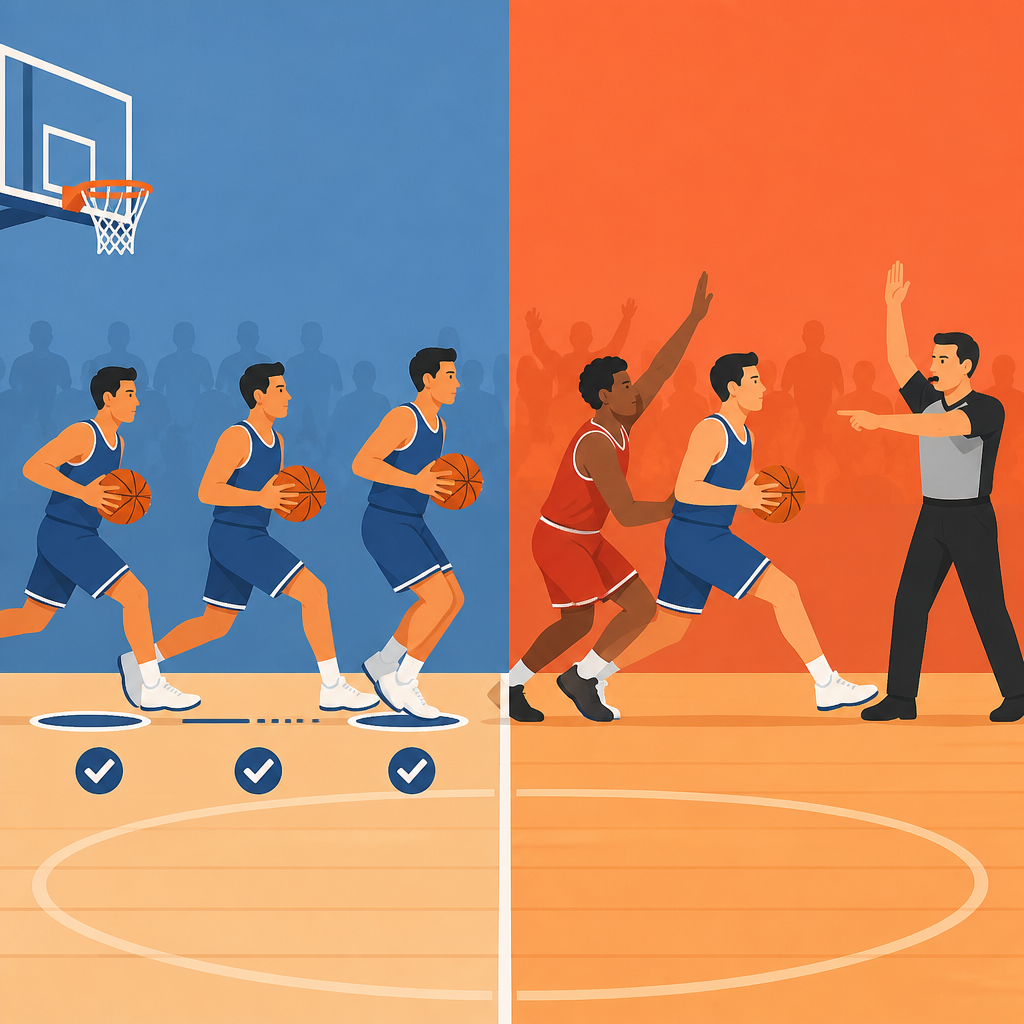
The core definition is simple: a player cannot move a pivot foot illegally once it is established, and a player who gathers the ball while progressing cannot take more than the allowed steps. In NBA language, the crucial concept is the gather. The gather happens when a player gains enough control of the ball to hold it, bring it to the hand, or place a hand under it. That moment starts the footwork count. On a drive, the step that happens before control is completed is not one of the two counted steps after the gather. This is why many legal moves look like three steps to viewers who are counting too early.
The pivot foot is just as important. If a player catches the ball with one foot on the floor, that foot can become the pivot. If both feet land simultaneously, either foot may become the pivot. If both feet are off the floor and the player lands one foot then the other, the first foot to touch usually becomes the pivot. Once the pivot foot is established, lifting it is legal if the player passes or shoots before it returns to the floor. Lifting it and then putting it back down before the release is traveling. Sliding the pivot foot, even slightly, can also be traveling, although officials often allow minor movement that does not create an advantage.
Three situations create most confusion. First is the gather on drives. Second is the jump stop, where a player may legally land on two feet after the gather under certain timing conditions. Third is the player who falls to the floor. In NBA play, a player who catches the ball while on the floor may not stand up or roll over to gain an advantage; that is traveling. These details show why “extra steps” is an incomplete explanation. The rule is about sequence, control, and advantage, not just counting footsteps.
Why NBA traveling looks different from other levels
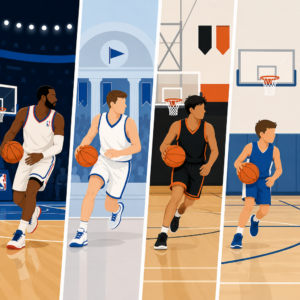
Fans often believe the NBA ignores traveling, but the better explanation is that NBA footwork interpretation differs from what many learned in youth basketball. The NBA officially recognizes the gather in a way that gives elite handlers room to complete dynamic moves at game speed. NCAA, NFHS high school rules, and FIBA all regulate traveling too, yet points of emphasis and officiating culture vary. High school games are usually called tighter on obvious shuffles and pivot-foot movement because the developmental goal includes teaching fundamentals. The NBA, by contrast, balances rule enforcement with the reality of world-class athleticism and advantage-disadvantage officiating.
I have reviewed the same euro-step clips with coaches from different levels, and their first disagreement is almost always where possession ends and the gather begins. If one evaluator marks the gather earlier, the move is a travel. If another marks it later, the move is legal. That is not random; it is the hardest judgment in the rule. This is also why replay rarely fixes public confusion. Slow motion can clarify control, but viewers still import different definitions of control. The written standard matters, yet the practical interpretation matters just as much.
Broadcast language adds to the problem. Announcers may say “that looked like three steps” without identifying the gather, the pivot, or whether the dribble had actually ended. Social media clips strip context even further. A five-second replay becomes evidence of a blown call even when the move is legal under the current interpretation. Anyone trying to understand NBA game rules has to separate personal expectation from the actual mechanics officials are trained to judge.
How officials judge the gather, steps, and pivot foot
Officials do not count steps the way most fans do. They first identify whether the player is still dribbling. If the hand is on top of the ball and the ball is still being pushed to the floor, the dribble is alive. Then they identify when control is gained. Only after that do they count the legal steps. On a typical drive, a player may gather the ball, take step one, take step two, and then shoot or pass. If a third step occurs before the release, it is traveling. On a jump stop after the gather, the player can land on two feet and then must follow pivot-foot restrictions.
Officials are also trained to judge advantage. If a foot shifts minimally because of momentum but does not create a clear benefit, some crews may pass on it. That frustrates rule purists, yet it is part of real officiating in every sport. The same philosophy appears on screens, hand-checks, and marginal contact. The challenge is consistency. A crew that allows a broad margin early should not suddenly tighten it late unless the action becomes more blatant. Good officiating crews communicate these thresholds constantly.
| Situation | Usually Legal | Usually Traveling |
|---|---|---|
| Drive after live dribble | Gather, then two steps, then release | Gather, three steps before pass or shot |
| Pivot on catch | Lift pivot foot and release pass or shot before it returns | Lift pivot foot, return it to floor, then pass or shoot |
| Jump stop | Land on two feet after gather, then pivot legally | Land, drag or replant illegally, then continue |
| Falling to floor | Secure loose ball while down and pass without standing illegally | Roll over or rise to feet while holding ball |
| Spin move | Gather before step count and keep steps within limit | Extra step after gather or illegal pivot replant |
The moves that confuse everyone most
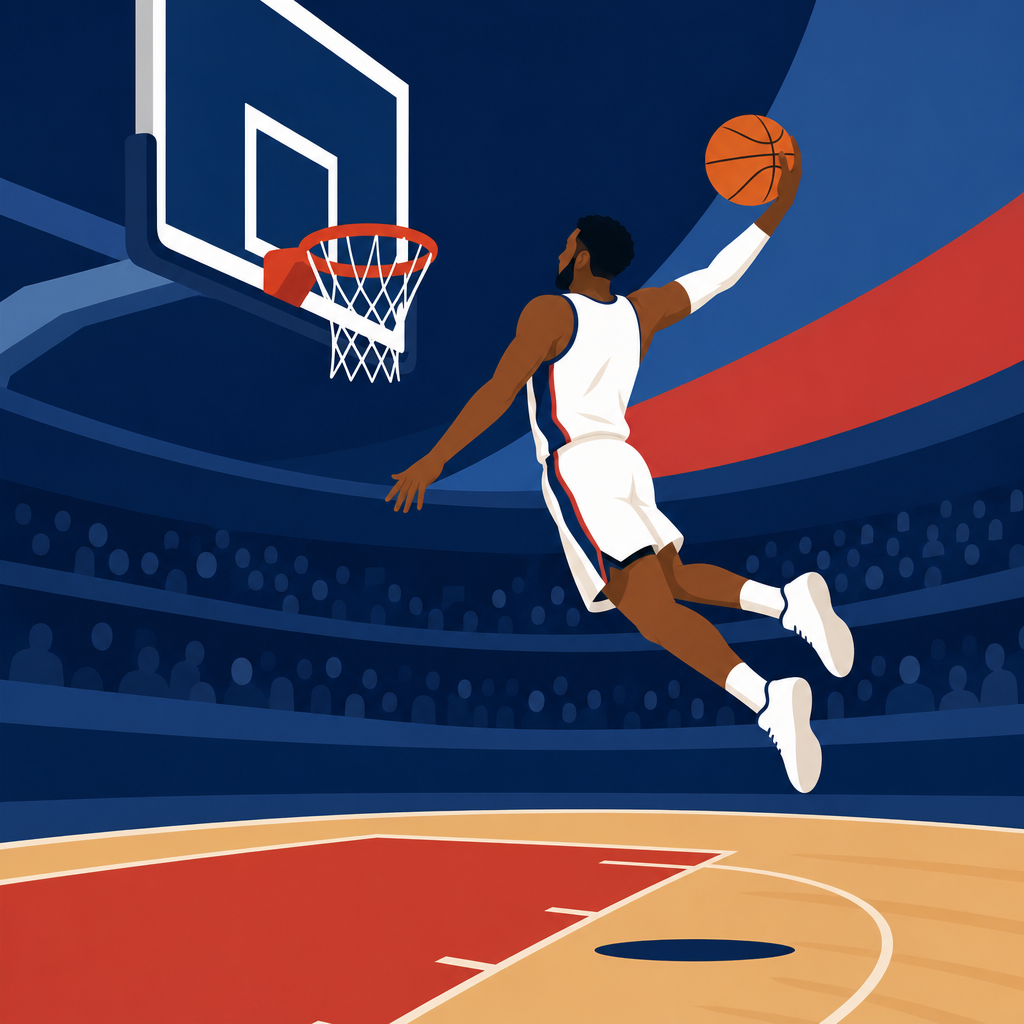
The euro step is the signature example. A player gathers while moving, plants one foot as step one, then changes direction and plants the other as step two before finishing. Because the movement is lateral and dramatic, spectators often perceive an extra step that is not there. James Harden, Manu Ginobili, and Giannis Antetokounmpo each used versions of this move that looked impossible until you tracked the gather carefully. When timed correctly, the move is legal and brilliantly efficient because it manipulates help defenders without requiring a second dribble.
The step-back jumper creates a different issue. The dribbler gathers, plants, and pushes backward to create space. If the ball is controlled before the footwork sequence begins, the player still gets two legal steps after the gather. That is why many step-backs that seem backward and awkward are legal. The illegal version usually involves a subtle extra hop or a drag of the pivot foot once control is already established. Luka Doncic and Jayson Tatum are excellent examples of players who use legal deceleration footwork that looks suspicious only at full speed.
Post moves confuse people for the opposite reason. A player catches, jabs, pivots, pump fakes, and turns. Here the dribble is not the issue; the pivot foot is. If the pivot stays planted until the shot release or pass, the move is legal. If the pivot slides, gets replaced, or returns after being lifted, it is traveling. Hakeem Olajuwon’s footwork remains the teaching model because every fake flowed from precise pivot discipline. Young players trying to copy his moves without understanding the pivot usually travel long before the shot fake works.
Why traveling is called inconsistently
Inconsistency comes from speed, angles, game management, and evolving interpretation. NBA players cover space faster than almost any officials in sports must process. A bang-bang drive can involve a live dribble, contact, a gather, two long strides, and a finish in less than a second. The lead official may be focused on the defender’s body contact, while the trail official has the cleaner look at the feet. If neither angle clearly shows an illegal extra step, the play continues. That does not always mean the crew missed it; sometimes the evidence was never clean enough in real time.
Rule emphasis also changes. The NBA has periodically instructed officials to focus on perimeter moves, especially blatant step-backs or obvious carry-travel combinations. Early in those emphasis periods, call volume rises. Players then adjust, and the numbers normalize. This pattern is common in game rules enforcement. Fans interpret the swing as hypocrisy, but it is often an effort to correct drift in how the rule had been applied over previous seasons.
There is also a practical truth coaches understand: officials tend to call the obvious travel more often than the technical but marginal one. A dramatic extra step through traffic is easy. A tiny pivot-foot slide in the post may be passed on if it creates no real advantage. That tradeoff is imperfect, but it reflects how games are actually officiated, from the NBA to youth tournaments.
How players and coaches should apply the rule
The best way to teach traveling is not “one, two, shoot.” It is “control, then count.” Start every drill by defining the gather. On drives, players should practice picking the ball up at different moments and finishing from legal two-step patterns. On catches, teach them to call out the pivot foot immediately. In my experience, players who verbalize “left pivot” or “right pivot” during footwork sessions improve faster because the decision becomes conscious rather than reactive.
Film work matters. Use slow-motion clips from NBA, college, and FIBA games and pause at the exact moment control occurs. Then identify step one, step two, and release. This turns a controversial topic into a teachable progression. Coaches should also train jump stops, stride stops, reverse pivots, and inside-foot finishes under defensive pressure. Most travels happen when balance breaks down, not when players intentionally bend the rule.
For fans and media, the simplest upgrade is to stop counting from the moment the player touches the ball and start counting from the moment the player controls it. That single adjustment resolves a large share of online debates. For players, the benefit is even bigger: cleaner footwork improves efficiency, reduces turnovers, and holds up across every level of basketball.
Traveling in the larger picture of game rules
Traveling is the gateway rule for understanding basketball mechanics because it connects directly to dribbling, carrying, jump balls, legal guarding position, and shooting fouls. A player cannot be judged correctly for a block or charge if the footwork before the contact is misunderstood. A highlight finish cannot be evaluated fairly if the gather is ignored. That is why this topic serves as a hub within game rules. Once you understand traveling, many other calls make more sense.
The key takeaways are clear. The rule is not merely about “three steps.” It depends on the gather, the pivot foot, and the sequence of movement after control. NBA interpretation often looks looser because the gather is applied carefully and because elite players use advanced footwork at extreme speed. Inconsistency exists, but much of the public frustration comes from counting too early or overlooking pivot-foot rules. Watch the hands, identify control, then watch the feet.
If you want to read the game better, start using that framework on every drive, post move, and step-back you watch this week. You will spot real travels more accurately, appreciate legal footwork more often, and build a stronger foundation for understanding the rest of basketball’s game rules.
Frequently Asked Questions
What does the traveling rule actually say in basketball?
At its core, traveling is an illegal movement involving a player’s feet while holding the ball. The basic idea sounds simple: once a player ends a dribble and establishes a pivot foot, that foot cannot be lifted and returned to the floor before the ball is passed or released on a shot. A player also cannot take more legal steps than the rules allow when receiving the ball, gathering it, stopping, pivoting, or starting a move to the basket. The reason the rule causes so much confusion is that the written language in most rulebooks is more technical than the way fans usually talk about “steps.” Officials are not just counting one-two-three in a vacuum. They are judging when the player gained control of the ball, whether a dribble had truly ended, which foot became the pivot, whether the player came to a jump stop legally, and whether the ball was released before the pivot foot returned to the floor.
Different levels of basketball also word the rule a little differently. The NBA, NCAA, NFHS, and FIBA all define legal footwork using similar principles, but the exact terminology and interpretation can vary. That matters because a move that looks identical on television may be discussed differently depending on the league. The biggest takeaway is that traveling is not just “taking too many steps.” It includes illegal pivots, sliding the pivot foot, starting a dribble too late, falling to the floor without maintaining legal status, and certain awkward catches or landings that force extra foot movement after control has already been established.
Why do fans think players take three or four steps without a traveling call?
The short answer is that most fans count steps from the wrong moment. In modern basketball, the key issue is not simply how many times a foot touches the floor after a player begins moving toward the basket. The critical question is when the player actually gathered or gained control of the ball. Until that gather happens, the player may still be in the act of completing the dribble. Once control is established, then the legal step count begins. That is why a move can look like “three steps” to the crowd but still be legal under the rule as it is interpreted at that level. Broadcasts often replay the move in slow motion without clearly identifying the gather, which makes legal footwork look suspicious and fuels the argument.
There is also a difference between what is technically legal, what officials are trained to prioritize, and what looks fair in real time. Elite players are exceptionally skilled at timing the final dribble, the gather, and their first legal step so tightly that it becomes almost impossible to judge at full speed without multiple angles. Add in euro steps, hop gathers, stride stops, and spin moves, and the visual picture gets even messier. Fans often think they are seeing officials “miss an obvious travel,” when in reality the officials may be applying a gather interpretation that starts later than the fan expects. At the same time, it is also true that some borderline travels go uncalled because the action is fast, the move creates no obvious advantage beyond normal play, or the officiating standard in that game is looser than the literal wording of the rulebook.
What is a gather step, and is it the reason traveling feels inconsistently called?
The gather step is one of the main reasons this rule creates debate. “Gather” refers to the moment a player secures enough control of the ball to end the dribble and begin the legal step sequence. In practical terms, if the ball is still coming up from the dribble, being controlled with one hand but not yet fully secured, or transitioning into both hands, the official may judge that the gather has not fully happened yet. Once the player gathers, the next foot contact generally begins the count of legal steps under that ruleset. This interpretation allows certain moves that casual viewers often think should be travels, especially in professional basketball where players are extremely advanced at extending the dribble right to the edge of the legal limit.
Yes, the gather concept is a major reason traveling seems inconsistent. It creates a gap between the plain-English version of the rule and the way it is enforced in actual games. Many fans grow up hearing “you only get two steps,” but that phrase leaves out a crucial detail: two steps after the gather, not necessarily two steps after the ball first starts coming into the player’s hands. Because the gather can be subtle and highly judgment-based, two people can watch the same play and disagree honestly about when control was established. That does not always mean one person is ignoring the rules. It often means they are using different mental starting points. This is also why the same move may look legal in one league and questionable in another, since teaching points and emphasis can differ by competition level.
How do jump stops, euro steps, and spin moves stay legal without becoming travels?
These moves stay legal when the player follows the footwork rules tied to control, pivot establishment, and ball release. A jump stop is legal if the player lands properly after ending the dribble or receiving the ball. For example, a player may gather, take the allowed steps, and then land on both feet simultaneously in a controlled stop. From there, the legal options depend on the specific landing and ruleset, including how the pivot foot is established. A euro step can also be legal because it typically uses the player’s two allowed steps after the gather, just in a side-to-side path instead of a straight line. To fans, it can look like extra movement because the player changes direction dramatically, but direction change by itself does not make the move a travel. What matters is whether the dribble ended before too many steps occurred and whether the feet touched legally in sequence.
Spin moves are similar. A spin move becomes a travel when a player lifts or relocates the pivot foot illegally, restarts movement after ending legal footwork, or takes an extra step after the gather. But when performed correctly, the spin is simply a controlled pivoting action combined with legal steps before a pass or shot. The confusion comes from how fluid these moves are in real time. A legal euro step can look exaggerated. A legal jump stop can look like a stutter or slide. A legal spin can look like the pivot foot moved when it actually stayed within the allowed action. The best way to understand these moves is not to ask whether they look unusual, but to break them down in order: when was the ball gathered, what was the first legal step, what was the second, and did the player release the ball before any illegal return of the pivot foot?
Why does traveling seem to be called differently depending on the level of play or the situation in the game?
Traveling is one of those rules where the written standard, the officiating philosophy, and the game environment all affect what gets whistled. Different leagues place different emphasis on freedom of movement, pace, entertainment, player skill expression, and technical rule enforcement. Youth and high school officials may call footwork more tightly because players are still learning fundamentals and because looser interpretations create chaos at that level. College games may emphasize consistency with the mechanics taught to officials in that system. Professional leagues often allow more advanced rhythm and gather interpretations because the speed and sophistication of the game are so high. The result is that a move considered acceptable in one setting may be called immediately in another, even if the underlying rule sounds similar on paper.
Game context also matters more than many fans realize. Officials are making split-second judgments amid contact, traffic, and partial sight lines. Clear, obvious travels are usually called. Borderline footwork plays often depend on angle, timing, and whether the official had a clean look at the gather and pivot. There is also a practical reality: officiating crews aim for a standard that can be applied consistently throughout a game. If every microscopic foot shift were called literally, the flow of basketball would collapse. That does not mean the rule is ignored, but it does mean officials distinguish between clear violations and marginal actions that are difficult to separate from normal basketball movement at full speed. That is why traveling can feel both over-argued and under-explained: the rule is technical, the enforcement is judgment-based, and most broadcasts do not spend enough time showing viewers exactly how officials are taught to see the play.