
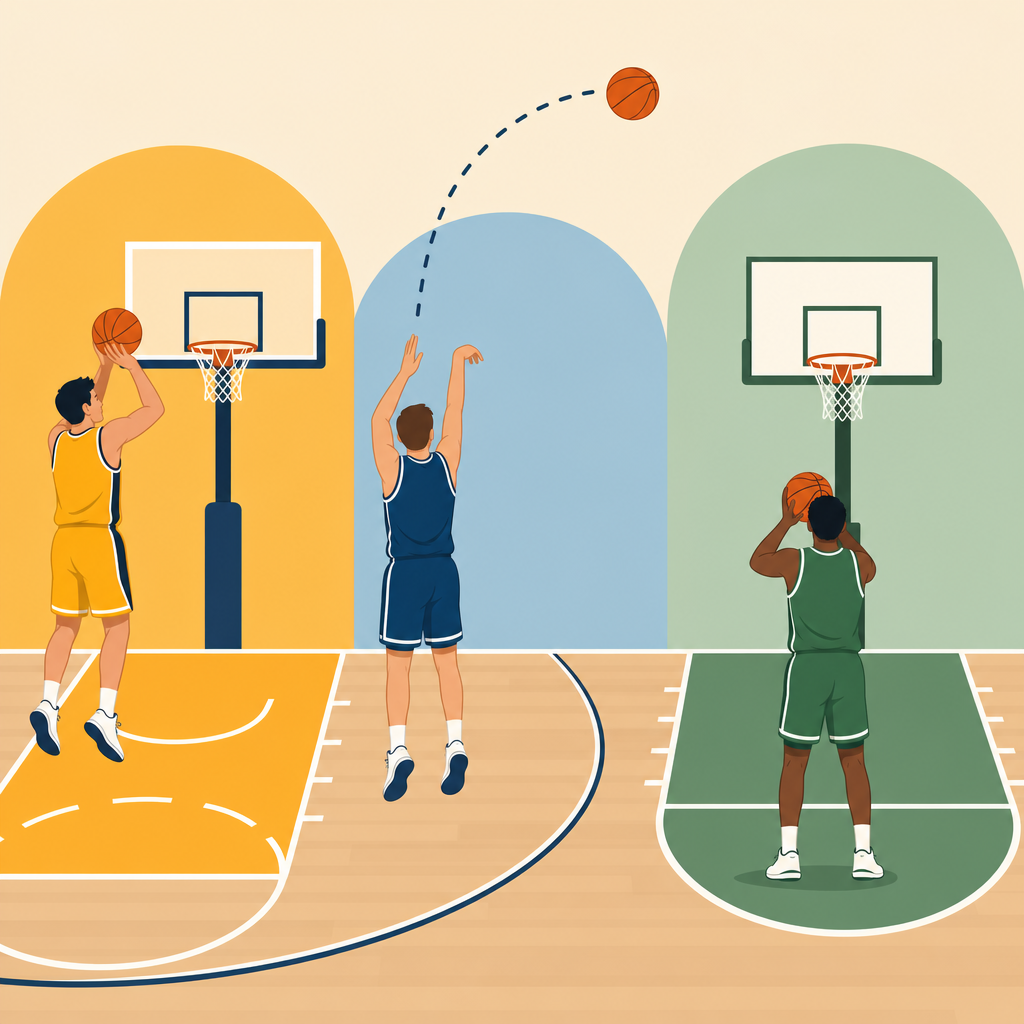
Basketball scoring is simple at first glance—put the ball through the hoop and earn points—but understanding exactly how two-pointers, three-pointers, and free throws work gives new players and fans the foundation they need to follow every possession with confidence. In practical terms, scoring rules determine strategy, player development, shot selection, game flow, and even roster construction, so this is one of the most important topics within Basketball Basics. A made field goal inside the three-point line is worth two points, a made shot from beyond the arc is worth three, and an uncontested foul shot from the free-throw line is worth one. Those definitions sound straightforward, yet beginners quickly run into related questions: where is the line measured, when does a player get free throws, what counts as a foot on the line, and why do some offenses chase threes while others attack the rim? After years of coaching beginners and explaining games to first-time viewers, I have learned that scoring becomes much easier once you connect rules to real game situations. This article serves as the getting-started hub for basketball scoring, laying out the core rules in plain language while giving enough detail to support deeper study across the rest of the Basketball Basics section.
To understand scoring, start with two key terms. A field goal is any live-ball shot attempt taken during normal play, and it can be worth either two or three points depending on the shooter’s position relative to the arc. A free throw is a set shot taken from the foul line after certain fouls or violations, and each made attempt is worth one point. Official rulebooks from FIBA, the NBA, NCAA, and high school associations use slightly different court dimensions and foul procedures, but the core scoring structure remains the same worldwide. That consistency is why learning scoring is the fastest way to become fluent in the sport. Once you know why a corner shot can be worth more than a floater, why a defender’s foul can create one, two, or three free throws, and why efficient offenses care about points per shot, you can watch a game and immediately recognize what teams are trying to do. The sections below break down each scoring method, the most common edge cases, and the tactical meaning behind the numbers.
How Basketball Scoring Works at a Basic Level
Every basketball game is ultimately a race to accumulate more points than the opponent before time expires. Teams score in three ways: by making two-point field goals, making three-point field goals, and making free throws. The scoreboard does not care whether the scorer is a center posting up, a guard pulling up from deep, or a forward cutting backdoor; it only records the point value of the successful attempt. For beginners, the easiest framework is this: shots from inside the arc are usually worth two, shots from outside the arc are worth three, and foul shots are worth one. Possessions end or reset based on made baskets, rebounds, turnovers, and stoppages, so understanding the value of each scoring event helps explain why coaches emphasize efficiency rather than raw shot volume.
Scoring also ties directly to offensive spacing. If a team can threaten the rim for twos and the perimeter for threes, defenders must cover more area, opening passing lanes and driving angles. In youth and amateur games, I often see players understand the “what” of scoring before they understand the “why.” They know a three is worth more, but they do not yet grasp that a rushed long shot can be worse than a controlled layup because shot quality matters. A balanced introduction to basketball scoring should therefore combine rules with context: where the shot came from, how difficult it was, what the defense allowed, and whether drawing a foul created extra value. That practical lens turns basic rules into useful basketball knowledge.
Two-Pointers: The Foundation of Most Offenses
A two-pointer is any successful field goal scored with the shooter touching the floor on or inside the three-point line at the moment of release. Common examples include layups, dunks, hook shots, floaters, mid-range jumpers, bank shots, and putbacks after offensive rebounds. Because these attempts happen closer to the basket, they are generally converted at a higher percentage than three-pointers. At the NBA level, shots at the rim routinely produce strong efficiency, and at youth levels the gap is often even larger because younger players have less range and consistency from outside. That is why beginner coaches usually teach players to attack the basket first and develop dependable finishing mechanics before hunting long jumpers.
Two-point scoring includes more nuance than many newcomers expect. The line itself matters: if any part of the shooter’s foot is touching the three-point line, the shot is scored as two, not three. A player can jump from behind the line, drift forward, and still score three points as long as the ball is released before landing and the launch started legally behind the arc. Inside the line, offenses generate twos through several repeatable actions: pick-and-roll drives, cuts from the weak side, post seals, transition leaks, and offensive rebounds. Consider a simple example. A guard uses a screen, turns the corner, forces the help defender to step up, and drops the ball to a rolling big for a layup. The finish counts for two, but the scoring chance was created by spacing, timing, and pressure on the rim. That is why two-point offense remains central even in an era that values the three-point shot heavily.
Three-Pointers: Spacing, Efficiency, and Shot Value
A three-pointer is a successful field goal taken from beyond the three-point arc, with the shooter clearly outside the line at release. The shot was introduced to reward long-range accuracy and create more strategic variety, and it has transformed modern basketball at every level. A made three is worth 50 percent more than a made two, which means teams do not need to shoot the same percentage from both areas for the three to be valuable. If a player makes 35 percent of three-point attempts, that produces 1.05 points per shot before considering rebounds or fouls drawn. A player making 50 percent of two-point attempts produces 1.00 point per shot. This simple math explains why perimeter shooting carries such tactical weight.
Not all threes are equal, though. Corner threes are shorter than above-the-break threes in leagues that use the standard arc shape, so they are often more efficient. Catch-and-shoot threes created by drive-and-kick action are usually better than tightly contested pull-up threes taken early in the clock. Stephen Curry is the obvious modern example of long-range scoring power, but the broader lesson for beginners is not “shoot more threes at any cost.” It is “seek good threes.” Teams use off-ball screens, dribble handoffs, paint touches, and transition advance passes to create open perimeter looks. Defensively, opponents may switch, hedge, or zone up specifically to limit these attempts. Once you understand three-point value, you begin to see why even missed threes can influence the game: defenders stay attached to shooters, and that opens lanes for two-point scoring.
Free Throws: One Point Each, Huge Impact
Free throws are unguarded shots taken from the foul line after certain fouls or violations, and each made attempt counts for one point. They look simple, but they are often decisive because they stop the clock, punish undisciplined defense, and reward aggressive offense. Players typically receive two free throws after a shooting foul on a missed two-point attempt and three free throws after a shooting foul on a missed three-point attempt. If the shot goes in despite the foul, the basket counts and the shooter usually gets one additional free throw—commonly called an “and-one.” Teams can also reach a penalty situation in which non-shooting fouls send the opponent to the line, depending on league rules.
In games I have broken down with beginners, free throws are often the hidden scoring category. A team may appear evenly matched from the field yet lose because it allowed too many foul shots. Strong drivers such as Giannis Antetokounmpo, Jimmy Butler, or Shai Gilgeous-Alexander create scoring pressure partly by earning trips to the line. Good free-throw shooting also matters late in games when opponents foul intentionally to extend the clock. Mechanics play a major role here: balanced stance, consistent routine, relaxed upper body, and repeatable release. Because free throws are worth only one point each, new fans sometimes underestimate them, but efficient teams treat them as high-value possessions. They are also one of the clearest indicators of composure under pressure.
When Each Type of Score Happens in Real Games
Beginners learn fastest when scoring rules are tied to common scenarios. The table below shows how point values apply in live play and why they matter strategically.
| Scoring play | Point value | What must happen | Typical example |
|---|---|---|---|
| Layup or dunk | 2 | Shot released in bounds inside the arc and goes through the basket | Fast-break finish after a steal |
| Mid-range jumper | 2 | Shooter is on or inside the three-point line at release | Pull-up from the foul-line area |
| Perimeter jumper | 3 | Shooter is fully behind the arc at release | Catch-and-shoot corner three |
| Shooting foul on missed two | Up to 2 | Fouled in the act of shooting and the shot misses | Defender hits the shooter’s arm on a layup |
| Shooting foul on missed three | Up to 3 | Fouled on a three-point attempt and the shot misses | Closeout causes illegal contact on a jumper |
| Made basket plus foul | 3 or 4 total | Shot goes in and the foul is called during the attempt | Made layup for two plus one free throw |
This framework helps explain late-game decisions. If a team trails by three points, a made two-point basket still leaves it behind, while a made three can tie the score immediately. If a team is in the penalty, defenders must be careful because even a harmless reach can lead to free throws. If a shooter is struggling from deep, the offense may pivot to cuts and post entries to recover efficient two-point looks. These are not abstract ideas; they show up every game.
Rules, Line Differences, and Common Beginner Questions
One reason scoring can feel confusing is that court markings and foul rules vary by competition level. The NBA three-point line is farther from the basket than the high school line, and FIBA and NCAA measurements differ as well. The corners are also unique because the arc bends into straight sidelines, making corner threes shorter than shots from the top. Even with these differences, the scoring principle never changes: inside the line is two, outside is three, and free throws are one each. That consistency is what makes basketball easy to learn across leagues.
Beginners also ask predictable and important questions. Does the ball have to hit the net cleanly? No; a basket counts if the ball passes legally through the hoop from above, even after touching the rim or backboard. Can a shot count after the buzzer? Yes, if it left the shooter’s hand before time expired. What if a player’s toe is on the line? Then it is a two-pointer. Can goaltending or basket interference affect scoring? Absolutely. Illegal contact with the ball on its downward flight or interference above the cylinder can award points or erase a live scoring chance depending on the play. Another common area of confusion is the bonus or penalty. While exact thresholds differ by ruleset, the basic idea is that too many team fouls in a period give the opponent free throws even when the foul did not occur during a shot attempt. For any beginner building strong Basketball Basics knowledge, learning those edge cases prevents confusion when watching full games.
How to Read Scoring Efficiency Like a Smart Fan or New Player
Knowing how points are awarded is the first step; knowing how to evaluate scoring is the next. The simplest useful metric is points per shot, which compares the scoring return of different attempts. A made layup is worth two, but because layups are converted at high rates, they are often among the most efficient shots in basketball. A three-pointer is harder, yet its extra point can make it equally or more valuable when taken by a capable shooter. Free throws are especially efficient because they are uncontested and can add scoring without using a normal field-goal attempt in many stat models. That is why analysts focus on shot profile, rim pressure, free-throw rate, and effective field goal percentage.
For players just getting started, the practical takeaway is clear. Do not judge offense only by highlight difficulty. Judge it by repeatable value. A player who scores 16 points on layups, cuts, and six made free throws may have helped the team more than a player who made a few deep jumpers on poor efficiency. For fans, this perspective makes box scores more meaningful. Field-goal percentage alone can mislead because it treats a two and a three as equal makes. Better scoring analysis asks where the shots came from, how often a player got to the line, and whether the offense created open looks. If you want to understand basketball quickly, track those patterns during the next game you watch.
Basketball scoring comes down to three point sources, but each one shapes the sport in a different way. Two-pointers provide the base of efficient offense through layups, cuts, post play, and controlled mid-range shooting. Three-pointers stretch the floor, change defensive priorities, and raise the reward for accurate perimeter shooting. Free throws punish fouls, stop the clock, and often decide close games. Once you understand where each score comes from and why teams value them differently, the game becomes easier to follow possession by possession.
As the hub for Getting Started within Basketball Basics, this guide gives you the framework needed to explore related topics such as court lines, fouls, shot selection, positions, and basic offensive strategy. The key lesson is simple: scoring is not just counting points; it is understanding how rule structure influences decisions. Watch for feet relative to the arc, note when contact leads to foul shots, and compare the value of a contested jumper with a clean look at the rim. Do that consistently, and you will read games with far more clarity. Use this article as your reference point, then continue through the rest of the Basketball Basics content to build a complete understanding of how basketball works.
Frequently Asked Questions
What is the difference between a two-pointer, a three-pointer, and a free throw in basketball?
A two-pointer, a three-pointer, and a free throw are the three basic ways teams score in basketball, and each is worth a different number of points depending on how the shot happens. A two-pointer is any made field goal taken from inside the three-point line. If a player shoots the ball during live play and makes it while both feet are positioned so the shot qualifies as being inside the arc, the basket counts for two points. These are often layups, dunks, floaters, post moves, and mid-range jump shots.
A three-pointer is a made field goal taken from beyond the three-point line. If the shooter releases the ball from outside the arc and makes the shot, the basket counts for three points. This extra point has a major effect on strategy because it can quickly change the scoreboard and encourages teams to space the floor, create open perimeter looks, and build offenses around strong outside shooting.
A free throw is different from both of those because it is not taken during normal live play. Instead, it is awarded after certain fouls or violations. The player shoots from the free-throw line with no defender actively contesting the shot, and each successful free throw is worth one point. Free throws often come in sets of one, two, or occasionally three, depending on the situation. Together, these three scoring methods shape the entire rhythm of a game, from shot selection and player roles to late-game tactics and comeback chances.
How do officials determine whether a basket counts as two points or three points?
Officials determine whether a made basket is worth two or three points by looking at the shooter’s location at the moment the shot is released, not where the player lands afterward. The key rule is simple: for a shot to count as three points, the shooter must release the ball from behind the three-point line. If any part of the shooter’s foot is touching the line at the time of release, the shot is considered a two-pointer. Because the line itself is part of the two-point area, stepping on it removes the chance for the basket to count as three.
This distinction is especially important on closeout plays, corner shots, and step-back jumpers, where inches matter. A player can jump from behind the line, release the shot while airborne, and land inside the arc, and it will still count as three points because the release occurred from legal three-point range. On the other hand, if the player begins a shot with a foot on the line, even a perfectly made long-range attempt is scored as two points.
In many games, referees use visual judgment in real time, but at higher levels, replay review can be used to confirm whether a shot was a two or a three, especially near the end of quarters or in critical situations. You may also see officials signal three-point attempts by raising an arm and then confirm the made three with a scoring signal after the shot goes in. Understanding this rule helps fans follow scoring more accurately and explains why some seemingly identical jump shots can be recorded differently.
When are free throws awarded, and how many free throws does a player get?
Free throws are awarded in several common situations, most often after shooting fouls. If a player is fouled while attempting a two-point shot and the shot misses, that player typically receives two free throws. If the player is fouled while attempting a three-point shot and misses, the reward is usually three free throws. If the shot goes in despite the foul, the basket counts and the player is awarded one additional free throw, often called an “and-one.” This creates the chance for a three-point play after a made two-pointer or a four-point play after a made three-pointer.
Free throws can also be awarded for non-shooting team fouls once the opposing team has reached the penalty, depending on the rules of the league or level of play. In those cases, a player may go to the line even though no shot was being attempted when the foul occurred. Technical fouls can also result in free throws, and some violations or special situations may produce a single free throw or possession adjustments depending on the competition’s ruleset.
The exact number of free throws depends on what kind of foul happened, whether the shot was made, and what the team foul count is at that point in the game. That is why free throws are such an important part of basketball basics: they reward aggressive play, punish undisciplined defense, and can become a major source of scoring efficiency. Strong free-throw shooters are especially valuable late in games when teams foul intentionally to stop the clock and try to extend the contest.
Why are two-pointers, three-pointers, and free throws so important to basketball strategy?
These scoring types do more than add points to the scoreboard; they influence nearly every strategic decision a team makes. Two-pointers are often the foundation of efficient offense because shots near the basket are usually converted at a higher percentage than longer jump shots. Teams try to create quality two-point looks through drives, cuts, screens, pick-and-roll actions, offensive rebounds, and interior passing. Players who finish well inside can pressure the defense and force rotations that open up other scoring opportunities.
Three-pointers are strategically powerful because they offer more reward per made shot. Even though they are typically harder to make than shots close to the basket, the extra point changes the math of the game. Teams that shoot well from long range can erase deficits quickly, stretch defenses, and create more driving lanes by pulling defenders away from the paint. This is one reason modern basketball places so much emphasis on floor spacing, catch-and-shoot ability, and lineups filled with players who can threaten from outside.
Free throws are just as important because they provide efficient scoring without a live defender contesting the shot. Players who attack the rim and draw fouls can generate steady offense even when the half-court game is not flowing well. Free throws also affect tempo, player foul trouble, substitution patterns, and end-of-game tactics. In close games, teams often target high-percentage free-throw shooters to close out wins, while poor free-throw shooting can keep opponents alive. Taken together, two-pointers, three-pointers, and free throws form the scoring framework that drives offensive philosophy, defensive priorities, and roster building at every level of basketball.
What should beginners watch for to understand scoring during a basketball game?
Beginners should focus on a few simple cues to understand scoring with confidence. First, notice where the shot is taken. If the shooter is inside the three-point line, a made field goal is worth two points. If the shot is released from behind the three-point line, it is worth three points. Watching the shooter’s feet at release is one of the best habits a new fan can develop, especially on close perimeter attempts. Once you start noticing shot location consistently, the scoring system becomes much easier to follow.
Second, pay attention to whistles and referee signals. When the action stops after contact, there is a good chance free throws may be coming. Listen for commentary about shooting fouls, bonus situations, or an “and-one,” because those terms explain why a player is heading to the line and how many free throws to expect. Also keep an eye on the scoreboard after made baskets, because it will immediately show whether the shot counted for two or three.
Third, watch how scoring choices affect momentum. A team getting repeated layups may be controlling the paint. A team making several threes in a short stretch can swing a game quickly. A player who earns frequent free throws may be putting constant pressure on defenders. These patterns tell you a lot about what each team is trying to do offensively and what the defense is struggling to stop. For new players and fans, learning to recognize two-pointers, three-pointers, and free throws is the fastest way to understand possessions, evaluate shot quality, and follow the flow of the game like an experienced observer.