

Basketball positions once worked like strict job titles, but the modern NBA has steadily blurred those lines, and no role captures that change better than the point forward. A point forward is a forward-sized player who initiates offense, handles the ball, reads the floor like a point guard, and creates shots for teammates while still bringing the size, rebounding, and defensive versatility of a wing or big forward. In simple terms, this player breaks the old five-position model by combining playmaking duties with frontcourt physical tools. Understanding the point forward matters because it explains how teams now build lineups, why “positionless basketball” became a real strategy, and how stars can dominate games without fitting neatly into point guard, shooting guard, small forward, power forward, or center labels.
When I evaluate NBA roles, I always start with function rather than roster designation. A lineup card may list a player at small forward or power forward, but if that player brings the ball up, calls sets, manipulates pick-and-roll coverage, and leads the team in assists, the actual role is much closer to primary initiator. That is the core of the point forward idea. The term has been used for decades, from early examples like Paul Pressey to famous modern stars such as LeBron James, Scottie Pippen, Grant Hill, Giannis Antetokounmpo, and Luka Doncic when deployed in oversized playmaking lineups. As NBA offenses have emphasized spacing, switching, and decision-making, the value of a tall creator has only grown.
This article serves as a hub for NBA positions and roles because the point forward sits at the intersection of every major basketball responsibility: initiating offense, scoring efficiently, defending multiple spots, rebounding, and adapting to matchups. To understand it fully, you also need a working grasp of traditional positions, on-ball and off-ball responsibilities, usage rate, assist percentage, matchup hunting, transition creation, and team construction. The sections below explain where the role came from, how it differs from a standard point guard or wing, what skills define it, how coaches use it, which players embody it, and why the concept reshaped the language of basketball positions.
How the Point Forward Fits Into Traditional NBA Positions and Roles
In the classic model, the point guard organized the offense, the shooting guard scored from the perimeter, the small forward attacked from the wing, the power forward played inside and rebounded, and the center protected the rim. That framework still helps beginners learn the game, but real NBA roles have always been more fluid than the labels suggest. The point forward emerged when coaches recognized that a bigger player could see over defenses, survive physical contact, and create passing angles that smaller guards often could not. Instead of forcing every possession through a 6-foot-2 guard, teams let a 6-foot-7 or 6-foot-9 forward function as the main decision-maker.
The difference between a point forward and a traditional point guard is not simply height. It is the combination of size and offensive control. A standard point guard may have tighter dribble craft and better pull-up shooting, while a point forward often uses strength, stride length, and court vision to collapse a defense. The difference between a point forward and a regular wing is also important. Many wings can handle the ball on occasion, but a true point forward consistently initiates sets, reads weak-side help, and produces advantages for the entire offense, not just for his own scoring chances.
In practical terms, coaches use point forwards in several ways. They can start possessions at the top of the floor, run delay actions through the elbow, push in transition after grabbing defensive rebounds, or serve as the screener and playmaker in inverted pick-and-rolls. Those uses make the role central to lineup flexibility. If a forward can create like a guard, the team can surround him with shooters, cutters, rim runners, and defenders instead of needing a conventional floor general. That changes roster building and explains why many franchises prioritize ball-handling wings in the draft and free agency.
The Core Skills That Define a True Point Forward
A real point forward needs more than flashy passes. The first essential skill is advanced ball handling under pressure. NBA defenses attack initiators with digs, traps, top-locks, and switching schemes, so a forward must protect the ball against smaller, quicker defenders and stronger help defenders. The second is processing speed. The best point forwards make rapid reads: if the low man tags the roller, they hit the corner shooter; if the defense switches, they punish the mismatch; if the nail defender stunts, they keep the dribble alive and shift the angle of attack. High-level passing is really a chain of correct reads made on time.
Scoring gravity matters just as much. If defenders do not fear the point forward as a scorer, they can sag off, clog driving lanes, and disrupt passing windows. That scoring threat can come in different forms. LeBron James has long used downhill pressure, post strength, and improved pull-up shooting. Giannis Antetokounmpo creates fear with transition force, long strides, and rim pressure. Scottie Pippen used slashing, spin moves, and open-floor creation. Luka Doncic, while often called a guard, operates in many lineups as an oversized creator who manipulates defenders with pacing, strength, and step-back shooting. The exact style varies, but the pressure on the defense must be real.
Defensive versatility is another major part of the role. Because point forwards are usually bigger than guards, they can switch across positions, rebound to finish possessions, and ignite transition without an outlet pass. That rebound-and-go ability is one of the clearest signs of a point forward in action. When a player secures the board and immediately becomes the offense, the team saves time, attacks before the defense is set, and gains extra transition opportunities. I have seen this trait completely alter a game’s rhythm; one versatile star can turn a half-court team into a fast-break threat within a single quarter.
| Trait | Why It Matters | Player Example |
|---|---|---|
| Size with handle | Sees over traps and survives contact | LeBron James |
| Transition creation | Turns rebounds into instant offense | Giannis Antetokounmpo |
| Half-court playmaking | Creates efficient shots from reads and manipulation | Scottie Pippen |
| Scoring gravity | Forces help and opens passing lanes | Grant Hill |
| Lineup flexibility | Allows more shooting and switching around the star | Luka Doncic |
How Coaches Use Point Forwards in Modern Offense and Defense
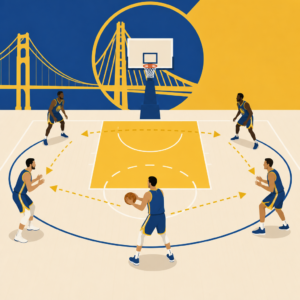
The most effective point-forward systems simplify everyone else’s job. In transition, the point forward pushes after a rebound and immediately pressures backpedaling defenders. In the half court, coaches often clear a side and let the creator attack with shooters spaced to the corners and slot areas. This setup forces the defense into hard choices: help at the nail and surrender a kick-out three, switch and risk a post mismatch, or stay home and allow the forward to get downhill. Teams such as the 1990s Bulls, the Miami Heat and Cleveland Cavaliers during LeBron James’s prime, and the Milwaukee Bucks with Giannis built major portions of their offense around those decisions.
One common tactic is the inverted pick-and-roll, where a guard screens for the point forward. Defenses are often less comfortable with that action because the resulting switch can place a smaller guard onto a stronger ball-handler near the paint, while the original big defender may be pulled away from the rim. Another tactic is using the point forward from the elbow in delay offense, a structure made famous in different forms by teams like the Denver Nuggets with Nikola Jokic, though Jokic is more accurately a point center. The principle is similar: offense can run through a non-guard if that player processes the game at an elite level.
Defensively, a point forward gives coaches more schematic freedom. Because these players can often guard wings and some bigs, teams can switch actions without immediately losing structure. They also help close defensive possessions with rebounding, which is critical because small lineups fail when they cannot finish stops. There are tradeoffs, however. If the point forward carries too much creation load, fatigue can reduce defensive intensity late in games. Teams usually counter that by adding secondary ball handlers, limiting the burden of every initiation duty falling on one star.
Famous NBA Point Forwards and What Made Each One Different
Scottie Pippen is one of the clearest historical examples. With the Chicago Bulls, he handled the ball extensively, initiated the fast break, defended multiple positions, and created offense within the triangle system. He was not a point guard by title, but his role often matched one. Paul Pressey deserves mention as an earlier prototype with the Milwaukee Bucks in the 1980s. He was one of the first players widely associated with the term because he regularly orchestrated offense as a 6-foot-5 forward, challenging old assumptions about who should run a team.
Grant Hill pushed the idea further in the 1990s. Before injuries changed his career arc, Hill was a brilliant oversized creator who rebounded, attacked in transition, and passed with timing and imagination. LeBron James then turned the concept into a central model for superstar team building. At 6-foot-8 and around 250 pounds in his peak years, he could function as the lead ball-handler, primary scorer, and a multi-position defender. Few players have illustrated the power of the role more clearly. When a defense had to stop his drives, post seals, skip passes, and transition attacks all at once, traditional positional answers stopped working.
Giannis Antetokounmpo represents a more force-based variation. He is not a conventional pull-up shooter, but his speed, length, and rim pressure make him a devastating playmaking forward. Luka Doncic adds another interpretation. Although often listed as a guard, his size and style fit many of the same principles: he manipulates defenses as an oversized initiator, controls tempo, and dictates matchups. The broader lesson is that the point forward is not one template but a family of roles built around size plus creation.
Why the Point Forward Changed the NBA and What It Means for Positions Today
The rise of the point forward helped push the league toward function-based basketball. Instead of asking, “What position is he?” coaches now ask, “What advantages does he create?” That shift affected player development at every level. Young forwards are encouraged to dribble, pass, and read pick-and-roll coverage rather than only post up or spot up. Front offices now hunt for wings with playmaking upside because those players unlock lineup combinations that are harder to scheme against. A forward who can initiate allows a team to add more shooting, more defense, or a second screener without sacrificing offensive organization.
This role also changed how fans should think about NBA basics. Positions still matter as teaching tools, but roles explain the game more accurately. A team may have a nominal point guard who actually works off the ball, a center who acts as a passing hub, and a forward who runs the offense. That is why any serious guide to positions and roles has to go beyond labels and focus on responsibilities: who starts possessions, who bends the defense, who protects the rim, who spaces the floor, and who closes possessions with rebounds. The point forward sits in the middle of that evolution, connecting perimeter skill with frontcourt size.
The biggest takeaway is straightforward: a point forward is a forward-sized primary playmaker whose versatility lets a team break traditional position rules without losing structure. That role has shaped championship offenses, redefined roster construction, and made basketball smarter to watch once you know what to look for. If you want a stronger understanding of NBA basics, keep studying positions through the lens of role, matchup, and decision-making rather than jersey-number labels. Start with the point forward, then explore how combo guards, 3-and-D wings, stretch fours, rim-running centers, and point centers fit into the same larger picture of modern basketball.
Frequently Asked Questions
What is a point forward in the NBA?
A point forward is a forward-sized player who takes on many of the responsibilities traditionally assigned to a point guard. Instead of only scoring from the wing, posting up, or defending bigger players, a point forward also brings the ball up the floor, starts offensive sets, reads defensive coverage, and creates opportunities for teammates. In practical terms, this means the offense can run through a player who has the size and physical profile of a forward but the decision-making and playmaking instincts of a lead ball-handler.
This role represents one of the clearest examples of how the NBA has moved away from rigid position labels. In earlier eras, positions were treated more like fixed job descriptions: the point guard organized the offense, wings scored and defended the perimeter, and forwards and centers controlled the paint. A point forward disrupts that model. He can rebound, push the ball in transition, initiate pick-and-rolls, make cross-court reads, and still switch defensively onto multiple positions. That combination of size, skill, and vision is what makes the role so valuable in today’s game.
How is a point forward different from a traditional point guard?
The biggest difference is physical profile and how that affects the game. A traditional point guard is usually smaller, quicker in tight spaces, and built to organize the offense from the perimeter. A point forward, by contrast, is larger and often stronger, which allows him to see over defenders, absorb contact, finish through traffic, and defend bigger matchups. While both can handle the ball and create shots, the point forward does it from a different body type and often from different spots on the floor.
That size changes strategy in meaningful ways. A point forward can create mismatches by forcing smaller defenders to guard a bigger playmaker, or by drawing bigger defenders into actions they are less comfortable defending on the perimeter. He may not always resemble a classic guard stylistically, but he can still function as the offensive engine. In many systems, that versatility is even more disruptive than a standard point guard because it allows coaches to build lineups with more size, more switching on defense, and more playmaking across multiple positions.
What skills make a great point forward?
A great point forward needs much more than decent ball-handling for a big player. He must be able to make advanced reads under pressure, understand timing, control pace, and recognize how defenses rotate. Passing vision is essential because the role depends on creating efficient shots for others, not just making the occasional extra pass. He also needs a secure handle, especially in transition and against on-ball pressure, since he is often trusted to start possessions and attack before the defense is fully set.
Beyond playmaking, the best point forwards also bring value in rebounding, defense, and scoring versatility. Rebounding lets them end a possession and immediately ignite the break without needing an outlet pass. Defensive versatility allows them to stay on the floor in different lineup constructions. As scorers, they must be threatening enough to force defenses into difficult choices, whether by driving, posting smaller defenders, finishing at the rim, or hitting open jumpers. In short, the role demands a rare blend of basketball IQ, physical tools, and all-around impact. That is why true point forwards are uncommon, even in an era that celebrates positionless basketball.
Why has the point forward become so important in the modern NBA?
The modern NBA values spacing, decision-making, versatility, and matchup pressure more than ever, and the point forward fits all of those priorities. Teams want multiple players who can initiate offense so the defense cannot load up on one primary creator. A point forward helps achieve that by giving coaches another ball-handler who can attack from a different angle. Because he combines size with playmaking, he can punish switches, push the ball after rebounds, and force defenses into more complicated help assignments.
The rise of positionless basketball has also increased the value of players who can do several jobs at once. Instead of building around five narrowly defined roles, teams now prefer lineups with overlapping skills. A point forward lets a team play bigger without sacrificing passing and ball movement. He also supports faster pace, because he can grab a rebound and instantly start transition offense. In playoff basketball, where opponents spend days targeting weaknesses, that adaptability becomes even more important. The point forward is not just a novelty role; it is a strategic answer to how the game has evolved.
Can a point forward still be effective if he is not an elite shooter?
Yes, a point forward can still be highly effective without being an elite shooter, but the rest of his game has to create enough pressure to keep defenses honest. If he is an outstanding passer, powerful driver, strong finisher, and smart decision-maker, he can still control the offense and generate quality looks. His size can help him get to the paint, collapse the defense, and create shots for cutters and spot-up shooters. In those cases, his value comes from forcing defensive reactions rather than simply stretching the floor with shooting alone.
That said, shooting still matters because defenses in the modern NBA are quick to exploit any limitation. If a point forward is not a consistent perimeter threat, teams may sag off, clog driving lanes, and dare him to score from outside. The best non-elite shooting point forwards counter that by being dominant in other areas: pushing the pace, screening, posting mismatches, making rapid reads, and using strength and vision to manipulate coverage. So while elite shooting can elevate a point forward’s ceiling, it is not the only path to effectiveness. What matters most is whether the player can still bend the defense and make the offense function at a high level.