

Phil Jackson’s triangle offense legacy sits at the center of modern NBA strategy because it solved two problems every coach still faces: how to create efficient shots without relying on constant play calls, and how to connect individual stars to a coherent team structure. In simple terms, the triangle offense is a spacing and decision-making system built around a sideline triangle, a two-man game on the weak side, and a sequence of reads based on defensive positioning. Jackson did not invent it; assistant coach Tex Winter brought its principles from decades of study and teaching. But Jackson proved its championship value on the biggest stage, using it to guide the Chicago Bulls and Los Angeles Lakers to 11 titles. That success made the system influential, controversial, and often misunderstood.
When people ask why the triangle offense worked, the answer starts with geometry and discipline. The system created strong-side passing angles, filled all five offensive spots, and let great players operate with clear options rather than random isolation. It also demanded uncommon patience, timing, and basketball intelligence. I have studied and broken down the triangle for years, and the pattern is consistent: when teams embraced the reads, cuts, post entries, and spacing rules, the offense produced balance, rhythm, and control. When players resisted its constraints or lacked the necessary skill mix, it stalled. Understanding that tension explains both Jackson’s legacy and the offense’s eventual decline. The triangle mattered because it shaped championship basketball, influenced modern spacing concepts, and still offers lessons for any team trying to blend stars, role players, and sustainable offensive process.
What the triangle offense actually is
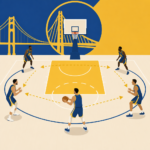
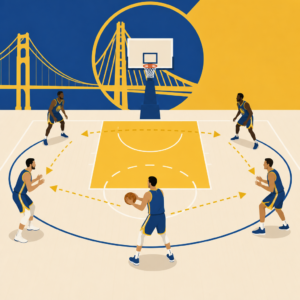
The triangle offense is not a single play. It is a repeatable framework that organizes five players into connected actions and reads. On the strong side, a player with the ball initiates to the wing, the corner is filled, and the post occupies the low block or mid-post, forming the triangle. On the weak side, two players space above the break and near the opposite slot or corner, creating a built-in two-man game. From there, the offense flows through options: post entry, corner pass, pinch post action, split cuts, backdoor cuts, handoffs, and weak-side exchanges. The key principle is that each pass triggers a set of coordinated reactions rather than a reset into freelance basketball.
Tex Winter’s system emphasized spacing at roughly 15 to 18 feet, quick decisions, and reading pressure. If the wing was denied, players back-cut. If the post defender fronted, the angle changed and the weak side became active. If the defense loaded to the strong side, the ball reversed into weak-side action. The offense was built to punish overplays long before switching became a league-wide default. In coaching terms, it reduced the need for a sideline command on every possession because the reads were embedded in the structure. That is one reason Jackson trusted it in playoff settings, where defenses scout pet actions and force teams off their first option. The triangle was designed to survive that pressure by giving players second, third, and fourth answers within the same possession.
Why Phil Jackson made the system famous
Jackson became synonymous with the triangle because he gave it the highest-profile proof of concept in league history. With the Bulls, he inherited a team that leaned heavily on Michael Jordan’s scoring brilliance. Doug Collins had helped Jordan put up enormous numbers, but Chicago needed a more scalable offense to beat elite playoff defenses. Jackson and Winter pushed Jordan off the ball more often, used the post and pinch post as hubs, and integrated Scottie Pippen as a playmaking connector. The result was not less star power but better deployment of it. The Bulls won six championships between 1991 and 1998, and the offense evolved across eras, from Horace Grant and Bill Cartwright lineups to Dennis Rodman versions that needed creative half-court balance.
Jackson then carried the same philosophical core to the Lakers. There, the challenge was different. Shaquille O’Neal was the most dominant interior force in basketball, while Kobe Bryant wanted freedom as a perimeter creator. The triangle gave O’Neal deep post touches without turning every possession into a static dump-in, and it gave Bryant options to attack from the wing, pinch post, and weak side. Los Angeles won five championships under Jackson, including the 2000–2002 three-peat and the 2009 and 2010 titles with a reshaped roster featuring Pau Gasol, Lamar Odom, and Derek Fisher. Jackson’s fame comes from this versatility. He did not use the triangle as a museum piece. He adapted its emphasis while preserving its core reads, proving the system could serve different superstars, roster types, and playoff contexts.
Why the triangle offense worked so well
The triangle worked because it merged spacing, role clarity, and optionality. First, it created reliable passing angles. A wing, corner, and post on one side naturally produce short, safe passes and force defenders to choose between help and denial. Second, it generated high-value shots. Post seals, cuts behind pressure, corner jumpers, and clean mid-post touches were all built into the system. In the 1990s and early 2000s, before the three-point shot became the league’s dominant diet, those were efficient outcomes relative to the era. Third, it reduced predictability. Defenses could prepare for an initial entry, but the offense rarely stopped there. The split after a post pass, the weak-side screen-and-replace, and the blind pig action from the pinch post created continuous pressure on help defenders.
Another reason it worked was psychological. Players knew where to be, but they still had agency. Jordan and Bryant could attack, yet role players remained involved because the system rewarded cutting, screening, and timely spacing. Steve Kerr, John Paxson, Rick Fox, and Fisher all benefited from touches that came from structure rather than emergency kick-outs. The triangle also slowed opponents by controlling tempo and limiting live-ball turnovers. Because the reads were grounded in spacing discipline, the offense often got organized before the defense could force chaos. In playoff basketball, where possessions become more half-court oriented, that matters. Teams with a stable process tend to survive better than teams dependent on difficult shot-making alone. Jackson’s teams still relied on stars, but the triangle made those stars more repeatable from series to series.
How the triangle maximized stars and role players
A major strength of the triangle was its ability to align different archetypes. It gave elite scorers clean entry points, strong passers meaningful decision hubs, and role players a map for impact without overdribbling. Jordan used the pinch post and mid-post to attack double teams from better angles. Pippen became a devastating facilitator because the weak-side two-man game and post split actions let him read the floor one step ahead. O’Neal got deep catches without constant battering-ram isolations. Gasol thrived because he could score, pass, and operate from the elbow within the system’s rhythm. This is why coaches admired it: the triangle turned offensive possessions into connected jobs rather than disconnected turns.
Role players often improved inside the scheme because the demands were clear. A corner player had to be ready to shoot, cut baseline, or screen out. A weak-side guard had to time exchanges and maintain spacing. A post player needed touch, patience, and the awareness to hit cutters. None of those tasks were glamorous, but they made stars harder to load up against. In my film review of Bulls and Lakers playoff runs, one pattern shows up repeatedly: defenses bent toward the star, then the triangle punished the second rotation. That could be a Kerr three after a post split, a Fox baseline cut, or a Gasol touch after Kobe drew help. The offense functioned less like a script and more like a shared language, which is why veteran teams often executed it best.
| Triangle principle | How it helped | Classic example |
|---|---|---|
| Strong-side triangle spacing | Created short passing windows and forced help decisions | Bulls wing entry to Jordan with corner and post occupied |
| Post as decision hub | Drew doubles and opened split cuts | O’Neal catches leading to weak-side rotations |
| Weak-side two-man game | Prevented overloads and offered reversal options | Pippen initiating after strong-side denial |
| Backdoor counters | Punished aggressive perimeter denial | Bulls exploiting overplays in playoff scouting battles |
| Read-based continuity | Reduced predictability over a long series | Lakers flowing from post entry into split and repost |
The limitations that made the system harder to keep
For all its strengths, the triangle had real limitations. It required rare practice time and collective buy-in. Modern NBA schedules, player movement, and compressed training environments make it harder to teach an offense that depends on layered reads rather than a smaller menu of spread pick-and-roll packages. The triangle also asks players to sacrifice some immediate freedom for long-term efficiency. That tradeoff can be difficult for stars raised in ball-screen ecosystems where the primary creator controls almost every possession. If players do not trust the delayed rewards of spacing and cuts, the offense can look static, especially when entries are denied and the tempo drifts.
The system also became less naturally aligned with the changing shot map of the league. As analytics departments highlighted the value of rim attempts, free throws, and high-volume threes, many teams shifted toward five-out spacing, spread pick-and-roll, and drive-and-kick structures. The triangle could generate threes, but it was not built around maximizing above-the-break volume in the way offenses influenced by Mike D’Antoni, Steve Kerr, and later motion-spread hybrids did. Defensively, switching also changed the equation. While the triangle historically punished hard denials and traditional matchups, switch-heavy teams could flatten some of its cuts and handoffs without sending the same kind of rotating help. None of this means the triangle stopped working entirely. It means the league environment moved toward simpler, faster-to-install systems that better fit roster churn and modern shot priorities.
Why the NBA largely abandoned it
The abandonment of the triangle was gradual, not sudden. By the mid-2010s, most teams preferred offenses centered on high pick-and-roll, early drag screens, empty-corner actions, and spread spacing that gave ball handlers immediate access to the rim or kick-out threes. Those systems are easier to tailor around a heliocentric star, easier to teach to changing rosters, and easier to scale in a league where assistant coaches, video departments, and analytics staffs constantly search for repeatable shot quality. The triangle, by contrast, demands synchronization that can erode when rosters turn over, stars miss time, or coaches lack years to build habits. Its decline was therefore practical, not ideological.
The New York Knicks under Jackson illustrated the problem. Jackson tried to reintroduce the triangle as an executive influence, but the roster and broader league trends were already moving elsewhere. Carmelo Anthony had strengths that overlapped with some triangle scoring zones, yet the team lacked the overall personnel, continuity, and coaching ecosystem that made the Bulls and Lakers versions hum. Younger guards were developing in ball-screen reads, not post-oriented continuity. Defenses were switching more. Pace was increasing. Front offices wanted more threes. The triangle became a symbol of resistance to change, even though parts of its logic still lived on across the league. What disappeared was not every triangle principle, but the commitment to running it as a primary identity offense.
The triangle’s lasting impact on modern NBA strategy
The triangle offense legacy remains visible in today’s NBA strategy, even on teams that never label it that way. Many offenses still use corner occupation, post splits, weak-side exchanges, and elbow hubs. The Golden State Warriors under Steve Kerr borrowed heavily from structured read-and-react principles, mixing split action, post facilitation, and off-ball movement in ways that echo Winter’s teaching, even while relying far more on three-point volume and modern pace. Denver uses Nikola Jokić as a central passing hub from the post and elbows, creating many of the same dilemmas the triangle once weaponized. Miami, Sacramento, and Boston all incorporate concepts that reward spacing discipline and collective reads rather than pure isolation.
The enduring lesson is not that every team should revive the full triangle. It is that championship offense still depends on the same core truths Jackson’s teams mastered: proper spacing, quick decisions, counters to defensive pressure, and a structure that elevates role players around stars. The triangle proved that offense can be both organized and creative. It taught coaches that systems should create decisions, not just diagrams. It also showed the limits of any scheme that cannot adapt to personnel and league evolution. For readers exploring NBA strategy, Jackson’s triangle is the ideal hub topic because it connects classic post play, modern motion principles, star optimization, playoff adjustments, and the ongoing debate between structure and freedom. Rewatch the Bulls and Lakers with these ideas in mind, then compare them to today’s best offenses. You will see that the triangle was abandoned as a full-time system, but its smartest ideas never left the game.
Frequently Asked Questions
What exactly was the triangle offense, and why did it become so closely associated with Phil Jackson?
The triangle offense was a structured yet flexible half-court system built around spacing, timing, and reads rather than constant sideline play-calling. Its basic shape placed three players on the strong side in a sideline triangle while the other two formed a complementary two-man action on the weak side. From that alignment, players reacted to the defense: if the post was open, the ball went inside; if defenders overplayed one side, cutters and screeners attacked the gaps; if the defense collapsed, the offense flowed into kick-outs and secondary actions. The goal was not to run one set play over and over, but to create a framework that generated smart decisions and efficient shots.
Phil Jackson became the public face of the triangle because he used it to lead dynastic teams, first with the Chicago Bulls and later with the Los Angeles Lakers. It is important to note that Jackson did not invent the system. Its roots are tied to Tex Winter, the longtime assistant coach and principal teacher of the offense. Jackson’s legacy comes from believing in it, empowering players to master it, and proving at the highest level that it could support championship basketball. Under Jackson, the triangle was not just a playbook concept; it became an organizing philosophy that blended star talent with disciplined teamwork. Because it was the offensive backbone of teams led by Michael Jordan, Scottie Pippen, Kobe Bryant, and Shaquille O’Neal, the system became inseparable from Jackson’s coaching identity.
Why did the triangle offense work so well for championship teams?
The triangle worked because it solved a problem that still defines modern basketball: how to create quality shots without becoming predictable. Many offenses depend heavily on a single ball-handler and repeated called actions, which can become easier to scout in playoff series. The triangle attacked that issue by giving players spacing principles and decision trees instead of a rigid script. That meant the offense could adapt in real time to different coverages, matchups, and help rotations. It also reduced the need for one player to dominate every possession from the top of the floor, which helped preserve flow and made defenses guard the entire court.
Another reason it succeeded is that it connected stars to team structure. Great players still had room to shine, but they operated inside a system that created balance. Michael Jordan could isolate or post, Kobe Bryant could attack from the wing, and Shaquille O’Neal could punish defenders on the block, yet the offense still maintained spacing and passing options around them. That balance made double teams more dangerous and made role players more relevant. The triangle also encouraged cutting, post entries, ball reversals, and weak-side involvement, so non-stars were not reduced to simply watching. When run well, it created rhythm, improved shot quality, and made teams harder to defend over a seven-game series.
Perhaps most importantly, it demanded high basketball intelligence. Players had to read defenders, recognize counters, and understand where the next advantage would appear. On teams with elite talent and strong buy-in, that created a powerful combination: stars who could exploit gaps, plus a shared system that turned individual brilliance into repeatable offense. That is a major reason the triangle became a championship formula rather than just an interesting coaching theory.
How did the triangle offense differ from today’s most common NBA offensive systems?
The biggest difference is where the offense was initiated and how decisions were distributed. Modern NBA offenses often begin with a high pick-and-roll, spread floor spacing, and a primary creator handling the ball above the break. Those systems are designed to force defensive switches, collapse the paint, and generate threes, layups, or free throws. The triangle, by contrast, often initiated from the wing or post area and emphasized side spacing, post reads, cuts, and interdependence. Instead of one player directing everything from the top, multiple players shared responsibility for reading the defense and moving into the next action.
That does not mean the triangle was outdated in principle. In many ways, it anticipated modern ideas about spacing and quick decision-making. The offense sought efficient shots, punished overhelping, and used structure to produce freedom. But it did so through different geometry. It valued post play more than most modern systems, relied less on relentless on-ball screening, and required players to be comfortable operating without the ball while still staying mentally engaged. Today’s offenses often simplify reads for role players and centralize creation in the hands of elite guards or wings. The triangle asked more players to think as playmakers and react instantly within a shared framework.
This distinction matters when evaluating its legacy. The triangle was not simply “old basketball.” It was a sophisticated read-and-react system that pursued many of the same goals modern offenses pursue, just through a different organizational logic. In that sense, its influence still survives, even if few teams run the full traditional version anymore.
If the triangle was so successful, why was it eventually abandoned by most NBA teams?
The triangle was abandoned not because it failed historically, but because the league changed in ways that made other systems easier to install, easier to scale, and often better aligned with modern personnel. One major factor was the rise of pace-and-space basketball. As teams prioritized three-point volume, transition offense, spread pick-and-roll, and versatile perimeter creators, coaches increasingly favored systems that put the ball in the hands of a primary initiator and created simpler, faster reads around him. That style fit the skill sets of many contemporary rosters more naturally than the triangle’s more intricate spacing and post-oriented entry structure.
Another reason was the teaching burden. The triangle was demanding. It required extensive practice time, player patience, and a shared commitment to details that are difficult to build in a league with limited practice schedules and constant roster turnover. Players had to know not only their own spots and reads, but also the logic behind everyone else’s movement. That level of collective understanding is hard to maintain, especially when teams are changing lineups frequently or developing younger players who are already learning complex defensive schemes and modern offensive responsibilities. By comparison, many spread pick-and-roll systems can be implemented more quickly and tailored more directly to a star ball-handler.
There was also a cultural shift in how teams viewed offensive control. Front offices and coaches increasingly built around heliocentric stars who could generate efficient offense through high-volume on-ball creation. In that environment, a system that redistributed touches and required stars to work within a more democratic structure could be viewed as limiting, even if it had long-term benefits. Finally, copycat dynamics matter in the NBA. Once other styles became associated with success, especially those emphasizing spacing, switching counters, and high pick-and-roll, more teams invested in those approaches instead of mastering the triangle’s complexities. In short, the triangle was not abandoned because it had no value; it was abandoned because the league found more practical and contemporary ways to achieve similar offensive goals.
What is Phil Jackson’s lasting triangle offense legacy in today’s NBA?
Phil Jackson’s lasting legacy is not that modern teams still run the triangle exactly as the Bulls or Lakers did. His legacy is that he helped prove a deeper coaching truth: great offense is about organizing talent through spacing, reads, and role clarity, not just drawing up endless plays. The triangle showed that a team could create efficient shots by teaching players how to interpret defensive positioning together. That idea remains central to the modern game. Even teams that never use the triangle’s classic sideline structure still rely on many of its core principles, including balanced floor spacing, cutting off defensive pressure, making the extra pass, and turning stars into focal points without reducing everyone else to spectators.
Jackson’s version of the triangle also left a philosophical imprint on leadership and team building. He demonstrated that an offense can be both disciplined and freeing, giving players rules while still asking them to think and create. That balance helped his best teams avoid becoming stagnant or overly dependent on one action. It also offered a model for integrating superstar personalities into a shared identity. Coaches across eras have wrestled with that challenge, and Jackson’s teams remain one of the clearest examples of how a system can support elite individuals while reinforcing collective habits.
So when people discuss why the triangle worked and why it was abandoned, the answer is not simply that basketball moved on. A better answer is that the league absorbed many of its lessons while moving away from its full traditional form. Jackson’s triangle offense legacy endures because its best ideas still live inside modern strategy: create spacing, force defensive decisions, empower smart players, and make the whole team part of the offense. That is why it still matters, even in a league that no longer runs it as a default system.