
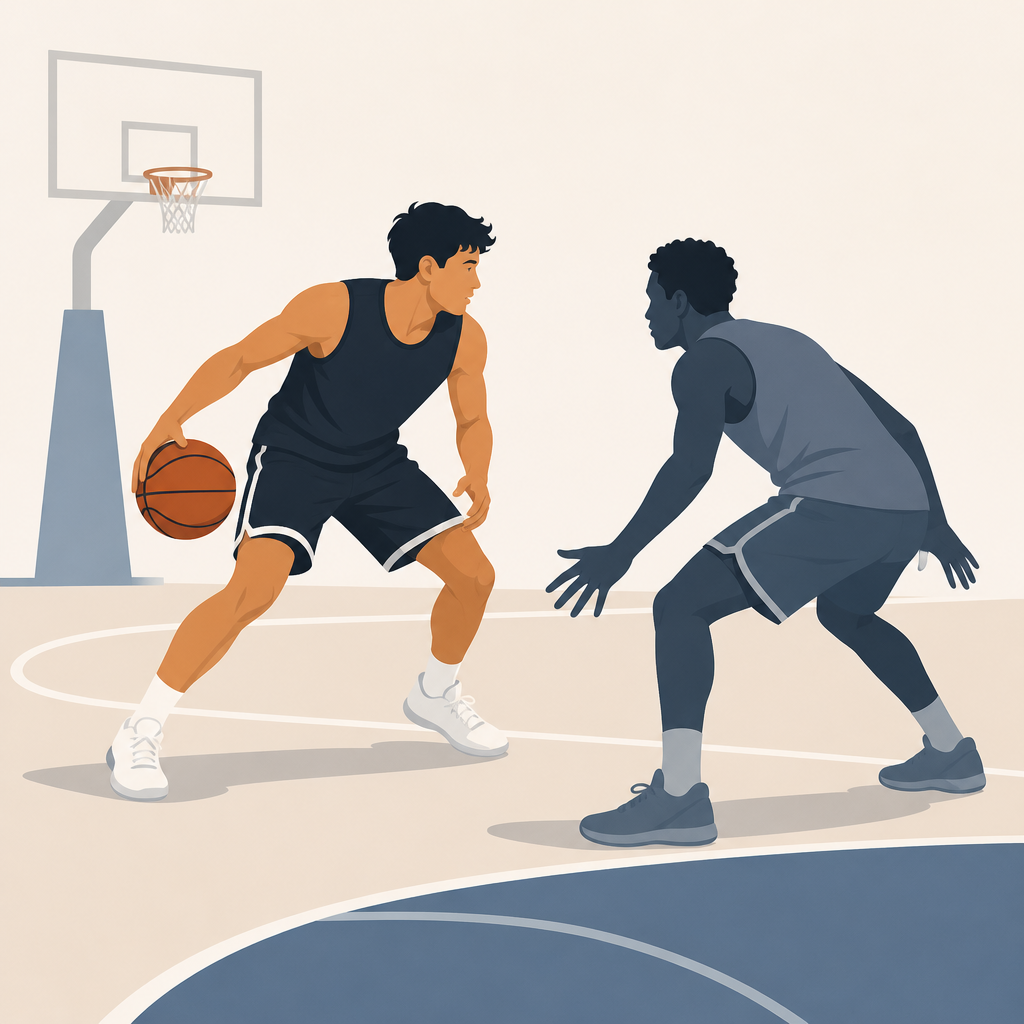
The hesitation dribble is one of basketball’s most useful ball handling moves because it disrupts timing, changes pace, and forces defenders to reveal their balance. In simple terms, a hesitation dribble is a controlled moment of deceleration that makes a defender think you are stopping, rising, or resetting before you explode into space. I have taught this move in workouts with middle school guards, college wings, and adult rec players, and the pattern is always the same: when the feet, eyes, shoulders, and dribble tell one believable story, the defender freezes just long enough to lose the angle.
That is why this skill matters far beyond highlight clips. Good ball handling is not just about flashy combinations. It is the ability to keep possession under pressure, create an advantage off the bounce, get into the paint, trigger help defense, and make the next read. The hesitation dribble sits at the center of that process because it links handle, footwork, pace, and decision-making. If you are building a complete Basketball Skills foundation, this move belongs in the core Ball Handling toolkit alongside the crossover, in-and-out, retreat dribble, pound dribble, split, and change-of-pace push dribble.
At higher levels, defenders are too quick to beat with speed alone. They study tendencies, sit on rhythm, and recover fast. A well-timed hesitation attacks those habits. It works in transition, in pick-and-roll, from isolation, and on closeout drives. It also scales to every position. Small guards use it to force hip turns. Wings use it to get downhill in two dribbles. Bigger players use it to enter power drives without exposing the ball. When coaches talk about “playing off two speeds,” they are really talking about controlled variation, and the hesitation dribble is the cleanest example.
This hub article explains how the hesitation dribble works, when to use it, what body mechanics make it effective, and how it fits into a complete Ball Handling development plan. It also connects the move to live-game reads, common mistakes, practice progressions, and complementary counters. If you want to freeze defenders like the pros, start by understanding that the move is not magic. It is precise deception built on fundamentals, repeated until the fake looks identical to your real attack.
What the Hesitation Dribble Actually Does
The hesitation dribble freezes defenders by interrupting their defensive rhythm. Most on-ball defenders read three things first: your torso, your lead foot, and the height and speed of the ball. When those signals slow down together, the defender often rises slightly, narrows the stance, or shifts weight backward to prepare for a shot or pass. That brief reaction is the opening. The offensive player then re-accelerates before the defender can reset the hips and slide.
Players sometimes think the hesitation is only a “pause.” That is incomplete. A useful hesitation has three linked phases: attack, sell, and burst. You attack with intent so the defender respects your drive. You sell the deceleration with posture, eyes, and a dribble that stays alive. Then you burst through the defender’s top foot or outside shoulder. If any phase is weak, the move loses power. A soft initial attack produces no threat. A fake without body commitment looks staged. A burst without ball protection becomes a steal opportunity.
In practical terms, the hesitation dribble is effective because defense is based on anticipation. The defender does not wait for certainty. They move on cues. Elite ball handlers manipulate those cues. Shai Gilgeous-Alexander is a modern example of pace control done at an advanced level. He rarely rushes the move. He gets a defender sliding, rises subtly through the shoulders, keeps the ball connected to his frame, and then extends into open space. Luka Doncic uses a similar principle with less raw speed but excellent balance and timing. The lesson is clear: the move depends more on sequencing than athleticism.
Body Mechanics: Feet, Shoulders, Eyes, and Ball Position
The best hesitation dribble starts with posture. Stay low enough to drive but upright enough to suggest a pull-up or slowdown. If your chest drops too early, defenders read pure drive. If you stand too tall, you lose the ability to burst. I coach players to think “loaded but relaxed.” Your knees are bent, your core is engaged, and your shoulders are loose. The ball should remain in your control pocket, usually around knee to thigh height on the live dribble, never floating out where help defenders can swipe.
Footwork determines whether the move creates separation or traffic. On a right-hand hesitation, many players attack with the left foot leading, then use a short rhythm step as the ball rises slightly and the body decelerates. The next step is explosive, often off the same-side foot, driving outside the defender’s lead hip. There are variations, but the principle stays constant: your feet must support the stop-start story. If the feet keep racing while the upper body tries to fake a pause, the move looks disconnected.
Eyes matter more than most players realize. Looking at the rim can suggest a pull-up jumper. Glancing toward a teammate can hint at a pass. Keeping the chin level prevents telegraphing panic. In workouts, I often have players perform the same hesitation while changing only eye focus. The defender’s reaction changes immediately. That is not cosmetic deception; it is functional communication. Basketball is a game of reading intent, and your eyes help write the script.
Ball position is the final piece. The dribble should rise just enough to imply reset or gather, but not so high that you lose control. Guards who carry the ball during hesitations often get away with it in loose settings, then struggle when officiating tightens. Under standard rule interpretation, your hand must stay on top or to the side of the ball while it remains a legal dribble. Clean mechanics matter because a move that depends on borderline handling will fail in serious competition.
When to Use the Move in Real Games
The hesitation dribble works best when a defender is retreating, sliding laterally, or preparing for a screen action. In transition, it is deadly against backpedaling defenders because they are already managing space and are vulnerable to a sudden change of speed. In the half court, it shines when you have forced the defender to open a hip. Once that happens, even a small freeze can turn a neutral possession into a paint touch.
One of the highest-value uses is on a closeout. A hard closeout defender must choose between taking away the shot and containing the drive. If you catch, show the ball, and take one assertive dribble into a hesitation, the defender often brakes upright. That is your lane. Another common use is in pick-and-roll. After rejecting a screen or turning the corner, a hesitation can hold the trailing defender behind you and delay the big man’s drop coverage. That pause creates room for a floater, pocket pass, or second burst to the rim.
The move is less effective against defenders who are completely stationary and sitting well off you, unless you are a credible shooter. A hesitation depends on believable threat. If the defender does not respect your pull-up or first step, the fake has limited value. That is why Ball Handling development cannot be separated from shooting and finishing. Defenders guard ecosystems, not isolated moves.
| Game situation | Why the hesitation works | Best follow-up |
|---|---|---|
| Transition against a backpedaling defender | Retreating defenders struggle to change from backward balance to lateral containment | Explode to the rim or pull up if they keep dropping |
| Closeout drive from the wing | The defender’s momentum is moving outward and upward | Attack the top foot and finish off two feet |
| Pick-and-roll after turning the corner | It delays help timing and traps the trailing defender behind the play | Floater, pocket pass, or second burst |
| Isolation against an aggressive slider | The defender is reacting early to your pace and angle | Cross back, in-and-out, or straight-line drive |
How Pros Freeze Defenders
Professional scorers do not all use the same hesitation, but they share common habits. First, they attack a real line. Kyrie Irving does not dance aimlessly before he hesitates. He threatens a shoulder past the defender. Jalen Brunson uses his strength and balance to get a defender leaning, then pauses without losing his dribble. De’Aaron Fox applies the move at higher speed, making defenders feel late even when they are in front. Different styles, same principle: create honest pressure before you ask the defender to guess.
Second, pros keep the ball protected during the fake. Watch how often the ball stays tight to the hip or just outside the knee line. Young players frequently let the ball drift away from the frame during a hesitation, which invites strips from active hands. At advanced levels, weak-side stunts and nail help are timed to exposed dribbles. Compact handling is not only cleaner; it is safer.
Third, elite players pair the hesitation with a second decision. The move itself is rarely the whole play. A defender may freeze, recover, and force another read. This is where complete Ball Handling shows up. After the hesitation, you may need a snatch-back, euro step, jump stop, spin, or kick-out pass. Pros are dangerous because the hesitation opens the door to a chain, not a single action.
Common Mistakes and How to Fix Them
The most common mistake is hesitating without first threatening. If your first dribble is casual, the defender stays comfortable. Fix this by attacking game-speed cones or live defenders with a clear shoulder-to-hip angle before each hesitation. The second mistake is pausing too long. A hesitation is a beat, not a rest stop. Once the defender regains stance, the advantage is gone.
Another problem is standing up so tall that the burst becomes slow and predictable. Players often confuse visible deceleration with exaggerated posture. You only need enough rise to sell the fake. Keep your base loaded. A fourth mistake is watching the ball. Good defenders read that immediately and crowd the next dribble. Train with eyes up, and add visual targets such as a coach’s hand signal or numbered spots on the wall.
Finally, many players overuse the move. If every drive starts with the same hesitation, disciplined defenders sit on the timing. The answer is variation. Sometimes go straight by. Sometimes use an in-and-out. Sometimes retreat and re-attack. Ball Handling is most effective when your moves support decisions rather than replace them.
Practice Progressions for Better Ball Handling
To build a reliable hesitation dribble, start with stationary rhythm work. Pound the ball at knee height, then raise it slightly into a legal hesitation while keeping the shoulders relaxed and the eyes forward. Next, add one-step attacks from both hands. Then progress to two-dribble entries where the first dribble is forceful and the second is the hesitation. I prefer short, focused sets with full intent rather than long sloppy routines.
After that, move into guided game reads. Use a cone as the defender’s top foot and attack different shoulders. Add finishing constraints: one-foot layup, two-foot power finish, floater, or pull-up. Then layer in live defense. Start with a defender who can slide but not reach. Progress to full containment with help at the nail. This sequence matters because control must come before chaos.
For a complete Ball Handling hub, the hesitation should connect to adjacent skills. Pair it with crossover counters, retreat dribbles for reset space, and split dribbles for pressure escapes. Add weak-hand reps equal to strong-hand reps. Track turnovers, paint touches, and successful advantage creations in scrimmages. Improvement is easier to trust when it is measured in outcomes, not just workout volume.
How the Hesitation Fits into a Complete Ball Handling Hub
Ball Handling is not a menu of isolated tricks. It is a system built on control, posture, pace, protection, and reading defenders. The hesitation dribble belongs in that system because it teaches change of speed better than almost any other move. Once players understand that concept, every other skill sharpens. Crossovers become more dangerous. Pick-and-roll manipulation improves. Finishing windows get larger because the first defender is no longer arriving on time.
If you are organizing your skill development, treat this move as a hub connector. Learn the stationary dribble foundations, then the attack dribble, then the hesitation, then the counters that branch from it. Study footwork, film your reps, and test the move in live play where timing is honest. The benefit is simple: you stop dribbling just to survive pressure and start handling the ball to create real advantage. Practice the hesitation dribble with purpose, connect it to the rest of your Ball Handling work, and you will give defenders a problem that shows up in every game.
Frequently Asked Questions
What is a hesitation dribble, and why does it work so well against defenders?
A hesitation dribble is a controlled change-of-pace move where the ball handler briefly slows down, rises slightly, or looks as if they are about to stop, pass, or pull up, then quickly accelerates past the defender. What makes it so effective is that it disrupts the defender’s timing. Most defenders are trained to react to rhythm, so when your pace suddenly changes, they naturally pause, shift their weight, or lift their stance for a split second. That brief reaction window is all a skilled ball handler needs to gain an advantage.
The move works best because it attacks balance, not just speed. A lot of players think they need elite quickness to beat defenders, but the hesitation dribble proves that deception often matters more than raw explosiveness. If your feet slow, your eyes come up, your shoulders rise, and the ball stays under control, the defender starts to process multiple threats at once. They may think you are preparing to shoot, reset the offense, or change direction. Once they hesitate mentally or physically, you can drive by, pull up, or flow into another move.
At every level of the game, from youth basketball to high-level college and pro play, great scorers use the hesitation dribble because it forces the defender to reveal their balance. If they lean back, you attack forward. If they freeze upright, you explode into space. If they overreact and jump to cut off the drive, you can counter into a crossover, in-and-out, or pull-up jumper. In that way, the hesitation dribble is not just a flashy move. It is a decision-making tool that helps you read defenders and create efficient offense.
How do you perform a hesitation dribble correctly without losing control of the ball?
The key to a great hesitation dribble is selling the pause while keeping the ball protected and your body ready to explode. Start by approaching your defender under control. As you dribble, slightly decelerate your stride and let your body language suggest that you are easing up. Your chest can rise a bit, your eyes can come up as if you are reading the floor, and your steps should shorten just enough to make the defender believe a change is coming. The ball should stay tight to your body and under your hand, not wide and loose.
During the hesitation itself, keep your dribble alive and compact. This is not a full stop or a carry. It is a legal, controlled dribble where the ball briefly lingers in rhythm as your body slows. Your knees should still be loaded, even if your posture appears more relaxed. That is an important detail many players miss. The move looks calm on the surface, but underneath, your hips and legs should be prepared to re-accelerate immediately. If you stand too tall or stop moving your feet, you lose the burst that makes the move dangerous.
Once the defender reacts, explode decisively. Push off your outside foot, drop your shoulders, and attack the open lane with purpose. The biggest mistake players make is hesitating without a clear second gear. If the pause is convincing but the drive is soft, the defender recovers easily. Think of the move as a two-part sequence: sell the slow, then punish with speed. Practice it at game pace, because a hesitation dribble that only works in drills but not under pressure is not yet reliable.
What are the most common mistakes players make with the hesitation dribble?
The most common mistake is making the move too obvious or too slow. A hesitation dribble is subtle. If you dramatically stop, over-pose, or exaggerate your body language without threatening the defender, experienced opponents will not bite. The move should feel believable, like you might actually pull up, reset, or change direction. If it looks rehearsed instead of natural, the defender stays disciplined and the advantage disappears.
Another major mistake is standing upright without staying loaded in the legs. Players often hear that they should “rise” into the hesitation, but that does not mean becoming stiff or unathletic. The best ball handlers create the illusion of relaxing while still being in position to explode. If your weight gets too high and your feet stop working, your first step loses power. That turns the hesitation into a pause with no payoff.
Ball placement is another issue. If the dribble gets too far out front or to the side, the defender can swipe at it or crowd your space. The ball should remain protected, with your off-arm ready to shield and your body between the defender and the dribble line whenever possible. Players also make the mistake of using the hesitation at the wrong distance. Too far away, and the defender has time to recover. Too close, and you can get cut off before the move develops. The best hesitations happen when you are close enough to be a real scoring threat but still have room to burst into the gap.
Finally, many players use the move without reading the defender. A hesitation dribble is not something you force every possession. It is most effective against defenders who are retreating, sitting on your speed, or reacting to your eyes and shoulders. If the defender is already off balance, you may not need a hesitation at all. Great players use the move as a response to what the defense gives them, not as an automatic habit.
When should you use a hesitation dribble in a game?
The hesitation dribble is most useful when a defender is worried about your drive and starts matching your speed backward. In that situation, changing pace can make them momentarily relax or shift their weight to their heels. That is the perfect time to freeze them and attack. It is especially effective in transition, early offense, or isolation situations where there is space to operate and the defender has to guard multiple possibilities.
It is also a strong move coming off ball screens or attacking a closeout. After using a screen, defenders often try to recover by chasing or backpedaling. A well-timed hesitation can make the on-ball defender hesitate just enough for you to turn the corner. On a closeout, the move is valuable because the defender is already reacting aggressively. If you catch the ball, show a shot-ready posture, then hesitate and drive, you force the defender to choose between contesting the jumper and cutting off penetration. That indecision favors the offense.
Another smart time to use it is when you want to set up a counter. The hesitation dribble does not always need to lead directly to a straight-line drive. If the defender lunges to stop your burst, you can flow into a crossover, behind-the-back, spin, or step-back depending on the coverage. In that sense, the hesitation becomes a trigger move that creates the reaction you want.
The move is less effective when the floor is crowded or when help defense is sitting in the gap waiting for you. In those moments, beating the first defender is not enough if a second defender is already planted in your path. That is why awareness matters. The best players use the hesitation dribble not just to beat their man, but to do it in spots where the next read still works in their favor.
How can you practice the hesitation dribble so it actually works in live play?
Start by mastering the footwork and tempo without a defender. Work on dribbling at a controlled pace, then briefly decelerating while keeping your dribble legal, tight, and protected. Focus on syncing your feet, eyes, shoulders, and ball rhythm. The move becomes convincing when your whole body tells the same story. If your upper body says stop but your feet are still racing, or if your eyes stay down on the ball, defenders will not believe the fake.
Next, add an explosive first step out of the hesitation. This is where many players separate in training. Do not just practice the pause. Practice the burst after the pause. Take one or two hard dribbles out of the move and imagine attacking a hip, splitting a gap, or getting downhill to the rim. You can also work on different exits, such as straight-line drive, crossover, pull-up, or step-back, so the move becomes part of a complete scoring package rather than a one-option skill.
Then progress to guided live reps. Use a partner, coach, or light defender and practice reading real reactions. Ask the defender to sometimes retreat, sometimes crowd you, and sometimes cut off the first drive. That teaches you to recognize when the hesitation is available and what counter fits the moment. Film your reps if possible. Often, players think they are changing pace dramatically, but on video the move looks rushed or unconvincing. Seeing that feedback helps you refine the details.
Finally, practice it in realistic game spots. Use it coming off a cone or chair as if turning the corner off a screen, attacking from the wing, or pushing in transition. The more context you give the move, the easier it is to transfer into actual competition. The goal is not to have a hesitation dribble that looks good in an empty gym. The goal is to develop one that freezes defenders because your timing, body language, and burst are all sharp under pressure.