
ACL tears are not new in basketball, but the frequency and visibility of recent NBA injuries have made one question impossible to ignore: why do NBA players keep tearing their ACLs? The answer is not a single cause, and anyone promising a simple explanation is missing how modern basketball stresses the human knee. An ACL tear happens when the anterior cruciate ligament, one of the key stabilizers inside the knee joint, is overloaded beyond its capacity. In elite basketball, that overload usually comes from a noncontact sequence involving deceleration, cutting, landing, trunk sway, and split-second loss of alignment rather than a direct collision alone.
In my work analyzing game film, injury reports, force-production data, and return-to-play timelines, the same pattern appears repeatedly. The modern NBA asks athletes to move faster in tighter spaces, cover more ground defensively, and create offense through violent changes of direction. Players are bigger, more skilled, and more explosive than ever. That sounds like progress, and it is, but it also means every possession contains more high-risk actions. When a six-foot-eight wing plants hard to reject a screen, absorbs contact, rotates through the torso, and tries to reaccelerate instantly, the knee becomes the transfer point for huge forces.
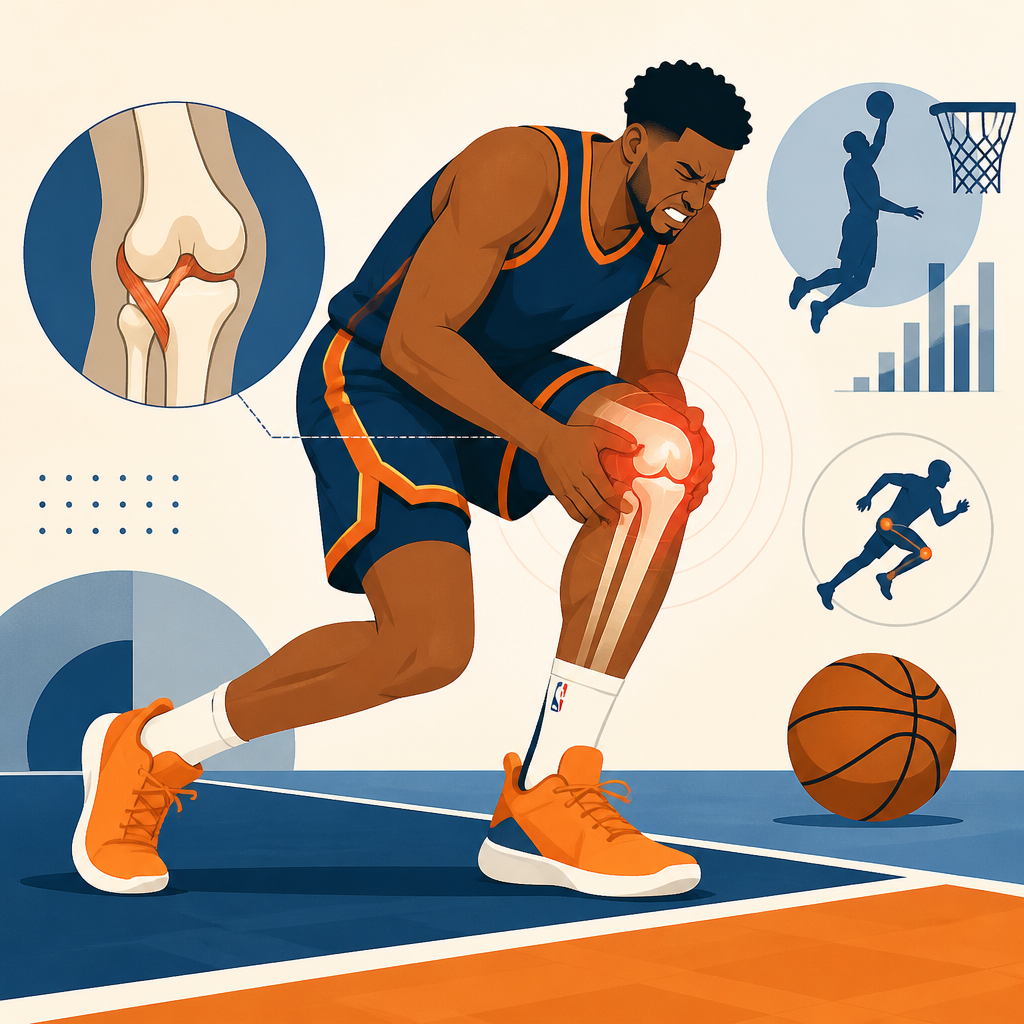
Understanding the injury spike starts with defining terms. The ACL connects the femur to the tibia and helps resist anterior translation and rotational instability at the knee. Sports scientists often separate risk into intrinsic factors, such as anatomy, neuromuscular control, strength asymmetry, previous injury, and fatigue response, and extrinsic factors, such as schedule congestion, footwear, court surface, role demands, and game speed. The key point is interaction. Players do not tear ACLs because of one weak muscle or one bad landing. They tear them when multiple stressors line up at the wrong instant.
This matters because an ACL tear is not just a missed season. It affects roster construction, player development, contract value, biomechanics, and often long-term joint health. Even after successful reconstruction, some athletes lose a fraction of preinjury elasticity, confidence, or deceleration sharpness. Others return brilliantly, but usually after a long, carefully managed process. For teams, the cost is competitive and financial. For players, it can change career trajectories. For fans and analysts, understanding the science behind the rise in ACL injuries gives much better insight than blaming bad luck.
The modern NBA movement profile puts the knee under extreme rotational stress
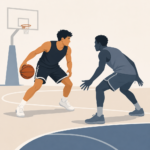
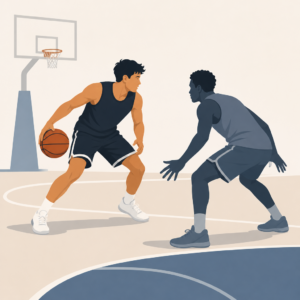
Basketball has always involved jumping and landing, but the NBA movement profile has changed in ways that increase ACL load. Pace is faster, spacing is wider, and defensive schemes demand more open-floor recovery. A generation ago, many possessions involved post entries, set plays, and more static half-court actions. Today, one sequence may include a switch, stunt, closeout, retreat step, peel switch, and recovery sprint before the shot even goes up. Each of those actions requires deceleration, and deceleration is where many ACL injuries begin.
Biomechanically, the ACL is highly stressed when an athlete plants with the foot fixed, the knee relatively extended, and the trunk leaning away from the plant leg while the body rotates. That combination can create dynamic valgus, internal tibial rotation, and anterior shear forces. On film, these injuries often look harmless until slowed down. A player chases over a screen, catches the front of the foot, the knee caves slightly inward, and the ligament fails before there is dramatic contact. This is why many ACL tears are described as freak injuries even though the underlying mechanics are well understood.
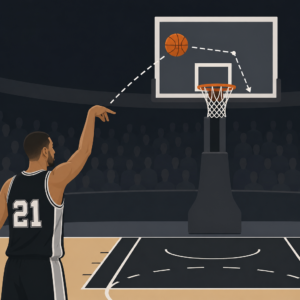
The modern shot diet contributes too. More threes mean longer rebounds and more chaotic scramble possessions. More spread pick-and-roll means more isolation space, more downhill drives, and more emergency help rotations. Bigs now defend in space and guards finish among rotating length. The result is more abrupt stops, more awkward landings, and more multiplanar knee loading than a slower, more structured era demanded.
Fatigue does not directly tear a ligament, but it changes the movement pattern that protects it
When players and trainers talk about tired legs, they are not speaking vaguely. Fatigue changes how force is absorbed and redirected. In the lab and on court, tired athletes often show reduced knee flexion on landing, slower hamstring recruitment, less precise hip control, and poorer trunk positioning. Those adjustments matter because the hamstrings, glutes, calves, and core help dissipate force that would otherwise shift toward passive structures like the ACL.
NBA fatigue is also different from simple conditioning fatigue. It includes cumulative travel, circadian disruption, contact bruising, repeated eccentric loading, and cognitive fatigue from processing complex schemes at game speed. A player on the second night of a back-to-back may still jump high, but the tiny stabilizing decisions can degrade. The foot strikes a few centimeters farther outside the center of mass, the trunk drifts, the hip does not absorb enough load, and the knee takes the penalty.
This is one reason workload management became common across the league. Teams are not merely protecting star scorers from general wear. They are trying to keep neuromuscular quality high enough for safe movement. Tracking systems such as Catapult, force plates, NordBord hamstring testing, and countermovement jump monitoring are used to detect readiness and asymmetry. These tools cannot predict every injury, but they help identify when an athlete is compensating or failing to recover between games and practices.
More games are not the only schedule problem; density, travel, and role volatility matter more
Fans often ask whether the season is simply too long. The season length matters, but schedule density is the more useful lens. What elevates risk is not only eighty-two games. It is compressed travel windows, cross-country flights, fluctuating sleep opportunity, inconsistent practice intensity, and sudden role spikes caused by injuries elsewhere in the rotation. A reserve thrust from twelve minutes into thirty-two high-leverage minutes experiences a different stress profile than a starter on a stable plan.
I have seen teams handle this well and poorly. The better organizations integrate sports science with coaching decisions rather than treating monitoring as a separate department. They adjust practice contact, modify lift timing, and flag players whose acceleration and deceleration exposures are climbing too quickly. The worst approach is focusing only on total minutes. Two players can each log thirty minutes, but one spends the night navigating screens, closing out to corners, and changing directions on defense, while the other plays in more linear offensive actions. The tissue cost is not equal.
| Risk factor | How it stresses the ACL | NBA example in plain terms |
|---|---|---|
| Rapid deceleration | Increases anterior shear and knee valgus risk | A guard stops hard after turning the corner in pick-and-roll |
| Fatigue accumulation | Reduces precise landing and cutting mechanics | Second half of a road back-to-back with heavy defensive workload |
| Role change | Raises acute workload faster than tissue adapts | Bench wing suddenly starts and defends primary scorers |
| Previous lower-body injury | Creates compensation and asymmetry patterns | Player returns from ankle sprain and overloads the knee |
| Footwear and traction mismatch | Locks the foot while the body keeps rotating | Shoe grips aggressively on a sharp change of direction |
Previous injuries, even minor ones, can set up the next major knee injury
ACL tears rarely emerge from a perfectly healthy system. Often there is a chain reaction. An ankle sprain reduces dorsiflexion and alters landing mechanics. A hip issue changes force absorption. Patellar tendinopathy leads a player to offload one side. Adductor tightness limits pelvic control. None of these injuries guarantees an ACL tear, but each can shift movement enough to raise risk during a high-speed cut.
This is why return-to-play testing has become more sophisticated than simply checking pain and strength. Teams now look at interlimb asymmetry, single-leg braking force, reactive strength index, isokinetic output, and live movement quality. Passing a hop test is helpful, but it is not enough if the athlete still protects one side under reactive conditions. In real games, players do not move in clean, rehearsed lines. They react to screens, bumps, and changing visual cues. The knee must stay stable inside chaos.
There is also the issue of scar tissue and altered proprioception after earlier injuries. Even when tissue heals, the athlete may not sense joint position as cleanly under speed and fatigue. That subtle loss can affect planting angles and timing. Coaches and fans usually notice the big outcomes, like reduced burst, but sports scientists focus on the micro-adjustments that happen before the burst is even attempted.
Explosiveness is valuable, but force without braking capacity is a dangerous equation
One of the clearest trends in the NBA is the premium placed on explosive athletes who can cover ground instantly. Vertical leap and first-step burst are celebrated, but braking capacity is the trait that often separates durable explosiveness from risky explosiveness. Braking capacity means how effectively a player can absorb force, control joint positions, and stop the body before changing direction. The stronger and more explosive an athlete becomes, the more important this quality is.
In performance settings, I have seen players improve sprint speed and jump output while quietly losing movement efficiency because training emphasized production more than control. Heavy bilateral strength work is useful. Plyometrics are useful. Olympic lifts can be useful. But if programming undertrains single-leg deceleration, frontal-plane control, trunk stiffness, and reactive landings, the athlete may become more dangerous to the defense and to his own knees at the same time.
The best prevention programs borrow from established neuromuscular frameworks used across elite sport: landing mechanics, hamstring strength, hip stability, balance under perturbation, and progressive return to chaotic sport actions. FIFA 11+ is often cited in soccer for reducing lower-extremity injuries through structured warmups, and basketball uses similar principles even if the drills differ. The science is consistent: better movement organization lowers risk.
Equipment and environment play a role, but they are contributing factors, not root causes
Whenever a star tears an ACL, discussion quickly turns to shoes, court surfaces, or minutes. Equipment does matter, but usually as part of a broader chain. Too much traction can be a problem because if the shoe grips so well that the foot sticks while the torso rotates, the knee may absorb the rotational load. Too little traction creates slipping and late corrections. Either extreme can be harmful depending on the movement.
Court conditions matter as well. Moisture, dust, hardwood maintenance, and transition between arenas can alter confidence and foot strike behavior. Even then, surface issues alone rarely explain the injury spike. Elite players adapt to varied floors all season. What makes the environment relevant is how it interacts with fatigue, timing, and body position during high-speed play.
The same balanced view applies to load-management criticism. Rest is not a cure-all, and reduced games alone will not eliminate ACL tears. Some injuries happen early, when players are fresh. Others occur after long workload buildups. The goal is not to avoid stress; elite performance requires stress. The goal is to dose stress so tissue capacity and movement quality rise with it.
What teams can do to reduce ACL risk without compromising performance
No prevention plan can remove ACL risk from NBA basketball, but smart teams can lower it meaningfully. First, they need individualized workload models that track more than minutes. Acceleration counts, deceleration intensity, change-of-direction volume, and recent role changes should all be included. Second, strength and conditioning must prioritize eccentric strength, hamstring function, soleus capacity, and single-leg control. Third, return-to-play decisions should include reactive movement testing, not just linear strength numbers.
Coaching strategy matters too. Practice design can reduce unnecessary wear while preserving tactical sharpness. Defensive schemes can be taught in ways that improve angles and reduce late panic closeouts. Rotation stability helps athletes prepare physically for expected loads. Communication between medical staff, performance staff, and coaches is often the hidden variable in durable teams.
For readers exploring the broader NBA Analysis sports science hub, the central lesson is simple. ACL injuries rise when the demands of modern basketball outpace an athlete’s ability to organize force safely under fatigue, speed, and uncertainty. The spike is real, but it is understandable. Better monitoring, smarter training, and more honest interpretation of movement data will not end the problem entirely. They will, however, give teams and players the best chance to keep elite explosiveness on the floor instead of in rehab. Follow this hub for deeper breakdowns on biomechanics, workload, recovery, and return-to-play science across the NBA.
Frequently Asked Questions
Why does it seem like NBA players are tearing their ACLs more often now?
It feels that way for a few reasons, and some of them are very real. First, the modern NBA places enormous demands on the knee. Today’s game is faster, more spaced out, and built around constant acceleration, deceleration, hard closeouts, sharp changes of direction, and explosive one-leg takeoffs and landings. Those are exactly the movement patterns that can stress the ACL, especially when the knee collapses inward, the foot sticks to the floor, or the body’s momentum shifts faster than the joint can control. In other words, modern basketball creates more situations where the ligament is asked to resist high rotational and shear forces.
Second, players are bigger, stronger, and more explosive than ever. That sounds like protection, but it can also raise injury risk because larger forces are moving through the same human structures. A 250-pound athlete changing direction at elite speed generates a huge amount of load through the knee. If the muscles around the joint are even slightly late in stabilizing that movement, the ACL may absorb more of the stress than it was designed to handle.
Third, the visibility of injuries is much higher now. Every major injury is instantly replayed, analyzed, and discussed across social media, television, and sports betting coverage. So while ACL tears are not new, they are far more noticeable than they were in previous eras. There is also better diagnostic precision today, meaning injuries are identified and categorized more clearly. The result is a mix of genuine biomechanical stress, a changing style of play, and much more public awareness.
What actually causes an ACL tear in basketball?
An ACL tear usually is not caused by one dramatic collision. In basketball, many ACL injuries are non-contact, meaning the ligament fails during a movement the player initiates on their own. The classic setup is a sudden deceleration, a hard cut, an awkward landing, or a quick attempt to change direction while the foot is planted. When that happens, the knee can experience a combination of forward tibial translation, rotation, and inward collapse, sometimes called dynamic valgus. If the stabilizing muscles and movement mechanics cannot control those forces in time, the ACL can rupture.
That is why the injury is so complicated. The problem is not just “the knee bent the wrong way.” It is often a chain reaction involving hip control, core stability, ankle positioning, fatigue, timing, and body alignment at the exact instant force is transferred through the leg. A player may be completely healthy and still tear an ACL on a single high-risk movement if enough load hits the ligament at once. Contact can also contribute, especially if a player gets bumped in the air or while planting, but the underlying science usually comes back to force, positioning, and timing rather than simple bad luck alone.
Put another way, the ACL is not a weak structure. It is a strong restraint that becomes vulnerable when the movement environment overwhelms it. That is why these injuries can happen to world-class athletes with elite training staffs. The sport itself creates split-second situations where the knee has to solve a difficult mechanical problem under extreme speed.
Are fatigue and the NBA schedule part of the problem?
Yes, fatigue is a major part of the conversation, even if it is rarely the only explanation. The ACL does not tear because a player is merely tired in a general sense. The issue is that fatigue changes movement quality. When athletes are fatigued, they may decelerate less cleanly, land with worse alignment, react a fraction of a second slower, and rely on passive structures like ligaments instead of active muscular control. That small drop in neuromuscular precision can matter a lot in a sport where one possession may require multiple explosive cuts, stops, and jumps in just a few seconds.
The NBA schedule can amplify that risk. Back-to-backs, dense travel, short recovery windows, playoff intensity, and year-round basketball all reduce the time players have to fully restore strength, tissue capacity, and movement sharpness. Recovery is not just about whether someone feels rested. It also affects tendon stiffness, muscle readiness, coordination, and the body’s ability to absorb force efficiently. Over time, cumulative workload may not directly tear the ligament, but it can increase the number of moments when a player’s mechanics are slightly off, and that is where injury risk rises.
This is also why sports scientists look beyond minutes played alone. Two players can log the same minutes but carry very different biomechanical loads depending on their role, style, and movement demands. A guard who is constantly attacking off the dribble may accumulate more repeated cutting stress than a player with a more stationary offensive role. So when people ask whether fatigue matters, the smart answer is yes, but through movement degradation and cumulative stress rather than as a simple one-variable cause.
Can ACL tears be prevented, or are they just unavoidable in a sport like basketball?
They are not fully preventable, but they are also not purely random. That middle ground is important. No training program can eliminate ACL tears because basketball will always involve chaotic, high-force movements that no athlete can perfectly control every time. But risk can absolutely be reduced through targeted prevention strategies. The best programs focus on landing mechanics, deceleration technique, single-leg stability, hamstring and glute strength, hip control, trunk positioning, balance, and neuromuscular timing. These are not glamorous interventions, but they directly address the way force travels through the lower body.
Prevention also means managing exposure. Teams monitor workload, asymmetries, jump counts, change-of-direction volume, and return-to-play progressions because injury risk is not just about strength in the weight room. It is about whether the athlete can repeatedly produce and absorb force in basketball-specific situations. That includes how they move when fresh, how they move when tired, and how they respond under live game pressure. Screening tools can help identify red flags, but no single test can predict who will tear an ACL. Human movement is too complex for that.
So the honest answer is that prevention works in probabilities, not guarantees. Good training and smart load management can lower risk, improve movement quality, and potentially prevent some tears that would otherwise happen. But in a sport this explosive, there will always be an irreducible level of danger. That is not a failure of medicine or performance science. It is the reality of asking the human knee to handle extreme speed, force, and unpredictability.
Why is returning from an ACL tear so challenging for NBA players?
Because recovery is about much more than healing the ligament. Surgically reconstructed ACLs can become structurally sound, but that does not automatically restore the athlete’s full movement profile, confidence, or reaction timing. NBA players need elite deceleration, rotational control, one-leg power, and the ability to make unconscious split-second adjustments in traffic. Those qualities are incredibly difficult to rebuild after a major knee injury. Even when a player is medically cleared, they may still be working through subtle deficits in force production, landing symmetry, proprioception, and trust in the repaired leg.
There is also a psychological side that matters more than many fans realize. Basketball movements happen too fast for a player to consciously think through every cut and landing. They need to trust the knee instinctively. If that trust is not fully there, mechanics can change in small ways that affect performance and may even shift stress elsewhere in the body. That is one reason some players look physically recovered before they truly look like themselves on the court.
On top of that, the league does not reward partial explosiveness. The difference between 90 percent and 100 percent can be huge at the NBA level, especially for athletes whose games depend on burst, elevation, and lateral agility. That is why return timelines can be misleading. A player may return to competition within a year, but complete functional recovery can continue well beyond that. The challenge is not just getting back on the floor. It is restoring the rare movement capacity that made that player an elite NBA athlete in the first place.