

Undrafted NBA players who became stars represent one of basketball’s most compelling themes because they challenge the draft’s basic promise: that thirty teams, armed with scouts, analytics models, medical reports, and years of film, can accurately rank future greatness. In NBA terms, an undrafted player is any prospect who completes the annual draft process without hearing his name called across two rounds. That outcome usually signals doubt about size, age, athleticism, role fit, health, competition level, or simple upside. Yet draft history shows that missing draft night glory does not prevent a player from building an elite career, earning All-Star honors, winning championships, or reshaping how front offices evaluate overlooked talent.
As someone who has tracked draft classes, Summer League battles, and training-camp competitions for years, I have seen one pattern repeat: the difference between a second-round flyer and an undrafted signee is often thinner than fans assume. Teams routinely make rapid judgments under uncertainty. A player can be dismissed because he stayed in college too long, played at a mid-major, lacked a defined position, or arrived before the league fully valued his skill set. The best against-all-odds stories emerge when that player lands with a development system willing to invest real minutes, coaching detail, and patience.
This matters beyond inspirational storytelling. Studying undrafted NBA success explains how draft history actually works, where talent evaluation fails, and why roster construction depends on far more than draft order. It also helps readers understand the broader NBA draft ecosystem: pre-draft workouts, two-way contracts, Exhibit 10 deals, the G League pathway, and the importance of organizational fit. Some undrafted players become stars because they own one elite NBA skill from day one. Others evolve through defense, decision-making, or relentless physical development. The common thread is not luck alone. It is the intersection of opportunity, self-awareness, and a league environment finally ready for what they do well.
In a hub article about draft history, these players are essential. Their careers connect scouting blind spots, developmental infrastructure, and changing league trends across eras. Ben Wallace showed that defensive dominance can outweigh offensive limitations. John Starks proved a waived long shot could become a cornerstone in a major market. Bruce Bowen built value through perimeter defense before 3-and-D became front-office vocabulary. Udonis Haslem turned local grit and conditioning into extraordinary longevity. More recently, Fred VanVleet went from undersized college winner to NBA champion and All-Star, while Austin Reaves demonstrated how modern creators can slip through the cracks if evaluators underestimate feel, pace, and adaptability. Together, these stories form the clearest reminder in draft history that selection status is a starting point, not a destiny.
Why Undrafted Players Slip Through in NBA Draft History
Undrafted players usually fall out of the draft for identifiable reasons, and understanding those reasons is the first step to understanding their later success. The most common causes are measurable limitations, projection risk, and market context. A player may be considered too short for his position, too slow laterally, too old to justify upside bets, or too specialized to warrant one of only sixty selections. In other cases, a prospect’s college role hides NBA-level traits. Draymond Green was drafted, but his example illustrates the category: evaluators often struggle with players who dominate games through processing speed, strength, timing, and competitive intelligence more than traditional athletic aesthetics. When those same traits appear in undrafted prospects, the skepticism is usually even stronger.
Era matters too. Front offices in the 1990s and early 2000s often valued positional prototypes more rigidly than teams do now. An undersized guard without blazing speed or a forward without a polished face-up game could be written off quickly. Modern spacing has reopened doors for players with shooting, passing, and switching versatility, but blind spots remain. College seniors still get discounted despite entering the league with more refined skills. Mid-major stars still face doubts about translation. International scouting is deeper than ever, yet late bloomers continue to surface outside the draft. In practice, the draft is not just a ranking of talent. It is a snapshot of how the league values certain archetypes at a specific moment.
There is also a structural reason stars emerge after going undrafted: post-draft pathways are more flexible than fans realize. Once the draft ends, teams can pursue players aggressively without the constraints of draft order. A prospect and his agents can choose a franchise with a clearer route to minutes, stronger player development staff, or a roster lacking depth at his position. I have long thought this is one of the most underrated dynamics in draft history. A player taken fifty-fifth may end up buried, while an undrafted player signs with a franchise that offers Summer League reps, a two-way contract, G League continuity, and a direct communication plan. Development is rarely linear, but environment changes odds dramatically.
The Defining Success Stories That Reshaped Expectations
Ben Wallace is the gold standard for undrafted NBA stardom. After playing at Virginia Union, he entered the league in 1996 without hearing his name called. By conventional draft logic, a 6-foot-9 center with limited scoring range and small-school exposure looked like a long shot. By NBA reality, he became one of the greatest defenders ever. Wallace won four Defensive Player of the Year awards, made five All-NBA teams, earned five All-Star selections, and anchored the 2004 Detroit Pistons championship team. His impact was built on strength, anticipation, rim protection, rebounding, and perhaps the best pure defensive motor of his era. Draft history often celebrates scoring breakthroughs, but Wallace proved that an elite specialist can become a franchise-defining superstar.
John Starks offers a different path. He went undrafted in 1988, spent time in the Continental Basketball Association and World Basketball League, and nearly became a forgotten footnote. Instead, he carved out a career with the New York Knicks, making the 1994 All-Star team and becoming a central figure in deep playoff runs. Starks was not a polished prospect in the classic sense. What changed was role clarity. In New York, his toughness, shot creation, perimeter defense, and emotional edge fit Pat Riley’s identity perfectly. His story highlights a core draft-history lesson: a team culture can amplify a player’s strengths so much that the original scouting report becomes outdated.
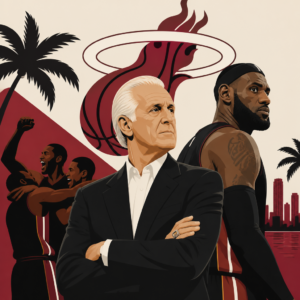
Udonis Haslem was overlooked in 2002 partly because he was seen as an undersized power forward without ideal explosiveness. After working on his body overseas in France, he returned to sign with the Miami Heat and became one of the league’s most respected role players. Haslem made no All-Star teams, but in a hub article about draft history, he belongs because star influence is not always captured by box scores. He started on a championship team in 2006, remained part of title teams in 2012 and 2013, and set a standard for conditioning, screening, rebounding, defensive communication, and locker-room leadership. Teams now talk constantly about infrastructure and culture; Haslem is one reason those concepts are taken seriously.
Fred VanVleet is perhaps the clearest modern example of an undrafted player becoming a genuine star in the analytics era. After a decorated career at Wichita State, he went undrafted in 2016 because of concerns about size, burst, and perceived ceiling. Toronto signed him, developed him through the Raptors 905 program, and trusted his decision-making under pressure. VanVleet became a key contributor to the 2019 championship team, famously erupted after the birth of his son during the Eastern Conference finals, then rose to All-Star status in 2022. He built his career on pull-up shooting, low-turnover playmaking, point-of-attack defense, and unusual composure. His path is now taught across front offices as evidence that productivity, toughness, and processing can outperform pre-draft measurables.
What These Players Had in Common
Across eras, the best undrafted success stories share a small set of repeatable traits. First, they entered the league with at least one bankable NBA skill. Wallace had defensive range and rebounding violence. VanVleet had command of pace and the ability to make the right read. Starks brought competitive shot creation. Haslem offered physical screening, positional defense, and interior toughness. Second, they accepted developmental humility. None arrived demanding star treatment. They fought for ten-day contracts, camp invites, rotation scraps, and specialized roles. Third, they improved strategically rather than randomly. The leap usually came from sharpening a narrow edge until it forced coaches to trust them in winning minutes.
Organizational fit also stands out. Miami has repeatedly extracted value from undrafted players because its standards are clear and non-negotiable. Toronto built a pipeline between the NBA club and G League affiliate that gave VanVleet, Pascal Siakam, and others coherent development plans. San Antonio turned Bruce Bowen, another undrafted player, into an elite defensive specialist by defining his job with precision: guard the toughest perimeter scorer, space to the corner, and execute within a championship structure. Development sounds abstract until you watch these examples. The best organizations teach footwork, rotation timing, shot diet, film habits, and conditioning benchmarks in a way that turns fringe players into reliable winners.
| Player | Undrafted Year | Why Teams Passed | What Made Him a Star or High-Impact Fixture |
|---|---|---|---|
| Ben Wallace | 1996 | Small-school background, limited offensive profile | Historic defense, rebounding, rim protection, strength |
| John Starks | 1988 | Unclear projection, rough path through minor leagues | Shot creation, toughness, defensive intensity, fit in New York |
| Udonis Haslem | 2002 | Size concerns, tweener label, limited upside perception | Defense, screening, rebounding, leadership, durability |
| Bruce Bowen | 1993 | Limited offensive game, late development arc | Elite perimeter defense, corner shooting, role acceptance |
| Fred VanVleet | 2016 | Height and athleticism concerns | Pull-up shooting, decision-making, clutch play, defense |
| Austin Reaves | 2021 | Average burst, uncertain defensive ceiling | Craft, foul drawing, secondary playmaking, efficient scoring |
Modern Undrafted Stars and the Changing Development Pipeline
The current NBA has improved the odds for overlooked players, though it has not eliminated the challenge. Two-way contracts, created in 2017, allow teams to keep developmental prospects connected to the parent club while giving them meaningful game reps in the G League. That matters because fringe players need volume possessions and film review, not just occasional bench minutes. Austin Reaves benefited from another modern advantage: undrafted free agency as a strategic choice. By not being selected in 2021, he gained more control over destination and landed with the Los Angeles Lakers, where his feel as a ballhandler and decision-maker quickly translated. He became an All-Rookie Team selection and then a high-level starter and playoff contributor.
Jose Alvarado, though not yet a star on the level of VanVleet, shows how quickly a signature NBA skill can create value. Undrafted in 2021, he earned rotation minutes with New Orleans through full-court defensive pressure, anticipation, and disruptive plays like his now-famous baseline steal. The point is broader than one player. In today’s league, if an undrafted guard can defend, make quick reads, and hit open threes, he has a viable route to staying power. If a wing can guard multiple positions and keep the ball moving, teams will keep searching for minutes. If a big can protect the rim, screen well, and survive in space, he can beat the odds faster than in previous eras.
Data and video have also changed evaluation after draft night. Synergy Sports, Second Spectrum tracking, and lineup-based analytics help teams identify translatable strengths that old scouting language might miss. But numbers do not replace context. I have seen organizations misread college usage, inflate weak-conference scoring, or overlook players whose low-volume roles masked professional traits. The best teams pair data with targeted development. They ask specific questions: Can this player guard an action three times in one possession? Can he make the weak-side tag and still recover to the corner? Can his handle survive pressure? Undrafted success in the modern era still comes down to answering those questions on the floor, possession after possession.
Lessons for Reading Draft History More Accurately
The biggest lesson from undrafted NBA players who became stars is that draft history should be read as probability, not prophecy. High picks still matter enormously; they receive more investment because they usually have superior talent and stronger pathways to stardom. But misses are inevitable because basketball development is nonlinear, role-dependent, and deeply affected by health, confidence, and fit. That is why any serious study of draft history should include not only lottery hits and busts, but also the undrafted players who exposed the limits of consensus evaluation.
For readers using this page as a hub within the broader NBA Draft topic, the practical takeaway is clear. When studying past drafts, look beyond who was selected where. Examine what scouts valued at the time, how team needs shaped decisions, which development systems consistently outperformed the market, and how league style influenced projection. The strongest against-all-odds stories are not random miracles. They are evidence. They show where the draft process underrates defensive genius, competitive resilience, mature decision-making, and role acceptance. They show why franchises keep mining the undrafted pool every June and why fans should care long after the final pick is announced.
Undrafted stars make draft history richer because they keep the league honest. They remind teams that measurables are incomplete, consensus can be wrong, and player development is a competitive advantage. From Ben Wallace’s Hall of Fame defense to Fred VanVleet’s championship résumé and Austin Reaves’ rapid rise, these careers prove that elite NBA impact can emerge from the margins. If you are building knowledge around the NBA Draft, use these stories as a lens for every class: who was overlooked, why, and which environment might unlock them next. That is where the most revealing draft history lives, and it is why this subtopic remains essential reading for serious basketball fans.
Frequently Asked Questions
What does it mean to be an undrafted NBA player, and why is that such a big deal?
An undrafted NBA player is a prospect who goes through the league’s annual draft process and is not selected in either of the two rounds. That may sound like a technical detail, but in practical terms it is a major setback at the start of a professional career. The NBA draft is designed to identify the best incoming talent, so when a player is passed over completely, it usually reflects real concerns from teams about his size, age, athletic profile, injury history, role fit, or long-term upside. Being undrafted also means losing the built-in security that many drafted players receive, such as guaranteed money, development patience, and immediate organizational investment.
That is why undrafted success stories carry so much weight. These players begin with less leverage, fewer opportunities, and often a shorter margin for error. Many have to earn training camp invites, fight for two-way contracts, prove themselves in Summer League, and spend time in the G League or overseas before sticking in the NBA. When an undrafted player not only makes a roster but develops into a star, it exposes how difficult projection can be, even for teams with deep scouting departments, advanced analytics, and years of film study. It also shows that growth after age 18 or 19 can be dramatic. In other words, undrafted stars are not just feel-good stories; they are reminders that evaluation is imperfect and that determination, skill development, and the right environment can completely reshape a career.
Who are some of the best examples of undrafted NBA players who became true stars?
Several names stand out immediately when discussing the greatest undrafted success stories in NBA history. Ben Wallace is often near the top of the list because he went from being overlooked to becoming one of the best defenders the league has ever seen. He became a four-time Defensive Player of the Year, an NBA champion with the Detroit Pistons, and eventually a Hall of Famer. His rise is especially remarkable because he built an elite career without the offensive profile teams usually prioritize in draft evaluations.
Another major example is John Starks, who carved out an All-Star career through relentless competitiveness and shot-making. Fred VanVleet belongs in any modern version of this conversation as well. After going undrafted in 2016, he developed into a key contributor on the Toronto Raptors’ 2019 championship team, earned an All-Star selection, and became one of the league’s most respected guards because of his toughness, leadership, and ability to create offense. Udonis Haslem also deserves mention, not only for longevity but for becoming a foundational figure in Miami Heat culture and contributing to multiple championship teams.
If the definition of “star” includes players who reached All-Star or near-All-Star impact levels, names like Connie Hawkins and Brad Miller also matter historically. More recent fans may point to players such as Jose Alvarado or Austin Reaves as examples of undrafted players who have outperformed expectations, though they are better described as high-level contributors unless their resumes continue to grow. The strongest list usually includes players who combined individual accolades, playoff relevance, and sustained success. What makes these stories compelling is that they are not one-year surprises. The best undrafted stars turned opportunity into lasting careers and in some cases into championship-level legacies.
Why do NBA teams miss on players who later become stars?
Teams miss on future stars for many reasons, and the answer is more complicated than simply saying scouts got it wrong. Draft evaluation is an inexact science because front offices are projecting how teenagers or young adults will develop against the best basketball competition in the world. Some players are undervalued because they do not fit prototype measurements for their position. Others are penalized for playing at smaller schools, lacking elite explosiveness, entering the draft at an older age, or having a skill set that is harder to quantify in a traditional scouting model. A player may also be buried in a college system that does not showcase his best strengths.
Context matters too. Teams are not drafting in a vacuum; they make decisions based on roster needs, timelines, coaching preferences, and risk tolerance. A prospect with a high floor but limited perceived upside might be overlooked in favor of a younger, more athletic player. In some cases, the concern is not talent but uncertainty about role translation. A college star who dominated with the ball may be difficult to project as an off-ball guard or complementary wing in the NBA. That uncertainty can push him out of the draft entirely.
Just as important, many players improve dramatically after the draft. They refine their shooting mechanics, add strength, sharpen decision-making, and land in systems that maximize their strengths. Confidence and opportunity can change everything. A player who receives meaningful minutes with a smart coaching staff may look completely different from the version teams evaluated months earlier. That is one reason undrafted stars are so fascinating: they reveal that development is not linear, environment matters enormously, and the draft captures only a snapshot of a player rather than the full story of what he can become.
How do undrafted players usually make it onto NBA rosters and work their way up?
The path is rarely straightforward. Most undrafted players have to build their careers one opportunity at a time. After the draft, they may sign Exhibit 10 deals, compete in Summer League, accept training camp invites, or join teams on two-way contracts that split time between the NBA and G League. Some go overseas to develop, earn money, and prove they can handle a major role professionally. Unlike first-round picks, they typically are not guaranteed long developmental runways. If they struggle early, they can be replaced quickly, which makes every practice, preseason game, and bench minute matter.
To survive that environment, undrafted players usually need a clearly translatable NBA skill. That can be point-of-attack defense, reliable three-point shooting, ball security, rebounding, screen setting, or positional versatility. They often enter the league by mastering a role before expanding their game. Fred VanVleet, for example, earned trust through poise, defense, and smart play before growing into a bigger offensive responsibility. Ben Wallace made himself indispensable through rebounding, rim protection, and energy. This role-first progression is one of the most common themes in undrafted success stories.
Organizational fit is also huge. Certain franchises consistently identify and develop overlooked players because they have strong player development systems, clear expectations, and patience. Miami, Toronto, and San Antonio have often been cited as teams that excel in this area. When an undrafted player enters a stable system with a defined pathway, he has a much better chance of sticking. Ultimately, making it as an undrafted player requires more than talent. It requires resilience, adaptability, self-awareness, and the ability to turn limited chances into undeniable proof that you belong.
What makes undrafted NBA success stories so compelling to fans and important to basketball history?
These stories resonate because they go beyond basketball statistics. They speak to a universal idea: being underestimated and proving people wrong. Fans understand what it means to be overlooked, and undrafted players embody that underdog narrative at the highest level of the sport. The NBA is one of the hardest leagues in the world to enter, so when someone is passed over by all 30 teams and still fights his way into stardom, it feels dramatic, personal, and deeply earned. There is a difference between expected greatness and discovered greatness, and undrafted stars represent the latter in its purest form.
They also matter historically because they challenge assumptions about talent identification. Every great undrafted player becomes a case study in what scouts, coaches, and executives may have missed. That does not mean the draft is broken, but it does mean player evaluation must remain flexible. The success of undrafted stars has helped teams place greater emphasis on development infrastructure, G League investment, skill growth, and open-minded roster building. It has reinforced the idea that high-level contributors can come from unconventional pathways.
Most of all, these stories endure because they redefine what success can look like. Some undrafted players become All-Stars. Some become champions. Some become franchise culture-setters, elite defenders, or playoff heroes. Their journeys add texture to NBA history by proving that greatness is not always announced on draft night. Sometimes it arrives later, through persistence, humility, and relentless work. That is why the best against-all-odds stories remain some of the most memorable in the league’s history.