The 1996 Chicago Bulls: The Greatest Team Ever Built
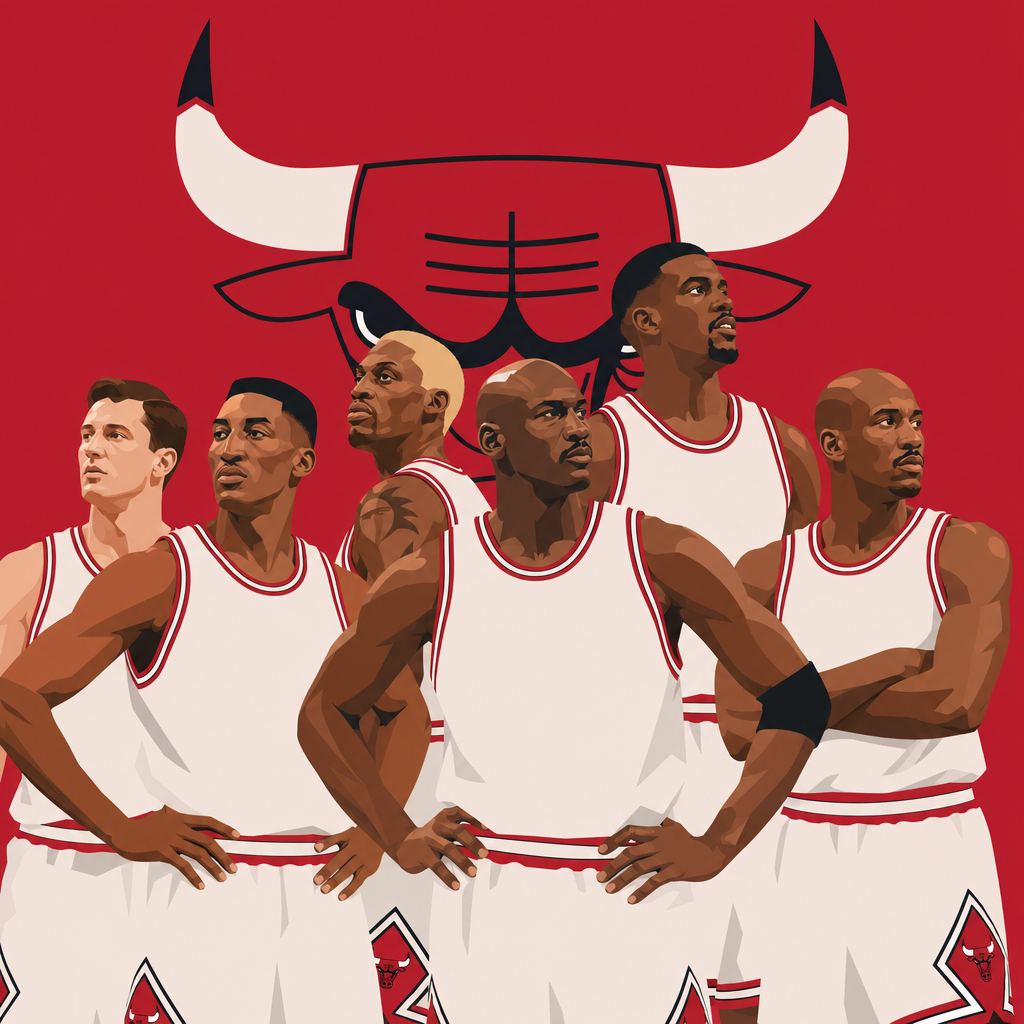
The 1996 Chicago Bulls remain the strongest case for the greatest team ever built because they paired historic results with a repeatable formula: elite defense, efficient offense, championship experience, and uncommon mental control. In NBA history and legends debates, many teams flash brilliance for one postseason or dominate a weakened era. The 1995-96 Bulls did something harder. They won 72 regular-season games, finished 15-3 in the playoffs, and captured a fourth title in six seasons while integrating key new pieces without losing identity.
That season matters far beyond Chicago. It is the central reference point for any serious conversation about basketball greatness, roster construction, coaching adaptability, and competitive durability. For readers exploring NBA History & Legends, this team is a natural hub because its story connects to nearly every major topic in the league’s past: Michael Jordan’s prime, Scottie Pippen’s all-around impact, Phil Jackson’s triangle offense, Dennis Rodman’s defensive rebounding, the expansion-era talent debate, and the standard later dynasties had to chase. I have reviewed hundreds of historical games, coaching clinics, and statistical profiles, and the 1996 Bulls consistently stand out because the film and the numbers agree.
“Greatest team ever” needs a clear definition. It cannot mean only best record, because regular-season dominance alone does not settle the issue. It also cannot mean only the best collection of names. A great team is one that proves superiority across the full season, survives playoff adjustments, beats elite competition, and shows minimal weakness on both ends of the floor. By that standard, the 1996 Bulls set the benchmark. They ranked among the league’s best in offensive efficiency and defensive efficiency, led the NBA in point differential, protected the ball, forced mistakes, and had the league’s most reliable closer in Jordan.
They were also a product of timing and design. Jordan returned late in 1994-95 after his baseball hiatus, and Chicago lost to Orlando in the playoffs. The front office responded by replacing Horace Grant’s old role in a completely different way, adding Rodman to dominate the glass and increase lineup flexibility. That move, plus a full training camp with Jordan back in place, gave the Bulls a sharper edge. If you are building out your understanding of the sport, start with the broader pillar at NBA Basketball: The Complete Guide, then use this team as a lens for how dynasties are actually made.
Why the 1996 Bulls Were Historically Dominant
The simplest answer is that they overwhelmed opponents in every game state. Chicago went 72-10, breaking the 1971-72 Lakers’ long-standing 69-win record. They opened 41-3, an absurd start that effectively removed suspense from the Eastern Conference race by midseason. Their net rating, adjusted for the era’s pace and physicality, reflects real separation rather than mere style inflation. In plain terms, they did not just win often; they controlled games early, survived runs, and finished with authority.
Home court became a fortress. The Bulls went 39-2 at the United Center, combining suffocating defense with offensive execution that punished any coverage mistake. On the road, where contenders usually reveal their limits, they still went 33-8. That road mark alone would qualify as an excellent season for many playoff teams. Their consistency is what elevates them in NBA history. Some legendary clubs peak late. Some coast through weak stretches. Chicago treated nearly every night like a test of standard.
Context strengthens the argument. The 1990s were slower and more physical, with packed paint touches, hard fouls, and less spacing to simplify offense. Efficiency was harder to generate. Yet the Bulls still separated from the field. They had scoring punch, but they were not dependent on one formula. They could win in transition off steals, through half-court triangle actions, through post mismatches, or by simply grinding teams into bad shots and one-and-done possessions.
The Core: Jordan, Pippen, Rodman, and the System
Michael Jordan was still the league’s defining force. He won the scoring title at 30.4 points per game, played all 82 games, and finished with the regular-season MVP, All-NBA First Team, All-Defensive First Team, and Finals MVP. Those honors were not reputation gifts. On film, he solved every type of defender: smaller guards got overpowered in the post, long wings got beaten from the elbow, and help-heavy defenses gave up kick-outs or cuts. Jordan’s mid-post footwork, pull-up timing, and late-clock shotmaking created offense when possessions stalled.
Scottie Pippen made the entire structure work. He was the team’s secondary scorer, primary perimeter disruptor, transition initiator, and positional connector. Modern language would call him a two-way engine. He could guard point guards, wings, and many power forwards, then push the ball after a rebound and trigger early offense before defenses got set. Pippen’s value in 1996 is still underrated by box-score-only debates. He covered space, read actions early, and allowed Chicago to switch or trap without panic.
Dennis Rodman changed the geometry of games. He averaged 14.9 rebounds and repeatedly stole possessions with offensive boards, tip-outs, and loose-ball recoveries. He could defend centers in the post for stretches, slide onto forwards, and detonate handoff actions before they developed. Rodman’s scoring barely mattered because his rebounding and defensive anticipation created hidden points. Against bigger frontcourts, he neutralized size. Against quicker units, he brought enough mobility to stay playable.
Phil Jackson and lead assistant Tex Winter deserve equal mention because the triangle offense and defensive structure gave stars clarity rather than confinement. The triangle is often misunderstood as a static set. In practice, it is a spacing and read system that creates strong-side overloads, weak-side options, post entries, and cutting lanes. It reduces predictability while preserving balance. Chicago’s stars thrived in it because they understood when to attack outside the script and when to trust the sequence.
Regular Season and Playoff Resume Compared
Greatest-team arguments become stronger when regular-season dominance carries into the playoffs. The 1996 Bulls passed that test. They swept Miami 3-0 in the first round, beat the New York Knicks 4-1 in a bruising second-round series, handled the Orlando Magic 4-0 in the Eastern Conference Finals, and defeated the Seattle SuperSonics 4-2 in the NBA Finals. The Orlando sweep mattered because it avenged the previous year’s loss and answered doubts about Jordan’s full return.
| Category | 1995-96 Bulls | Why It Matters |
|---|---|---|
| Regular-season record | 72-10 | Set a new NBA wins record at the time |
| Home record | 39-2 | Shows elite consistency and championship focus |
| Road record | 33-8 | Proves dominance was portable, not venue-driven |
| Playoff record | 15-3 | Confirmed regular-season strength under pressure |
| Finals result | Beat Seattle 4-2 | Closed the season with a title, not just a record |
Seattle deserves more respect in this conversation than it usually gets. George Karl’s team won 64 games and had elite athletes, defensive length, and Gary Payton’s on-ball pressure. The Sonics were good enough to expose weak champions. Chicago still won the series because its composure and half-court reliability were better. Payton bothered Jordan after being assigned more directly, but the Bulls had too much structure, too much defensive discipline, and too much experience in late-game execution.
The Knicks series also matters. New York played with force, size, and playoff-level resistance. Those games were ugly in the exact way 1990s contenders had to survive. Chicago did not need aesthetic beauty; it needed control. That team could win 110-95 or 86-81, and that versatility is a hallmark of historically complete champions.
How the 1996 Bulls Compare With Other Legendary Teams
Every era presents a challenger. The 1986 Celtics had depth, passing, and one of the best home records ever. The 1987 Lakers were devastating in transition and featured Magic Johnson at his peak. The 2001 Lakers rampaged through the Western Conference in the postseason. The 2017 Warriors blended shooting gravity, switching defense, and top-end talent in a way no earlier team could. Each of those teams has a legitimate case depending on whether you value peak playoff invincibility, stylistic advantage, or era-adjusted strength.
The reason the 1996 Bulls stay at or near the top is balance. They did not rely on one strategic innovation that later eras could copy. They won with principles that travel across decades: wing creation, defensive versatility, offensive rebounding, low-turnover execution, and elite coaching. If the 2017 Warriors represent the most terrifying modern offensive ceiling, the 1996 Bulls represent the most complete championship ecosystem. They had fewer obvious pressure points than almost any team ever assembled.
There are fair counterarguments. Expansion in the 1990s diluted some rosters. Illegal defense rules changed spacing and help responsibilities. Sports science, travel recovery, and shooting development all improved later. Those points matter, and serious historical analysis should admit them. Still, era context cuts both ways. The Bulls faced hand-checking, more congested paint areas, and more direct physical punishment on drives and post catches. They mastered their conditions more fully than nearly any champion mastered its own.
Legacy in NBA History and Legends
The 1996 Bulls are not just a champion; they are a measuring stick. Every great team since has been framed against them, whether the comparison is fair or not. The 2016 Warriors chased 73 wins and inevitably revived the debate. The Kobe-Shaq Lakers were judged by whether their peak could beat Jordan’s group. LeBron-led superteams were measured against Chicago’s star hierarchy, defensive precision, and late-game certainty. That is what true historical permanence looks like: your season becomes shorthand for excellence.
Their legacy also explains larger truths about NBA history and legends. Dynasties are rarely built only on talent. They require role acceptance, health, schematic coherence, and a front office willing to make uncomfortable changes. Chicago had the courage to swap familiar stability for Rodman’s volatility because the upside addressed a real weakness. That is a lesson modern contenders still wrestle with. The best teams are not always the safest teams; they are the best fitted teams.
For fans, analysts, and newer readers entering basketball history, the main benefit of studying the 1996 Bulls is clarity. They show what complete greatness looks like when the roster, coach, and superstar timeline align. If you want to understand why certain teams become legends while others become trivia, start here. Revisit the games, study the numbers, and use this Bulls team as the baseline for every future greatest-team debate.
Frequently Asked Questions
Why are the 1996 Chicago Bulls so often called the greatest team ever built?
The 1995-96 Chicago Bulls are widely viewed as the greatest team ever built because their case rests on more than nostalgia or star power. They combined historic results with a style of play that translates across eras: elite defense, efficient offense, championship pedigree, and uncommon emotional discipline. Their 72-10 regular-season record was unprecedented at the time and immediately became the standard for team dominance. Just as important, they followed that record-setting season by going 15-3 in the playoffs and winning the NBA title, proving that their excellence held up under postseason pressure.
What makes their résumé especially convincing is balance. Some great teams are remembered for overwhelming offense, while others are defined by defense or depth. The Bulls had all of it. Michael Jordan was the league’s most feared scorer and ultimate closer. Scottie Pippen gave them a second superstar who could handle, score, and defend every type of perimeter threat. Dennis Rodman transformed possessions with rebounding and defensive versatility. Around them, role players understood their jobs and executed with consistency. Add Phil Jackson’s leadership and the triangle offense, and you get a team that was not just talented, but structurally complete.
Their greatness also came from repeatability. This was not a one-month hot streak or a favorable postseason draw. The Bulls could win slow, physical games, fast-paced games, close games, and blowouts. They could beat teams with defense, with Jordan’s shot-making, with transition pressure, or with disciplined half-court execution. That versatility is a major reason they remain central to any serious greatest-team debate.
How important was the Bulls’ 72-10 regular-season record in defining their legacy?
The 72-10 record was enormously important because it gave the Bulls a statistical achievement that instantly separated them from almost every champion before them. Winning 72 games in an 82-game season requires excellence over six months, not just short-term brilliance. It means surviving injuries, road trips, back-to-backs, and the nightly intensity that comes from being every opponent’s biggest target. The 1996 Bulls were not merely very good for stretches; they were consistently dominant from opening night through the end of the regular season.
Still, the number alone is not what defines their legacy. Plenty of great regular-season teams are remembered with an asterisk because they failed to finish the job in the playoffs. The Bulls avoided that problem completely. They validated the 72 wins by winning the championship, which turned the record from a trivia fact into part of a complete title run. Their playoff mark of 15-3 reinforced the idea that the regular season was not inflated by luck, weak competition, or empty momentum. They were every bit as powerful when the games mattered most.
The record also symbolized the team’s mentality. Chicago played with urgency that champions sometimes lose after prior success. This was already a core that had won three titles earlier in the decade, yet they approached the season with focus and edge. Jordan’s return to full form after his baseball hiatus, Pippen’s all-around excellence, and the addition of Rodman created a group that played with both hunger and confidence. The 72-10 mark therefore stands as more than a number; it represents sustained concentration, depth, and competitive seriousness on a historic scale.
What made the 1996 Bulls such a dominant team on both offense and defense?
The Bulls’ dominance came from the fact that they did not rely on one overwhelming strength while covering up major weaknesses elsewhere. Defensively, they were relentless, intelligent, and adaptable. Jordan and Pippen gave Chicago two elite perimeter defenders who could pressure ball-handlers, disrupt passing lanes, and switch assignments without losing control of possessions. Rodman added another layer by defending bigger players, chasing rebounds, and providing unmatched energy. This defensive core allowed Chicago to dictate tempo, create turnovers, and turn stops into easy offense.
On offense, the Bulls were efficient because they understood spacing, timing, and roles. Phil Jackson’s triangle offense reduced predictability and encouraged smart reads rather than static isolation on every possession. Jordan remained the central force, but the system also empowered Pippen as a creator and let role players contribute without needing high usage. The ball moved, the floor stayed balanced, and the team rarely looked rushed. They could attack from the post, from the mid-range, in transition, and through off-ball action. That variety made them difficult to scheme against in a playoff series.
What truly elevated them was how offense and defense fed each other. Their defense generated rhythm and confidence, while their offense protected leads and punished mistakes. They also excelled in details that separate contenders from all-time teams: defensive rebounding, shot selection, late-game composure, and matchup flexibility. In modern language, they were scalable. Against physical opponents, they could grind. Against athletic teams, they could run. Against elite stars, they had multiple defenders to throw at them. That total-package quality is a big reason their formula still looks sustainable in almost any era.
How did Michael Jordan, Scottie Pippen, and Dennis Rodman complement each other so well?
The greatness of the 1996 Bulls was not just that they had famous names, but that their three biggest stars addressed different demands of winning basketball. Michael Jordan gave them the most valuable commodity in the sport: dependable shot creation under pressure. He could score at all three levels available in that era, command double teams, and take control late in games without disrupting the team’s structure. He was also still a high-level defender, which meant his value extended far beyond points.
Scottie Pippen was the connector who made everything cleaner. He could initiate offense, push the ball in transition, defend multiple positions, and serve as the team’s tactical bridge between Jordan, the system, and the rest of the rotation. Pippen’s versatility meant the Bulls never became one-dimensional. If Jordan drew the defense, Pippen punished the rotation. If the offense stalled, Pippen could create. If the opponent had a dangerous wing or lead ball-handler, Pippen often took the toughest assignment. His all-around game is a major reason the Bulls felt so complete.
Dennis Rodman filled needs that stars often leave uncovered. He was not there to score; he was there to dominate possessions in other ways. His rebounding gave Chicago extra chances and denied opponents second shots. His defensive versatility let the Bulls survive different frontcourt matchups. His physicality and energy changed the emotional temperature of games. In many superteams, star players overlap. On the 1996 Bulls, Jordan, Pippen, and Rodman fit together with unusual clarity. One was the closer, one was the all-purpose engine, and one was the possession-winner. That division of strengths made the team stronger than the sum of its parts.
How do the 1996 Bulls compare with other legendary NBA teams in greatest-team debates?
When compared with other legendary teams, the 1996 Bulls stand out because they satisfy almost every criterion people use in greatest-team debates. If the standard is regular-season dominance, they have it with 72 wins. If the standard is postseason authority, they have that too with a 15-3 playoff run and a championship. If the standard is star power, they featured Jordan at the height of his competitive force, plus an elite co-star in Pippen and a uniquely impactful specialist in Rodman. If the standard is coaching and system quality, Phil Jackson and the triangle offense give them another major advantage.
Other famous champions certainly have arguments. Some teams posted larger scoring margins, some faced different stylistic challenges, and some were built around more modern spacing or more top-heavy offensive firepower. But the Bulls’ case remains unusually stable because there are so few weak points to attack. They were not dependent on one playoff matchup, one lucky injury break, or one unsustainably hot shooting stretch. Their identity was broad and resilient: defend at a high level, execute efficiently, trust proven stars, and remain composed in high-leverage moments.
That is why the 1996 Bulls remain the benchmark rather than just another entry on the list. They did not simply win a title; they demonstrated a version of team-building that feels timeless. Their roster construction made sense, their style held up under pressure, and their results were historic. Even as newer champions enter the conversation, the 1996 Bulls remain the team many analysts and fans return to first because their argument is not built on hype. It is built on evidence, completeness, and the rare ability to dominate from start to finish.