Boston Celtics: Championships and Legacy
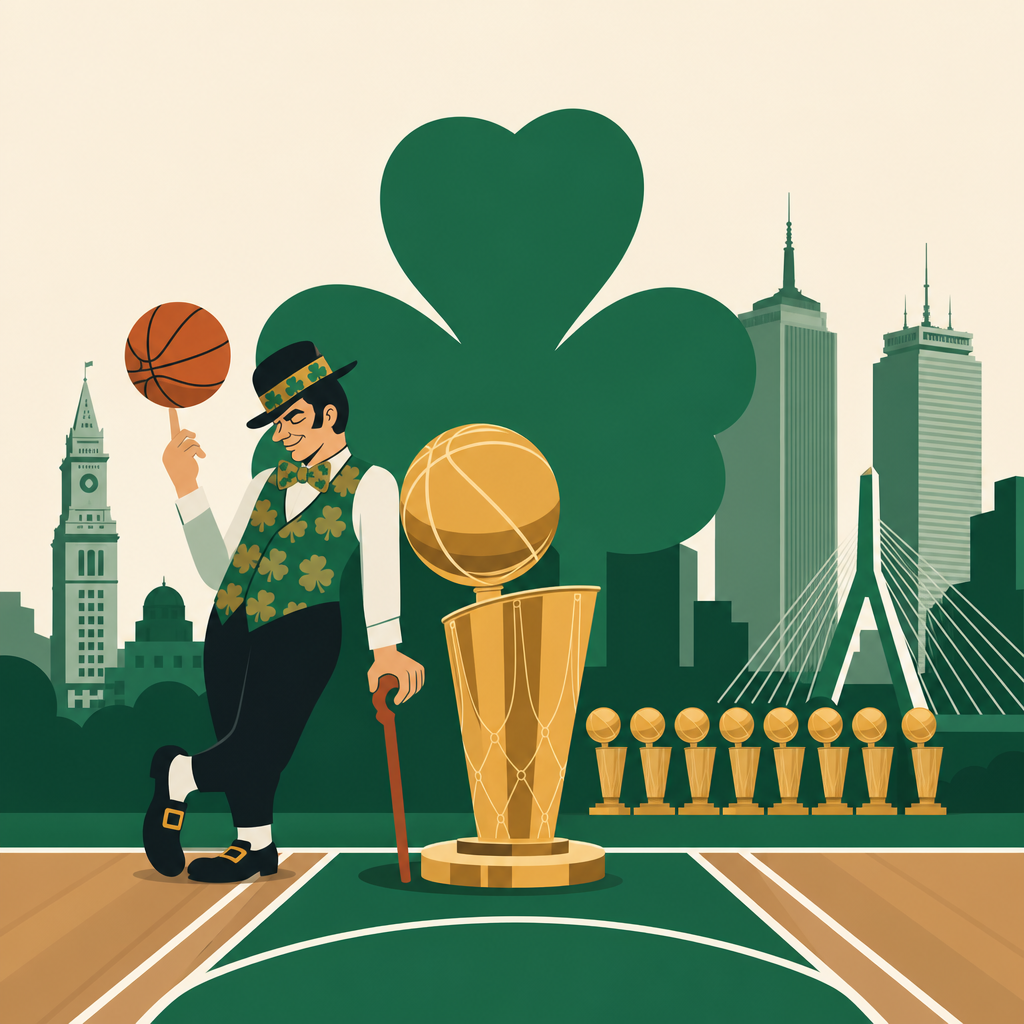
The Boston Celtics are the standard by which NBA franchises are measured, a team whose championships, iconic players, and enduring identity define much of professional basketball history. Any serious discussion of NBA teams and rosters begins here because the Celtics connect every major theme in the sport: dynasty building, scouting, player development, front-office planning, coaching continuity, and the pressure that comes with winning expectations. Founded in 1946, Boston is one of the league’s original anchors, and its legacy rests not only on banner counts but on how those titles were built across vastly different eras. From George Mikan’s early league influence in Minneapolis to the Showtime Lakers in Los Angeles and the modern Warriors, many teams have ruled for a stretch. Boston’s distinction is broader. The franchise has remained relevant through repeated reinvention.
When people search Boston Celtics championships, they usually want three answers: how many titles the franchise has won, which eras mattered most, and why the Celtics remain central to modern roster construction debates. The short answer is that Boston has captured 18 NBA championships, the most in league history. The fuller answer is more useful. The Celtics won with Bill Russell’s defensive genius in the 1950s and 1960s, with Larry Bird’s all-around brilliance in the 1980s, with Kevin Garnett and Paul Pierce’s veteran core in 2008, and with Jayson Tatum and Jaylen Brown leading a deep, switchable roster in 2024. That range matters because it shows that team-building principles change, but elite habits do not: defend at a high level, identify stars early, surround them with complementary skills, and maintain standards that survive roster turnover.
As a hub within NBA Teams & Rosters, this article also helps frame how fans should evaluate any franchise. A roster is not just a list of names. It is a strategic design balancing shot creation, rim protection, spacing, playmaking, age curve, contract value, and playoff adaptability. Boston repeatedly solved that puzzle better than most organizations. In my experience covering roster construction, the Celtics are one of the clearest case studies because their successes and failures are both instructive. Their history shows why continuity matters, why fit can outweigh raw talent, and why championship windows are always narrower than they appear in October.
Championship history and the foundations of the Celtics dynasty
The Celtics’ championship story starts with Red Auerbach, the architect who turned a young franchise into the league’s first true dynasty. Boston won its first NBA title in 1957, then captured 11 championships in 13 seasons from 1957 through 1969. No run in North American team sports matches the scale of that dominance. Bill Russell was the centerpiece, and his impact cannot be reduced to points per game. He transformed defense into a system of possession control, using rim protection, rebounding, communication, and outlet passing to create easy offense. In today’s language, Russell was both an elite back-line defender and a transition trigger. The Celtics built around his strengths with players such as Bob Cousy, John Havlicek, Sam Jones, Tom Heinsohn, and K.C. Jones.
What made those teams special was not just talent but structure. Auerbach emphasized unselfish play, fast breaks, and role clarity. He also understood roster depth before most teams treated the bench as a strategic weapon. Boston’s early championships established principles that still shape successful NBA teams: defend first, move the ball quickly, and trust a defined hierarchy. Russell later became the first Black head coach in major American professional sports, adding another layer to the franchise’s historical significance. The Celtics were not merely winning titles; they were changing the league’s culture and expanding what leadership looked like.
The second great championship era arrived in the 1980s, when Larry Bird turned Boston into the intellectual center of the NBA. Bird’s skill set remains unusually modern. He shot, passed, rebounded, manipulated help defenders, and punished mismatches without needing high-usage isolation on every trip. Boston won championships in 1981, 1984, and 1986 with Bird, Kevin McHale, Robert Parish, Dennis Johnson, Danny Ainge, and one of the strongest frontcourts the game has seen. The 1986 team in particular is still cited by coaches and analysts as a model of half-court efficiency, passing precision, and positional intelligence.
After a long gap marked by near misses, aging cores, and tragic setbacks, the Celtics returned to the summit in 2008. That title mattered because it showed another path to contention: targeted veteran consolidation. Boston traded for Kevin Garnett and Ray Allen to join Paul Pierce and Rajon Rondo, creating a balanced roster that defended with force and shared offensive responsibility. Under Doc Rivers and defensive coordinator Tom Thibodeau, the Celtics built an elite unit around communication, strong-side help, and disciplined pick-and-roll coverage. The 2024 championship then completed the latest evolution, with a roster designed for modern playoff basketball: multiple ball handlers, five-out spacing, interchangeable defenders, and enough size to survive any matchup.
Legendary players, roster philosophy, and what Boston teaches the NBA
Every championship franchise develops a talent identity, and Boston’s has been remarkably consistent. The Celtics value players who think the game quickly, defend multiple actions, and accept the demands of team offense. Russell, Havlicek, Bird, McHale, Pierce, Garnett, Tatum, and Brown played different styles, yet they share three traits: competitiveness, adaptability, and willingness to function within a larger system. That is why the Celtics are such a useful hub for NBA Teams & Rosters analysis. Their history is essentially a master class in identifying which skills scale in the postseason.
For readers exploring the broader league landscape, the best next step is the main guide to NBA Basketball, which provides the wider context around teams, player roles, rules, and season structure. Boston fits that larger picture because the franchise has repeatedly anticipated where the league was heading. In the Russell era, they maximized defensive mobility and transition play. In the Bird years, they weaponized spacing through passing bigs and smart weak-side movement. In the current era, they prioritize lineup versatility, three-point volume, and defenders who can switch across positions without surrendering the paint.
Recent roster construction under Brad Stevens deserves particular attention. After moving from coach to front-office leader, Stevens reshaped Boston with disciplined, modern logic. Jrue Holiday added championship experience, point-of-attack defense, and secondary playmaking. Kristaps Porzingis brought rim protection and floor spacing that changed the geometry of Boston’s offense. Derrick White became one of the league’s most valuable connective guards, making quick decisions, taking efficient shots, and covering up mistakes on defense. These are not glamorous roster choices in the way a single superstar trade is glamorous. They are smarter than that. Championship teams usually need one or two stars and four or five players whose value rises in the playoffs because they process the game faster than the opponent.
| Era | Key stars | Championships | Roster lesson |
|---|---|---|---|
| 1957–1969 | Bill Russell, Bob Cousy, Sam Jones, John Havlicek | 11 | Defense, depth, and role clarity can create a dynasty |
| 1981–1986 | Larry Bird, Kevin McHale, Robert Parish, Dennis Johnson | 3 | Elite passing and frontcourt balance punish every coverage |
| 2008 | Paul Pierce, Kevin Garnett, Ray Allen, Rajon Rondo | 1 | Veteran consolidation works when skills are complementary |
| 2024 | Jayson Tatum, Jaylen Brown, Jrue Holiday, Derrick White | 1 | Versatility, spacing, and two-way guards define modern contenders |
Boston also demonstrates how player development and patience interact. Brown was criticized early for handle issues and decision-making. Tatum was questioned for shot selection and whether he could be the best player on a title team. The Celtics stayed disciplined, expanded each player’s responsibility gradually, and resisted the temptation to react to every playoff disappointment with a destructive overhaul. That restraint matters. Around the league, teams often confuse urgency with wisdom. Boston improved the edges of the roster while preserving the central partnership. By 2024, Brown had become a stronger downhill attacker and more reliable playmaker, while Tatum grew into a complete offensive organizer and high-level team defender.
Rivalries, culture, and the lasting meaning of the Celtics legacy
No Celtics legacy discussion is complete without the Lakers rivalry, the defining feud in NBA history. Boston and Los Angeles turned championships into national events, especially in the 1960s and 1980s. Russell versus Jerry West and Elgin Baylor established the early emotional stakes; Bird versus Magic Johnson made the league globally compelling. Rivalries matter for roster analysis because they force organizations to build specifically for the team standing in the way. Boston’s physical frontcourts and disciplined help defense were not abstract strengths; they were championship answers to real opponents. The same logic applies now when contenders build to survive Denver’s size, Milwaukee’s star power, or the pace-and-space attacks used across the league.
The culture inside the Celtics organization is another reason the franchise remains a benchmark. Expectations in Boston are unusually high, and not every player thrives under them. But the standard has practical benefits. Rotations are judged by playoff viability, not regular-season comfort. Draft picks are expected to defend before they dominate the ball. Veterans are valued when they close weaknesses rather than duplicate strengths. TD Garden crowds, retired numbers, and daily comparisons to past champions create pressure, yet they also sharpen organizational discipline. In my experience, teams with strong identity make cleaner decisions because they know exactly what kind of basketball they want to play.
The main takeaway is simple: the Boston Celtics matter because they show how championships and legacy are built, protected, lost, and rebuilt over time. Their 18 titles are the headline, but the deeper lesson is about process. Great NBA teams align stars, coaching, roster balance, health, and timing, then repeat their standards until winning becomes sustainable. Boston has done that across multiple generations better than any franchise. If you are exploring NBA Teams & Rosters, use the Celtics as the reference point: study how they draft, trade, defend, and adapt. Then compare every other contender against that model. That is the clearest path to understanding why some teams collect highlights while others hang banners.
Frequently Asked Questions
Why are the Boston Celtics considered one of the most important franchises in NBA history?
The Boston Celtics are widely viewed as one of the defining franchises in NBA history because their story mirrors the evolution of the league itself. Founded in 1946, the Celtics helped shape professional basketball through sustained excellence, organizational stability, and a championship-first culture that very few teams have ever matched. When people talk about basketball dynasties, elite front offices, legendary coaching, and the pressure of tradition, they are often talking about standards that Boston helped establish. The franchise is not just important because it won titles, but because it created a model for what winning basketball could look like across generations.
Much of that importance comes from continuity. The Celtics have remained relevant across multiple eras, from the Bill Russell dynasty to the Larry Bird years and into the modern NBA. That level of long-term significance is rare in any sport. Boston has been home to some of the game’s greatest players, most respected coaches, and most influential basketball thinkers, and each era added to the team’s identity rather than replacing it. As a result, the Celtics are not remembered as a team with one great run, but as a franchise whose entire history carries weight.
Their legacy also extends beyond wins and losses. The Celtics became associated with team basketball, defensive intensity, player development, and high expectations. Opposing teams, media, and fans have long measured success against what Boston achieved. That is why the franchise remains central to any serious discussion about NBA greatness: the Celtics are not simply part of basketball history, they are one of the organizations that helped define it.
How many championships have the Boston Celtics won, and why do those titles matter so much?
The Boston Celtics have won 18 NBA championships, making them one of the most decorated franchises in league history. That total matters not only because it reflects success, but because of how those titles were accumulated and what they represent in different eras of the NBA. Boston’s championship history spans decades, showing an ability to build contenders under changing rules, styles of play, levels of competition, and roster structures. In other words, the Celtics did not dominate just one moment in basketball history; they found ways to win across many of them.
The foundation of that championship identity was built during the Bill Russell era, when the Celtics established one of the most remarkable dynasties in professional sports. Those teams demonstrated the value of defense, unselfishness, preparation, and organizational clarity. Later championship runs, especially in the Larry Bird era and then with the 2008 title team, showed that Boston could reinvent itself while still preserving its core values. More recent success has reinforced the idea that the franchise remains tied to contention, not just nostalgia.
These titles matter so much because championships are the ultimate measure in the NBA, and Boston’s trophy count created a standard that generations of players and executives have had to live up to. In Boston, a successful season is often judged not by playoff appearances or individual awards, but by whether the team seriously competed for a title. That expectation is part of the franchise’s identity. Each championship adds to a legacy that is both celebrated and demanding, and that combination is what makes the Celtics’ title history so meaningful.
Who are the most iconic players in Boston Celtics history?
No discussion of Celtics history can begin anywhere other than Bill Russell, whose impact on the franchise and the sport is almost impossible to overstate. Russell anchored the greatest dynasty in NBA history, leading Boston with elite defense, rebounding, leadership, and a team-first mentality that defined the organization. His winning record, championship count, and influence as a competitor made him the face of Celtics greatness for generations. He also holds a larger place in sports history because of his leadership, dignity, and role as a transformative figure beyond basketball.
Larry Bird is another essential name, representing the franchise’s resurgence in the 1980s and one of the most celebrated eras in NBA history. Bird brought a unique blend of skill, toughness, confidence, and basketball intelligence that made him one of the game’s greatest players. His rivalry with Magic Johnson helped elevate the NBA’s popularity, and his success in Boston reinforced the Celtics’ image as a franchise built around excellence and accountability. Bird’s teams combined star power with precision and toughness, which fit perfectly within the organization’s legacy.
Other iconic Celtics include John Havlicek, Bob Cousy, Sam Jones, Kevin McHale, Robert Parish, Paul Pierce, Kevin Garnett, and more recently stars who carried the franchise back into title contention. Havlicek embodied durability and winning. Cousy helped popularize modern guard play. Sam Jones was one of the great clutch performers in league history. McHale and Parish were central to the 1980s success alongside Bird. Pierce became the emotional and scoring leader of a new generation, while Garnett transformed the culture of the 2008 championship team with intensity and defense. Together, these players show why Boston’s history is so rich: the franchise has not relied on one legend, but on a long line of them.
What makes the Celtics’ legacy different from other championship teams?
What separates the Celtics from many other successful franchises is the depth and consistency of their legacy. Plenty of teams have had great stretches, Hall of Fame players, or championship moments, but Boston’s identity is rooted in the idea that winning is a lasting obligation rather than a temporary opportunity. The franchise has built a reputation where banners, legends, and expectations all connect. That creates a different kind of historical weight. Players who join the Celtics are not just trying to win games; they are stepping into one of the most demanding traditions in sports.
Another difference is that the Celtics’ legacy is tied to a recognizable style of organizational thinking. Over time, the franchise became associated with smart roster building, disciplined coaching, strong defensive principles, and an emphasis on team basketball over individual flash. Even when the roster changed dramatically from era to era, the broader expectations remained familiar. That ability to preserve a core identity while adapting to modern basketball is a major reason the Celtics continue to matter.
The Celtics’ legacy also feels unique because it is woven into the broader culture of the NBA. Historic rivalries, especially with the Los Angeles Lakers, gave Boston an outsized place in the league’s national story. Major NBA eras are often told through the lens of Celtics teams and Celtics stars. From Russell to Bird to later championship contenders, the franchise appears again and again at defining moments in basketball history. That is what makes the Celtics different: they are not just a successful team from the past, but a permanent reference point for what greatness looks like in the NBA.
How has the Boston Celtics franchise maintained its relevance across so many generations?
The Celtics have remained relevant because they have consistently combined history with adaptation. Many franchises lean heavily on tradition, but Boston has generally understood that legacy only matters if it is supported by smart decision-making in the present. Across decades, the organization has found ways to evolve through scouting, drafting, trades, coaching changes, and player development while still preserving a recognizable identity. That balance is difficult to achieve, but it is one of the main reasons the Celtics continue to contend in different basketball eras.
Front-office planning has been a major part of that durability. The Celtics have often shown an ability to think long term without losing sight of immediate competitiveness. Whether rebuilding around young talent, making bold moves for veteran stars, or investing in roster depth, the franchise has usually operated with a clear understanding of what championship-level basketball requires. Coaching continuity and player buy-in have also mattered. The most successful Celtics teams tend to reflect structure, accountability, and a shared purpose, all of which help turn talent into sustainable winning.
Just as important, the Celtics benefit from an environment where expectations never disappear. The team’s fan base, history, and public profile ensure that relevance is constantly reinforced. In Boston, rebuilding is rarely treated as an excuse for lowered standards; it is treated as a phase that should lead back to contention. That pressure can be demanding, but it also keeps the franchise aligned with its own history. The result is a team that continues to matter not only because of what it accomplished long ago, but because it remains active in the ongoing story of the NBA.