Los Angeles Lakers: History and Current Roster
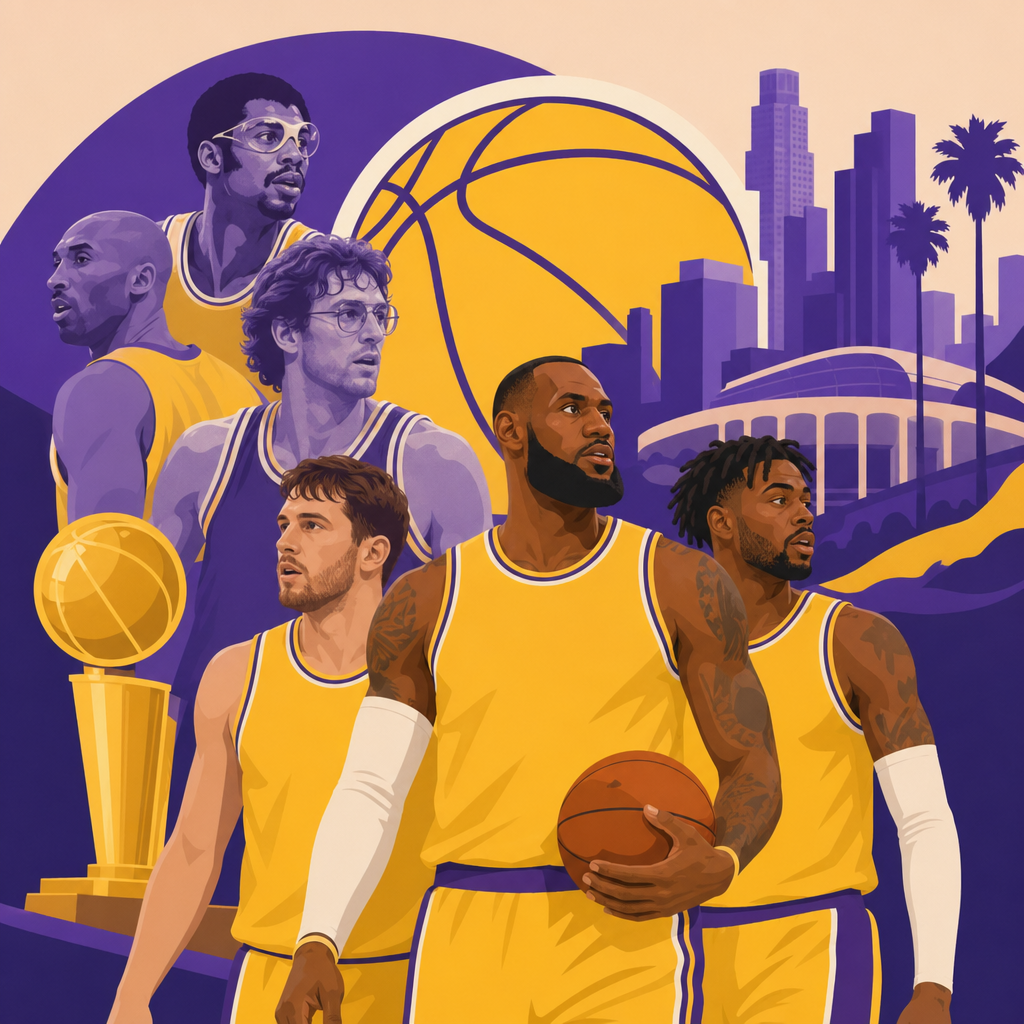
The Los Angeles Lakers are one of the most recognizable franchises in professional sports, a team whose history stretches from the Midwest beginnings of the Basketball Association of America to the center of modern NBA culture. Any serious guide to NBA teams and rosters has to start here, because the Lakers combine sustained winning, iconic stars, market power, and constant roster scrutiny in a way few clubs can match. Founded in 1947 as the Minneapolis Lakers, the franchise took its name from Minnesota’s nickname, the Land of 10,000 Lakes, before relocating to Los Angeles in 1960. Since then, the Lakers have become synonymous with championships, superstar pairings, and the pressure that comes with playing under the brightest lights in basketball.
When people search for Los Angeles Lakers history and current roster, they usually want three things answered clearly: how the team became so important, which eras defined its identity, and who is on the roster now. Those questions matter beyond fan interest. The Lakers influence league economics, television schedules, free agency, and how contenders are built. I have covered NBA roster construction and team cycles long enough to know that the Lakers are never evaluated like a normal team. A 46-win season can feel like failure, while a single trade rumor can dominate the league’s news cycle for weeks.
This article serves as a hub for NBA Teams and Rosters by using the Lakers as a model for understanding how franchise history shapes present-day personnel decisions. A roster is not just a list of names. It is a blend of salary cap choices, coaching fit, developmental timelines, injury management, and star hierarchy. With the Lakers, every one of those factors is magnified. Their history created the expectation that the team should always chase titles, and that expectation directly affects which players stay, which players are traded, and how the front office evaluates risk.
From Minneapolis Dynasty to Hollywood Powerhouse
The Lakers were elite almost immediately. In Minneapolis, led by Hall of Fame center George Mikan, they won multiple championships in the late 1940s and 1950s and helped establish pro basketball as a national product. Mikan was the league’s first dominant big man, and the Lakers’ early success showed how one transformational star could anchor a dynasty. That pattern would repeat across nearly every major chapter of franchise history. Even before moving west, the Lakers had already become a benchmark organization.
The 1960 relocation to Los Angeles changed the scale of the franchise. In California, the Lakers became a glamour team, but not without frustration. Jerry West and Elgin Baylor turned the club into a perennial contender, and Wilt Chamberlain later joined them, yet the team repeatedly ran into Bill Russell’s Boston Celtics in the Finals. That stretch matters because it created one of the defining truths of Lakers history: star power alone does not guarantee titles, but it keeps the team in the championship conversation. In 1972, under coach Bill Sharman, the Lakers finally broke through with a 69-win season and a then-record 33-game winning streak, one of the most famous runs in NBA history.
The Showtime Era and the Kobe-Shaq Championship Machine
The franchise reached a different cultural level in the 1980s. Drafting Magic Johnson in 1979 and pairing him with Kareem Abdul-Jabbar produced the “Showtime” Lakers, a fast, creative, transition-heavy team coached first by Paul Westhead and then more memorably by Pat Riley. They won five championships in the decade and became a blueprint for entertaining, star-driven basketball. Magic controlled pace better than almost any point guard ever, Kareem remained devastating with the skyhook, and role players such as James Worthy, Michael Cooper, Byron Scott, and AC Green gave the team balance. Their rivalry with Boston elevated the entire league and remains central to NBA history.
The next great era came after a short decline and organizational reset. In 1996, the Lakers acquired Kobe Bryant via draft-night trade and signed Shaquille O’Neal in free agency, two moves that changed the next decade of basketball. Under Phil Jackson and the triangle offense, Los Angeles won three straight titles from 2000 through 2002. Shaq was physically overwhelming, Kobe evolved into an elite perimeter closer, and the roster consistently featured important specialists such as Derek Fisher and Robert Horry. After Shaq’s departure, Bryant led the franchise through transition, and the arrival of Pau Gasol helped produce back-to-back championships in 2009 and 2010.
Those title teams are useful case studies for roster building. The Lakers usually win when three conditions align: a top-tier star, a clear system, and experienced complementary depth. The names change, but the formula stays recognizable. That is why the Lakers remain essential reading within the broader NBA Teams and Rosters conversation. For a wider league overview, team context, and season-by-season strategy, see the main NBA Basketball guide, which connects franchise history to modern roster trends across the league.
How the Modern Lakers Are Built
The contemporary Lakers operate under the same pressure as earlier eras, but the mechanics are more complicated because of the salary cap, luxury tax aprons, and restrictions introduced in the current collective bargaining agreement. Modern roster construction requires balancing veteran star contracts with minimum-salary contributors, two-way development, and trade flexibility. Since the 2019-20 championship team built around LeBron James and Anthony Davis, the organization has continually searched for the right mix of shooting, point-of-attack defense, rebounding, and secondary playmaking.
In practical terms, the Lakers usually begin every roster discussion with their stars. James remains the primary organizer, half-court decision-maker, and transition engine even in the later phase of his career. Davis is the defensive anchor, interior scorer, and most versatile big on the roster when healthy. Around those pillars, the front office has targeted players who can defend multiple positions, make open threes, and avoid disrupting the offensive hierarchy. That sounds simple, but it is one of the hardest balancing acts in the league because stars need both spacing and defensive cover, and those skill sets are expensive.
The Lakers have also leaned heavily on short-term flexibility. Instead of locking themselves into a fully homegrown core, they often cycle through veterans on tradeable contracts, minimum deals, and mid-level exceptions. I have seen this approach create both opportunity and instability. It allows quick correction when a roster fit fails, but it can also lead to continuity problems, especially on defense, where communication and role clarity matter. Teams like Denver and Boston have benefited from long-term cohesion. The Lakers have often chosen optionality over continuity because their market position gives them a reasonable belief they can attract talent again.
Los Angeles Lakers Current Roster Snapshot
The exact current roster changes through trades, injuries, hardship signings, and two-way promotions, so the best way to evaluate the Lakers is by role. Their group is typically organized around superstar initiators, two-way wings, rotation guards, reserve bigs, and developmental depth. The central question is always the same: which players can stay on the floor in a playoff series next to James and Davis? That standard is more demanding than regular-season utility. A player may help in January but become unplayable in May if opponents target him defensively or ignore him offensively.
| Roster Layer | Primary Function | What the Lakers Need |
|---|---|---|
| Stars | Shot creation, leadership, defensive backbone | Health, efficient late-game execution, matchup versatility |
| Starting wings and guards | Spacing, perimeter defense, secondary ball handling | Reliable three-point shooting and low-turnover play |
| Bench scorers | Maintain offense when stars rest | Quick decision-making and playoff-ready defense |
| Reserve bigs | Rim protection, rebounding, screen setting | Minutes that preserve Davis without losing mobility |
| Young depth | Energy, development, cheap roster value | Specific bankable skills, not just potential |
On most recent Lakers iterations, backcourt depth has included a mix of lead guards and combo guards who can start possessions but also play off James. Wing depth has been critical because playoff basketball punishes lineups that lack size and switchability. When the Lakers have had dependable wings who can defend stars, cut without the ball, and hit catch-and-shoot jumpers, the team has looked credible. When those players are absent, the offense becomes too star-dependent and the defense too easy to manipulate in space.
Depth at center also shapes the roster. Davis is often most dangerous as a mobile defensive big, but the regular season can require another center to absorb contact, rebound, and protect him from excessive wear. The challenge is finding a reserve big who helps without clogging the paint. This is a classic Lakers roster issue: the player who works in February may narrow driving lanes in the playoffs. Front offices must think ahead to postseason geometry, not just regular-season box scores.
What Defines Success for the Lakers Today
Success for the Lakers is not merely making the playoffs. The franchise measures itself against contention, which means a top defense, a trustworthy half-court offense, and a rotation with at least seven or eight players the coaching staff can use in a high-pressure series. Health remains the largest swing factor. James can still control a game, Davis can still dominate both ends, and the role players can look far better when those two stars are available consistently. But durability is part of roster value, especially for an aging contender.
Coaching matters just as much as talent. The Lakers need lineups that preserve rim protection without sacrificing spacing and that manage star minutes without collapsing when bench groups enter. Good Lakers teams defend first, rebound well, and generate enough transition offense to prevent every possession from turning into a difficult half-court isolation. Their clearest path back to a title is straightforward: keep the stars healthy, maintain two-way wing depth, add enough shooting, and avoid overloading the roster with one-dimensional specialists.
The history of the Los Angeles Lakers explains their present more than with most NBA teams. From George Mikan to Jerry West, from Magic and Kareem to Kobe, Shaq, LeBron, and Davis, the franchise has always been built around elite talent and the expectation of championships. That history shapes every current roster decision, from star acquisitions to bench signings. It also explains why the Lakers remain a central hub topic within NBA Teams and Rosters: they are both a team and a lens through which the league can be understood.
If you want to evaluate the Lakers correctly, do not stop at the names on the jersey. Look at fit, health, cap structure, defensive versatility, and playoff survivability. Those factors decide whether a famous roster is merely interesting or truly dangerous. Follow the roster with that framework in mind, and you will understand not just where the Lakers stand now, but why every move they make matters across the NBA.
Frequently Asked Questions
What is the origin of the Los Angeles Lakers franchise, and how did the team get its name?
The Lakers franchise began in 1947 as the Minneapolis Lakers, a founding-era professional basketball team that emerged during the formative years of major league basketball in the United States. The club’s name came from Minnesota’s well-known nickname, the “Land of 10,000 Lakes,” which made “Lakers” a natural regional identity. The team originally competed in the National Basketball League before becoming part of the Basketball Association of America, one of the leagues that ultimately contributed to the creation of the modern NBA. Even in those earliest seasons, the organization quickly established itself as a serious power, winning championships and building a reputation for elite talent and strong leadership.
The move to Los Angeles in 1960 marked one of the most important turning points in basketball history. Although the franchise left Minnesota, it kept the “Lakers” name, which by then had already become tied to winning and star power. In Los Angeles, the team grew into something even larger: not just a successful NBA franchise, but a global sports brand. That continuity between Minneapolis and Los Angeles is a major part of the Lakers’ identity. Their history is not split into two unrelated stories; it is one continuous franchise story that stretches from the Midwest roots of professional basketball to the center of modern NBA culture and entertainment.
Why are the Los Angeles Lakers considered one of the most important teams in NBA history?
The Lakers are considered one of the defining franchises in NBA history because they combine nearly every marker of long-term sports greatness: championships, Hall of Fame players, cultural influence, financial power, and sustained relevance across multiple eras. Very few teams can point to true dominance in the early years of professional basketball, then again in the 1970s, 1980s, 2000s, and into the modern era. The Lakers can. Their story includes dynastic teams, historic rivalries, transformational coaches, and some of the most recognizable figures the sport has ever produced. That kind of multigenerational success is extremely rare.
Just as importantly, the Lakers have helped shape what the NBA looks like to the wider world. The franchise became central to the league’s rise in visibility, especially during the “Showtime” era of the 1980s, when fast-paced play, celebrity attention, and star-driven competition turned Lakers basketball into a major entertainment event. Across decades, the team has featured icons such as George Mikan, Jerry West, Elgin Baylor, Wilt Chamberlain, Magic Johnson, Kareem Abdul-Jabbar, Shaquille O’Neal, Kobe Bryant, Pau Gasol, LeBron James, and Anthony Davis. Because of that lineage, discussions about basketball history almost always include the Lakers near the center. They are not simply a successful team; they are one of the franchises through which the history of the NBA is best understood.
Who are some of the most legendary players in Lakers history?
The list of legendary Lakers players is unusually deep, which is one reason the franchise holds such a unique place in the sport. George Mikan was the franchise’s first true superstar and one of the earliest dominant big men in professional basketball, helping establish the Lakers as a championship organization in Minneapolis. After the move to Los Angeles, stars such as Jerry West and Elgin Baylor defined the franchise’s early West Coast era. West became one of the greatest guards in basketball history and remains inseparable from the Lakers’ image, while Baylor was one of the game’s most gifted scorers and innovators at the forward position.
The next wave of legends elevated the team even further. Wilt Chamberlain helped deliver a championship in the early 1970s, and Kareem Abdul-Jabbar became one of the most important players ever to wear the uniform, combining unmatched skill, longevity, and winning. Then came Magic Johnson, whose leadership and flair turned the Lakers into the face of 1980s basketball. In the 2000s, Shaquille O’Neal and Kobe Bryant formed one of the most famous star pairings in NBA history, leading the team to a three-peat and establishing another era of dominance. Kobe later led the Lakers to additional championships and became one of the most beloved and scrutinized figures in the sport. In the modern period, LeBron James and Anthony Davis added another championship chapter, reinforcing the idea that elite stars are consistently drawn to the franchise. Few organizations can match that roll call of talent across so many generations.
What defines the Lakers’ current roster, and why does it receive so much attention?
The Lakers’ current roster is typically defined by a blend of superstar expectations, veteran experience, role-player evaluation, and constant discussion about championship viability. More than almost any other NBA team, the Lakers are judged not merely by whether they are competitive, but by whether their roster is strong enough to contend for a title immediately. That standard changes how every player is viewed. The stars are expected to carry enormous responsibility, secondary scorers are expected to be consistent, defensive specialists are expected to hold up in playoff settings, and even end-of-bench players are analyzed for fit, flexibility, and long-term value. On the Lakers, roster construction is never treated as a minor issue.
This level of scrutiny exists because the franchise combines prestige, market size, and historical expectations in a way few teams can. If a young player develops well, it becomes national news. If a veteran struggles, it becomes a debate topic across the league. If the front office makes a trade, signs a free agent, or adjusts the rotation, the move is instantly framed in the context of championship windows and legacy. The current roster is also shaped by the realities of the modern NBA: salary cap decisions, injury management, defensive versatility, floor spacing, and playoff matchups all matter. For readers looking at the Lakers today, the key point is that the roster is never viewed in isolation. It is always compared to the franchise’s history, to rival contenders, and to the expectation that the Lakers should matter at the highest level of the league.
How should fans evaluate the current Lakers roster in the context of the team’s history?
The best way to evaluate the current Lakers roster is to balance present-day reality with historical perspective. The franchise’s past is so decorated that every current team is automatically measured against championship groups from previous eras. That can make fair analysis difficult. A useful starting point is to ask how the current roster functions in modern basketball terms: Does it have enough top-end talent? Is there reliable two-way depth? Can the team defend across multiple positions? Is there enough shooting, playmaking, and size to survive a playoff series against elite opponents? Those questions matter more than simple nostalgia, because the NBA changes constantly and every era requires different roster strengths.
At the same time, the Lakers’ history does matter because organizational identity shapes expectations. This is a franchise associated with stars, pressure, and the belief that contending is the standard, not the exception. Fans often evaluate the roster through that lens, asking whether it reflects classic Lakers traits such as elite talent, postseason credibility, and national relevance. A strong current Lakers roster is not just one that wins regular-season games; it is one that appears capable of handling playoff intensity, adapting to high-profile matchups, and carrying the weight of enormous public attention. In other words, the current team should be judged on both basketball substance and historical standard. That dual test is exactly what makes Lakers roster analysis so compelling year after year.