
NBA Summer League is the NBA’s annual laboratory, a compact stretch of games where rookies, second-year players, G League standouts, and fringe veterans compete under bright lights before the regular season begins. For fans trying to understand how to watch NBA Summer League, the event offers more than entertainment. It is the quickest way to track draft picks, study roster battles, and follow the league’s next wave of contributors. As the central guide for following the NBA during the offseason, this hub explains the Summer League schedule, where games air, why results can be misleading, and what traits actually matter when evaluating prospects.
In practice, Summer League refers to multiple events, most notably the California Classic, Salt Lake City Summer League, and the NBA 2K26 Summer League in Las Vegas. Las Vegas is the headline attraction because every team participates, national broadcasters carry most games, and front offices treat it as a live evaluation setting. I have covered these games the same way I watch training camp and preseason: the final score matters less than decision-making, role clarity, physical readiness, and whether skills translate against NBA size and pace. That perspective is essential because a 28-point outburst in July can mean very little if it comes on poor reads, unsustainable shot-making, or weak defensive engagement.
Summer League matters because it compresses several NBA storylines into one accessible window. First-round picks make their professional debut. Two-way candidates try to earn contracts. Sophomores show whether they are too advanced for this level. Coaches experiment with lineups, actions, and defensive coverages. Fans who learn to watch with the right framework get a head start on the regular season. You can identify who is likely to crack a rotation, who needs G League reps, and which teams are emphasizing pace, spacing, point-of-attack defense, or on-ball creation. If you follow the NBA closely, Summer League is not background noise. It is the opening chapter of the next season.
What NBA Summer League is and how the schedule works
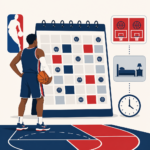
NBA Summer League is a collection of short offseason competitions designed to give teams live reps for young players and invitees. The early-July calendar usually starts with smaller events such as the California Classic and Salt Lake City Summer League, then shifts to Las Vegas, where all 30 teams play at least four games before a playoff-style finish for the top performers and additional placement games for everyone else. The exact dates change each year, but the structure stays familiar: a few regional tune-ups, then a large centralized event that becomes the main scouting and fan destination.
Las Vegas is the version most fans mean when they ask about the Summer League schedule. Games run throughout the day and evening, often stacked from afternoon through prime time on NBA TV, ESPN, and ESPN2, with some streaming through ESPN platforms. The pace is intense because rosters are temporary and the schedule is condensed. Teams may limit minutes, sit a player after one or two strong showings, or hold back a first-round pick with a minor issue. That means checking the daily slate matters more than assuming every marquee name will play every night.
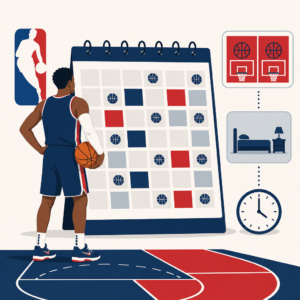
One practical way to follow the NBA through Summer League is to treat the calendar in layers. Start with your team’s opening game and any nationally televised rookie debuts. Then circle matchups between top draft picks, second-year guards competing for backup roles, and teams known for player development such as the Heat, Thunder, Spurs, Pacers, or Nuggets. Finally, monitor back-to-backs and rest decisions. In Las Vegas especially, late-week lineups can look very different from opening weekend. If your goal is prospect evaluation, the first two appearances often tell you more than the fifth.
How to watch NBA Summer League on TV and streaming platforms
The simplest answer to how to watch NBA Summer League is this: most major games are available through ESPN networks and NBA TV, with streaming access through ESPN’s app ecosystem and live TV services that carry those channels. League Pass may also support viewing in some seasons, but national distribution usually centers on ESPN and NBA TV. Because rights can vary by event, the most reliable habit is checking the NBA’s official schedule page and your local provider’s listings each morning.
For cord-cutters, YouTube TV, Hulu + Live TV, Sling TV, and Fubo are common options because they often include ESPN channels and, depending on the package, NBA TV. If you already use a cable login, the ESPN app is the most convenient way to move between simultaneous games. Summer League days can feature overlapping tipoffs, and the app makes it easier to switch from a marquee rookie debut to a fourth-quarter comeback involving two-way hopefuls. I recommend enabling score alerts but muting generic breaking news notifications; you want lineup updates and final box scores without clutter.
Watching effectively also means knowing what broadcast style you will get. National TV crews often focus on storylines, draft-night context, and sideline interviews with coaches or executives. That coverage is useful, but serious fans should watch some possessions without sound and track process independently. Pay attention to who initiates offense, who screens with force, who gets back in transition, and who communicates on defense. If a player scores 20 points yet repeatedly misses tag responsibilities or cannot create separation against similar-level athletes, the broadcast may not emphasize that weakness. Your own viewing notes should.
What to look for in prospects during Summer League games
Summer League evaluation starts with translation, not raw production. Ask which skills carry over to NBA lineups with higher speed, stronger defenders, and more structure. For guards, the most important questions are whether they can create an advantage, make the correct read on time, handle physical ball pressure, and defend at the point of attack without being screened out of possessions. For wings, look at shooting mechanics, footwork, closeout discipline, screen navigation, and whether they process the game quickly enough to keep the ball moving. For bigs, focus on rim protection instincts, verticality, rebounding technique, passing decisions in short-roll actions, and mobility in space.
Efficiency matters, but context matters more. A rookie guard might shoot 5-for-17 while still having a strong game if he manipulates help defenders, gets teammates clean corner threes, and stays attached defensively. Conversely, a 24-point game can be empty if it comes from high-usage isolations that stall offense or from jumpers generated without sustainable separation. I have found that one of the strongest Summer League signals is repeatability. Can the player get to the same spot three different ways? Can he make the weak-side skip pass every time the low man commits? Can he contest without fouling possession after possession?
| Prospect Type | Best Summer League Indicators | Common Misread |
|---|---|---|
| Lead guard | Advantage creation, live-dribble passing, turnover control, screen reads | Overrating scoring bursts without playmaking or defense |
| 3-and-D wing | Quick release, closeout balance, team defense, rebounding effort | Judging only three-point percentage in a tiny sample |
| Scoring wing | Separation, decision speed, shot quality, secondary creation | Confusing difficult makes with sustainable offense |
| Big man | Screen setting, rim deterrence, hands, mobility, short-roll reads | Valuing block totals over positioning and coverage discipline |
Body language and role acceptance are underrated indicators. Summer League rosters are crowded with players trying to prove they deserve touches, so the prospects who stand out are often the ones who do the connective work. Watch who sprints into dribble handoffs, tags the roller, relocates after passing, and communicates on switches. NBA coaches trust players who make possessions easier for everyone else. That is why an unglamorous seven-rebound, four-assist, two-steal performance can be more predictive than a volume-scoring night.
How teams use Summer League to make roster decisions
Front offices do not treat Summer League as a referendum on a prospect’s future, but they absolutely use it to gather evidence for roster planning. Coaches want to see whether a draft pick can handle a larger on-ball role, whether a second-year player has outgrown the G League, and whether a veteran invitee can fill a specialist need. The games also help teams decide who deserves an Exhibit 10 contract, a two-way deal, or a training-camp invitation. In other words, Summer League is less about winning a trophy and more about reducing uncertainty before October.
This is why teams often script developmental assignments. A combo guard who played mostly off the ball in college may be asked to initiate every half-court set. A center who lived in drop coverage might be tested higher at the level of the screen. A wing with a reputation as a scorer may be told to focus on rebounding and defensive communication. Fans sometimes misread these experiments as evidence of weakness, but the purpose is to expose the edges of a player’s game. Development staff need film that answers hard questions, not comfortable reps that confirm what scouts already know.
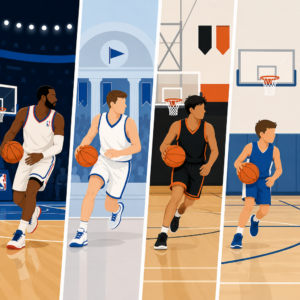
Real examples from recent years show the pattern. Keegan Murray’s strong Summer League scoring translated because it came with physical maturity, decisive footwork, and scalable shooting. Quentin Grimes and Herb Jones looked credible quickly because their defensive habits and role-player skills were obvious even in chaotic settings. On the other hand, some July scoring stars struggled later because they relied on difficult pull-ups or ignored playmaking reads that NBA defenses punish. Translation always wins over spectacle.
Following the NBA beyond Summer League
As a hub for following the NBA, this page should point fans toward the broader rhythm of the league. Summer League is the entry point, but smart NBA watching continues through offseason transactions, September roster deadlines, training camp, preseason rotations, opening-night depth charts, and the G League pipeline. If you want to understand where a prospect stands by November, compare his Summer League usage to his preseason role. Did he go from primary ball handler to second-unit spacer? Did a big man earn backup center minutes because he defended without fouling in July? Those links tell the real story.
Use official team sites, NBA.com, Cleaning the Glass-style lineup analysis, and Synergy-based clip breakdowns from credible analysts to deepen what you saw live. Beat reporters are especially valuable because they explain why a player sat, what the coaching staff emphasized, and whether a standout performance changed internal expectations. The best way to follow the NBA is to combine film, role context, and transaction awareness. Summer League gives you the first sample, but the larger fan guide is about connecting that sample to the league’s full development cycle.
Common mistakes fans make when judging Summer League
The biggest mistake is taking the box score at face value. Pace is high, execution is uneven, and many players are unfamiliar with one another, so counting stats inflate easily. Another mistake is ignoring age and experience. A 23-year-old who has spent time in a professional system should look more polished than a 19-year-old rookie. That does not automatically make him the better long-term prospect. Similarly, fans often overreact to shooting percentages in tiny samples. Five made threes can be encouraging, but the more predictive clues are release consistency, footwork into the shot, and willingness to fire without hesitation.
It is also easy to underrate defense because Summer League broadcasts naturally follow the ball. Watch the weak side. Does the wing sink to the nail? Does the big rotate early enough to deter the layup? Does the guard fight over the screen twice in one possession? Those details are the difference between a player who can survive in a regular-season rotation and one who needs another developmental year. Summer League can be noisy, but the basics of NBA basketball still reveal themselves clearly if you know where to look.
NBA Summer League is the best offseason tool for fans who want to watch the league with sharper eyes. It gives you the schedule-driven excitement of live games while revealing which prospects can process quickly, defend reliably, and fit real NBA roles. The smart way to watch is simple: use the daily schedule, confirm broadcast availability on ESPN networks and NBA TV, focus on translation over points, and judge players by repeatable skills rather than highlights. When you do that, Summer League becomes far more than a few July games in Las Vegas. It becomes a guide to roster construction, player development, and the storylines that will shape the coming season.
As the hub for following the NBA, this article should be your starting point each summer. Return to it when schedules drop, when a draft pick debuts, and when you need a framework for separating real progress from temporary noise. Then keep building outward into training camp, preseason, and opening week with the same discipline. Watch the role, watch the reads, watch the defense, and you will understand the league earlier than most fans do. Start with the next Summer League slate, pick two prospects to track possession by possession, and build your own evaluation notes from there.
Frequently Asked Questions
How can I watch NBA Summer League games, and where are they usually broadcast?
NBA Summer League games are typically available through the league’s national broadcast partners, most commonly ESPN networks and NBA TV, with additional streaming access often provided through platforms that carry those channels. In practice, that means fans can usually watch the biggest matchups on ESPN or ESPN2, while a wider slate of games may air on NBA TV. If you stream live television through services that include those networks, Summer League is generally easy to follow without needing cable. The NBA’s own digital platforms may also provide schedules, highlights, clips, and game tracking tools that help fans stay current even when they cannot watch every game live.
The easiest way to follow the event is to check the official Summer League schedule before the games begin and identify which contests involve top draft picks, notable second-year players, or teams with interesting roster battles. Because multiple games can happen in a short window, especially during the Las Vegas portion of Summer League, knowing the daily lineup ahead of time helps you prioritize what to watch. If you miss a game, recaps, condensed games, and highlight packages are usually available quickly, making it possible to track player development without sitting through every full broadcast.
What is the NBA Summer League schedule, and when should fans pay the closest attention?
NBA Summer League usually takes place during the offseason in July, with the Las Vegas event serving as the main attraction and the most widely followed portion of the schedule. In some years, there are also smaller early events or team-specific showcases, but Las Vegas is the centerpiece because it brings together all NBA teams in one concentrated stretch of games. The format often includes several guaranteed games for each team followed by placement or playoff-style matchups, depending on the structure used that year.
Fans should pay the closest attention during the opening games, because that is when anticipation is highest and when top rookies are most likely to get meaningful on-ball opportunities. Early Summer League games provide the first real look at how a draft pick handles NBA pace, spacing, physicality, and decision-making against professional competition. Mid-event games are also important, especially for players competing for two-way contracts, training camp invites, or back-end roster spots. Toward the end of Summer League, teams sometimes reduce the workload of established young players or recent high draft picks, so the focus can shift from star prospects to fringe contributors fighting to extend their professional chances.
What should I look for when evaluating rookies and prospects during NBA Summer League?
Summer League is best viewed as a scouting environment rather than a final judgment on a player’s NBA future. The most useful things to watch are translatable skills. For guards, that often means ball-handling under pressure, pick-and-roll reads, pace, rim pressure, and whether they can create clean looks without dominating the ball too much. For wings, key indicators include defensive versatility, off-ball movement, catch-and-shoot confidence, transition play, and whether they can make quick decisions instead of stalling possessions. For big men, fans should watch screening, rebounding, rim protection timing, mobility in space, and how comfortably they finish plays around the basket.
Equally important is how a prospect processes the game. Summer League can be messy, so players who stand out usually do so by making sound, repeatable decisions even when structure breaks down. Watch how quickly they react on defense, whether they rotate on time, how they handle physical defenders, and whether they maintain composure after mistakes. Efficiency matters, but context matters more. A rookie asked to create offense on every trip may have uneven shooting numbers while still showing high-level tools. On the other hand, a player who scores efficiently against weaker defenders but struggles to make reads or defend his position may not be as impressive as the box score suggests. The most encouraging signs are usually feel, adaptability, and skills that fit real NBA roles.
How seriously should fans take Summer League performances?
Fans should take Summer League seriously enough to learn something, but not so seriously that one hot streak or one rough week becomes a permanent label. Strong performances can confirm that a player’s college, international, or G League production has real carryover value, especially if the underlying skills are easy to project to the regular season. Likewise, struggles can reveal areas that still need work, such as strength, shot selection, defensive awareness, or decision-making under pressure. But Summer League is a small sample, and the environment is far from a polished NBA setting.
Roster experimentation, limited practice time, unfamiliar teammates, and uneven competition all shape what happens on the floor. Some players are asked to do things in Summer League that they will never be asked to do in an NBA rotation. A role player might be encouraged to create off the dribble more than usual, while a first-round pick may be given the freedom to explore parts of his game that are still developing. That is why fans should focus less on raw point totals and more on the quality of possessions. Did the player get to good spots? Did he make the right reads? Did he defend with effort and awareness? Summer League can be extremely useful, but it should be treated as a first data point, not a final verdict.
Why is NBA Summer League important for understanding the upcoming NBA season?
Summer League matters because it offers one of the earliest clues about how teams are shaping their future rotations. For rebuilding teams, it is a first look at how recent draft picks might fit together and which young players are ready for larger roles. For contenders, it can reveal whether a second-round pick, two-way player, or G League standout has a chance to earn real minutes as a low-cost contributor. It is also a valuable setting for observing coaching priorities, developmental goals, and stylistic preferences before training camp officially begins.
From a fan perspective, Summer League helps connect the offseason storylines to the regular season in a practical way. Instead of just reading scouting reports or front-office quotes, you can see how prospects move, compete, communicate, and respond to live game situations. You can spot potential breakout candidates, identify which roster battles are real, and get a better sense of organizational depth. Even when the games themselves are imperfect, the information is useful. Summer League is where the NBA’s next wave starts to take shape, which is why it remains one of the most valuable and watchable parts of the offseason calendar.