

Running an efficient basketball practice when you have limited time starts with accepting a hard truth: you cannot coach everything in one session, so every minute must serve a defined purpose. In youth, high school, and club settings, time is usually the one resource a coach never has enough of. Gym availability is tight, players arrive from school or work tired, and staff often juggle multiple age groups in a single evening. An efficient basketball practice is a session built around clear objectives, fast transitions, appropriate coaching tools, and measurable outcomes. In practical terms, that means using practice plans, timers, whiteboards, pinnies, cones, video, score constraints, and small-sided formats to teach more in less time. I have learned over years of planning short weekday sessions that the difference between a chaotic ninety minutes and a productive sixty is not energy alone. It is structure. Players improve faster when drills connect directly to game actions, instructions are brief, and coaches organize the gym before the first whistle. This matters because limited-time practices are common, not exceptional. Middle school teams may get the floor for only an hour. Varsity programs often share space with sub-varsity teams. Amateur clubs may practice twice a week and still need to develop skill, conditioning, tactics, and communication. The good news is that efficiency is coachable. With the right coaching tools and a disciplined framework, short practices can produce strong habits, better decision-making, and clearer accountability.
Start With a Practice Blueprint, Not a Drill List
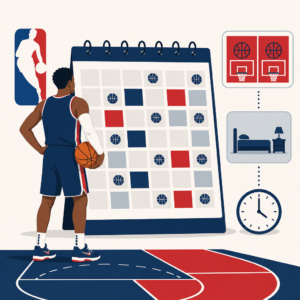
The fastest way to waste practice is to string together familiar drills without a central goal. A practice blueprint is different from a random drill sheet because it identifies one primary theme, two secondary points, and the exact time budget for each segment. If the theme is transition defense, every block should connect to sprint recovery, communication, stopping the ball, and matching up. In my own planning, I write the session in five parts: arrival routine, activation, teaching block, competitive block, and review. That simple structure prevents drift. It also helps assistants know what to set up next before players need direction.
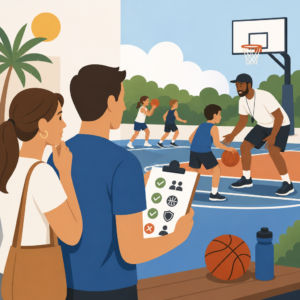
Good coaching tools make that blueprint executable. A printed practice plan on a clipboard keeps the staff synchronized. A whiteboard with the day’s sequence posted at the sideline reduces repeated explanations. A large digital timer, whether on a scoreboard or tablet app, creates urgency and protects the session from overcoaching. Teams that use visible timing generally move faster because players can see that a three-minute water break is actually ninety seconds. The plan should also assign court space, groupings, and equipment ahead of time. If two baskets are reserved for finishing and one for shooting, that must be clear before players enter the gym.
Planning by objective also sharpens teaching language. Instead of saying, “We’re working on defense today,” state a standard players can execute: “By the end of practice, we will hold the ball out of the middle in every live shell rep.” That gives athletes a target and gives coaches a way to evaluate whether the session worked. Efficient practice is not just about moving quickly. It is about matching time spent to outcomes produced.
Choose Coaching Tools That Save Time on the Floor
Coaching tools are any resources that reduce downtime, improve clarity, and make feedback more precise. The essentials are simple. Cones define angles and spots without long verbal explanations. Pinnies split teams instantly for advantage games and transition work. Ball racks or mesh bags prevent players from chasing loose balls across the gym. Whistles are useful, but overuse slows practice; many coaches get better pace from verbal cues and timer sounds. A portable whiteboard is still one of the highest-value tools in basketball because it turns a thirty-second explanation into a visual reference players can revisit between reps.
Video is another major time-saving tool when used correctly. Instead of stopping play for a two-minute lecture, record a sequence on a tablet and review it during water or after practice. Apps such as Hudl, FastDraw, FastScout, and Coach’s Eye have become standard because they allow quick diagramming, tagging, and replay. For high school and club coaches, even a smartphone on a tripod can be enough to capture transition habits, closeout technique, or spacing errors. The key is not collecting video for its own sake. The key is selecting one correction that players can apply immediately at the next session.
Managers, assistant coaches, and even trusted injured players are tools in the best sense of the word. One person can run the timer. Another can chart paint touches, turnovers, or defensive stops. Another can feed balls so a shooting block keeps flowing. Coaches often think efficiency is about finding a better drill. More often, it comes from assigning jobs so no one waits for the head coach to handle every detail.
Build Practice Around Constraints and Small-Sided Games
When time is limited, players need more decisions per minute, not more lines. That is why constraints-based coaching and small-sided games are so effective. A constraint is a rule that directs attention to the behavior you want. If your team settles for poor shots, play a game where a possession counts only after a paint touch. If transition defense is weak, make every offensive rebound trigger an immediate outlet and live attack. If passing vision is the issue, limit dribbles or reward weak-side reversals. The drill becomes the lesson.
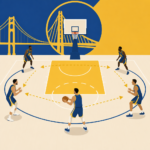
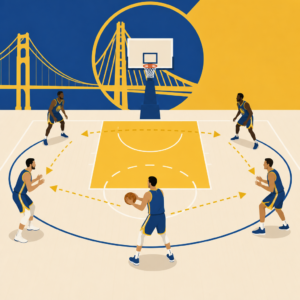
Small-sided games, such as 2-on-2, 3-on-3, and 4-on-4, create more repetitions than full-court 5-on-5 while preserving game realism. Players guard the ball more often, rotate more often, and touch the ball more often. In one thirty-minute block, a guard may make twenty pick-and-roll reads in 3-on-3 half court, compared with only a handful in a crowded 5-on-5 scrimmage. For youth teams, this is one of the clearest pathways to faster development. For advanced teams, it allows precise work on tactical sub-skills like tagging the roller, second-side action, or baseline drift spacing.
| Practice Need | Best Tool or Format | Why It Works Quickly |
|---|---|---|
| Improve spacing | 4-on-4 shell with spot markers | Players see spacing landmarks and repeat them live |
| Sharpen closeouts | 3-on-3 advantage game | Creates repeated recoveries with immediate consequences |
| Teach transition defense | Continuous 4-on-3 to 4-on-4 | Forces sprint decisions and communication every rep |
| Reduce turnovers | 3-on-3 no-middle, two-dribble limit | Demands stronger pivots, cuts, and pass selection |
| Raise shot quality | Paint-touch scoring system | Aligns offensive choices with the team’s priorities |
The coaching advantage here is efficiency. Instead of telling players what matters, you create a game in which the right habit is rewarded and the wrong habit is exposed. That keeps practice active and makes learning stick.
Use Time Blocks, Transitions, and Benchmarks to Control the Session
Most lost practice time disappears between drills. Players sip water too long, coaches move cones after the explanation, or a new team split takes two minutes because pinnies were never prepared. Efficient basketball practice treats transitions as a coached skill. Equipment should be staged before practice. The next drill should begin with players standing near their starting spots while the previous rep ends. Assistants should know which basket, balls, and groups they own. If a transition regularly takes more than thirty seconds, the setup is too complicated.
Time blocks work best when they are short and intentional. Ten to twelve minutes is ideal for many teaching segments because energy stays high and corrections stay focused. A sixty-minute practice might look like this: five minutes arrival ball-handling and finishing, eight minutes dynamic warmup with footwork, twelve minutes skill teaching tied to the day’s theme, fifteen minutes small-sided game, twelve minutes competitive team segment, five minutes special situations, three minutes review. That is enough variety to maintain focus and enough repetition to drive improvement.
Benchmarks matter because players respond to standards better than speeches. For shooting, use make goals under time pressure, such as fifty team corner threes in four minutes with a required rebounder and passer rotation. For defense, track consecutive stop goals. For ball security, chart live-ball turnovers in every competitive segment. Programs that measure a few important habits become more efficient because feedback is immediate and objective. The benchmark itself becomes a coaching tool. Players know what success looks like before the rep starts.
Language should be equally disciplined. Limit initial instruction to one teaching point, one demonstration, and one start command. Long explanations create passive athletes. Brief cues create action. Correct during natural pauses or by freezing a live rep only when the mistake is central to the theme. Everything else can wait for film or post-practice notes.
Design Short Practices for Skill, Conditioning, and Team Play at Once
Limited time does not mean sacrificing conditioning or fundamentals. It means blending them into live basketball. Many coaches still separate conditioning into running blocks that consume valuable teaching time. There are moments for pure conditioning, especially preseason, but in-season efficiency comes from conditioning through competitive basketball actions. Full-court conversion games, rebounding wars, closeout circuits, and continuous finishing drills raise heart rates while preserving technical quality. Players get fit for the demands they actually face in games: repeated accelerations, decelerations, slides, jumps, and quick decisions.
Skill development also improves when it sits inside team context. A passing drill with no defender has some value for rhythm and mechanics, but a passing drill with a help defender, clock pressure, and a scoring consequence is usually better use of scarce minutes. The same is true for shooting. Spot shooting can reinforce footwork and release, yet game-speed shooting with relocation, decision cues, and rebounding roles transfers more directly to performance. In my experience, short practices improve when every drill answers two questions: what game problem does this solve, and how will we know if players solved it today?
Team play should be taught in chunks. If installing a motion action, teach the entry and first read before layering counters. If teaching a defensive coverage, start with the on-ball defender and screener defender before adding weak-side rotations. Coaches often overload players because they feel pressure to cover the entire playbook in one practice. That instinct backfires. Limited time rewards sequencing. Teach the core, rehearse it under light pressure, then test it live. Players leave remembering the essential rule instead of half-learning four variations.
Review, Adjust, and Connect This Hub to Your Broader Training System
The most efficient coaches treat each practice as part of a larger basketball training system, not as an isolated event. Review should happen immediately after practice while details are fresh. I recommend a simple three-question staff debrief: what improved, what stalled, and what must appear in the next session. That process prevents emotional overreactions and helps the staff identify whether the issue was effort, understanding, spacing, or drill design. If players failed repeatedly in a transition drill, the answer may not be “run more.” It may be that the starting positions created confusion or the scoring rule rewarded the wrong behavior.
This hub topic, coaching tools, should connect naturally to related basketball training areas. Practice planning links to drill design, season planning, player development, film study, shooting workouts, defensive teaching, and communication standards. Internal resources should branch from this page into more detailed guides on whiteboard organization, video breakdown, small-sided game design, and practice templates by age level. That hub structure matters because coaches rarely have one problem. A team struggling with efficiency may also need better terminology, better use of assistants, and better data tracking. The tools work best when they reinforce each other.
When you have limited time, the goal is not to make practice feel busy. The goal is to make every segment intentional, connected, and measurable. Start with one priority, choose tools that reduce explanation, use constraints that teach through play, and track benchmarks that matter to winning. Over time, players become faster learners because the environment is clear and consistent. If you want better practices this week, build tomorrow’s session around one game problem, post the plan, set the timer, and coach the transitions as hard as the drills.
Frequently Asked Questions
1. What is the most important first step when planning an efficient basketball practice with limited time?
The most important first step is deciding exactly what the practice must accomplish before you ever step on the floor. When time is limited, practice cannot be a collection of random drills or a rushed attempt to cover every area of the game. It has to be built around one or two clearly defined priorities. That might mean improving defensive closeouts, sharpening half-court spacing, cleaning up transition communication, or getting better execution out of a specific offensive action. Once that objective is clear, every segment of practice should connect back to it.
Effective coaches understand that limited-time practices are successful because of focus, not volume. If your team has 60 or 75 minutes, you will get more out of a session with a single theme than a practice that tries to squeeze in ball handling, shooting, rebounding, conditioning, special situations, zone offense, man-to-man defense, and scrimmaging all in one night. Players retain more when the session has a purpose they can understand. They also compete with more urgency when they know why each drill matters.
A practical way to start is to ask three questions: What is the main problem we need to solve? What game situation does that problem show up in most often? What is the minimum number of drills needed to teach and reinforce the solution? That approach keeps planning honest. It prevents wasted time, reduces transition confusion, and helps the staff stay aligned. In short, the first step is not choosing drills. It is choosing the outcome, then organizing everything else around it.
2. How should a coach structure a short basketball practice so players stay engaged and productive?
A short basketball practice should move with intention from arrival to finish, with every block serving a clear teaching goal. The best structure usually includes a brief opening, a fast and purposeful warm-up, a high-repetition skill or concept block, a competitive game-like segment, and a short closing review. This keeps players mentally engaged, physically active, and connected to the main objective of the day. The key is minimizing dead time between segments and avoiding long speeches that interrupt rhythm.
For example, in a 60-minute practice, a coach might use the first 5 minutes for attendance, quick expectations, and a concise explanation of the day’s focus. The next 8 to 10 minutes can be a dynamic warm-up combined with skill work, such as movement prep with ball handling or footwork built into partner passing. After that, 15 minutes can be spent teaching or refining the primary concept of the day. Another 15 to 20 minutes should place that concept into a small-sided or constrained game environment so players apply it under pressure. The last 10 minutes can be dedicated to a competitive finishing segment, free throws under consequence, or a short scrimmage tied to the practice goal, followed by a 2-minute recap.
Players stay engaged when they know what comes next and when transitions are fast. That means cones should already be set, teams should be assigned in advance, and coaches should communicate briefly and clearly. It also helps to design drills where multiple players are working at once rather than standing in lines. Engagement drops quickly when athletes spend more time waiting than moving. A well-structured short practice feels organized, active, and demanding without feeling chaotic. That is the sweet spot coaches should aim for.
3. What kinds of drills work best when you do not have enough time to cover everything?
The best drills for limited-time practices are drills that teach multiple things at once and closely resemble actual game situations. In other words, coaches should prioritize drills with transfer. A drill that develops decision-making, communication, spacing, effort, and technique at the same time is far more valuable than an isolated activity that looks clean but has little relevance to real possessions. When time is short, multi-purpose drills are essential because they let you coach more efficiently without overloading the schedule.
Small-sided games are especially effective. Using 2-on-2, 3-on-3, or 4-on-4 formats allows more touches, more reads, and more repetitions per player than full 5-on-5 for long stretches. These formats also make it easier to emphasize a specific theme. If the goal is defensive shell principles, a 4-on-4 half-court game with scoring rules tied to stops and communication can produce high-quality reps quickly. If the focus is attacking gaps and making the extra pass, a constrained 3-on-3 advantage drill may be more productive than a traditional layup line or scripted passing sequence.
Coaches should also look for drills that combine conditioning with basketball movement instead of separating conditioning into its own block whenever possible. Transition drills, closeout-and-recover games, rebounding battles, and competitive conversion drills can all raise the heart rate while reinforcing habits needed in games. The same principle applies to shooting. Rather than standing in long lines taking casual shots, use shooting drills that include footwork, decision-making, pressure, or accountability. Limited time demands that every drill justify its place. If a drill does not connect clearly to your practice goal or game performance, it probably does not belong in a short session.
4. How can coaches reduce wasted time and make transitions smoother during basketball practice?
Reducing wasted time starts long before practice begins. Efficient coaches walk into the gym with a written plan, a clear timeline, and the equipment ready. They know which baskets will be used, where each drill starts, how players will be grouped, and what teaching points matter most. Without that preparation, valuable minutes disappear into reorganizing lines, moving cones, explaining rules repeatedly, or deciding on the fly what comes next. In a limited practice window, those small losses add up fast.
One of the simplest ways to improve transitions is to keep the practice layout logical. If one drill ends on one end of the court and the next begins on the other, players lose time moving, resetting, and waiting for instructions. Whenever possible, sequence drills so the next activity grows naturally out of the previous one. For example, a footwork warm-up can flow into closeout work, then into a small-sided defensive game using the same spacing. That continuity saves time and strengthens learning because players see how the pieces connect.
Communication matters just as much. Coaches should explain drills briefly, demonstrate quickly, and start action immediately. Long explanations often create the illusion of teaching while reducing actual repetition. A strong rule is to teach in short bursts, let players play, then correct on the move. Assigning assistant coaches or team leaders to help organize groups can also make a major difference. Finally, build accountability into the practice culture. Players should know where to go, when to hustle, and how to reset without being told every time. The most efficient teams are not just well-coached; they are well-trained in the routines of practice itself.
5. How do you know if a limited-time basketball practice was actually effective?
An effective limited-time basketball practice is not measured by how tired players look at the end or by how many drills were completed. It is measured by whether the team improved in the area that mattered most. The clearest sign of success is when players can execute the targeted concept better at the end of practice than they could at the beginning, and then carry that improvement into games. That might show up as cleaner spacing, faster defensive rotations, fewer turnovers in a specific action, better communication, or stronger decision-making under pressure.
Coaches should evaluate practice using a few simple standards. First, did the session stay aligned with its stated objective, or did it drift? Second, were players active for most of the practice, or was too much time lost to talking and waiting? Third, did the drills produce realistic repetitions tied to game situations? Fourth, was there visible progress in understanding, execution, or competitive consistency? If the answer to those questions is yes, the practice was likely efficient, even if it felt shorter than ideal.
It also helps to gather feedback and track patterns over time. Players may reveal whether instructions were clear, whether the pace felt productive, and which parts of practice translated best to competition. Coaches can also review film, chart common mistakes, or note whether the same problems reappear in games. Efficiency is not about doing more in less time just to feel busy. It is about getting the right things done well. When a limited-time practice produces clarity, purposeful reps, and visible carryover, that is a strong sign the session was successful.