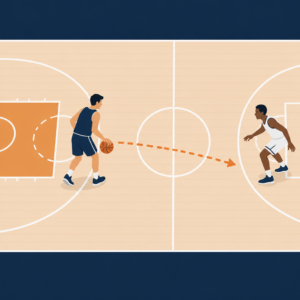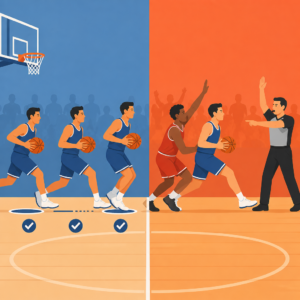

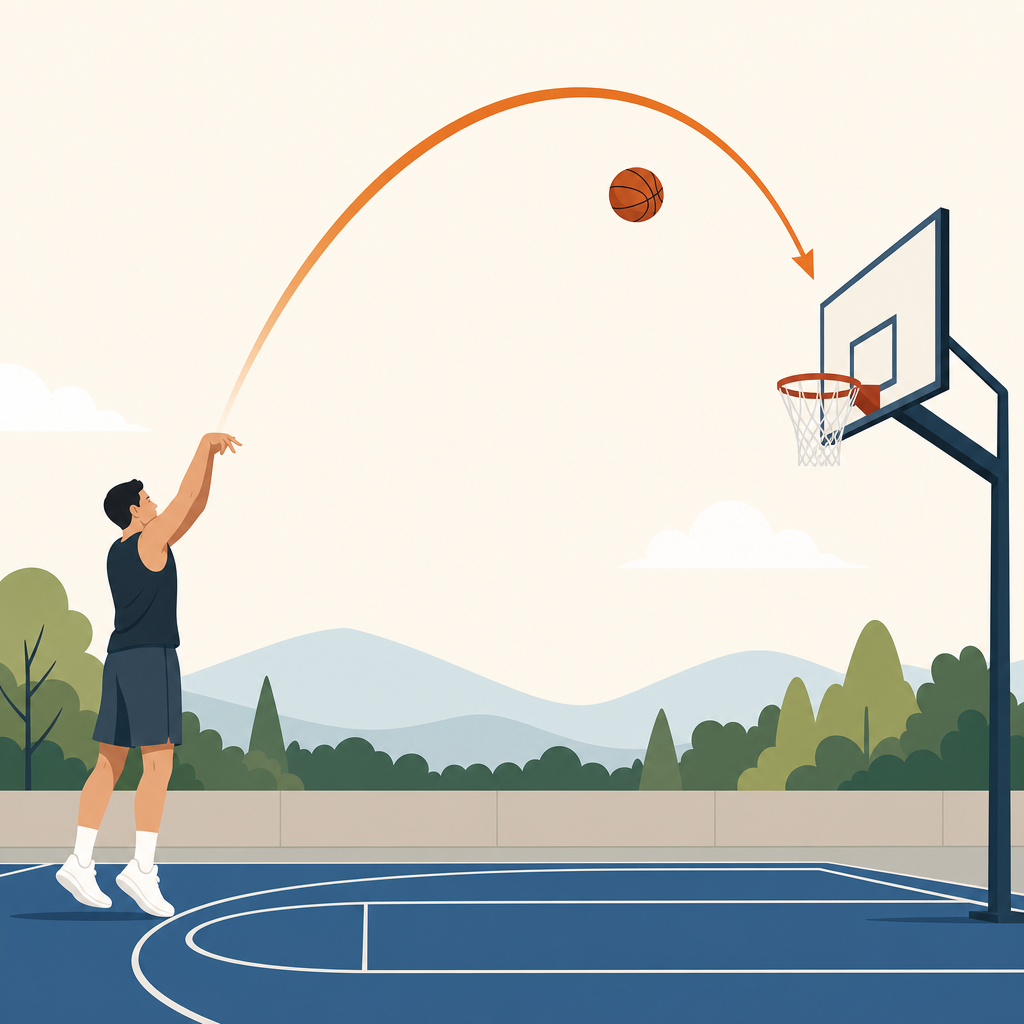
Shot arc is one of the most misunderstood parts of basketball shooting, yet it often determines whether a good release becomes a make, a soft miss, or a hard rebound. In simple terms, shot arc is the angle and height of the ball’s flight after release. Many players focus first on power because long shots feel difficult, but angle matters more than raw force because the basket is a fixed target with limited space and the ball must enter it on a path the rim can accept. I have coached shooters who could launch the ball from deep yet struggled badly from midrange because their flight was too flat. Once we changed arc, not strength, their percentages improved quickly. For any player learning shooting, understanding arc is essential because it affects margin for error, touch, consistency, and the way every other mechanic works together.
Basketball shooting is not just about getting the ball to the rim. It is about creating a repeatable path that gives the ball the best chance to drop cleanly or bounce softly if it hits iron. A flatter shot approaches the hoop almost horizontally, which shrinks the effective opening. A higher arc creates a steeper entry angle, making the rim play bigger. That does not mean every shot should be a moon ball. Excessive arc can hurt distance control, slow release speed, and create timing issues under pressure. The goal is functional arc: high enough to improve entry angle, low enough to stay efficient and repeatable. This article serves as a basketball shooting hub by explaining the physics behind shot arc, how mechanics influence trajectory, what elite shooters do, how to train arc without losing range, and how arc changes across form shooting, jump shots, off-movement shots, and game-speed three-pointers.
Why angle changes the size of the rim
The reason angle matters more than power is geometry. A basketball is about 9.4 inches in diameter, while the rim is 18 inches wide. That leaves limited clearance even before considering spin, speed, and contact point. When the ball enters at a steeper angle, the usable opening increases because the ball is descending through the cylinder instead of skimming across it. Coaches often reference the ideal entry angle as roughly in the mid-forties, and many shot-tracking systems place made-shot windows near that range. Noah Basketball, one of the best-known shooting analytics tools, commonly highlights an entry angle near 45 degrees and an arc around the low-to-mid fifties as a productive benchmark for many players. Those numbers are not laws, but they reflect a real truth: the basket becomes more forgiving when the ball comes down correctly.
Players can feel this without any software. A flat shot tends to hit the back rim hard, especially when the shooter adds force to compensate for range. A high-quality arc, by contrast, produces softer misses and more friendly bounces. In workouts, I often tell players to judge arc by rebound behavior. If misses are rocketing long, the shot is usually too flat, too hard, or both. If misses land softly around the rim, the trajectory is usually closer to useful. This is why touch shooters age well and why smaller guards who cannot overpower the ball often develop excellent arc. They learn to send the ball up before sending it forward. That sequence gives the release room to work and reduces the urge to sling the ball from the chest, which is one of the fastest ways to flatten a jumper.
How shooting mechanics create arc
Shot arc does not appear by accident. It is produced by a chain of mechanics beginning at the feet and ending at the fingertips. Balance starts the process. If a player leans forward, drifts sideways, or jumps excessively toward the basket, the ball usually leaves on a flatter path because the body’s momentum pushes the release out instead of up. The set point matters too. A release that starts from the chest and stays in front of the face often forces a line-drive shot. A cleaner motion raises the ball into the shooting window, aligns elbow and wrist under the ball, and lets the shooter extend upward through the release. Wrist flexion and finger roll then add touch and backspin, which help the ball slow down and react better on the rim.
The most common mistake I see is players trying to manufacture arc with a late flick rather than building it into the full kinetic chain. They hear “get more arc” and simply toss the ball higher with their hand. That usually destroys direction. Better arc comes from synchronized leg drive, vertical lift, relaxed shoulder action, and full elbow extension. The guide hand must come off cleanly; if it stays involved, the ball often rotates sideways and exits flat. Release timing also matters. Letting the ball go on the way down can lower the launch angle and reduce consistency. The shooter should ideally release near the top of the jump or just before it, using lift to support the ball rather than forcing power with the upper body. Good shooting mechanics turn arc into a byproduct of efficient movement, not a separate trick.
What good arc looks like at different distances
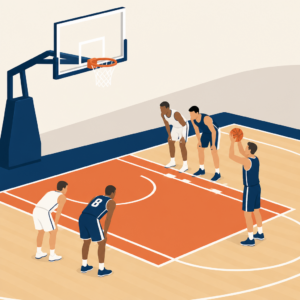
Arc should be consistent, but it does not look identical on every shot. Form shooting close to the basket usually has the highest visible arc because distance is short and the player can emphasize wrist extension, follow-through, and a clean path over the front rim. As range increases to free throws, midrange jumpers, and three-pointers, the launch must stay efficient enough to carry the ball without becoming a heave. This is where players confuse “more power” with “better shooting.” The ball does need additional force from longer distances, but that force should come from coordinated lower-body contribution, not a flatter trajectory. The best shooters keep nearly the same release pattern and simply scale the energy in the chain.
At the youth level, arc problems are often tied to strength. Players who are not yet strong enough for regulation distance push the ball from the shoulder, dip too deeply, or bring in the off hand. In those cases, the answer may be temporary distance management, lighter basketballs in training environments, or closer repetition until proper mechanics become stable. For advanced high school, college, and professional players, arc becomes more about shot type. A catch-and-shoot corner three may have a compact, efficient arc. A one-dribble pull-up over a contest may need slightly more lift and trajectory. A floater has a much higher launch by design. The principle remains constant across all of them: the shot should rise enough to create a forgiving entry angle while staying quick enough to survive real defensive pressure.
Common arc mistakes and how to fix them
Most shooting issues that look like accuracy problems are really arc problems. The table below covers patterns I see repeatedly in skill sessions and film review, along with the clearest correction for each one.
| Problem | What it looks like | Likely cause | Best fix |
|---|---|---|---|
| Flat shot | Misses long, hard back-rim contact | Chest push, low set point, forward drift | Raise shooting window, finish up, land balanced |
| High but weak shot | Short misses with soft front-rim contact | Too much hand toss, not enough leg drive | Use legs earlier, keep elbow extending through target |
| Inconsistent arc | One shot line-drive, next shot moon ball | Poor rhythm and changing release timing | Standardize dip, jump timing, and follow-through |
| Side-spin with flat entry | Ball tilts left or right in flight | Guide hand interference | Remove guide hand sooner and hold finish |
| Flat deep threes | Ball reaches rim but rarely drops cleanly | Forcing distance with upper body | Load hips, keep same release, add lower-body power |
Two drills solve many of these problems. First is one-hand form shooting from short range, focused on clearing the guide hand and sending the ball up through the center of the rim. Second is a “swish window” drill from five spots, where the player must produce soft makes or clean swishes before stepping back. Constraints matter. If players are allowed to count any make, they often hide bad arc behind lucky banked or hard-rimmed shots. I also like video from the side because arc is hard to judge from straight on. A side-angle phone clip immediately shows whether the release is rising smoothly or being shoved toward the basket. Combine visual feedback with percentages, and players improve faster because they can connect feel with evidence.
Training shot arc in real basketball shooting workouts
The best way to improve shot arc is to layer it into a complete shooting progression rather than isolate it once and forget it. Start every workout with close-range form shooting. Stand three to eight feet from the basket, square or slightly turned according to your natural stance, and make consecutive swishes with a high, relaxed finish. Focus on three details: eyes on a specific target, elbow extending under the ball, and wrist finishing with fingers down inside the frame of the rim. From there, move to free throws, then one-step catch-and-shoot reps, then game-speed threes. If arc collapses as you back up, you have reached a distance where mechanics no longer hold, and that is the range you must train patiently.
Technology can help, but it is not mandatory. Systems like Noah Basketball provide arc, depth, and left-right data, which is extremely useful for pattern recognition. HomeCourt and other video-based tools can also supply shot charts and some trajectory feedback. Still, a simple structure works. Track swishes, track soft misses, and note where misses go. Long misses usually indicate a flat or overpowered shot; repeated front-rim misses may signal weak leg drive or deceleration. Build drills that force transfer. For example, alternate two form shots, one free throw, two catch-and-shoot threes, and one off-the-dribble pull-up. This teaches the body to keep a dependable launch angle across changing contexts. Arc training should never live apart from footwork, rhythm, and decision-making because in games those elements always show up together.
How elite shooters balance arc, speed, and range
Elite shooters do not simply shoot higher than everyone else. They balance trajectory with release speed and repeatability. Stephen Curry is a clear example. His shot has enough arc to create soft entries, but his release is also extremely efficient, allowing him to shoot from deep range without a slow windup. Klay Thompson offers another model: compact footwork, quick loading, and a repeatable release path that keeps the ball on a strong upward line. At the college and professional levels, the common thread is not identical form but consistent entry conditions. Great shooters arrive at similar outcomes through slightly different mechanics, yet nearly all avoid the dead-flat jumper that leaves no margin for error.
This is an important point for player development. There is no single perfect arc for every body type, age, or role. Taller wings may release higher and need less visible launch to produce a good entry angle. Smaller guards often require more obvious lift and more precise timing. Fatigue also changes arc. Late in games, players tend to flatten shots because the legs stop contributing and the shoulders take over. That is why conditioning and lower-body strength support shooting percentages just as much as hand skill. In practice, I want players to know their own signs: when tired, do they drift left, rush the dip, or start pushing from the chest? Correcting those breakdowns preserves arc under stress. Better shooting is rarely about trying harder; it is about maintaining shape when the body wants shortcuts.
Using this shooting hub to build the rest of your game
Improving shot arc makes every other shooting topic easier to learn because it connects directly to form, range, touch, and shot selection. Players working on catch-and-shoot consistency should pair arc training with footwork and shot preparation. Players focused on pull-up jumpers should study how stopping balance affects trajectory. Free-throw improvement often comes fastest when the shooter raises the launch slightly and slows the shot down enough to feel true extension. Even finishing drills and floaters benefit from understanding angle because the same principle applies: the target becomes more forgiving when the ball approaches on a useful path. As a hub for basketball shooting, this topic should lead naturally into deeper work on release speed, follow-through, one-motion versus two-motion shooting, shooting off movement, and range development.
The key takeaway is simple. Power gets the ball to the rim, but angle gives it a chance to go in. If your shot is flat, adding strength alone will not solve the problem; it will usually make misses worse. Build arc through balanced feet, coordinated leg drive, a clean shooting window, full extension, and consistent release timing. Use close-range form work, side-view video, and honest miss tracking to measure progress. Then carry that shape into game-speed reps. When players commit to this process, the rim looks bigger, touch improves, and percentages rise from every level of the floor. Start with twenty purposeful form shots today, watch the flight carefully, and make arc the foundation of your shooting development from this point forward.
Frequently Asked Questions
Why does shot arc matter more than power in basketball shooting?
Shot arc matters more than power because the rim is a fixed, unforgiving target, and the ball has to approach it on an angle that gives it the best chance to drop cleanly. When players think only about power, they often drive the ball too flat toward the basket. A flatter shot reduces the usable opening of the rim because the ball is coming in almost sideways rather than descending into the cylinder. Even if that shot is strong enough to reach the basket, it has less margin for error and is more likely to hit the back rim hard, bounce long, or miss badly. A higher, properly shaped arc changes the entry path so the ball can fall into the hoop more naturally.
In practical terms, good shooters do not simply “throw harder” from longer distances. They create enough lift and angle so the ball travels with touch. That is why two players can shoot from the same spot with the same strength, but the one with the better arc will usually be more consistent. Arc improves how the ball sees the rim, increases the chance of a soft make, and creates friendlier misses that stay around the basket. Power still matters, of course, because the ball must reach the target, but power without the right angle is inefficient. The best shooting mechanics blend controlled force with a repeatable release angle, and that is what makes arc so important.
What is a good shot arc, and how can players tell if their arc is too flat or too high?
A good shot arc is one that gives the ball a comfortable, downward entry into the rim without turning the shot into a high, uncontrolled lob. Coaches often describe quality arc as a shot that rises with enough height to let the ball descend softly into the basket. While exact numbers can vary by player, the general goal is a release path that is clearly upward and smooth, not driven straight at the hoop. If a shot looks like it is racing on a line toward the rim, it is probably too flat. If it climbs excessively and loses direction, it may be too high and harder to control.
Players can identify a flat arc by watching common miss patterns. Flat shots usually strike the back rim hard, come off the basket with speed, and leave almost no chance for a soft bounce. They can also look powerful but rushed, especially when players are trying to “get it there” from deeper range. On the other hand, shots with excessive arc may fall short, drift left or right, or feel inconsistent because the player is adding unnecessary lift instead of a compact, efficient release. A healthy arc typically produces soft misses, better touch, and a shot flight that looks effortless rather than forced.
One simple way to evaluate arc is to film from the side and compare makes and misses. Another is to pay attention to how the ball interacts with the rim. Good arc tends to create softer contact and more forgiving bounces. Players do not need to obsess over a perfect number as much as they need to build a repeatable launch angle that gives the ball room to enter the basket. The best arc is one that balances height, control, and consistency.
How can a player improve shot arc without losing range or accuracy?
The key to improving shot arc without sacrificing range or accuracy is to make changes through mechanics, not by adding random extra lift with the arms. Players often make the mistake of trying to “shoot higher” by flicking the ball upward or exaggerating their release, which can hurt timing and direction. Instead, better arc usually starts with the full shooting chain: balanced feet, a controlled dip, proper leg drive, a smooth upward motion, and a high, relaxed release. When the legs and core help generate force, the shooter does not need to push the ball forward. That makes it much easier to create a cleaner upward path.
One of the most effective ways to train arc is to begin close to the basket. Form shooting from short range teaches players to lift the ball with touch and finish with the shooting hand extending upward, elbow aligned, and wrist relaxed. From there, the shooter can gradually step back while keeping the same release quality. This matters because many arc problems appear only when distance increases. If the motion changes dramatically as the player moves back, that usually means the player is relying on extra power instead of preserving the same efficient mechanics.
Drills with visual targets can also help. Some coaches use a cue such as “shoot over the front rim” or place a reference point in the player’s mind above the basket to encourage the right flight path. Video feedback, side-angle review, and tracking where misses land are especially useful. If most misses are long and hard, arc may be too flat. If shots die short, the player may be adding height without enough coordinated force. The goal is not just a prettier shot; it is a shot that gets to the rim on time, with touch, and with a repeatable descent angle. That is how players improve arc while keeping range and accuracy intact.
Does better shot arc actually make misses more forgiving?
Yes, better shot arc absolutely makes misses more forgiving, and this is one of the biggest reasons it matters so much in real games. A ball that descends at a steeper, softer angle tends to interact with the rim and backboard more gently. That means even when the shot is not perfect, it has a better chance to bounce favorably, roll in, or stay near the basket for a second chance opportunity. In contrast, a flat, hard-driven shot often has almost no forgiveness. If it misses, it usually ricochets off the rim with speed and distance, turning a near-make into an easy rebound for the defense.
This is especially important under pressure. In games, players are dealing with fatigue, contests, and split-second decisions. No one releases every shot perfectly. Because of that, the shots with the greatest margin for error become the most valuable. Proper arc effectively widens the functional window for the ball to enter the rim by improving the entry angle and reducing violent contact. A softly descending shot can catch more of the basket and still fall. A flat shot often needs to be nearly perfect.
There is also a practical rebounding effect. Coaches notice that players with good arc tend to miss “small,” meaning their misses stay in the area of the hoop. That can benefit both shooting percentage and team offense. So while good arc does help makes go in cleaner, it also improves the quality of misses. That is a major competitive advantage and one reason experienced shooting coaches prioritize angle and touch before telling players to just use more power.
What are the most common mistakes players make when trying to fix a low or flat shot arc?
The most common mistake is trying to fix arc by manipulating only the wrist or by consciously tossing the ball higher without correcting the rest of the shooting motion. Players often hear that they need “more arc,” then respond by leaning back, dropping the ball behind the head, or over-flicking the follow-through. Those adjustments can produce a taller ball flight, but not necessarily a better one. In many cases they create new problems with accuracy, timing, and shot speed. Good arc is not a cosmetic change; it is the result of efficient body alignment and a clean release path.
Another frequent mistake is disconnecting power from the lower body. When players do not use their legs properly, they compensate by pushing the ball from the shoulder or chest. That forward push is one of the main causes of flat shots, especially from three-point range. Instead of lifting through the shot, the player shoves it toward the basket. A coach will usually address this by rebuilding balance, rhythm, and upward force from the ground up. Once the legs contribute correctly, the upper body can stay smoother and the release angle improves naturally.
Players also make the mistake of changing too much at once. They may alter their stance, release point, follow-through, and timing in a single workout, which makes it hard to know what is actually helping. A smarter approach is to make one clear adjustment, test it at short range, and gradually transfer it outward. Finally, many players ignore feedback from their misses. The rim tells the truth. Hard back-rim misses, line-drive shots, and long rebounds usually point to an arc problem. The most reliable fix is not to shoot harder, but to build a more efficient motion that sends the ball up and through the basket instead of straight at it.