
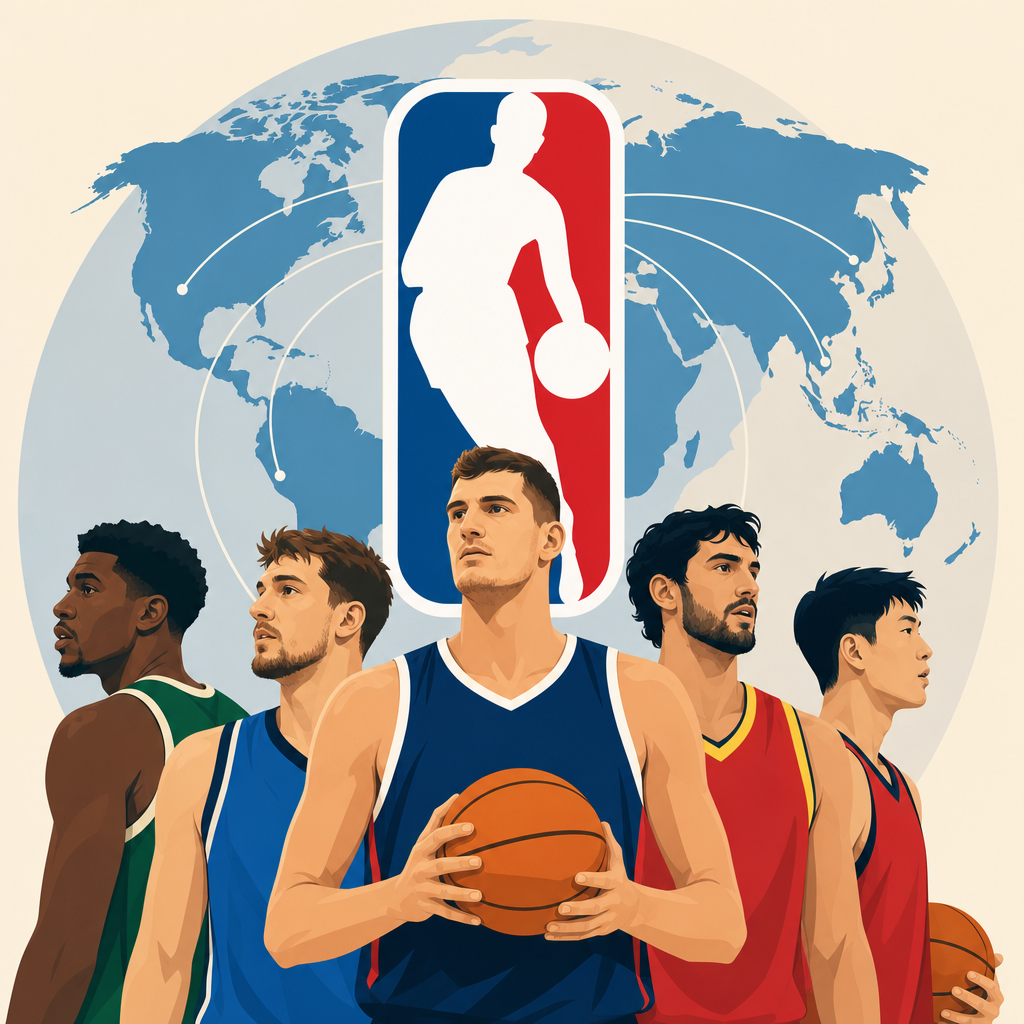
The NBA became a global brand by combining star power, television reach, smart league policy, and, most importantly, international players who changed how the game looked, who watched it, and where the sport could grow next. In NBA history, global growth refers to the league’s expansion beyond the United States and Canada into a worldwide entertainment business with international fans, sponsors, media partners, academies, and player pipelines. That transformation did not happen through marketing alone. It happened because elite players from outside the traditional American system proved they could dominate MVP races, carry franchises, and inspire entire nations to follow the league every night.
I have worked on basketball content and audience strategy long enough to see the pattern clearly: interest spikes when fans can connect the sport to a local hero, a national identity, or a style of play that feels distinct. The NBA’s international rise followed that exact logic. Early broadcasts created awareness, but players created loyalty. When Hakeem Olajuwon won titles in Houston, when Dirk Nowitzki redefined the power forward position, when Yao Ming connected the league to China, and when Giannis Antetokounmpo and Nikola Jokic became modern superstars, the NBA moved from exported product to shared global culture. That distinction matters because brands travel farther when audiences feel represented inside the story.
This hub article explains how the NBA became a global brand through international players who transformed the league on the court and in the marketplace. It covers the foundations of global growth, the pioneers who opened doors, the stars who commercialized new markets, the basketball changes driven by overseas talent, and the systems now sustaining worldwide expansion. For anyone studying NBA history, this topic matters because international growth reshaped roster construction, youth development, media rights, merchandising, and even the definition of what an NBA superstar looks like. The modern league is not simply an American competition with foreign participants. It is a global league whose identity has been built by international influence.
The Early Foundations of NBA Global Growth
The NBA’s international brand did not emerge overnight in the 1990s, even though that decade accelerated everything. The league first built credibility abroad through exhibition games, Olympic visibility, and gradual television syndication. FIBA competitions exposed foreign audiences to NBA-caliber talent, while videotapes and delayed broadcasts helped create early fandom in Europe, Latin America, and parts of Asia. By the 1980s, Magic Johnson and Larry Bird had already given the league a more compelling television product, and David Stern understood that a better product could travel if distribution improved.
The turning point before the major wave of international players was the 1992 Dream Team. Although most of that roster was American, its impact on global growth was enormous because it turned NBA players into worldwide reference points. Young prospects across Europe, Africa, Asia, and South America watched Michael Jordan, Charles Barkley, and Magic Johnson and began training with the NBA as the standard. The result was not just more fans. It was a stronger future talent pipeline. The Dream Team globalized basketball aspiration, but the next stage required international stars to prove that aspiration could lead to NBA greatness.
The Pioneers Who Proved International Stars Could Lead
Several early figures were essential in changing executive opinion inside the league. Hakeem Olajuwon, born in Lagos, Nigeria, arrived through the American college system, but his success carried international significance. He won back-to-back NBA championships in 1994 and 1995, claimed an MVP award, and became one of the most technically refined centers in league history. His footwork, timing, and “Dream Shake” gave the NBA a global superstar whose game was studied far beyond Houston. Importantly, Olajuwon was not treated as a novelty. He became a central figure in championship history, which raised the credibility of international player development.
Drazen Petrovic and Toni Kukoc further changed attitudes toward European talent. Petrovic, the Croatian guard who starred for the New Jersey Nets, demonstrated that European perimeter players could bring elite shooting, toughness, and high-level shot creation. His tragic death in 1993 cut short a brilliant career, but his influence remained. Kukoc entered the NBA with the Chicago Bulls after starring in Europe and showed that a tall forward could handle, pass, and create in ways American teams had not fully normalized. At the time, many decision-makers still questioned whether international players were physically ready or mentally prepared for NBA demands. These pioneers challenged that bias directly.
Arvydas Sabonis is another essential figure in this history. Because political circumstances and injuries delayed his NBA arrival, American fans saw only part of his peak. Even so, the Lithuanian center’s passing, screening, rebounding, and floor vision revealed how advanced European big-man development could be. Around the league, front offices started to rethink scouting assumptions. International players were not one category. They were diverse prospects shaped by different coaching traditions, competition levels, and tactical systems. That realization laid the groundwork for broader global recruitment.
The Superstars Who Opened Massive Markets
Dirk Nowitzki changed both basketball and business. The German forward entered the league in 1998 as a skinny seven-footer with perimeter skill, then became one of the greatest scorers in NBA history. He won the 2007 MVP award, led the Dallas Mavericks to the 2011 championship, and popularized the one-legged fadeaway as a signature shot. More than that, Dirk gave European fans a sustained, elite superstar to follow over two decades. He was durable, loyal, and unmistakably international without being marketed as an outsider. His success made teams more willing to draft and develop skilled foreign bigs, and it helped the NBA deepen its media footprint in Germany and across Europe.
Yao Ming’s impact was even larger commercially. Drafted first overall by the Houston Rockets in 2002, the Chinese center became a dominant cultural bridge between the NBA and China. His All-Star voting totals reflected huge international participation, but his importance went beyond popularity contests. Yao was a highly skilled player, an eight-time All-Star, and a serious matchup problem because of his size, touch, and intelligence. When he played, Chinese viewership surged, jersey sales expanded, sponsorship opportunities multiplied, and the NBA gained entry into one of the world’s most important sports media markets. Tencent and CCTV would later become critical distribution channels, but Yao created the emotional connection first.
Manu Ginobili also deserves central attention. The Argentine guard, who won four titles with the San Antonio Spurs, became proof that international stars could thrive within team-first championship systems while still altering the style of play. Manu’s left-handed drives, pick-and-roll craft, improvisation, and competitive edge influenced a generation of guards worldwide. In Latin America, his Olympic success with Argentina’s 2004 gold-medal team and his NBA career gave fans a direct reason to invest in the league. The Spurs as a franchise became a model for global scouting because they consistently found, trusted, and maximized international talent.
| Player | Country | Primary Global Impact | League Transformation |
|---|---|---|---|
| Hakeem Olajuwon | Nigeria | Legitimized international superstardom | Proved a foreign-born player could anchor titles and win MVP |
| Dirk Nowitzki | Germany | Expanded European fandom | Redefined the scoring forward and stretch big archetype |
| Yao Ming | China | Unlocked the Chinese market | Boosted media rights, merchandise, and global audience scale |
| Manu Ginobili | Argentina | Strengthened Latin American connection | Validated creative international guard play in title teams |
| Giannis Antetokounmpo | Greece/Nigeria | Modernized global superstar identity | Linked international development to MVP-level dominance |
| Nikola Jokic | Serbia | Elevated Balkan basketball prestige | Centered offense around passing from the pivot position |
How International Players Changed the Way the NBA Game Is Played
The NBA did not just become more global in audience terms. It became more global stylistically. International players accelerated ball movement, spacing, multi-skill development, and tactical flexibility. European coaching systems often emphasized passing reads, team concepts, and technical fundamentals from an early age. As more international players entered the league, those habits blended with American athleticism and one-on-one creation. The result was a richer strategic environment.
Dirk normalized the idea that a seven-footer could be your primary perimeter scorer. Pau Gasol brought face-up skill, passing, and interior finesse to title teams with the Los Angeles Lakers. Tony Parker’s speed, paint pressure, and floater game shaped guard play for years. Marc Gasol and Joakim Noah popularized the playmaking center role before Nikola Jokic turned it into an offensive system. Luka Doncic, developed in Slovenia and Spain, arrived with advanced pick-and-roll manipulation usually seen in veteran NBA guards. These players were not adding decorative variety. They were shifting core assumptions about player development and roster balance.
Scouting language changed too. Front offices increasingly valued processing speed, touch, positional versatility, weak-side decision-making, and international experience against professionals. Teams put more resources into Europe, Australia, Africa, and Latin America because the returns were obvious. The success of international MVPs made it impossible to dismiss overseas pathways as secondary. Since 2019, players born outside the United States have dominated the MVP conversation, including Giannis Antetokounmpo, Nikola Jokic, and Joel Embiid. That trend reflects more than talent concentration. It shows that the global player pipeline is now central to competitive success.
The Business of Becoming a Worldwide League
International players transformed the NBA because they linked basketball excellence to business expansion. Once a player from a specific country became a star, local broadcasters had a stronger product to sell, sponsors had a recognizable face to activate campaigns around, and retailers had a reason to push licensed merchandise. This pattern repeated across markets. Yao Ming amplified China. Dirk strengthened Germany. Parker and later Victor Wembanyama energized France. Giannis expanded interest in Greece and among African diaspora communities. Jokic reinforced the Balkans as a serious NBA region.
The league supported that growth with infrastructure. NBA Global Games brought regular-season and preseason contests to cities such as London, Paris, Mexico City, and Tokyo. NBA Academy programs created formal youth development pathways in multiple regions. Basketball Without Borders, launched by the NBA and FIBA in 2001, gave elite young players instruction, exposure, and a direct line to scouts. Digital distribution then multiplied the effect. League Pass, social media clips, YouTube highlights, and localized content allowed fans to follow teams without depending on traditional cable schedules. A teenager in Manila or Madrid could now build daily fandom around a player, not just occasional event viewing.
Merchandise, sponsorship, and media rights all benefited from this player-led expansion. The NBA’s jersey business became truly international because star identification crossed borders. Shoe deals became global lifestyle campaigns. Corporate partners wanted athletes with multilingual appeal and broad recognition. The league’s business model now depends on worldwide attention, and international stars are the most efficient drivers of that attention because they create overlapping fan communities rather than isolated local ones.
The Modern Era and the Future of Global Growth
Today’s NBA is the clearest evidence that global growth is no longer a side story in NBA history. It is the story. Giannis Antetokounmpo rose from difficult circumstances in Greece to become a two-time MVP, Defensive Player of the Year, Finals MVP, and one of the league’s most marketable stars. Nikola Jokic, developed in Serbia, became a multiple-time MVP and led the Denver Nuggets to a championship through unprecedented passing and efficiency from the center position. Luka Doncic entered the league as one of the most polished young creators ever. Joel Embiid, born in Cameroon, became an MVP after years of development shaped by both local beginnings and global opportunity. Victor Wembanyama now represents the next stage: a French prospect treated as a worldwide event before his first NBA season.
The future will be built through deeper academies, earlier scouting, better sports science, and stronger ties between the NBA, FIBA ecosystems, and grassroots programs. There are limits to manage. Not every market converts interest into sustainable youth participation. Time zones still affect live viewership. Political and commercial tensions can complicate league relationships in major regions. Yet the direction is clear. International players have permanently changed who enters the league, how the game is played, and how fans identify with NBA history.
The NBA became a global brand because international players made the league feel both elite and inclusive at the same time. They did more than add diversity to rosters. They won championships, claimed MVPs, shifted tactics, expanded broadcasting markets, and inspired the next generation of talent from every continent. From Olajuwon and Petrovic to Nowitzki, Yao, Ginobili, Giannis, Jokic, and Doncic, each era produced stars who moved the league beyond its domestic roots and into a shared worldwide culture.
For anyone exploring NBA history, global growth is the hub that connects player development, media expansion, international competition, and franchise strategy. If you want to understand why the modern league looks the way it does, start with the international players who transformed it. Then continue through the related stories within NBA History to trace how scouting, Olympic basketball, overseas academies, and global fandom turned the NBA into one of the world’s strongest sports brands.
Frequently Asked Questions
How did international players help turn the NBA into a global brand?
International players helped transform the NBA from a North American sports league into a global entertainment brand by making the game feel relevant to audiences far beyond the United States and Canada. Their influence was not limited to box scores or individual awards. When elite players from Europe, Africa, Asia, Latin America, and other regions began starring in the league, fans in those markets suddenly had a personal reason to follow NBA teams, games, and storylines. That emotional connection matters. A league can spend heavily on marketing, but when people see someone from their own country or region succeeding at the highest level, interest becomes deeper, more loyal, and more organic.
These players also changed the NBA’s visibility in practical ways. Broadcasters had stronger incentives to buy rights in overseas markets. Sponsors gained access to new audiences. Merchandise sales expanded as fans bought jerseys tied to national pride as well as team loyalty. Youth participation grew because international stars provided proof that the NBA was not just an American dream but a global one. In that sense, international players were not simply additions to the league; they were bridges between the NBA and millions of new fans.
Just as important, many of these players reshaped how basketball was played. They brought different developmental backgrounds, technical skills, and tactical ideas that made the league more diverse and more appealing to a wider audience. Their success helped establish the NBA as the world’s top basketball destination, where styles from many basketball cultures could meet and thrive. That combination of representation, competitive excellence, and global fan engagement is a major reason the NBA became a worldwide brand.
Which international players had the biggest impact on the NBA’s global growth?
Several international stars stand out as transformational figures because they did more than excel individually; they expanded the league’s reach and changed perceptions of what an NBA superstar could be. Hakeem Olajuwon, born in Nigeria, became one of the earliest globally recognizable international greats and showed that international-born players could dominate the league at the highest level. Dikembe Mutombo, from the Democratic Republic of the Congo, became both a defensive icon and a global ambassador whose personality and humanitarian work strengthened the NBA’s international image.
Dirk Nowitzki was especially important in Europe. His rise from Germany to MVP, champion, and all-time great gave the NBA a powerful foothold with European audiences and changed long-held assumptions about international players. He was not treated as a novelty; he became the centerpiece of a championship franchise. Yao Ming had an even more dramatic market impact. His arrival connected the NBA to China on a scale few leagues have ever achieved in any international market. Yao brought enormous media attention, commercial opportunities, and fan growth, while also proving he belonged competitively, which made the connection sustainable rather than temporary.
Manu Ginobili from Argentina played a major role in Latin America and beyond by showing that creativity, flair, and international experience could translate directly to championship basketball. Tony Parker, from France, became another example of a global star central to a dynasty. More recently, players such as Giannis Antetokounmpo, Nikola Jokic, Luka Doncic, Joel Embiid, and Victor Wembanyama have continued that momentum by becoming MVP-level faces of the modern league. Their success reflects how deeply global the talent pipeline has become. The most influential names differ depending on era and region, but together they helped normalize the idea that the NBA’s biggest stars could come from anywhere.
Was the NBA’s international success mainly about marketing, or did the players themselves drive the change?
The NBA’s global rise was not mainly a marketing story, even though strong marketing certainly helped. The more important driver was credibility, and that credibility came from the players. International audiences are highly aware when a league is simply trying to sell itself abroad. What makes expansion durable is not advertising alone, but meaningful representation on the court. Once international players became stars, All-Stars, MVPs, and champions, the NBA stopped looking like a foreign product being promoted overseas and started looking like a truly global competition.
Marketing amplified what the players made possible. Television distribution, international preseason and regular-season games, social media strategy, multilingual content, and global sponsorship deals all mattered. But those efforts worked because there were real stories for fans to care about. Broadcasters could market Yao Ming to Chinese viewers because he was a legitimate NBA player with real impact. European networks could build coverage around Dirk Nowitzki or Luka Doncic because they were among the league’s most important talents, not symbolic figures. The same principle applies across Africa, Latin America, and other emerging basketball markets.
In other words, policy and promotion created infrastructure, but players created attachment. The NBA’s smartest strategic move was recognizing that international talent was not just good for competition; it was good for long-term global identity. Once fans in many countries could see their own athletes influence playoff races, championships, and the style of play itself, the league’s international growth became self-reinforcing. That is why the transformation did not happen through marketing alone. It happened because the product on the floor became genuinely global.
How did international players change the way the NBA game is played?
International players changed the NBA stylistically as much as they changed it commercially. Many arrived with basketball educations shaped by different coaching traditions, especially from European systems that emphasized spacing, passing, footwork, positional versatility, and team-oriented decision-making. Over time, those qualities influenced the broader league. Big men became more skilled on the perimeter. Ball movement became more valued. The idea that a player could be seven feet tall and still shoot, create, and operate as a playmaker became much more accepted.
Dirk Nowitzki is one of the clearest examples. He helped redefine what a power forward could be by stretching defenses with elite outside shooting and face-up scoring. Manu Ginobili brought a dynamic, improvisational style that blended creativity with high-level team play. Nikola Jokic has taken the playmaking center concept to an extraordinary level, while Luka Doncic has shown how international guard development can produce elite pace control, vision, and advanced shot creation. Giannis Antetokounmpo represents another dimension: a globally developed athlete who combines unique physical tools with a versatile, positionless approach that fits the modern NBA.
This evolution also changed how teams scout and build rosters. Franchises became more open to international pathways, more willing to invest in player development, and more interested in versatile skill sets over rigid positional labels. As a result, the NBA grew not only in geographic reach but also in basketball sophistication. Fans around the world could see elements of their local basketball cultures reflected in the league, making the NBA feel more inclusive and more advanced at the same time. The modern game’s fluidity owes a great deal to international influence.
Why are international players still central to the NBA’s future growth?
International players remain central to the NBA’s future because they sit at the intersection of talent, audience expansion, and long-term business development. The league’s next phase of growth depends on continuing to attract top players from around the world while deepening relationships with fans in international markets. When global audiences see players from their countries succeed, they are more likely to watch games live, follow teams year-round, engage on social media, buy merchandise, and invest emotionally in the league. That kind of engagement is far more durable than one-time promotional interest.
The talent pipeline is also stronger than ever. Basketball academies, international youth systems, scouting networks, and grassroots programs have widened access to NBA pathways. The league and its partners now operate in a world where elite prospects can emerge from many regions, and that reality strengthens the NBA’s claim to be the highest stage in a truly worldwide sport. This is especially important in regions where basketball is still growing. One successful international star can reshape local participation, inspire infrastructure investment, and create an entire generation of future players and fans.
There is also a branding dimension that cannot be ignored. In a crowded global entertainment market, the NBA benefits from being able to present itself as both elite and inclusive. It is not dependent on a single country for its identity, even though its roots remain in North America. That flexibility helps the league connect with sponsors, media partners, and communities across continents. As more international stars become franchise leaders and MVP candidates, the NBA’s global image becomes more authentic, not less. That is why international players are not just part of the league’s story; they are essential to where the story goes next.